The 40-Minute Lesson Plan is essential elements of the CBL lesson plan. We suggest the teacher reads aloud or uses an audio book for the reading portion. 40-min includes: Background, Wordwall, Key Paragraph, and Writing Prompt
60
The 60-Minute Lesson Plan uses the same elements as the 40-minute plan, but also covers a visual activity and discussion. 60-min includes: Background, Wordwall, Key Paragraph,Writing Prompt and adding the Key Questions
90
The 90-Minute Lesson Plan contains all elements of the lesson plan. If time is available, we recommend using this version to get all of the benefits of CBL. The full lesson includes: Background, Wordwall, Key Paragraph, Writing Prompt, and Key Questions of the 40 and 60 minutes options while incorporating the Mapping Activity, Visual Activity and creating the Timeline as a class.
Day 1
Outcomes for Today
-->
Common Core Standards Focus:
SL1. Initiate and participate effectively in a range of collaborative discussions (one-on-one, in groups, and teacher-led) with diverse partners on grades 9–10 topics, texts, and issues, building on others’ ideas and expressing their own clearly and persuasively
a.) Come to discussions prepared having read and researched material under study; explicitly draw on that preparation by referring to evidence from texts and other research on the topic or issue to stimulate a thoughtful, well-reasoned exchange of ideas.
b.) Work with peers to set rules for collegial discussions and decision-making (e.g., informal consensus, taking votes on key issues, and presentation of alternate views), clear goals and deadlines, and individual roles as needed.
Prepare
Background
Gather background knowledge about a place, time, event, person, or thing.
What is different about the 1960’s compared to now?
New styles emerged during the decade including bell bottoms, wired glasses, long hair, and tie dye. Above all, the 1960's were a time of rebellion against the older generations, the Vietnam War, and the mainstream culture into which the baby boomers were born. Many of the changes that occurred during the 1960's still impact us today.
Fads and Trends
Any decade in American history ushers in new fads, trends, and toys.
A fad is an intense and widely shared enthusiasm for something and is usually short-lived. For example, silly bands would be an example of a fad from the 2000's.
A trend is a general direction in which something is developing or changing. For example, the use of cell phones would be an example of a trend that started in the 1980's and continues to this day.
Lava Lamps Tye-Dye The Twist Peace Symbol Surfing Fallout Shelters Go-Go Boots Mini Dresses Skateboards Black Lights Hippie Beads Bell Bottoms Chinese Fire Drill Smiley Face
Word Wall
Here are five vocabulary words to teach and add to the Word Wall.
Read
Review
Review the timeline from the beginning every day.
Read
Read the selection, usually in a Shared Reading Read React Predict Cycle of 2-3 pages.
Respond
Timeline
Agree on the facts in today’s reading and list the 3-5 most important on the timeline.
Map
Add to ongoing class activities like a KWL chart or map: where did the characters go?
Explore
Activity
Explore the reading more deeply with a visual or oral language activity.
1960’s Twitter feed: It’s 1965, what is “trending”, what has “gone viral”, (#the1960’s)? Using the information gathered, have students in pairs or solo create a pretend 1960’s Twitter feed; include what would be trending, what would have “gone viral”, equip with hash tags. Present to class.
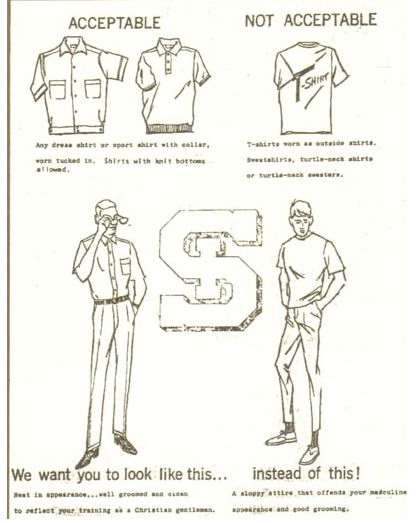
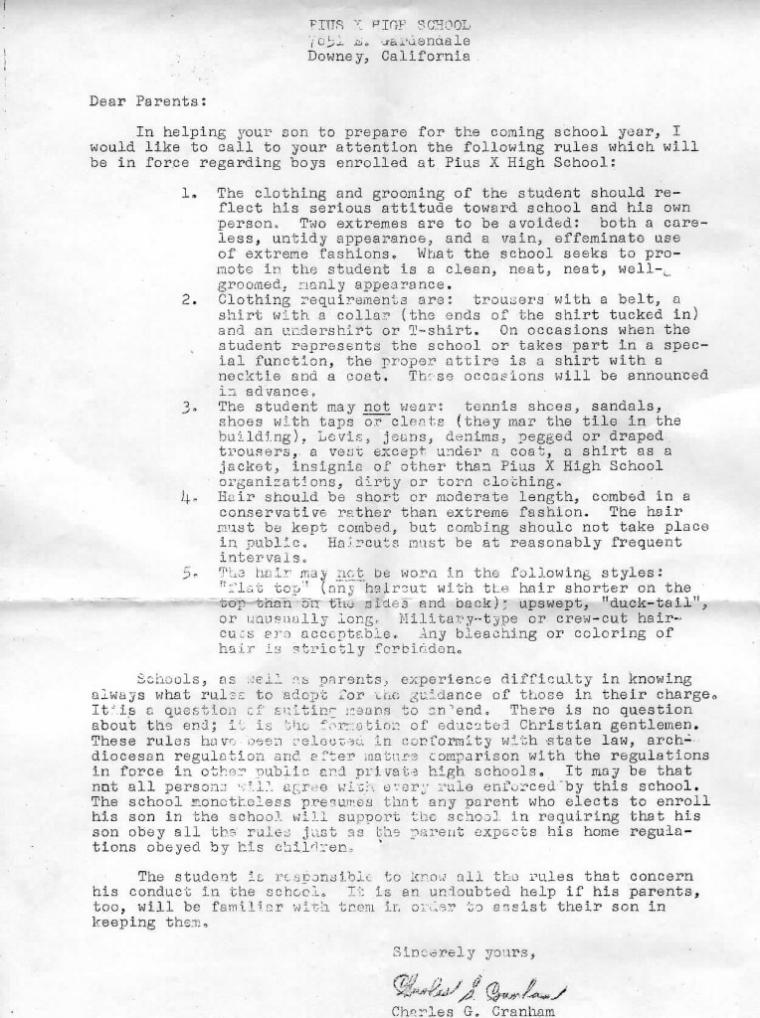
Alternative Assignment: Review excerpts from a 1960’s school dress code. How does it differ from today?
When it came to dressing for high school in the early to mid-1960s, the clean, neatly shorn and well-pressed conformity of the student body, with its tucked-in shirts and shined shoes, was expected. Below is a strongly worded dress codes from the ’60s itemizing what was acceptable and unacceptable—from clothes to hairstyles, accessories and makeup. What could get you sent home from school reflected the cultural trends on the cusp of ’60s counterculture revolution.
Ask discussion questions of all 9 types (see Day 1).
Analyze
Analyze the key paragraph.
Extend
Write
Have each student write a short product based on today’s prompt to connect to the unit theme.
Close
Close by extending today’s lesson to life and the world.
Day 2
Outcomes for Today
-->
Common Core Standards Focus:
W3. Write narratives to develop real or imagined experiences or events using effective technique, well-chosen details, and well structured event sequences.
a.)Engage and orient the reader by setting out a problem, situation, or observation, establishing one or multiple point(s) of view, and, introducing a narrator and/or characters; create a smooth progression of experiences or events.
b.) Use narrative techniques, such as dialogue, pacing, description, reflection, and multiple plot lines to develop experiences, events and or characters.
c.) Use a variety of techniques to sequence events so that they build on one another to create a coherent whole.
d.) Use precise words and phrases telling details and sensory language to convey a vivid picture of the experiences, events, setting and/or characters.
e.) Provide a conclusion that follows from and reflects on what is experienced, observed, or resolved over the course of the narrative.
Prepare
Background
Gather background knowledge about a place, time, event, person, or thing.
What is a family?
What formations does family come in? What must be present to constitute family? Is the traditional, nuclear family the only family structure? Do family members each have responsibilities? Do family members have a responsibility to one another? Does our responsibility extended beyond immediate family to extended family? How are those responsibilities different/the same?
Word Wall
Here are five vocabulary words to teach and add to the Word Wall.
reputation-11
suffocate-5
sympathetic-8
tension-12
unfathomable-10
Read
Review
Review the timeline from the beginning every day.
Begin Timeline.
Timeline
Materials:
butcher paper or long rolls of shelf or craft paper
pencils, pens, crayons, markers
construction paper, scissors, glue sticks if desired
Step One: Decide on the 5 most important events in today’s reading.
Make a list of all the things that happened in today’s reading.
Decide which are the 5 most important.
Step Two: Write each event as the next event on the timeline.
The timeline is a long [20 feet] running piece of paper, with a line running horizontally through the upper third.
At the beginning o the story start at the far left edge, and then add 5 events or important details each day.
Write each event in the fewest possible words. Use bold print that can be read from a distance. Leave enough room for all of the chapters.
Step Three: Review the timeline each day before reading the next section.
Starting at the beginning of the story, read and review each event on the timeline before starting today’s reading.
This will help you remember what happened in reading on previous days. If you missed parts, or all of the story so far, this will fill you in.
A symbol, such as the pompadour (see attachment), could be used as the backing for each timeline entry. Also, consider placing the timeline alongside a 1960’s timeline or bulletin board dedicated to the era.
Read
Read the selection, usually in a Shared Reading Read React Predict Cycle of 2-3 pages.
Read p. 3-12
Setting
Characters
Pages
Walk home from the
theatre
Ponyboy, Soda, Darry, Socs gang members, greasers: Two-Bit Mathews, Steve, Dally, Johnny Cade
3-12
Respond
Timeline
Agree on the facts in today’s reading and list the 3-5 most important on the timeline.
Ponyboy walks home from the movie theatre alone.
Members of the Soc gang attack Ponyboy.
He is forced to the ground, punched in the face, and cut with a knife.
His brothers Darry and Soda come to his aid, along with other members of the Greaser gang.
Members of the Greaser gang chased the Soc members away and threw rocks at them.
Ponyboy tries not to cry, and though being bruised and bleeding, but he will be ok.
Map
Add to ongoing class activities like a KWL chart or map: where did the characters go?
Theme Chart:
Create a class theme chart of Responsibility, one side representing responsible acts, the other side irresponsible acts (and perhaps the center for the grey areas to be discussed). Any time a responsible or irresponsible act is made by the characters in each day’s readings, the act(s) can be added to the board on an index card or other creative means.
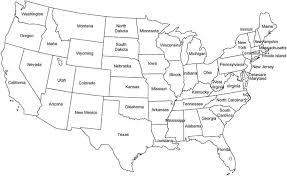
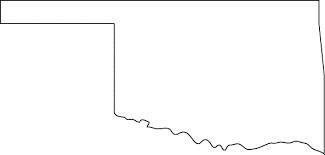
MAP: Create or print a map of Oklahoma. Compare it to where we reside.
Explore
Activity
Explore the reading more deeply with a visual or oral language activity.
Create a Multiple-character chart:
Divide a single sheet of blank paper (no holes, no lines) into 6 boxes.
Choose 6 characters you have profiled and wish to analyze. Fill the name of each character, a quick sketch, and 2-3 descriptive words.
Ponyboy p.3
Darry (oldest brother) p.6
Sodapop (second oldest brother) 7
Steve Randle p. 9
Two-Bit Mathews p. 9
Dally (Dallas Winston) p. 10
Johnny Cade 11
Circle/Highlight the main character of the 6. Be able to explain his relationship thus far to each of the other character.
Additional activity, Cubing
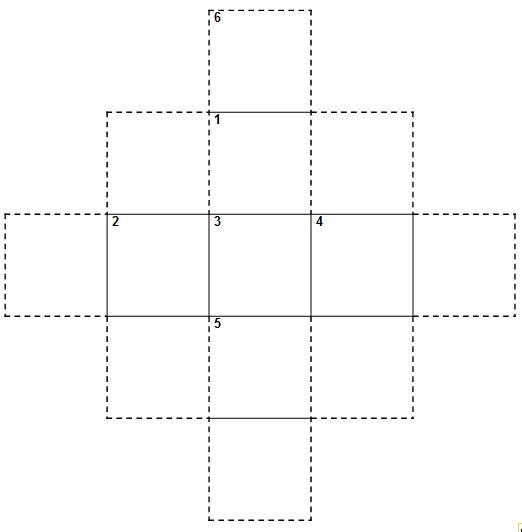
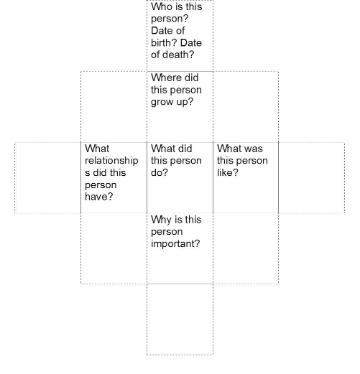
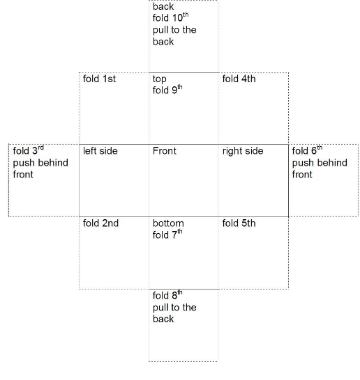
A cube can be created to accompany this chart. The six-sides can be used for class discussion. Each character’s name for the chart can be placed on a side of the cube. Students can take turns rolling and sharing one fact learned in today’s reading and/or one prediction about the character.
3c12 Cubing 6 Questions About Anything
Discussion
Ask discussion questions of all 9 types (see Day 1).
Key Questions- Day 2
Ponyboy tells the story in the first person, as what type of literary style?
The story involves a feud between two rival gangs: the Socs, and the Greasers. How would you describe each?
What have we learned about Ponyboy so far?
Why do you think Ponyboy was attacked?
Where did the attack on Ponyboy take place? If it was in a public place, do bystanders have a responsibility to the safety of one another?
The gang protected Ponyboy. Was this responsible?
Was it responsible of Ponyboy to put the gang in that position?
When is the story taking place? How are the teenagers the same and or different than today?
What character can you relate to the most so far and why?
Should he have been walking alone at night? What should have he done?
If the story was told from the Soc’s perspective how it might differ?
Remember to ask literal, structural, idea, craft, author, literature, life, evaluative, and inference questions every day.
Analyze
Analyze the key paragraph.
Key Paragraph
We’re poorer than the Socs and the middle class. I reckon we’re wilder, too. Not like the Socs, who jump greasers and wreck houses and throw beer blasts for kicks, and get editorials in the paper for being a public disgrace one day and an asset to society the next. Greasers are almost like hoods; we steal things and drive old souped-up cars and hold up gas stations and have a gang fight once in a while. I don’t mean I do things like that. Darry would kill me if I got into trouble with the police. Since Mom and Dad were killed in an auto wreck, the three of us get to stay together only as long as we behave. So Soda and I stay out of trouble as much as we can, and we’re careful not to get caught when we can’t. I only mean that most greasers do things like that, just like we wear our hair long and dress in blue jeans and T-shirts, or leave our shirttails out and wear leather jackets and tennis shoes or boots. I’m not saying that either Socs or greasers are better; that’s just the way things are. [p. 3]
Then there were shouts and the pounding of feet and the Socs jumped up and left me lying there, gasping. I lay there and wondered what in the world was happening -people were jumping over me and running by me and I was too dazed to figure it out. Then someone had me under the armpits and was hauling me to my feet. It was Darry. [p. 6]
Extend
Write
Have each student write a short product based on today’s prompt to connect to the unit theme.
Prompt 1. Responsibility Requires Action: Responsibility to the Family
Ponyboy describes in great detail several major people in his life. The members of his family and friends are interconnected and to various degrees take responsibility for each other.
Write a narrative paragraph describing 3-4 major people in your life starting with the people who are most responsible for you or take responsibility of you. (Mom, brother, grandma, uncle, legal guardian, or teacher are just a few examples).How do they model responsibility for you? Provide specific examples of their acts of responsibility. Why do you think they take responsibility for you?
Variations for Writing (as needed):
Take a section of the timeline and write a summary of the story so far. Or look at the story so far and write a narrative paragraph about what you think will happen next.
Close
Close by extending today’s lesson to life and the world.
Are there any parallels between your life and Ponyboy’s life?
Can you relate to the non-traditional structure of Ponyboy’s family?
Although the setting of this story is in the 1960’s, could it take place today? What might be different/the same?
Day 3
Outcomes for Today
-->
Common Core Standards Focus:
W3. Write narratives to develop real or imagined experiences or events using effective technique, well-chosen details, and well structured event sequences.
a.) Engage and orient the reader by setting out a problem, situation, or observation, establishing one or multiple point(s) of view, and introducing a narrator and/or characters; create a smooth progression of experiences or events.
W10. Write routinely over extended time frames (time for research, reflection, and revision) and shorter time frames (a single sitting or a day or two) for a range of tasks, purposes, and audiences.
Prepare
Background
Gather background knowledge about a place, time, event, person, or thing.
Identity: We take on many roles (brother/friend/student/son/daughter) what is expected of you in each of these roles (select 3)?
Why do we belong to groups?
We are social beings; we often join groups with thers. How do we chose the groups we belong to? Why?
Are the groups in high school the same or different?
What makes them different? What makes them the same?
Are these groups a sign of the times or do the same groups transcend time?
Have students list the groups they would be a part of and also the ones they would never belong. Why?
What is the criterion to belong to the listed groups?
Why might someone close to you place high expectations on you? How does that relate to responsibility? Can you think of a person in your life who “expects” from you? Why do you think that is? Do you resent or appreciate this?
In a pair, narrate a real or created scenario between you and this person. Share with your partner.
Word Wall
Here are five vocabulary words to teach and add to the Word Wall.
sagely-12
tough-12
lonesome-13
scholarship-16
bright-eyed-15
Read
Review
Review the timeline from the beginning every day.
Read
Read the selection, usually in a Shared Reading Read React Predict Cycle of 2-3 pages.
Read p. 12-18
Setting
Characters
Pages
Walk home from the theatre
Ponyboy, Soda, Darry, Socs gang members, greasers: Two-Bit Mathews, Steve, Dally, Johnny Cade
12-15
Home
Ponyboy, Soda
15-18
Respond
Timeline
Agree on the facts in today’s reading and list the 3-5 most important on the timeline.
Students might mention:
They sit down to have a smoke, and make plans to go to the Nightly Double movie the next night.
Darry scolds Ponyboy for walking home alone. Soda comes to his defense.
Later that night, Ponyboy reads Great Expectations for English, and can identify with the character Pip.
He goes to bed, and talks with brother Soda about how to put up with Darry’s gruffness, that Darry really does care about him.
Ponyboy is not fully convinced. He feels that Soda is the only one he cares about.
Map
Add to ongoing class activities like a KWL chart or map: where did the characters go?
Theme Chart:
Add to the class theme chart of Responsibility, one side representing responsible, the other side irresponsible acts (and perhaps the center for the grey areas to be discussed). Any time a responsible or irresponsible act is made by the characters in each day’s readings, the act(s) can be added to the board on an index card or other creative means.
Explore
Activity
Explore the reading more deeply with a visual or oral language activity.
Open Mind Portrait
Create an open mind portrait of one of the following characters; take some ideas from your character interaction chart in the previous lesson. What are the 3 different perspectives of what happened? Why are they different? What does your character think about Ponyboy's fight with the Socs? Why?
Soda
Darry
Ponyboy
Materials:
large piece of stiff paper for each character, like 11x17 oak tag
paper for bubbles with scissors and glue sticks
markers, crayons, pens, pencils, or paint
construction or tissue paper, scissors and glue sticks if desired
Step One: create a large head shot of the character
Imagine what you think the character looks like from the descriptions in the text as well as your imagination. You can make a list of these details to help you draw the character, if you wish.
Decide how much of the character you wish to show: just the head and face? From the shoulders up? From the waist up? The whole person? You might want to include at least the shoulders to include some clothing details. You might want to show the size differences between characters.
Draw the characters head shot including the face on the large piece of paper. You could also cut the paper to form the head.
Illustrate your portrait with colors, construction paper or whatever will make the character colorful.
Step Two: place cartoon bubbles of character thoughts around the portrait
Cut cartoon bubbles out.
Write things the character thinks, or says to himself, on each bubble.
Put the bubbles up around the portrait.
Step Three: add bubbles as you learn new things about the character
Read the story further and identify new things you have learned about the character, or ways the character has changed.
Follow step 2 to create and place additional bubbles.
Discussion
Ask discussion questions of all 9 types (see Day 1).
Key Questions – Day 3
In the story, Ponyboy feels animosity towards his older brother. Why? Is this responsible of Ponyboy?
What happened to Ponyboy in biology class that led him to relate to Pip in Great Expectations?
Why does Soda try to help Ponyboy understand why Darry acts the way he does?
What kind of a relationship does Soda and Ponyboy have other than being brothers?
How does Ponyboy show his care for Soda?
Do responsibilities vary with age?
Today, what is the average 20 year old responsible for?
Are Darry’s responsibilities typical for his age?
How does having high expectations for someone show that you care?
Who demonstrates the strongest bond in the story so far?
Analyze
Analyze the key paragraph.
Key Paragraph
“Darry didn’t deserve to work like an old man when he was only twenty. He had been a real popular guy in school; he was captain of the football team and he had been voted Boy of the Year. But we just didn’t have the money for him to go to college, even with the athletic scholarship he won. And now he didn’t have time between jobs to even think about college” [p. 16]
“A little,” I lied. Soda threw one arm across my neck. He mumbled something drowsily. “Listen, kiddo, when Darry hollers at you, he don’t mean nothin’. He’s just got more worries than somebody his age ought to. Don’t take him serious, you dig Pony? Don’t let him bug you. He’s really proud of you ‘cause you’re so brainy. It’s just because you’re the baby-I mean, he loves you a lot. Savvy?” [p. 17]
Extend
Write
Have each student write a short product based on today’s prompt to connect to the unit theme.
Prompt 1. Responsibility Requires Action: Responsibility to the Family
Darry has tried to make sure that his brothers behave themselves, in part at least because: “Since Mom and Dad were killed in an auto wreck, the three of us get to stay together only as long as we behave.” These orphans have a strong responsibility to themselves and each other. They must be responsible by obeying the law, and attending school in order to remain a family among themselves. Darry has taken on the role of parent to his younger brothers; it is Darry who shoulders the most responsibility. But Soda and Ponyboy also have the responsibility to follow the rules that Darry has made. This must be done even though they identify as greasers and have adopted many of the behaviors of that gang.
What kind of responsibility do you have within your family? Are you in a position of authority within your family structure? Because of your family’s rules, do you monitor your behavior to maintain a certain level of responsibility, in consideration of the expectations of all of your family members? What sorts of small things could you do to be more responsible? Write a narrative paragraph about your position in your family structure, and about what behaviors you are responsible for within your family.
Close
Close by extending today’s lesson to life and the world.
Who in your life “looks up” to you? Do you have a responsibility to behave responsibility if you being “looked up” to?
Day 4
Outcomes for Today
-->
Common Core Standards Focus:
SL1. Initiate and participate effectively in a range of collaborative discussions (one-on-one, in groups, and teacher-led) with diverse partners on grades 9–10 topics, texts, and issues, building on others’ ideas and expressing their own clearly and persuasively
d.) Respond thoughtfully to diverse perspectives, summarize points of agreement and disagreement, and, when warranted, qualify or justify their own views and understanding and make new connections in light of the evidence and reasoning presented.
W3. Write narratives to develop real or imagined experiences or events using effective technique, well-chosen details, and wellstructured event sequences.
a.) Engage and orient the reader by setting out a problem, situation, or observation, establishing one or multiple point(s) of view, and introducing a narrator and/or characters; create a smooth progression of experiences or events.
b.) Use narrative techniques, such as dialogue, pacing, description, reflection, and multiple plot lines, to develop experiences, events, and/or characters.
c.) Use a variety of techniques to sequence events so that they build on one another to create a coherent whole.
d.) Use precise words and phrases, telling details, and sensory language to convey a vivid picture of the experiences, events, setting, and/or characters. e.) Provide a conclusion that follows from and reflects on what is experienced, observed, or resolved over the course of the narrative.
Prepare
Background
Gather background knowledge about a place, time, event, person, or thing.
Have students pair up and discuss a time when they had to be totally responsible for another person.
Who was it? Why did they feel responsible for this person? How did they act when they were being responsible for this person?
Did this person understand what you were doing? Did they appreciate it? Why or why not? Why is it important to stand up and take care of other people? What would our society be like if we didn’t?
Word Wall
Here are five vocabulary words to teach and add to the Word Wall.
incredulous-24
nonchalantly-25
hoodlum-23
scatterbrained-27
embarrass-21
Read
Review
Review the timeline from the beginning every day.
Read
Read the selection, usually in a Shared Reading Read React Predict Cycle of 2-3 pages.
Read p. 19-31
Setting
Characters
Pages
Downtown stores to the drive-in theater
Ponyboy, Dally, Johnny, Cherry Valance, Marcia
19-31
Respond
Timeline
Agree on the facts in today’s reading and list the 3-5 most important on the timeline.
Students might mention:
Ponyboy and Soda meet Dally downtown and go to the Nightly Double movie theater.
Dally starts talking loudly and is rude to these two girls in front of him
One of the girls gets mad and stands up to him.
The pretty redhead introduces herself to Ponyboy; her name is Cherry (Sherri) Valance, and her friend is Marcia.
Dally returns with 2 cherry cokes; Cherry throws one his cokes in his face.
Johnny tells Dally to leave her alone, and surprisingly, he leaves.
Two-Bit shows up unexpectedly, trying to scare them.
Map
Add to ongoing class activities like a KWL chart or map: where did the characters go?
Theme Chart:
Add to the class theme chart of Responsibility, one side representing responsible, the other side irresponsible acts (and perhaps the center for the grey areas to be discussed). Any time a responsible or irresponsible act is made by the characters in each day’s readings, the act(s) can be added to the board on an index card or other creative means.
Explore
Activity
Explore the reading more deeply with a visual or oral language activity.
Have students create groups of 3 or 4. Have them play the role of each of the characters in the theatre. Have them go through one scene where Dally is rude to the girls. Then have them re-do the scene where Dally is acting responsible to the girls and others in the theatre. In that scene everyone of the characters should be acting responsible. What would it look like? How would the scene change? Why?
Have them change groups and act out scene 2 more times.
Then have students share out and list on paper or a white board how the scene would look if everyone in it were acting responsible.
Who would it affect if everyone acted responsibly and was kind to others? Could this happen?
Open Mind Portrait
Create an open mind portrait of one of the following characters:
Soda
Cherry
Ponyboy
Materials:
large piece of stiff paper for each character, like 11x17 oak tag
paper for bubbles with scissors and glue sticks
markers, crayons, pens, pencils, or paint
construction or tissue paper, scissors and glue sticks if desired
Step One: create a large head shot of the character
Imagine what you think the character looks like from the descriptions in the text as well as your imagination. You can make a list of these details to help you draw the character, if you wish.
Decide how much of the character you wish to show: just the head and face? From the shoulders up? From the waist up? The whole person? You might want to include at least the shoulders to include some clothing details. You might want to show the size differences between characters.
Draw the characters head shot including the face on the large piece of paper. You could also cut the paper to form the head.
Illustrate your portrait with colors, construction paper or whatever will make the character colorful.
Step Two: place cartoon bubbles of character thoughts around the portrait
Cut cartoon bubbles out.
Write things the character thinks, or says to himself, on each bubble.
Put the bubbles up around the portrait.
Step Three: add bubbles as you learn new things about the character
Read the story further and identify new things you have learned about the character, or ways the character has changed.
Follow step 2 to create and place additional bubbles.
Discussion
Ask discussion questions of all 9 types (see Day 1).
Key Questions – Day 4
Ponyboy was perturbed by Dally’s behavior at the theater. What did Dally do? Would you have felt perturbed? Why is this behavior responsible or not?
Ponyboy also was impressed by Cherry’s response to Dally. What did she say/do?
Why are Ponyboy and Johnny surprised that Cherry and Marcia are talking to them?
What is the one rule, besides “Stick Together” that the Greasers follow? Examine this rule. Is this a responsible rule?
Why might someone act nonchalantly?
Why does Ponyboy seem embarrassed?
How would you describe Two-Bit? What does his nickname imply?
What could you infer will be the fate of Ponyboy and Cherry? Why?
How would you describe Ponyboy’s attitude toward Cherry at the end of today’s reading?
Analyze
Analyze the key paragraph.
Key Paragraph
I wouldn’t have felt so embarrassed if they had been greasy girls-I might even have helped old Dallas. But those two girls weren’t our kind. They were tuff-looking girls-dressed sharp and really good looking. They looked about sixteen or seventeen. One had short dark hair, and the other had long red hair. The redhead was getting mad, or scared. She sat up straight and she was chewing hard on her gum. The other one pretended not to hear Dally. Dally was getting impatient. He put his feet up on the back of the redhead’s chair, winked at me, and beat his own record for saying something dirty. She turned around and gave him a cool stare. [p. 21]
Extend
Write
Have each student write a short product based on today’s prompt to connect to the unit theme.
Prompt 1. Responsibility Requires Action: Responsibility to oneself and others may involve taking the risk to make new friends.
In the chapter, Ponyboy became acquainted with two girls from the Soc group. Uncharacteristically, Ponyboy and Johnny were able to converse with relative ease with these girls. They took a big risk, though in doing so, they were breaking an unspoken rule that greasers are not to get involved with girls that are not of their social rank. What do you think was successful about Ponyboy’s and Johnny’s approach to these two girls that made their meeting a success? Were they acting in a responsible manner in the way that they treated these girls? In contrast, Dally’s behavior got him driven from the group.
Write a narrative paragraph describing how you have approached someone who is relatively different from you (in appearance, age, and so on.) to form a friendship. Using the characters from the story as examples, describe what works best (and perhaps not so well) in approaching and meeting new people?
Close
Close by extending today’s lesson to life and the world.
How do the male/female interactions compare/contrast to today’s male/female interactions?
Day 5
Outcomes for Today
-->
Common Core Standards focus:
SL1. Initiate and participate effectively in a range of collaborative discussions (one-on-one, in groups, and teacher-led) with diverse partners on grades 9–10 topics, texts, and issues, building on others’ ideas and expressing their own clearly and persuasively
c.) Come to discussions prepared having read and researched material under study; explicitly draw on that preparation by referring to evidence from texts and other research on the topic or issue to stimulate a thoughtful, well-reasoned exchange of ideas.
W3. Write narratives to develop real or imagined experiences or events using effective technique, well-chosen details, and well structured event sequences.
a.) Engage and orient the reader by setting out a problem, situation, or observation, establishing one or multiple point(s) of view, and introducing a narrator and/or characters; create a smooth progression of experiences or events.
W10. Write routinely over extended time frames (time for research, reflection, and revision) and shorter time frames (a single sitting or a day or two) for a range of tasks, purposes, and audiences.
Prepare
Background
Gather background knowledge about a place, time, event, person, or thing.
What was a 1950s or 60s movie theater like?
If possible Interview someone alive in the 1960’s (grandparent, teacher, and neighbor) and ask about movie going experience. (Cubing Biography Cube can be used.)
Going to the movies was something that before the 1980s was a pretty big deal in the Midwest. If you were to go to the movies, it may be an all-day experience especially since movie houses were usually the first places to have air-conditioning. The experience was much the same as today with a feature film being presented on a big screen. However, before the movie started there would sometimes be a piano player that would play the piano or there would be newsreels (discussing the issues of the day), short movies, or cartoons. In addition to the normal movie houses, drive-in movies were quite popular. People used to go to the movies in their car, and it would be a better time if you wanted to socialize or be loud because you were not confined to a small screening room.
Word Wall
Here are five vocabulary words to teach and add to the Word Wall.
trembling-32
comical-32
rebellious-34
high-strung-33
half-crocked-35
Read
Review
Review the timeline from the beginning every day.
Read
Read the selection, usually in a Shared Reading Read React Predict Cycle of 2-3 pages.
Read p. 31-36
Setting
Characters
Pages
Downtown stores to the drive-in theater
Ponyboy, Dally, Johnny, Cherry Valance, Marcia
27-31
Corner of the home block
Ponyboy, Soda, Johnny
31-34
Theater
Ponyboy, Cherry, Johnny, Two-Bit, Marcia
34-36
Respond
Timeline
Agree on the facts in today’s reading and list the 3-5 most important on the timeline.
Students might mention:
Two-Bit shows up unexpectedly to the theater, trying to scare Ponyboy and Johnny.
They discuss Dally’s consequences of being spotted slashing the tires of Mr. Timothy Shepard and Co.
Four months earlier, Ponyboy takes a Springtime walk to see Steve and Soda, and near his block, finds Johnny beaten, and barely conscious.
Two-Bit, Darry and Dally join to assist Johnny; they lift him up, and he tells them of a blue Mustang full of Socs who have attacked him.
This beating leaves Johnny traumatized and always carrying a switchblade after this.
Ponyboy and Cherry go to the movies and discuss the rival gangs. Two-Bit and Marcia pair off.
Map
Add to ongoing class activities like a KWL chart or map: where did the characters go?
Theme Chart:
Add to the class theme chart of Responsibility, one side representing responsible, the other side irresponsible acts (and perhaps the center for the grey areas to be discussed). Any time a responsible or irresponsible act is made by the characters in each day’s readings, the act(s) can be added to the board on an index card or other creative means.
Explore
Activity
Explore the reading more deeply with a visual or oral language activity.
One possible activity: Cartoon
On poster paper, draw a cartoon (graphic novel style would be ok) of Johnny’s attack by the Soc’s. Try to include emotions and feelings as well as what Ponyboy saw and heard. Include the Soc’s. Speculate and include their thoughts and feelings.
Discussion
Ask discussion questions of all 9 types (see Day 1).
Key Questions – Day 5
Why do you think it was Johnny who was targeted for attack? Could he have done something differently? Was it partly his fault?
Where do the characters spend a lot of their time?
What do you think of Cherry and Marcia? Are they good people?
How do they act responsibly and kindly to the greasers even though they are Soc’s? Why do they do that?
What does traumatized mean? What is an example of something that might leave someone traumatized?
In your opinion, is emotional or physical trauma easier to heal from?
How can someone overcome trauma?
Analyze
Analyze the key paragraph.
Key Paragraph
“Looks like Johnny forgot his jacket,” Steve said, slinging it over his shoulder to take it by Johnny’s house. Suddenly he stopped and examined it more carefully. There was a stain the color of rust across the collar. He looked at the ground. There were some more stains on the grass. He looked up and across the field with a stricken expression on his face. I think we all heard the low moan and saw the dark motionless hump on the other side of the lot at the same time. Soda reached him first. Johnny was lying face down on the ground. Soda turned him over gently, and I nearly got sick. Someone had beaten him badly. [p. 32]
Extend
Write
Have each student write a short product based on today’s prompt to connect to the unit theme.
Prompt 1. Responsibility Requires Action: Responsibility to oneself and others may involve taking the risk to make new friends.
In this section, the reader is confronted by the stark reality of the violence between the Soc gang and the greasers. Johnny is forever scarred by a violent outburst and Ponyboy lives with the memory. While talking with Cherry, Ponyboy hears that the Soc’s have their own problems and that life is not great for them either.
Write a narrative paragraph describing what troubles both groups could have. Use a quote from the text if possible. What sorts of problems do the Soc’s have? The Greasers? What sorts of things are the Soc’s poor in? How can these realizations bring the two groups together if they wanted to try?
Close
Close by extending today’s lesson to life and the world.
Extend the reading to the student’s lives or to the world.
Day 6
Outcomes for Today
-->
Common Core Standards focus:
RL1. Cite strong and thorough textual evidence to support analysis of what the text says explicitly as well as inferences drawn from the text.
W3. Write narratives to develop real or imagined experiences or events using effective technique, well-chosen details, and well-structured event sequences.
a.) Engage and orient the reader by setting out a problem, situation, or observation, establishing one or multiple point(s) of view, and introducing a narrator and/or characters; create a smooth progression of experiences or events.
Prepare
Background
Gather background knowledge about a place, time, event, person, or thing.
What was the significance of the Ford Mustang in the 1960s?
The Ford Mustang was a sleek sports car that was inspirational on the later muscle car “arms race.” Its design was a fundamental shift from the 1950s “boat” car designs and it was provided with a faster, more agile build. From its creation in 1964, it became a household name and was a cultural icon of social status and youthful vigor. More:
Word Wall
Here are five vocabulary words to teach and add to the Word Wall.
cunning-43
impersonally-38
madras-44
ornery-39
bitterly-42
Read
Review
Review the timeline from the beginning every day.
Read
Read the selection, usually in a Shared Reading Read React Predict Cycle of 2-3 pages.
Read p. 37-44
Setting
Characters
Pages
Drive-in theater-trip home
Ponyboy, Johnny, Two-Bit, Cherry Valance, Marcia/Socs: Bob
37-44
Respond
Timeline
Agree on the facts in today’s reading and list the 3-5 most important on the timeline.
Students might mention:
On the way, Ponyboy and Cherry discuss the similarities and differences between the Socs and the Greasers- the Greasers are emotional; the Socs are aloof.
A blue Mustang comes down the street, like the one that was involved in Johnny’s beating. They freeze, but it drives on.
Cherry asks Ponyboy about Darry, knowing that he’s a football player, but finding out from Ponyboy that he’s cold and inhuman as a rock.
Ponyboy humiliates Johnny, and is slapped by Two-Bit.
Map
Add to ongoing class activities like a KWL chart or map: where did the characters go?
Theme Chart:
Add to the class theme chart of Responsibility, one side representing responsible, the other side irresponsible acts (and perhaps the center for the grey areas to be discussed). Any time a responsible or irresponsible act is made by the characters in each day’s readings, the act(s) can be added to the board on an index card or other creative means.
Explore
Activity
Explore the reading more deeply with a visual or oral language activity.
Compare and Contrast Chart
Differences and similarities between the Greasers and the Socs
Using a Venn Diagram have students use information they have read to fill in the things that are different about the two groups and what is similar. Are these people in these two groups really that different? Why do they need to fight over these differences? Can these high school students control how they were brought up?
Fill out the Venn Diagram Box
Decide on 2 characters, or settings, or events, or other variables you wish to analyze in the story, chapter or segment you have read. Label each of the 2 circles.
Where the 2 circles overlap, write the way these two are alike.
Where the circles are distinct, write down how each is different.
Discussion
Ask discussion questions of all 9 types (see Day 1).
Key Questions – Day 6
Where are the main characters going in the beginning of the chapter?
Why are the boys so concerned about the blue Mustang?
What is one of the main conflicts in the story so far?
Why are Ponyboy and his friends escorting the girls’ home? Is this responsible given the situation with the Soc’s?
Ponyboy seems to be hitting it off with Cherry. How is he being respectful and responsible during his interactions with her?
Is the author using formal or informal words? How does this affect the tome of the story?
Who do you think is the intended audience of the book?
Analyze
Analyze the key paragraph.
Key Paragraph
Johnny was breathing heavily and I noticed he was staring at the Soc’s hand. He was wearing three heavy rings. I looked quickly at Johnny, an idea dawning on me. I remembered that it was a blue Mustang that had pulled up beside the vacant lot and that Johnny’s face had been cut up by someone wearing rings. [p. 44]
“It ain’t fair!” I cried passionately. “It ain’t fair that we have all the rough breaks!” I didn’t know exactly what I meant, but I was thinking about Johnny’s father being a drunk and his mother a selfish slob…”I know” Two-Bit said with a good-natured grin, “the chips are always down when it’s our turn, but that’s the way things are. Like it or lump it.” [p. 43]
Extend
Write
Have each student write a short product based on today’s prompt to connect to the unit theme.
Prompt 1. Responsibility Requires Action: I am responsible for the actions I take, or I don’t take.
Ponyboy is exasperated in chapter 3. On page 43 he is exasperated by the condition of his life, and by what he sees his friends go through:
“It ain’t fair!” I cried passionately. “It ain’t fair that we have all the rough breaks!”
As Ponyboy reflects upon his life, and upon the life circumstances of the people in his life, he feels compelled to make a change: “But I gotta do something. It seems like there’s gotta be someplace without greasers or Socs, with just people. Plain ordinary people.”
What kind of responsibility does Ponyboy have to himself, in terms of bettering his life; in terms of being happy? How can he do it? Brainstorm about what you would do if you were in his situation? Write a narrative paragraph reflecting on YOUR life, like Ponyboy; what you can do to better your life? What is your plan? How will you make it happen? How will you show responsibility in your plan?
Close
Close by extending today’s lesson to life and the world.
Write a descriptive paragraph describing your ideal car and narrate how you would care for your car to keep it in pristine condition. How is this considered a responsible act?
Day 7
Outcomes for Today
-->
W3. Write narratives to develop real or imagined experiences or events using effective technique, well-chosen details, and well structured event sequences.
a.) Engage and orient the reader by setting out a problem, situation, or observation, establishing one or multiple point(s) of view, and introducing a narrator and/or characters; create a smooth progression of experiences or events.
b.) Use narrative techniques, such as dialogue, pacing, description, reflection, and multiple plot lines, to develop experiences, events, and/or characters.
c.) Use a variety of techniques to sequence events so that they build on one another to create a coherent whole.
d.) Use precise words and phrases, telling details, and sensory language to convey a vivid picture of the experiences, events, setting, and/or characters. e.) Provide a conclusion that follows from and reflects on what is experienced, observed, or resolved over the course of the narrative.
Prepare
Background
Gather background knowledge about a place, time, event, person, or thing.
Spoken Word: Poems that don’t just sit on the page.
Spoken Word involves performance based poetry that focuses on word play and storytelling.
Introduce students to Spoken Word
Watch Sarah Kay’s If I Should have a daughter, Ted Conference online
Have students create a list of 10 Things I Know I Am Responsible For or 10 Things I should have known by now.
Word Wall
Here are five vocabulary words to teach and add to the Word Wall.
frustration-50
phony-46
rip-roarin-47
stammered-49
hollering-51
Read
Review
Review the timeline from the beginning every day.
Read
Read the selection, usually in a Shared Reading Read React Predict Cycle of 2-3 pages.
Read p. 44-52
Setting
Characters
Pages
Drive-in theater-trip home
Ponyboy, Johnny, Two-Bit, Cherry
Valance, Marcia/Socs: Bob
44-47
Corner of the home block
Ponyboy, Johnny
47-49
home
Ponyboy, Darry, Sodapop
49-50
Street, walk to the park
Ponyboy, Johnny
50-52
Respond
Timeline
Agree on the facts in today’s reading and list the 3-5 most important on the timeline.
Students might mention:
Soc members Bob and Randy get out. Cherry confronts Bob about his drinking;
Bob and Rob threaten the Greasers with the four Socs they have in the back seat. Ponyboy, Two-bit and Johnny stand tough.
Cherry offers to go with the Socs to avoid a fight.
Cherry regretfully explains to Ponyboy that she can’t be seen with him, that her parents wouldn’t understand.
Ponyboy admits that they are not from the same social class, but that he watches the sunset too. He’s hurt by this.
To top it off, Cherry tells Ponyboy that she could fall in love with Dally.
Map
Add to ongoing class activities like a KWL chart or map: where did the characters go?
Theme Chart:
Add to the class theme chart of Responsibility, one side representing responsible, the other side irresponsible acts (and perhaps the center for the grey areas to be discussed). Any time a responsible or irresponsible act is made by the characters in each day’s readings, the act(s) can be added to the board on an index card or other creative means.
Explore
Activity
Explore the reading more deeply with a visual or oral language activity.
One possible activity: Spoken Word
Ponyboy has many things going on at once.
“I felt the tension growing inside me and I knew something had to happen or I would explode.”
This can be overwhelming and we all get to the point where we have had enough. One way to express ourselves responsibly is through Spoken Word. Step into Ponyboy’s shoes and create a short (5-10 line) Spoken word poem to be shared with class. Practice in pair at presenting with gusto.
Discussion
Ask discussion questions of all 9 types (see Day 1).
Key Questions – Day 7
Why doesn’t Cherry want to spend the evening with Bob and his friend?
Why does Darry slap Ponyboy?
How does Ponyboy react? Is this acceptable?
Where does Ponyboy fantasize being? Is this a responsible ideal given his family life?
What role does Johnny play in the gang hierarchy?
Think of two characters you find the most different from each other, can you think of a similarity they have, something they share in common?
What do you think Cherry’s parents would do if they say her with a Greaser?
Do you see this group dynamic in today’s society between classes? What other novels, stories, movies have you seen that touches on differences in class, status, and conflict? Why do you think it is a point of contention?
Analyze
Analyze the key paragraph.
Key Paragraph
“Suddenly it was deathly quiet. We had all frozen. Nobody in my family had ever hit me. Nobody. Soda was wide-eyed. Darry looked at the palm of his hand where it had turned red and then looked back at me. His eyes were huge. “Ponyboy. . .”[p. 32]
“I turned and ran out the door and down the street as fast as I could. Darry screamed, “Pony, I didn’t mean to!” but I was at the lot by then and pretended I couldn’t hear. I was running away. It was plain to me the Darry didn’t want me around. And I wouldn’t stay if he did. He wasn’t ever going to hit me again.” [p. 34-35]
Extend
Write
Have each student write a short product based on today’s prompt to connect to the unit theme.
Prompt 1. Responsibility Requires Action: I am responsible for my own emotions.
At the end of the chapter, Ponyboy and his brother Darry get into a fight. Darry hits Ponyboy, which shocks everyone. In a rash decision, Ponyboy decides to run away with Johnny. Write a narrative paragraph describing what you would think and feel if someone that you loved hit you. Describe the different emotions. Would you give up on them? Is this a break in responsibility toward you? Can someone redeem themselves after an irresponsible act?
Close
Close by extending today’s lesson to life and the world.
Watch and study various Spoken Word videos. Look at the elements such as attitude, repetition, and persona. What are the artists trying to communicate and why?
Ponyboy expresses himself to Cherry, a person he feels safe with. It’s important to express feelings so they are not pent up. It’s a part of being responsible. Spoken Word is one way of expressing said emotions.
Refer back to your list of 10, create a Spoken Word poem in which you narrate one of the ten on the list, select the one that stirs the most emotion in you.
Day 8
Outcomes for Today
-->
Common Core Standards focus:
W10. Write routinely over extended time frames (time for research, reflection, and revision) and shorter time frames (a single sitting or a day or two) for a range of tasks, purposes, and audiences.
L5. Demonstrate understanding of figurative language, word relationships, and nuances in word meanings.
Interpret figures of speech (e.g., euphemism, oxymoron) in context and analyze their role in the text.
Analyze nuances in the meaning of words with similar denotation.
Prepare
Background
Gather background knowledge about a place, time, event, person, or thing.
What does self-defense mean? If we are defending ourselves are we still being responsible?
Have students work in groups of 3 or 4. Have them brain storm ways to defend themselves. Does it always include violence? What else can you do to defend yourself? Is it being responsible keeping out of situations that would cause someone to attack you? Now give them the following definition, is it the same as the things they wrote down? Why or why not?
Word Wall
Here are five vocabulary words to teach and add to the Word Wall.
apprehensive-59
bootlegging-58
contemptuously-59
unceasingly-56
ruefully-60
Read
Review
Review the timeline from the beginning every day.
Read
Read the selection, usually in a Shared Reading Read React Predict Cycle of 2-3 pages.
Read p. 53-60
Setting
Characters
Pages
City park
Ponyboy, Johnny, Randy, Bob, +3 Socs
53-58
Buck Merril’s house
Ponyboy, Johnny, Buck, Dally
58-60
Respond
Timeline
Agree on the facts in today’s reading and list the 3-5 most important on the timeline.
Students might mention:
Ponyboy and Johnny are hanging out at the park fountain area, at 2:30 AM.
The blue Mustang drives up. 5 drunken Socs get out and approach them.
Johnny speaks up to them and calls them white trash with Mustangs and madras.
One of the Socs, David, grabs Johnny by the arm and shoves his face into the fountain.
Johnny tells Ponyboy that he’s killed one of the Socs.
Bob, the handsome Soc, is lying in a pool of blood.
Johnny explains that he killed Bob to prevent him from drowning Ponyboy.
They agree to go find Dally-at Buck Merril’s place.
Map
Add to ongoing class activities like a KWL chart or map: where did the characters go?
Theme Chart:
Add to the class theme chart of Responsibility, one side representing responsible, the other side irresponsible acts (and perhaps the center for the grey areas to be discussed). Any time a responsible or irresponsible act is made by the characters in each day’s readings, the act(s) can be added to the board on an index card or other creative means.
Explore
Activity
Explore the reading more deeply with a visual or oral language activity.
Open Mind Portrait:
Create an Open Mind Portrait of a Character(s): Ponyboy, Johnny, Soda or Darry
If you have already done one use another one of the characters to create an open mind portrait. What are they thinking, why, how are their thoughts different?
Materials:
large piece of stiff paper for each character, like 11x17 oak tag
paper for bubbles with scissors and glue sticks
markers, crayons, pens, pencils, or paint
construction or tissue paper, scissors and glue sticks if desired
Step One: create a large head shot of the character
Imagine what you think the character looks like from the descriptions in the text as well as your imagination. You can make a list of these details to help you draw the character, if you wish.
Decide how much of the character you wish to show: just the head and face? From the shoulders up? From the waist up? The whole person? You might want to include at least the shoulders to include some clothing details. You might want to show the size differences between characters.
Draw the characters head shot including the face on the large piece of paper. You could also cut the paper to form the head.
Illustrate your portrait with colors, construction paper or whatever will make the character colorful.
Step Two: place cartoon bubbles of character thoughts around the portrait
Cut cartoon bubbles out.
Write things the character thinks, or says to himself, on each bubble.
Put the bubbles up around the portrait.
Step Three: add bubbles as you learn new things about the character
Read the story further and identify new things you have learned about the character, or ways the character has changed.
Follow step 2 to create and place additional bubbles.
Variations of this Open Mind Portrait
You can use this process for any character in the story
You can use bubbles for what the character says, says to himself or herself, or does. You could make each of these different colors if you wish.
You could add bubbles for what the character learns, or ways the character changes, and use different colors for each.
You could use different colors for the beginning, middle and end of the story. Remember in the beginning you are introduced to the setting, the characters and the problems they have. In the middle you learn about the roadblocks to the characters solving their problems, and conflicts occur. In the end of the story those conflicts reach a peak and then resolve with a resolution of the character’s problems.
You could use different colors for the phases you see in a story or the development of a particular character.
Instead of using bubbles you could write the bubble contents on the back of the portrait. You could use any of the variations above with color or print, or create columns or boxes for different categories or phases.
You could literally open the head like a hinge and list the contents [as though they were escaping from the space] using any of these variations.
You could make an Open Mind Portrait of yourself using any of the above variations.
Discussion
Ask discussion questions of all 9 types (see Day 1).
Key Questions – Day 8
What dramatic event occurs in the chapter that changes everything for Ponyboy and Johnny?
Given the information, did Johnny do the responsible thing? What would you do differently?
What do they decide to do about it?
Who did they turn to?
Is this a responsible idea? Who else would have been a good option to go to?
How could they have avoided this situation?
Does the use of a weapon change the severity of the act?
What do you predict will happen next?
Analyze
Analyze the key paragraph.
Key Paragraph
The next thing I knew I was lying on the pavement beside the fountain, coughing water and gasping. I lay there weakly, breathing in air and spitting out water. The wind blasted through my soaked sweatshirt and dripping hair. My teeth chattered unceasingly and I couldn’t stop them. I finally pushed myself up and leaned back against the fountain, the water running down my face. Then I saw Johnny. [p. 56]
“I killed him,” he said slowly. “I killed that boy.”[p. 56]
Extend
Write
Have each student write a short product based on today’s prompt to connect to the unit theme.
Prompt 1. Responsibility Requires Action: Taking responsibility for decisions you make, or don’t make
In chapter 4, Johnny felt a responsibility to his friend Ponyboy to try to save his life, as Ponyboy was being drowned in the fountain. Johnny, too was having his life threatened by the Socs. Johnny killed Bob defending Ponyboy and himself.
He and Ponyboy decide to plan an escape from the law. Ponyboy panics. He nearly screams. : “What are we gonna do? They put you in the electric chair for killing people!”
Johnny responds: “We gotta get outa here. Get somewhere. Run away. The police’ll be here soon. ” I was trembling, and it wasn’t all from the cold. But Johnny, except for the fact that his hands were twitching, looked as cool as Darry ever had. “We’ll need money. And maybe a gun. And a plan.” [p. 57]
Now it’s time to take the lead. Write a narrative paragraph describing what the responsible thing to do would be in this situation? Considering the definition of responsibility, what do you think would be the best course to take? Describe your plan.
Close
Close by extending today’s lesson to life and the world.
Extend the reading to the student’s lives or to the world.
Day 9
Outcomes for Today
-->
SL1. Initiate and participate effectively in a range of collaborative discussions (one-on-one, in groups, and teacher-led) with diverse partners on grades 9–10 topics, texts, and issues, building on others’ ideas and expressing their own clearly and persuasively
d.) Respond thoughtfully to diverse perspectives, summarize points of agreement and disagreement, and, when warranted, qualify or justify their own views and understanding and make new connections in light of the evidence and reasoning presented.
Prepare
Background
Gather background knowledge about a place, time, event, person, or thing.
What is a runaway?
There are many children who run away every year. Have students look at the information on what different people can do when a child runs away. Talk about some of the causes of why children run away. Is running away the answer? Is running away the responsible thing to do? Should Ponyboy and Johnny run away from their crime? Was it really a crime? Why or why not?
Discuss the quote with a partner. Do you agree or disagree why or why not. Be prepared to share.
Word Wall
Here are five vocabulary words to teach and add to the Word Wall.
unreasonable-61
gingerly-62
groggy-63
premonition-67
sermon-66
Read
Review
Review the timeline from the beginning every day.
Read
Read the selection, usually in a Shared Reading Read React Predict Cycle of 2-3 pages.
Read p. 61-67
Setting
Characters
Pages
Railroad tracks-
Three-fifteen freight to Windrixville
Ponyboy, Darry
60-63
meadow
Ponyboy, Johnny
63-66
Church
Ponyboy, Johnny
66-67
Respond
Timeline
Agree on the facts in today’s reading and list the 3-5 most important on the timeline.
Students might mention:
Ponyboy and Johnny go to Buck’s house.
He helps Ponyboy to get dry clothes, and gives them 50$ and a gun.
He tells them to hide away on the three-fifteen freight to Windrixville. There, they should wait in an abandoned church at Jay Mountain with a week’s supply of food until he arrives.
Ponyboy and Johnny ask a farmer for directions and make it to the abandoned church.
Ponyboy and Johnny go to sleep.
Map
Add to ongoing class activities like a KWL chart or map: where did the characters go?
Theme Chart:
Add to the class theme chart of Responsibility, one side representing responsible, the other side irresponsible acts (and perhaps the center for the grey areas to be discussed). Any time a responsible or irresponsible act is made by the characters in each day’s readings, the act(s) can be added to the board on an index card or other creative means.
Explore
Activity
Explore the reading more deeply with a visual or oral language activity.
One possible activity: Postcard
This can be done as an individual project or in partners.
Write a postcard to Johnny or Ponyboy. In this postcard explain to them or convince them they need to do the right thing. Go into details as to what the right thing is to do and the plan they should do to be responsible. How would you convince them to do the right thing?
Use an index card either 3x5 or larger
On one side draw and write something inspirational and convincing that would sooth Ponyboy and Johnny
On the other side persuade them in writing to do the right and responsible thing and include a plan for them.
Share out with class.
Discussion
Ask discussion questions of all 9 types (see Day 1).
Key Questions – Day 9
Who gives them directions as to how to deal with the event? Is this a good idea?
Where do they go to hide?
Why do you think they choose this way of handling this crisis?
Who knows about their hiding place event? Who doesn’t know?
Is it responsible to tell who they told and not tell whom they don’t?
Is fleeing responsible?
What is the tone of today’s reading?
What are possible thoughts of Ponyboy at this time? Do they differ from Johnny’s?
Analyze
Analyze the key paragraph.
Key Paragraph
It was only yesterday that Dally and I had sat down behind those girls at the Nightly Double. Glory, I thought with a bewildered feeling of being rushed, things are happening too quick. Too fast. I figured I couldn’t get into any worse trouble than murder. Johnny and I would be hiding for the rest of our lives. [p. 65]
Extend
Write
Have each student write a short product based on today’s prompt to connect to the unit theme.
Prompt 1. Responsibility Requires Action: Taking responsibility for decisions you make, or don’t make
At the end of chapter 4, Ponyboy and Johnny are cooling off in a church. Both of them are exhausted from the night before and the travel. Put yourself in Ponyboy’s shoes. Ponyboy shows incredible loyalty to Johnny. Ponyboy sticks with Johnny even though sticking with him even though this could put Ponyboy in danger. Why does he do this? What responsibility to Johnny does Ponyboy have? Does he have more responsibility for him because Johnny saved his life? Do you owe someone more if they save your life? Would you stay? Why or why not? What is the right thing for Ponyboy to do? Since it was self-defense, Johnny would probably be let off. Do you consider going to the police to be an option? Why? Write a narrative paragraph illustrating what you imagine will happen next in an ideal situation.
Close
Close by extending today’s lesson to life and the world.
Extend the reading to the student’s lives or to the world.
Day 10
Outcomes for Today
-->
Common Core Standards focus:
W3. Write narratives to develop real or imagined experiences or events using effective technique, well-chosen details, and well structured event sequences.
a.) Engage and orient the reader by setting out a problem, situation, or observation, establishing one or multiple point(s) of view, and introducing a narrator and/or characters; create a smooth progression of experiences or events.
b.) Use narrative techniques, such as dialogue, pacing, description, reflection, and multiple plot lines, to develop experiences, events, and/or characters.
c.) Use a variety of techniques to sequence events so that they build on one another to create a coherent whole.
d.) Use precise words and phrases, telling details, and sensory language to convey a vivid picture of the experiences, events, setting, and/or characters. e.) Provide a conclusion that follows from and reflects on what is experienced, observed, or resolved over the course of the narrative.
Prepare
Background
Gather background knowledge about a place, time, event, person, or thing.
What is the story of Gone with the Wind about?
Gone with the Wind is a favorite American Civil War novel, written in 1936 by Margaret Mitchell. She won the Pulitzer Prize for it in 1937. It remains her only published work. The novel documents the dramatic life stories of interwoven families and friends as they endure the Civil War and its aftermath. The main character is a rebellious Southern belle named Scarlett O’Hara, whose tumultuous affair and marriage to rogue Rhett Butler is featured. The burning of Atlanta is one of the climactic features of the story.
Word Wall
Here are five vocabulary words to teach and add to the Word Wall.
gallant-76
imploringly-72
quavering-74
reluctantly-71
unreal-69
Read
Review
Review the timeline from the beginning every day.
Read
Read the selection, usually in a Shared Reading Read React Predict Cycle of 2-3 pages.
Read p. 68-76
Setting
Characters
Pages
Abandoned church
Ponyboy
Ponyboy, Johnny
68-70
70-76
Respond
Timeline
Agree on the facts in today’s reading and list the 3-5 most important on the timeline.
Students might mention:
He recalls the night before, but it is like a dream.
Johnny returns with supplies (baloney, bread, matches, a copy of Gone with the Wind.)
In an effort to disguise his appearance, Johnny cuts and dyes Ponyboy’s hair.
Johnny tells Ponyboy to go home. He feels guilty about involving him in the killing. (Ponyboy is only 14.)
They relate the gallant Southern soldiers from gone with the wind, to Dally.
This is something that Ponyboy admits, though Dally is not his favorite.
Map
Add to ongoing class activities like a KWL chart or map: where did the characters go?
Theme Chart:
Add to the class theme chart of Responsibility, one side representing responsible, the other side irresponsible acts (and perhaps the center for the grey areas to be discussed). Any time a responsible or irresponsible act is made by the characters in each day’s readings, the act(s) can be added to the board on an index card or other creative means.
Explore
Activity
Explore the reading more deeply with a visual or oral language activity.
Do another open mind portrait on either Johnny or Ponyboy
Make sure you mention how they have changed their thoughts since the first and second open mind projects.
Open Mind Portrait: Create an Open Mind Portrait of a Character
Materials:
large piece of stiff paper for each character, like 11x17 oak tag
paper for bubbles with scissors and glue sticks
markers, crayons, pens, pencils, or paint
construction or tissue paper, scissors and glue sticks if desired
Step One: create a large head shot of the character
Imagine what you think the character looks like from the descriptions in the text as well as your imagination. You can make a list of these details to help you draw the character, if you wish.
Decide how much of the character you wish to show: just the head and face? From the shoulders up? From the waist up? The whole person? You might want to include at least the shoulders to include some clothing details. You might want to show the size differences between characters.
Draw the characters head shot including the face on the large piece of paper. You could also cut the paper to form the head.
Illustrate your portrait with colors, construction paper or whatever will make the character colorful.
Step Two: place cartoon bubbles of character thoughts around the portrait
Cut cartoon bubbles out.
2. Write things the character thinks, or says to himself, on each bubble.
Put the bubbles up around the portrait.
Step Three: add bubbles as you learn new things about the character
Read the story further and identify new things you have learned about the character, or ways the character has changed.
Follow step 2 to create and place additional bubbles.
Discussion
Ask discussion questions of all 9 types (see Day 1).
Key Questions – Day 10
Where did Ponyboy and Johnny end up?
What are your predictions as to what will happen next?
Why does Ponyboy reflect on the incidents that have happened?
What do you think Ponyboy learns from this lesson?
How do Ponyboy and Johnny spend their time in hiding?
Are they responsible to each other?
What does Johnny learn from the book “Gone with the Wind?”
Do you think Johnny and Ponyboy’s story is similar to “Gone with the Wind?”
When Johnny tells Ponyboy to go home is that responsible?
Analyze
Analyze the key paragraph.
Key Paragraph
“After I’d sat in the sun for fifteen minutes to dry the bleach, Johnny let me look in the old cracked mirror we’d found in a closet. I did a double take. My hair was even lighter than Sodapop’s. I’d never combed it to the side like that. It just didn’t look like me. It made me look younger, and scarier. Boy howdy, I thought, this really makes me look tuff. I look like a blasted pansy. I was miserable.” [p. 72 ]
“One morning I woke up earlier than usual. Johnny and I slept huddled together for warmth- Dally had been right when he said it would get cold where we were going. Being careful not to wake Johnny up, I went to sit on the steps and smoke a cigarette. The dawn was covered with mist, and sometimes little pieces of it broke off and floated away in small clouds. The sky was lighter in the east, and the horizon was a thin golden line. The clouds changed from gray to pink, and the mist was touched with gold. There was a silent moment when everything held its breath, and the sun rose. It was beautiful.” [p. 76]
Extend
Write
Have each student write a short product based on today’s prompt to connect to the unit theme.
Prompt 1: Responsibility Requires Action: I am responsible for the actions I take, or don’t take.
In chapter 5, Ponyboy and Johnny have been hanging out in an empty church, running from the law, after Johnny has killed Bob in self-defense. Realizing what he has done, Johnny has started pacing back and forth. Ponyboy begins to cry. Johnny admits to Ponyboy that he regrets getting him involved. He feels responsible. Ponyboy is only fourteen. Ponyboy gets upset at this, feeling just as involved. He cries himself to sleep. Late that night they wake up and agreed that they are done crying. The boys have decided to make an escape, and to somehow avoid the legal consequences of what Johnny has done. They have released their emotions, and now may be ready to take on the responsibility of dealing with the consequences of their actions.
Can you think of a personal experience, when you had to face consequences that required you to make an important decision and do the responsible thing? Did you find that you had to get beyond your emotions first before you could act? Write a narrative paragraph about your experience and examine your decisions based on the many things and people you were responsible for pleasing.
Close
Close by extending today’s lesson to life and the world.
Extend the reading to the student’s lives or to the world.
Day 11
Outcomes for Today
-->
Common Core Standards focus:
W3. Write narratives to develop real or imagined experiences or events using effective technique, well-chosen details, and wellstructured event sequences.
a.) Engage and orient the reader by setting out a problem, situation, or observation, establishing one or multiple point(s) of view, and introducing a narrator and/or characters; create a smooth progression of experiences or events.
W10. Write routinely over extended time frames (time for research, reflection, and revision) and shorter time frames (a single sitting or a day or two) for a range of tasks, purposes, and audiences.
Prepare
Background
Gather background knowledge about a place, time, event, person, or thing.
In today’s reading Ponyboy is introduced to a poem.
Who was Robert Frost?
Robert Frost was a 20th century American poet whose poems often were inspired by his life in rural New England. He won the Pulitzer Prize 4 times. He interwove images of the natural setting with complex social and philosophical themes. He taught at Amherst College, and encouraged students to bring the sound of the human voice to their craft.
Word Wall
Here are five vocabulary words to teach and add to the Word Wall.
hue-77
vital-80
wholeheartedly-82
gorged-83
wistfully-82
Read
Review
Review the timeline from the beginning every day.
Start at the beginning and review the story so far
Read
Read the selection, usually in a Shared Reading Read React Predict Cycle of 2-3 pages.
Read p. 77-84
Setting
Characters
Pages
Abandoned church
Ponyboy, Johnny
Ponyboy, Johnny, Dally
77-80
80-84
Respond
Timeline
Agree on the facts in today’s reading and list the 3-5 most important on the timeline.
Students might mention:
Ponyboy recites a Robert Frost poem, and this inspires them to talk of how they and Soda are the only ones who can admire poetry.
Dally has brought a letter from Soda, and reads it. Soda apologizes for Darry’s anger. He writes that Dally was hauled in, informed them of Johnny’s involvement, but would not reveal where they are.
Dally tells them that the fighting has escalated- to having guns.
He tells them that the gangs are meeting for a final showdown the next night.
If the Socs win, all remains the same. If they win, the Socs have to stay off of their territory.
Dally finally tells them that Cherry is a spy.
Map
Add to ongoing class activities like a KWL chart or map: where did the characters go?
Theme Chart:
Add to the class theme chart of Responsibility, one side representing responsible, the other side irresponsible acts (and perhaps the center for the grey areas to be discussed). Any time a responsible or irresponsible act is made by the characters in each day’s readings, the act(s) can be added to the board on an index card or other creative means.
Explore
Activity
Explore the reading more deeply with a visual or oral language activity.
One possible activity: Writing Poetry
Write a poem about a time in your life you experienced something emotional or naturally beautiful like a sun rise or set.
Review the poem documented in today’s reading [p. 77], “Nothing Gold Can Stay” by Robert Frost. (see Key Paragraphs below).
Decide on an experience that you’ve been through, when you or were struck by the beauty of nature, or some thought or emotion that your senses provided when experiencing a natural setting. While you were contemplating nature, what may have been internal thoughts or feelings that you had that might be expressed through a description of what you saw?
Write a poem in the manner of the Robert Frost poem. This poem can be then illustrated using media of your choice.
Another possible activity:
Setting Sketch: Sketch the Visual Details
Materials:
paper suitable for drawing, like 9x12 manilla paper
pencil, pen, crayon, marker or chalk as desired
Step One: List the details
Read pages
Make a list of all the details
Step Two: Draw a sketch
Variations of this Sketch
The same process can be used to create a setting sketch for any story.
The same process can be used for create a visual of the future wishes of characters in any story.
Variations for Writing
This sketch can be used to help write a setting paragraph.
Discussion
Ask discussion questions of all 9 types (see Day 1).
Key Questions – Day 11
What significance might the Robert Frost poem Nothing Gold Can Stay have for the story?
What do you think is special about the two characters, that allows them to appreciate poetry?
Does it seem that thinking about stuff more gets them to a deeper level of understanding of their responsibility over themselves and gives them control over their life?
How does Dally handle the situation when he arrives?
Is he responsible in his thinking and in how he treats the two boys?
What surprising twist happens at the end of the chapter?
What does Ponyboy appear to value most?
How does the poem shift the tone of the story?
Analyze
Analyze the key paragraph.
Key Paragraph
“Nature’s first green is gold, Her hardest hue to hold. Her early leaf’s a flower; But only so an hour. Then leaf subsides to leaf. So Eden sank to grief, So dawn goes down to day. Nothing gold can stay.” [p. 77]
“Ya kill ‘em with switchblades, too, don’t ya, kid?” Dally said in a hard voice. Johnny gulped. “Don’t worry,” Dally went on, ”it ain’t loaded. I ain’taimin’ to get picked up for murder. But it sure does help bluff. Tim Shepard’s gang and our outfit are havin’ it out with the Socs tomorrow night at the vacant lot. We got hold of the president of one of their social clubs and had a war council. Yeah”- Dally sighed, and I knew he was remembering New York- “just like the good old days. If they win, things go on as usual. If we do, they stay outa our territory but good. Two-Bit got jumped a few days ago. Darry and me came along in time, but he wasn’t havin’ too much trouble. Two-Bit’s a good fighter. Hey, I didn’t tell you we got us a spy.” [p. 84]
Extend
Write
Have each student write a short product based on today’s prompt to connect to the unit theme.
Prompt 1: Responsibility Requires Action: I am responsible for people I don’t even know.
At the end of chapter 5, Ponyboy receives a letter from his brother Sodapop. Sodapop reveals that he and Darry are worried about Ponyboy and that they miss him. Soda says that Darry is sorry for hitting Ponyboy and that he did not mean it. Imagine that you are Ponyboy. You ran away from home, and got into trouble with a friend who killed someone.
The letter says that your family is worried sick. Do you have responsibility for putting their worrying at rest? But at the same time, what responsibility do you have to Johnny? Are you his family too? Write a narrative paragraph in letter form, as if you were Ponyboy sending it to Soda, describing your feelings, thoughts, and responsibilities.
Close
Close by extending today’s lesson to life and the world.
Extend the reading to the student’s lives or to the world.
Day 12
Outcomes for Today
-->
Common Core Standards focus:
W3. Write narratives to develop real or imagined experiences or events using effective technique, well-chosen details, and wellstructured event sequences.
a.) Engage and orient the reader by setting out a problem, situation, or observation, establishing one or multiple point(s) of view, and introducing a narrator and/or characters; create a smooth progression of experiences or events.
W10. Write routinely over extended time frames (time for research, reflection, and revision) and shorter time frames (a single sitting or a day or two) for a range of tasks, purposes, and audiences.
Prepare
Background
Gather background knowledge about a place, time, event, person, or thing.
Reading the “Outsiders” so far, what do you think about the author? Have students work in pairs or small groups to come up with who they think the author is and what experiences they must have had to come up with this story. Is the author male or female? Why do you think? The Biography Cube can be completed.
Once they have worked on it have them then take a look at her website.
Here are five vocabulary words to teach and add to the Word Wall.
clobbered-89
desperately-87
bewilderedment-88
scowling-89
doggedly-88
Read
Review
Review the timeline from the beginning every day.
Read
Read the selection, usually in a Shared Reading Read React Predict Cycle of 2-3 pages.
Read p. 85-90.5
Setting
Characters
Pages
Dairy Queen/Car
Ponyboy, Johnny, Dally
85-90
Respond
Timeline
Agree on the facts in today’s reading and list the 3-5 most important on the timeline.
Students might mention:
Dally tells the story of how Cherry felt responsible, and would testify about the Socs being drunk, attacking Johnny and Ponyboy, and of how they acted in self-defense.
He also admits that he thinks Cherry hates him.
Johnny tells Dally that they are going to turn themselves in.
Johnny is confident that they will be able to be let off easy, as it was self-defense
Ponyboy reflects on how Johnny’s parents don’t want him.
Dally warns Johnny not to let jail harden him
Map
Add to ongoing class activities like a KWL chart or map: where did the characters go?
Theme Chart:
Add to the class theme chart of Responsibility, one side representing responsible, the other side irresponsible acts (and perhaps the center for the grey areas to be discussed). Any time a responsible or irresponsible act is made by the characters in each day’s readings, the act(s) can be added to the board on an index card or other creative means.
Explore
Activity
Explore the reading more deeply with a visual or oral language activity..
One possible Activity
Cube Johnny, what do we learn about him?
Answer the question in each un-shaded box.
Cut out the cube on each dotted line – do not cut any solid lines.
Crease each solid line back to make it easier to fold.
Put a little paste, glue, double sided tape or a drafting dot on each shaded square. Do not get paste or glue on the un-shaded squares.
Carefully fold the squares in the order specified sticking squares to pasted surfaces underneath as you go
10c12 Johnny Cubing
Discussion
Ask discussion questions of all 9 types (see Day 1).
Key Questions – Day 12
What did Johnny and Ponyboy decide to do?
Is this the most responsible thing to do?
Is this the right thing to do?
Are they being responsible for themselves and their actions?
What are the reasons Johnny stated for thinking that they would get let off easily?
What is it about Johnny’s parents that concern his friends?
Is it responsible to make a decision out of desperation? How might that lead to irresponsibility?
What is Johnny’s responsibility to his parents?
Analyze
Analyze the key paragraph.
Key Paragraph
“I said we’re goin’ back and turn ourselves in,” Johnny repeated in a quiet voice. I was surprised but not shocked. I had thought about turning ourselves in lots of times, but apparently the whole idea was a jolt to Dallas. [p. 87]
“I got a good chance of bein’ let off easy,” Johnny said desperately, and I didn’t know if it was Dally he was trying to convince or himself. . “I ain’t got no record with the fuzz and it was self –defense. Ponyboy and Cherry can testify to that. And I don’t aim to stay in that church all my life.” [p. 87]
“If Dally had said yes, Johnny would have gone back to the church without hesitation. He figured Dally knew more than he did, and Dally’s word was law. But he never heard Dally’s answer, for we had reached the top of Jay Mountain and Dally suddenly slammed on the brakes and stared. “Oh glory!” he whispered. The church was on fire!” [p. 90]
Extend
Write
Have each student write a short product based on today’s prompt to connect to the unit theme.
Prompt 1. Responsibility Requires Action: Taking action to save lives
At the beginning of chapter 6, Ponyboy and Johnny are stunned to find out that Cherry Valance has been spying on the Soc’s for the greaser gang, and more importantly for Ponyboy, Johnny, and peace between the gangs. Why does this information confuse the two boys? Since Cherry is a Soc by social class and does not know Ponyboy and Johnny or the rest of the greasers that well, what are her reasons for helping? Is she being heroic in trying to stop the bloodshed between the two groups?
In a narrative paragraph describe heroism; include how heroism and responsibility can be related.
Close
Close by extending today’s lesson to life and the world.
Extend the reading to the student’s lives or to the world.
Day 13
Outcomes for Today
-->
Common Core focus:
RL1. Cite strong and thorough textual evidence to support analysis of what the text says explicitly as well as inferences drawn from the text.
W3. Write narratives to develop real or imagined experiences or events using effective technique, well-chosen details, and wellstructured event sequences.
a.) Engage and orient the reader by setting out a problem, situation, or observation, establishing one or multiple point(s) of view, and introducing a narrator and/or characters; create a smooth progression of experiences or events.
b.) Use narrative techniques, such as dialogue, pacing, description, reflection, and multiple plot lines, to develop experiences, events, and/or characters.
c.) Use a variety of techniques to sequence events so that they build on one another to create a coherent whole.
d.) Use precise words and phrases, telling details, and sensory language to convey a vivid picture of the experiences, events, setting, and/or characters.
e.) Provide a conclusion that follows from and reflects on what is experienced, observed, or resolved over the course of the narrative.
Prepare
Background
Gather background knowledge about a place, time, event, person, or thing.
What do firefighters do in rescuing people from burning buildings?
According to "two-in, two-out", the only time it is permissible for a team of firefighters to enter a burning structure without backup in place outside is when they are operating in what is known as "Rescue Mode". Rescue Mode occurs when firefighters have arrived at the scene, and it is readily apparent that there are occupants trapped inside who need immediate rescue. At such a time, properly equipped firefighters (exercising good judgment tempered by training and experience) may enter the structure and proceed directly to victims in need of rescue, RIT will then be put in place when resources permit. More:
Word Wall
Here are five vocabulary words to teach and add to the Word Wall.
faintly-91
hoarsely-94
detached-92
hysterics-96
staggered-93
Read
Review
Review the timeline from the beginning every day.
Read
Read the selection, usually in a Shared Reading Read React Predict Cycle of 2-3 pages.
Read p. 90.5-99
Setting
Characters
Pages
church
Ponyboy, Johnny, Dally, towns people, children
90-93
ambulance
Ponyboy, Jerry, ambulance workers
93-96
hospital
Ponyboy, Jerry, Johnny, Dally, Soda, Darry
96-99
Respond
Timeline
Agree on the facts in today’s reading and list the 3-5 most important on the timeline.
Students might mention:
The three boys return to the church to find it on fire
They find out that there are children trapped inside.
Ponyboy goes in to save them.
Johnny follows him in.
They find 4 or 5 little kids huddled in the corner. Johnny tosses out the nearest kid.
Jerry tells him that Johnny and Dally are in the ambulance behind them.
Dally is going to be all right Johnny has a broken back, and is severely burned.
Ponyboy tells him that they’re greasers.
Ponyboy is in the waiting room, and finds out that he only has a few burns and a big bruise. Johnny is unconscious.
Ponyboy realizes that Darry has cared about him all along. The reason he’s been stern is because of his caring about him.
Ponyboy realizes that he is finally home to stay.
Map
Add to ongoing class activities like a KWL chart or map: where did the characters go?
Theme Chart:
Add to the class theme chart of Responsibility, one side representing responsible, the other side irresponsible acts (and perhaps the center for the grey areas to be discussed). Any time a responsible or irresponsible act is made by the characters in each day’s readings, the act(s) can be added to the board on an index card or other creative means.
Explore
Activity
Explore the reading more deeply with a visual or oral language activity.
Magazine Cover Story Activity:
Have student’s create a magazine cover story.
materials:
stiff paper 9x12 to 11x17 or butcher paper
pencils, pens, crayons, markers
construction paper, scissors, glue sticks if desired
Step One: Create the cover for the magazine.
Decide on the size of the pages and then lay out the cover in this size.
Decide what text, pictures or other images you will bring together to make sure the cover conveys your take, or central impression, or thesis about the story.
Create the cover.
One possible activity:
Locate ONE sentence in today’s reading that best creates a visual in your mind. What can you picture; what do you see. Write down the sentence. Share it with a partner while the partner sketches the scene created from the one sentence. Add the sentence using quotes on the top of the sketch. Prepare to share with class as a team.
Materials:
pieces of blank white paper
some combination of pencil, pen, crayon, or marker
Discussion
Ask discussion questions of all 9 types (see Day 1).
Key Questions – Day 13
How do they react when they see the burning church?
Do they react responsibly?
What do they do to help?
Why does Dally hit Ponyboy and render him unconscious?
Are Ponyboy and Johnny courageous or stupid?
What would you have done?
Who is hurt the worst during this incident?
Do you think Ponyboy and Johnny have regrets?
What leads Ponyboy to realizing Darry cares?
Analyze
Analyze the key paragraph.
Key Paragraph
“We pushed open the door to the back room and found four or five little kids, about eight years old or younger, huddled in a corner. One was screaming his head off, and Johnny yelled, “Shut up! We’re goin’ to get you out!” The kid looked surprised and quit hollering. I blinked myself-Johnny wasn’t behaving at all like his old self. He looked over his shoulder and saw that the door was blocked by flames, then pushed open the window and tossed out the nearest kid. I caught one quick look at his face; it was redmarked from falling embers and sweat-streaked, but he grinned at me. He wasn’t scared either. That was the only time I can think of when I saw him without that defeated, suspicious look in his eyes. He looked like he was having the time of his life.” [p. 92]
“I let go of Soda and stood there for a minute. Darry didn’t like me. . . Darry hollered at me all the time. . . he didn’t give a hang about me. . .Suddenly I realized, horrified, that Darry was crying. He didn’t make a sound, but tears were running down his cheeks. I hadn’t seen him cry in years, not even when Mom and Dad had been killed. (I remembered the funeral. I had sobbed in spite of myself; Soda had broken down and bawled like a baby; but Darry had only stood there, his fists in his pockets and that look on his face, the same helpless, pleading look that he was wearing now.)” [p. 98]
“That was his silent fear then- of losing another person he loved. I remember how close he and Dad had been, and I wondered how I could ever have thought him hard and unfeeling. I listened to his heart pounding through his T-shirt and knew everything was going to be okay now. I had taken the long way around, but I was finally home. To stay.” [p. 99]
Extend
Write
Have each student write a short product based on today’s prompt to connect to the unit theme.
Prompt 1. Responsibility Requires Action: Taking action to save lives
In chapter 6, Ponyboy and Johnny break into a window of the burning church to try to save the lives of children trapped inside. They risk their lives to save them, and manage to save 4-5 children. Dally, Ponyboy and Johnny all get hurt. Johnny is the most seriously hurt, with a broken back and serious burns. They have taken the responsibility upon themselves to act in a time of intense need.
Can you think of a personal experience when you faced something that, because of your actions, you had to act quickly to do the responsible thing, even if it meant risking your own life? Write a narrative paragraph about your experience. Make sure to include details about what circumstances you faced, what decision(s) you made, and how you went about taking action based upon your decision(s). Who was impacted by your decision making? What was the outcome of your actions?
Close
Close by extending today’s lesson to life and the world.
Extend the reading to the student’s lives or to the world.
Day 14
Outcomes for Today
-->
Common Core focus:
W3. Write narratives to develop real or imagined experiences or events using effective technique, well-chosen details, and wellstructured event sequences.
a.) Engage and orient the reader by setting out a problem, situation, or observation, establishing one or multiple point(s) of view, and introducing a narrator and/or characters; create a smooth progression of experiences or events.
b.) Use narrative techniques, such as dialogue, pacing, description, reflection, and multiple plot lines, to develop experiences, events, and/or characters.
c.) Use a variety of techniques to sequence events so that they build on one another to create a coherent whole.
d.) Use precise words and phrases, telling details, and sensory language to convey a vivid picture of the experiences, events, setting, and/or characters.
e.) Provide a conclusion that follows from and reflects on what is experienced, observed, or resolved over the course of the narrative.
Prepare
Background
Gather background knowledge about a place, time, event, person, or thing.
What is a boys-home?
Commonly known as an orphanage, it is a place where children with deceased parents or who were neglected or abused are put if they are deemed by the government to not being able to take care of themselves. Up until the 1990s, orphanages were still in the greatest place to find these children in America. However, recently emphasis on foster homes and group homes, where there is a closer living space and an adult supervisor, have been more predominant.
Word Wall
Here are five vocabulary words to teach and add to the Word Wall.
bleak-103
crippled-103
manslaughter-108
mimicking-100
radiates-101
Read
Review
Review the timeline from the beginning every day.
Read
Read the selection, usually in a Shared Reading Read React Predict Cycle of 2-3 pages.
Read p. 100-108
Setting
Characters
Pages
Hospital waiting room
Ponyboy, Soda, Darry
100-103
Car ride home
Ponyboy, Soda, Darry
103-104
Home
Ponyboy, Soda, Darry, Two-bit, Randy
104-10
Respond
Timeline
Agree on the facts in today’s reading and list the 3-5 most important on the timeline.
Students might mention:
Ponyboy, Soda and Darry are in the waiting room; they are questioned by the police.
Darry finally discourages them from continuing.
Darry convinces the doctor to give them a prognosis on Johnny and Dally.
Dally is going to be alright.
Johnny, however, has a broken back from a fallen timber, and has third-degree burns. He is in critical condition. He’ll be crippled for life.
There is a complete story about everything, including that Johnny is being charged with manslaughter.
He and Ponyboy are also to appear in court for running away.
The real shocker about the news story is that they were thinking about putting Soda and Ponyboy in a boys’ home.
Map
Add to ongoing class activities like a KWL chart or map: where did the characters go?
Theme Chart:
Add to the class theme chart of Responsibility, one side representing responsible, the other side irresponsible acts (and perhaps the center for the grey areas to be discussed). Any time a responsible or irresponsible act is made by the characters in each day’s readings, the act(s) can be added to the board on an index card or other creative means.
Explore
Activity
Explore the reading more deeply with a visual or oral language activity.
One possible activity: Newspaper Headline/Article
If the local newspaper were to come out and do a story on you, what would be the headline? What else would they say about you? How are you a hero? How have you acted responsibly?
Step 1: Start with a headline stating the title of your story. Make sure to use as few words as possible to relate the most meaning.
Step 2: Write the story using the paragraphs you have already written in this lesson, which paragraphs would you use? Make sure to add any and all important details, and start with a strong opening sentence. Finish your story with an equally strong concluding sentence.
Step 3: If you can type your story on the computer, in a news format. If you are unable to type it create your article on paper and add your own artwork that represents you. Publish, and share with the class.
Discussion
Ask discussion questions of all 9 types (see Day 1).
Key Questions – Day 14
Why were reporters in the waiting room?
How do Ponyboy, Darry, and Soda find out about the prognosis of Dally and Johnny?
What upsetting news do they hear about Johnny?
Given this, were his actions in the Church responsible? Did saving the children make his sacrifice any greater?
What is in the news article? Does it portray the truth of what Ponyboy did?
What part of the news story particularly upsets Ponyboy? Why?
Do you think that the state would act responsibly if they separated Ponyboy and Soda from Darry? Why or why not?
Analyze
Analyze the key paragraph.
Key Paragraph
The meaning of that last line finally hit me. “You mean; ; ;” –I swallowed hard- “that they’re thinking about putting me and Soda in a boy’s home or something?” [p.108]
Extend
Write
Have each student write a short product based on today’s prompt to connect to the unit theme.
Prompt 1. Responsibility Requires Action: Responsibility to your family
Ponyboy is confronted with the situation that he might be put into a boys’ home. Darry has constantly watched out for his family, and now Ponyboy feels betrayed by the system that he lives under. Write a narrative paragraph: Imagine Ponyboy is dreaming about his boy’s home experience. Describe in great detail, using your imagination, what it looks like, who is there, and what are his responsibilities while there? Be sure to include how Ponyboy feels upon waking up (i.e. relieved).
Close
Close by extending today’s lesson to life and the world.
Extend the reading to the student’s lives or to the world.
Day 15
Outcomes for Today
-->
Common Core Focus:
W10. Write routinely over extended time frames (time for research, reflection, and revision) and shorter time frames (a single sitting or a day or two) for a range of tasks, purposes, and audiences.
Standards for Language
L2. Demonstrate command of the conventions of standard English capitalization, punctuation, and spelling when writing.
Use a colon to introduce a list or quotation.
Use a semicolon (and perhaps a conjunctive adverb) to link two or more closely related independent clauses.
Spell correctly.
Prepare
Background
Gather background knowledge about a place, time, event, person, or thing.
When is it responsible to go against what your friends say?
Have students discuss and roll play how they would respond if were against what their friends were doing. How would you gently go against your friend? What would you say to them? Under what circumstance would you go against your friend? What do you say to them when they are working hard to persuade you to do wrong? How are you being responsible?
Word Wall
Here are five vocabulary words to teach and add to the Word Wall.
recurring-110
brawn-109
exploits-113
easygoing-114
earshot-115
Read
Review
Review the timeline from the beginning every day.
Read
Read the selection, usually in a Shared Reading Read React Predict Cycle of 2-3 pages.
Read p. 108-118
Setting
Characters
Pages
Home
Ponyboy, Soda, Darry, Two-bit, Randy
108-118
Respond
Timeline
Agree on the facts in today’s reading and list the 3-5 most important on the timeline.
Students might mention:
Ponyboy describes his recurring nightmare, about his parents’ death, and how he wakes up screaming.
Soda and Steve mention having a party after the rumble with the Socs.
Ponyboy asks Soda about bringing his girlfriend Sandy, and he finds out that she’s moved to Florida to live with her grandmother.
At the Tasty Freeze the blue Mustang pulls up.
He tells Ponyboy that he’s not going to the rumble.
He’s upset about Bob’s death, and about what it’s done to his parents.
How a rumble won’t do any good in terms of changing anything about their behavior.
Randy says goodbye to Ponyboy. Ponyboy realizes that Randy is not just a Soc, that he’s just another guy.
Map
Add to ongoing class activities like a KWL chart or map: where did the characters go?
Theme Chart:
Add to the class theme chart of Responsibility, one side representing responsible, the other side irresponsible acts (and perhaps the center for the grey areas to be discussed). Any time a responsible or irresponsible act is made by the characters in each day’s readings, the act(s) can be added to the board on an index card or other creative means.
Explore
Activity
Explore the reading more deeply with a visual or oral language activity.
One possible activity:
Have students act as if they are Johnny and they have to write a letter to Bob’s parents. Make sure students take into consideration that losing a child is the worst thing that can happen to a parent under any circumstances. What would you say to the parents of the child you killed? Can you convince a parent to forgive you? How would you do that? This letter should follow all letter conventions: salutations, beginning, middle, end and closure.
Discussion
Ask discussion questions of all 9 types (see Day 1).
Key Questions – Day 15
Why do you think that Ponyboy has the recurring nightmare?
Do you think he feels a certain bit of stress for having to look out for himself and not having parents to help?
Steve defends Soda against Ponyboy’s questioning. Why? Is this a good thing to do? Does it show responsibility for his friend?
What important turn of events happens during Randy’s visit?
How does Randy break down the understanding of a Soc?
At the end of the chapter Ponyboy realizes that Soc’s are human too.
How does that change his responsibility for them?
Analyze
Analyze the key paragraph.
Key Paragraph
“And tonight. . . people get hurt in rumbles, maybe killed. I’m sick of it because it doesn’t do any good. You can’t win, you know that, don’t you?” And when I remained silent he went on: “You can’t win, even if you whip us. You’ll still be where you were before- at the bottom. And we’ll still be the lucky ones with all the breaks. So it doesn’t do any good, the fighting and the killing. It doesn’t prove a thing. We’ll forget if you win, or if you don’t. Greasers will still be greasers and Socs will still be Socs. Sometimes I think it’s the ones in the middle that are really the lucky stiffs. . .” He took a deep breath. “So I’d fight if I thought it’d do any good. I think I’m going to leave town. Take my little old Mustang and all the dough I can carry and get out.” [p. 117]
“Nope,” I said, lighting up another weed. I still had a headache, but I felt better. Socs were just guys after all. Things were rough all over, but it was better that way. That way you could tell the other guy was human too. [p. 118]
Extend
Write
Have each student write a short product based on today’s prompt to connect to the unit theme.
Prompt 1. Responsibility Requires Action: Responsibility to Others
In the end of the story, Randy comes to visit Ponyboy and he congratulates him on saving the kids in the fire. He tells him that he would not have done so. Randy also talks to him about the fact that he is not going to the rumble. Randy is upset about Bob’s death, and about being in a gang in general. He can’t see anyone winning such a game.
Ponyboy, in turn, is able to see another side to Randy, a Soc: he is able to see him as another person, not just an adversary. In this exchange, Randy is taking responsibility for the fact that he does not have to remain identified with the Soc gang- that he can take responsibility for his own actions apart from the group.
Write a narrative paragraph defining a time when you were willing to break away from the mold and think for yourself, not following someone else’s plan. What kind of responsibility does this involve?
Close
Close by extending today’s lesson to life and the world.
Extend the reading to the student’s lives or to the world
Day 16
Outcomes for Today
-->
Common Core focus:
W3. Write narratives to develop real or imagined experiences or events using effective technique, well-chosen details, and wellstructured event sequences.
a.) Engage and orient the reader by setting out a problem, situation, or observation, establishing one or multiple point(s) of view, and introducing a narrator and/or characters; create a smooth progression of experiences or events.
b.) Use narrative techniques, such as dialogue, pacing, description, reflection, and multiple plot lines, to develop experiences, events, and/or characters.
c.) Use a variety of techniques to sequence events so that they build on one another to create a coherent whole.
d.) Use precise words and phrases, telling details, and sensory language to convey a vivid picture of the experiences, events, setting, and/or characters.
e.) Provide a conclusion that follows from and reflects on what is experienced, observed, or resolved over the course of the narrative.
Prepare
Background
Gather background knowledge about a place, time, event, person, or thing.
What is paralysis?
Paralysis is the complete loss of muscle function for one or more muscle groups. Paralysis often includes loss of feeling in the affected area. Paralysis is most often caused by damage to the nervous system or brain, especially the spinal cord. Lower spinal cord damage from a severe back injury may result in paraplegia, while an injury higher up on the spinal cord, such as a neck injury, can cause quadriplegia. Patients with paraplegia or quadriplegia often use equipment such as a wheelchair or standing frame for mobility and to regain some independence. More:
Word Wall
Here are five vocabulary words to teach and add to the Word Wall.
abruptly-123
divert-125
quivering-121
hoodlums-123
reluctantly-126
Read
Review
Review the timeline from the beginning every day.
Read
Read the selection, usually in a Shared Reading Read React Predict Cycle of 2-3 pages.
Read p. 119-130
Setting
Characters
Pages
Johnny’s hospital room
Ponyboy, Two-Bit
119-124
Dally’s hospital room
Ponyboy, Two-Bit
124-125
Bus Stop/bus
Ponyboy, Two-Bit
125-126
Walk home
Ponyboy, Two-Bit, Cherry
126-130
Respond
Timeline
Agree on the facts in today’s reading and list the 3-5 most important on the timeline.
Students might mention:
Ponyboy, Two-Bit visit Johnny’s room, when a doctor gives the OK.
Ponyboy and Two-Bit also tell Johnny about him being a hero in the newspaper; Johnny seems proud, but looks pale and weak.
Johnny asks them to bring him the book (Gone with the Wind.)
Johnny goes white, and closes his eyes again. He tells them he will never walk again.
Ponyboy thinks of how they can’t get by without him. He tries not to cry.
Johnny reveals that he is not ready to die.
Johnny rests, and then the nurse announces his mother has arrived. Johnny doesn’t want to see her. He passes out.
The nurse shows them out. They pass his mother in the hall. They hear her ranting about them.
Dally tells them of Tim Shepard’s visit.
He tells Ponyboy that he’s glad that he didn’t kill him.
Ponyboy falls asleep. He’s feverish. He doesn’t want Darry to know.
Ponyboy admits that he had bad feelings about the rumble that night. Two-Bit tries to talk him out of it.
Cherry shows up and tells them she’d been told that at the rumble the Socs will play by the rules with no weapons.
Ponyboy bawls her out accusing her of trying to give them charity.
Map
Add to ongoing class activities like a KWL chart or map: where did the characters go?
Theme Chart:
Add to the class theme chart of Responsibility, one side representing responsible, the other side irresponsible acts (and perhaps the center for the grey areas to be discussed). Any time a responsible or irresponsible act is made by the characters in each day’s readings, the act(s) can be added to the board on an index card or other creative means.
Explore
Activity
Explore the reading more deeply with a visual or oral language activity.
One possible activity:
Have students take a look at the open mind portraits they have done. Have them choose one and do a comparison of that character then and that character now. What is different? What caused this difference? What is the same? Why has this character changed or not changed? How has this character shown responsibility? Did this character show this responsibility in the beginning when this open mind portrait was done? Why or why not?
You can use the Venn Diagram to do comparisons
Fill out the Venn Diagram Box
Decide on 2 characters, or settings, or events, or other variables you wish to analyze in the story, chapter or segment you have read. Label each of the 2 circles.
Where the 2 circles overlap, write the way these two are alike.
Where the circles are distinct, write down how each is different.
Discussion
Ask discussion questions of all 9 types (see Day 1).
Key Questions – Day 16
How is Johnny’s status?
What sorts of emotions are rushing through Ponyboy’s head when he is talking to Johnny?
They visit Dally? How is he?
What does Dally plan to do to get revenge? Is this responsible of him? Why or why not?
Why does Ponyboy want to go to the rumble so badly? Is this responsible?
Who tells him not to go? Why doesn’t he listen to him/her? Is he/she right? Should he listen?
What is often a major deterrent to making responsible decisions?
What can you predict will happen next?
Analyze
Analyze the key paragraph.
Key Paragraph
“You want to know something, Ponyboy? I’m scared stiff, I used to talk about killing myself. . .” He drew a quivering breath. “I don’t want to die now. It ain’t lon enough. Sixteen years ain’t long enough. I wouldn’t mind it so much if there weren’t sp much stuff I ain’t done yet and so many things I ain’t seen. It’s not fair. You know what? Thattime in Windrixville was the only time I’ve been away from the neighborhood.” [pp. 121-122]
I was silent most of the way home.I was thinking about the rumble. I had a sick feeling in my stomach and it wasn’t from being ill. It was the same kind of helplessness I’d felt that night Darry yelled at me for going to sleep in the lot. I had the same deathly fear that something was going to happen that none of us could stop. As we got off the bus I finally said it. “Tonight – I don’t like it one bit.” [pp. 126-127]
Extend
Write
Have each student write a short product based on today’s prompt to connect to the unit theme.
Prompt 1. Responsibility Requires Action: Responsibility to Others
In a narrative paragraph describe an act of giving out of responsibility. Why does it hurt when someone gives you something because they feel sorry for you? How did Cherry and Ponyboy find common ground to unite on? Think about the people in your life that give to you. Are they giving because they are sorry for you or because they want you to do well and genuinely care about you?
Close
Close by extending today’s lesson to life and the world.
Extend the reading to the student’s lives or to the world.
Possible extended activity:
Create 2 Open Mind Portraits of Yourself when confronted with a major life decision:
You if you were to make an irresponsible decision.
The other, of You making the best possible decision.
Day 17
Outcomes for Today
-->
Common Core focus:
W10. Write routinely over extended time frames (time for research, reflection, and revision) and shorter time frames (a single sitting or a day or two) for a range of tasks, purposes, and audiences.
Standards for Language
L2. Demonstrate command of the conventions of standard English capitalization, punctuation, and spelling when writing.
Use a colon to introduce a list or quotation.
Use a semicolon (and perhaps a conjunctive adverb) to link two or more closely related independent clauses.
Spell correctly.
Prepare
Background
Gather background knowledge about a place, time, event, person, or thing.
What is the history of rumbles?
It began with the influx of immigrants during the late eighteenth and nineteenth centuries. During that time, many immigrants lived in close proximity with other ethnic groups. Competition between ethnic groups arose, and gangs formed to “protect” ethnic territory. These gangs would have battles or rumbles with or without weaponry, either in a field or in a neutral place. These brawls usually had something to do with territorial boundary marking or the influx of the one ethnicity in the other’s territory. Take a look at some of the beginnings of gangs and rumbles, how are the same and how are they different today?
Word Wall
Here are five vocabulary words to teach and add to the Word Wall.
spruced-131
wearily-135
superiority-135
leery-139
smoldering-138
Read
Review
Review the timeline from the beginning every day.
Read
Read the selection, usually in a Shared Reading Read React Predict Cycle of 2-3 pages.
Read p. 131-141
Setting
Characters
Pages
home
Ponyboy, Darry, Soda
131-136
lot
The gangs
136-141
Respond
Timeline
Agree on the facts in today’s reading and list the 3-5 most important on the timeline.
Students might mention:
They all apply a lot of hair oil and get ready to go. They want to look like greasers-to look the part.
Darry expresses concern about Ponyboy fighting. He’s lost weight and looks ill.
Ponyboy wonders if there’ll be a small guy (like Johnny), perhaps Curly, Tim Shepard’s younger brother. . . Ponyboy is the youngest one there.
Ponyboy convinces Darry to let him fight.
Ponyboy wonders about why they all fight.
Darry warns him about the fuzz- if they arrive, everyone is to leave.
Tim Shepard and company meet them there. The Bromley gang is also there.
Their gang carries all sorts of weapons. The gang members shake hands.
The Socs arrive in four car loads, 22 members. They’re all clean-shaven with semi-Beatle haircuts, striped shirts, etc.
There are 20 greasers.
Map
Add to ongoing class activities like a KWL chart or map: where did the characters go?
Theme Chart:
Add to the class theme chart of Responsibility, one side representing responsible, the other side irresponsible acts (and perhaps the center for the grey areas to be discussed). Any time a responsible or irresponsible act is made by the characters in each day’s readings, the act(s) can be added to the board on an index card or other creative means.
Explore
Activity
Explore the reading more deeply with a visual or oral language activity.
One possible activity:
Add to the Bookmark. Who is being responsible and who is not being responsible give examples as to why they are on the side they are. Add any other examples of responsibility and irresponsibility. After all these boys have been through, what have they learned?
Discussion
Ask discussion questions of all 9 types (see Day 1).
Key Questions – Day 17
Why does Darry not want Ponyboy to fight? Is this a legitimate concern to have?
Why does Ponyboy fight? Is this the responsible thing to do even though his brother does not want him to?
Who came to the rumble?
What is the tone of the story as the author builds up to the rumble?
Brumly gang came. What are they like?
Is Darry a responsible leader? Why or why not?
Analyze
Analyze the key paragraph.
Key Paragraph
They could just as easily have been going to the movies as to a rumble. That’s why people don’t ever blame the Socs and are always ready to jump on us. We look hoody and they look decent. It could be just the other way around – half of the hoods I know are pretty decent guys underneath the grease, and from what I’ve heard, a lot of Socs are just cold-blooded mean – but people usually go by looks. [141]
Extend
Write
Have each student write a short product based on today’s prompt to connect to the unit theme.
Prompt 1. Responsibility Requires Action: Responsibility to Oneself
At the end of this section, the rumble is about to take place. All of the groups are ready to fight each other. Remember the reasons behind it. The Socs win, nothing changes. The greasers win, the Socs don’t go on their territory. Do you think this fight is worth it? Think about all of the consequences. There are the police and people getting hurt. Will anything really change? If the Socs lose, will they always stay off of the territory, or will they just go back on again? Given these factors, is the rumble a responsible endeavor?
Write a narrative paragraph describing the most ideal outcome you can think of as an outcome/conclusion to the rumble. Is the outcome realistic? Can you picture happening in real life, why/why not? Is it a responsible outcome?
Close
Close by extending today’s lesson to life and the world.
Extend the reading to the student’s lives or to the world.
Day 18
Outcomes for Today
-->
Common Core focus:
W3. Write narratives to develop real or imagined experiences or events using effective technique, well-chosen details, and well structured event sequences.
a.) Engage and orient the reader by setting out a problem, situation, or observation, establishing one or multiple point(s) of view, and introducing a narrator and/or characters; create a smooth progression of experiences or events.
b.) Use narrative techniques, such as dialogue, pacing, description, reflection, and multiple plot lines, to develop experiences, events, and/or characters.
c.) Use a variety of techniques to sequence events so that they build on one another to create a coherent whole.
d.) Use precise words and phrases, telling details, and sensory language to convey a vivid picture of the experiences, events, setting, and/or characters.
e.) Provide a conclusion that follows from and reflects on what is experienced, observed, or resolved over the course of the narrative.
Prepare
Background
Gather background knowledge about a place, time, event, person, or thing.
Ponyboy refers to a book by Jack London; this book is Call of the Wild. Ask if any students have read this book. If so have them explain the plot and connect why Ponyboy is comparing the start of the rumble to this book. If none of the students have read this book them share the summary with them and help them connect to the start of the rumble. Why does Ponyboy keep referring to books he has read?
Word Wall
Here are five vocabulary words to teach and add to the Word Wall.
mounting-143
realization-146
static-147
escort-146
racked-up-147
Read
Review
Review the timeline from the beginning every day.
Read
Read the selection, usually in a Shared Reading Read React Predict Cycle of 2-3 pages.
Read p. 142-149
Setting
Characters
Pages
lot
The gangs
142-147
Johnny’s hospital room
Ponyboy, Dally, Johnny
147-149
Respond
Timeline
Agree on the facts in today’s reading and list the 3-5 most important on the timeline.
Students might mention:
Darry steps forward and offers to fight. Paul from the other gang offers to take him on,
Paul swings a right to Darry’s jaw as he turns to look at someone who calls out. The rumble is on.
Dally shows up, having left the hospital, and Ponyboy tangles with a Soc.
Dally and Pony continue to fight with the Socs. Ponyboy nearly gets knocked out.
The Socs leave. Dally grabs Ponyboy and they runback to the hospital to see Johnny.
They rush up to Johnny’s room, with the doctor’s OK once more.
Johnny is white, answers their greeting weakly- he looks almost dead.
Johnny tells them that fighting is no good.
Jonny tells Ponyboy “Stay gold, Ponyboy. Stay gold.” And dies.
Map
Add to ongoing class activities like a KWL chart or map: where did the characters go?
Theme Chart:
Add to the class theme chart of Responsibility, one side representing responsible, the other side irresponsible acts (and perhaps the center for the grey areas to be discussed). Any time a responsible or irresponsible act is made by the characters in each day’s readings, the act(s) can be added to the board on an index card or other creative means.
Explore
Activity
Explore the reading more deeply with a visual or oral language activity.
One possible activity:
Enactment of the rumble, with negotiation, not fighting:
Step 1: Divide the class in half. Half will be Socs, the other half will be Greasers.
Step 2: Have each half determine lead characters:
Socs: Paul Holden, two others
Greasers: Darry, Ponyboy, Dally after 5 minutes have groups change leaders
Step 3: Have the two groups meet separately to determine a game plan for avoiding a fight. What might the gang say to the other gang? How might they respond?
Step 4: Meet outdoors for a confrontation, which avoids any aggressive action. Each group will state their position, and proposals for negotiation. Flip a coin to determine who will go first.
Discussion
Ask discussion questions of all 9 types (see Day 1).
Key Questions – Day 18
How does the fight get started? Is this fair?
Who are the toughest gang members in the rumble?
How does the rumble end? Does this change anything really?
Where do Dally and Ponyboy rush off to after the rumble?
What do you think might be a literary significance to Johnny’s fate?
What are Johnny’s last words both to Dally and to Ponyboy? Why are these important?
What does it say about Ponyboy that he keeps comparing his life experience to books he has read?
Analyze
Analyze the key paragraph.
Key Paragraph
Somebody kicked me hard in the ribs and I yelped in spite of myself. Some Soc had knocked out one of our bunch and was kicking me as hard as he could. But I had both arms wrapped around the other Soc’s neck and refused to let go. Dally was slugging him, and I hung on desperately, although that other Spc was kicking me and you’d better believe it hurt. Finally he kicked me in the head so hard it stunned me, and I lay limp, trying to clear my mind and keep from blacking out. I could hear the racket, but only dimly through the buzzing in my ears. Numerous bruises along my back and on my face were throbbing, but I felt detached from the pain, as if it wasn’t really me feeling it. [p. 145]
“I was crazy, you know that, kid? Crazy for wantin’ Johnny to stay outa trouble, for not wantin’ him to get hard. If he’d been like me he’d never have been in this mess. If he’d got smart like me he’d never have run into that church. That’s what you get for helpin’ people. Editorials in the paper and a lot pf trouble. . .You’d better wise up, Pony. . .you get tough like me and you don’t get hurt. You lookout for yourself and nothin’ can touch you. . .” [p. 147]
“Stay gold, Ponyboy. Stay gold. . .” The pillow seemed to sink a little, and Johnny died. [p. 148]
Extend
Write
Have each student write a short product based on today’s prompt to connect to the unit theme.
Prompt 1. Responsibility Requires Action: Responsibility to Oneself
When Johnny is about to die, as Ponyboy is by his bedside, he says: “Stay gold, Ponyboy. Stay gold. . .” This is in reference to the Robert Frost poem, on page 77.
What does this statement mean to you? How can you relate it to your life? In a narrative paragraph describe what will you need to change to “stay gold?”
Close
Close by extending today’s lesson to life and the world.
Extend the reading to the student’s lives or to the world.
Day 19
Outcomes for Today
-->
Common Core focus:
W3. Write narratives to develop real or imagined experiences or events using effective technique, well-chosen details, and well-structured event sequences.
a.) Engage and orient the reader by setting out a problem, situation, or observation, establishing one or multiple point(s) of view, and introducing a narrator and/or characters; create a smooth progression of experiences or events.
b.) Use narrative techniques, such as dialogue, pacing, description, reflection, and multiple plot lines, to develop experiences, events, and/or characters.
c.) Use a variety of techniques to sequence events so that they build on one another to create a coherent whole.
d.) Use precise words and phrases, telling details, and sensory language to convey a vivid picture of the experiences, events, setting, and/or characters.
e.) Provide a conclusion that follows from and reflects on what is experienced, observed, or resolved over the course of the narrative.
Prepare
Background
Gather background knowledge about a place, time, event, person, or thing.
What is a concussion?
Concussion, or mild traumatic brain injury (MTBI), is the most common and least serious type of traumatic brain injury. A milder type of diffuse axonal injury, concussion involves a transient loss of mental function. It can be caused by acceleration or deceleration forces, or by a direct blow. Concussion is generally not associated with penetrating injuries. Symptoms of concussion can include a period of unconsciousness for less than 30 minutes, vomiting, confusion, and visual disturbances. Amnesia, the hallmark sign of concussion, can be retrograde amnesia (loss of memories that were formed before the injury) or intermittent amnesia (loss of memories formed post-injury). Patients with concussion may act confused, for example repeatedly asking the same questions, or forgetting where they are. Patients may have focal neurological deficits, signs that a specific part of the brain is not working correctly. More:
Word Wall
Here are five vocabulary words to teach and add to the Word Wall.
bewilderedly-155
concussion-156
delirious-159
dumbfounded-151
stupor-150
Read
Review
Review the timeline from the beginning every day.
Read
Read the selection, usually in a Shared Reading Read React Predict Cycle of 2-3 pages.
Read p. 150-160
Setting
Characters
Pages
Walk home from the hospital
Ponyboy
150
Ride home with a stranger
Ponyboy, stranger in mid-twenties
151
Home-living room
Ponyboy, Darry, Soda, Two-Bit
151-153
Vacant lot
Ponyboy, Darry, Soda, Two-Bit, Steve, Dally
153-155
Home-Ponyboy’s bedroom
Ponyboy, Soda,Derry,
155-160
Respond
Timeline
Agree on the facts in today’s reading and list the 3-5 most important on the timeline.
Students might mention:
Dally had taken the car.
Ponyboy wanders the streets, trying to convince himself that Johnny is not dead.
Ponyboy is delusional while suffering from a concussion
Ponyboy collapses. He wakes up with Soda at his bedside. He goes back to sleep.
Ponyboy wakes up later, hot and hungry, with Darry asleep at his side.
Darry wakes up and tells Ponyboy that he’s had a concussion
Then he remembers his obligations to school, and the court.
Ponyboy doesn’t remember being in the hospital.
He also reassures him that he called out for Darry, which had concerned Ponyboy.
Map
Add to ongoing class activities like a KWL chart or map: where did the characters go?
Theme Chart:
Add to the class theme chart of Responsibility, one side representing responsible, the other side irresponsible acts (and perhaps the center for the grey areas to be discussed). Any time a responsible or irresponsible act is made by the characters in each day’s readings, the act(s) can be added to the board on an index card or other creative means.
Explore
Activity
Explore the reading more deeply with a visual or oral language activity.
One possible activity: Story Board
Materials:
Pencil
Colored pencil
Heavy weight paper 11x17 or larger
Straight edge
Step 1: A story board is a sequential set of visual images, like a cartoon format, so that a visual map is provided for setting up scenes for film production. The class should grid out the paper in squares for creating the sequence.
Step 2: Have the class draw scenes in each square, following the story line from chapter 10, as if they were to film the story.
Step 3: Display the story boards on the wall, for the class to view.
Step 4: These story boards can be used for video staging of scenes, for enacting a film of the story.
Discussion
Ask discussion questions of all 9 types (see Day 1).
Key Questions – Day 19
What does Ponyboy do after leaving the hospital?
What news does he tell the others?
How do they take the news? Do they feel responsible for what had happened? Why?
Why do you think Dally does what he does? Does this show any responsibility over himself or the people that care about him? What should he have done?
How does Ponyboy react?
Who is there to watch over Ponyboy?
What is Ponyboy’s big concern about what he’s said while unconscious?
Does Ponyboy’s big concern give an insight into Ponyboy’s care for others and feeling of responsibility for his loved ones.
Analyze
Analyze the key paragraph.
Key Paragraph
I walked down the hall in a daze. Dally had taken the car and I started the long walk home in a stupor. Johnny was dead. But he wasn’t. That still body back in the hospital wasn’t Johnny. Johnny was somewhere else.- maybe asleep in the lot, or playing the pinball machine in the bowling alley, or sitting on the back steps of the church in Windrixville. I’d go home and walk by the back lot, and Johnny would be sitting on the curb smoking a cigarette, and maybe we’d lie on our backs and watch the stars. He isn’t dead, I said to myself. He isn’t dead. And this time my dreaming worked. I convinced myself that he wasn’t dead. [p. 150]
Dally raised the gun, and I thought: You blasted fool. They don’t know you’re the only one bluffing. And even as the policemen’s guns spit fire into the night I knew that was what Dally wanted. He was jerked half around by the impact of the bullets, then slowly crumpled with a look of grim triumph on his face. He was dead before he hit the ground. But I knew that was what he wanted, even as the lot echoed with the cracks of shots, even as I begged silently- Please, not him. . . not him and Johnny both- I knew he would be dead, because Dally Winston wanted to be dead and he always got what he wanted. [p. 154]
Extend
Write
Have each student write a short product based on today’s prompt to connect to the unit theme.
Prompt 1. Responsibility Requires Action: Responsibility to Oneself and Society
In chapter 10, Dally robs a grocery store, and, armed with a gun, flees to the vacant lot where his friends witness his shooting death when he confronts the police. It would seem that Dally has staged his own death. (See the key paragraph above.)
What responsibility do you think Dally had for his own life, and to those who loved him, when he committed such an act? Do you understand why he would do such a thing? Was he justified and responsible in doing this?
Write a narrative paragraph describing an alternate ending to Dally’s story.
Close
Close by extending today’s lesson to life and the world.
Extend the reading to the student’s lives or to the world.
Day 20
Outcomes for Today
-->
Common Core focus:
W3. Write narratives to develop real or imagined experiences or events using effective technique, well-chosen details, and well structured event sequences.
a.) Engage and orient the reader by setting out a problem, situation, or observation, establishing one or multiple point(s) of view, and introducing a narrator and/or characters; create a smooth progression of experiences or events.
b.) Use narrative techniques, such as dialogue, pacing, description, reflection, and multiple plot lines, to develop experiences, events, and/or characters.
c.) Use a variety of techniques to sequence events so that they build on one another to create a coherent whole.
d.) Use precise words and phrases, telling details, and sensory language to convey a vivid picture of the experiences, events, setting, and/or characters.
e.) Provide a conclusion that follows from and reflects on what is experienced, observed, or resolved over the course of the narrative.
Prepare
Background
Gather background knowledge about a place, time, event, person, or thing.
What are the negative effects of smoking?
Tobacco-related diseases are some of the biggest killers in the world today and are the biggest cause of premature death in industrial countries. In the United States some 500,000 deaths per year are attributed to smoking and a recent study estimated that as much as 1/3 of China's male population will suffer shortened life-spans due to smoking. More:
Word Wall
Here are five vocabulary words to teach and add to the Word Wall.
guardian-165
idolized-162
pity-162
reckless-161
vaguely-161
Read
Review
Review the timeline from the beginning every day.
Read
Read the selection, usually in a Shared Reading Read React Predict Cycle of 2-3 pages.
Read p. 161-166
Setting
Characters
Pages
Home – Ponyboy’s bed
Ponyboy, Randy, Darry
161-166
Respond
Timeline
Agree on the facts in today’s reading and list the 3-5 most important on the timeline.
Students might mention:
Ponyboy stays in bed for a week.
He looks at Bob’s yearbook picture.
Darry interrupts to bring Randy in to see him.
Randy, a Soc, shares that he has concerns about the hearing. He also expresses worry about his parent’s reaction, and Ponyboy’s fate.
Ponyboy takes this as an insult, in a way.
Ponyboy insists that it was he who killed Bob, not Johnny. And, he insists that Johnny is not dead.
Darry shows concern over Ponyboy’s smoking, and calls him “little buddy.” This comforts Ponyboy, and he promises to be more careful.
Map
Add to ongoing class activities like a KWL chart or map: where did the characters go?
Theme Chart:
Add to the class theme chart of Responsibility, one side representing responsible, the other side irresponsible acts (and perhaps the center for the grey areas to be discussed). Any time a responsible or irresponsible act is made by the characters in each day’s readings, the act(s) can be added to the board on an index card or other creative means.
Explore
Activity
Explore the reading more deeply with a visual or oral language activity.
One possible activity: Mock Trial
Organize class with a 6 jury people, 1 judge, 2 attorneys, different witnesses from the book and the rest of class can be the audience.
Set up a trial for Ponyboy, have the state represent Bob and another attorney represent Ponyboy. Have both sides persuade the jury of their represented side with the facts and evidence from the book. Have some students in class represent character witnesses from the book. Give students time to prepare their case. (It Might take 2 days)
Have the jury of Ponyboy’s peers decided if he is guilty or innocent and make sure they can support why they decided on that verdict.
Discussion
Ask discussion questions of all 9 types (see Day 1).
Key Questions – Day 20
How does Ponyboy spend his time while recuperating?
Often when people look at yearbook photos they feel nostalgic? Do you think that is what Ponyboy feels when he looks at Bob’s yearbook photo?
Why do you think Randy’s conversation was disturbing to Ponyboy?
What does Ponyboy have to gain by saying that he was the one who killed Bob? Is this a responsible thing to do, or is this crazy?
Why does Ponyboy say that Johnny is not dead? Does this make sense to you?
Do you think that Ponyboy really believes these things? Is this a responsible way or a silly way for him to cope with his friends’ deaths? Why?
Analyze
Analyze the key paragraph.
Key Paragraph
I knew he liked to pick fights, had the usual Soc belief that living on the West Side made you Mr. Super-Tuff, looked good in dark wine-colored sweaters, and was proud of his rings. But what about the Bob Sheldon that Cherry Valance knew? She was a smart girl; she didn’t like him just because he was good-looking. Sweet and friendly, stands out from the crowd- That’s what she had said. A real person, the best buddy a guy ever had, kept trying to make somebody stop him- Randy had told me that. Did he have a kid brother who idolized him? Maybe a big brother who kept bugging him not to be so wild? His parents let him run wild- because they loved him too much or too little? Did they hate us now? I hoped they hated us, that they weren’t full of that pity-the –victims-of –environment junk the social workers kept handing Curly Shepard every time he got sent off to reform school. I’d rather have anybody’s hate than their pity. But, then, maybe they understood, like Cherry Valance. I looked at Bob’s picture and I could begin to see the person we had killed. A reckless, hot-tempered boy, cocky and scared stiff at the same time. [p. 162]
“I had it.” [I stopped him. He was looking at me strangely. “I had the knife. I killed Bob.” [p. 165]
“Johnny is not dead.” My voice was shaking. “Johnny is not dead.” [p. 165]
Extend
Write
Have each student write a short product based on today’s prompt to connect to the unit theme.
Prompt 1. Responsibility Requires Action: Responsibility to a Friend Who’s Died
In chapter 11, Ponyboy has taken on the imagined responsibility of having killed Bob, as he admits to Randy, in the key paragraph above. He seems to really have convinced himself that this is true: “I swallowed hard and blinked. He was just like all the rest of the Socs. Cold-blooded mean. Johnny didn’t have anything to do with Bob’s getting killed.” Ponyboy is also convinced that Johnny isn’t dead. Darry tells Randy that he is racked up mentally and emotionally; that he will get over it in time.
Why do you think Ponyboy chooses to believe that Johnny isn’t dead? Put yourself in Ponyboy’s shoes. Would you take responsibility for a dead friend’s actions? It would seem that Ponyboy is not legitimately responsible for the death of Bob or to his friend Johnny for taking the blame. Does that make what Ponyboy does any more or less right?. Write a narrative paragraph about a time in your life you were in denial? Is being in denial avoiding responsibility?
Close
Close by extending today’s lesson to life and the world.
Extend the reading to the student’s lives or to the world.
Day 21
Outcomes for Today
-->
Common Core focus:
W3. Write narratives to develop real or imagined experiences or events using effective technique, well-chosen details, and well structured event sequences.
a.) Engage and orient the reader by setting out a problem, situation, or observation, establishing one or multiple point(s) of view, and introducing a narrator and/or characters; create a smooth progression of experiences or events.
b.) Use narrative techniques, such as dialogue, pacing, description, reflection, and multiple plot lines, to develop experiences, events, and/or characters.
c.) Use a variety of techniques to sequence events so that they build on one another to create a coherent whole.
d.) Use precise words and phrases, telling details, and sensory language to convey a vivid picture of the experiences, events, setting, and/or characters.
e.) Provide a conclusion that follows from and reflects on what is experienced, observed, or resolved over the course of the narrative.
Prepare
Background
Gather background knowledge about a place, time, event, person, or thing.
What are the benefits of reflection upon one’s responsibility and experiences?
One is able to learn from one’s mistakes because those mistakes are better understood when remembering them. Thinking about one’s responsibility, and being more responsible to the right people, can lead to greater success because people will be more likely to help someone that is responsible to them. Furthermore, people that are responsible will be rewarded by the system sometimes (like the article in the newspaper about Ponyboy).
Word Wall
Here are five vocabulary words to teach and add to the Word Wall.
consideration-169
flinching-168
middleman-175
pleading-176
relieved-172
Read
Review
Review the timeline from the beginning every day.
Read
Read the selection, usually in a Shared Reading Read React Predict Cycle of 2-3 pages.
Read p. 167-180
Setting
Characters
Pages
Court hearing
Ponyboy, Darry, Soda, Randy and his parents, Cherry Valance and her parents, two more Socs, Judge
167-168
Home, school
Ponyboy, Engli sh teacher, history teacher
169-170
Lunch hour
Ponyboy, Two-Bit, Steve, three Socs
170-172
Home
Ponyboy, Soda, Darry
172-175
park
Ponyboy, Soda, Darry
175-177
Home
Ponyboy, Mr. Syme, the English teacher
177-180
Respond
Timeline
Agree on the facts in today’s reading and list the 3-5 most important on the timeline.
Students might mention:
They have the hearing: Randy is the first to be questioned.
All of the Socs tell the same story about Johnny killing Bob.
Cherry tells the story of before and after they got jumped.
The Judge closes the case, and they are acquitted.
Ponyboy has trouble performing in school after this.
Ponyboy is shunned by classmates, and scares his History teacher.
He feels really out of place.
Over dinner, Ponyboy tells his brothers that he might drop out of school and get a job. Sodapop scolds him.
Soda takes off for the park and his brothers follow him. Soda tells them he feels torn in the middle. They come to a resolution that they need to stick together to avoid a fate like Dally’s. They agree to no more fights. They return home.
Ponyboy picks up Gone with the Wind, and a letter from Johnny falls out.
Johnny appeals to Ponyboy to stay young at heart. He asks him to make something of his life.
Ponyboy is inspired to reflect upon his life, and to write about it. He gets the approval from his English teacher.
Ponyboy begins his story in the exact way that The Outsiders has begun.
Map
Add to ongoing class activities like a KWL chart or map: where did the characters go?
Theme Chart:
Add to the class theme chart of Responsibility, one side representing responsible, the other side irresponsible acts (and perhaps the center for the grey areas to be discussed). Any time a responsible or irresponsible act is made by the characters in each day’s readings, the act(s) can be added to the board on an index card or other creative means.
Explore
Activity
Explore the reading more deeply with a visual or oral language activity.
One possible activity: Re-Write the Ending
Take a look at the last chapter and have students write their own ending to the story. How would they end the story? Would it be the same? How would it be different? Would they insert their own experiences?
Discussion
Ask discussion questions of all 9 types (see Day 1).
Key Questions – Day 21
What is the result of the hearing?
Why do you think the judge handled it the way that he did? Was this the right thing to do given what you know about Ponyboy’s plan to confess to the murder?
What is Ponyboy’s state of mind after the hearing?
What changes in behavior surprise and concern his brothers and friends? Are these behaviors acceptable or should he try and change them?
What is bothering Sodapop?
What is the outcome of the brother’s confrontation with each other?
How does Ponyboy react to reading Johnny’s letter?
Why do you think he suddenly is inspired to write about his life? Is his reason for finally taking responsibility over his life sincere? Is he a more responsible person than at the start of the chapter?
Analyze
Analyze the key paragraph.
Key Paragraph
Tell Dally. It was too late to tell Dally. Would he have listened? I doubt it. Suddenly it wasn’t only a personal thing to me. I could picture hundreds and hundreds of boys living on the wrong side of cities, boys with black eyes who jumped at their own shadows. Hundreds of boys who maybe watched sunsets and looked at stars and ached for something better. I could see boys going down under street lights because they were mean and tough and hated the world, and it was too late to tell them that there was still good in it, and they wouldn’t believe you if you did. It was too vast a problem to be just a personal thing. There should be some help, someone should tell them before it was too late. Someone should tell their side of the story, and maybe people would understand then and wouldn’t be so quick to judge a boy by the amount of hair oil he wore. It was important to me. I picked up the phone book and called my English teacher. [p. 179]
I sat down and picked up my pen and thought for a minute. Remembering. Remembering a handsome, dark boy with a reckless grin and a hot temper. A tough, tow-headed boy with a cigarette in his mouth and a bitter grin on his hard face. Remembering - and this time it didn’t hurt – a quiet, defeated-looking sixteen-year-old whose hair needed cutting badly and who had black eyes with a frightened expression to them. One week had taken all three of them. And I decided I could tell people, beginning with my English teacher. I wondered for a long time how to start that theme, how to start writing about something that was important to me. And I finally began like this: When I stepped out into the bright sunlight from the darkness of the movie house, I had only two things on my mind: Paul Newman and a ride home. . . [p. 180]
Extend
Write
Have each student write a short product based on today’s prompt to connect to the unit theme.
Prompt 1. Responsibility Requires Action: Responsibility to Oneself and One’s Calling
In the final chapter, Ponyboy struggles with an English assignment: a theme. Since the hearing, and all of what had happened to him in the story, he had been acquitted, but, he was far from normal. He’d been having trouble concentrating, and was failing English. He’d stood ground against a group of Socs with a broken bottle, and hadn’t thought twice about it. He was even thinking of dropping out and getting a job like Soda had done. But, his English teacher was willing to give him a chance: “Pony I’ll give it to you straight. You’re failing this class right now, but taking into consideration the circumstances, if you come up with a good semester theme, I’ll pass you with a C grade.” The theme assignment was not a reference theme. It was to be about his own ideas and experiences.
After an altercation with his brothers, and a plea from Soda that they stick together and not fight anymore, Ponyboy really makes an attempt to do his homework. Looking at the Gone with the Wind book that he’d gotten from Johnny, he finds a note from him. In so many words, Johnny asks him to stay young at heart: to enjoy sunsets and make himself be what he wants. It is after reading this note that Ponyboy really becomes inspired to write about his life experiences; about Johnny, and Dally, and the others.
What do you think of Ponyboy’s final spark of inspiration? Would you say that he was finally taking responsibility for his own life and others by staying in school? What can you relate from your own life, as a time when you’d been stuck, and finally had a breakthrough? Was this an instance of being responsible for your goals and yourself? Write a narrative paragraph describing in detail a challenge you had to take on, and how you were successful in expressing yourself. Relate your experience with Ponyboy’s. Were you taking responsibility for which you were like Ponyboy is finally doing? What would be the end of your story?
Close
Close by extending today’s lesson to life and the world.
Extend the reading to the student’s lives or to the world.
Final Assignment
Unit: Responsibility Requires Action Novel: The Outsiders by S.E Hinton Final Assignment: Narrative Essay
Task: Write a narrative essay.
Directions: Over the past three weeks, you have read the novel The Outsiders by S.E. Hinton. In the novel, Hinton shows children growing up under difficult circumstances. Three boys lose their parents to an accident and are forced to take care of each other. Being orphans they are not wealthy like some of the kids at their school. They don’t fit in and look different from others which prompts them to establish their own group, the Greasers. Like history groups who are different and hold different beliefs, conflict often in violent ways. These boys are no different and the book is based on lives taken by these conflicts. It also shows self-reflection and growth.
Using the writing different projects you kept over the three weeks, write an autobiographical narrative sharing a period of time in your life you were faced with a responsible/irresponsible decision. Remember that one paragraph should flow into the next. In order to produce this effect, you may have to re-write some sentences or paragraphs from your daily projects and writings. You may also need to add leading or unifying sentences at the beginning or end of paragraphs to aid your reader in following the direction of your essay.
Prewrite to organize your ideas Rough draft Edit/peer edit Final Draft