Lesson Plan
Iqbal
40
60
90
Day 1
Outcomes for Today
Prepare
Background
Gather background knowledge about a place, time, event, person, or thing.
What is child labor? Child labor was very common in past history, especially during the time period of the industrial revolution when factories needed inexpensive labor. Child labor was common in England and the United States until new laws forbade the practice of forcing children to work in factories instead of attending school. In some countries children are still exploited and used as forced laborers in factories and work in unsafe conditions. International laws have been established to stop this practice, but the problem still exists where national customs and laws allow it.
Word Wall
Here are five vocabulary words to teach and add to the Word Wall.
|
dexterity (vi) |
outskirts (1) |
incessantly (2) |
numskulls (3) |
weft (7) |
Read
Review
Review the timeline from the beginning every day.
Start at the beginning and review the story so far
- mention the setting and main character
- point to each timeline item as you quickly review it
Read
Read the selection, usually in a Shared Reading Read React Predict Cycle of 2-3 pages.
Read pp. v–9
|
Setting |
Characters |
Pages |
|
A house and carpet factory in Pakistan |
Hussain Khan (master), Fatima, Iqbal, Hussain’s wife (mistress), Karim |
vi–9 |
Respond
Timeline
Agree on the facts in today’s reading, and list the 3-5 most important on the Timeline.
Students might mention:
- Children have been a source of labor throughout history all over the world.
- Bonded labor is a part of some countries’ economic system.
- Fatima is a bonded child laborer for making carpet for her master.
- Fatima works with her fingers making carpet long hours each day.
- Hussain promises Fatima freedom when she has worked off her family’s debt.
- After three years, the debt did not seem to change, and she feared her master.
- One day, Iqbal arrived to do work for her master, and Fatima’s life changed.
Map
Add to ongoing class activities like a KWL chart or map: where did the characters go?
Map
Create a map of Pakistan so that Fatima’s town may be put on the map later. Determine the locations within Pakistan as described in the novel as the story unfolds.
Justice Posters
Collaborate with students create a class T Chart. This can be a live, online document that students have shared access to (Google Document or Google Spreadsheet).
- Label one column “Justice” and the other side “Injustice”.
- During this unit, encourage students to follow the local and world news, using a variety of mediums (newspapers, online sources, etc.).
- Have students periodically input a headline/article of a “Justice” and “Injustice” in their local community and in the world on the document. Discuss the additions the next day in class.
- For all of the items in the “Justice” column, have students write one thing they can do to take action and support the individuals, groups, or organizations that are acting in a “just” way.
- For all of the items in the “Injustice” column, have students write one thing they can do to help the individuals, groups, or organizations that are being treated unfairly.
- In each situation, helping may involve writing a letter, getting more informed, volunteering, etc.
- Have students choose one item to take action on. They should report their action and results to the class.
Explore
Activity
Explore the reading more deeply with a visual or oral language activity.
Open Mind Portrait of Fatima
Materials:
- Open Mind Portrait diagram (next page).
- Large piece of stiff paper, like 11x17 oak tag
- Paper for bubbles with scissors and glue sticks
- Pencils, pens, crayons, markers
- Construction or tissue paper, scissors and glue sticks if desired
Step One: Create a large head shot of the character
- Imagine what you think the character looks like from the descriptions in the text as well as your imagination. You can make a list of these details to help you draw the character, if you wish.
- Decide how much of the character you wish to show: just the head and face? from the shoulders up? from the waist up? the whole person? You might want to include at least the shoulders to include some clothing details. You might want to show the size differences between characters.
- Draw the characters head shot including the face on the large piece of paper. You could also cut the paper to form the head.
- Illustrate your portrait with colors, construction paper or whatever will make the character colorful.
Step Two: Place cartoon bubbles of character thoughts around the portrait
- Cut cartoon bubbles out.
- What do you think this character is thinking and feeling? Add 3–5 things they might think, or say to themselves, on each bubble.
- Put the bubbles up around the portrait.
- Keep the portrait in your folder. You will add to the portrait later.
Open Mind Portrait: Create an Open Mind Portrait for Fatima. Add cartoon bubbles of new things being thought or said by a character you have already drawn.

Discussion
Comprehension and higher-level questions for discussion.
Key Questions
- Why does D’ Adamo describe the history of child labor in the world?
- As the novel begins, what kind of person is Fatima?
- What do you think this story is about?
- From what point of view does D’ Adamo write?
- How does a person become a good at weaving carpet like Fatima?
- Why does Hussain like Fatima?
- How do you relate to Fatima’s feelings and ideas about her situation?
- Why do you think Fatima and Iqbal will survive their situation?
- Historically, why have bonded laborers existed in our world?
Analyze
Analyze the key paragraph.
Key Paragraph, pp. 4–5
“‘When all the lines are erased,’ said Hussain Khan added, ‘when you see this slate wiped completely clean, then you’ll be free and you’ll be able to return home.’
‘I never saw a clean slate, neither mine nor one of my companions’” (pp. 4–5).
Extend
Write
Have each student write a short product based on today’s prompt to connect to the unit theme.
Writing Prompt
Write a narrative paragraph describing reality of child labor.
When answering the question above, consider the following:
- How have children been a source of labor throughout history all over the world?
- How is bonded labor a part of some countries’ economic system?
- Who is Fatima and how is she a bonded child laborer?
Close
Close by extending today’s lesson to life and the world.
What might you do to help bonded laborers in third world countries today to be freed from their slave labor to their masters?
Day 2
Outcomes for Today
Prepare
Background
Gather background knowledge about a place, time, event, person, or thing.
What is cricket? Cricket is a national game in some countries. The game of cricket is played with eleven players, a red ball, and a flat bat. Popular in England and other countries, such as India and Pakistan, cricket is played by batting the ball and bowling the ball on the pitch to cross the crease before being dismissed. Developed in the 16th century in Southern England, it has become an internationally known and respected sport.
Word Wall
Here are five vocabulary words to teach and add to the Word Wall.
|
complicated (10) |
incredible (10) |
twitched (16) |
precision (13) |
chickpeas (16) |
Read
Review
Review the timeline from the beginning every day.
Start at the beginning and review the story so far
- mention the setting and main character
- point to each timeline item as you quickly review it
Read
Read the selection, usually in a Shared Reading Read React Predict Cycle of 2-3 pages.
Read pp. 10–22
|
Setting |
Characters |
Pages |
|
Hussain’s house and carpet factory in Pakistan |
Fatima, Karim, Iqbal, Hussain and his wife, Fatima’s father, mother, brothers and sisters |
10 |
|
Hussain’s house and carpet factory in Pakistan |
14 child-slaves, Iqbal Masih, Hussain, Karim, Maria, Ali, Salman |
11–22 |
Respond
Timeline
Agree on the facts in today’s reading, and list the 3-5 most important on the Timeline.
Students might mention:
- The master brings Iqbal to the carpet factory; now there are 15 child slaves.
- Fatima likes Iqbal’s deep eyes and lack of fear for Hussain.
- Iqbal demonstrates his superb ability to impressively weave carpet.
- Iqbal is introduced to the other children during the night; and they tell their stories of how they came to work at the carpet factory.
- Iqbal tells his story, and how nobody goes home as the debts are never paid off to their families.
Map
Add to ongoing class activities like a KWL chart or map: where did the characters go?
Map
Create a map of how the compound of Hussain’s house and the carpet factory might look like in a city. Add streets that surround the compound.
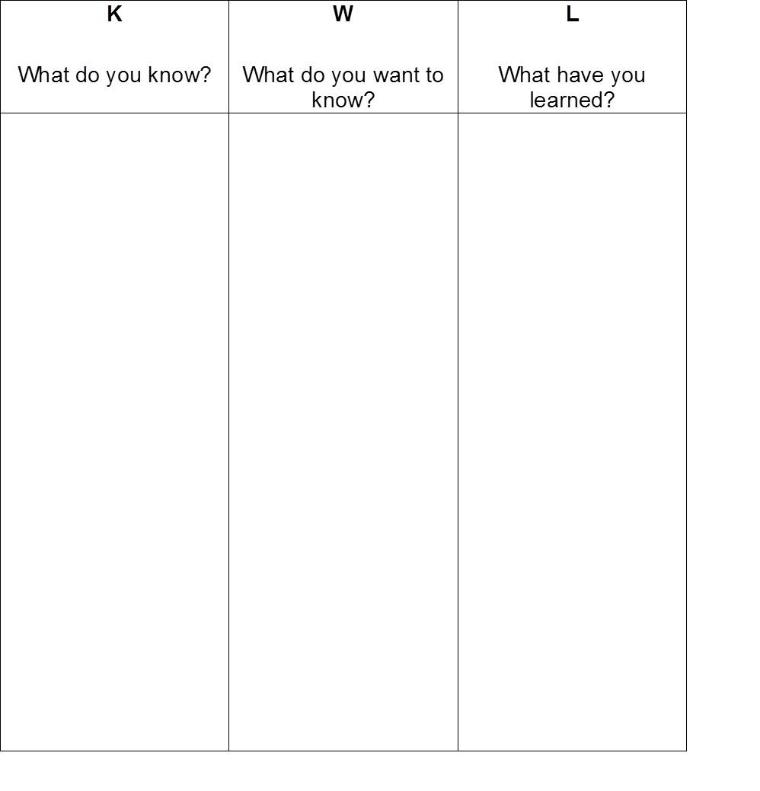
KWL Chart
Begin adding to the KWL chart.
Step One: Read the segment you wish to analyze
Step Two: Fill out the K (know) column: What do you Know?
Step Three: Fill out the W (want) column: What do you Want to know?
Step Four: Fill out the L (learn) column: What have you Learned?
Step Five: Review the chart when it is complete
Explore
Activity
Explore the reading more deeply with a visual or oral language activity.
Venn Diagram
Create a Venn diagram to compare and contrast Pakistan with the United States.

Discussion
Comprehension and higher-level questions for discussion.
Key Questions (pp. 10–22)
- Why does Fatima think about her family and past life so much?
- What kind of person is Iqbal?
- Where do you think this carpet factory enslavement is taking place in Pakistan?
- How does D’ Adamo describe Fatima and her thinking processes?
- Why do Fatima and the other children want to hear Iqbal’s stories?
- What can you infer about Fatima’s feelings about being alone?
- How would you feel if you were a child slave in Hussain’s factory?
- What does D’ Adamo mean to tell us about the fearlessness of Iqbal?
- How does the author portray Iqbal and Fatima’s initial relationship?
Analyze
Analyze the key paragraph.
Key Paragraph, p. 22
“I did not know him. He could have been just a braggart, or maybe even truly crazy, but still I believed him. I went back to my bed and spent the night restlessly” (p. 22).
Extend
Write
Have each student write a short product based on today’s prompt to connect to the unit theme.
Writing Prompt
Pretend you are Fatima. In 2–3 narrative paragraphs, write a journal entry retelling Iqbal’s story.
When answering the question above, consider the following:
- Where did Iqbal come from?
- How does his carpet weaving skills compare to the other children? demonstrates his superb ability to impressively weave carpet?
- What does Iqbal thing about the debts the children are working for?
Close
Close by extending today’s lesson to life and the world.
Day 3
Outcomes for Today
Prepare
Background
Gather background knowledge about a place, time, event, person, or thing.
What is meant by “invoking the name of Allah and the Prophet in vain”? To invoke someone’s name means to call upon them for helpp. Hussain was calling upon Allah and the prophet of Allah in his religious belief system because he was in a difficult circumstance with important clients coming to inspect his carpets and he was unsure of the quality of the carpets desired by these important clients. Therefore, Hussain was asking for divine intervention, without true faith, so that he would receive mercy and be blessed with good fortune by clients being pleased with the carpets for sale.
Word Wall
Here are five vocabulary words to teach and add to the Word Wall.
|
suk (24) |
tortured (24) |
arrogant (28) |
apprentices (32) |
agitated (33) |
Read
Review
Review the timeline from the beginning every day.
Start at the beginning and review the story so far
- mention the setting and main character
- point to each timeline item as you quickly review it
Read
Read the selection, usually in a Shared Reading Read React Predict Cycle of 2-3 pages.
Read pp. 23–34
|
Setting |
Characters |
Pages |
|
Hussain’s house and carpet factory |
Hussain, Fatima, Iqbal, Karim, Salman, Ali, mistress, Maria, and the foreign buyers |
23–34 |
Respond
Timeline
Agree on the facts in today’s reading, and list the 3-5 most important on the Timeline.
Students might mention:
- Hussain is very anxious about foreign clients coming to look at his carpets.
- Karim announces Hussain’s secret about Iqbal’s artistic ability to weave the Blue Bukhara carpet.
- Fatima reflects on the difference of night sounds in the countryside versus the city where Iqbal and she now worked and lived.
- Fatima speaks to Iqbal about going with him to the cinema, whereas Iqbal wants to ride the bus around the city.
- Hussain treats the children to a nice breakfast the morning of the foreign buyers’ arrival, but becomes enraged when Iqbal cuts the Blue Bukhara carpet, he has just completed, into pieces.
- Hussain drags Iqbal down to the Tomb after Iqbal destroys the carpet.
Map
Add to ongoing class activities like a KWL chart or map: where did the characters go?
KWL Instructions
Continue adding to the a whole class KWL chart
Step One: Read the segment for today before you analyze it.
Step Two: Add to the K (know) column: What do you Know?
Step Three: Add to the W (want) column: What do you Want to know?
Step Four: Add to the L (learn) column: What have you Learned?
Step Five: Review the chart when it is complete
Justice Poster
Collaborate with students create a class T Chart. This can be a live, online document that students have shared access to (Google Document or Google Spreadsheet).
- Label one column “Justice” and the other side “Injustice”.
- During this unit, encourage students to follow the local and world news, using a variety of mediums (newspapers, online sources, etc.).
- Have students periodically input a headline/article of a “Justice” and “Injustice” in their local community and in the world on the document. Discuss the additions the next day in class.
- For all of the items in the “Justice” column, have students write one thing they can do to take action and support the individuals, groups, or organizations that are acting in a “just” way.
- For all of the items in the “Injustice” column, have students write one thing they can do to help the individuals, groups, or organizations that are being treated unfairly.
- In each situation, helping may involve writing a letter, getting more informed, volunteering, etc.
- Have students choose one item to take action on. They should report their action and results to the class.
Explore
Activity
Explore the reading more deeply with a visual or oral language activity.
Discussion
Comprehension and higher-level questions for discussion.
Key Questions (pp. 10–22):
- What can you infer about Hussain’s feelings of anxiety about the arrival of buyers?
- How would you feel with the threats, verbal abuse, combined with nice treatment if you were a child slave of Hussain’s?
- What does D’ Adamo mean to tell us about when describing Iqbal’s artistic talent?
- Why did Iqbal decide to cut the carpet that he had just completed?
- What did Fatima mean when she said Iqbal’s eyes looked like he was afraid as he was dragged to the Tomb?
- Why do you think Hussain treated the children differently on the day the foreign buyers arrived to inspect his carpets?
- How did you feel when Iqbal cut the carpet and it enraged Hussain?
- What did the author do in the novel to create suspense in the reader’s mind in this section?
- Why does the author describe characters in the novel in relationship to locations and their memories, thoughts, and reflections?
Analyze
Analyze the key paragraph.
Key Paragraph, p. 34
“Iqbal was pale, too, but not as pale as Hussain Khan. He took the knife that we all used to cut the ends of the knots, raised it above his head, and seemed to look each of us in the eye. Then he calmly turned and cut the carpet from top to bottom, right in the middle” (p. 34).
Extend
Write
Have each student write a short product based on today’s prompt to connect to the unit theme.
Writing Prompt
Pretend you are Hussain. Write a narrative letter to a friend describing Iqbal’s stunt with the Blue Bukhara carpet.
When answering the question above, consider the following:
- Who is Iqbal?
- What happened when Iqal presented the Blue Bukhara carpet?
- How did you (Hussain) discipline Iqbal?
- How did you feel at the end of the day?
Close
Close by extending today’s lesson to life and the world.
How might the children dealt with Hussain’s mistreatment of them the past three years if they knew they had rights to protect their welfare and could report Hussain’s mistreatment of them?
Day 4
Outcomes for Today
Prepare
Background
Gather background knowledge about a place, time, event, person, or thing.
What does it mean to “scream like a stuck pig”? The sound made by a pig that is stuck with a sharp object when being hunted or killed at the slaughter house is a loud, shrill, high-pitched squealing sound that pierces the air with the sound of the intense immediate pain the pig is enduring. The high-pitched sound pierces the ears of the listener and produces an immediate response of empathy for the pain of the animal.
Word Wall
Here are five vocabulary words to teach and add to the Word Wall.
|
ingrate (35) |
rasping (36) |
horseflies (36) |
menacing (40) |
rustling (43) |
Read
Review
Review the timeline from the beginning every day.
Start at the beginning and review the story so far
- mention the setting and main character
- point to each timeline item as you quickly review it
Read
Read the selection, usually in a Shared Reading Read React Predict Cycle of 2-3 pages.
Read pp. 35–45
|
Setting |
Characters |
Pages |
|
Hussain’s house and carpet factory workshop |
Iqbal, Hussain, mistress, Karim, Maria, Ali, Fatima |
34–36, 39–45 |
|
The Tomb |
Hussain, Iqbal, Salman, mountain boy, Fatima |
36–39 |
Respond
Timeline
Agree on the facts in today’s reading, and list the 3-5 most important on the Timeline.
Students might mention:
- Hussain sees Iqbal destroy the blue carpet he’d just finished for the buyers.
- Hussain screams, threatens all the children, and drags Iqbal to the Tomb, an old empty cistern with a metal roof.
- The children are punished with no dinner because of Iqbal’s deed.
- Hussain blames all the children for Iqbal’s destruction of the carpet.
- The children plan to support Iqbal and to take him food and water.
- Karim is threatened into helping to take food and water to Iqbal.
Map
Add to ongoing class activities like a KWL chart or map: where did the characters go?
Map
Add information from the story about Hussain’s carpet factory and house with a courtyard leading to the Tomb.
KWL Instructions
Continue adding to the whole class KWL chart.
Explore
Activity
Explore the reading more deeply with a visual or oral language activity.
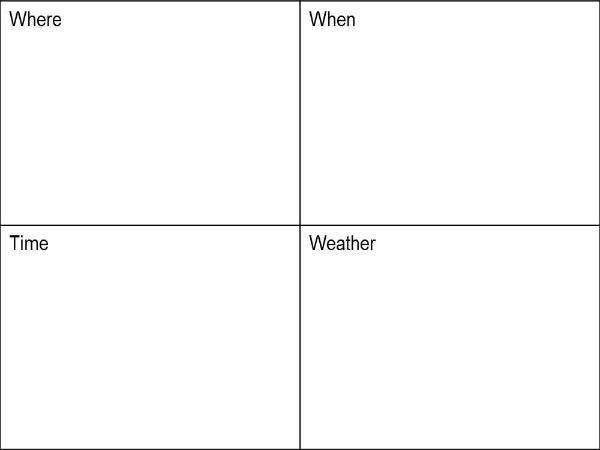
Fill out the Setting Chart
- Describe the place where the story takes place in the where box on the chart. This includes the location, geography, scenery and other details about the place.
- Describe the time period in which the story is taking place in the when box on the chart. Is this a contemporary story, or does it take place in the past or the future? Give details about this past or future time if this is the case.
- Describe the time of day or day of the week the story begins in the time box on the chart. This box is important if the story of the part you are analyzing takes place in a short period of time.
- Describe the weather in the weather box of the chart. Is it sunny, stormy, snowing, all of the above, none of the above? Sometimes the weather matters, sometimes not. Sometimes it is critical.
Discussion
Comprehension and higher-level questions for discussion.
Key Questions (pp. 35–45)
- Why does the author take time to explain the feelings of Hussain and his wife?
- What does Fatima feel about Iqbal doing his act of destroying the carpet he made?
- Why do you think the author jumps from Hussain’s feelings to Iqbal’s feelings and then to a description of the Tomb?
- How did the author let you inside the emotions of the children toward Iqbal?
- Why did the author use the idea of Fatima seeing the look of fear in Iqbal’s eyes as he was dragged to the Tomb?
- What is Karim’s primary dilemma with the other children?
- Why do you think Fatima felt good after taking food and water to Iqbal?
- What do you think Hussain is feeling angry about after Iqbal destroyed the carpet that was so beautiful?
- Why do you think the author chose to have Fatima involved in caring for Iqbal?
Analyze
Analyze the key paragraph.
Key Paragraph, p. 44
“For a second I thought it would be better to go back, but then I felt ashamed. I turned to look at Salman: He was probably afraid too, but he knew he had to try first. After all, I was only a girl, right? And Ali was too little” (p. 44).
Extend
Write
Have each student write a short product based on today’s prompt to connect to the unit theme.
Writing Prompt
Write a narrative paragraph about the steps you would take to help Iqbal if you were one of the children in this carpet workshop. Describe what you would do first, second, etc.
Close
Close by extending today’s lesson to life and the world.
Knowing about children being sold into slavery in other countries produces feelings of injustice. What kind of inner fortitude does it take to help children in our world to not be enslaved to anyone and have a life filled with both courage and commitment for what is right?
Day 5
Outcomes for Today
Prepare
Background
Gather background knowledge about a place, time, event, person, or thing.
Are you a slavery-free consumer? In today's world, it can be tough to determine whether products have or have not been produced through slavery. A specific component of a product – the cotton used to make a T-shirt, for example – may be the result of human trafficking.
Thankfully, there are products in our lives that we know are slavery-free, like the homegrown tomato you had for lunch. (More: What is your slavery footprint?)
CNN iReport is inviting you to participate in a special assignment to identify items that you know are slavery-free. Was the exercise easy or surprisingly difficult? Do you make an effort to shop slavery-free, or is this the first time you've thought about where products come from?
Upload photos of your slavery-free items and share your perspective with CNN. The best stories will be featured here on the Freedom Project blog. You can check out the iReport assignment for additional details.
Want to find out more about slavery in the supply chain? Check out a brief overview or go to Anti-Slavery International's interactive map.
Source: http://thecnnfreedomproject.blogs.cnn.com/2011/09/29/are-you-a-slavery-free-consumer/
Word Wall
Here are five vocabulary words to teach and add to the Word Wall.
|
paralyzed (46) |
cistern (47) |
avidly (47) |
curiosity (49) |
accustomed (51) |
Read
Review
Review the timeline from the beginning every day.
Start at the beginning and review the story so far
- mention the setting and main character
- point to each timeline item as you quickly review it
Read
Read the selection, usually in a Shared Reading Read React Predict Cycle of 2-3 pages.
Read pp. 46–55
|
Setting |
Characters |
Pages |
|
The cistern/Tomb |
Fatima, Iqbal, Salman, Karim, Ali, mistress, Hussain, Twig, Mohammed |
46–55 |
|
Outside Hussain’s walled house and carpet factory |
Iqbal |
55 |
Respond
Timeline
Agree on the facts in today’s reading, and list the 3-5 most important on the Timeline.
Students might mention:
- The children reached Iqbal with water and food the first night in the Tomb.
- Iqbal was cared for every night by the other children until released by Hussain after three days in the Tomb.
- Salman calls Iqbal strong and courageous to destroy the carpet, but Iqbal said it took courage to bring him food and water too.
- A new skinny boy arrives, he is nicknamed Twig.
- Iqbal is ordered to begin the carpet again, this time he will not destroy it he tells Fatima.
- Iqbal promises Fatima to fly a kite with her next spring; she believes him, and then he escapes Hussain’s carpet factory into the city.
Map
Add to ongoing class activities like a KWL chart or map: where did the characters go?
Map
Determine the location of the homes of each of the characters as revealed today in the novel to your best ability. Add information you learned about the Iqbal, the mountain boy’s name, Mohammed, or add a portrait for the new character, Twig.
KWL
Continue adding to the whole class KWL chart.
Explore
Activity
Explore the reading more deeply with a visual or oral language activity.
Bookmark
Discuss with your elbow partner necessary attributes for a person with fortitude. Determine the necessary attributes to put on the back of your bookmark that demonstrate having fortitude in the midst of difficult circumstances.
Suggested Attributes: Bravery, Perseverance, Thoughtfulness, Conviction, Commitment, Steadiness, and Strength.
Title: “Attributes of a Person with Fortitude” or “The Practice of Fortitude”
(See Appendix)
Materials:
Pieces of stiff paper (tag board) about 3 inches wide and 8 inches long
Pencils, pens, colored pencils, markers, crayons
Construction paper, scissors, glue sticks
Copies of the photo of the militia symbol for each student
Instructions:
Create the front of the bookmark using a symbol and print below the symbol, the title for the bookmark. Copies of the sample symbol clip art can be provided for each student.
List some attributes you think a person with fortitude in difficult circumstances would have. Write them in a bulleted format. A second suggested bookmark idea is provided.
Decorate the bookmark using colored pencils, markers, crayons, or ribbon.
Discussion
Comprehension and higher-level questions for discussion.
Key Questions (pp. 46–55):
- Why do you think the author chose to include the comments about Iqbal being strong and courageous to destroy Hussain’s carpet?
- How do you know when a child is being verbally or physically abused?
- From inference, why does Iqbal tell Fatima that they will fly a kite together next spring?
- Why do you think the author included so much information about Iqbal’s statements about the debt never being erased and positive ideas about the future?
- How does the author weave in information into the novel that helps the reader to understand the various emotions of each child going through the abusive experiences?
- Why does the author paint this section of the novel with the concepts of fear, courage, and strength in the face of a foe?
- How would you describe Iqbal as a young man of courage and commitment to ideals?
- Why does Iqbal promise not to destroy the new carpet he is weaving?
- What hurts Fatima’s feelings in this section of the novel, and how does Fatima feel about Iqbal’s escaping Hussain’s carpet factory?
Analyze
Analyze the key paragraph.
Key Paragraph, p. 55
“’Fatima,’ he said in a low voice, ‘next spring you and I are going to go and fly a kite. Remember that, no matter what happens’” (p. 55).
Extend
Write
Have each student write a short product based on today’s prompt to connect to the unit theme.
Writing Prompt
Imagine you are Twig. Write 2–3 narrative paragraphs as a journal entry describing your new home and work place.
When answering the question above, consider the following:
- Describe the living and working conditions.
- Who is Iqbal?
- How do the children take responsibly for each other?
- How are the children courageous?
Close
Close by extending today’s lesson to life and the world.
How should a person stand up for what is right in the midst of difficulty, knowing there may be people who ridicule, or viciously verbally attack any person who is showing courage in such a difficult circumstance? How would you respond to such a situation?
Day 6
Outcomes for Today
Prepare
Background
Gather background knowledge about a place, time, event, person, or thing.
What is spicy mutton? In India, Pakistan, and other Asian countries, the meat from a full grown domestic sheep is cooked with many spices and rice. The various spices along with the fattiness of the mutton help to enhance the flavor of the dish. It is a popular curry spice meat and rich dish for many cultures. The richness of the dish and the spiciness depends on the culture of that area of Pakistan, as each area and culture has its own recipe for spicy mutton with rice.
Word Wall
Here are five vocabulary words to teach and add to the Word Wall.
|
fugitive (56) |
muezzin (57) |
pungent (62) |
fritters (63) |
calculations (63) |
Read
Review
Review the timeline from the beginning every day.
Start at the beginning and review the story so far
- mention the setting and main character
- point to each timeline item as you quickly review it
Read
Read the selection, usually in a Shared Reading Read React Predict Cycle of 2-3 pages.
Read pp. 56–68
|
Setting |
Characters |
Pages |
|
Hussain’s carpet factory |
Fatima, Karim, Hussain and mistress, Maria, two policemen, Iqbal, Salman, Mohammed, Ali |
56–66 |
|
The city market square |
Iqbal, Fatima, Karim, Hussain |
67–68 |
Respond
Timeline
Agree on the facts in today’s reading, and list the 3-5 most important on the Timeline.
Students might mention:
- Iqbal runs away into the city from Hussain’s carpet shop.
- Hussain is angry and forces the children to work longer and harder.
- Hussain is gone for days hunting all over for Iqbal but to no avail.
- Two policemen come with Iqbal to the factory, but Hussain pays them off and puts Iqbal in the Tomb.
- Maria’s carpet with a kite woven into it makes Hussain angry, but the children force Hussain to not punish Maria, and even release Iqbal from the Tomb.
Map
Add to ongoing class activities like a KWL chart or map: where did the characters go?
Map
Add the market square and details about the various shops to the map as described by Iqbal’s story to the children.
KWL Instructions:
Continue adding to the whole class KWL chart.
Explore
Activity
Explore the reading more deeply with a visual or oral language activity.
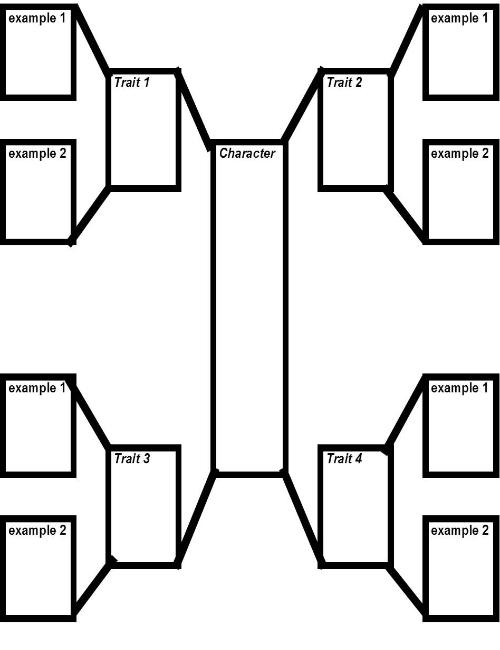
Fill out the Character Profile Chart on Iqbal.
- Write the name of the character in the box in the middle of the chart.
- Think of 4 characteristics, or traits, that the character has. Describe each with a key word or phrase and write it down one of the 4 boxes that surround the name.
- For each trait, find 2 concrete examples of it in the story. Write each in one of the 2 boxes attached to each trait box. Continue this until you have 2 examples for each of the 4 traits.
Discussion
Comprehension and higher-level questions for discussion.
Key Questions (pp. 56–68):
- How does the author create vivid visualizations of the various children in the novel?
- When does Fatima react to Iqbal’s return and imprisonment?
- Who is the person Iqbal is most upset with upon his return to Hussain’s factory?
- What is so important the children learn to stand up to the brutality of Hussain?
- Why do you think Maria wove the white kite into her carpet?
- Why is it important that we have courage to face obstacles in life?
- Why are the policemen so easily bribed by money?
- What caused the children to stand up to Hussain wanting to put Maria in the Tomb?
- What caused the author to spend so much time on the market square details?
Analyze
Analyze the key paragraph.
Key Paragraph, p. 66
“Hussain was pale. He moved restlessly, unable to decide what to do. He tried to shout over our voices, but couldn’t. You could see that he loathed us and that he would like to see us dead. But even he knew that wasn’t possible” (p. 66).
Extend
Write
Have each student write a short product based on today’s prompt to connect to the unit theme.
Writing Prompt
Pretend you are one of the police offers that returned Iqbal to the factory. In 2–3 narrative paragraphs, write a police report about how you met Iqbal and returned him to the factory. Include a final paragraph with a description of what actually happened (including the bribe).
Close
Close by extending today’s lesson to life and the world.
If everyone helped the weaker people in a society when they are threatened, how much stronger would our society be with giving fair treatment to all people?
Day 7
Outcomes for Today
Prepare
Background
Gather background knowledge about a place, time, event, person, or thing.
What is a market square in Pakistan? A market square is a common place where farmers and craftsmen from the countryside bring their goods to sell to the people in the city. It is a place where people from other cities and from within the city can barter or sell goods, and people needing the goods can barter or purchase the goods. There are entertainers and musicians who also create a market for their services while customers are looking for other goods to barter for or buy.
Word Wall
Here are five vocabulary words to teach and add to the Word Wall.
|
basmati (69) |
tandoori (69) |
mutton hinds (69) |
exploitation (78) |
clandestine (79) |
Read
Review
Review the timeline from the beginning every day.
Start at the beginning and review the story so far
- mention the setting and main character
- point to each timeline item as you quickly review it
Read
Read the selection, usually in a Shared Reading Read React Predict Cycle of 2-3 pages.
Read pp. 69–79
|
Setting |
Characters |
Pages |
|
Iqbal’s bed in Hussain’s carpet factory – reflecting on his time in the city market square |
Iqbal, Fatima, Karim, Salman, two bigger boys, some men from the Bonded Labor Liberation Front of Pakistan |
69 – 74 |
|
Hussain’s carpet workshop and the courtyard in the new spring |
Iqbal, Fatima, Ali, Twig, Karim, Mohammed, Maria, Salman, Maria’s father, village moneylender |
75–79 |
Respond
Timeline
Agree on the facts in today’s reading, and list the 3-5 most important on the Timeline.
Students might mention:
- Iqbal relates his experiences in the market square working for the butcher with mutton hinds
- Iqbal tells Fatima of riding the buses, the men against child labor, and the two policemen who took Hussain’s money as a bribe for Iqbal’s return to slavery.
- Maria teaches the children to read, and then she begins speaking again.
- Ali grew physically, Twig grew thinner, and Iqbal ran away again.
- The children finally were able to read the paper that Iqbal brought back about the Liberation Front as if magically the words appeared on the paper.
Map
Add to ongoing class activities like a KWL chart or map: where did the characters go?
Map
Add the bus route around the city, put in the various shops in the market square as described by Iqbal’s story. Add the place where the men spoke to the crowd in the market square to stop the exploitation of children as forced laborers.
KWL
Continue adding to the whole class KWL chart.
Explore
Activity
Explore the reading more deeply with a visual or oral language activity.
Open Mind Portrait
Create a portrait for Maria. You can use bubbles for what the character says, says to himself or herself, or does. You could make each of these different colors if you wish. You could add bubbles for what the character learns, or ways the character changes, and use different colors for each.
Discussion
Comprehension and higher-level questions for discussion.
Key Questions (pp. 69–79):
- What happens when Iqbal tells the children about the market square experiences?
- How does the Karim react to Iqbal’s idea of freedom from slavery?
- What are the conflicts you read about in this section of the novel?
- How does the author create a mood in this part of the novel?
- What core value does Maria demonstrate by teaching the children to read? Why do you think so?
- What does Fatima learn from Maria in this section of the story?
- What core value in this section might you apply in your community this week?
- What cultural values does the author present the reader in this section of the novel?
- What do you think will happen next in the story with Iqbal and Fatima?
Analyze
Analyze the key paragraph.
Key Paragraph, p. 78
“Maria’s efforts were greatly rewarded one night, when we finally managed to decipher the handout that Iqbal brought back from his first escape. It seemed as if suddenly and miraculously, all those little marks we had drawn in the sand, those strange, incomprehensible pothooks, assumed meaning. We saw a sentence form on the paper all by itself – I swear we didn’t do anything. It just came together, and it told us things” (p. 79).
Extend
Write
Have each student write a short product based on today’s prompt to connect to the unit theme.
Writing Prompt
Pretend you are Iqbal. Write a narrative journal entry (2–3 paragraphs) about your experience in the city.
When answering the question above, consider the following:
- What was it like to work in the market square for the butcher?
- What did you see on the bus ride?
- What did you see in the market square?
- What “souvenir” did you take back?
Close
Close by extending today’s lesson to life and the world.
Have you ever wondered how many children in the world cannot read? Some live in poverty and have never seen a book. Other children must work to support their family with the basics just to survive. How might we help all children have the chance to read?
Day
Outcomes for Today
Prepare
Background
Gather background knowledge about a place, time, event, person, or thing.
What does the ability to read have to do with getting out of poverty? Reading is the most important skill to master in life. Once you have learned to read, the world of words is opened to you to learn more about the world you live in. Reading helps you to write down ideas from what you have learned. As a person learns to read and understand new words, the ability to relate to and understand you world grows as you gain mastery of reading and comprehending what you have read and learned. With those new abilities, you gain an education that leads to better jobs and income.
Word Wall
Here are five vocabulary words to teach and add to the Word Wall.
|
enthusiastically (80) |
interrupted (80) |
immaculate (82) |
inevitable (83) |
irresistible (86) |
Read
Review
Review the timeline from the beginning every day.
Start at the beginning and review the story so far
- mention the setting and main character
- point to each timeline item as you quickly review it
Read
Read the selection, usually in a Shared Reading Read React Predict Cycle of 2-3 pages.
Read pp. 80–93
|
Setting |
Characters |
Pages |
|
Courtyard of Hussain’s house and carpet workshop and the Tomb |
Salman, Mohammed, Maria, Fatima, Ali, Karim, Iqbal, mistress, and Hussain |
80 – 81
|
|
Hussain’s house and carpet workshop |
Iqbal, Eshan Khan, a policeman, a magistrate, and all the children, Hussain and mistress. |
81 – 84 |
|
Headquarters of the Bonded Labor Liberation Front of Pakistan in Lahore |
Iqbal, Fatima, Eshan, Karim, Maria, Salman, Mohammed |
85–93 |
Respond
Timeline
Agree on the facts in today’s reading, and list the 3-5 most important on the Timeline.
Students might mention:
- Iqbal returns with Eshan, a policeman, and a magistrate to arrest Hussain and rescue the children from slavery.
- The children go in three cars to the Liberation Front headquarters and are bathed, deloused, fed, and put to bed to sleep.
- Fatima, Maria, and Iqbal do what Iqbal promised they would do together, and they fly a kite in the open sky the next day.
- Iqbal decides to stay with the Liberation Front to free all children in Pakistan, and wants both Maria and Fatima to also stay.
- Eshan is not sure about Iqbal’s idea, but he listens to his advisors and to Iqbal who declares he will learn what is necessary, and he is not afraid of anybody.
Map
Add to ongoing class activities like a KWL chart or map: where did the characters go?
Map
Add any new places from this section of reading to the map and identify those places with small labels. Add the name of the city in Pakistan, Lahore.
KWL Instructions
Continue adding to the whole class KWL chart.
Explore
Activity
Explore the reading more deeply with a visual or oral language activity.
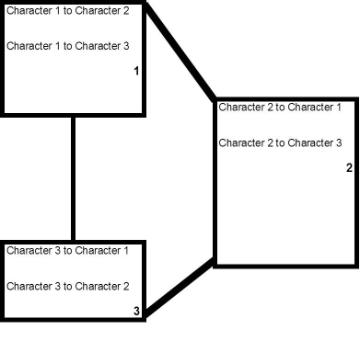
Fill out the Character Interaction Chart for Iqbal, Maria, and Hussain or Iqbal, Fatima and Hussain.
- Choose 3 characters you have profiled and wish to analyze. Fill the name of each character in one of the 3 boxes.
- Each character box has another character box on each side. On the side of the first character box near the second character box, write down what the first character thinks about the second character, and how the first character interacts or gets along with, the second character.
- Then do the same thing for how the second character thinks about and interacts with the first, in the second characters box.
- Continue doing this until you have filled out each box: the second for the third, the third for the second, the third for the first and the first for the third.
Discussion
Comprehension and higher-level questions for discussion.
Key Questions (pp. 80–93):
- Why does Iqbal succeed in freeing the children this time?
- The author paints a word picture of the reception at the headquarters, how do you think the children felt with all the clapping and cleaning they received?
- How does the author’s reflection backwards through the children about their families create an air of suspense?
- What is the purpose of the kite flying episode with Iqbal, Fatima, and Maria?
- What style does the author use to help us understand the development of the plot?
- How do you learn about problem of child enslavement in Pakistan from the novel?
- How different is the culture of the characters from your own culture and community?
- What do you think will happen next to Iqbal and Fatima?
- What are the differences between Iqbal’s past and present opportunities?
Analyze
Analyze the key paragraph.
Map
Add any new places from this section of reading to the map and identify those places with small labels. Add the name of the city in Pakistan, Lahore.
KWL Instructions
Continue adding to the whole class KWL chart.
Extend
Write
Have each student write a short product based on today’s prompt to connect to the unit theme.
Writing Prompt
Write a letter (2–3 paragraphs) to Iqbal describing how you could help him accomplish his goal to free all the children enslaved in Pakistan. Include a narrative paragraph describing what he needs to do to be a lawyer to free the children.
Close
Close by extending today’s lesson to life and the world.
What happens when the people of the world respect one another and do not enslave others? How does exploitation affect a culture, does it strengthen it or tear it apart?
Day 8
Outcomes for Today
Prepare
Background
Gather background knowledge about a place, time, event, person, or thing.
What are moneylenders in Pakistan? A moneylender is a person who loans a needy person some money with the promise to repay, usually with a high average rate of interest of 78.5% per year. Capital for businesses average 32.5% per year. Some moneylenders charge up to 5% interest per day for the poor people in Pakistan. The government has attempted to crack down on these practices, but the need to survive drives the market in spite of attempts to curtail the practice of high interest money lending to poor people.
Word Wall
Here are five vocabulary words to teach and add to the Word Wall.
|
outskirts (94) |
proprietor (94) |
anxiously (95) |
exploiters (96) |
ridiculed (97) |
Read
Review
Review the timeline from the beginning every day.
Start at the beginning and review the story so far
- mention the setting and main character
- point to each timeline item as you quickly review it
Read
Read the selection, usually in a Shared Reading Read React Predict Cycle of 2-3 pages.
|
outskirts (94) |
proprietor (94) |
anxiously (95) |
exploiters (96) |
ridiculed (97) |
Respond
Timeline
Agree on the facts in today’s reading, and list the 3-5 most important on the Timeline.
Students might mention:
- Iqbal took his declaration seriously and in a few months almost 200 children freed.
- Iqbal gets a black eye and cut on his check while attempting a rescue of children.
- Those enslaving the children fight back against Eshan and Iqbal’s attempts using threats, violence against the headquarters, and even a riot at market square.
- An international correspondent interviews Iqbal and Eshan about their efforts.
- Iqbal and Eshan go to a brick factory where the munshi uses a gun to shoot at those from the Labor Liberation Front, but nobody is hit by the bullets.
- Iqbal secretly tells Fatima about being scared at the brick factory.
Map
Add to ongoing class activities like a KWL chart or map: where did the characters go?
Map
Add the brick factory to the map on the outskirts of Lahore. Add the fact that the headquarters building was hit by an incendiary bomb.
KWL Instructions
Continue adding to the whole class KWL chart.
Explore
Activity
Explore the reading more deeply with a visual or oral language activity.
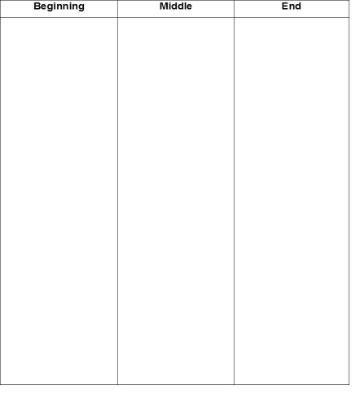
2g6 Fill out the Beginning-Middle-End Chart
- Decide what the most important events in the story are. You may want to jot down a list.
- Decide whether each event is part of the beginning, middle or end or the story. Then write a phrase describing each event in the correct column. Remember in the beginning you are introduced to the setting, the characters and the problems they have. In the middle, you learn about the roadblocks to the characters solving their problems, and conflicts occur. In the end of the story those conflicts reach a peak and then resolve with a resolution of the character’s problems.
- If the events in a column are not in the order they took place, number the items in the column.
- If you analyze a chapter or segment of a larger story, all of the events might be in 1 or 2 columns, understood as part of the larger story. Or it might work to analyze the beginning, middle and end of just this part.
Discussion
Comprehension and higher-level questions for discussion.
Key Questions (pp. 94–106):
- Why do you think Iqbal felt driven to rescue children enslaved to work by adults?
- How do you think Fatima and Iqbal’s relationship will grow in the story?
- What is Iqbal learning about how many people in his country view child labor?
- How does the author develop the plot using the visit to the brick factory by Iqbal and Fatima?
- How does the author describe the feelings of Iqbal about the visit to the brick factory and Iqbal telling Fatima about those feelings?
- How does this section of the novel relate to your understanding of the worldview of children outside of the United States of America?
- Which character to you relate to the best? Why?
- How is the effort to rescue children by the Labor Liberation Front viewed by the rich merchants and moneylenders of Lahore?
- What do you think will happen to Iqbal if he continues speaking out in public about the exploitation of children in Pakistan?
Analyze
Analyze the key paragraph.
Key Paragraph, p. 106
“There was something else he wanted to say to me. He lowered his voice to a whisper. A truck as passing down in the street, and I could barely hear him.
‘I was scared, Fatima. But please, please don’t tell anybody’” (p. 106).
Extend
Write
Have each student write a short product based on today’s prompt to connect to the unit theme.
Writing Prompt
Pretend you are the international correspondent that interviewed Iqbal and Eshan. reporter. Write a narrative article describing their efforts to free child slaves. How were they successful? What challenges do they face? How do they keep hope? Include a quote from Iqbal in your article. Draw a picture that corresponds with the article.
Close
Close by extending today’s lesson to life and the world.
Life is filled with difficulties we all must face from time to time, how does understanding fortitude help us to face difficult times in our lives better?
Day 10
Outcomes for Today
Prepare
Background
Gather background knowledge about a place, time, event, person, or thing.
What does practicing for a speech involve? Giving a speech involved knowing what you are going to talk about as well as knowing your audience. Speaking clearly so that you are understood is important. Knowing your material is vital. Not rushing through the speech is essential. Practice involves doing the speech in front of a person or group and saying what you will say in the speech and how you will say it. After each time you practice the speech, those listening make suggestions that will make you a better speaker and make your speech that much better too. Practice gives the speaker more confidence from learning to talk about the content many times.
Word Wall
Here are five vocabulary words to teach and add to the Word Wall.
|
astonished (109) |
foreseen (110) |
violated (111) |
murmured (118) |
convinced (119) |
Read
Review
Review the timeline from the beginning every day.
Start at the beginning and review the story so far
- mention the setting and main character
- point to each timeline item as you quickly review it
Read
Read the selection, usually in a Shared Reading Read React Predict Cycle of 2-3 pages.
Read pp. 107–120
|
Setting |
Characters |
Pages |
|
Labor Liberation Front Headquarters |
Iqbal, Fatima, Eshan, reporters from Pakistan and abroad |
107 – 112 |
|
Fatima’s home in the countryside |
Fatima, driver, Ahmed, Hasam, Maria, Iqbal, |
112 – 120 |
Respond
Timeline
Agree on the facts in today’s reading, and list the 3-5 most important on the Timeline.
Students might mention:
- Iqbal and Fatima are told by Eshan about Iqbal receiving a prize of $15,000.00 and a scholarship to a university outside of Boston in the USA.
- Iqbal is torn by his desire to free children and be with Fatima and Maria, or go to school to become a lawyer to free even more children.
- Fatima helps Iqbal practice for his speech, which he later gives flawlessly.
- Fatima goes to the airport to see Iqbal and Eshan fly to Sweden for the speech.
- Fatima returns home in the countryside, to be with her two brothers.
- Fatima receives a letter from Maria telling her Iqbal was murdered near his home in Pakistan after returning for a visit at the young age of thirteen.
Map
Add to ongoing class activities like a KWL chart or map: where did the characters go?
Map
Add new locations or information to the map based on this section of the novel. You might want to add Sweden and Boston, MA as places Iqbal visited.
KWL Instructions
Continue adding to the whole class KWL chart.
Explore
Activity
Explore the reading more deeply with a visual or oral language activity.
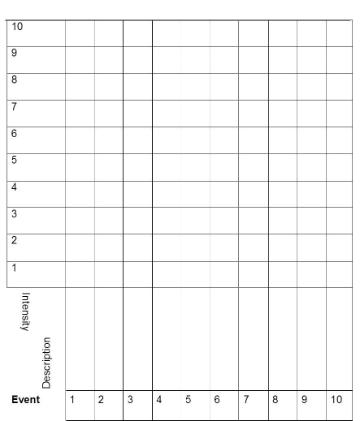
Fill out the Plot Profile Chart
- Decide on the 10 most important events in the story, chapter or segment you are analyzing. List them in order in the rows at the bottom of the chart. If you go back the Beginning–Middle-End Chart, this will be easier to do.
- Decide on a scale of 1 [low] to 10 [high] how intense you think this event is, and mark your score in the appropriate box.
- Connect the marks in the boxes to form a graph.
- This graph will help you to profile the plot. How it looks will depend on the story you are reading and whether you are plotting an entire story, or a chapter or segment.
Discussion
Comprehension and higher-level questions for discussion.
Key Questions (pp. 107–120):
- Why does D’Adamo have the novel told through the thoughts and feelings of Fatima?
- As the story unfolds, how do you think Fatima feels after getting Maria’s letter? Do you think she sensed something bad happened to Iqbal?
- How does the loss of Iqbal heighten the dangerous path Iqbal had taken to confront the evil enslavement of children?
- Why do you think anyone would have wanted to murder Iqbal’s effort to free children from slavery?
- How does the author unfold the plot using a letter from Maria to explain Iqbal’s success and his death at the hands of murderers?
- How does Fatima view her home after being in the big city?
- What method did the author use to give the reader insight into Fatima’s struggles?
- What is your impression of Maria after reading her letter to Fatima?
- What can you infer from the plot of how Fatima will continue Iqbal’s work to free the children of Pakistan?
Analyze
Analyze the key paragraph.
Key Paragraph, p. 119
“’Try not to be sad, Fatima. He changed our lives and will be with us forever. I told Eshan Kahn that I’ll be the one to study and go to the university. I’ll be a lawyer, and I’ll fight to free all the slaves in Pakistan and all over the world. And for the first time in my life, I’m not afraid either’” (p. 119).
Extend
Write
Have each student write a short product based on today’s prompt to connect to the unit theme.
Writing Prompt
Pretend you are Maria. In 2–3 narrative paragraphs, write a eulogy for Iqbal’s funeral. The eulogy should narrate Iqbal’s life story and the legacy he has left behind.
When answering the question above, consider the following:
- Where does Iqbal come from?
- How has he escaped slavery?
- How has he given hope and inspired other enslaved children?
- How has he lived a life for a purpose bigger than himself?
Close
Close by extending today’s lesson to life and the world.
Some people choose to destroy what is good and promote what is evil. When we stand up and speak out with courage for what is right and good, who can stop such a powerful message of truth that frees people?