The 40-Minute Lesson Plan is essential elements of the CBL lesson plan. We suggest the teacher reads aloud or uses an audio book for the reading portion. 40-min includes: Background, Wordwall, Key Paragraph, and Writing Prompt
60
The 60-Minute Lesson Plan uses the same elements as the 40-minute plan, but also covers a visual activity and discussion. 60-min includes: Background, Wordwall, Key Paragraph,Writing Prompt and adding the Key Questions
90
The 90-Minute Lesson Plan contains all elements of the lesson plan. If time is available, we recommend using this version to get all of the benefits of CBL. The full lesson includes: Background, Wordwall, Key Paragraph, Writing Prompt, and Key Questions of the 40 and 60 minutes options while incorporating the Mapping Activity, Visual Activity and creating the Timeline as a class.
Day 1
Outcomes for Today
Prepare
Background
Gather background knowledge about a place, time, event, person, or thing.
Who is William Shakespeare?
William Shakespeare was baptized on April 26, 1564, in Stratford-upon-Avon, England. From roughly 1594 onward he was an important member of the Lord Chamberlain’s Men Company of theatrical players. Written records give little indication of the way in which Shakespeare’s professional life molded his artistry. All that can be deduced is that over the course of 20 years, Shakespeare wrote plays that capture the complete range of human emotion and conflict.
Mysterious Origins
Known throughout the world, the works of William Shakespeare have been performed in countless hamlets, villages, cities and metropolises for more than 400 years. And yet, the personal history of William Shakespeare is somewhat a mystery. There are two primary sources that provide historians with a basic outline of his life. One source is his work—the plays, poems and sonnets—and the other is official documentation such as church and court records. However, these only provide brief sketches of specific events in his life and provide little on the person who experienced those events.
Here are five vocabulary words to teach and add to the Word Wall.
realm (37)
vanish (37)
elected (37)
heir (37)
prophecies (38)
Read
Review
Review the timeline from the beginning every day.
Since this is the first day and there is no timeline yet: read the introduction on page 36 of Morris, Muriel J. Shakespeare Made Easy to the class, think about the questions, and then discuss your answers posting them on a chart.
Read
Read the selection, usually in a Shared Reading Read React Predict Cycle of 2-3 pages.
Read Shakespeare Made Easy by Muriel J Morris, “Macbeth” p. 36-38.
Setting
Day
Characters
Frames
Walking to military base
1
Three witches, Macbeth, Banquo, Banquo, messengers from the king
1-4
Military camp
1
Macbeth
7
Macbeth’s castle
1
Macbeth, Lady Macbeth, Banquo, Duncan, guards
8-12
Respond
Timeline
Agree on the facts in today’s reading and list the 3-5 most important on the timeline.
Students might mention:
Macbeth becomes a hero of Scotland for killing a rebel leader by himself.
Three witches appear to Macbeth and Banquo. The witches greet Macbeth as Thane of Glamis, Thane of Cawdor, and “king hereafter.”
A messenger arrives and tells Macbeth he has ben granted the title Thane of Cawdor and Macbeth begins to believe in the prophecy of the witches.
King Duncan names his son, Malcolm, the next heir to his throne.
Macbeth writes to Lady Macbeth about the witches’ prophecies. The Macbeths host King Duncan for dinner. They prepare to kill King Duncan.
Macbeth has doubts about killing King Duncan and Lady Macbeth encourages him to continue with their plan.
Macbeth sees a bloody, ghostly dagger. He stabs King Duncan to his death while Lady Macbeth watches guard. Macbeth feels upset about what he has done.
Lady Macbeth returns the daggers to King Duncan’s room, so that she can blame King Duncan’s guards for his murder. Lady Macbeth’s hands are covered in blood from holding the daggers.
Someone knocks at the gate. The Macbeths change into their nightclothes and pretend they were sleeping the whole time.
Map
Add to ongoing class activities like a KWL chart or map: where did the characters go?
Open Mind Portrait
New character information can be added to an Open Mind Portrait.
KWL Chart
An answer can be added to a question from the KWL Chart.
Map
A new location or change can be added to the map.
Explore
Activity
Explore the reading more deeply with a visual or oral language activity.
Poster for Tragedy Ahead
Review the idea of tragedy with the class: things will go wrong, suffering will take place, because of flaws in a heroic character or the circumstances or people around him or her.
Look at the twelve frames that quickly tell the plot of the first half of the play.
Find warning signs, clues of flaws, and/or circumstance that indicate something might go wrong.
Place theses clues on the poster by writing a list or drawing a picture of the warning sign.
Give the poster a title, like “Tragedy Ahead”, or “Tragedy Waiting to Happen”.
Materials can include poster size paper, construction paper, markers, pencils or crayons.
KWL Chart
What You Know, Want to Know, and Learn about the plot of Macbeth. The story of Macbeth lives on even in our modern day culture. What do you already know about this story? What details do you want to know? At the end of the story, write what you have learned.
Variations of the KWL Chart
You can do this chart for any topic you are trying to learn about.
This can be done on worksheets, or written on a big piece of paper, like chart paper or butcher paper. This can also be written on a white board or black board; the shape of the chart is easy to copy.
When you are analyzing a story, you can copy a KWL chart on a piece of paper and quickly take the story apart. This can be a helpful strategy on a test. This can use the same strategy for a nonfiction topic, a problem or a case study.
You can do this individually, in pairs, in a small group, or as part of a large group.
Write a paragraph from any of the 3 columns, K, W or L, of the chart.
Discussion
Ask discussion questions of all 9 types (see Day 1).
Key Questions
Describe Macbeth’s success on the battlefield.
Why does Macbeth’s success lead Duncan to name his song Malcolm as his heir?
In your own words, explain the witches’ prophesies for Macbeth and Banquo.
Describe Macbeth’s reaction to the witch’s prophecy?
Compare and contrast Banquo and Lady Macbeth’s reaction to the witches’ prophecy.
Summarize the sequence of events that lead to King Duncan’s death
Formulate a theory for the reasons why Lady Macbeth was so eager for Macbeth to kill the king.
Describe the image or vision that Macbeth sees before Macbeth stabs King Duncan.
Elaborate on how Macbeth feels after he killed King Duncan. Select a quote from the text to support your answer.
Do you think the actions of Macbeth and Lady Macbeth are an example of leadership requires engagement? Do you think their actions promote the common good or their own interests? Explain why or why not.
Analyze
Analyze the key paragraph.
Key Passage, p. 37
“Banquo tries to warn Macbeth that witches are witches and don’t go around doing good, but Macbeth doesn’t listen” (p. 37).
Extend
Write
Have each student write a short product based on today’s prompt to connect to the unit theme.
Some friends can be a positive influence on our lives while other friends encourage us to make poor choices. Banquo warns Macbeth not to pay close attention to the three witches. On the other hand, Lady Macbeth encourages Macbeth to take action and kill King Duncan to secure the throne.
Think about your circle of family, friends, and classmates. Write an informative paragraph describing a friend you have that has been a positive influence on your life. How does this friend encourage you to use your time and talent to make positive choices or promote the common good or better your community? Provide an example.
Close
Close by extending today’s lesson to life and the world.
Do you think you are a positive influence on your friends?
How can you encourage your friends to make good choices?
Day 2
Outcomes for Today
Prepare
Background
Gather background knowledge about a place, time, event, person, or thing.
Is it true that Banquo’s heirs become king?
Shakespeare talked up the role of Banquo in the play in order to flatter the reigning King, James I. Banquo – the one-time friend of Macbeth who is murdered by him, but later returns to haunt Macbeth at the dinner-table – was made an important character in the play because King James I of England (James VI of Scotland), who had come to the throne a few years before Shakespeare wrote the play, claimed descent from Banquo. In Shakespeare’s play, Banquo is the man who the Witches prophesy will ‘get [i.e. sire] kings’, even though Banquo himself will not be King.
Here are five vocabulary words to teach and add to the Word Wall.
porter (39)
appointed (39)
ambush (39)
apparition (40)
nauseating (40)
Read
Review
Review the timeline from the beginning every day.
Read
Read the selection, usually in a Shared Reading Read React Predict Cycle of 2-3 pages.
Read Shakespeare Made Easy by Muriel J Morris, “Macbeth” p. 39-40.
Setting
Day
Characters
Frames
Macbeth’s castle
2
Porter, Macbeth, Macduff, Lennox, Malcolm, and Donalbain
13-16
Macbeth’s Palace
2
Macbeth, Lady Macbeth, and Banquo
17
Park near Macbeth’s palace
2
Three murders, Banquo and Fleance
18
Macbeth’s palace banquet
2
Macbeth, Lady Macbeth, dinner guests, the ghost of Banquo
19-20
Witches’ dwelling
2
Witches, Macbeth
21-24
Respond
Timeline
Agree on the facts in today’s reading and list the 3-5 most important on the timeline.
Students might mention:
Macduff and Lennox discover King Duncan is dead.
Lady Macbeth faints when questions arise as to why Macbeth killed the guards. Her fainting distracts Banquo and Macduff.
King Duncan’s two sons Malcolm and Donalbain flee to England and Ireland fearing their own lives.
The Macbeths become king and queen. They plan to kill Banquo and his son Fleance because they know about the prophecies.
Macbeth sends murders to kill Banquo and Fleance. Banquo is killed but Fleance escapes.
Macbeth plans to kill Lady Macbeth.
Macbeth hosts an evening banquet and in his toast wishes Banquo was with them. The ghost of Banquo appears but only Macbeth can see him. The dinner guest are confused by Macbeth’s behavior. Lady Macbeth sends the guest home.
Macbeth seeks the witches for help and they show him three apparitions. The first warning Macbeth of Macduff. The second explaining, “[no man] of a woman born shall harm Macbeth.” The third stating that Macbeth will never be defeated until Birnam Wood comes to Dunsinane Castle.
Map
Add to ongoing class activities like a KWL chart or map: where did the characters go?
Open Mind Portrait
New character information can be added to an Open Mind Portrait.
KWL Chart
An answer can be added to a question from the KWL Chart.
Map
A new location or change can be added to the map.
Explore
Activity
Explore the reading more deeply with a visual or oral language activity.
Create a Fakebook
Create a fake Facebook profile page for Macbeth using colored pencils and a sheet of paper.
Draw/sketch/design his profile picture or find a magazine cutout.
Include his basic information including birthday, relatives, gender, occupation, and favorite quotes.
Provide a list of friends and a list of enemies.
Discussion
Ask discussion questions of all 9 types (see Day 1).
Key Questions
In your own words describe the series of events that take place after King Duncan is discovered dead.
Describe how three different characters react to King Duncan’s murder.
Why does Macbeth send murders to kill Banquo?
How does Macbeth feel about his murdering spree? Select a quote from today’s text to support your answer.
Provide two examples that show Lady Macbeth supports Macbeth’s actions and behavior.
Why does Macbeth seek help from the three witches?
Summarize the three apparitions.
Predict what you think will happen next according to the apparitions.
Now that Macbeth is King of Scotland, do you think he is a good example of a leader that uses their time and talent to promote the common good? How does Macbeth use his time and talent?
Based on today’s reading, do you think Malcolm and Donalbain demonstrate leadership requires engagement? Why or why not? Provide one reason that explains your position.
Analyze
Analyze the key paragraph.
Key Passage, p. 39
“When we next see the Macbeths, they are king and queen. Macbeth questions Banquo about where he is going and when, because Macbeth intends to kill him and his son, Fleance. Banquo knows too much. Remember the prophecies” (p. 39).
Extend
Write
Have each student write a short product based on today’s prompt to connect to the unit theme.
The Macbeths become the king and queen of Scotland, but do you think they exemplify leadership requires engagement? Do they use their time and talent to promote the common good?
In an informative paragraph describe three of Macbeth’s actions as king. Defend whether or not these actions serve the common good or his self-interest. In a second explanatory paragraph, describe what advice would you give Macbeth so that he can better his community as the King of Scotland?
Close
Close by extending today’s lesson to life and the world.
Describe a time when you were in a leadership role.
Did you make decisions based on the common good or for your self-interest?
Day 3
Outcomes for Today
Prepare
Background
Gather background knowledge about a place, time, event, person, or thing.
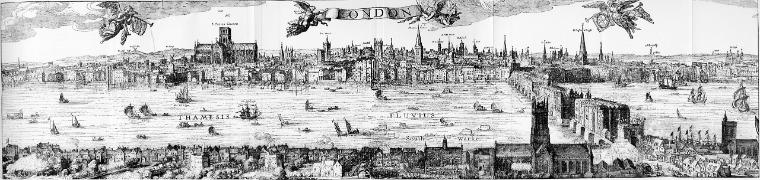
What was London, England like during Shakespeare’s time?
London wasn’t just big; it was also growing fast, mostly due to migrants from the countryside and from Europe. Between 1550 and 1600 it is estimated the city grew from around 50,000 residents to over 200,000. Inside the city’s old medieval walls, every available space was being built on. Outside, the suburbs grew steadily into the countryside.
London was a bustling, overcrowded city. In 1599, a Swiss visitor said, “one simply cannot walk along the streets for the crowds”. Another visitor called the crowded streets “dark and narrow”. The dark attracted thieves and the overcrowding brought disease. Plague struck most summers; in 1593 about 10,000 people were killed and all the theatres were closed. In 1607, John Donne called it “London, plaguey London, full of danger and vice”.
Here are five vocabulary words to teach and add to the Word Wall.
fantasizes (41)
conceal (41)
rants (41)
decency (42)
justly (42)
Read
Review
Review the timeline from the beginning every day.
Read
Read the selection, usually in a Shared Reading Read React Predict Cycle of 2-3 pages.
Read Shakespeare Made Easy by Muriel J Morris, “Macbeth” p. 41-42.
Setting
Day
Characters
Frames
Witches’ dwelling
3
Witches, Macbeth, ghost of Banquo
25
Macduff’s castle
3
Lady Macduff, young son, murders
26
3
Malcolm and Macduff
27
Macbeth’s Palace
3
Lady Macbeth
28
Dunsinane Castle
3
Macbeth, Macbeth’s small army, Malcolm, and Malcolm’s large army, messengers
29-31
Battle Field near Dunsinane Castle
3
Macbeth, Macduff, Malcolm,
32-34
Respond
Timeline
Agree on the facts in today’s reading and list the 3-5 most important on the timeline.
Students might mention:
Macbeth asks if Banquo’s children will ever reign. Then the ghost of Banquo appears and shows Macbeth his future generations of kings; which infuriates Macbeth.
Macbeth orders for the death of Macduff, but since he already fled to England, Macbeth orders for the death of Macduff’s family.
Lady Macduff and her young son are killed; the first entirely innocent people to die signifying no one is safe.
Macduff convinces Malcolm to return from England to Scotland. England lends Malcolm an army.
Lady Macbeth is plagued with guilt. She sleepwalks around the castle and tries to rub the “blood” off her hands.
Malcolm’s army arrives and Macbeth’s soldiers desert him. Macbeth has faith in the apparition’ prophecies that “[no man] of a woman born shall harm Macbeth.”
Malcolm orders his soldiers to cut down tree branches from the Birnam Wood to hide their large army.
A messengers report that Lady Macbeth committed suicide and that there is a moving grove. Macbeth realizes the true meaning of the prophecies. Macduff searches the battlefield for Macbeth.
Macduff finds Macbeth. Macbeth warns Macduff of the prophecy. Macbeth discovers that Macduff was delivered by Caesarean operation. Macduff gives Macbeth a chance to surrender. Macbeth chooses to fight.
Macduff presents the head of Macbeth to Malcolm and calls Malcolm the King of Scotland. Malcolm swears to rule justly and well.
Map
Add to ongoing class activities like a KWL chart or map: where did the characters go?
Open Mind Portrait
New character information can be added to an Open Mind Portrait.
KWL Chart
An answer can be added to a question from the KWL Chart.
Map
A new location or change can be added to the map.
Explore
Activity
Explore the reading more deeply with a visual or oral language activity.
Shakespeare Made Easy Quiz
Answer the questions on page 43 of Shakespeare Made Easy by Muriel J Morris, “Macbeth”.
Answer each of the 12 questions by going back to the cartoons of the play to find the correct information.
Check your answers by consulting the text.
In the upcoming study of Macbeth, you are going to compare 3 versions of the play. The focus will be on 4 essential scenes of the play. For now, you want an overview of the whole play since you will only be dealing with pieces of it.
Discussion
Ask discussion questions of all 9 types (see Day 1).
Key Questions
In your own words describe what Macbeth sees when he asks the witches if Banquo’s children will ever reign.
Why is the death of Lady Macduff and her son significant?
How does Macduff convince Malcolm to come back to Scotland with an army?
Elaborate on the reasons why Lady Macbeth is plagued with guilt.
List three adjectives to describe Macbeth’s army.
Explain how the prophecy of the Birnam Wood comes true.
Describe the sequence of events from the battlefield.
Based on today’s reading, do you think Macduff demonstrates leadership requires engagement? Why or why not? Provide one reason that explains your position.
Do you think Malcolm will be a good lead and King of Scotland? Provide one reason that explains your position.
Predict what will happen to Scotland in the future.
Analyze
Analyze the key paragraph.
Key Passage, p. 40
“Meanwhile, Lady Macbeth has gone mad. She sleepwalks around the castle, rubbing at the “blood” she fantasizes is still staining her hands. She talks of the other murders, too, so that what she says is so dangerous no one will date to help her” (p. 40).
Extend
Write
Have each student write a short product based on today’s prompt to connect to the unit theme.
Lady Macbeth is plagued with guilt. She sleepwalks around the castle and tries to rub the “blood” off her hands. Think about a time when you felt guilty for your actions or words. What would you have done differently?
In an informative paragraph describe a time when you felt guilty for past actions and/or words. Explain what happened first, second, and third. What would or should you have done/said instead?
Close
Close by extending today’s lesson to life and the world.
How do you act when you feel guilty?
How can you redeem yourself for past actions?
The Tragedy of Macbeth Media Study
William Shakespeare’s The Tragedy of
Macbeth
Folger Library Shakespeare Macbeth Simon & Schuster Paperbacks
Roman Polanski’s Film
Macbeth
1971
Columbia Pictures
Justin Kurzel’s Film Macbeth
2015 The Weinstein Company
lines
pages
Act 1, Scene 3
Day 4:
The prophecies of the three witches
1 – 92
13 – 21
9:30 – 12:30
11:00 – 14:05
Day 5:
A message from the king: a prophecy realized
93 – 175
21 – 25
12:30 – 17:10
14:06 – 17:10
Act I, Scene 7
Day 6:
Lady Macbeth convinces Macbeth to kill the king
1 – 96
39 – 45
26:55 – 37:00
26:53 – 32:30
Act IV, Scene 1
Day 7:
Macbeth visits the three witches
1-148
119 - 128
126:15 – 132:33
Warning: This scene contains nudity.
108:34 – 111:43
Day 8:
Macbeth orders for the murder of Macduff’s family
149 – 177
129 - 131
136:00 - 138:38
111:44 – 114:10
Act V, Scene 1
Day 9:
Lady Macbeth plagued with guilt
1-84
161 - 165
141:39 – 145:15
Warning: This scene contains nudity.
122:37 – 126:48
Act V, Scene 8
Day 10:
Macbeth and Macduff on the battlefield
1- 88
185 – 191
211:37 – 214:20
Warning: The remainder of this film is violent and graphic.
134:24 – 146:51
Warning: The remainder of this film is violent and graphic.
Times are calculated from the beginning of the movie itself [after trailers]
Day 4
Outcomes for Today
-->
Second Look [Days 4-10] Media Study of the Play using the The Folger Library Shakespeare The Tragedy of Macbeth, the 1971 Roman Polanski Macbeth film, and the 2015 Justin Kurzel Macbeth film.
Prepare
Background
Gather background knowledge about a place, time, event, person, or thing.
What is a tragedy?
Tragedy is drama where the flaws or circumstances of heroic individuals lead to their suffering in ways that cause us to identify with them and both fear their situations and feel for them. In short, a situation that typically starts out happily all falls apart.
Here are five vocabulary words to teach and add to the Word Wall.
noble (17)
attire (17)
fantastical (17)
hail (19)
prosperous (19)
Read
Review
Review the timeline from the beginning every day.
Read
Read the selection, usually in a Shared Reading Read React Predict Cycle of 2-3 pages.
Read Macbeth by William Shakespeare, Folger Shakespeare Library, p. 13 – 21.
Comparing Folger’s text and the films by Polanski and Kurzel: Act I, Scene 3, Lines 1 – 92
Book Materials:
The Tragedy of Macbeth by William Shakespeare
Folger Shakespeare Library, Simon & Schuster Paperbacks;
pages 13-21, lines 1 – 92
Film Materials:
Roman Polanski’s Macbeth, 1971 Columbia Pictures;
running times 9:30 – 12:30
Justin Kurzel’s Film Macbeth, 2015 The Weinstein Company:
running times 11:00 – 14:05
Instructional Materials:
Macbeth Study Chart; Comparing and Contrasting
Readings and films of the Play
William Shakespeare’s The Tragedy of
Macbeth
Folger Shakespeare Library Macbeth Simon & Schuster Paperbacks
Roman Polanski’s Film Macbeth 1971
Columbia Pictures
Justin Kurzel’s Film Macbeth, 2015 The Weinstein Company
Lines
Pages
Act I, Scene 3
Enter Macbeth and Banquo (Encounter with witches)
1 – 92
13 – 21
9:30 – 17:10
11:00 – 14:05
Step One: Read Act I, Scene 3, Lines 1 – 92 in the text.
Read slowly and carefully pages 13 – 21 in the text. Note that in this edition that unfamiliar words are listed and explained on the left page and the Shakespeare text appears on the right page. A synopsis will appear on the left page at the beginning of the scene.
Complete the Act I, Scene 3 chart below in section “6. Maps”. Write a word description or draw a picture to create your own visual of this scene.
Step Two: Watch Act I, Scene 3 in the Polanski’s Film Macbeth 1971 and Justin Kurzel’s Film Macbeth 2015
Watch this scene of the Polanski’s film and Kurzel’s film. Note how each director presents this scene. Pay attention to visual images, music, voices, pace and locale. How is this like and not like your take after reading the Act I, Scene 3? Write a word description or draw a picture to show how each director portrayed this scene in section “6. Maps.”
Respond
Timeline
Agree on the facts in today’s reading and list the 3-5 most important on the timeline.
Students might mention:
Macbeth and Banquo encounter three witches.
The witches’ prophecies that Macbeth will one day be Thane of Cawdor and eventually King of Scotland.
The witches’ prophecies that Banquo will not be king but his children will be king.
Map
Add to ongoing class activities like a KWL chart or map: where did the characters go?
Act I, Scene 3 Chart
Folger Shakespeare Library Macbeth
In the first row, write a word description or draw a picture to create your own visual of this setting.
How do you picture the Macbeth’s encounter with the witches from the reading? Enter this in the Encounter with Witches column on the chart.
What impressions do you have of the Macbeth? The witches? Make notes or draw a picture to show how you imagined what these characters looked like based on the reading.
Roman Polanski’s Macbeth
In the second row, write a word description or draw a picture to show how Polanski portrayed the setting and the encounter with the witches. Explain or draw a picture of Polanski’s interpretation of the appearance of Macbeth, the witches, and Banquo.
Justin Kurzel’s Macbeth
In the third row, write a word description or draw a picture to show how Kurzel portrayed the setting and the encounter with the witches. Explain or draw a picture of Kurzel’s interpretation of today’s reading.
Act I, Scene 3 Chart
Setting
Encounter with Witches
Macbeth
Witches
Folger Shakespeare LibraryMacbeth Simon & Schuster Paperbacks
Roman Polanski’s Film
Macbeth
1971
Columbia Pictures
Justin Kurzel’s Film Macbeth
2015 The Weinstein Company
Variations for Chart Scenes
You may wish to watch some of the segments more than once.
You may wish to make a large display of the chart on butcher paper on the wall, on a whiteboard/blackboard, or collaborative Google Doc.
You could create another table detailing the differences between the versions.
Explore
Activity
Explore the reading more deeply with a visual or oral language activity.
Fill out the Setting Chart
Describe the place where the story takes place in the where box on the chart. This includes the location, geography, scenery and other details about the place.
Describe the time period in which the story is taking place in the when box on the chart. Is this a contemporary story, or does it take place in the past or the future? Give details about this past or future time if this is the case.
Describe the time of day or day of the week the story begins in the time box on the chart. This box is important if the story of the part you are analyzing takes place in a short period of time.
Describe the weather in the weather box of the chart. Is it sunny, stormy, snowing, all of the above, none of the above? Sometimes the weather matters, sometimes not. Sometimes it is critical.
Discussion
Ask discussion questions of all 9 types (see Day 1).
Key Questions
How would you describe the sequence of events in Roman Polanski’s Film Macbeth (1971)?
How would you describe the sequence of events in Justin Kurzel’s Film Macbeth (2015)?
How do the two films differ?
Why do you think Kurzel’s film includes child witches?
How are the films similar and different in characters clothing, visual backgrounds, music, voices, pace and locale?
In your own words, how are the films and text similar and different?
In each film, how does Macbeth react to the witches’ prophecies?
Elaborate on reasons why you think Macbeth continues to question the witches about their prophecies. What do you think this might say about his character?
Do you think Macbeth should believe in the witches’ prophecies? Why or why not?
If you were the director of one of these Macbeth films, what would you change?
Analyze
Analyze the key paragraph.
Key Passage, p. 19
Macbeth
Stay, you imperfect speakers. Tell me more.
By Sinel’s death I know I am Thane of Glamis.
But how of Cawdor? The Thane of Cawdor lives
A prosperous gentleman, and to be King
Stands not within the prospect of belief,
No more than to be Cawdor. Say from whence
You owe this strange intelligence or why
Upon this blasted heath you stop our way
With such prophetic greeting. Speak, I charge you.
Have each student write a short product based on today’s prompt to connect to the unit theme.
After Macbeth hears the prophecies from the witches he demands to learn more. Macbeth is hooked and eventually becomes intently focused on how he can become king. This scene reveals Macbeth’s interest in the glory, power, and prestige of becoming king. Do you think a leadership is about glory, power, and prestige or do you think it is about serving people in your community?
Leadership requires engagement. Leaders develop and dedicate their talents to promote the common good. This is where they choose to spend their time and effort, Leadership requires positive civic engagement. It is making sure that the communities I am part of are better because I am in them. And that I am better because of the communities I choose to be part of.
Write Macbeth a letter explaining that people should not seek leadership positions for the glory, power, and prestige. In an informative paragraph, explain how leaders use their time and talent to be a servant to their community. Provide an example of a leader that service to better their community.
Close
Close by extending today’s lesson to life and the world.
What do you wish to learn about your future?
If you learned something about your future, do you think it would change your decisions and actions in the present? Why or why not?
Day 5
Outcomes for Today
-->
Second Look [Days 4-10] Media Study of the Play using the The Folger Library Shakespeare The Tragedy of Macbeth, the 1971 Roman Polanski Macbeth film, and the 2015 Justin Kurzel Macbeth film.
Prepare
Background
Gather background knowledge about a place, time, event, person, or thing.
What is a thane?
A thane is a noun referring to a person of rank, often the chief of a clan, holding land from the king. A thane is a lesser noble who was a Crown official holding authority over an area of land.
Here are five vocabulary words to teach and add to the Word Wall.
supernatural (23)
soliciting (23)
betray (23)
mold (25)
leisure (25)
Read
Review
Review the timeline from the beginning every day.
Read
Read the selection, usually in a Shared Reading Read React Predict Cycle of 2-3 pages.
Read Macbeth by William Shakespeare, Folger Shakespeare Library, p. 21 – 25.
Comparing Folger’s and Polanski’s Macbeth: Act I, Scene 3, Lines 93 – 175
William Shakespeare’s The Tragedy of
Macbeth
Folger Shakespeare Library Macbeth Simon & Schuster Paperbacks
Roman Polanski’s Film Macbeth 1971
Columbia Pictures
Justin Kurzel’s Film Macbeth
2015 The Weinstein Company
lines
pages
Act I, Scene 3
A message from the king: a prophecy realized
93 – 175
21 – 25
12:30 – 17:10
14:06 – 17:10
Step One: Read Act I, Scene 3, Lines 93 – 175 in the text.
Complete the Act I, Scene 3 chart below in section “6. Maps.” Write a word description or draw a picture to create your own visual of this scene.
Step Two: Watch Act I, Scene 3 in the Polanski’s Film Macbeth 1971 and Justin Kurzel’s Film Macbeth 2015
Pay attention to visual images, music, voices, pace and locale. How is this like and not like your take after reading the Act I, Scene 3? Write a word description or draw a picture to show how each director portrayed this scene in section “6. Maps.”
Respond
Timeline
Agree on the facts in today’s reading and list the 3-5 most important on the timeline.
Students might mention:
The king’s messengers inform Macbeth that he is now the Thane of Cawdor.
Macbeth thinks about the witches’ prophecies.
Banquo warns Macbeth about holding too much truth in the prophecies.
Map
Add to ongoing class activities like a KWL chart or map: where did the characters go?
Act I, Scene 3 Chart Folger Shakespeare Library Macbeth
In the first row, write a word description or draw a picture to create your own visual of this setting.
How do you picture the Macbeth’s encounter with the messengers from the reading? Enter this in the encounter with king’s messengers column on the chart.
What impressions do you have of the Macbeth? Make notes or draw a picture to show how you imagined what these characters looked like based on the reading.
Roman Polanski’s Macbeth
In the second row, write a word description or draw a picture to show how Polanski portrayed the setting, encounter with king’s messengers and of Macbeth.
Justin Kurzel’s Macbeth
In the third row, write a word description or draw a picture to show how Kurzel portrayed the setting and the encounter with the king’s messengers. Explain or draw a picture of Kurzel’s interpretation of today’s reading.
Act I, Scene 3 Chart
Setting
Encounter with king’s messengers
Macbeth
Folger Shakespeare LibraryMacbeth Simon & Schuster Paperbacks
Roman Polanski’s Film
Macbeth
1971
Columbia Pictures
Justin Kurzel’s Film
Macbeth
2015
The Weinstein Company
Variations for Chart Scenes
You may wish to watch some of the segments more than once.
You may wish to make a large display of the chart on butcher paper on the wall, on a whiteboard/blackboard, or collaborative Google Doc.
You could create another table detailing the differences between the versions.
Explore
Activity
Explore the reading more deeply with a visual or oral language activity.
Fill out the Character Profile Chart on Macbeth.
Write the name of the character in the box in the middle of the chart.
Think of 4 characteristics, or traits, that the character has. Describe each with a key word or phrase and write it down one of the 4 boxes that surround the name.
For each trait, find 2 concrete examples of it in the story. Write each in one of the 2 boxes attached to each trait box. Continue this until you have 2 examples for each of the 4 traits.
Discussion
Ask discussion questions of all 9 types (see Day 1).
Key Questions
How would you describe the scene when Macbeth learns of his new title in the text? in Roman Polanski’s Film Macbeth (1971)? and Justin Kurzel’s Film Macbeth (2015)?
Describe the similarities among the text and the two films in today’s scene.
How are the settings in the two films different in today’s scene?
How does the text and films show that Macbeth has earned a new title?
How did Macbeth react to the king’s messenger’s news of his new title as the Thane of Cawdor?
What conclusions can you draw from Macbeth’s new title?
How does Banquo react to Macbeth’s new title in the text and in Roman Polanski’s Film Macbeth (1971)?
Why do you think Banquo does not react to Macbeth’s new title in Justin Kurzel’s Film Macbeth (2015)?
Do you think Banquo is looking out for Macbeth’s best interests? Why or why not?
Do you think Macbeth should believe in the prophecies even if 2 of the 3 were correct? Justify your answer.
Analyze
Analyze the key paragraph.
Key Passage, p. 23
Banquo
That, trusted home,
Might yet enkindle you unto the crown,
Besides the Thane of Cawdor. But ‘tis strange.
And oftentimes, to win us to our harm,
The instruments of darkness tell us truths,
Win us with honest trifles, to betray’s
In deepest consequences. –
Cousins, a word, I pray you.
(Folger Shakespeare Library, p. 23, lines 132 – 139).
Extend
Write
Have each student write a short product based on today’s prompt to connect to the unit theme.
Having watched Act I Scene 3 in both film versions, as well in your reading of the text, how do they differ in the their presentation of the scene? In an explanatory paragraph, detail what you consider to be the most significant difference and similarity in the two film versions of this scene. Provide an example of the most significant difference and most significant similarity.
Close
Close by extending today’s lesson to life and the world.
Would you recommend the movie or the book? Why?
Name a book you like more than the movie.
Name a movie you like more than the book.
Day 6
Outcomes for Today
-->
Second Look [Days 4-10] Media Study of the Play using the The Folger Library Shakespeare The Tragedy of Macbeth, the 1971 Roman Polanski Macbeth film, and the 2015 Justin Kurzel Macbeth film.
Prepare
Background
Gather background knowledge about a place, time, event, person, or thing.
How to make a tough decision?
Identify the decision to be made as well as the objectives or outcome you want to achieve.
Do your homework.
Gather as many facts and as much information you can to assess your options. Brainstorm and come up with several possible choices. Determine if the options are compatible with your values, interests and abilities.
Weigh the probabilities or possible outcomes. In other words, what's the worst that can happen? What will happen if I do A, B or C and can I live with the consequences?
Make a list of the pros and cons. Prioritize which considerations are very important to you, and which are less so. Sometimes when you match the pros against the cons you may find them dramatically lopsided.
Solicit opinions and obtain feedback from those you trust or have had a similar situation to contend with. There may be some aspects you haven't thought about.
Make the decision and monitor your results. Make sure you obtain the desired outcome.
Here are five vocabulary words to teach and add to the Word Wall.
plague (39)
virtues (39)
ambition (41)
courage (43)
enterprise (43)
Read
Review
Review the timeline from the beginning every day.
Read
Read the selection, usually in a Shared Reading Read React Predict Cycle of 2-3 pages.
Read Macbeth by William Shakespeare, New Folger Library, p. 39 – 45.
Comparing Folger’s text and the films by Polanski and Kurzel: Act I, Scene 7
William Shakespeare’s The Tragedy of
Macbeth
Folger Library Shakespeare Macbeth Simon & Schuster Paperbacks
Roman Polanski’s Film Macbeth 1971 Columbia Pictures
Justin Kurzel’s Film Macbeth
2015 The Weinstein Company
lines
pages
Act I, Scene 7
Lady Macbeth convinces Macbeth to kill the king
1 – 96
39 – 45
26:55 – 37:00
26:53 – 32:30
Step One: Read Act I, Scene 7 in the text.
Step Two: Watch Act I, Scene 3 in the Polanski’s Film Macbeth 1971 and Justin Kurzel’s Film Macbeth 2015
Respond
Timeline
Agree on the facts in today’s reading and list the 3-5 most important on the timeline.
Students might mention:
Macbeth thinks about the potential consequences of killing the king.
Macbeth thinks about the reasons why not to kill the king and realizes he is only doing this for his own aspiration to be king.
Macbeth tells Lady Macbeth that he won’t kill the king. Lady Macbeth is upset and angry. She insults Macbeth’s manhood.
Lady Macbeth tells Macbeth her plan on how to murder the king and convinces Macbeth to carry out the murder.
Map
Add to ongoing class activities like a KWL chart or map: where did the characters go?
Act I, Scene 7 Chart
Folger Shakespeare Library Macbeth
In the first row, write a word description or draw a picture to create your own visual of this setting, the scene of Lady Macbeth convincing Macbeth to kill the king, and of Lady Macbeth. Make notes or draw a picture to show how you imagined what these characters looked and how they acted based on reading the text.
Roman Polanski’s Macbeth
In the second row, write a word description or draw a picture to show how Polanski portrayed the setting and Lady Macbeth’s interaction with Macbeth. Explain or draw a picture of Polanski’s interpretation of the appearance of Lady Macbeth.
Justin Kurzel’s Macbeth
In the third row, write a word description or draw a picture to show how Kurzel portrayed the setting, the scene of Lady Macbeth convincing Macbeth to kill the king, and of Lady Macbeth. Explain or draw a picture of Kurzel’s interpretation of today’s reading.
Act I, Scene 7 Chart
Setting
Interaction between Lady Macbeth and Macbeth
Lady Macbeth
Folger Shakespeare LibraryMacbeth Simon & Schuster Paperbacks
Roman Polanski’s Film
Macbeth
1971
Columbia Pictures
Justin Kurzel’s Film
Macbeth
2015
The Weinstein Company
Variations for Chart Scenes
You may wish to watch some of the segments more than once.
You may wish to make a large display of the chart on butcher paper on the wall, on a whiteboard/blackboard, or collaborative Google Doc.
You could create another table detailing the differences between the versions.
Explore
Activity
Explore the reading more deeply with a visual or oral language activity.
Character Interaction Chart
Fill out the Character Interaction Chart for Macbeth, Lady Macbeth, and King Duncan.
Choose 3 characters you have profiled and wish to analyze. Fill the name of each character in one of the 3 boxes.
Each character box has another character box on each side. On the side of the first character box near the second character box, write down what the first character thinks about the second character, and how the first character interacts or gets along with, the second character.
Then do the same thing for how the second character thinks about and interacts with the first, in the second characters box.
Continue doing this until you have filled out each box: the second for the third, the third for the second, the third for the first and the first for the third.
Discussion
Ask discussion questions of all 9 types (see Day 1).
Key Questions
How would you describe the scene of Lady Macbeth convincing Macbeth to proceed with the murder of the king in the text? in Roman Polanski’s Film Macbeth (1971)? and Justin Kurzel’s Film Macbeth (2015)?
Describe the similarities and differences of the scene from the text and the two films.
In Polanski’s film, why do you think the director decided to have Macbeth and Lady Macbeth’s conversation during the dinner festivities?
Why do you think Macbeth makes a pro/con list on whether or not he should murder the king? How does he feel about this plan?
What are the reasons Macbeth should not proceed with the murder?
How would you describe Lady Macbeth’s character?
Describe the relationship between Lady Macbeth and Macbeth.
What does Macbeth think of Lady Macbeth? Select a quote from today’s text or films to support your answer.
How does Lady Macbeth convince Macbeth to go through with the murder?
Summarize the plan to kill King Duncan.
Analyze
Analyze the key paragraph.
Key Passage, p. 39-40
Macbeth
If it were done when 'tis done, then 'twere well It were done quickly: if the assassination Could trammel up the consequence, and catch With his surcease success; that but this blow Might be the be-all and the end-all here, But here, upon this bank and shoal of time, We'ld jump the life to come. But in these cases We still have judgment here; that we but teach Bloody instructions, which, being taught, return To plague the inventor: this even-handed justice Commends the ingredients of our poison'd chalice To our own lips. He's here in double trust; First, as I am his kinsman and his subject, Strong both against the deed; then, as his host, Who should against his murderer shut the door, Not bear the knife myself. Besides, this Duncan Hath borne his faculties so meek, hath been So clear in his great office, that his virtues Will plead like angels, trumpet-tongued, against The deep damnation of his taking-off; And pity, like a naked new-born babe, Striding the blast, or heaven's cherubim, horsed Upon the sightless couriers of the air, Shall blow the horrid deed in every eye, That tears shall drown the wind. I have no spur To prick the sides of my intent, but only Vaulting ambition, which o'erleaps itself And falls on the other.
Have each student write a short product based on today’s prompt to connect to the unit theme.
Macbeth makes a mental pro and con list about his decision to kill King Duncan or not. He thinks about the potential consequences of killing the king and reasons why he should not kill the king.
In an explanatory paragraph, describe a time in your life when you had to make a big decision to either “do something” or “not do something”. Explain the pros and cons for this decision. Describe how you came to your decision. How might a pro/con list help you in future decision-making dilemmas?
Close
Close by extending today’s lesson to life and the world.
Who do you count on for advice?
Who is a responsible role model in your life? What makes them responsible?
Day 7
Outcomes for Today
-->
Second Look [Days 4-10] Media Study of the Play using the The Folger Library Shakespeare The Tragedy of Macbeth, the 1971 Roman Polanski Macbeth film, and the 2015 Justin Kurzel Macbeth film.
Prepare
Background
Gather background knowledge about a place, time, event, person, or thing.
Is it true Shakespeare didn’t write any of his plays?
A major controversy today is brewing over this very contentious issue. The traditional camp maintains that William Shakespeare was indeed a poet, playwright and an actor. Critics known as "Oxfordians" argue that a more likely contender may have been Edward de Ver (1550-1604) whom T.J. Looney in 1920, claimed authored Shakespeare's plays, Christopher Marlowe or even Queen Elizabeth herself! A problem for the Edward de Vere line is that many of Shakespeare’s plays were said to have been written after Edward de Vere’s death in 1604. Shakespeare died in 1616.
The Oxfordians argue quite reasonably, that proof of Shakespeare’s authorship is largely circumstantial and sketchy at best. These scholars argue that Shakespeare was better known in Stratford as a businessman not a playwright. However despite putting up some plausible contenders for Shakespeare’s throne, Shakespeare remains the most likely evidence wise. For now at least, it is still safe to say Shakespeare did indeed write the 37 plays and 154 sonnets credited to him.
Here are five vocabulary words to teach and add to the Word Wall.
assurance (125)
fate (125)
sovereignty (127)
cauldron (127)
eternal (127)
Read
Review
Review the timeline from the beginning every day.
Read
Read the selection, usually in a Shared Reading Read React Predict Cycle of 2-3 pages.
Read Macbeth by William Shakespeare, New Folger Library, pp. 119 – 128.
Comparing Folger’s text and the films by Polanski and Kurzel: Act IV, Scene 1
William Shakespeare’s The Tragedy of
Macbeth
Folger Shakespeare Library Macbeth Simon & Schuster Paperbacks
Roman Polanski’s Film
Macbeth1971
Columbia Pictures
Justin Kurzel’s Film Macbeth
2015 The Weinstein Company
lines
pages
Act IV, Scene 1
Macbeth visits the three witches
1-148
119 – 128
126:15 – 132:33
Warning: This scene contains nudity.
108:34 – 111:43
Step One: Read Act IV, Scene 1 in the text.
Step Two: Watch Act IV, Scene 1 in the Polanski’s Film Macbeth 1971 and Justin Kurzel’s Film Macbeth 2015
Respond
Timeline
Agree on the facts in today’s reading and list the 3-5 most important on the timeline.
Students might mention:
The witches chant and cast spells before Macbeth arrives.
Macbeth finds the witches to learn how to secure his position as king.
The witches show him three apparitions; which warm Macbeth to beware of Macduff, that no man born of woman can harm him, and that he will not be overthrown until the Birnam Wood moves to Dunsinane.
Then the witches show Macbeth a line of kings in the image of Banquo.
Map
Add to ongoing class activities like a KWL chart or map: where did the characters go?
Act IV, Scene 1 Chart
Folger Shakespeare Library Macbeth
In the first row, write a word description or draw a picture to create your own visual of today’s reading.
Roman Polanski’s Macbeth
In the second row, write a word description or draw a picture to show how Polanski portrayed today’s reading.
Justin Kurzel’s Macbeth
In the third row, write a word description or draw a picture to show how Kurzel portrayed today’s reading.
Act IV, Scene 1 Chart
Setting
Encounter with Witches
Macbeth
Folger Shakespeare LibraryMacbeth Simon & Schuster Paperbacks
Roman Polanski’s Film
Macbeth
1971 Columbia Pictures
Justin Kurzel’s Film
Macbeth
2015 The Weinstein Company
Variations for Chart Scenes
You may wish to watch some of the segments more than once.
You may wish to make a large display of the chart on butcher paper on the wall, on a whiteboard/blackboard, or collaborative Google Doc.
You could create another table detailing the differences between the versions.
Explore
Activity
Explore the reading more deeply with a visual or oral language activity.
Illustration
Draw a picture of each apparition. Write a couple sentences explaining what each apparition mean.
Discussion
Ask discussion questions of all 9 types (see Day 1).
Key Questions
How would you describe Macbeth’s second encounter with the witches in the text? in Roman Polanski’s Film Macbeth (1971)?
Describe the similarities and differences among the text and Polanski’s film in today’s scene?
How are the settings in the text and Polanski’s film different in today’s scene?
Elaborate on reasons why Macbeth wanted to meet with the witches again.
What does Macbeth learn from the witches?
How does Macbeth react when he learns that Banquo’s heir will inherit the throne?
Do you think the witches predict the future or do you think the witches decide the future? Explain why?
What kind of leader is Macbeth? Paraphrase a quote from the text or the film that supports your thoughts on Macbeth’s leadership style.
In your own words, how would you describe the character of the witches?
Do you think the witches are looking out for Macbeth’s best interests? Why or why not?
Analyze
Analyze the key paragraph.
Key Passage, p. 125-127
Macbeth
Then live, Macduff: what need I fear of thee? But yet I'll make assurance double sure, And take a bond of fate: thou shalt not live; That I may tell pale-hearted fear it lies, And sleep in spite of thunder.
Thunder. Third Apparition: a Child crowned, with a tree in his hand
What is this That rises like the issue of a king, And wears upon his baby-brow the round And top of sovereignty?
Have each student write a short product based on today’s prompt to connect to the unit theme.
Macbeth is now king, but wants to secure his throne at all cost! Macbeth seeks out the witches to learn how to maintain his position as king. Pretend you are Macbeth. Write a journal entry about your encounter with the withes. In an informative paragraph, explain how you found the witches, what you learned from them, and how you feel about their prophecies.
Close
Close by extending today’s lesson to life and the world.
Describe a time when you fibbed or lied to not hurt someone’s feelings.
What did you learn from this experience?
Day 8
Outcomes for Today
-->
Second Look [Days 4-10] Media Study of the Play using the The Folger Library Shakespeare The Tragedy of Macbeth, the 1971 Roman Polanski Macbeth film, and the 2015 Justin Kurzel Macbeth film.
Prepare
Background
Gather background knowledge about a place, time, event, person, or thing.
Who is the real Macbeth?
Macbeth was a king of the Scots whose rule was marked by efficient government and the promotion of Christianity, but who is best known as the murderer and usurper in William Shakespeare's tragedy.
Shakespeare's Macbeth bears little resemblance to the real 11th century Scottish king.
Mac Bethad mac Findláich, known in English as Macbeth, was born in around 1005.
In August 1040, he killed the ruling king, Duncan I, in battle near Elgin, Morayshire. Macbeth became king. His marriage to Kenneth III's granddaughter Gruoch strengthened his claim to the throne. In 1045, Macbeth defeated and killed Duncan I's father Crinan at Dunkeld.
For 14 years, Macbeth seems to have ruled equably, imposing law and order and encouraging Christianity. In 1050, he is known to have travelled to Rome for a papal jubilee. He was also a brave leader and made successful forays over the border into Northumbria, England.
In 1054, Macbeth was challenged by Siward, Earl of Northumbria, who was attempting to return Duncan's son Malcolm Canmore, who was his nephew, to the throne. In August 1057, Macbeth was killed at the Battle of Lumphanan in Aberdeenshire by Malcolm Canmore (later Malcolm III).
Here are five vocabulary words to teach and add to the Word Wall.
hag (129)
doom (129)
charm (129)
dread (131)
boasting (131)
Read
Review
Review the timeline from the beginning every day.
Read
Read the selection, usually in a Shared Reading Read React Predict Cycle of 2-3 pages.
Read Macbeth by William Shakespeare, Folger Shakespeare Library, p. 129 - 131.
Comparing Folger’s text and the films by Polanski and Kurzel: Act IV, Scene 1, Lines 149 – 177
William Shakespeare’s The Tragedy of
Macbeth
Folger Shakespeare Library Macbeth Simon & Schuster Paperbacks
Roman Polanski’s Film Macbeth
1971 Columbia Pictures
Justin Kurzel’s Film Macbeth
2015 The Weinstein Company
lines
pages
Act IV, Scene 1
Macbeth orders for the murder of Macduff’s family
149 – 177
129 - 131
136:00 - 138:38
111:44 – 114:10
Step One: Read Act I, Scene 7 in the text.
Step Two: Watch Act IV, Scene 1 in the Polanski’s Film Macbeth 1971 and Justin Kurzel’s Film Macbeth 2015
Respond
Timeline
Agree on the facts in today’s reading and list the 3-5 most important on the timeline.
Students might mention:
Macbeth learns that Macduff has fled to London.
Macbeth orders for the death of Macduff’s wife and children.
Map
Add to ongoing class activities like a KWL chart or map: where did the characters go?
Act IV, Scene 1 Chart
Folger Shakespeare Library Macbeth
In the first row, write a word description or draw a picture to create your own visual of today’s reading.
Roman Polanski’s Macbeth
In the second row, write a word description or draw a picture to show how Polanski portrayed today’s reading.
Justin Kurzel’s Macbeth
In the third row, write a word description or draw a picture to show how Kurzel portrayed today’s reading.
Act I, Scene 3 Chart
Setting
Ordering for the murder of Macduff’s family
Macbeth
Folger Shakespeare LibraryMacbeth Simon & Schuster Paperbacks
Roman Polanski’s Film
Macbeth
1971
Columbia Pictures
Justin Kurzel’s FilmMacbeth
2015 The Weinstein Company
Variations for Chart Scenes
You may wish to watch some of the segments more than once.
You may wish to make a large display of the chart on butcher paper on the wall, on a whiteboard/blackboard, or collaborative Google Doc.
You could create another table detailing the differences between the versions.
Explore
Activity
Explore the reading more deeply with a visual or oral language activity.
Wanted Poster Activity
Macbeth wants Macduff dead. Create a wanted poster of Macduff. Be sure to include the following:
Picture of Macduff
A written description
Describe where he was last seen
Explain what he is wanted for
List the reward amount
Provide details on how to obtain the reward
Discussion
Ask discussion questions of all 9 types (see Day 1).
Key Questions
How would you describe the scene when Macbeth sends murders to kill Macduff’s family in the text? in Roman Polanski’s Film Macbeth (1971)? and Justin Kurzel’s Film Macbeth (2015)?
Describe the similarities and differences of the scene from the text and the two films.
How are the settings similar and/or different?
Elaborate on reasons why Macbeth wants Macduff’s family dead.
Paraphrase quotes from the text or the films that demonstrate Macbeth’s insecurities as king.
Why did Macduff flee to England?
Predict how Macduff will respond once he learns Macbeth killed his family.
Do you think Macbeth can change the outcome of the witches’ prophecies? Why or why not?
What kind of leader is Macbeth? Do you think he demonstrates leadership requires engagement?
How has Macbeth changed since the beginning of the play?
Analyze
Analyze the key paragraph.
Key Passage, p. 131
Macbeth [aside]
Time, thou anticipat’st my dreadexploits. The flighty purpose never is o’ertook Unless the deed go with it. From this moment The very firstlings of my heart shall be The firstlings of my hand. And even now, To crown my thoughts with acts, be it thought and done: The castle of Macduff I will surprise, Seize upon Fife, give to th’ edge o’ th’sword His wife, his babes, and all unfortunate souls That trace him in his line. No boasting like a fool; This deed I’ll do before this purpose cool. But no more sights!- Where are these gentlemen? Come bring me where they are.
(Folger Shakespeare Library, p. 131, lines 164 – 177).
Extend
Write
Have each student write a short product based on today’s prompt to connect to the unit theme.
Now that Macbeth is king, he has the power to make people disappear. Write an informative paragraph explaining Macbeth’s decision to send murders to kill Macduff’s family. In your paragraph be sure to give evidence from the text and film versions. When answering the question above, consider the following:
Based on this decision, what kind of leader is Macbeth?
What else could he have done?
How is Macbeth pictured as a leader differently in the two movie versions?
Close
Close by extending today’s lesson to life and the world.
Describe a time when you made a difficult decision.
How do you think about your decisions? Do you make a pro con list? Do you talk to a friend or mentor?
Day 9
Outcomes for Today
-->
Second Look [Days 4-10] Media Study of the Play using the The Folger Library Shakespeare The Tragedy of Macbeth, the 1971 Roman Polanski Macbeth film, and the 2015 Justin Kurzel Macbeth film.
Prepare
Background
Gather background knowledge about a place, time, event, person, or thing.
What is a gentlewoman?
A gentlewoman is a noun referring to a woman regarded as being of good family or breeding; a woman who is cultured, courteous, and well-educated; and a woman in personal attendance on a high-ranking lady.
Here are five vocabulary words to teach and add to the Word Wall.
nightgown (161)
dignity (163)
deeds (165)
divine (165)
physician (165)
Read
Review
Review the timeline from the beginning every day.
Read
Read the selection, usually in a Shared Reading Read React Predict Cycle of 2-3 pages.
Read Macbeth by William Shakespeare, Folger Shakespeare Library, p. 161 - 165.
Comparing Folger’s text and the films by Polanski and Kurzel: Act V, Scene 1, Lines 1 – 84
William Shakespeare’s The Tragedy of
Macbeth
Folger Shakespeare Library Macbeth Simon & Schuster Paperbacks
Roman Polanski’s Film
Macbeth 1971
Columbia Pictures
Justin Kurzel’s FilmMacbeth
2015 The Weinstein Company
lines
pages
Act V, Scene 1
Lady Macbeth plagued with guilt
1-84
161 - 165
141:39 – 145:15
Warning: This scene contains nudity.
122:37 – 126:48
Step One: Read Act V, Scene 1 in the text.
Step Two: Watch Act V, Scene 1 in the Polanski’s Film Macbeth 1971 and Justin Kurzel’s Film Macbeth 2015
Respond
Timeline
Agree on the facts in today’s reading and list the 3-5 most important on the timeline.
Students might mention:
The Doctor and Gentlewomen observe Lady Macbeth sleepwalking in her nightgown.
Lady Macbeth talks about the murder of Lady Macduff and Banquo. In her sleepwalking trance, she believes she has blood on her hands and tries to wash it off.
As she makes hand washing gestures she states that she will never be able to wash away the blood.
Map
Add to ongoing class activities like a KWL chart or map: where did the characters go?
Act V, Scene 1
Folger Shakespeare Library Macbeth
In the first row, write a word description or draw a picture to create your own visual of today’s reading.
Roman Polanski’s Macbeth
In the second row, write a word description or draw a picture to show how Polanski portrayed today’s reading.
Justin Kurzel’s Macbeth
In the third row, write a word description or draw a picture to show how Kurzel portrayed today’s reading.
Act V, Scene 1 Chart
Setting
Doctor and the Gentlewomen’s observation of Lady Macbeth
Lady Macbeth
Folger Shakespeare LibraryMacbeth Simon & Schuster Paperbacks
Roman Polanski’s Film
Macbeth
1971
Columbia Pictures
Justin Kurzel’s Film
Macbeth
2015
The Weinstein Company
Variations for Chart Scenes
You may wish to watch some of the segments more than once.
You may wish to make a large display of the chart on butcher paper on the wall, on a whiteboard/blackboard, or collaborative Google Doc.
You could create another table detailing the differences between the versions.
Explore
Activity
Explore the reading more deeply with a visual or oral language activity.
Obituary Activity
Lady Macbeth’s sleepwalking reveals her guilty conscious; which eventually leads her to take her own life. Create an obituary for Lady Macbeth. Be sure to include the following:
Name and age of diseased
Place, date of birth
Names of family members she left behind
Biographical information (title, employment, hobbies, and life accomplishments)
Brief explanation of death
Funeral arrangements (date, time and place)
Beginning-Middle-End Chart
Fill out the Beginning-Middle-End Chart.
Decide what the most important events in the story are. You may want to jot down a list.
Decide whether each event is part of the beginning, middle or end or the story. Then write a phrase describing each event in the correct column. Remember in the beginning you are introduced to the setting, the characters and the problems they have. In the middle you learn about the roadblocks to the characters solving their problems, and conflicts occur. In the end of the story those conflicts reach a peak and then resolve with a resolution of the character’s problems.
If the events in a column are not in the order they took place, number the items in the column.
If you analyzing a chapter or segment of a larger story, all of the events might be in 1 or 2 columns, understood as part of the larger story. Or it might work to analyze the beginning, middle and end of just this part.
Discussion
Ask discussion questions of all 9 types (see Day 1).
Key Questions
How would you describe the scene when the Doctor and Gentlewomen observe Lady Macbeth sleepwalking in the text? in Roman Polanski’s Film Macbeth (1971)? and Justin Kurzel’s Film Macbeth (2015)?
Describe the similarities among the text and the two films in today’s scene?
How are the settings in the two films different in today’s scene?
Why do you think Kurzel’s film of Macbeth does not include the Doctor and Gentlewomen? Why do you think this film includes images of a child and of the witches?
Elaborate on the reasons why Lady Macbeth is plagued with guilt.
Select a quote from the text or paraphrase a quote from one of the films that proves Lady Macbeth is guilty of assisting a murder.
How has Lady Macbeth changed since the beginning of the play?
How would you describe the character of the Doctor and the Gentlewoman?
What would happen if the Doctor or the Gentlewoman turned in Lady Macbeth to the authorities for the murder of Banquo?
Do you think Lady Macbeth regrets her involvement in the murder? Why or why not?
What do you think Lady Macbeth should do about her guilty conscious? What advice would you give Lady Macbeth?
Analyze
Analyze the key paragraph.
Key Passage, p. 163
Lady Macbeth
Out, damned spot, out, I say! One. Two. Why then, ‘tis time to do ‘t. Hell is murky. Fie, my lord, fie, a solider and afeard? What need we fear who knows it, when none can call our power to account? Yet who would have thought the old man to have had so much blood in him?
(Folger Shakespeare Library, p. 163, lines 37 – 42).
Extend
Write
Have each student write a short product based on today’s prompt to connect to the unit theme.
The Doctor and Gentlewomen observe Lady Macbeth sleepwalking in her nightgown and talking about the murder of Lady Macduff and Banquo.
Pretend you are the Doctor. In two informative paragraphs write a medical report. In the first paragraph describes your observation of Lady Macbeth. This paragraph should only include the facts. In the second paragraph explain your “medical opinion” of what should be done to cure Lady Macbeth.
Close
Close by extending today’s lesson to life and the world.
Describe a time when you felt guilty.
What lessons can you learn from this situation?
Day 10
Outcomes for Today
-->
Second Look [Days 4-10] Media Study of the Play using the The Folger Library Shakespeare The Tragedy of Macbeth, the 1971 Roman Polanski Macbeth film, and the 2015 Justin Kurzel Macbeth film.
Prepare
Background
Gather background knowledge about a place, time, event, person, or thing.
What does it mean to be untimely ripped from a mother’s womb?
Section, Cesarean: Also referred to as a C-section. A procedure in which a baby, rather than being born vaginally, is surgically extracted (removed) from the uterus.
As the name "Cesarean" suggests, this is not exactly a new procedure. It was done in ancient civilizations upon the death of a pregnant woman who was near full term in order to salvage the baby. Julius Caesar (or one of his predecessors) was born by this procedure. Hence, the name "Cesarean."
The term "section" in surgery refers to the division of tissue. What is being divided here is the abdominal wall of the mother as well as the wall of the uterus in order to extract the baby.
In Shakespeare's Macbeth the Witches' prophecy was that "...none of woman born/ Shall harm Macbeth" (IV.i). Unfortunately for Macbeth, the Scottish nobleman Macduff was "from his mother's womb/ Untimely ripped," and thus not naturally "born of woman" (V.vii). Macduff was the only agent capable of destroying Macbeth.
Here are five vocabulary words to teach and add to the Word Wall.
untimely (185)
womb (185)
tyrant (187)
yield (187)
debt (187)
Read
Review
Review the timeline from the beginning every day.
Read
Read the selection, usually in a Shared Reading Read React Predict Cycle of 2-3 pages.
Read Macbeth by William Shakespeare, Folger Shakespeare Library, p. 185 – 191.
Comparing Folger’s text and the films by Polanski and Kurzel: Act V, Scene 8
William Shakespeare’s The Tragedy of
Macbeth
Folger Shakespeare LibraryMacbeth Simon & Schuster Paperbacks
Roman Polanski’s Film
Macbeth 1971
Columbia Pictures
Justin Kurzel’s Film Macbeth
2015 The Weinstein Company
lines
pages
Act V, Scene 8
Macbeth and Macduff on the battlefield
1- 88
185 – 191
211:37 – 214:20
Warning: The remainder of this film is violent and graphic.
134:24 – 146:51
Warning: The remainder of this film is violent and graphic.
Step One: Read Act V, Scene 8 in the text.
Step Two: Watch Act V, Scene 8 in the Polanski’s Film Macbeth 1971 and Justin Kurzel’s Film Macbeth 2015
Respond
Timeline
Agree on the facts in today’s reading and list the 3-5 most important on the timeline.
Students might mention:
Macbeth and Macduff meet on the battlefield.
Since Macbeth already killed Macduff’s entire family, Macduff is hesitant to fight Macbeth. He knows Macbeth will try to kill him.
Macbeth informs Macduff that has a charmed life and knows a man born of a woman will not kill him.
Macduff announces that he was born prematurely and ripped from his mother’s womb. Macbeth is now afraid to fight Macduff.
Macduff tells Macbeth that he will capture him and make him a public spectacle if he does not continue to fight.
Macduff cuts off Macbeth’s head. Malcolm becomes king.
Map
Add to ongoing class activities like a KWL chart or map: where did the characters go?
Act I, Scene 3 Chart
Folger Shakespeare Library Macbeth
In the first row, write a word description or draw a picture to create your own visual of this setting.
How do you picture the battle between Macbeth and Macduff from the reading? Enter this in the battle between Macbeth and Macduff column on the chart.
Make notes or draw a picture to show your impressions do you have of the Macbeth from this scene.
Roman Polanski’s Macbeth
In the second row, write a word description or draw a picture to show how Polanski portrayed the setting and the battle between Macbeth and Macduff. Make notes or draw a picture to show Polanski’s impressions of Macbeth from this scene.
Justin Kurzel’s Macbeth
In the third row, write a word description or draw a picture to show how Kurzel portrayed the setting and the battle between Macbeth and Macduff. Make notes or draw a picture to show Kurzel’s impressions of Macbeth from this scene.
Act V, Scene 8 Chart
Setting
Battle between Macbeth and Macduff
Macbeth
Folger Shakespeare Library Macbeth Simon & Schuster Paperbacks
Roman Polanski’s Film
Macbeth
1971
Columbia Pictures
Justin Kurzel’s Film
Macbeth
2015
The Weinstein Company
Variations for Chart Scenes
You may wish to watch some of the segments more than once.
You may wish to make a large display of the chart on butcher paper on the wall, on a whiteboard/blackboard, or collaborative Google Doc.
You could create another table detailing the differences between the versions.
Explore
Activity
Explore the reading more deeply with a visual or oral language activity.
Fill out the Plot Profile Chart
Decide on the 10 most important events in the story, chapter or segment you are analyzing. List them in order in the rows at the bottom of the chart. If you go back the Beginning-Middle-End Chart, this will be easier to do.
Decide on a scale of 1 [low] to 10 [high] how intense you think this event is, and mark your score in the appropriate box.
Connect the marks in the boxes to form a graph.
This graph will help you to profile the plot. How it looks will depend on the story you are reading and whether you are plotting an entire story, or a chapter or segment.
Cartoon Comic Strip
Create a cartoon comic strip to retell the parts of Macbeth you thought were most important.
Discussion
Ask discussion questions of all 9 types (see Day 1).
Key Questions
How would you describe the battle scene between Macbeth and Macduff in the text? in Roman Polanski’s Film Macbeth (1971)? and Justin Kurzel’s Film Macbeth (2015)?
Describe the similarities among the text and the two films in today’s scene?
How are the endings in the two films different in today’s scene?
Why did Macbeth feel confident going into battle?
Why was Macduff hesitant to fight Macbeth?
Elaborate on the reasons why Macduff wanted to kill Macbeth.
If you were Macduff, would you kill Macbeth? Why or why not?
How would you describe Macduff’s character?
Describe the sequence of events takes place after Macbeth’s death in both films. How are they different?
Predict the sequence of events that would take place if Macbeth killed Macduff.
Analyze
Analyze the key paragraph.
Key Passage, p. 185
Macbeth
Despair thy charm, And let the angel whom thou still hast served Tell thee Macduff was from his mother’s womb Untimely ripped.
(Folger Shakespeare Library, p. 185, lines 17 – 20).
Extend
Write
Have each student write a short product based on today’s prompt to connect to the unit theme.
Pretend you are Macbeth. Write a journal entry explaining lessons you learned during your life. What did you love about life? What did you regret? In an explanatory paragraph reflect on the sequence of events that lead to your death. In a second paragraph describe what you would have done differently if you were given a second chance at life.
Close
Close by extending today’s lesson to life and the world.
Going into battle, Macbeth thought he knew the future; he thought he knew it all. He was unfortunately mistaken. Describe a time when you mistakenly thought you knew it all.
What lessons did you learn from this experience? What did Macbeth learn?