Lesson Plans
An Island Like You
40
60
90
Day 1
Outcomes for Today
W3. Write narratives to develop real or imagined experiences or events using effective technique, relevant descriptive details, and well-structured event sequences.
W3a.) Engage and orient the reader by establishing a context and point of view and introducing a narrator and/or characters; organize an event sequence that unfolds naturally and logically.
Prepare
Background
Gather background knowledge about a place, time, event, person, or thing.
What is an island?
An island is a landmass, smaller than a continent, entirely surrounded by water. It is also referred to being isolated or unattached. You can be an island if you seclude yourself. An Island Like You is the title of this novel. What do you think the author chose this title? (For class discussion)
In today’s reading, we meet Rita who is sent to her grandparent’s house in Puerto Rico because she made a bad choice with her friends. Her parents insisted on a summer with her grandparents or a Catholic School. As we read today you will see the vast generational differences between her grandparents and her.
Word Wall
Here are five vocabulary words to teach and add to the Word Wall.
Introduce 5 important, useful words from today’s reading.
|
insisted (1) |
daze (3) |
coincidence (3) |
commentary (5) |
barrio (7) |
Additional words related to today’s reading:
Quinceanera= a huge Spanish party for a girl’s 15th birthday
Sabrosos= delicious
Trabajo= work or job
Telenovela= Mexican Soap Opera
Read
Review
Start at the beginning and review the story so far.
- Mention the setting and main character.
- Point to each timeline item as you quickly review it.
Read
Read the selection, usually in a Shared Reading Read React Predict Cycle of 2-3 pages.
Read p. 1-8 (bottom of the page)
|
Setting |
Characters |
Pages |
|
Puerto Rico |
Grandma, Grandpa and all the neighbors, Rita, Rooster |
1-8 |
Respond
Timeline
Agree on the facts in today’s reading, and list the 3-5 most important on the Timeline.
Discuss the story to fix the facts: who, what, when, where, and why. Decide on the 3-5 most important events and add these to the timeline.
Students might mention:
- Rita is sent to Puerto Rico for the summer.
- She meets Ramon the backwards chicken.
- She tries to avoid her Grandparents, who she thinks are crazy.
- She describes why she was sent to the island and the differences in culture.
- She is frustrated that her parents and grandparents don’t understand her.
- Rita doesn’t understand why everyone is so interested in the TV show and she wants to call her friends.
- Her grandmother tells her they are getting up early in the morning to go “crabbing”.
Map
Add to ongoing class activities like a KWL chart or map: where did the characters go?
Character Web
Many of the characters are interwoven in the stories we suggest making a character map/web. This map should include but is not limited to the following:
- Character’s name
- Story in which they appear
- Unique quality or characteristic
- Issue in the novel
- Issue resolution (how does the character take care of their issues).
You can place a likeness of each character on the wall or chart with their description. Each time there is a connection draw a line linking the two or use string to create a web.
Explore
Activity
Explore the reading more deeply with a visual or oral language activity.
Open Mind Portrait
Create an OMP for Rita. What do you think she is thinking and feeling since she has been sent to stay with her grandparents? Do you think she has any responsibility for being there? Add 5-7 thoughts to your OMP.
Sketch
Using any medium of your choosing sketch a picture of Ramon, describe why he is so unique.
Post Card
Pretend you are Rita. Write a postcard to your friends back home. Describe to them what your life is like living with your grandparents. One the opposite side, draw a picture depicting your new life. Do not forget a stamp and proper address.
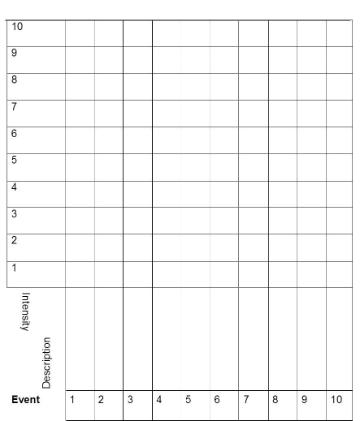
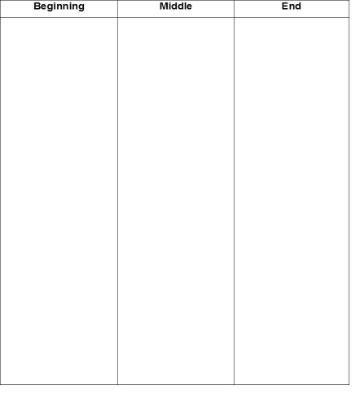
Beginning-Middle-End Chart
Using Rita as you character fill in the Beginning column of a Beginning, Middle, End chart. You will add to this over the next 2 days of lesson plans. Have students note the changes Rita has made from the beginning to end of this story.
2g6 Beginning-Middle-End Chart
Discussion
Ask discussion questions of all 9 types.
Key Questions
- In the beginning of the chapter Rita mentions visiting her grandparents. How often did she see them?
- Under the circumstances of her visit, do you think there is anything she or her grandparents can do to make her trip positive?
- Have you ever been sent to your grandparents as a form of punishment?
- What do Rita’s grandparents think is wrong with her? What do you think is really the problem?
- Does Rita accept any responsibility for her punishment? Do you think she would change her perspective if she did?
- Does ancestry (where your family if from) matter when it comes to dating and marriage? Is it OK to sneak out or around for your girlfriend or boyfriend? Why? What does it say about your relationship if you feel you have to do that?
- Rita and her grandparents have many generational differences. How do you live in peace and respect from one generation to the next? Why do you think that things are that different between generations? Explain your answer.
Analyze
Analyze the key paragraph.
Key Passage, p. 3
“Great. My mother hadn’t told me that her father had gone senile. But I had been dreaming about Johnny Ruiz one of the reasons I had been sent away for the summer. Just a coincidence, I decided. But, what about privacy? Had I or had I not closed the window to my room?” (p. 3).
Extend
Write
Have each student write a short product based on today’s prompt to connect to the unit theme.
Rita has just gotten to her grandparents house and is having a difficult time adjusting. Her grandfather is able to see through her and tell her about her boyfriend. Have your parents or grandparents ever known what you were thinking? How did you feel about it? How did you react? How do you think they knew?
Write a three paragraph narrative essay describing your situation. In the first paragraph, describe in detail the situation or event. In the second paragraph, state how you think your family knew what you were thinking, how that made you feel and how you did react. In the third paragraph, discuss the relevant importance of the situation. Did it impact you in a way that positively or negatively impacted your life?
Close
Close by extending today’s lesson to life and the world.
Community Connection
Day 2
Outcomes for Today
W3. Write narratives to develop real or imagined experiences or events using effective technique, relevant descriptive details, and well-structured event sequences.
W3a.) Engage and orient the reader by establishing a context and point of view and introducing a narrator and/or characters; organize an event sequence that unfolds naturally and logically.
Prepare
Background
Gather background knowledge about a place, time, event, person, or thing.
What is Alternative Healing?
Alternative Healing or Alternative Medicine is simply an alternative to modern medicine. Most ailments can be cured with some sort of medicine. Alternative treatments use; herbs, acupuncture, reike, aromatherapy, massage, fitness, food, supplements, etc. to help cure discomforts in a more natural way. Many alternative treatments focus on relaxation and cleansing to promote healing in the body.
In today’s reading, Rita’s grandfather is described as a local healer. They feel he can “see” into people’s hearts and souls to help heal their ailments. Rita goes with her grandparents as he seeks to heal a family near the beach.
Word Wall
Here are five vocabulary words to teach and add to the Word Wall.
|
sacrifice (10) |
trances (10) |
summoned (10) |
pollution (12) |
distracted (15) |
Additional words related to today’s reading:
Mala influencia: Bad influence
Habichuelas=Beans
Dona=term of respect for a female
Entiendes= understand
Comadre=Trusted friend
Read
Review
Start at the beginning and review the story so far.
Read
Read the selection, usually in a Shared Reading Read React Predict Cycle of 2-3 pages.
Read p. 8 (bottom)-18 (bottom)
|
Setting |
Characters |
Pages |
|
Rita’s grandparents home; Puerto Rico |
Rita, Grandfather, Grandmother |
9-11 |
|
Beach; Puerto Rico |
Rita, Grandfather, Grandmother |
11-18 |
Respond
Timeline
Agree on the facts in today’s reading, and list the 3-5 most important on the Timeline.
Students might mention:
- Rita and her grandparents are able to have a talk and get to know one another a little better.
- They are leaving to go to the beach early the next day. Grandpa is going to help to get rid of the mala influencia at Angela’s.
- Rita’s grandma explains that her grandfather is a healer and he helps people on the island, he is very respected.
- She also told Rita that she wanted to be a famous dancer, but she got married and started a family.
- Rita was amazed to learn that her grandmother had another life and interests.
- They went to the beach. Rita was amazed by the beauty. She helped her grandmother set crab traps and saw dolphins. She couldn’t understand how someone could be sick when they lived in such a beautiful location.
- Grandfather returned to figure out his strategy to rid the mala influencia.
- He and grandmother think that Angela’s mother needs to get rid of her boyfriend.
- He tells Angela and her mother that they have to work as a team and help each other if they are going to purify their home.
- Rita is sent to get Angela to feast with them on the beach.
Map
Add to ongoing class activities like a KWL chart or map: where did the characters go?
Character Web
Many of the characters are interwoven in the stories we suggest making a character map/web. This map should include but is not limited to the following:
- Character’s name
- Story in which they appear
- Unique quality or characteristic
- Issue in the novel
- Issue resolution (how does the character take care of their issues)
You can place a likeness of each character on the wall or chart with their description. Each time there is a connection draw a line linking the two or use string to create a web.
Explore
Activity
Explore the reading more deeply with a visual or oral language activity.
Beginning-Middle-End Chart
Using Rita as you character, fill in the Middle column of a Beginning, Middle, End chart you started yesterday. Have students note the changes Rita has made from the beginning to end of this story. You will complete this chart with tomorrows reading.
2g6 Beginning-Middle-End Chart
Sketch
Using the descriptions on page 12, sketch the house or Rita’s description of the ocean. Use any medium of your choosing.
Postcard
Pretend you are Rita. Write a postcard to your friends describing your day on the beach today. Make sure you properly address the card to them. On the opposite side draw a picture that reflects today’s reading.
Discussion
Ask discussion questions of all 9 types.
Key Questions
- What are some of the generational differences between Rita and her grandparents? Rita learns that her grandmother wanted to be a dancer. Do you think that changes the way Rita now thinks about her grandmother? How?
- Do you think Rita’s grandmother has regret that she didn’t dance? Why is dancing important to her? Is there anything you ever wanted to do and didn’t, that you are regretful of? Explain? Do you think it’s ever too late to pursue a dream or goal?
- What do you think is wrong with Angela? What clues in the reading help you determine that outcome?
- Rita is able to discover the beach as Mother Nature intended it—with shells, dolphins dancing in the water, and sheer beauty. She doesn’t understand why Angela could be unhappy when such beauty surrounds her. What is the most beautiful thing in nature you have ever seen? Why did it make such an impact on you?
- Part of grandfather’s suggestion for the mother and Rita is that they get rid of the evil in the house together. Why is it important to support one another when you have to stand up for yourself? Do you think that healing can occur if they do not help each other? Why or why not?
Analyze
Analyze the key paragraph.
Key Passage, p. 16
“…I actually found some shells. This was new to me, since the public beach my cousins and I went to was swept clean of trash and everything else, every morning. Sand was all that was left until it was covered by empty cans, bags, disposable diapers, and all the other things people bring for a day at the beach and leave behind as a little gift to Mother Nature. But this was different. How could that girl in the pink house be so unhappy when she could wake up to this every morning?” (p. 16).
Extend
Write
Have each student write a short product based on today’s prompt to connect to the unit theme.
Rita is starting to gain an appreciation for the beauty that surrounds her. The description the author uses to describe what she sees at home and what she is experiencing now is very vivid. Why do you think the author compares the beaches with such detail? Do you think it has any reflection on Rita’s life?
Using the description of the beach where she is at, compared to what she knows from being at home, write a two-paragraph response to literature. In the first paragraph, describe the important ideas you feel that the author is trying to convey with her detailed accounts of the beach.
If you lived in a beautiful location, do you think you would you be happy all the time? Does the location of your home affect happiness or sadness? Can you be happy living anywhere, as long as you make it your home? The location perspective will be the basis for your second paragraph.
Close
Close by extending today’s lesson to life and the world.
Community Connection
Day 3
Outcomes for Today
W3. Write narratives to develop real or imagined experiences or events using effective technique, relevant descriptive details, and well-structured event sequences.
W3a.) Engage and orient the reader by establishing a context and point of view and introducing a narrator and/or characters; organize an event sequence that unfolds naturally and logically.
Prepare
Background
Gather background knowledge about a place, time, event, person, or thing.
What is a Quinceañera?
Today's celebrations embrace religious customs, and the virtues of family and social responsibility. The Quinceañera tradition celebrates the young girl (la Quinceañera), and recognizes her journey from childhood to maturity. The customs highlight God, family, friends, music, food, and dance.
The Quinceañera celebration traditionally begins with a religious ceremony. A Reception is held in the home or a banquet hall. The festivities include food and music, and in most, a choreographed waltz or dance performed by the Quinceañera and her Court. There are many traditions throughout the Quinceañera celebration, all of which symbolize the rite of passage moving from childhood to womanhood.
In today’s reading, Rita celebrates her Quinceañera on the island.
Word Wall
Here are five vocabulary words to teach and add to the Word Wall.
|
elegant (18) |
fiend (19) |
outrageous (20) |
bodice (21) |
influence (22) |
Read
Review
Start at the beginning and review the story so far.
Read
Read the selection, usually in a Shared Reading Read React Predict Cycle of 2-3 pages.
Read p. 18 (bottom)-26
|
Setting |
Characters |
Pages |
|
Rita’s grandparents house; Puerto Rico |
Rita, Angela, Grandmother, Grandfather, neighbors |
18-24 |
|
In car on way to airport |
Rita, Grandmother, Rita’s mother |
24-26 |
Respond
Timeline
Agree on the facts in today’s reading, and list the 3-5 most important on the Timeline.
Students might mention:
- Rita and Angela become great friends.
- Grandma and Grandpa throw Rita a huge Quinceañera. Most of the neighbors come and Angela arrives in a limo with her mother.
- Rita begins to understand her grandparents more.
- Rita spends more time with Angela and begins to understand the hard life she has led.
- Rita’s parents arrive on the island. Her mother is weary of Rita, afraid she might be mad.
- She sees that she has been having a good time.
- Rita begins to have a better understanding of her mother.
- She learns that her friend will not be going to the same high school next year.
Map
Add to ongoing class activities like a KWL chart or map: where did the characters go?
Character Web
Many of the characters are interwoven in the stories we suggest making a character map/web. This map should include but is not limited to the following:
- Character’s name
- Story in which they appear
- Unique quality or characteristic
- Issue in the novel
- Issue resolution (how does the character take care of their issues)
You can place a likeness of each character on the wall or chart with their description. Each time there is a connection draw a line linking the two or use string to create a web.
Explore
Activity
Explore the reading more deeply with a visual or oral language activity.
Beginning-Middle-End Chart
Using Rita as you character fill in the End column of a Beginning, Middle, End chart you started on day one of the lesson plans. Have students note the changes Rita has made from the beginning to end of this story.
2g6 Beginning-Middle-End Chart
Quinceañera Invitation
Pretend you are Rita and having your Quinceañera. Create an invitation for your party. Include the following information:
- Purpose of the party
- Who it is honoring
- When and where it will be held
- Information for an RSVP
- Any other pertinent information
- Decorate your invitation to represent who you are (MUST BE SCHOOL APPROPRIATE)
Discussion
Ask discussion questions of all 9 types.
Key Questions
- Why does Rita’s grandmother insist that Angela eat? Why do some people get offended if you do not eat what they serve or do not eat more when offered?
- Why did Angela stop eating? Was she possessed?
- Angela and Rita have both been affected by bad influences. What do you consider bad influences? What do you do to combat them?
- Each culture seems to have various different life celebrations and rituals. What does your culture celebrate that is different from another culture? Do you think there are huge differences in what we celebrate or are the differences in how we celebrate? What is the difference between the two?
- Do you consider Rita’s boyfriend, Jonny, a bad influence? What about her best friend Meli? What kind of person is she? Can she be her own bad influence?
- What does Rita learn through this experience?
- How does Rita change from the beginning to the end of this story?
- Do you think Rita’s grandmother knew she was not sick?
- Do you think that Rita and her mother will have a better understanding of one another after this experience? Will the understanding be positive or negative?
Analyze
Analyze the key paragraph.
Key Passage, p. 25
“…Our parents had really come up with some awful punishments for Meli and me. I’d had one of the best summers of my life with Angela, and I was even really getting to know my grandparents—the ghost-busting magnificent duo…” (p. 25).
Extend
Write
Have each student write a short product based on today’s prompt to connect to the unit theme.
“When life gives you lemons; make lemonade.” Rita was sent to her grandparents as a punishment. Although, she tried to be miserable she ended up having a great time. She began to understand and like her grandparents, she met a great friend, and she learned a life lesson about negative peers. Have you ever been in a bad situation that because of your attitude turned out to be really fun?
Write a two-paragraph essay describing a time in your life where you were able to take something that was completely negative and change the outcome to make it completely positive. Describe who was involved and what the situation was. In the second paragraph, explain in detail what you learned from this situation and how it was significant to your life.
Be sure to include how your attitude helped you turn your situation around. Can the opposite occur? Can you be in a great situation but because of your bad mood have a negative experience?
Close
Close by extending today’s lesson to life and the world.
Community Connection
Day 4
Outcomes for Today
W3. Write narratives to develop real or imagined experiences or events using effective technique, relevant descriptive details, and well-structured event sequences.
W3a.) Engage and orient the reader by establishing a context and point of view and introducing a narrator and/or characters; organize an event sequence that unfolds naturally and logically.
Prepare
Background
Gather background knowledge about a place, time, event, person, or thing.
How is the Puerto Rican Culture and history similar to yours? How is it different?
The people of Puerto Rico represent a mixture of races, cultures, languages and religions. They draw their unique heritage from the Tainos, from Spanish loyalists who sought refuge here, from the African slaves and from other Caribbean islanders who came to the island in search of jobs. The Spanish they speak is a mix too, different somewhat from Castillian Spanish, with many words borrowed from the pre-Colombian Amerindian tongue right up to modern-day English. American culture has had a progressive effect upon Puerto Rican culture since 1898 but especially so after the 40's. Some Puerto Ricans are not happy with the result of that influence; others welcome it.
There is an essential dichotomy of Puerto Rico's relationship with the United States. Within American jurisdiction, as reflected by common citizenship, flag, currency and numerous applicable Federal laws, Puerto Rico might seem in everything but name a State of the Union. But on the other side you will find a culture and society profoundly different from that in the mainland. It is a rich and varied culture but a unique one emanating from all those rich influences. This makes Puerto Rico a unique blend of the Spanish-Caribbean "joy of living" and the American drive for organization and
forward-thinking
In today’s reading we meet Arturo. He is unique and diverse and doesn’t necessarily fit into the mold of the others that live in his neighborhood. He likes poetry, is good in school, and is diverse. Although, those are all great attributes, Arturo struggles with them as a young man.
Word Wall
Here are five vocabulary words to teach and add to the Word Wall.
|
opinion (27) |
asylum (27) |
ribbing (28) |
lair (30) |
obsessive (33) |
Read
Review
Start at the beginning and review the story so far.
Read
Read the selection, usually in a Shared Reading Read React Predict Cycle of 2-3 pages.
Read p. 27-34 (bottom paragraph)
|
Setting |
Characters |
Pages |
|
Outside St. Joseph Church |
Arturo and Johan |
27-28 |
|
Inside St. Joseph Church |
Arturo and Johan |
28-34 |
Respond
Timeline
Agree on the facts in today’s reading, and list the 3-5 most important on the Timeline.
Students might mention:
- Arturo leaves for a walk. He intends to catch a bus and go somewhere. He ends up at St. Joseph Church.
- After sitting on the porch he meets Johan. Johan is there to clean the church. He is genuinely concerned about Arturo. He invites him in.
- Arturo sits in the church thinking about the changes in his life while Johan cleans.
- Arturo wants to get up and help, but he knows that Johan is enjoying what he is doing.
- He starts to enjoy sitting in the church, in silence.
- He thinks about how he is questioning everything—his faith, friends, school.
- He is enjoying school and likes to learn. He realizes that his friends are going to hold him back not help him.
Map
Add to ongoing class activities like a KWL chart or map: where did the characters go?
Character Web
Many of the characters are interwoven in the stories we suggest making a character map/web. This map should include but is not limited to the following:
- Character’s name
- Story in which they appear
- Unique quality or characteristic
- Issue in the novel
- Issue resolution (how does the character take care of their issues)
You can place a likeness of each character on the wall or chart with their description. Each time there is a connection draw a line linking the two or use string to create a web.
Explore
Activity
Explore the reading more deeply with a visual or oral language activity.
Open Mind Portrait
Create and OMP for Arturo. He is running away and ends up at St. Joseph. What do you think he is thinking and feeling? Add 5-7 new thoughts to your OMP.
Sketch
Using the details that describe Arturo on page 27-28, sketch Arturo using the medium of your choice.
Suitcase Bookmark
If you had to move and do it more than once what would you pack in your suitcase? How do you organize what is really important and what is not as important? Does anything you pack surprise you? Why or Why not? Create a bookmark or a suitcase that you list what you would take with you.
Discussion
Ask discussion questions of all 9 types.
Key Questions
- Why do you think Johan took Arturo into the church? Johan asks Arturo if he is in pain. What kind of pain do you think he is referring too?
- What character traits (a trait is a characteristic or quality to describe someone) do you think Johan possesses?
- What is the real reason Arturo runs away?
- When you live in a small community, why is it harder to be who you really are?
- Why did Arturo feel like he could relate to “The Flea”?
- What stories have you read that resonated with you, where you felt like you could relate to it?
- Arturo’s peers start picking on him for reading The Flea; he says he didn’t know how to fight it. So he dyed his hair purple, page 32. What do you think he should do to fight the pressures his peers are putting on him? Have you ever been a bully or been bullied? If you were a bully, what did you do and why did you do it? If you were the one who was bullied, how did it make you feel and what did you do about it?
Analyze
Analyze the key paragraph.
Key Passage, p. 28
“…He acts like the keeper of the Olympic torch or something. But I understand what he means. It would be wrong to blow out a candle someone lit for a special reason—like stealing a wish” (p. 28).
Extend
Write
Have each student write a short product based on today’s prompt to connect to the unit theme.
Johan takes pride in caring for the church. In some ways his is protecting it. He makes sure that people’s candles stay lit and the intentions they represent are protected.
Write a two paragraph narrative essay. In the first paragraph, explain why respecting “wishes” of others is so important. In the second paragraph explain why it is important for Johan to leave the candles alone. Support your ideas with information that connects all related claims.
Close
Close by extending today’s lesson to life and the world.
Community Connection
Day 5
Outcomes for Today
W3. Write narratives to develop real or imagined experiences or events using effective technique, relevant descriptive details, and well-structured event sequences.
W3a.) Engage and orient the reader by establishing a context and point of view and introducing a narrator and/or characters; organize an event sequence that unfolds naturally and logically.
Prepare
Background
Gather background knowledge about a place, time, event, person, or thing.
What does it mean to be true to yourself?
To be true to yourself means to act in accordance with who you are and what you believe. Be who you are. Have the courage to accept yourself as you really are, not as someone else thinks you should be.
Self-respect comes from being true to who you really are and from acting in accordance with your fundamental nature. When you respect yourself, others will respect you. They will sense that you are strong and capable of standing up for yourself and your beliefs. When you are true to yourself, you allow your individuality and uniqueness to shine through. You respect the opinions of others but do not conform to stereotypes or their expectations of you. To be true to yourself takes, it requires you to be introspective, sincere, open-minded and fair.
Being true to yourself does not mean that you are inconsiderate or disrespectful of others. It means that you will not let others define you or make decisions for you that you should make for yourself.
In today’s reading, Arturo realizes that he is allowing himself to make decisions based on other people’s opinions. He is not standing up for himself or his beliefs. After speaking with Johan he realizes that his problems are petty and he really does have unique qualities. He learns the value of being more self-assured.
Word Wall
Here are five vocabulary words to teach and add to the Word Wall.
|
relax (34) |
sensation (35) |
saintly (35) |
conscripting (36) |
conversing (36) |
Read
Review
Start at the beginning and review the story so far.
Read
Read the selection, usually in a Shared Reading Read React Predict Cycle of 2-3 pages.
Read p. 34 (bottom)-40
|
Setting |
Characters |
Pages |
|
Inside St. Joseph’s Church |
Arturo and Johan |
34-37 |
|
In the alley |
Arturo, his mother |
38-40 |
Respond
Timeline
Agree on the facts in today’s reading, and list the 3-5 most important on the Timeline.
Students might mention:
- Arturo starts to find peace sitting in the church.
- Johan comes to sit with him. Arturo knows he can’t leave until they talk so he starts asking questions.
- Johan begins to tell him of his life in Nazi Germany, losing his son, coming to America, and losing his wife.
- Arturo begins to ask him about spirituality and religion and Johan speaks candidly to him.
- As he leaves he no longer feels like running away. He realizes that his problems are really petty compared to what others may be facing.
- He returns home to find his poetry books.
- He starts reading the poem that his nemesis will have to read.
- Not only is it a hard poem to read and understand the meaning is telling.
- He realizes that his teacher is helping him stand up for himself and be himself.
Map
Add to ongoing class activities like a KWL chart or map: where did the characters go?
Character Web
Many of the characters are interwoven in the stories we suggest making a character map/web. This map should include but is not limited to the following:
- Character’s name
- Story in which they appear
- Unique quality or characteristic
- Issue in the novel
- Issue resolution (how does the character take care of their issues)
You can place a likeness of each character on the wall or chart with their description. Each time there is a connection draw a line linking the two or use string to create a web.
Explore
Activity
Explore the reading more deeply with a visual or oral language activity.
Open Mind Portrait
Add to the OMP you started yesterday for Arturo. What do you think he is thinking and feeling today? Add 5-7 new thoughts to your OMP.
Walk a Mile in Another Persons Shoes
As a class, discuss what the phase “To walk a mile in another person’s shoes” means. Have everyone take one shoe off and place it in a pile. At random hand “another person’s shoes” out to classmates. You can just switch shoes on a couple willing classmates Have them walk around a bit. As a class discuss the following questions:
- What does it mean to walk in someone else’s shoes?
- What can you learn my putting yourself in someone else’s shoes?
- How can you use this activity to gain perspective of others?
- If we knew what it felt like to be others do you think that people would be a little nicer to each other?
Discussion
Ask discussion questions of all 9 types.
Key Questions
- Why do you think Arturo felt safe at the church? Do you think that Johan helped make him feel comfortable? If so, what did Johan do to make Arturo feel comfortable?
- Johan cleans the church at night because he likes to be alone. Why is it an important to the time to be able to be alone? Is being alone and lonely the same thing?
- Johan explains how he can always find peace. To be without a restless heart is to have a joyful life. Do you agree? Where do you go and what do you do to find peace?
- Arturo realizes that Johan’s story is amazing and filled with tragedy, yet he still moves forward and has an amazing attitude. This made him think about his troubles and realize that he could handle his situation. Why is it important to keep your troubles in perspective (or walk a mile in someone else’s shoes)? What does that help you do?
- Integrity, honesty, genuine. These are all admirable traits to possess. What does the phrase, “be true to yourself”, mean to you? How are you true to yourself?
Analyze
Analyze the key paragraph.
Key Passage, p. 34
“But what happened was that when I sat back down, I started to relax in that church like I hadn’t anywhere since I was a little kid. I breathed better. The way the air smelled like incense and candles cleared my head, and the old wood and leather all around made me feel kind of safe, like in a library” (p. 34).
Extend
Write
Have each student write a short product based on today’s prompt to connect to the unit theme.
Arturo describes the safe feeling he got while visiting the church. He describes the setting and the smells he associates with it. Do your senses (touch, sight, hearing, taste, and smell) play an important role in how you feel?
Write a two paragraph narrative essay where you describe something you see, smell, hear, or touch that makes you feel safe. What is it? Is it a place? Does it involve someone who is close to you? What do you associate that item or feeling with? Use as many concrete details as you can to describe your feelings.
Close
Close by extending today’s lesson to life and the world.
Community Connection
Day 6
Outcomes for Today
W3. Write narratives to develop real or imagined experiences or events using effective technique, relevant descriptive details, and well-structured event sequences.
W3a.) Engage and orient the reader by establishing a context and point of view and introducing a narrator and/or characters; organize an event sequence that unfolds naturally and logically.
Prepare
Background
Gather background knowledge about a place, time, event, person, or thing.
What does it mean to be aerodynamic?
Aerodynamic is a design method to design things with rounded edges to reduce wind drag and increase fuel efficiency. Used especially of motor vehicles or planes. This reduces or minimizes the drag caused by air as an object moves though it or by wind that strikes and flows around an object. The wings and bodies of airplanes have an aerodynamic shape.
In today’s reading, Sandra talks about feeling free when she is running. Her gym teacher compliments her telling her she has an aerodynamic shape allowing her to run faster. She also encourages Sandra to try out for the swim team for the same reason. Although Sandra loves to run and is athletic, she is still very insecure of her body.
Word Wall
Here are five vocabulary words to teach and add to the Word Wall.
|
stampedes (41) |
herd (42) |
concentration (42) |
conduct (46) |
disdain (48) |
Read
Review
Start at the beginning and review the story so far.
Read
Read the selection, usually in a Shared Reading Read React Predict Cycle of 2-3 pages.
Read p. 41-49 (top)
|
Setting |
Characters |
Pages |
|
High School |
Paco, Luis, Jennifer, Anita, Sandra |
41-44 |
|
Entering high school room |
Sandra, Anita, teacher |
44-46 |
|
Entering PE class |
Sandra, Anita, Jennifer, PE class |
46-47 |
|
The walk home |
Anita and Sandra, 3 bums |
47-49 (top) |
Respond
Timeline
Agree on the facts in today’s reading, and list the 3-5 most important on the Timeline.
Students might mention:
- Sandra is on her way to class. She likes Paco—who is smart and nice looking but he is trying to be tough for his friends.
- Sandra feels invisible at school and is built differently than the other girls.
- She is teased. She walks out of class, her friend Anita comes to help her. She gives her support.
- Sandra is very athletic and is built to run—this is where she feels freedom.
- Sandra is asked to return to the class she walked out of. Her teacher tells her that he is a late bloomer.
Map
Add to ongoing class activities like a KWL chart or map: where did the characters go?
Character Web
Many of the characters are interwoven in the stories we suggest making a character map/web. This map should include but is not limited to the following:
- Character’s name
- Story in which they appear
- Unique quality or characteristic
- Issue in the novel
- Issue resolution (how does the character take care of their issues)
You can place a likeness of each character on the wall or chart with their description. Each time there is a connection draw a line linking the two or use string to create a web.
Explore
Activity
Explore the reading more deeply with a visual or oral language activity.
Open Mind Portrait
Create an OMP for Sandra. What do you think she is thinking and feeling as she is teased in class, as she runs, and as a friend to Anita? Add 5-7 thoughts to your OMP.
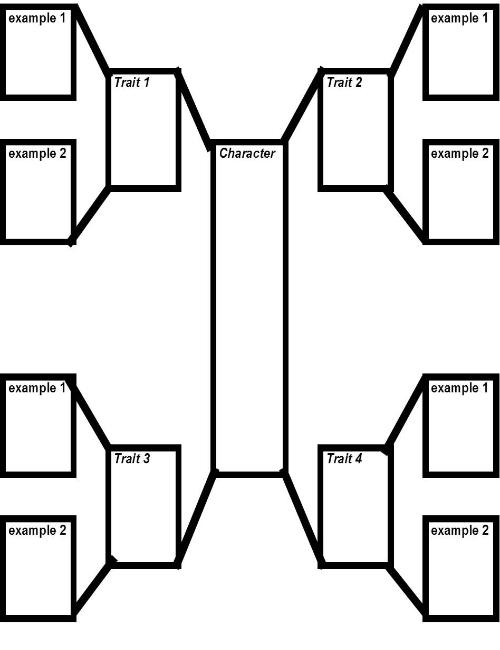
Character Profile Chart
Create a CPC for Sandra. Add four character traits you feel she has. Use examples from the reading to support your answer.
4g6 Character Profile Chart
The Late Bloomer
Read Leo the Late Bloomer by Robert Kraus with your class.
- What made Leo a Late Bloomer?
- What was done to help Leo?
- Why is there such a need by society for everyone to do the same things at the same time?
- What is an individual? What makes you unique?
Have students create flowers on the medium of your choosing. On each flower blossom write things that make you special, unique, and an individual?
Discussion
Ask discussion questions of all 9 types.
Key Questions
- Why does Sandra feel so different? What makes her feel invisible? Is it the fault of others or does she have some responsibility for feeling invisible?
- Sandra talks about her plans on page 43. She is clear that she wants to be independent, why is it important to have a plan for your life? What are your short-term and long-term plans?
- Why is Sandra so self-conscious about how she looks?
- Sandra is an awesome athlete and running makes her feel free. She is able to escape and just be herself. What do you do to feel “free” or to get away from people and things that bother you?
- Do you think Paco likes her? Why or why not?
- Do you think Paco would like her if she wore a lot of make-up and tight clothing?
Analyze
Analyze the key paragraph.
Key Passage, p. 43
“I plan on staying in school because if I don’t I‘ll end up depending on someone else to take care of me, like a man. That seems to be all the women can talk about around the barrio—money and men, men and money. Maybe if I go to college and get a good job, I won’t have to worry that I’ll have to go on welfare if my husband leaves me” (p. 43).
Extend
Write
Have each student write a short product based on today’s prompt to connect to the unit theme.
Sandra has goals. She wants to be independent and able to care for herself. In order to do this she has a plan with dreams and goals that she wants to accomplish. What are your goals? What do you want for yourself in 1 year, 5 years, 10 years, life?
Write 2-3 paragraphs explaining your goals and your plan. Be as clear and concise as possible. Explain your goals and your plan with as much detail and reasoning as possible. Include the idea of making commitments to yourself in order to move forward with your plan and include education, and/or specialized training that may be required to attain success. Also, explain why having a plan makes a dream seem attainable and realistic and not just a fantasy that may never happen.
Close
Close by extending today’s lesson to life and the world.
Community Connection
Day 7
Outcomes for Today
W3. Write narratives to develop real or imagined experiences or events using effective technique, relevant descriptive details, and well-structured event sequences.
W3a.) Engage and orient the reader by establishing a context and point of view and introducing a narrator and/or characters; organize an event sequence that unfolds naturally and logically.
Prepare
Background
Gather background knowledge about a place, time, event, person, or thing.
What is beauty? (for class discussion)
What do you consider is beautiful? Why?
Beauty by definition is the quality that gives pleasure to the mind or senses and is associated with such properties as harmony of form or color, excellence of artistry, truthfulness, and originality.
In today’s reading, Sandra does not feel that she is beautiful. But as she compares herself to her aunt who; paints on her face, squeezes into dresses, uses fake eyelashes, and has false teeth, she realizes that although she may be a little underdeveloped she is still beautiful because everything she has is hers.
Word Wall
Here are five vocabulary words to teach and add to the Word Wall.
|
linoleum (50) |
potential (51) |
invisible (52) |
dramatically (52) |
glamorous (52) |
Read
Review
Start at the beginning and review the story so far.
Read
Read the selection, usually in a Shared Reading Read React Predict Cycle of 2-3 pages.
Read p. 49-54
|
Setting |
Characters |
Pages |
|
Apartment building |
Mami, Sandra, Aunt Modesta |
49-54 |
Respond
Timeline
Agree on the facts in today’s reading, and list the 3-5 most important on the Timeline.
Students might mention:
- Aunt Modesta has gotten a divorce and moved in with Sandra and her mother.
- Aunt Modesta is concerned about her looks and spends much time on fashion, and making herself up.
- Sandra who is feeling bad about herself decides she can learn something about beauty from her aunt.
- As she watches her aunt she sees a sad transformation. Her aunt goes from pretty to old in a short amount of time. Her face is painted on; she has false eyelashes, and false teeth.
- Sandra is saddened by this and decides to be nicer to her.
- She goes to her mirror and decides she is not ugly just unique and she is proud that all of her parts are “hers.”
- She decides that she will talk to Paco and to stand up for herself.
- She leaves her aunt and mother and goes to the basketball court to shoot balls with Paco.
Map
Add to ongoing class activities like a KWL chart or map: where did the characters go?
Character Web
Many of the characters are interwoven in the stories we suggest making a character map/web. This map should include but is not limited to the following:
- Character’s name
- Story in which they appear
- Unique quality or characteristic
- Issue in the novel
- Issue resolution (how does the character take care of their issues)
You can place a likeness of each character on the wall or chart with their description. Each time there is a connection draw a line linking the two or use string to create a web.
Explore
Activity
Explore the reading more deeply with a visual or oral language activity.
Open Mind Portrait
Add to your OMP of Sandra. What do you think she is thinking and feeling as she learns that her aunt is made-up and not herself? Add 5-7 new thoughts to her OMP.
Character Profile Chart
Add two more character traits to the CPC you started yesterday on Sandra. Use examples from the reading to support your answer.
4g6 Character Profile Chart
Modesta’s Beauty School
Create an advertisement for Modesta’s beauty school. What attributes do you think she would teach if she had the opportunity? Create a flyer for her school. Include the following information:
- Name of school
- Hours, location, and contact information
- Mission and goals of the school
- Attributes focused upon to create a beautiful you
Discussion
Ask discussion questions of all 9 types.
Key Questions
- Sandra notes that she doesn’t think her aunt knows how to be happy without a man in her life, page 49. Why is it important to know how to be happy on your own?
- What is the definition of dignity? Based on what you read about Modesta, do you think she has dignity? Describe the personality traits of someone you know that has dignity.
- How does Sandra feel when she sees how much work her aunt goes through to look good?
- In today’s society, do we place more value on the beauty of a person, rather than personality or intelligence? Explain your answer in detail.
- How does Sandra make contact with Paco?
- What do the two of them share in common?
Analyze
Analyze the key paragraph.
Key Passage, p. 53
“I may have bugs bunny teeth, but they are mine, and if I put on a few pounds, they might even look right on my face, which is, at least, my real face, and not painted on. When I see Paco by himself next time I am going to talk to him” (p. 53).
Extend
Write
Have each student write a short product based on today’s prompt to connect to the unit theme.
Sandra realizes that although she may not be popular and great looking by her friends’ standards, she is beautiful because everything on her is real. She becomes confident knowing this. Do you think it is important to be yourself and unique or to follow others?
Write a narrative letter requesting your reader to value the person he or she is. Emphasize that he or she should not change, compete with peers or pretend to be someone else just to impress others. Try to be realistic. Most of us know someone who is influenced by what others think and tend to think that it is better to follow and be accepted than to venture out of the norm and possibly be rejected or ridiculed. Your standard letter format should be addressed to someone not in your class…maybe a friend outside of school or a family member. Be firm, but also loving and supportive.
Close
Close by extending today’s lesson to life and the world.
Community Connection
Day 8
Outcomes for Today
W3. Write narratives to develop real or imagined experiences or events using effective technique, relevant descriptive details, and well-structured event sequences.
W3a.) Engage and orient the reader by establishing a context and point of view and introducing a narrator and/or characters; organize an event sequence that unfolds naturally and logically.
Prepare
Background
Gather background knowledge about a place, time, event, person, or thing.
How do you cope with grief? (see attachment at end of today)
Grief is a deep mental anguish that stems from bereavement.
There are certain stages in the grieving process. There is no time limit for staying at a stage. They may come and go as the moment arises.
- Denial (this isn't happening to me!)
- Anger (why is this happening to me?)
- Bargaining (I promise I'll be a better person if...)
- Depression (I don't care anymore)
- Acceptance (I'm ready for whatever comes
On the last page of today’s lesson plan is a guide on grieving.
In today’s reading, Luis deals with the death of his mother for the first time. As part of his healing process he is able to better understand what his father is dealing with and also do a kind act for someone else.
Word Wall
Here are five vocabulary words to teach and add to the Word Wall.
|
botched (56) |
mascot (57) |
vulgar (57) |
emerged (58) |
mocking (59) |
Read
Review
Start at the beginning and review the story so far.
Read
Read the selection, usually in a Shared Reading Read React Predict Cycle of 2-3 pages.
Read p. 55-65
|
Setting |
Characters |
Pages |
|
Sitting on hubcaps in father’s junk yard |
Luis, Jorge |
55-58 |
|
In junkyard |
Luis, Jorge, Naomi |
58-59 |
|
At home |
Luis and Jorge |
60-63 |
|
Parked in front of the funeral home |
Luis and Naomi |
63-64 |
|
The junkyard |
Luis |
64 |
|
In front of the funeral home |
Luis and Naomi |
64-65 |
Respond
Timeline
Agree on the facts in today’s reading, and list the 3-5 most important on the Timeline.
Students might mention:
- Luis is being punished for being arrested.
- He has to polish all of the hubcaps at the junkyard. His father is proud and tells him that one day it will all be his.
- A girl comes into the yard looking for a specific hubcap. Luis’s father gets the information and details and tells her Luis will look for it.
- Luis and his father go home. For the first time in months they eat together.
- Luis asks to borrow the car. He intended to see his friends but ends up at the mortuary where they held his mother’s services and where Naomi lives.
- The memories of his mother come flooding back. For the first time Luis grieves for his mother.
- He talks briefly to the girls and leaves to the yard where he searches for her hubcap.
- He returns to show her proud he has done something nice for someone and she has drawn a picture of him standing on the pile of hubcaps under the moon.
Map
Add to ongoing class activities like a KWL chart or map: where did the characters go?
Character Web
Many of the characters are interwoven in the stories we suggest making a character map/web. This map should include but is not limited to the following:
- Character’s name
- Story in which they appear
- Unique quality or characteristic
- Issue in the novel
- Issue resolution (how does the character take care of their issues)
You can place a likeness of each character on the wall or chart with their description. Each time there is a connection draw a line linking the two or use string to create a web.
Explore
Activity
Explore the reading more deeply with a visual or oral language activity.
Open Mind Portrait
Create and OMP for Luis. What do you think he is thinking and feeling as he works off his sentence, he understands his dads need to keep busy, and grieves for his mother? Add 5-7 thoughts to your OMP.
Sketch
Sketch a picture of Luis using the medium of your choice while he is standing on the hubcaps in the junkyard. See page 55 for description.
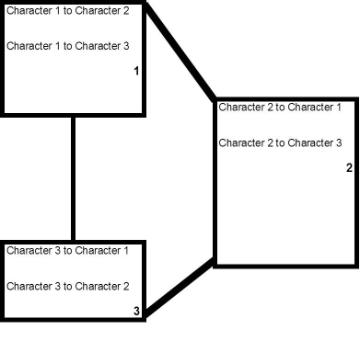
Character Interaction Chart
Create a Character Interaction Chart using Luis, Naomi, and Jorge. Use examples from the books to explain the interaction between each character.
5g6 Character Interaction Chart
Dream Property
Not everyone can inherit a junkyard. Create a “dream property” you would like to have.
- Where would your dream property be?
- What features would it have?
- Illustrate your property with as much detail as possible.
You can also do this activity by having students create a dream property collage.
Discussion
Ask discussion questions of all 9 types.
Key Questions
- Why is Luis on top of the hubcaps? Why do you think that Luis mocks his father when he tells him that the yard will be his? Is it ever okay for a child to mock a parent?
- Do you think that Luis is a troublemaker or extremely smart with misguided talents? What could he do to use his talents in other ways?
- Luis’s father is self-taught and extremely proud of his appearance and all he has learned and earned. Does Luis appreciate his father for those qualities? Why or why not?
- Why is his father concerned about him?
- What does Luis learn about his father’s desire to keep busy? What do you do to help yourself through difficult situations? Do you try to get through it on your own or do you go to someone you trust to help you?
- Who is Naomi?
- What is different about Naomi?
- Why does Luis spend all night trying to find her hubcap? How does this help him through the grieving process?
Analyze
Analyze the key paragraph.
Key Passage, p. 55
“Luis Cintron sits on top of a six-foot pile of hubcaps and watches his father walk away into the steel jungle of his car junkyard. Released into his old man’s custody after six months in juvenile hall—for breaking and entering—and he didn’t even take anything. He did it on a dare. But the old lady with the million cats was a light sleeper and a good with her aluminum cane. He has a scar on his head to prove it” (p. 55).
Extend
Write
Have each student write a short product based on today’s prompt to connect to the unit theme.
Luis was released to his father after breaking into an elderly woman’s home. He had organized a group of so-called friends that would dare one another to do illegal and horrible things.
Pretend you are Luis Cintron and you are now trying to get off probation. Write a standard business letter to the woman whose house you broke into. Explain to her that you are sorry and tell her what you plan to do in the future that is constructive, not destructive. Whether or not you are offering a sincere apology is not the issue. Writing a letter to the woman is the first step to take when holding yourself accountable for your actions. This shows responsibility and a promise to do the right thing. Use standard business format.
Close
Close by extending today’s lesson to life and the world.
Community Connection
Grief- Practical Suggestions
Grief is…
- “as crazy as you can be without being locked up”
- “like being handicapped without a sticker”
- “I never expected it to be so physically painful”
- “a journey, not a temporary state”
If your loss is very recent, the following suggestions might help:
- Take care of yourself. In addition to getting plenty of rest, plenty of exercise, eating right, and drinking enough water.
- Be VERY CAREFUL driving. For some reason, our cars (our “personal space”) seem to just invite sad thoughts. But you know that you are extremely vulnerable now, and when your mind is elsewhere, you are in jeopardy (as are the other drivers on the road with you).
- If possible, concentrate solely on driving safely and put all other thoughts on hold. When you buckle up, put “it” out of your mind until you reach your destination.
- Beware of alcohol and prescription drugs. It’s easy to fall into a patter of chemical abuse at this time.
- Surround yourself with people who are good for you, and avoid people who are likely to hurt your feelings or offend you.
- Some people are more gifted than others when it comes to giving comfort. Pat expressions of sympathy, clichés such as “he’s better off”, “it’s God’s will”, “You’re young, you’ll marry again/have more children”, “you must put this behind you”, “I KNOW HOW YOU FEEL” …sometimes actually hurt more than they help. Rather than expect everyone to know how to act, rather than to be angry or hurt if they don’t, selectively screen the company you keep during this very sensitive time. Even if it means putting long-time friendships on the back burner for a while. You owe it to yourself.
- Be willing to make the first move. Remember all those people at the funeral who said “let me know if there’s anything I can do?” they really did mean it… but don’t be surprised if the phone calls taper off and a time comes when you hear from almost no one. Its likely people will fail to contact you out of a wish to NOT INTRUDE, although you may be desperately needing the contact. Try to understand that this is the case, and be willing to make a call yourself… and say “Hey, I really need to talk” or “I’d love to see you… may I come by?”
- Don’t let others call the shots when it comes to the course of your mourning. Each individual grieves differently; some quietly – some audibly. Some need to look at pictures and reminisce; others can’t bear that type of activity for a long while. Some need to keep busy; some need to be alone. What do YOU need?
- Resist pressure from others to “get rid of “clothes or other possessions. If the presence of these things is not a problem to you, why rush? There’s plenty of time (like forever) to take care of these details.
- Similarly, if making routine trips to the cemetery or crypt comforts you, do it. But don’t fall into a routine which compels you to do something that is very painful for you.
- Grief is very much a roller coaster, with good days and bad days constantly intermingling. As shock wears off and the weeks/months go by, you may find you are feeling worse, not better. If this happens, don’t be alarmed (many people say “I thought I must be crazy.”) This pattern is very typical, but in time the good days will outnumber, by far, the bad.
- Keeping a journal or a notebook where you record your feelings as time goes by can really help you get an overview of the grief recovery process.
- The library and the bookstore hold literally hundreds of good books about all facets of bereavement. If you like to read, a lot of help is there.
- Tears are healthy! Cry freely and without shame. Sometimes, the best night’s sleep follows a really good cry.
- Hang in there, and “keep the faith.” Your life can be good again. Believe it!
- When the day comes that you feel better – consistently (as opposed to sporadically) – resist the temptation to feel guilty about feeling better! Grief recovery is to integrate the loss into your life, and to go on living.
Day 9
Outcomes for Today
W3. Write narratives to develop real or imagined experiences or events using effective technique, relevant descriptive details, and well-structured event sequences.
W3a.) Engage and orient the reader by establishing a context and point of view and introducing a narrator and/or characters; organize an event sequence that unfolds naturally and logically.
Prepare
Background
Gather background knowledge about a place, time, event, person, or thing.
What is a nursing home?
A nursing home, convalescent home, Skilled Nursing Unit (SNU), care home or rest home provides a type of care of residents: it is a place of residence for people who require constant nursing care and have significant deficiencies with activities of daily living. Residents include the elderly and younger adults with physical or mental disabilities. Residents in a skilled nursing facility may also receive physical, occupational, and other rehabilitative therapies following an accident or illness.
Arturo went to visit his grandfather. He was not overly excited to visit and he promised his mother he would stay an hour. His grandfather told him the story of his life and for once Arturo was interested. He seemed to want to stay longer but his grandfather was swept up to an activity by a woman.
Word Wall
Here are five vocabulary words to teach and add to the Word Wall.
|
industrial (66) |
depressed (67) |
orderlies (67) |
scholar (70) |
wicked (71) |
Read
Review
Start at the beginning and review the story so far.
Read
Read the selection, usually in a Shared Reading Read React Predict Cycle of 2-3 pages.
Read p. 66-71
|
Setting |
Characters |
Pages |
|
Nursing home |
Arturo and grandfather |
66-70 |
|
Nursing home |
Arturo, grandfather, and woman in pink |
71 |
Respond
Timeline
Agree on the facts in today’s reading, and list the 3-5 most important on the Timeline.
Students might mention:
- Arturo is sent to visit his sick grandfather.
- Arturo is not sure what to make of his grandfather.
- Arturo listens to his grandfather’s story. He judges why his grandfather didn’t try to do more to fight for his dreams.
- They talk briefly and Arturo realizes how precious time is. He wants to learn more from his grandfather.
- Their visit is interrupted by a woman in a pink jogging suit. Arturo realizes that grandfather has a life of his own.
Map
Add to ongoing class activities like a KWL chart or map: where did the characters go?
Character Web
Many of the characters are interwoven in the stories we suggest making a character map/web. This map should include but is not limited to the following:
- Character’s name
- Story in which they appear
- Unique quality or characteristic
- Issue in the novel
- Issue resolution (how does the character take care of their issues)
You can place a likeness of each character on the wall or chart with their description. Each time there is a connection draw a line linking the two or use string to create a web.
Explore
Activity
Explore the reading more deeply with a visual or oral language activity.
Open Mind Portrait
Add to your OMP for Arturo. What do you think he is thinking and feeling about his grandfather and their relationship? Add 5-7 new thoughts to your OMP.
Found Poem
Have students write a found poem using words from this chapter. Using the topic; “life” “education” or “reading” have students find 10-15 words in that chapter that relate to their chosen topic. They can use the words in any order to create their poem. You can also have them complete an acrostic poem using the same topic words.
Discussion
Ask discussion questions of all 9 types.
Key Questions
- Why does Arturo not want to see his grandfather?
- Arturo’s grandfather valued reading. How does reading help you? Do you believe that you will gain more knowledge by being an avid reader?
- Does his grandfather know how his grandson feels?
- What does grandfather prove to his grandson?
- What does the older lady in pink jogging suit represent?
- What does Arturo think of his grandpa?
- How does this change by the end of the story?
- Arturo’s grandfather was a teacher. The circumstances of the war prohibited him from getting a college degree. Do you have to have a degree to be smart? How does being a college graduate help you?
- What does Arturo learn about his grandpa and life?
Analyze
Analyze the key paragraph.
Key Passage, p. 68
“‘Asi es la vida,’ That’s the way life is. It sometimes makes me mad that the adults I know just accept whatever crap is thrown at them because ‘that’s the way things are.’ Not for me. I go after what I want” (p. 68).
Extend
Write
Have each student write a short product based on today’s prompt to connect to the unit theme.
Arturo has gotten to know his grandfather in a new way. However, he is frustrated at his grandfather’s philosophy, “Asi es la vida”, “That’s the way life is.” Do you think that life just happens or do you think that you are in control of your own destiny?
Write two narrative paragraphs defending your position. Structure your argument in a logical fashion. Think about the choices you make. Do you choose which course of action you’ll take all the time? Or, do you let life just happen? Do some people always seem to have to work a little harder than others in order to achieve what they want and it still does not work out for them? What kind of long-term affects do you think it might have on them?
Close
Close by extending today’s lesson to life and the world.
Community Connection
Day 10
Outcomes for Today
W3. Write narratives to develop real or imagined experiences or events using effective technique, relevant descriptive details, and well-structured event sequences.
W3a.) Engage and orient the reader by establishing a context and point of view and introducing a narrator and/or characters; organize an event sequence that unfolds naturally and logically.
Prepare
Background
Gather background knowledge about a place, time, event, person, or thing.
What is Carnegie Hall?
Located in New York City Carnegie Hall was built by Andrew Carnegie in 1890. Less than 25 years later Carnegie Hall became one of the most impressive stages worldwide. Many political events have occurred at the hall as well as world-renowned performers.
In today’s reading, Doris, a self-described follower, follows Yolanda on another adventure. It is not too bad following her when her pranks are harmless. However, as she continues to go with her Yolanda begins to steal. Once Doris realizes what is going on she runs, and runs. She realizes that she has to determine what she believes in and become her own person.
Word Wall
Here are five vocabulary words to teach and add to the Word Wall.
|
afford (72) |
monstrous (73) |
confusion (73) |
sentimental (79) |
crumpled (79) |
Read
Review
Start at the beginning and review the story so far.
Read
Read the selection, usually in a Shared Reading Read React Predict Cycle of 2-3 pages.
Read p. 72-81
|
Setting |
Characters |
Pages |
|
Going to 34 street |
Yolanda, Doris and lady at the store |
72-76 |
|
Doris’s apt |
Mother and Doris |
76-78 |
|
Downtown to shop |
Yolanda and Doris |
78-81 |
Respond
Timeline
Agree on the facts in today’s reading, and list the 3-5 most important on the Timeline.
Students might mention:
- Yolanda and Doris go to store with a show was going on and became a part of it. They are both scolded by the department store representative.
- Doris is home with mother and feels invisible. She wants her mother to see her for who she is. Her mother invites her to come watch her sing.
- Doris leaves still feeling invisible.
- Doris goes to Yolanda’s. Yolanda decides she is going to steal a handbag. Doris gets out of the bad situation she was in and Yolanda is caught.
- Doris learns that she is not invisible and there are better things to do then be arrested.
Map
Add to ongoing class activities like a KWL chart or map: where did the characters go?
Character Web
Many of the characters are interwoven in the stories we suggest making a character map/web. This map should include but is not limited to the following:
- Character’s name
- Story in which they appear
- Unique quality or characteristic
- Issue in the novel
- Issue resolution (how does the character take care of their issues)
You can place a likeness of each character on the wall or chart with their description. Each time there is a connection draw a line linking the two or use string to create a web.
Explore
Activity
Explore the reading more deeply with a visual or oral language activity.
Open Mind Portrait
Create and OMP for either Doris or Yolanda. What do you think they are thinking and feeling as they go on their adventures? Add 5-7 thoughts to your OMP.
Venn Diagram
Use a Venn diagram to compare Yolanda to Doris. List the things that are different about them and in the center list the things they have in common. You can use the diagram to write a character comparison essay.
6g6 Venn Diagram Chart

Discussion
Ask discussion questions of all 9 types.
Key Questions
- Why does Doris choose to follow Yolanda? What do you think she is missing from her life that she won’t stand up for herself?
- Does Doris know they could get into trouble? Why is she willing to risk for Yolanda? Do you think she is treated well by Yolanda? Are they really friends? Explain.
- Does refers to herself as “Just a nothing.” Why? Why does Doris feel invisible? What does it mean to feel invisible?
- What does Yolanda do with the black beaded evening bag? How does Doris react?
- What does Doris learn from this experience?
- Why does Doris’s mom sing to her like she was at Carnegie Hall? What is she trying to tell her daughter?
Analyze
Analyze the key paragraph.
Key Passage, p. 72
“Mira, Mira, my friend Yolanda yells out. She’s always telling me to look at something. And I always do. I look, she does. That’s the way it has always been. Yolanda just turned sixteen and I am six months younger. I was born to follow the leader, that’s what my mother says when she sees us together, and it’s true” (p. 72).
Extend
Write
Have each student write a short product based on today’s prompt to connect to the unit theme.
Doris is convinced she should follow Yolanda and do whatever she wants her to. Although, their journeys are fun and fairly harmless at first they continue to escalate until Yolanda is stealing. For the first time Doris stands up for herself.
What does the phrase, “I was born to follow the leader” mean? Write a 3-paragraph response. In the first paragraph, explain what the above phrase symbolizes or means. In the second paragraph, use information from today’s reading and from previous experiences to relate to what Doris experienced with Yolanda. In the third paragraph, write whether you see yourself as a follower or a leader and if you are content with the role you have selected for yourself. Be thorough in your explanations.
Close
Close by extending today’s lesson to life and the world.
Community Connection
Day 11
Outcomes for Today
W3. Write narratives to develop real or imagined experiences or events using effective technique, relevant descriptive details, and well-structured event sequences.
W3a.) Engage and orient the reader by establishing a context and point of view and introducing a narrator and/or characters; organize an event sequence that unfolds naturally and logically.
Prepare
Background
Gather background knowledge about a place, time, event, person, or thing.
Have you never listened to your parents or another person’s warning? (class discussion)
In today’s reading, Kenny Motoa is going to a party at Harry’s house. He is warned repeatedly by his mother that Harry is not a positive influence. However Kenny refuses to listen. He goes to the party anyway and on his way back something horrible happens to him. He left a rough tough guy and came back cowering in the corner of his room.
Word Wall
Here are five vocabulary words to teach and add to the Word Wall.
|
impression (83) |
lure (83) |
disconnected (85) |
imaginary (88) |
sprawled (89) |
Read
Review
Start at the beginning and review the story so far.
Read
Read the selection, usually in a Shared Reading Read React Predict Cycle of 2-3 pages.
Read p. 82-91
|
Setting |
Characters |
Pages |
|
Kenny’s apt |
Kenny and Mom |
82-85 |
|
Harry’s place |
Harry, Kenny and other party goers |
85-86 |
|
Kenny’s walk home to the apartment |
Kenny, others he is not sure of |
86-89 |
|
Back at home |
Kenny, mom and his sisters |
89-91 |
Respond
Timeline
Agree on the facts in today’s reading, and list the 3-5 most important on the Timeline.
Students might mention:
- Mom begs Kenny not to go to Harry’s house she knows he is trouble.
- Kenny dismisses her and goes anyway.
- Kenny has taken in more than he is aware and tries to walk home.
- He rests on the street and thinks he sees someone getting beat up.
- Kenny returns home. He left self-assured and confident and returned broken and scared. He was never the same.
Map
Add to ongoing class activities like a KWL chart or map: where did the characters go?
Character Web
Many of the characters are interwoven in the stories we suggest making a character map/web. This map should include but is not limited to the following:
- Character’s name
- Story in which they appear
- Unique quality or characteristic
- Issue in the novel
- Issue resolution (how does the character take care of their issues).
You can place a likeness of each character on the wall or chart with their description. Each time there is a connection draw a line linking the two or use string to create a web.
Explore
Activity
Explore the reading more deeply with a visual or oral language activity.
Open Mind Portrait
Create an OMP for Kenny. What do you think he is thinking and feeling? Add 5-7 new thoughts to your OMP.
Collage
Think of all of the advice your parents or mentors give you. Create a collage representing that advice.
Character Interaction Chart
Have students fill out character interaction chart for Kenny, his mom and then his family either mom or sisters after he comes home from Harry’s party.
5g6 Character Interaction Chart
Discussion
Ask discussion questions of all 9 types.
Key Questions
- Why did his Kenny’s mom furious about Kenny associating with Harry?
- Why did Kenny choose to go to the party anyway?
- Why do we sometimes choose not to listen to our parents?
- When Kenny was at the party, he felt out of place. But, that feeling changed. Why? What happened to him?
- What does Kenny really see while he is on the streets?
- What does the white mirror represent? What does Kenny do with it?
- How does Kenny change after this event?
Analyze
Analyze the key paragraph.
Key Passage, p. 91
“He shuts his eyes tight against the intense light ricocheting off the white mirror like a laser beam aimed straight at him. It feels like it’s burning a hole through his skull—and his mother’s voice keeps calling him back, worming its way into his head, tracking him down to the dark corner where he hides” (p. 91).
Extend
Write
Have each student write a short product based on today’s prompt to connect to the unit theme.
The author is not very clear about what has happened to Kenny. She allows you to come to your own conclusion.
In two paragraphs, respond to the following questions: What is really going on? Will Kenny live through it? Was his mother right? Do you think this is an effective writing style for this particular story?
Explain if you think this stylistic format is effective. Why or why not? Do you think you would have the same response in the story if you knew exactly what happened? What was the transformation Kenny went through?
Close
Close by extending today’s lesson to life and the world.
Community Connection
Day 12
Outcomes for Today
W3. Write narratives to develop real or imagined experiences or events using effective technique, relevant descriptive details, and well-structured event sequences.
W3a.) Engage and orient the reader by establishing a context and point of view and introducing a narrator and/or characters; organize an event sequence that unfolds naturally and logically.
W3. Write narratives to develop real or imagined experiences or events using effective technique, relevant descriptive details, and well-structured event sequences.
Prepare
Background
Gather background knowledge about a place, time, event, person, or thing.
What is the Man of La Mancha?
Man of La Mancha (1965), a musical play. A prisoner of the Spanish Inquisition enacts for his fellow cellmates the story of his hero, the noble madman Don Quixote. The unworldly, idealistic Don and his servant Sancho set out to rid the world of evil, battling windmills, and honoring the sluttish serving wench Aldonza as a lady and rechristening her Dulcinea. But in the end Quixote's illusions are shattered and he is destroyed, just as Cervantes goes off to meet his fate in the hands of the Inquisition.
In today’s reading, Yolanda is trying to avoid her house because her mother’s new boyfriend is over. Since she still misses her father, who died, she is not willing to give the man a chance.
Word Wall
Here are five vocabulary words to teach and add to the Word Wall.
|
squirm (92) |
addicted (92) |
majesty (93) |
maneuvering (93) |
widow (93) |
Read
Review
Start at the beginning and review the story so far.
Read
Read the selection, usually in a Shared Reading Read React Predict Cycle of 2-3 pages.
Read p. 92-96
|
Setting |
Characters |
Pages |
|
Home at Yolanda’s |
Yolanda, her mother, Don Jose’, Kenny |
92-96 |
Respond
Timeline
Agree on the facts in today’s reading, and list the 3-5 most important on the Timeline.
Students might mention:
- Yolanda is outside waiting on the street. She does not want to watch the television show everyone is addicted to.
- Because she had been arrested for shoplifting, her mother will not allow her to go out.
- Her father died and her mother is working 7 days a week. His employer will not give them the insurance money.
- Yolanda and her mother do nightly offerings to her father.
- A man comes to their door selling tickets. Her mother is taken by him and invites him to come and watch the telenovela with her.
- Yolanda is jealous of Mom’s new boyfriend and is avoiding them by staying outside.
Map
Add to ongoing class activities like a KWL chart or map: where did the characters go?
Character Web
Many of the characters are interwoven in the stories. We suggest making a character map/web.
This map should include but is not limited to the following:
- Character’s name
- Story in which they appear
- Unique quality or characteristic
- Issue in the novel
- Issue resolution (how does the character take care of their issues).
You can place a likeness of each character on the wall or chart with their description. Each time there is a connection draw a line linking the two or use string to create a web.
Explore
Activity
Explore the reading more deeply with a visual or oral language activity.
Open Mind Portrait
Create an OMP for Yolanda. What do you think she is thinking and feeling since she has lost her father, been arrested, and her mother has a new boyfriend? Add 5-7 new thoughts to your OMP.
Sketch
Based on Yolanda’s description of Don Jose on page 95-96, sketch your version of him using the medium of your choosing.
Discussion
Ask discussion questions of all 9 types.
Key Questions
- Why does Yolanda sit outside alone on the front stoop?
- She meets Kenny Motoa on the street. What does she think happened to him? Are Yolanda’s feelings different from your impression based on yesterday’s reading?
- Does Yolanda accept responsibility for the trouble she got into with the police?
- How does Yolanda’s mother deal with the loss of her father? How does Yolanda deal with it? Is either one a better way to cope then the other? Explain?
- Yolanda and her mother have a good relationship. Do you think the majority of their differences are generational or cultural or both? Explain.
- When Yolanda meets Don Jose is she compassionate towards him? Does she like him? What about Yolanda’s attitude. Could she have earnestly tried to think and act differently towards him?
Analyze
Analyze the key paragraph.
Key Passage, p. 95
“‘To some people that is not an insult, Yolanda,’ she says, ‘When I was a little girl on the island, the jibaros were the backbone of our country—the good, simple people who farmed the land’” (p. 95).
Extend
Write
Have each student write a short product based on today’s prompt to connect to the unit theme.
Yolanda is not overly enthusiastic about Don Jose or her mother dating. She sees him as a threat and makes fun of who he is based on his clothes. Has he done anything wrong?
Write a two-paragraph essay where you either defend Don Jose and his pursuit of Mami, or object to it. Be clear and concise. Have a clear and specific thesis statement that defines your position. Give details from the novel to support your thesis.
Close
Close by extending today’s lesson to life and the world.
Community Connection