Lesson Plans
The Breadwinner
40
60
90
Day 1
Outcomes for Today
Prepare
Background
What is the situation in Afghanistan?
- Only 23 percent of the population has access to safe water, and only 12 percent have access to adequate sanitation, thereby increasing the incidence of dise At least 15,000 Afghans die of tuberculosis every year, of which 64 percent are women.
- Malnutrition of women, which negatively affects pregnancies and deliveries as well as the health of children, is not only caused by the food scarcity linked to the conflict and the drought, but is also related to traditional preferences for males which makes women reduce their own food allowance in favor of men and
- The poor health situation has been aggravated by the lack of basic health services and resources, particularly in rural areas; there is a strict segregation of medical staff and the small number of trained women doctors, nurses and midwives that remained in the country after since the rise of the
- 23 years of war have destroyed the infrastructure of the educational system and further increased the illiteracy rate in Only 5 % of women are able to read and write (during the 1980s, the female adult literacy rate was only 8 %).
- 54 % of girls under the age of 18 are ma Families of girls and young women were reportedly forced to marry them to the Taliban or give them large amounts of money instead. Often, families married young girls at an earlier age in order to use the bride price to assist in the family's survival.
- The conflict in Afghanistan during the Taliban rule and the militarization of society led to an increased number of abductions of young girls and women by Taliban The exact numbers are unknown, as families have been reluctant to come forward and report cases of abductions for fear of reprisals and due to the social stigma attached to a daughter or sister kidnapped or sold for sex.
- Source: Report of the Secretary-General on "Discrimination against women and girls in Afghanistan" (E/CN.6/2002/5)
Word Wall
Here are five vocabulary words to teach and add to the Word Wall.
Introduce 5 important, useful words from today’s reading.
|
slump (8) |
marvel (15) |
forbade (7) |
decreed (16) |
conquerors (11) |
Read
Review
Review the timeline from the beginning every day.
Read
Read p. 7-18
|
Setting |
Characters |
Pages |
|
Kabul, Afghanistan |
Parvana- 6th grade girl |
7-18
|
|
Father |
||
|
Nooria- sister to Parvana |
||
|
Maryam-5 years old |
||
|
Ali- 2 years old |
||
|
Mother |
Respond
Timeline
Agree on the facts in today’s reading, and list the 3-5 most important on the Timeline.
Discuss the reading and add 3-5 events to the timeline.
- Discuss the story to fix the facts: who, what, when, where, and why.
- Decide on the 3-5 most important events and add these to the timeline.
Students might mention:
- Changes since Taliban took control.
- Parvana’s dad read things and wrote things for people who were not literate.
- History of the war is discussed.
Map
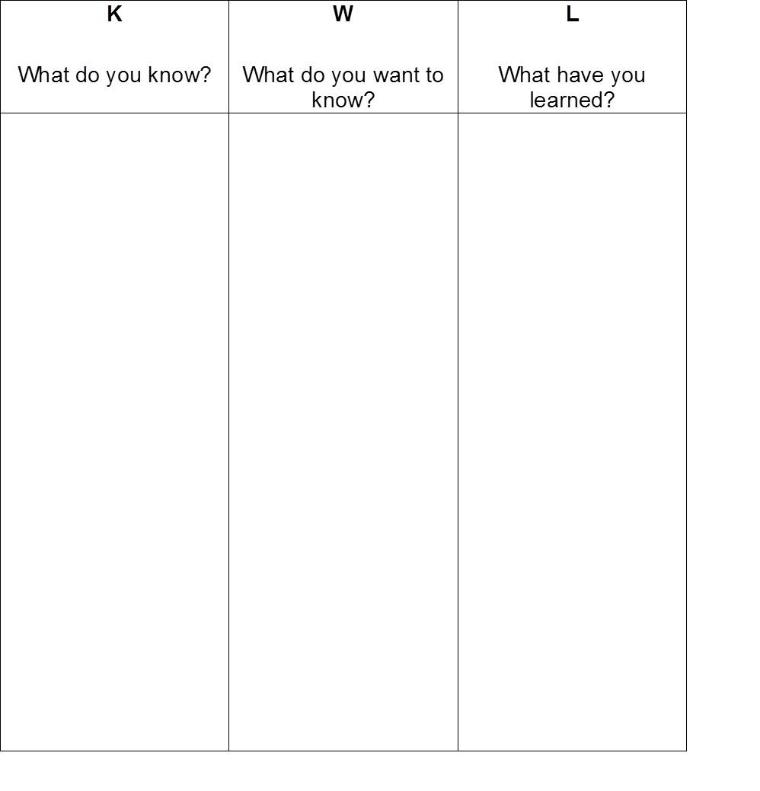
Add to ongoing class activities like a KWL chart or map: where did the characters go?
Map
Obtain a map of Afghanistan by visiting your local AAA or by searching online. Enlarge the map on a piece of butcher paper. Using information provided by authoritative print or digitals sources, have students track the locations in the novel on the map. They can also add physical features, resources, political information, and other relevant information that arises in the novel.
Responsibility Poster
Collaborate with students create a class T Chart. This can be a live, online document that students have shared access to (Google Document or Google Spreadsheet).
- Label one column “Responsibility” and the other side “Irresponsibility”.
- During this unit, encourage students to follow the local and world news, using a variety of mediums (newspapers, online sources, etc.).
- Have students periodically input a headline/article of a “Responsibility” and “Irresponsibility” in their local community and in the world on the document. Discuss the additions the next day in class.
- For all of the items in the “Irresponsible” column, have students write one suggestion on how the character could have acted more responsibly.
KWL Chart
Begin a class KWL Chart about the war in Afghanistan. What do students already know? What do they want to know?
Explore
Activity
Explore the reading more deeply with a visual or oral language activity.
Map
Draw a map of Afghanistan and include: The Capitol (Kabul), Hindu Kush mountain range (northeastern), and neighboring countries.
KWL Chart
On the chart, ask them if they know anything about Afghanistan. Show them a map and explain where it is. Show them the novel, The Breadwinner, and ask if there are any predictions given the cover? Read the dedication “To the children of war” and discuss what they think that means. Why would an author dedicate a book to kids? How would war be different for kids than for adults? Introduce Deborah Ellis.
Read background information on Afghanistan. See Author’s note in the back of the book.
Discussion
Ask discussion questions of all 9 types.
Key Questions
- How has Parvana’s housing changed in the last few years?
- Since the Taliban took control, how have Parvana’s mother and father’s jobs changed? What did they do before and what do they do now?
- The Taliban created new rules for school and education, what were the consequences for girls? What were the consequences for boys?
- What is the Taliban’s rule on public appearances?
- What is a chador?
- Parvana’s father speaks what three languages?
- What did Parvana’s father mean when he said, “Afghans cover the earth like stars cover the sky”?
- What six nations had previously tried to conquer Afghanistan?
- Why is it difficult for women to walk in a burqa?
- How long has it been since Parvana’s mother and siblings have left the house?
Analyze
Analyze the key paragraph.
Key Paragraph, p. 8
“She wasn’t really supposed to be outside at all. The Taliban had ordered all the girls and women in Afghanistan to stay inside their homes. They even forbade girls to go to school. Parvana had had to leave her sixth- grade class, and her sister Nooria was not allowed to go to her high school. Their mother had been kicked out of her job as a writer for a Kabul radio station. For more than a year now, they had all been stuck inside one room, along with five-year-old Maryam and two-year-old Ali” (p. 8).
Extend
Write
Have each student write a short product based on today’s prompt to connect to the unit theme.
Pretend that you have just arrived in Afghanistan and Parvana is your old friend. She is taking you around the market, showing you her house, pointing out the Taliban. She is talking about how as the war has gone on, each house she has lived in has been bombed and her family has had to move to smaller and smaller houses. They are becoming poorer and poorer. Write a short letter to your family in the United States narrating the sequence of events of Parvana’s life in Afghanistan. Be sure to include the rules of the Taliban and use the nouns Afghanistan, Taliban, and Kabul in your letter to help explain Parvana’s life.
Close
Close by extending today’s lesson to life and the world.
Extend the reading to the students’ lives or to the world.
Day 2
Outcomes for Today
Prepare
Background
What is Chador and Hijab wear?
Chador Etiquette-In a Kuwaiti shopping mall, Christine Michaud learns that dressing like the locals is not as easy as it looks. A hijab looks deceivingly easy to put on, especially when you receive instructions from a woman who has been wearing one for twenty years. Basically, the Muslim head covering is nothing but a large square of cloth folded once into a triangle. The fold goes over the forehead and the sides are pinned tightly under the chin to completely cover a woman's hair, ears, and neck. One of the tips of the scarf is then wrapped around the neck to hide the unfashionable pin.
Now, how hard can this be? Well, for someone who's got a perfect cube for a head, I suppose it's a cinch. For the rest of us sporting somewhat rounded skulls, no hijab will ever fit tightly and entirely hide a full hairline unless it is slightly folded in on each side just above ear level, symmetrically of course.
Word Wall
Here are five vocabulary words to teach and add to the Word Wall.
Introduce 5 important, useful words from today’s reading.
|
grumbled (20) |
resentful (21) |
lingered (26) |
intricate (22) |
rouse (26) |
Read
Review
Review the timeline from the beginning every day.
Read
Read p. 18-33
|
Setting |
Characters |
Pages |
|
Kabul |
Mother |
18-33
|
|
Nooria |
||
|
Parvana |
||
|
Father, Ali, Maryam |
Respond
Timeline
Agree on the facts in today’s reading, and list the 3-5 most important on the Timeline.
Discuss the reading and add 3-5 events to the timeline.
- Discuss the story to fix the facts: who, what, when, where, and why.
- Decide on the 3-5 most important events and add these to the timeline.
Students might mention:
- Parvana is the only one who can do things outside because she does not have to wear a burqa.
- Find out that Parvana had an older brother who died.
- Taliban burst into their home and takes their father away for having an education and spreading “foreign ideas.”
Map
Add to ongoing class activities like a KWL chart or map: where did the characters go?
Map
Obtain a map of Afghanistan by visiting your local AAA or by searching online. Enlarge the map on a piece of butcher paper. Using information provided by authoritative print or digitals sources, have students track the locations in the novel on the map. They can also add physical features, resources, political information, and other relevant information that arises in the novel.
Responsibility Poster
Collaborate with students create a class T Chart. This can be a live, online document that students have shared access to (Google Document or Google Spreadsheet).
KWL Chart
Update and add to the KWL Chart about the war in Afghanistan. What do students already know? What do they want to know?
Explore
Activity
Explore the reading more deeply with a visual or oral language activity.
Compare and contrast
Compare and contrast the fictional story of Parvana’s life living in modern day Afghanistan with the non-fiction, researched facts of the living circumstances for Afghan women.
- Using an accurate Internet source, research the living circumstances of an Afghan women and girls.
- Find new information about the living circumstances of Afghan women.
- Write three pieces of new information on the “True-life of Afghan Women and Girls” section of the Venn diagram.
- Compare and contrast Parvana’s life with the reality of the circumstances of women and girls living in Afghanistan.
Discussion
Ask discussion questions of all 9 types.
Key Questions
- What privileges did Parvana have because she did not wear a burqa?
- How did that make her feel? How did Nooria make Parvana feel?
- What did Parvana’s father say about the women of Afghanistan?
- Why did the soldiers go to their house?
- Provide an example of Parvana taking responsibility.
- Describe the scene where the soldiers arrest Parvana’s father.
Analyze
Analyze the key paragraph.
Key Paragraph. p. 21
“Parvana knew she had to fetch the water because there was nobody else in the family who could do it. Sometimes this made her resentful. Sometimes it made her proud. One thing she knew—it didn’t matter how she felt. Good mood or bad, the water had to be fetched, and she had to fetch it” (p. 21).
Extend
Write
Have each student write a short product based on today’s prompt to connect to the unit theme.
With the Venn diagram activity, compare and contrast the fictional story of Paravana’s life in modern day Afghanistan with factual research of the circumstances for women and girls living in Afghanistan. Write one informative paragraph that explains how Parvana’s life is similar to the true-life of some Afghan girls. Write a second paragraph that explains how Parvana’s life is different from the reality of some Afghan girls.
Close
Close by extending today’s lesson to life and the world.
Extend the reading to the students’ lives or to the world.
Day 3
Outcomes for Today
Prepare
Background
Who are the Taliban?
The Taliban was created in the early 1990s in northern Pakistan after the withdrawal of Soviet troops from Afghanistan. Taliban came to prominence in Afghanistan in the autumn of 1994. At first, the Taliban were well liked and welcomed by the Afghan people. Their early popularity was largely due to their success in stamping out corruption, curbing lawlessness and making the roads and the areas under their control safe for commerce to flourish.
By 1998, they were in control of almost 90% of Afghanistan. However, the Afghan people were fed up when the Taliban started to enforce strict rules - such as public executions of convicted murderers and adulterers and amputations of those found guilty of theft. Men were also required to grow beards and women had to wear the all-covering burka. The Taliban banned television, music, movie theaters and disapproved of girls ages 10 and over from going to school.
Word Wall
Here are five vocabulary words to teach and add to the Word Wall.
Introduce 5 important, useful words from today’s reading.
|
distinguish (37) |
hesitated (39) |
regulation (39) |
militia (40) |
hobbled (43) |
Read
Review
Review the timeline from the beginning every day.
Read
Read p. 34-43
|
Setting |
Characters |
Pages |
|
Home to prison |
Family |
34-43
|
|
Guards |
Respond
Timeline
Agree on the facts in today’s reading, and list the 3-5 most important on the Timeline.
Discuss the reading and add 3-5 events to the timeline.
- Discuss the story to fix the facts: who, what, when, where, and why.
- Decide on the 3-5 most important events and add these to the timeline.
Students might mention:
- Parvana and her mother go looking for her father.
- Nooria had to forge a note for her mother, pretending that her father had given her permission to be outside without a man.
- They made it to the prison and demanded that their father be released.
Map
Add to ongoing class activities like a KWL chart or map: where did the characters go?
Map
Obtain a map of Afghanistan by searching online. Enlarge the map on a piece of butcher paper. Using information provided by authoritative print or digitals sources, have students track the locations in the novel on the map. They can also add physical features, resources, political information, and other relevant information that arises in the novel.
Responsibility Poster
Collaborate with students create a class T Chart. This can be a live, online document that students have shared access to (Google Document or Google Spreadsheet).
KWL Chart
Update and add to the KWL Chart about the war in Afghanistan. What do students already know? What do they want to know?
Explore
Activity
Explore the reading more deeply with a visual or oral language activity.
Open Mind Portrait
Understand the points of view from the narrator, by filling in words and thoughts that you think Parvana was feeling in this chapter when her father is unjustly arrested and when she fails to rescue him from jail.
Discussion
Ask discussion questions of all 9 types.
Key Questions
- Why would the Taliban want all the windows painted black?
- What problem does Parvana and her mother face on their search for Father?
- How did they look for Father? What were they doing that was forbidden?
- Provide two reasons of why it was dangerous to show pictures of Parvana’s father.
- How did the guards treat them at the prison?
- What advice would you provide Parvana and her mother in order to help release Parvana’s father from prison?
- What do you think will happen next?
Analyze
Analyze the key paragraph.
Key Paragraph, p. 38
“The prison was a long way from their home. Buses were not permitted to carry women who did not have a man with them. They would have to walk the whole way. What if Father was being held somewhere else? What if they were stopped by the Taliban in the street? Mother wasn’t supposed to be out of her home without a man, or without a note from her husband” (p. 38).
Extend
Write
Have each student write a short product based on today’s prompt to connect to the unit theme.
Have you ever been blamed for something you did not do? In this chapter, Father is arrested without having broken any laws. Pretend you are Parvana, write a letter to the chief of the prison that explains the sequence in descriptive detail. In the concluding paragraph, request that the chief of the prison release your father from jail.
Close
Close by extending today’s lesson to life and the world.
Extend the reading to the students’ lives or to the world.
Day 4
Outcomes for Today
Prepare
Background
What continent is Afghanistan on?
Look at maps and structures of towns in Afghanistan.
What are Afghanistan’s neighboring countries? List the capitol, rivers, and mountains.
Word Wall
Here are five vocabulary words to teach and add to the Word Wall.
Introduce 5 important, useful words from today’s reading.
|
exhaustion (46) |
collapsed (46) |
basin (46) |
sensible (57) |
eternity (61) |
Read
Review
Review the timeline from the beginning every day.
Read
Read p. 44-62
|
Setting |
Characters |
Pages |
|
Back home |
The family without Father |
44-62
|
|
Market |
Mrs. Weera |
Respond
Timeline
Agree on the facts in today’s reading, and list the 3-5 most important on the Timeline.
Discuss the reading and add 3-5 events to the timeline.
- Discuss the story to fix the facts: who, what, when, where, and why.
- Decide on the 3-5 most important events and add these to the timeline.
Students might mention:
- Parvana and Mother return home and days go by where no one does
- They are running out of food and water so Parvana has to go out to get their Parvana goes to the market to get food and a soldier stops and hits her.
- On the way back home she bumps into Weera who decides to help them.
Map
Add to ongoing class activities like a KWL chart or map: where did the characters go?
Map
Obtain a map of Afghanistan by visiting your local AAA or by searching online. Enlarge the map on a piece of butcher paper. Using information provided by authoritative print or digitals sources, have students track the locations in the novel on the map. They can also add physical features, resources, political information, and other relevant information that arises in the novel.
Poster
Collaborate with students create a class T Chart. This can be a live, online document that students have shared access to (Google Document or Google Spreadsheet).
KWL Chart
Update and add to the KWL Chart about the war in Afghanistan. What do students already know? What do they want to know?
Explore
Activity
Explore the reading more deeply with a visual or oral language activity.
Role-Play
In these 2 chapters, Parvana is forced to take action to help her family. She has to once again go out and get food and water. After all that work, she is so exhausted she wants a drink of water. Her sister states.
“Nooria snatched it from her hands. ‘You are the stupidest girl! All we need now is for you to get sick! How could anyone so stupid end up as my sister!’
‘That’s no way to keep up team spirit,’ Mrs. Weera said” (p. 61).
- Using 2-3 flashcards, write down other ways Nooria could have responded that would have had more “team spirit.”
- Role-play the alternative responses as a class.
Discussion
Ask discussion questions of all 9 types.
Key Questions
- What were the after effects on Mother and Parvana as a result of the beatings from the soldiers?
- What is a toshak?
- Why did Parvana have to go to the market and not the older sister?
- What happened to Parvana when she went to go buy food?
- Who did Parvana run into and what did this person do?
- What are their living conditions by the end of chapter four?
- Describe how one of the characters changed in this chapter.
Analyze
Analyze the key paragraph.
Key Paragraph, p. 61
“Nooria snatched it from her hands. ‘You are the stupidest girl! All we need now is for you to get sick! How could anyone so stupid end up as my sister!’
‘That’s no way to keep up team spirit,’ Mrs. Weera said” (p. 61).
Extend
Write
Have each student write a short product based on today’s prompt to connect to the unit theme.
Parvana’s parents used to argue about whether or not they should leave Afghanistan. Parvana’s mother wanted to flee their homeland but Parvana’s father would argue, “We are Afghans. This is our home. If all the educated people leave, who will rebuild the country?” Explain the father’s argument in an informative paragraph. What are the effects of fleeing the country? What is the father’s dream for his country? Provide 3 reasons why Parvana’s family should not leave Afghanistan. Peer review: Trade your paragraph with a classmate, edit your partner’s paragraph, and rewrite your paragraph.
Close
Close by extending today’s lesson to life and the world.
Extend the reading to the students’ lives or to the world.
Day 5
Outcomes for Today
Prepare
Background
What is a SWOT matrix?
Like Parvana, we are often confronted with many problems and have to make difficult decisions. Using a SWOT (Strengths, Weaknesses, Opportunities, Threats) matrix can give you some ideas and help identify a solution.
Word Wall
Here are five vocabulary words to teach and add to the Word Wall.
Introduce 5 important, useful words from today’s reading.
|
idle (64) |
sulk (67) |
fringe (67) |
brusquely (68) |
gingerly (68 |
Read
Review
Review the timeline from the beginning every day.
Read
Read p. 63-73
|
Setting |
Characters |
Pages |
|
Home in Kabul |
The family |
64-73 |
Respond
Timeline
Agree on the facts in today’s reading, and list the 3-5 most important on the Timeline.
Discuss the reading and add 3-5 events to the timeline.
- Discuss the story to fix the facts: who, what, when, where, and why.
- Decide on the 3-5 most important events and add these to the timeline.
Students might mention:
- Parvana cuts her hair and dresses like a boy.
Map
Add to ongoing class activities like a KWL chart or map: where did the characters go?
Map
Obtain a map of Afghanistan by visiting your local AAA or by searching online. Enlarge the map on a piece of butcher paper. Using information provided by authoritative print or digitals sources, have students track the locations in the novel on the map. They can also add physical features, resources, political information, and other relevant information that arises in the novel.
Responsibility Poster
Collaborate with students create a class T Chart. This can be a live, online document that students have shared access to (Google Document or Google Spreadsheet).
KWL Chart
Continue a class KWL Chart about the war in Afghanistan. What do students already know? What do they want to know?
Explore
Activity
Explore the reading more deeply with a visual or oral language activity.
Bookmark
Have students use a sentence strip piece of paper of 1/2 of an 8 x 11 and make a bookmark. Decorate it with words and images that come to mind as you think of the novel thus far. Share with a partner.
Discussion
Ask discussion questions of all 9 types.
Key Questions
- What did they do to Parvana?
- What does she do after the changes are made?
- Why do you think the Taliban didn’t want women in the market place?
- While Parvana was in the market, she could have been punished for what two reasons?
- Why did the Taliban yell at Parvana?
- Who did Parvana meet in the market place? How did she know her?
- Why was it difficult to recognize her?
- When Parvana returned home, why did Nooria yell at her?
Analyze
Analyze the key paragraph.
Key Paragraph, p. 67
“As more and more hair fell away, Parvana began to feel like a different person. Her whole face showed. What was left of her hair was short and shaggy. It curled in a soft fringe around her ears. There were no long parts to fall into her eyes, to become tangled on a windy day, to take forever to dry when she got caught in the rain” (p. 67).
Extend
Write
Have each student write a short product based on today’s prompt to connect to the unit theme.
Parvana realized that her mother and Mrs. Weera can force her to cut her hair, but ultimately it would be her decision to pretend to be a boy and cooperate with their idea. In an informative paragraph, explain why it is better to convince someone to do something rather than to force them. Provide 2-3 reasons to help support your explanation. Have you ever tried to force someone to do something? In a second paragraph, describe an example of when you were not able to force someone to do something they did not want to do.
Close
Close by extending today’s lesson to life and the world.
Extend the reading to the students’ lives or to the world.
Day 6
Outcomes for Today
Prepare
Background
What is child labor?
Not all work done by children should be classified as child labor that is to be targeted for elimination. Children’s or adolescents’ participation in work that does not affect their health and personal development or interfere with their schooling, is generally regarded as something positive. This includes activities such as helping their parents around the home, assisting in a family business or earning pocket money outside school hours and during school holidays. These kinds of activities contribute to children’s development and to the welfare of their families; they provide them with skills and experience, and help to prepare them to be productive members of society during their adult life.
Word Wall
Here are five vocabulary words to teach and add to the Word Wall.
Introduce 5 important, useful words from today’s reading.
|
arrested (75) |
flicker (82) |
tucked (82) |
customer (81) |
embedded (78) |
Read
Review
Review the timeline from the beginning every day.
Read
Read p. 74-82
|
Setting |
Characters |
Pages |
|
Home in Kabul |
Parvana |
74-82
|
|
Rest of the family except father |
||
|
Talib soldier |
Respond
Timeline
Agree on the facts in today’s reading, and list the 3-5 most important on the Timeline.
Discuss the reading and add 3-5 events to the timeline.
- Discuss the story to fix the facts: who, what, when, where, and why.
- Decide on the 3-5 most important events and add these to the timeline.
Students might mention:
- Parvana goes back out to market.
- She tries to earn money by reading and writing things for people who cannot.
- She reads a letter for a Talib soldier from his dead wife.
Map
Add to ongoing class activities like a KWL chart or map: where did the characters go?
Map
Obtain a map of Afghanistan by visiting your local AAA or by searching online. Enlarge the map on a piece of butcher paper. Using information provided by authoritative print or digitals sources, have students track the locations in the novel on the map. They can also add physical features, resources, political information, and other relevant information that arises in the novel.
Responsibility Poster
Collaborate with students create a class T Chart. This can be a live, online document that students have shared access to (Google Document or Google Spreadsheet).
KWL Chart
Continue the class KWL Chart about the war in Afghanistan. What do students already know? What do they want to know?
Explore
Activity
Explore the reading more deeply with a visual or oral language activity.
Map
Draw a map of Afghanistan and include: The Capitol (Kabul), Hindu Kush mountain range (northeastern), and neighboring countries.
KWL Chart
On the chart, ask them if they know anything about Afghanistan. Show them a map and explain where it is. Show them the novel, The Breadwinner, and ask if there are any predictions given the cover? Read the dedication “To the children of war” and discuss what they think that means. Why would an author dedicate a book to kids? How would war be different for kids than for adults? Introduce Deborah Ellis.
Read background information on Afghanistan. See Author’s note in the back of the book.
Discussion
Ask discussion questions of all 9 types.
Key Questions
- Why do they want to disguise Parvana as a boy?
- Why is it significant that Parvana wear her late brother’s clothes?
- Describe how Parvana looked different when her mother and Mrs. Weera cut her hair.
- Why does Parvana go back to the market?
- Name three items Parvana bought at the market.
- What would happen if Parvana was caught wearing a disguise?
- What is special about Parvana that most people in Afghanistan do not have? Who was Parvana’s first customer?
- What is one question you would ask the Taliban man after hearing his letter?
- Why does Parvana change the price for her letter reading?
- Why was the embroidered dress special to Parvana?
- What did Parvana do for the Taliban?
- What did the Taliban help her realize?
- How does Nooria change during this chapter?
Analyze
Analyze the key paragraph.
Key Paragraph, p. 80
“Parvana took a deep breath and let it out slowly. Up until then, she had seen Taliban only as men who beat women and arrested her father. Could they have feelings of sorrow, like other human beings?” (p. 80)
Extend
Write
Have each student write a short product based on today’s prompt to connect to the unit theme.
Pretend that you have just arrived in Afghanistan and Parvana is your old friend. She is taking you around the market, showing you her house, pointing out the Taliban. She is talking about how as the war has gone on, each house she has lived in has been bombed and her family has had to move to smaller and smaller houses. They are becoming poorer and poorer. Write a short letter to your family in the United States narrating the sequence of events of Parvana’s life in Afghanistan. Be sure to include the rules of the Taliban and use the nouns Afghanistan, Taliban, and Kabul in your letter to help explain Parvana’s life.
Close
Close by extending today’s lesson to life and the world.
Extend the reading to the students’ lives or to the world.
Day 7
Outcomes for Today
Prepare
Background
What are the Taliban’s Rules?
The Taliban created the following rules for women.
- Complete ban on women's work outside the home, which also applies to female teachers, engineers and most professionals. Only a few female doctors and nurses are allowed to work in some hospitals in Kabul.
- Complete ban on women's activity outside the home unless accompanied by a mahram (close male relative such as a father, brother or husband).
- Ban on women dealing with male shopkeepers.
- Ban on women being treated by male doctors.
- Ban on women studying at schools, universities or any other educational institution. (Taliban have converted girls' schools into religious seminaries.)
- Requirement that women wear a long veil (Burqa), which covers them from head to toe.
- Whipping, beating and verbal abuse of women not clothed in accordance with Taliban rules, or of women unaccompanied by a mahram.
- Whipping of women in public for having non-covered ankles.
- Public stoning of women accused of having sex outside marriage. (A number of lovers are stoned to death under this rule).
- Ban on the use of cosmetics. (Many women with painted nails have had fingers cut off).
- Ban on women talking or shaking hands with non-mahram
- Ban on women laughing loudly. (No stranger should hear a woman's voice).
- Ban on women wearing high heel shoes, which would produce sound while walking. (A man must not hear a woman's footsteps.)
- Ban on women riding in a taxi without a mahram.
- Ban on women's presence in radio, television or public gatherings of any kind.
- Ban on women playing sports or entering a sport center or club.
- Ban on women riding bicycles or motorcycles, even with their mahrams.
- Ban on women's wearing brightly colored clothes. In Taliban terms, these are "sexually attracting colors."
- Ban on women gathering for festive occasions such as the Eids, or for any recreational purpose.
- Ban on women washing clothes next to rivers or in a public place.
- Modification of all place names including the word "women." For example, "women's garden" has been renamed "spring garden".
- Ban on women appearing on the balconies of their apartments or houses.
- Compulsory painting of all windows, so women cannot be seen from outside their homes.
- Ban on male tailors taking women's measurements or sewing women's clothes.
- Ban on female public baths.
- Ban on males and females traveling on the same bus. Public buses have now been designated "males only" (or "females only").
- Ban on flared (wide) pant-legs, even under a burqa.
- Ban on the photographing or filming of women.
- Ban on women's pictures printed in newspapers and books, or hung on the walls of houses and shops.
Word Wall
Here are five vocabulary words to teach and add to the Word Wall.
Introduce 5 important, useful words from today’s reading.
|
ruined (85) |
pneumonia (85) |
distinctive (84) |
collided (94) |
sprawled (94) |
Read
Review
Review the timeline from the beginning every day.
Read
Read p. 83-94
|
Setting |
Characters |
Pages |
|
Kabul |
Mrs. Weera |
83-94
|
|
Parvana’s Family |
Respond
Timeline
Agree on the facts in today’s reading, and list the 3-5 most important on the Timeline.
Discuss the reading and add 3-5 events to the timeline.
- Discuss the story to fix the facts: who, what, when, where, and why.
- Decide on the 3-5 most important events and add these to the timeline.
Students might mention:
- Weera moves in with Parvana’s family.
- She and Mother are going to start their own magazine.
- Parvana was able to escort all the girls and women Parvana starts finding odd objects on her blanket at the market.
- Then one day a tea boy slips and falls on her blanket—it turns out he was a girl.
Map
Add to ongoing class activities like a KWL chart or map: where did the characters go?
Map
Obtain a map of Afghanistan by visiting your local AAA or by searching online. Enlarge the map on a piece of butcher paper. Using information provided by authoritative print or digitals sources, have students track the locations in the novel on the map. They can also add physical features, resources, political information, and other relevant information that arises in the novel.
Responsibility Poster
Collaborate with students create a class T Chart. This can be a live, online document that students have shared access to (Google Document or Google Spreadsheet).
KWL Chart
Continue the KWL Chart about the war in Afghanistan. What do students already know? What do they want to know?
Explore
Activity
Explore the reading more deeply with a visual or oral language activity.
Fix the facts
Have students brainstorm events from the chapter. They don't have to be in order. Then, put all the major events on 3 x 5 cards. One event per card. Shuffle the cards. Give out one card to each person until the cards are finished. Have kids stand up and put them in the right order. Don't let this activity take too much time.
Bargaining Simulation
One student plays the role of the shopkeeper (S) using props to sell. A second student plays the role as the customer (C). Have students state the following dialogue:
(S): I have ______ product for a good price of $60.00 but I’ll sell it to you for only $50.00.
(C): $50.00! Wow it is a nice ______ but $50.00 is too much! What about $10.00?
(S): $10.00 is not enough! I’ll sell it to you for a price that is not more than $50 but not less than $10. What about $40?
(C): $40 ! What about _____ (name lower price).
(S): No that too little!! This is a really good quality ______ I will sell it you for _____ (name a price higher than the price previously states).
The bargaining continues until a price is agreed on. This can be done as a class demonstration with two or more students or in pairs.
Discussion
Ask discussion questions of all 9 types.
Key Questions
- How has Weera been living?
- Why did Maryam go outside? How was the experience for her?
- What was the new daily routine?
- Why was it difficult for Nooria to get fresh air even if she was outside?
- Describe the siblings trip to the water tap. What do they do there?
- Why was it dangerous for Nooria to flip up her burqa?
- Devise a getaway plan incase Nooria was caught by the Taliban without being fully covered.
- Who does Parvana think she saw in the market?
- What challenges does Parvana face as a girl in disguise working in the market?
- What did Parvana discover at the end of the chapter?
Analyze
Analyze the key paragraph.
Key Paragraph, p. 93
“The man put his hand on her shoulder.
‘You seem like a fine boy. I’m sorry I am not your father.’ He paused then said in a lower voice,
‘Your father is in prison?’ Parvana nodded.
‘People are released from prison sometimes. Don’t give up hope.’ The man went on his way into the market, and Parvana went back to her blanket” (p. 93).
Extend
Write
Have each student write a short product based on today’s prompt to connect to the unit theme.
Why are children in Afghanistan working? In an informative paragraph, explain why it is important for Parvana to work in the market? Provide 3 reasons why Parvana works in the market. Include 2-3 facts to support your claim from the background history. Trade your paragraph with a classmate, edit your partner’s paragraph, and rewrite your paragraph.
Close
Close by extending today’s lesson to life and the world.
Extend the reading to the students’ lives or to the world.
Day 8
Outcomes for Today
Prepare
Background
What is education like in Afghanistan?
With the fall of the Communist government in 1992, the country was divided among warring factions, many of them religiously-inspired groups opposed to modern education and education of girls. Millions of Afghans fled the country, particularly the educated. Of the schools not destroyed by war, many were shuttered because of lack of insecurity, the lack of teachers and teaching materials, or simply poverty. Under the Taliban, education went from wretched to worse. They denied nearly all girls the right to attend school and many boys were without an education as well. Only a small number of girls were able to attend secret schools or received an education abroad. Upon the defeat of the Taliban by US forces in 2001, and as a result of the Afghan Constitution, education is now compulsory and free from grades one through nine and free up to the undergraduate level of university. Formal education options also include vocational education and teacher education as well as Islamic education.
It is important that more girls and women now gain access to higher levels of education so they can have better jobs and can gain leadership roles in local and national government.
Word Wall
Here are five vocabulary words to teach and add to the Word Wall.
Introduce 5 important, useful words from today’s reading.
|
distinguish (95) |
kerosene (98) |
ridiculous (100) |
smuggle (101) |
embroidery (102) |
Read
Review
Review the timeline from the beginning every day.
Read
Read p. 95-103
|
Setting |
Characters |
Pages |
|
Market |
Parvana |
95-103
|
|
Shauzia |
||
|
Mrs. Weera |
||
|
The Family |
Respond
Timeline
Agree on the facts in today’s reading, and list the 3-5 most important on the Timeline.
Discuss the reading and add 3-5 events to the timeline.
- Discuss the story to fix the facts: who, what, when, where, and why.
- Decide on the 3-5 most important events and add these to the timeline.
Students might mention:
- Parvana meets the other girl, whose name is Shauiza.
- Weera and Mother are thinking of opening a small school for girls in their home, against the rules of the Taliban.
- Shauzia told her she knows of another way to make money.
Map
Add to ongoing class activities like a KWL chart or map: where did the characters go?
Map
Obtain a map of Afghanistan by visiting your local AAA or by searching online. Enlarge the map on a piece of butcher paper. Using information provided by authoritative print or digitals sources, have students track the locations in the novel on the map. They can also add physical features, resources, political information, and other relevant information that arises in the novel.
Responsibility Poster
Collaborate with students create a class T Chart. This can be a live, online document that students have shared access to (Google Document or Google Spreadsheet).
KWL Chart
Continue the KWL Chart about the war in Afghanistan. What do students already know? What do they want to know?
Explore
Activity
Explore the reading more deeply with a visual or oral language activity.
Jingle
Write a jingle – a song for advertising. Create a jingle that will inform other girls that there is an underground school at Parvana’s house. Use words that convey this message without out actually using the words “school” or “teacher” so that the Taliban will not catch on.
Discussion
Ask discussion questions of all 9 types.
Key Questions
- How did the family react to Shauzia?
- Describe Shauzia’s living situation?
- Why does Shauzia want to make extra money? What does she want to invest in?
- What is kerosene used for?
- Why hasn’t Shauzia kept up with her studies?
- Why do Mrs. Weera and Parvana’s mother want to produce a magazine?
- What is Mrs. Weera’s plan for distributing the magazine?
- Why do Weera and Mother want to start in the school?
- Why do you think someone is gave Parvana a gift?
Analyze
Analyze the key paragraph.
Key Paragraph, p. 100
“‘I’ve been thinking of starting up a little school here,’ Mrs. Weera said to Parvana’s surprise.
‘A secret school, for a small number of girls, a few hours a week. You must attend. Parvana will let you know when’” (p. 100).
Extend
Write
Have each student write a short product based on today’s prompt to connect to the unit theme.
Imagine you are also going to teach at Mrs. Weera’s underground school. What subject would you teach? What is an important lesson that you think Parvana and her siblings should learn? Describe your lesson. What will you do first, second, and third? Include an activity to help explain your lesson.
Close
Close by extending today’s lesson to life and the world.
Extend the reading to the students’ lives or to the world.
Day 9
Outcomes for Today
Prepare
Background
What is Bone Digging?
When the Taliban were in charge, it was difficult to work. Many people in Afghanistan became desperate enough to dig up human bones to sell. Bones were often sold in bulk to Pakistani traders. The bones were used to feed animals and make soap and cooking oil. A male skeleton weighing 13 pounds was worth about 50 cents.
Source: http://articles.orlandosentinel.com/1996-12-09/news/9612090060_1_capital-of-afghanistan-bones-kabul
Word Wall
Here are five vocabulary words to teach and add to the Word Wall.
Introduce 5 important, useful words from today’s reading.
|
objections (104) |
pecked (105) |
stench (105) |
unearthed (107) |
accommodate (110) |
Read
Review
Review the timeline from the beginning every day.
Read
Read p. 104-113
|
Setting |
Characters |
Pages |
|
Kabul |
Parvana |
104-113
|
|
Shauzia |
Respond
Timeline
Agree on the facts in today’s reading, and list the 3-5 most important on the Timeline.
Discuss the reading and add 3-5 events to the timeline.
- Discuss the story to fix the facts: who, what, when, where, and why.
- Decide on the 3-5 most important events and add these to the timeline.
Students might mention:
- Shauzia tells Parvana that they can make money by digging up bones.
- There is a bone-broker who weighs the bones and he pays by the They made as much money in one day as they normally would in three. They decided to go again the next day.
Map
Add to ongoing class activities like a KWL chart or map: where did the characters go?
Map
Obtain a map of Afghanistan by visiting your local AAA or by searching online. Enlarge the map on a piece of butcher paper. Using information provided by authoritative print or digitals sources, have students track the locations in the novel on the map. They can also add physical features, resources, political information, and other relevant information that arises in the novel.
Responsibility Poster
Collaborate with students create a class T Chart. This can be a live, online document that students have shared access to (Google Document or Google Spreadsheet).
KWL Chart
Continue the KWL Chart about the war in Afghanistan. What do students already know? What do they want to know?
Explore
Activity
Explore the reading more deeply with a visual or oral language activity.
Advertisement
Create an advertisement for a device that can detect the location of landmines. Draw the image; explain how it works, and state the price and where you can buy it. Write 2-3 reasons why someone should buy this product.
Poster
Create a poster of the most vivid part of this chapter. How did the writer create such a vivid scene in your mind without showing you a picture? This is an example of good descriptive writing.
Discussion
Ask discussion questions of all 9 types.
Key Questions
- What is a better way to make money for Parvana and Shauzia?
- Do they turn all their money to their families? Why or why not?
- What do they want to buy?
- How does the bone broker make money?
- Why was going to the bathroom dangerous?
- Why are some landmines disguised as toys?
- Why is it funny when Parvana told Shauzia that there are no landmines, “I kicked them out of the way?”
- What do Parvana and Shauzia imagine while digging up bones that help them believe there will be a better future ahead?
Analyze
Analyze the key paragraph.
“Bombs had fallen on the cemetery, too. The explosions had shaken up the graves in the ground. Here and there, white bones of the long-dead stuck up out of the rusty-brown earth. Flocks of large black and gray crows cawed and pecked at the ground around the ruined graves of the newer section of the graveyard. The slight breeze carried a rotting stench to where Parvana and Shauzia were standing, on the edge of the cemetery’s older section. They watched the boys fan out across the graveyard and start digging” (p. 105).
Extend
Write
Have each student write a short product based on today’s prompt to connect to the unit theme.
Write another short letter to your family in the United States informing them the sequence of events of Parvana’s life in Afghanistan from this chapter. Describe the surrounding environment using a quote from the chapter. Paraphrase information from the background history information to explain the dangers of landmines. Provide 2 reflective sentences about how Parvana tried to make the most of an unpleasant situation.
Close
Close by extending today’s lesson to life and the world.
Extend the reading to the students’ lives or to the world.
Day 10
Outcomes for Today
Prepare
Background
What are the Taliban’s unusually cruel punishments for petty crimes?
Taliban officials carried out lashings, stoning, amputations and executions in public places such as squares, schools or sports grounds. The sports stadiums in Kabul and Kandahar were notorious for such spectacles with thousands of people attending. Taliban fighters would ensure a high turnout by driving through neighborhoods announcing punishments through mounted loudspeakers. Trained doctors, who operated with their faces covered for fear of reprisals, usually carried out amputations. In many cases a local anesthetic was applied before the limb was removed with simple surgical instruments. The punishment for theft was the loss of a hand, depending on the severity of the crime.
Word Wall
Here are five vocabulary words to teach and add to the Word Wall.
Introduce 5 important, useful words from today’s reading.
|
stunned (116) |
relented (117) |
stint (118) |
intimidated (119) |
thwack (121 |
Read
Review
Review the timeline from the beginning every day.
Read
Read p. 114-122
|
Setting |
Characters |
Pages |
|
Kabul |
The Family |
114-122
|
|
Shauzia |
||
|
Mrs. Weera |
||
|
Soldiers |
Respond
Timeline
Agree on the facts in today’s reading, and list the 3-5 most important on the Timeline.
Discuss the reading and add 3-5 events to the timeline.
- Discuss the story to fix the facts: who, what, when, where, and why.
- Decide on the 3-5 most important events and add these to the timeline.
Students might mention:
- Parvana told the family what she had been doing after all.
- Parvana and Shauzia made enough money over time to buy their They decided to sell cigarettes and chewing gum.
- Parvana has noticed that Nooria is not as mean to her anymore.
- Parvana and Shauzia thought they would sell their things at the soccer stadium.
- They went expecting a soccer game, and discovered that Taliban soldiers were getting the hands off of prisoners because they were punishing them for being thieves.
Map
Add to ongoing class activities like a KWL chart or map: where did the characters go?
Map
Obtain a map of Afghanistan by visiting your local AAA or by searching online. Enlarge the map on a piece of butcher paper. Using information provided by authoritative print or digitals sources, have students track the locations in the novel on the map. They can also add physical features, resources, political information, and other relevant information that arises in the novel.
Responsibility Poster
Collaborate with students create a class T Chart. This can be a live, online document that students have shared access to (Google Document or Google Spreadsheet).
KWL Chart
Continue the KWL Chart about the war in Afghanistan. What do students already know? What do they want to know?
Explore
Activity
Explore the reading more deeply with a visual or oral language activity.
Postcard
Write a postcard from Parvana to her dad telling him how horrible things have gotten.
Discussion
Ask discussion questions of all 9 types.
Key Questions
- How does Mother react to Parvana’s job?
- Why does Mrs. Weera want to write about Parvana’s job in her magazine? Why is her job important to share with the rest of the world?
- What has happened between Nooria and Parvana?
- What were the soldiers doing to the men and why?
- Why do Parvana and Shauzia sell cigarettes and gum?
- Why didn’t anyone try to steal the cigarettes and gum when Parvana and Shauzia spilled them from their tray?
- What did Parvana hope Shauzia didn’t see?
- Why do you think people stole even though this harsh law exists?
Analyze
Analyze the key paragraph.
Key Paragraph, p. 121
“All of a sudden one of the soldiers took out a sword, raised it above his head and brought it down on one man’s arm. Blood flew in every direction. The man cried out in pain. Next to Parvana, Shauzia started screaming. Parvana clamped her hand over Shauzia’s mouth and pulled her down to the floor of the stadium stands. The rest of the stadium was quiet. There was still no cheering” (p. 121).
Extend
Write
Have each student write a short product based on today’s prompt to connect to the unit theme.
In some cultures, people who were considered thieves were punished by having their hands cut off. In an explanatory paragraph, describe why less people would steal with this law? Provide two reasons to support your answer. Create a new law that will positively encourage people from stealing.
Close
Close by extending today’s lesson to life and the world.
Extend the reading to the students’ lives or to the world.
Day 11
Outcomes for Today
Prepare
Background
Word Wall
Here are five vocabulary words to teach and add to the Word Wall.
Introduce 5 important, useful words from today’s reading.
|
mending (123) |
insisting (128) |
nomads (126) |
undertaking (126) |
snippets (130) |
Read
Review
Review the timeline from the beginning every day.
Read
Read p. 123-134
|
Setting |
Characters |
Pages |
|
Kabul |
The Family |
123-134 |
|
|
Shauzia |
123-134 |
Respond
Timeline
Agree on the facts in today’s reading, and list the 3-5 most important on the Timeline.
Discuss the reading and add 3-5 events to the timeline.
- Discuss the story to fix the facts: who, what, when, where, and why.
- Decide on the 3-5 most important events and add these to the timeline.
Students might mention:
- Parvana is getting tired and wants a break from working in the market with her tray.
- Shauzia tells Parvana that she is saving money so she can get out of here and go to France.
- Shauzia plans on going soon because her shape is changing and she won’t look like a boy forever.
- Nooria was teaching in “their school” at hom Then, surprise, surprise, Nooria is getting married!
Map
Add to ongoing class activities like a KWL chart or map: where did the characters go?
Map
Obtain a map of Afghanistan by visiting your local AAA or by searching online. Enlarge the map on a piece of butcher paper. Using information provided by authoritative print or digitals sources, have students track the locations in the novel on the map. They can also add physical features, resources, political information, and other relevant information that arises in the novel.
Responsibility Poster
Collaborate with students create a class T Chart. This can be a live, online document that students have shared access to (Google Document or Google Spreadsheet).
KWL Chart
Continue the KWL Chart about the war in Afghanistan. What do students already know? What do they want to know?
Explore
Plan of Action
Devise a plan of action for Shauzia to join the nomads:
- Draw a map of Afghanistan and Pakistan that show the route from city to city starting from Kabul, Afghanistan and ending in Islamabad, Pakistan.
- Draw a picture of the 10 most important items Shauzia should bring if she decided to go to Pakistan.
Discussion
Ask discussion questions of all 9 types.
Key Questions
- How is Parvana feeling?
- What is Shauzia planning on doing?
- Why is Shauzia in a rush? What did Parvana really want?
- Why couldn’t Parvana’s mother leave when she had the chance?
- What secret did Parvana share with Shauzia?
- Why does completion make it more difficult for Parvana to sell her items?
- How do you think Ali’s life will be different as a baby growing up during a war?
- What kinds of things grow in Afghanistan?
- What do you think happened in the house with the angry man and crying women?
Analyze
Analyze the key paragraph.
Key Paragraph, p. 130
“Parvana was tired. She wanted to sit in a classroom and be bored by a geography lesson. She wanted to be with her friends and talk about homework and games and what to do on school holidays. She didn’t want to know any more about death or blood or pain” (p. 130).
Extend
Write
Have each student write a short product based on today’s prompt to connect to the unit theme.
What would you do in Shauzia’s situation? Help Shauzia write a pro/con list. Explain why Shauzia should stay in Afghanistan. Provide 3 reasons. Explain why Shauzia should go to Pakistan. Provide 3 reasons.
Close
Close by extending today’s lesson to life and the world.
Extend the reading to the students’ lives or to the world.
Day 12
Outcomes for Today
Prepare
Background
What is Child Marriage in Afghanistan?
Child marriage is defined as marriages where either spouse is below age 18. There is a growing global trend, including in some Islamic countries, of setting 18 as the minimum age of marriage. According to the Afghan Ministry of Public Health’s 2010 Mortality Survey, conducted in all 34 provinces of Afghanistan including a nationally representative sample of 24,032 households, 53 percent of all women in the 25-49 age group were married by age 18, and 21 percent of the women were married by age 15.3. A 2012 global study by the United Nations Population Fund put Afghanistan among 41 countries in the world that reported 30 percent or more of its women in the 20-24 age group married by age 18.4
Source: “Afghanistan Ending Child Marriage and Domestic Violence” http://www.hrw.org/sites/default/files/related_material/Afghanistan_brochure_0913_09032013.pdf
Word Wall
Here are five vocabulary words to teach and add to the Word Wall.
Introduce 5 important, useful words from today’s reading.
|
fetch (137) |
satisfaction (137) |
glowered (137) |
sulking (138) |
accompany (138) |
Read
Review
Review the timeline from the beginning every day.
Read
Read p. 135-143
|
Setting |
Characters |
Pages |
|
Kabul |
The Family |
135-143
|
|
July |
Mrs. Weera |
Respond
Timeline
Agree on the facts in today’s reading, and list the 3-5 most important on the Timeline.
Discuss the reading and add 3-5 events to the timeline.
- Discuss the story to fix the facts: who, what, when, where, and why.
- Decide on the 3-5 most important events and add these to the timeline.
Students might mention:
- Nooria is getting ready to move to another city to get ma Nooria feels like she will have a better life where she is going.
- They will be gone most of the summer and Parvana will stay with Weera. Parvana had more free time than she was used to and she read her father’s books.
- Parvana accidentally falls asleep in a ruined build She wakes up to hear a woman crying.
Map
Add to ongoing class activities like a KWL chart or map: where did the characters go?
Map
Obtain a map of Afghanistan by visiting your local AAA or by searching online. Enlarge the map on a piece of butcher paper. Using information provided by authoritative print or digitals sources, have students track the locations in the novel on the map. They can also add physical features, resources, political information, and other relevant information that arises in the novel.
Responsibility Poster
Collaborate with students create a class T Chart. This can be a live, online document that students have shared access to (Google Document or Google Spreadsheet).
KWL Chart
Continue the KWL Chart about the war in Afghanistan. What do students already know? What do they want to know?
Explore
Activity
Explore the reading more deeply with a visual or oral language activity.
Picture
What changes are you witnessing in Parvana? Write words and draw pictures to represent what Parvana was like before her family was divided. How did she behave? What were her responsibilities?
Discussion
Ask discussion questions of all 9 types.
Key Questions
- What do Nooria and Parvana talk about concerning the marriage?
- Why is Nooria getting married?
- Why does Nooria think it is a good idea to get married?
- How is Nooria’s marriage different from American marriages?
- Who escorts Parvana’s family to Mazar? What is their plan if they meet a Talib?
- Why is Parvana not going to Nooria’s wedding?
- How does Parvana feel with an empty house?
Analyze
Analyze the key paragraph.
Key Paragraph, p. 136
“Nooria nodded.
‘Look at my life here, Parvana. I hate living under the Taliban. I’m tired of looking after the little ones. My school classes happen so seldom, they’re of almost no value. There’s no future for me here. At least in Mazar I can go to school, walk the streets without having to wear a burqa, and get a job when I’ve completed school. Maybe in Mazar I can have some kind of life. Yes I want to do this’” (p. 136).
Extend
Write
Have each student write a short product based on today’s prompt to connect to the unit theme.
How are the circumstances of Nooria’s marriage different to the circumstances of marriages in the U.S.? Explain the Nooria’s argument for getting married in an informative paragraph. Provide 3 reasons why Nooria decided to get married.
Close
Close by extending today’s lesson to life and the world.
Extend the reading to the students’ lives or to the world.
Day 13
Outcomes for Today
Prepare
Background
What was the conduct of war?
This is the issue of how a war should be fought, rather than why or if it should be fought.
While the issues of when is it right to go to war are high level issues for governments, the issues of the conduct of war often end up on the desk of military commanders, or fall to the instant decision of individual soldiers.
Word Wall
Here are five vocabulary words to teach and add to the Word Wall.
Introduce 5 important, useful words from today’s reading.
|
rummaged (144) |
huddled (144) |
heroine (148) |
critical (149) |
restocked (150) |
Read
Review
Review the timeline from the beginning every day.
Read
Read p. 144-154
|
Setting |
Characters |
Pages |
|
Kabul |
Parvana |
144-154
|
|
Homa |
||
|
Mrs. Weera |
||
|
Shauzia |
||
|
Father |
Respond
Timeline
Agree on the facts in today’s reading, and list the 3-5 most important on the Timeline.
Discuss the reading and add 3-5 events to the timeline.
- Discuss the story to fix the facts: who, what, when, where, and why.
- Decide on the 3-5 most important events and add these to the timeline.
Students might mention:
- Parvana helps the young woman to her house under the cover of Her name was Homa and she escaped from Mazar when the Taliban captured the city. Her whole family was shot to death in front of her.
- Parvana had a hard time with this news and felt hopeless.
- When she came home one day she saw her father being helped in the apartment.
Map
Add to ongoing class activities like a KWL chart or map: where did the characters go?
Map
Obtain a map of Afghanistan by visiting your local AAA or by searching online. Enlarge the map on a piece of butcher paper. Using information provided by authoritative print or digitals sources, have students track the locations in the novel on the map. They can also add physical features, resources, political information, and other relevant information that arises in the novel.
Responsibility Poster
Collaborate with students create a class T Chart. This can be a live, online document that students have shared access to (Google Document or Google Spreadsheet).
KWL Chart
Continue the KWL Chart about the war in Afghanistan. What do students already know? What do they want to know?
Explore
Activity
Explore the reading more deeply with a visual or oral language activity.
Comic Book Strip
Draw a comic book strip. Choose one event from this chapter and create a comic book strip by drawing four scenes that describe the event. Include dialogue and write captions at the bottom of each scene.
Discussion
Ask discussion questions of all 9 types.
Key Questions
- Who did Parvana meet?
- What was wrong with this person?
- What wasn’t this person wearing?
- Why did Parvana tell herself that she was Malali?
- What happened in Mazar?
- What happened to Parvana after Homa told her what had occurred in Mazar?
- What are three positive things that happened to Homa after she had lost her family?
- Who came home?
- What do you predict will happen next?
Analyze
Analyze the key paragraph.
Key Paragraph, p. 154
“Parvana got out of bed and carried on as before. She did her work in the market, fetched water, listened to Mrs. Weera’s stories and got to know Homa. She did all these things because she didn’t know what else to do. But she moved through her days as though she were moving through an awful nightmare—a nightmare from which there was no release in the morning” (154).
Extend
Write
Have each student write a short product based on today’s prompt to connect to the unit theme.
Imagine you are Homa. Write a journal update on the recent life changing events. Describe what happened to you and your family in Mazar. What happened first, second, and third? Describe the tense surrounding environment using a quote from the chapter. Provide 2-3 reflective sentences to express your feelings on the events of this chapter.
Close
Close by extending today’s lesson to life and the world.
Extend the reading to the students’ lives or to the world.
Day 14
Outcomes for Today
Prepare
Background
What are 11 Facts about Refugees?
Consider how radically your world would change if, without notice, you were forced to leave your home and possessions behind and relocate to an area where you don’t know anyone and have no idea when you will eat next. This is the reality of millions of people across the world.
- A refugee is legally defined as a person who is outside his or her country of nationality and is unable to return due to a well-founded fear of persecution because of his or her race, religion, nationality, political opinion, or membership in a particular social group.
- In early 2012, there were 15.2 million refugees around the world, with the highest number in Pakistan (4.8 million) and the most refugees originating from Afghanistan (2.7 million).
- It’s estimated that 80 percent of refugees are women and children. In 2012, 46 percent were under the age of 18 and 48 percent were women.
- An asylum seeker is a person who is looking to be recognized as a refugee, but has not yet received formal refugee status. The most asylum seekers come from Pakistan, Iran, and Sri Lanka.
- Internally displaced people (IDPs) are those who have been forced to leave their homes as a result of armed conflict, generalized violence, or human rights violations. Unlike refugees they have not crossed an international border.
- In 2011, there were roughly 26.4 million people displaced internally (within their country of origin) by conflict.
- Under international law, refugees are not allowed to be forced back to the countries they have fled.
- Developing countries host 80 percent of the world’s refugees.
- In 2011, the countries with the most number of IDPs were Colombia (3.8 million), Sudan (2.4 million), Democratic Republic of Congo (1.7 million), Somalia (1.4 million) and Iraq (1.3 million).
- A total of 895,000 individual applications for asylum or refugee status were submitted to governments and UNHCR offices in 166 countries in 2011. Roughly 11 percent of these requests were fulfilled.
2011 saw a significant number of people seeking asylum or refugee status from countries experiencing recent or ongoing conflict or security concerns.
Source: http://www.dosomething.org/tipsandtools/11-facts-about-refugees
Word Wall
Here are five vocabulary words to teach and add to the Word Wall.
Introduce 5 important, useful words from today’s reading.
|
recognizable (155) |
tattered (155) |
poultice (156) |
wail (158) |
refugee (159) |
Read
Review
Review the timeline from the beginning every day.
Read
Read p. 155-160
|
Setting |
Characters |
Pages |
|
Kabul |
Father |
155-160
|
|
Mrs. Weera |
||
|
Parvana |
Respond
Timeline
Agree on the facts in today’s reading, and list the 3-5 most important on the Timeline.
Discuss the reading and add 3-5 events to the timeline.
- Discuss the story to fix the facts: who, what, when, where, and why.
- Decide on the 3-5 most important events and add these to the timeline.
Students might mention:
- Father was barely recognizable.
- They find out that many people are fleeing Mazar and staying in refugee cam Father and Parvana want to go look for the rest of the family.
- Weera decided to take Homa to Pakistan with her.
- Parvana urges her to take Shauzia as well, but Weera says that would be deserting her family.
Map
Add to ongoing class activities like a KWL chart or map: where did the characters go?
Map
Obtain a map of Afghanistan by visiting your local AAA or by searching online. Enlarge the map on a piece of butcher paper. Using information provided by authoritative print or digitals sources, have students track the locations in the novel on the map. They can also add physical features, resources, political information, and other relevant information that arises in the novel.
Responsibility Poster
Collaborate with students create a class T Chart. This can be a live, online document that students have shared access to (Google Document or Google Spreadsheet).
KWL Chart
Continue the KWL Chart about the war in Afghanistan. What do students already know? What do they want to know?
Explore
Activity
Explore the reading more deeply with a visual or oral language activity.
Chapter Titles
The Breadwinner has 15 chapters without chapter titles. Create chapter titles for chapters 1-14 based on the significant details and events from the chapter.
Discussion
Ask discussion questions of all 9 types.
Key Questions
- What conditions was Father in when he came home?
- What was different about Parvana now?
- What did Parvana and Father decide to do?
- What did Weera decide to do?
- What is Parvana working for?
- What is Shauzia working for?
- Why would Shauzia’s life be over if she got married?
Analyze
Analyze the key paragraph.
Key Paragraph, p. 157-158
“Parvana was filled with hope. In the market she chased after customers just like the real boys did. Mrs. Weera suggested some medicine for Father, and Parvana worked and worked until she had earned the money to buy it. It seemed to help.”
‘I feel like I’m working for something now,’ she told Shauzia one day as they walked around looking for customers’” (p. 157-158).
Extend
Write
Have each student write a short product based on today’s prompt to connect to the unit theme.
Write another short letter to your family in the United States informing them the sequence of events of Parvana’s life in Afghanistan from this chapter. Introduce Homa. Describe the tense surrounding environment using a quote from the chapter. Use transitional words to convey a sequence. Provide 2-3 reflective sentences to express your feelings on the events of this chapter.
Close
Close by extending today’s lesson to life and the world.
Extend the reading to the students’ lives or to the world.
Day 15
Outcomes for Today
Prepare
Background
What was Journalism like under the Taliban in 1999?
There are more than a dozen state-owned newspapers around the country. However, the daily newspaper only runs two to three times a week. In line with the Islamic ban on human representation, their pages are free of pictures. News is limited to official announcements, accounts of Taliban military victories, and anti-opposition propaganda. And there are no newsstands in Afghanistan: the papers are distributed mainly to government offices.
Afghanistan is largely an illiterate society therefore radio is the mass communication medium of choice. Bereft of music, Radio Kabul (now known as Radio Voice of Islamic Law) is heavily oriented towards religious topics. In the provinces, however, local media seem to enjoy greater independence, according to local journalists. In the northern city of Mazar-i-Sharif, for example, a recent radio drama explored the racy topic of girls choosing their own husbands.
This is not to say that the Taliban are press freedom champions. A Peshawar-based Afghan woman journalist was reportedly jailed when she visited Afghanistan earlier this year, and two Pakistani reporters were detained on espionage charges after visiting opposition-held territories in northern Afghanistan. Several Peshawar-based Afghan journalists reported receiving threatening calls after writing critical articles about the Taliban. The latter deny threatening journalists, although Taliban officials say privately that they oppose "independent" newspapers because these could become propaganda vehicles for the opposition.
While there is no clear ban on independent journalism, state-owned publications and radio stations dominate the country's media. This has been true in Afghanistan for at least a quarter of a century. Afghanistan's last and only free press flourished during the so-called "decade of democracy" from 1963 to 1973.
Source: “CPJ Briefings: Press Freedom Reports” https://cpj.org/reports/1999/12/taliban15dec99.php
Word Wall
Here are five vocabulary words to teach and add to the Word Wall.
Introduce 5 important, useful words from today’s reading.
|
trampled (162) |
healthy (163) |
nomads (165) |
shepherd (165) |
sparkling (166) |
Read
Review
Review the timeline from the beginning every day.
Read
Read p. 161-166
|
Setting |
Characters |
Pages |
|
Kabul |
Parvana |
161-166
|
|
Mrs. Weera |
||
|
Old man |
||
|
Homa |
||
|
Shauzia |
Respond
Timeline
Agree on the facts in today’s reading, and list the 3-5 most important on the Timeline.
Discuss the reading and add 3-5 events to the timeline.
- Discuss the story to fix the facts: who, what, when, where, and why.
- Decide on the 3-5 most important events and add these to the timeline.
Students might mention:
- Parvana goes to the market for the last time.
- The Window Woman throws a gift down to her again.
- She decides to plant some wildflowers in the place where she had always put her blanket so the Window Woman would have something pretty to look at.
- Before they left, Weera showed them copies of Mother’s magazine. Shauzia comes to say goodbye—she has a plan for escaping.
- Parvana and Father head off.
Map
Add to ongoing class activities like a KWL chart or map: where did the characters go?
Map
Obtain a map of Afghanistan by visiting your local AAA or by searching online. Enlarge the map on a piece of butcher paper. Using information provided by authoritative print or digitals sources, have students track the locations in the novel on the map. They can also add physical features, resources, political information, and other relevant information that arises in the novel.
Responsibility Poster
Collaborate with students create a class T Chart. This can be a live, online document that students have shared access to (Google Document or Google Spreadsheet).
KWL Chart
Finish the KWL Chart about the war in Afghanistan. What do students already know? What do they want to know?
Explore
Activity
Explore the reading more deeply with a visual or oral language activity.
Pictures
Draw a before and after picture. Draw a picture of Parvana and Shauzia in Afghanistan. Write 5 sentences to describe each character as young girls. Draw a picture of Parvana and Shauzia in France. For each character, write a 5 sentences prediction on what you think will happen to Parvana and Shauzia in the future.
Discussion
Ask discussion questions of all 9 types.
Key Questions
- What did the Window Woman do?
- What did Shauzia do for her?
- Why doesn’t Mrs. Weera allow Shauzia to travel with her to Pakistan?
- What does Weera show Parvana and Father?
- Why is it important that women all over the world read about the lives of the women in Afghanistan?
- What agreement do Shauzia and Parvana make? How will they find each other?
- How do the plants symbolize Afghanistan?
Analyze
Analyze the key paragraph.
Key Paragraph, p. 163
“Through the voices of derision came another voice.
‘Do none of you appreciate nature? This boy has undertaken to bring a bit of beauty into our gray marketplace, and do you thank him? Do you help him?’ An old man pushed his way to the front of the little gathering. With difficulty, he knelt down to help Parvana plant the flowers.
‘Afghans love beautiful things,’ he said, ‘but we have seen so much ugliness, we sometimes forget how wonderful a thing like a flower is’” (p. 163).
Extend
Write
Have each student write a short product based on today’s prompt to connect to the unit theme.
What would you do if you were Shauzia? In an informative paragraph, explain why it is wrong for Shauzia to desert her family or why Shauzia had the right to seek a better life. Provide 3 reasons to support your claim.
Close
Close by extending today’s lesson to life and the world.
Extend the reading to the students’ lives or to the world.