Lesson Plan
Breaking Through
40
60
90
Day 1
Outcomes for Today
Prepare
Background
Gather background knowledge about a place, time, event, person, or thing.
Who is Francisco Jimenez?
Francisco Jimenez, the author of Breaking Through, first published The Circuit, an account of his early childhood in a family of migrant farm workers. Breaking Through continues his account, from junior high through high school.
Francisco is now a professor of modern languages at Santa Clara University. He has come a long way from being a first grader who could not read or speak English. He began his love of literature by looking at books with pictures of butterflies. He could close his eyes and see the words that he could not yet decipher. He carried a note pad with him and studied English while working in the fields, and later, as a janitor. He received help from one of his teachers, Mr. Lima, during lunchtime. He would collect books on family trips to the dump. He was particularly inspired by reading Steinbeck’s The Grapes of Wrath, about a Midwest family of migrant workers during the depression. Jimenez says: “For the first time, I realized the power of the written word: that an artist can write creatively and make a difference in people’s lives.”
What is a migrant worker?
A migrant worker is someone who works away from home, even if they have a home. The term is commonly used to describe low-wage workers performing manual labor in the agricultural field. In California, migrant workers have often been from Mexico.
Word Wall
Here are five vocabulary words to teach and add to the Word Wall.
|
dilapidated- 5 |
jalopy -7 |
mesquite -9 |
rummaging -9 |
sharecropper -6 |
Read
Review
Review the timeline from the beginning every day.
Start at the beginning and review the story so far
- mention the setting and main character
- point to each timeline item as you quickly review it
Read
Read the selection, usually in a Shared Reading Read React Predict Cycle of 2-3 pages.
Read p. 1-18.
|
Setting |
Characters |
Pages |
|
Background information: from El Rancho Blanco to California, 1940’s |
Francisco, Papa, Mama, Roberto |
1-2 |
|
Santa Maria, California: Bonetti Ranch |
Francisco, Papa, Mama, Roberto, Trampita, Torito Ruben, Rorra |
2- 4 |
|
San Luis Obispo, then trip back to Mexico through Nogales, Arizona |
Francisco, Papa, Mama, Roberto, Trampita, Torito Ruben, Rorra |
4-16 |
|
Bus-back to Santa Maria/Guadalajara |
Francisco, Roberto/ Papa, Mama, Trampita, Torito Ruben, Rorra |
16-18 |
Respond
Timeline
Agree on the facts in today’s reading and list the 3-5 most important on the timeline.
Students might mention:
- Francisco retells of his family’s initial migration (illegally) from El Rancho Blanco, near Guadalajara, Mexico, to become migrant farm workers, from age 4 to 14, when this story begins (sequel to “The Circuit”).
- The family settles at Bonetti Ranch, Santa Maria.
- They are caught by border patrol, and travel to Nogales, Arizona for deportation.
- They stay in a cheap motel on the Mexican border while they wait for petitioned visas.
- Francisco and Roberto take medical exams, along with Mama and others
- They find out after several days that their immigrant visas have been approved.
- Papa decides to send Panchito (Francisco) and Roberto back to Santa Maria, to work for the family, while the rest of the family take care of their immigration business in Mexico, such having a curandera tend to Papa’s bad back.
- The two boys go back on the bus to Santa Maria, while the rest of the family takes a bus to Guadalajara.
- Francisco and Roberto arrive in the rain to Santa Maria, and take a cab to Bonetti Ranch. They unpack and go to bed.
Map
Add to ongoing class activities like a KWL chart or map: where did the characters go?
Create a class theme chart on “Family.” Throughout the novel, Francisco depicts the struggles and successes of his family life. After each chapter, bullet point examples of how his family members take responsibility for each other.
Create a class theme chart of “Living in Two Cultures.” Francisco and his family are emerged in a seemingly strange and different American culture. After each chapter, bullet point examples of the challenges Francisco and his family faced living in America. Point out how their peers perceived Francisco and Roberto and how this affects their relationships with girls.
Explore
Activity
Explore the reading more deeply with a visual or oral language activity.
Other possible activities for a class group or individual Reader’s Theatre
Bookmark Open Mind Portrait g6 Graphic Organizer Poster Ad Map Rap
g7 Main Idea Graphic Organizer c1-12Cubing Postcard Prop Retelling Cartoon
One possible activity:
Cube Francisco Jimenez placing his information from book and website in the boxes before you fold cube. Hold on to this cube for future reference in this novel.
2c12 Cubing Directions: Assembling the Cube
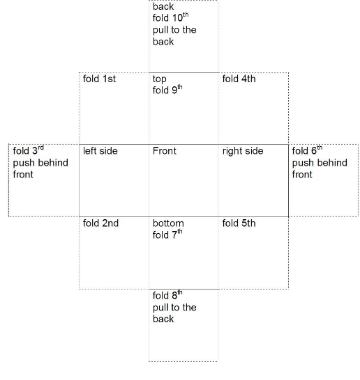
- Answer the question in each un-shaded box.
- Cut out the cube on each dotted line – do not cut any solid lines.
- Crease each solid line back to make it easier to fold.
- Put a little paste, glue, double-sided tape or a drafting dot on each shaded square. Do not get paste or glue on the un-shaded squares.
- Carefully fold the squares in the order specified sticking squares to pasted surfaces underneath as you go.
10c12 Cubing Biography
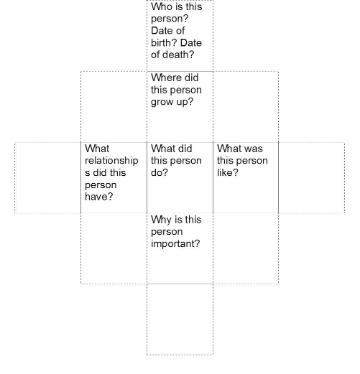
Discussion
Ask discussion questions of all 9 types (see Day 1).
Key Questions
- Where is the family in this story from?
- When did this story take place?
- From whose point of view is the story told?
- Why do you think Francisco lived in constant fear for ten years?
- Why do you think they plan to immigrate to California?
- How did they manage to enter the United States?
- What did they do to survive, once in California?
- Older brother Roberto really managed to help out the family. How? Would you do the same for your family? Why?
- What happened to Francisco, as he prepared to recite the preamble to: The Declaration of Independence?
- Why were Mama, Roberto and Francisco the only ones forced to leave?
- How did the family react to the order for the boys and mother to leave? Was it the right reaction?
- What kind of circumstances did the family have to go through in order to comply with the border patrol? Was this responsible? Was there compliance responsible or should they have done something else?
- How did the family solve their problems, at least temporarily?
- What attitude did the older boys take, when confronted with the solution presented by Papa? Did this attitude take everyone in the family into consideration? Was it responsible?
Analyze
Analyze the key paragraph.
Key Paragraph – p.10
“The motel room was small, like the cabins we lived in at the colon labor camps. We took the sagging mattress off the bed and placed it on the worn yellow linoleum floor so Papa and Mama could sleep on it. The rest of us went to bed on the box spring. That night I felt listless and had a hard time sleeping. I kept thinking about what I had done. The following morning, I went outside, holding the rock in my fist and wondering what to do. I thought of throwing it underneath the overpass, but I felt guilty and scared. I went back to the office and, pretending I was getting a brochure, put it back.”
Extend
Write
Have each student write a short product based on today’s prompt to connect to the unit theme.
Prompt 1. I am Responsible for the Actions I Take, or Don’t Take:
Francisco first admires the rocks in the motel office, and picked one up. His mother slapped his hand and told him to put it back. When no one was looking he took the rock. This action later bothered him, because he had gone against his idea of what was the right thing to do. Francisco ended up taking on the responsibility of his theft, by taking corrective action.
Think about an experience from your life when you may have done something that you knew was wrong, and it bothered you, until you took action to correct your mistake. Write three narrative paragraphs about the course of events. In the first narrative paragraph, clearly explain the circumstances involved, using details and sequential explanations of the event. In the second narrative paragraph, describe the things and/or people you felt responsible to. In the third narrative paragraph, describe how you corrected your action. Remember all experiences are a part of our learning process to become more responsible people.
Prompt 2. Responsibility Requires Action:
Francisco discovered a love of learning at an early age, in spite of the fact that he was unable to read or speak English. In the beginning of chapter one, he describes his state of mind when trying to attend school while his family struggled:
“As I got older, my fear of being deported grew. I did not want to return to Mexico because I liked going to school, even though it was difficult for me, especially English class. I enjoyed learning, and I knew there was no school in El Rancho Blanco” (2). Francisco was determined to succeed in school. He took responsibility for the fact that he needed to take action to make this happen.
Reflect on your own life, and consider a subject or ability that you wanted to master. Write a narrative paragraph defining your chosen subject, and the efforts you made toward a better mastery of that subject matter. When answering the question above, consider the following:
- How did you feel about taking on the responsibility of making that happen?
- Were you successful in taking strides toward your goal?
- What did you do specifically to improve your abilities in your chosen task?
Close
Close by extending today’s lesson to life and the world.
- If you were a member of the Jimenez Family, facing the problems that they did, how would you react?
- What struggle has your family overcome?
Day 2
Outcomes for Today
Prepare
Background
Gather background knowledge about a place, time, event, person, or thing.
What is illegal immigration?
Immigrants from other border countries such as Mexico who do not have automatic visa agreements or would not otherwise qualify for a visa will attempt to cross the border illegally, to escape poverty. In the U.S., the wage-labor ratio is much higher, resulting in a strong incentive for such immigration.
Word Wall
Here are five vocabulary words to teach and add to the Word Wall.
|
anxious -21 |
burlap -22 |
ceramic -28 |
furrows -22 |
savored -27 |
Read
Review
Review the timeline from the beginning every day.
Read
Read the selection, usually in a Shared Reading Read React Predict Cycle of 2-3 pages.
Read p. 19-28
|
Setting |
Characters |
Pages |
|
Santa Maria barracks |
Roberto and Francisco |
19-21 |
|
El Camino Junior High |
Francisco, teachers (Mr. Milo), students |
21 |
|
Work: Farm: carrots and lettuce, Velva’s Freeze |
Francisco, Roberto |
22-23 |
|
Far Western Restaurant |
Francisco, Roberto, boss Mary |
23-26 |
|
Work |
Francisco, Roberto |
26-28 |
|
Santa Maria barracks |
Francisco, Roberto |
28 |
Respond
Timeline
Agree on the facts in today’s reading and list the 3-5 most important on the timeline.
Students might mention:
- They cleaned the barracks every morning before heading for school.
- Roberto dropped Francisco off at school-Francisco was nervous about how the school would react to him having been gone.
- Roberto picked Francisco up late, and told him he’d been fired, because he’d missed so many weeks from work.
- They peeled carrots and thinned lettuce after school; were paid 16$ for I acre, working all weekend.
- The boys got by living on canned food and peanut butter.
- Roberto got a part-time job working at noon at Velva’s Freeze.
- They got invited to Saturday night steak dinner at the Far Western Restaurant with Mary, Roberto’s boss.
- The boys modeled their behavior after Mary’s, including what she’d ordered (New York steak) and proper table etiquette.
- They concluded that they did not enjoy dinner, but did enjoy Mary’s company.
- Roberto found out that he’d gotten his janitorial job back at the Main St. School.
- Francisco was excited by the idea of being able to help his brother at Main St. School, and not having to work in the fields anymore.
- The money earned went for necessities, and also to support the rest of the family in Tlaquepaque, Mexico.
- Someone broke into their house and stole their reserves from under the mattress.
Map
Add to ongoing class activities like a KWL chart or map: where did the characters go?
Create a class theme chart on “Family.” Throughout the novel, Francisco depicts the struggles and successes of his family life. After each chapter, bullet point examples of how his family members take responsibility for each other.
Create a class theme chart of “Living in Two Cultures.” Francisco and his family are emerged in a seemingly strange and different American culture. After each chapter, bullet point examples of the challenges Francisco and his family faced living in America. Point out how their peers perceived Francisco and Roberto and how this affects their relationships with girls.
Explore
Activity
Explore the reading more deeply with a visual or oral language activity.
One possible activity: Skit (Dinner at the restaurant)
Need:
- Producer
- Scriptwriter
- Prop people to create restaurant background
- Actors and actresses
- Audience
Have students perform the imagined conversation and activity that may have taken place at the Far Western Restaurant, with Roberto, Francisco and Mary. Refer to the chapter for inspiration. The main action in this skit should involve the boy’s attempted modeling of the dinner table behavior (etiquette) of the boss, Mary.
Set up like a restaurant and have students either be a part of the group eating or the service providers.
Try to use all students in some part of production. Videotape if you can.
This is a chance to show students how to behave in a restaurant and proper etiquette.
Discussion
Ask discussion questions of all 9 types (see Day 1).
Key Questions
- Describe the sights and sounds Francisco missed of his family at home.
- Was Roberto able to share with the boss what had happened to him when he missed so much work?
- What kind of work did the boys do instead?
- How are the boys taking responsibility for themselves?
- Do you think it is unfair that the boys are working? Why or why not?
- How did the boys know how to behave at the restaurant?
- Why do you think Francisco said that he and his brother did not enjoy their dinner with Roberto’s boss?
- Francisco is eager to help Roberto with his janitorial job. Why?
- How did the two brothers take advantage of their opportunities?
- Where did they keep their money? Was this a good idea? Why or why not?
Analyze
Analyze the key paragraph.
Key Paragraph – p.26
“Roberto and I continued going to school and working in the fields after school and on weekends. We missed our family and worried about not being able to send them money to help them out. We were barely making ends meet ourselves. But things were about to change.”
Extend
Write
Have each student write a short product based on today’s prompt to connect to the unit theme.
Prompt 1. Roberto and Francisco’s Sense of Responsibility
Francisco’s family worked hard to make ends meet. They fended for themselves, in a very responsible manner, working extremely hard: “3 Picking carrots was easier than thinning lettuce, but a lot messier. The ground was usually muddy, so our shoes and pants got soaked in mud. We worked on our knees, pulling the carrots out of the ground after they were loosened by the tractor-plow. We topped off the leaves by hand and dumped the carrots in a basket until it was full. We then emptied the bucket into a burlap sack. We got paid fifteen cents a sack.”
Roberto and Francisco showed an amazing amount of family commitment and responsibility, by sending any left over money home. Write a narrative paragraph that exemplifies Roberto and Francisco’s commitment to family. Provide three examples that show how they take responsibility to care for their family. When answering the question above, consider the following:
- What do you think is the motivation for their actions?
- Would you do the same thing in this situation? Why or why not?
Close
Close by extending today’s lesson to life and the world.
- Describe time when you lost something because it was stolen or misplaced.
- What do you do to keep your possessions safe?
Day 3
Outcomes for Today
Prepare
Background
Gather background knowledge about a place, time, event, person, or thing.
Who is Elvis?
Elvis Presley (1935-1977) was an American rock and roll and gospel singer, musician, and actor, who is considered to be one of the best selling and most influential artists in the history of popular music. His energetic, charismatic delivery on stage has been copied and mimicked ever since his career ended, when he died prematurely at age 42.
Source: http://www.elvis.com/
Word Wall
Here are five vocabulary words to teach and add to the Word Wall.
|
bickering -29 |
lip-synch -32 |
melancholy -31 |
ranchera -31 |
snickered -31 |
Read
Review
Review the timeline from the beginning every day.
Read
Read the selection, usually in a Shared Reading Read React Predict Cycle of 2-3 pages.
Read p. 29-41
|
Setting |
Characters |
Pages |
|
Santa Maria barracks (home) |
Roberto and Francisco |
29
|
|
El Camino Junior High School |
Roberto, Mr. Milo (math teacher) students Miss Ehlis (home room) |
30-33
|
|
Veterans Memorial |
Roberto and Francisco, students |
33-36 |
|
home |
Roberto and Francisco |
36-38 |
|
Peggy Dossen’s home |
Francisco, Peggy, Peggy’s parents |
38-40 |
|
El Camino Junior High School |
Francisco, Peggy |
40-41 |
Respond
Timeline
Agree on the facts in today’s reading and list the 3-5 most important on the timeline.
Students might mention:
- To ease his loneliness, Francisco would bury himself in his schoolwork.
- He discovered that his interests are not sports and cars but music and dancing.
- Francisco became an Elvis fan, and practiced his singing to perform in a band for the class.
- Francisco performed “Treat Me like a Fool” for the class, and was a hit.
- The boys attended the school dance at the Veteran’s Memorial building.
- To learn how to dance, Roberto and Francisco practiced dancing with each other.
- Francisco made friends with several other classmates, especially Peggy Dossen.
- Francisco borrowed his neighbors Joe and Espy Martinez’s phone to call Peggy regarding the next dance; she was short on the phone, but invited him over the next day.
- Francisco met Peggy’s parents, and was invited to her room, where he felt uncomfortable.
- The next day Peggy avoided him.
- Peggy stopped attending dances.
- Though they continued to attend the dances, the dances became more and more involved with drinking and fights.
Map
Add to ongoing class activities like a KWL chart or map: where did the characters go?
Create a class theme chart on “Family.” Throughout the novel, Francisco depicts the struggles and successes of his family life. After each chapter, bullet point examples of how his family members take responsibility for each other.
Create a class theme chart of “Living in Two Cultures.” Francisco and his family are emerged in a seemingly strange and different American culture. After each chapter, bullet point examples of the challenges Francisco and his family faced living in America. Point out how their peers perceived Francisco and Roberto and how this affects their relationships with girls.
Explore
Activity
Explore the reading more deeply with a visual or oral language activity.
One possible activity: Magazine Layout:
Have students create a magazine that includes bands of the 50’s. How is the music different from now? How is it the same? What were some of the big bands? What were some of the song titles? Do you think Francisco still enjoys the same music? What happened to Elvis?
Materials:
- Stiff paper 9x12 to 11x17 or butcher paper
- Pencils, paper, crayons, markers
- Construction paper, scissors, glue sticks if desired
Step One: Imagine you are on the editorial team for a Music magazine, with the issue specializing in rock and roll.
You have been assigned to do the cover story. You will have the cover and 5 pages to cover the story. Decide on your take on the story: what is it really about? What is title will you give the overall story?
Step Two: Create the cover for the magazine.
Decide on the size of the pages and then lay out the cover in this size.
Decide what text, pictures or other images you will bring together to make sure the cover conveys your take, or central impression, or thesis about the story.
Create the cover
Step Three: Decide what will be on each of the 4 pages
- Have a description of at least 3 bands, include Elvis.
- Make each of the pages filling in the words, pictures and images.
- Assemble the cover and pages like a magazine or in a wall display.
Discussion
Ask discussion questions of all 9 types (see Day 1).
Key Questions
- This chapter deals with some important discoveries on the part of the main character, Francisco. What were some of these discoveries?
- How did Francisco manage to become a singer, and perform for the class?
- Where did Francisco find his inspiration for his musical interests?
- Did Francisco make a good choice by deciding to attend the school dances?
- What was Francisco’s relationship like with his neighbors Joe and Espy Martinez?
- How did Francisco avoid the fights and drinking?
- Roberto and Francisco practiced dancing together, in order to learn how. Do you think this was a good idea? Why or why not?
- Why do you think Peggy had such an abrupt change of behavior towards Francisco, after their evening together at her home?
- Describe Francisco’s friendship with Peggy.
- Do you think Francisco was responsible in stopping himself from sitting on the bed with her? Why or why not?
Analyze
Analyze the key paragraph.
Key Paragraph – p.31
“Roberto and I began to tune in to rock ‘n’ roll music on the radio. We listened to Little Richard and Elvis Presley. I enjoyed the rhythm, but I did not pay much attention to the words like I did with Mexican music. Of all the popular singers, I liked Elvis the best. His fast songs released energy in my legs and made them move almost on their own. His slow songs were melancholy, like some Mexican ranchera songs.”
Key Paragraph – p.36
“The next time I saw Peggy, she asked me to walk her home after school. When Roberto came to pick me up, I told him that I would meet him at work and explained why. Peggy’s house was a few blocks from Main Street School, on the east side of town. The houses in Peggy’s neighborhood were different from the barracks in Bonneti Ranch. They had sidewalks, front lawns, and beautiful flower gardens. I did not have to watch out for potholes or stray dogs. I had been in a house once before. I was in the fifth grade when my friend Carl invited me to his home to see his coin collection. Peggy’s house was twice as big as Carl’s house. It was a two-story home with a double garage.”
Key Paragraph – p.40
“‘Late for what?’ she said, laughing. She grabbed my arm and pulled me toward her, trying to force me to sit next to her. I dug my heels in the thick carpet and leaned backward. ‘What’s wrong with you?’ she said, annoyed. The dog sensed Peggy was upset and started barking at me and pulling at my pant leg.”
Key Paragraph – p.41
“The next day when I saw Peggy at school, she avoided me, even outside of class. She did not walk home after school. When I saw her mother waiting in the car, I waved to her, but she looked the other way. I could not understand why. The following day I cornered Peggy in the hallway and asked her why she was avoiding me. She walked away and refused to talk to me. I was hurt and puzzled.”
Extend
Write
Have each student write a short product based on today’s prompt to connect to the unit theme.
Prompt 1. Differences in Race/Social Class?
In chapter 3, Francisco befriends Peggy Dossen, who shows a mutual, if not stronger romantic interest. Yet, the next day, Peggy ignores him. What do you think could be a possible reason that Peggy and her mother acted the way they did the following day? Do you think that the fact that Francisco was Mexican, and from a poor family had something to do with it? Consider the following exchange from page 39 of chapter 3:
“Are you Spanish?” Mrs. Dossen asked politely. “I detect a strong accent.”
“I am Mexican,” I said proudly. “But born in Colton, California,” I quickly added.
“That’s interesting,” Mr. Dossen said after a short silence. His wife nodded her head and smiled uneasily.
Write 2-3 narrative paragraphs that describe Francisco’s friendship with Peggy and how it changed after meeting her parents. Why do you think Peggy ignored Francisco the following day and how did this make you feel? When answering the question above, consider the following:
- Wouldn’t it be easy for him to make judgments on all white, financially secure people based on the mean things that Peggy and her parents did?
- Why is it important, responsible, and courageous for him not to generalize?
- What should he do about their irresponsible behavior to reveal to them how he feels? How can he attempt to be the unifier rather than hate in return for the hatred shown to him because of his race or social class?
Close
Close by extending today’s lesson to life and the world.
- Describe an embarrassing moment in your life.
- If you were to relive the situation again, what would you do differently?
Day 4
Outcomes for Today
Prepare
Background
Gather background knowledge about a place, time, event, person, or thing.
What is the Santo Nino de Atocha?
Nino de Atocha refers to a 13th Century story, Catholic in origin, of a miraculous intervention by the infant Jesus in the Spanish town of Atocha. During the Moorish invasion, Christians suffered and starved; they were only allowed food brought to them by family members under age 12. As the story goes, persons in jail, with no access to food, were visited and fed by a young child dressed as a pilgrim. This was an answer to the people’s prayers to the statue of Our Lady of Atocha. Women of the town then visited the statue to give thanks, and noticed that the shoes worn by the infant Jesus were dusty and worn. When the shoes were replaced, those too were found soiled. This was interpreted as a sign that the infant Jesus had helped those in need.
What are curandera healing techniques? What is the Huichol culture?
A curandera is a woman who practices folk medicine; an herb doctor. One of the ritualistic healing techniques performed by a curandera is called Egg Cleansing. Curanderas practice as part of the Huichol culture. The Huichol are an indigenous ethnic group of Western Central Mexico. They live in the rugged Sierra Madre Occidental, in the states of Jalisco and Nayarit. The Huichol have resisted evangelism, having lived in deliberate isolation. Consequently, they have retained much of their original culture. They are dirt farmers, practice animism as their religion, and produce beautiful yarn paintings that reflect symbolically their traditions and beliefs.
What are traditional Mexican family customs?
Traditional Mexican families consider the family as the center of their social structure. The extended family is as important as the nuclear family-it provides a sense of stability, and helps with the survival of the whole. Mexicans consider it their duty to help each other, with employment, financing a house, and other duties. The Mexican society is hierarchical. They hold high regard and respect for those above them for guidance and decision-making. There is a keen awareness of the hierarchy in a given social or business situation.
Source: http://www.kwintessential.co.uk/
Word Wall
Here are five vocabulary words to teach and add to the Word Wall.
|
frequented -42 |
hexed -45 |
hysterically -43 |
incense -46 |
massaged -46 |
Read
Review
Review the timeline from the beginning every day.
Read
Read the selection, usually in a Shared Reading Read React Predict Cycle of 2-3 pages.
Read p. 42-47
|
Setting |
Characters |
Pages |
|
Santa Maria barracks (home) |
Roberto and Francisco |
42
|
|
home |
Roberto and Francisco Papa, Mama, Trampita, Torito Ruben, Rorra |
44-47 |
Respond
Timeline
Agree on the facts in today’s reading and list the 3-5 most important on the timeline.
Students might mention:
- Francisco and Roberto prepared the house for the family’s return in early April: with supplies from the dump, they painted and replaced linoleum, plus, Roberto built a cupboard for the kitchen.
- The family returned by cab early on a Sunday evening.
- Francisco and Roberto showed them the work they had done.
- Mama brought out a statue of Santo Nino de Atocha for Roberto.
- She then gave Francisco a ceramic bust of Christ with thorns.
- The boys told them about school, and then heard about Mexico: Tia Chana managed to provide a home for them. Trampita was hit by a bus (not seriously), and the curandera took care of Pap’s back pain.
- They talked a little more, and then went to sleep.
- Francisco slept with the bust of Christ under his pillow.
Map
Add to ongoing class activities like a KWL chart or map: where did the characters go?
Create a class theme chart on “Family.” Throughout the novel, Francisco depicts the struggles and successes of his family life. After each chapter, bullet point examples of how his family members take responsibility for each other.
Create a class theme chart of “Living in Two Cultures.” Francisco and his family are emerged in a seemingly strange and different American culture. After each chapter, bullet point examples of the challenges Francisco and his family faced living in America. Point out how their peers perceived Francisco and Roberto and how this affects their relationships with girls.
Explore
Activity
Explore the reading more deeply with a visual or oral language activity.
One possible activity: Drawing of a Spiritual Symbol
Materials:
- Construction paper
- Colored pens and pencils
- Possible magazines pictures
Step One: Design a figure that will be symbolic of a spiritual entity, or idea
You are to draw a figure that will serve as a spiritual symbol- an icon. This can be any idea, within reason, that may or may not have an actual historical significance. In other words, you may invent the symbolic meaning of your figure.
Develop the rough sketch into a drawing of the figure with color and detail.
Step Two: Create the figurative drawing.
Use papers available create the drawing and fill in with color if appropriate.
Step Three: Display and Present your piece.
Write a descriptive paragraph about your picture: the experience you had conceiving it, creating it, and how successful you feel in having interpreted your idea. Place your art along with the others from the class in a special viewing area of the room. When it is your turn, present your art to the class in a central area of the room. Be prepared to receive feedback about your piece from the other students; questions and comments about your idea, design and execution.
Discussion
Ask discussion questions of all 9 types (see Day 1).
Key Questions
- In the story, when did the family arrive home? What time of year? Did they plan this for a specific purpose?
- What did Francisco and Roberto do to prepare for their family’s return? How did they show responsibility and caring for their family?
- Describe what it was like for the family to reunite.
- How do you think the boys have changed during their family’s absence?
- What significance did the statue of Santo Nino de Atoche have for Roberto?
- What gift did Francisco receive? Why do you think his mother gave him this gift?
- How did the curandera fix Papa’s back?
- Do you think this was “Black Magic?” Why or why not?
- Where did Roberto see the image of the devil?
- Why do you think the family holds the statues in such high regard?
Analyze
Analyze the key paragraph.
Key Paragraph – p.44
“‘It was a miracle,’ I said, remembering how Mama had made Torito an outfit just like the one the Holy Child Jesus wore in a picture prayer card Papa carried in his wallet. We all prayed to the Santo Nino until my brothers got well.”
Key Paragraph – p.46
“‘I went to her hut in the outskirts of Tlaquepaque. It was like the garage we lived in Selma. It had a dirt floor and no electricity. Behind it was a corral where she raised chickens and pigs. In one corner of the hut was a small table covered in black cloth. In the opposite corner was an altar with the Virgin de Guadalupe. It was surrounded with small, lit candles, pieces of clothing, wreaths, dried flowers, burning incense, and holy cards. We sat at the table facing each other and drank bitter tea that made me sleepy. She then had me strip to my waist and lie face down on a straw mat. She massaged my back with raw eggs and chanted in Huichol. I understood one or two words because your grandmother used to speak it. I fell into a deep sleep. When I woke up, I was soaked in sweat and my face was in the middle of a thick pool of blood covered with mucus. It had a foul smell, like dead flesh. She told me I had vomited it during my sleep.’”
Extend
Write
Have each student write a short product based on today’s prompt to connect to the unit theme.
Prompt 1: Family Ties
In chapter 4, the boys eagerly awaited the return of their family from Mexico. They found supplies at the dump to fix up their home, and when the family did return, they enjoyed a happy reunion, exchanging special gifts, family news and stories. In your family, can you think of a time when family member(s) had been gone, and were later reunited?
In a narrative autobiographical paragraph describe the experience to have the individual(s) gone and what it was like when they returned? Compare how your feelings were similar or different from Francisco’s. Was it a good experience? Did you show them respect? Was this a responsible thing to do?
Close
Close by extending today’s lesson to life and the world.
- What family momentums do you or your family hold in high regard?
- What makes these objects so special?
Day 5
Outcomes for Today
Prepare
Background
Gather background knowledge about a place, time, event, person, or thing.
What was The Cristero Revolt of 1926?
The Cristero Revolt consisted of Catholic resistance fighters (they thought that they were fighting for Christ, himself.) They were fighting against the anti-Catholic Mexican government, set off by the anti-clerical provisions of the Mexican Constitution. The rebellion ended by diplomatic means, as the Cristeros began to hold there own against federal forces.
What is sharecropping?
Sharecropping involves an agreement between the landowner and the agricultural worker, where the owner allows the use of his land for a share of the crop production in return.
Word Wall
Here are five vocabulary words to teach and add to the Word Wall.
|
blight -52 |
clenching -54 |
fumigation -52 |
furious -55 |
sharecropper -49 |
Read
Review
Review the timeline from the beginning every day.
Read
Read the selection, usually in a Shared Reading Read React Predict Cycle of 2-3 pages.
Read p. 48-55
|
Setting |
Characters |
Pages |
|
strawberry fields |
Francisco, Papa, Roberto, Trampita, boss Ito, Mama |
48-55 |
|
home |
Torito Ruben, Rorra |
51 |
Respond
Timeline
Agree on the facts in today’s reading and list the 3-5 most important on the timeline.
Students might mention:
- Francisco and Roberto worked in the strawberry fields, along with the rest of the family, under Japanese boss Ito.
- During their work in the fields, the boys heard stories about Papa joining the Cristero Revolt
- Papa became a sharecropper- tending 3 acres, the 3 other acres being tended by partner and neighbor Joe Garcia.
- Papa also continued to work for Ito 6 days a week.
- Papa had to borrow money to purchase equipment to work the fields as sharecroppers. Papa also bought a 53 Buick on credit.
- The strawberry crop became infected with blight.
- The boys worked all night to fumigate the crops.
- The fumigation chemicals were too strong, and killed the plants.
- Papa fell into a depression.
- Roberto and Francisco asked to go out on Saturday night, and were shot down by Papa.
- Mama convinced Papa to at least let Roberto to go out. Francisco (Pancho) had to stay home.
- Papa felt disrespected by his sons, which was intolerable to him.
- Francisco went to bed furious with his father.
Map
Add to ongoing class activities like a KWL chart or map: where did the characters go?
Create a class theme chart on “Family.” Throughout the novel, Francisco depicts the struggles and successes of his family life. After each chapter, bullet point examples of how his family members take responsibility for each other.
Create a class theme chart of “Living in Two Cultures.” Francisco and his family are emerged in a seemingly strange and different American culture. After each chapter, bullet point examples of the challenges Francisco and his family faced living in America. Point out how their peers perceived Francisco and Roberto and how this affects their relationships with girls.
Explore
Activity
Explore the reading more deeply with a visual or oral language activity.
One possible activity: Bookmark
On one side of bookmark write down examples of how Francisco is responsible. On the other side of the bookmark show examples of Francisco being irresponsible. Keep adding examples as you continue reading the story.
Materials:
- pieces of stiff paper [like oak tag] 3-5 inches wide and 5-10 inches long
- some combination of pencil, pen, crayon, or marker
- construction paper, scissors and glue sticks if desired
Discussion
Ask discussion questions of all 9 types (see Day 1).
Key Questions
- What was Papa’s goal for himself and his family as far as his work status was concerned?
- When did Papa want this change to take place? Why?
- What did Ito do that left the family indebted to him?
- Joe Garcia insisted upon what conditions for their work plans?
- How did the family care for the crops?
- Why did the strawberry plants fail?
- What happened to Papa as a result of his failure with the strawberry crop? Was this a responsible reaction? What would you have done differently?
- How did Papa respond to the boys’ request to go out on Saturday night?
- Do you think that the boys were being disrespectful by their behavior?
- How did Papa and the boys feel? Were these feelings unjustified or irresponsible? Why?
Analyze
Analyze the key paragraph.
Key Paragraph – p. 48
“I missed being with Roberto. While I worked, I daydreamed about going to the Vets dances and played rock ‘n’ roll in my head. Most of the time, I studied thing I needed to learn for school. I wrote the information in a small notepad, which I carried in my shirt pocket, and memorized it while I picked.”
Key Paragraph – p. 51
“Sundays, Roberto and the rest of my family went to work. Torito took care of Ruben and Rorra while Mama joined the rest of us in our battle with the weeds and mud clods. On Saturday nights Roberto and I did not go out. We stayed home to study. During that time, I barely kept up with my schoolwork. My social studies and English classes suffered, and so did my math. I sat in the fifth seat for three weeks in a row.”
Key Paragraph – p. 54
“Papa kept staring into space. Roberto and I stood in front of him with our hands folded in front of us, waiting for a response. There was a long and painful silence. Why do we have to go through this torture every time we want to go out? I asked myself. I glanced at Roberto and rolled my eyes.”
Key Paragraph – p. 55
“‘Let them go, viejo. They are good kids; they’ve never gotten into trouble, even when they lived by themselves,’ she said softly.”
Extend
Write
Have each student write a short product based on today’s prompt to connect to the unit theme.
Prompt 1: Responsibility Requires Action
In chapter 5, the family concentrated on working the strawberry fields, Papa became a sharecropper, and he did not have to work for anyone else. This goal required a tremendous commitment, and was an important step in bettering their lives. Papa had to join forces with neighbor Joe Garcia, and borrow money from a savings and loan company to buy equipment to work the fields.
In your life, think about a time when you made an important decision to take action on a personal goal. In a narrative, describe what kinds of actions were necessary in order for you to accomplish that goal? What was your goal? Did you have a clear plan of action? What actually took place in terms of following that plan? Did you accomplish your goal? Keep in mind that this experience provided a lesson in responsibility. If your actions were sincere, it helped you become a more responsible person, regardless of the outcome. Write 2-3 narrative paragraphs about this personal experience. Include details regarding your goal, actions you took, and the outcome.
Prompt 2: Responsibility may be lessened only to the extent my actual freedom or knowledge was actually and unavoidably limited.
In this chapter Francisco was obligated to work the fields along with other members of his family. As stated in the story, Francisco needed to make sacrifices to accomplish this: “On Saturday nights Roberto and I did not go out. We stayed home to study.”
Unfortunately, Francisco also had to sacrifice something else: “During that time, I barely kept up with my school work. My social studies and English classes suffered, and so did my math. I sat in the fifth seat for three weeks in a row.” [p. 51]
Under these conditions, one might think that Francisco was not living up to his responsibilities at school. Yet, he had to comply with the demands of the family, and, unfortunately, these obligations of working in the strawberry fields got in the way of his schooling. So, it seems that here we have an example of responsibility being lessened because of an unavoidable obligation. Francisco’s freedom to spend time studying was unfortunately compromised. What do you think of this state of affairs? Write a narrative paragraph, describing Francisco’s dilemma. When answering the question above, consider the following:
- Was it right for Francisco to be expected to work in the fields so much, when he had schoolwork to do?
- Was he responsible for his slipping grades in this case?
Close
Close by extending today’s lesson to life and the world.
- Describe a time when you argued with a family member.
- What would you do differently next time?
Day 6
Outcomes for Today
Prepare
Background
Gather background knowledge about a place, time, event, person, or thing.
Who is Saint Christopher?
Saint Christopher is the patron saint of travelers. He originated as a 12-century addendum to the Christian cannon. According to legend, Saint Christopher was a robust man who would help people to cross an otherwise unaffordable stream. One day a child asked Christopher to carry him across, and, the child became heavier and heavier until he could hardly be carried. The child claimed that he carried the sins of the world upon his shoulders. Christopher’s reward was to have his staff transformed into a living tree. Saint Christopher was decannonized in the late 20th century to mere legend.
Word Wall
Here are five vocabulary words to teach and add to the Word Wall.
|
auditorium -58 |
callused -59 |
constitution -56 |
grammatical -57 |
imagination -57 |
Read
Review
Review the timeline from the beginning every day.
Read
Read the selection, usually in a Shared Reading Read React Predict Cycle of 2-3 pages.
Read p. 56-60
|
Setting |
Characters |
Pages |
|
El Camino Junior High School, library |
Francisco, students |
56-58
|
|
home |
Francisco, Roberto, Papa |
51 |
|
graduation |
Francisco, Roberto, classmates, Robert Lindsay, Mr. McEacheron (P.E. coach), Mama and Papa |
60 |
Respond
Timeline
Agree on the facts in today’s reading and list the 3-5 most important on the timeline.
Students might mention:
- The family lost the three acres of strawberries, but this enabled Francisco to concentrate on his studies.
- Francisco scored 99% on his Constitution test, and continued to work hard on English, especially spelling.
- Francisco worked on a science project; the solar system. He created a fantasy story involving family members on a space exploration, and received an A+.
- Francisco and the other graduating students practiced in the auditorium.
- Francisco did the best he could to dress for the occasion, wearing a clean T- shirt that he borrowed from Roberto.
- Papa gave Francisco a St. Christopher medal, as a gift for passing the eighth grade.
- Francisco imagined that Papa and Mama were in the audience, along with Roberto.
Map
Add to ongoing class activities like a KWL chart or map: where did the characters go?
Create a class theme chart on “Family.” Throughout the novel, Francisco depicts the struggles and successes of his family life. After each chapter, bullet point examples of how his family members take responsibility for each other.
Create a class theme chart of “Living in Two Cultures.” Francisco and his family are emerged in a seemingly strange and different American culture. After each chapter, bullet point examples of the challenges Francisco and his family faced living in America. Point out how their peers perceived Francisco and Roberto and how this affects their relationships with girls.
Explore
Activity
Explore the reading more deeply with a visual or oral language activity.
One possible activity: Create an Open Mind Portrait of Francisco
What is Francisco thinking? Does he think his father is fair to him? Is Francisco responsible? Would you have Francisco as your friend? Why or why not?
Materials:
- large piece of stiff paper for each character, like 11x17 oak tag
- paper for bubbles with scissors and glue sticks
- markers, crayons, pens, pencils, or paint
- construction or tissue paper, scissors and glue sticks if desired
Step One: create a large headshot of Francisco
- Imagine what you think the character looks like from the descriptions in the text as well as your imagination. You can make a list of these details to help you draw the character, if you wish.
- Decide how much of the character you wish to show: just the head and face? from the shoulders up? from the waist up? the whole person? You might want to include at least the shoulders to include some clothing details. You might want to show the size differences between characters.
- Draw the characters headshot including the face on the large piece of paper. You could also cut the paper to form the head.
- Illustrate your portrait with colors, construction paper or whatever will make the character colorful.
Step Two: place cartoon bubbles of character thoughts around the portrait
- Cut cartoon bubbles out.
- Write things the character thinks, or says to himself, on each bubble.
- Put the bubbles up around the portrait.
Step Three: add bubbles as you learn new things about the character
- Read the story further and identify new things you have learned about the character, or ways the character has changed.
- Follow step 2 to create and place additional bubbles.
Discussion
Ask discussion questions of all 9 types (see Day 1).
Key Questions
- Now that the strawberry crop failed, how did Francisco spend his time?
- What was Francisco’s method of dealing with his final class work?
- What inspired Francisco’s science project? What approach did he take? Where did he go for inspiration?
- How did the teacher respond to Francisco’s project? Why do you think he received the grade that he did?
- How did Francisco receive guidance on how to proceed with the graduation ceremony?
- What was his attitude regarding his appearance for the ceremony? Who helped him out?
- Papa gave Francisco a special gift. What was it, and why do you think Papa chose it?
- Roberto was in the audience, but the parents were not. Why?
- How did Francisco handle this? Given the entire situation, was this the responsible thing to do (both the parents’ absence and Francisco’s reaction)?
- How do you think Francisco felt during his graduation?
Analyze
Analyze the key paragraph.
Key Paragraph – p. 57
“The hardest task for me was writing a final paper for my science class. We were to pick up any science topic, research it, and write a report on it. I had a hard time deciding on a topic, research it, and write a report on it. I had a hard time deciding on a topic. Nothing came to mind. Then one day as I was flipping through a history book, I came across a brief section on Christopher Columbus and the discovery of the new world. As I skimmed it, my eye caught the name Herman Cortes. I was fascinated. It was the first time I had read about someone with a Spanish name. I read the paragraph several times and said the name Herman Cortes out loud. I liked the sound of it. His name ended with a ‘z’ sound just like my family’s last name. I felt proud. I began to wonder what it was like to be an explorer over four hundred years ago.”
Key Paragraph – p. 55
“‘Let them go, viejo. They are good kids; they’ve never gotten into trouble, even when they lived by themselves,’ she said softly.”
Key Paragraph p. 59
“‘I don’t want you to smell like rotten strawberries,’ he said, smiling. ‘If you smell like me, nobody will want to get near you.’ He took off his Saint Christopher medal, which he wore around his neck, and handed it to me. ‘Here, mijo,’ he said, ‘I want you to have this. It will guide you.’”
Extend
Write
Have each student write a short product based on today’s prompt to connect to the unit theme.
Prompt 1: Responsibility in Study
Though the family is devastated by the strawberry blight, Francisco uses this opportunity to study hard in school and make his family proud. He studies hard and is able to get wonderful grades. In a narrative paragraph, write about Francisco’s attitude towards life. How he uses the time when he and his family are the worst off to strive for something greater than himself? In a second narrative paragraph, write about yourself during a difficult time in your life. What strengths you can use to act responsibly and a better life during a bad situation?
When answering this question, consider the following:
- What actions can you do now to make your world better and plan for a better life?
- How can you take responsibility in what has happened?
- What can you do to make your life better?
Close
Close by extending today’s lesson to life and the world.
- What do you imagine your graduation day will be like?
- How can you make your friends feel special when they graduate?
Day 7
Outcomes for Today
Prepare
Background
Gather background knowledge about a place, time, event, person, or thing.
Who is Dr. Doolittle?
Dr. John Doolittle was a fictional character if children’s stories by Hugh Lofting. The author originated these stories as a series of letters written during WWI, when the actual news was either too horrible or too boring. The character lived in Victorian England, on Puddleby-on-the-Marsh. The doctor shunned human patients in favor of animals, whom he learned to communicate to in their own language.
Word Wall
Here are five vocabulary words to teach and add to the Word Wall.
|
algae -66 |
gratitude -64 |
murky -67 |
reservoir -65 |
skirmish -62 |
Read
Review
Review the timeline from the beginning every day.
Read
Read the selection, usually in a Shared Reading Read React Predict Cycle of 2-3 pages.
Read p. 61-69
|
Setting |
Characters |
Pages |
|
Strawberry fields |
Francisco, Roberto, Papa, Ito |
61--62 |
|
home |
Francisco, Roberto, Trampita, Torito, Rorra Ruben, Papa, Mama, Ito |
63-65 |
|
City dump |
Francisco, Roberto, Trampita, Torito, Carlos |
65-66 |
|
reservoir |
Francisco and Trampita |
66-67 |
|
home |
Papa and Francisco, Mama |
68-69 |
Respond
Timeline
Agree on the facts in today’s reading and list the 3-5 most important on the timeline.
Students might mention:
- Papa Francisco and Roberto picked strawberries together on weekends.
- Francisco and Roberto would have races to determine who could pick strawberries the fastest.
- One day they had a strawberry war, staining their shirts. They were found out by Mama. She didn’t tell Papa, but boss Ito knew about it.
- Ito paid Papa 65 dollars, while the boys earned 85 cents an hour.
- The boys would go to the city dump and catch goldfish to sell for 5 cents apiece.
- While at the dump, Francisco found a copy of Dr. Doolittle, which he attempted to read throughout the summer.
- They find out that Carlos and his friends were selling fish for two for 5 cents, and gave up the idea.
- Papa gave Francisco a haircut, and the clippers slipped, cutting off the front lock of his hair. Francisco wore a cap for the rest of the summer, and avoided the dances.
Map
Add to ongoing class activities like a KWL chart or map: where did the characters go?
Create a class theme chart on “Family.” Throughout the novel, Francisco depicts the struggles and successes of his family life. After each chapter, bullet point examples of how his family members take responsibility for each other.
Create a class theme chart of “Living in Two Cultures.” Francisco and his family are emerged in a seemingly strange and different American culture. After each chapter, bullet point examples of the challenges Francisco and his family faced living in America. Point out how their peers perceived Francisco and Roberto and how this affects their relationships with girls.
Explore
Activity
Explore the reading more deeply with a visual or oral language activity.
One possible activity: Bookmark: Vision-Plan-Effort Bookmark
Materials:
- pieces of stiff paper [like oak tag] 3-5 inches wide and 5-10 inches long
- some combination of pencil, pen, crayon, or marker
- construction paper, scissors and glue sticks if desired
Step One: Create a vision of your life 10 years from now.
- Imagine what you would like your life to be like 10 years from today. Where or in what kind of housing will you be living? Where will you be working? What will you be doing? How will you be getting around? What relationships will you be in? What will you be doing in your non-work hours?
- On the top third of one side of the bookmark fill in pictures, words or symbols that represent your vision.
Comment: This is a successful vision. This should be a vision that you, your parents and grandparents, your teachers and people who know you [as well as your friends] would be proud to see you have accomplished.
Warning: This is 10-year plan, with a vision of people who aren’t imprisoned, or disabled from injuries received as a result of criminal behavior.
Step Two: Create a plan to achieve your vision in 10 years: what has to happen?
- Brainstorm a list of what has to happen between now and 10 years from now to achieve this vision. Compare lists with someone else and select the 10 most important things that have to happen.
- On the bottom two-thirds of the bookmark, underneath your vision, write 10 important things that have to happen in the next 10 years. This is your plan.
Step Three: Keep track of efforts to achieve your vision by following your plan.
- Every day, or as often as you like during this unit, consider: what have you done in the last 24 hours to get closer to your vision by following something on your plan? You can review this in pairs.
- On the back of the bookmark, starting at the top, write the date and what you did in a couple of words. Write in small letters keeping all of one day’s information in the same row. You want to have room for many entries during this unit.
Discussion
Ask discussion questions of all 9 types (see Day 1).
Key Questions
- Roberto and Francisco would race to see who could fill the strawberry crates the fastest. How did Francisco ever manage to win?
- In your own words, describe the strawberry war.
- What do you think would have happened to Francisco and Roberto if their father found out about the strawberry war?
- How much money did the father earn? How did this compare to Francisco and Roberto?
- What is one way that Papa demonstrated his gratitude for Ito’s work opportunity?
- Explain how these actions showed responsibility and respect?
- What plan did the boys come up with to make money that summer?
- Do you think this a good idea? Why or why not? What would you do differently?
- What happened to foil their operation?
- Why did Francisco start wearing a hat and stop attending the dances?
Analyze
Analyze the key paragraph.
Key Paragraph – p.62
“I glanced at Ito. He had a puzzled look on his face but did not say anything. I hope he didn’t see me, I thought. I continued working and, to keep my mind occupied, began whistling rock ‘n’ roll tunes and daydreaming about Peggy and the Vets. I danced song after song with her. Suddenly I felt a blow on the back of my right shoulder. I instinctively reached behind with my left hand and scooped up a rotten strawberry. I turned around. Roberto was picking on his knees behind me, four rows away. He had his head down, trying to hide his smirk. At lunchtime Roberto and I put on our jackets to hide our strawberry stains.”
Extend
Write
Have each student write a short product based on today’s prompt to connect to the unit theme.
Prompt 1: Responsibility is Doing What is Best for Everybody
In chapter 7, Papa demonstrated his appreciation for the opportunity to work for Ito by working 15 minutes longer than expected, without pay. (It can be assumed that Ito had the type of character that deserved such gratitude, as displayed when he privately joked to Francisco about throwing strawberries while on the job.) In any regard, Papa’s act of respect and kindness can be seen as an example of responsibility; of doing what is best for everybody.
Write a narrative paragraph about a personal experience in which you were either the executor or the recipient of such an act of appreciation. How was this act of appreciation an example of a responsible action? When answering the question, consider the following:
- How did this experience better everyone involved?
- Think of the ways that it made people feel and think. Are these feelings good?
Close
Close by extending today’s lesson to life and the world.
- Describe a close family member or friend.
- Why is this person special to you?
Day 8
Outcomes for Today
Prepare
Background
Gather background knowledge about a place, time, event, person, or thing.
What are the requirements to earn a teaching credential?
Teacher certification is the process by which prospective teachers get licensed to teach within a given area after completing required coursework, degrees, tests and other specified criteria. You can become certified by the state in which you wish to teach, and then earn national certification accepted in all 50 of the United States.
To qualify for teacher certification, all certifying bodies require a college degree, completion of certain education courses, student teaching experience and the passage of an approved exam. The most commonly used teaching exam is called the Praxis.
Source: http://www.alleducationschools.com/education-careers/article/teacher-certification/
Word Wall
Here are five vocabulary words to teach and add to the Word Wall.
|
Accurate (accuracy) -77, 79 |
mascot -74 |
scrunched -73 |
upholstery -73 |
vocational -75 |
Read
Review
Review the timeline from the beginning every day.
Read
Read the selection, usually in a Shared Reading Read React Predict Cycle of 2-3 pages.
Read p. 70-79
|
Setting |
Characters |
Pages |
|
Home |
Papa, Mama, Francisco, Roberto, Trampita, Torito, Ruben, Rorra |
70-73 |
|
Ride to Santa Maria High School |
Francisco, Roberto |
73-74 |
|
High School counseling office |
Francisco, Mr. Kinkade, |
74-76 |
|
P.E. class |
Francisco, Coach |
76-77 |
|
Typing class |
Francisco, teacher |
77-78 |
|
Social Studies class |
Francisco, Mrs. Dorothy Taylor |
78 |
|
Algebra class |
Francisco, Mr. Coe |
79 |
Respond
Timeline
Agree on the facts in today’s reading and list the 3-5 most important on the timeline.
Students might mention:
- It was September 3, and Francisco was excited about it being the last day of work and the first day of High School, freshman year the next morning.
- This year he would not have to move to Fresno for picking season.
- Francisco noticed the school motto: “Enter to Learn, Go Forth to Serve.”
- Francisco met with his counselor, Mr. Kinkade, and they discussed his future academic plans.
- Instead of vocational training, Francisco wanted to become a teacher. This would require 5 years of college. Mr. Kinkade told him about getting a scholarship for having good grades.
- He attended his other classes; English, typing, social studies and algebra.
- In Social Studies, Francisco saw a film about a father and son relationship. The class determined that it was ok for the son to argue a point with his father. This was a foreign concept for Francisco.
- In the end of the chapter, in algebra class, Francisco found the emphasis to be on speed and accuracy.
- Francisco determined that he would strive to become as good at double-digit multiplication as his algebra teacher Mr. Coe.
Map
Add to ongoing class activities like a KWL chart or map: where did the characters go?
Create a class theme chart on “Family.” Throughout the novel, Francisco depicts the struggles and successes of his family life. After each chapter, bullet point examples of how his family members take responsibility for each other.
Create a class theme chart of “Living in Two Cultures.” Francisco and his family are emerged in a seemingly strange and different American culture. After each chapter, bullet point examples of the challenges Francisco and his family faced living in America. Point out how their peers perceived Francisco and Roberto and how this affects their relationships with girls.
Explore
Activity
Explore the reading more deeply with a visual or oral language activity.
One possible activity: Role Playing: Francisco and the Counselor, Mr. Kinkade
Materials:
- Script (two copies): One for Francisco, one for Mr. Kinkade
- Form small groups of 4+ members. Have one student play Francisco, and the second Mr. Kinkade. One student will be designated to take notes from group discussion, one to write down the script, one to provide copies for the group, one+ to set the staging. All members of the group are to provide ideas for the script writing process
- Refer to the chapter for ideas and direction as to what structure and content the play should involve. It is fine to include actual dialogue from the chapter, but make sure to add dialogue of your own.
Step One: Brainstorm a short one-act play involving the dialog between Francisco and Mr. Kinkade this requires a group effort writing project, creating a script for both actors to follow.
Step Two: Write the script for the play, and practice it.
- Have the assigned students write down the script, and provide copies for the group members to follow.
- Have the students practice in their groups. Receive feedback from the others as to how to improve upon the scriptwriting, and the performance.
Step Three: Perform the play for the rest of the class.
- Assign a performance schedule.
- Have the students take turns performing their plays for the rest of the class.
- After each performance, allow time for feedback on the performance
Variation: Have the dialog between the two characters be “ad lib”.
- Form small groups, and designate two students to play the two roles: Francisco and Mr. Kinkade.
- Have a small group discussion concerning the personalities and motivations of the two characters.
- Have the two actors practice role playing- Mr. Kinkade counseling Francisco on his school experience thus far, and about his future plans.
- Perform the ad-lib dialog for the rest of the class.
Discussion
Ask discussion questions of all 9 types (see Day 1).
Key Questions
- The title of this chapter is “Becoming a Saint”. What is the title referring to?
- How was this summer different for Francisco?
- What is the motto of Francisco’s high school? What is significant about this motto?
- Francisco and the counselor have a discussion about Francisco’s future. What does the counselor suggest, and how does Francisco respond?
- What does it take to become a teacher? Do you think Francisco can do it? Why or why not?
- What does the counselor recommend Francisco do to prepare for his goal? Is this a good idea? Does Francisco have a responsible attitude?
- What troubled Francisco during his social studies class?
- What is the difference between arguing with someone and standing up for yourself?
- In algebra, Francisco is impressed by the teacher’s abilities at computing in his head. What types of computations is the teacher doing?
- How does Francisco react to the expectations of his algebra class? What is his motivation?
Analyze
Analyze the key paragraph.
Key Paragraph – pp. 74-75
“Mr. Kinkade sat at his desk, which was piled with folders and papers. Behind him was a tall, dark brown bookcase full of thick binders and books. To his left was a window that looked out onto the courtyard. He was dressed in a gray suit and a light blue bow tie. His thick hair was peppered with white and combed back. After he introduced himself, he picked up a folder with my name on it and said, ‘I see you graduated from El Camino Junior High School. Have you thought of what you want to do after high school?’ Before I had a chance to answer, he added, ‘We have excellent vocational programs in car mechanics, electronics, and wood shop. We also have a program for future farmers.’
‘I’d like to be a teacher,’ I responded, thinking about Mr. Lima, my sixth-grade teacher, who had helped me with English during the lunch hours when I was far behind in my class because I had missed so many weeks of school.”
Extend
Write
Have each student write a short product based on today’s prompt to connect to the unit theme.
Prompt 1: Responsibility and Father/Son Behavior
In chapter 8, Francisco at tends a social studies class where he sees a film about a father son relationship. In the film, the father prevents the boy from going out on a school night, and the boy gets upset, throwing his books on the floor and running into his room, slamming the door. The class agrees that it was wrong for the boy to throw his books, but felt that it was ok for him to argue with his father. Francisco felt confused by this. Consider that Francisco is from a different cultural background from many Americans. Would the responsible thing to do be to never argue with one’s father, no matter what the circumstances? In a narrative paragraph describe why Francisco felt confused by this film. How did the boy’s actions in the film differ from Francisco’ behavior towards his father? When answering the question above, consider the following:
- What would be the responsible thing to do in this situation?
- Is the boy showing respect to both is father and himself?
- Explain what you think the responsible thing for him to do is.
Close
Close by extending today’s lesson to life and the world.
- Describe your goals after high school.
- How is high school preparing you to reach your goals?
Day 9
Outcomes for Today
Prepare
Background
Gather background knowledge about a place, time, event, person, or thing.
What is athlete’s foot?
Athlete’s foot, tinea pedis is a fungal infection of the epidermis of the foot. It usually occurs between the toes, but in severely lasting cases may spread to the bottom and sides of the foot. The infection is called dermatophytosis, and may spread from other humans (anthropophilic), animals (zoophilic) or may come from the soil (geophilic).
Word Wall
Here are five vocabulary words to teach and add to the Word Wall.
|
athlete -82 |
dangling -82 |
foul -82 |
physical -80 |
snickering -81 |
Read
Review
Review the timeline from the beginning every day.
Read
Read the selection, usually in a Shared Reading Read React Predict Cycle of 2-3 pages.
Read p. 80-82
|
Setting |
Characters |
Pages |
|
High School P.E. |
Francisco |
80 |
|
Home |
Francisco, Roberto, Trampita, Torito, Rorra Ruben, Papa, Mama, Ito |
81-82 |
Respond
Timeline
Agree on the facts in today’s reading and list the 3-5 most important on the timeline.
Students might mention:
- Francisco thought that tennis would be one of the easiest classes, and it turned out to be one of the hardest.
- Francisco got into trouble with the P.E. coach because he lost his tennis shoes.
- His family would have to wait until the end of the month to buy him new shoes, so he faced being docked 5 points a day.
- Francisco sat out of P.E. for several days.
- Trampita and Torito found a pair of shoes at the dump.
- Francisco wore them, even though they were too big.
- He contracted severe athlete’s foot from wearing the used shoes.
- Francisco received a C in P.E.
Map
Add to ongoing class activities like a KWL chart or map: where did the characters go?
Create a class theme chart on “Family.” Throughout the novel, Francisco depicts the struggles and successes of his family life. After each chapter, bullet point examples of how his family members take responsibility for each other.
Create a class theme chart of “Living in Two Cultures.” Francisco and his family are emerged in a seemingly strange and different American culture. After each chapter, bullet point examples of the challenges Francisco and his family faced living in America. Point out how their peers perceived Francisco and Roberto and how this affects their relationships with girls.
Explore
Activity
Explore the reading more deeply with a visual or oral language activity.
Add to the Open Mind Portrait of Francisco
With Francisco’s new experiences, add to his open mind portrait, what is he thinking now? What is different and what is the same? Would you wear used shoes? What does that say about Francisco’s motivation?
Materials:
- large piece of stiff paper for each character, like 11x17 oak tag
- paper for bubbles with scissors and glue sticks
- markers, crayons, pens, pencils, or paint
- construction or tissue paper, scissors and glue sticks if desired
Step One: create a large headshot of Francisco
- Imagine what you think the character looks like from the descriptions in the text as well as your imagination. You can make a list of these details to help you draw the character, if you wish.
- Decide how much of the character you wish to show: just the head and face? from the shoulders up? from the waist up? the whole person? You might want to include at least the shoulders to include some clothing details. You might want to show the size differences between characters.
- Draw the characters headshot including the face on the large piece of paper. You could also cut the paper to form the head.
- Illustrate your portrait with colors, construction paper or whatever will make the character colorful.
Step Two: place cartoon bubbles of character thoughts around the portrait
- Cut cartoon bubbles out.
- Write things the character thinks, or says to himself, on each bubble.
- Put the bubbles up around the portrait.
Step Three: add bubbles as you learn new things about the character
- Read the story further and identify new things you have learned about the character, or ways the character has changed.
- Follow step 2 to create and place additional bubbles.
Discussion
Ask discussion questions of all 9 types (see Day 1).
Key Questions
- Francisco found P.E. to be one of his most difficult subjects. Why?
- What was the consequence for not participating in PE?
- Do you think this is a just consequence? Why or why not?
- Do you feel that the coach handled this situation appropriately, considering Francisco’s circumstances?
- Was this responsible of the coach? What should have he done instead?
- How seriously did this problem affect Francisco?
- Where did Francisco find temporary tennis shoes?
- What were the consequences of wearing these shoes?
- This chapter deals with an example of how a family deals with very limited funds. Do you feel the author was successful in conveying some of the reality of living in a struggling family this way?
- What would you have done if you were in Francisco’s shoes?
Analyze
Analyze the key paragraph.
Key Paragraph – p.82
“A few days later, my feet began to itch. I told the coach and he said I might have athlete’s foot. I thought if was a compliment until I found out what it really meant. I took off the two layers of socks and I noticed I had cracked, blistered, and peeling areas between the toes. This lasted a long time, even after I got a new pair of tennis shoes. I ended up getting a C in P.E. at mid-semester.”
Extend
Write
Have each student write a short product based on today’s prompt to connect to the unit theme.
Prompt 1: Responsibility Requires Action
In chapter 9, you might think that Francisco acted irresponsibly by loosing his tennis shoes. How he reacted to the consequences gives an indication of his character, and the character of his siblings. It is also an illustration of the type of challenge that a poor family goes through when they encounter an unexpected expense.
Write a narrative paragraph about a personal experience in which you faced a problem having to accommodate an unexpected expense, and your family was involved. What might you have learned about your and your family’s personal character as a result of this experience? How did you act responsibly and deal with the problems of the expense? Did you ask people for help? Did you or your family work more?
Close
Close by extending today’s lesson to life and the world.
- How can schools help students suffering from financial burdens?
- What are the consequences of not bringing tennis shoes to your PE class?
Day 10
Outcomes for Today
Prepare
Background
Gather background knowledge about a place, time, event, person, or thing.
What is depression?
Clinical depression is a psychiatric disorder characterized by two hallmark symptoms:
Loss of interest in normal daily activities -You lose interest in or pleasure from activities that you used to enjoy.
Depressed mood - you feel sad, helpless or hopeless, and may have crying spells.
There are other signs and symptoms that must be present for at least two weeks:
Sleep disturbances - sleeping too much or not enough; waking up in the middle of the night.
Impaired thinking or concentration - trouble concentrating, making decisions, memory.
Changes in weight - an increased or reduced appetite and unexplained weight gain or loss.
Agitation - you seem restless, agitated, irritable, and easily annoyed.
Fatigue or slowing of body movements - you feel weariness and lack of energy, feel as tired in the morning as you did the night before. You may feel like you’re doing everything in slow motion, or you may speak in a slow, monotonous tone.
Low self-esteem - you feel worthless and have excessive guilt.
Thoughts of death- you have a persistent negative vies of yourself, your situation and the future. You may have thoughts of death, dying or suicide.
Word Wall
Here are five vocabulary words to teach and add to the Word Wall.
|
chamois -85 |
disgrace -83 |
hobbled -84 |
raspy -87 |
squeegee -85 |
Read
Review
Review the timeline from the beginning every day.
Read
Read the selection, usually in a Shared Reading Read React Predict Cycle of 2-3 pages.
Read p. 83-90
|
Setting |
Characters |
Pages |
|
home |
Francisco, Roberto, Trampita, Torito, Rorra, Ruben, Papa, Mama, Ito |
83 |
|
Main Street Elementary School |
Francisco, Roberto |
84 |
|
offices |
Francisco, Roberto, Mike Nevel |
84-90 |
Respond
Timeline
Agree on the facts in today’s reading and list the 3-5 most important on the timeline.
Students might mention:
- Papa’s depression got worse.
- Work was scarce, and his back gave out.
- He was ashamed to be late paying the rent.
- The family needed money, so the boys got a second job: Roberto started working for The Santa Maria Window Cleaners, under boss Mike Nevel, on weekends for 25$/hr. Francisco begged to be included, and ended up working week nights for 1.00$/hr.
- Even so, Papa got angry when the boys came home after midnight, and reminded them that even though they were giving him their paycheck, that didn’t mean they could do whatever they wanted.
- Papa also reminded them that they didn’t dare talk back; that they must obey and respect him or else.
- Francisco cleaned the offices at night, and then would attempt to do his homework- his English text was Myths and their Meanings.
- He noticed a photograph of a father and son, the father smiling proudly.
Map
Add to ongoing class activities like a KWL chart or map: where did the characters go?
Create a class theme chart on “Family.” Throughout the novel, Francisco depicts the struggles and successes of his family life. After each chapter, bullet point examples of how his family members take responsibility for each other.
Create a class theme chart of “Living in Two Cultures.” Francisco and his family are emerged in a seemingly strange and different American culture. After each chapter, bullet point examples of the challenges Francisco and his family faced living in America. Point out how their peers perceived Francisco and Roberto and how this affects their relationships with girls.
Explore
Activity
Explore the reading more deeply with a visual or oral language activity.
One possible activity: Create an Open Mind Portrait of Papa
What do you think is going through his mind? Why does he not express how proud he is of his boys?
Compare Francisco’s open mind portrait to his father’s, are they similar? Are they different? How and why?
Materials:
- large piece of stiff paper for each character, like 11x17 oak tag
- paper for bubbles with scissors and glue sticks
- markers, crayons, pens, pencils, or paint
- construction or tissue paper, scissors and glue sticks if desired
Step One: create a large headshot of Papa
- Imagine what you think the character looks like from the descriptions in the text as well as your imagination. You can make a list of these details to help you draw the character, if you wish.
- Decide how much of the character you wish to show: just the head and face? from the shoulders up? from the waist up? the whole person? You might want to include at least the shoulders to include some clothing details. You might want to show the size differences between characters.
- Draw the characters headshot including the face on the large piece of paper. You could also cut the paper to form the head.
- Illustrate your portrait with colors, construction paper or whatever will make the character colorful.
Step Two: place cartoon bubbles of character thoughts around the portrait
- Cut cartoon bubbles out.
- Write things the character thinks, or says to himself, on each bubble.
- Put the bubbles up around the portrait.
Step Three: add bubbles as you learn new things about the character
- Read the story further and identify new things you have learned about the character, or ways the character has changed.
- Follow step 2 to create and place additional bubbles.
Discussion
Ask discussion questions of all 9 types (see Day 1).
Key Questions
- How did the boys react to their father’s depression?
- Do you think their attitude was responsible and respectful to themselves and their father?
- How did the boys help out their families financially? What did they do? How much did they make?
- Do you think children should be allowed to work? Why or why not?
- Do you think the boys were paid fairly? Why or why not?
- What was unusual about Francisco’s enthusiasm about working with his brother Roberto?
- There was a conflict between what Francisco learned in social studies about fathers and sons, and how his Papa reacted to the idea of the boys talking back. What was that conflict?
- What was the responsible thing for the boys to do given the depression that their father was feeling and also given that they wanted to be independent?
- Why do you think the author mentions that he had read the book Myths and their Meanings?
- What do you think the Francisco might have been thinking about as he examined the color photograph at the end of the chapter?
Analyze
Analyze the key paragraph.
Key Paragraph – p. 84
“‘How can I?’ he said, shrugging her hands away. ‘This life is for the dogs. No, it’s worse. Dogs can at least seek out their food. I can’t even do that.’ He slowly got up from the table and hobbled to his room. Mama gave us a pained look, shook her head, and followed him, trying to consol him. ‘I have to get an extra job,’ Roberto said, slumping in his chair and lowering his head. ‘I don’t know what else to do.’”
Extend
Write
Have each student write a short product based on today’s prompt to connect to the unit theme.
Prompt 1: Responsibility is doing what’s best for everyone
In chapter 10, the boys land a job with a janitorial service; Roberto’s second job, in order to help make ends meet for the family, since Papa was unable to work as he used to. Their attitude was one of gratitude for having found the job with Mike Nevel. What do you think was a main source of motivation for the boys to do this, other than earning the extra money? How was this decision a responsible action? Put yourself in Francisco’s position. You have to find a job to get money for the family. Write a narrative paragraph describing what you would you try to do? How would you find a job? What jobs would you look for? Would you work as a janitor if that was the only job offered? How would you balance school with work and homework? Would you give all you paycheck to your family?
Close
Close by extending today’s lesson to life and the world.
- What do you want your first job to be?
- How do you think your life would change if you worked after school?
Day 11
Outcomes for Today
Prepare
Background
Gather background knowledge about a place, time, event, person, or thing.
How was the typewriter the computer of the past?
The typewriter is, among things, an archetype of today’s computers. But while computers are increasingly products of our disposable consumer culture – assumed and built to be upgraded often – typewriters were built to last. While occasionally some innovation or another would pop up – a machine made noiseless or self-correcting or electric – the general idea remained the same. Fingers mashed down a key, the key drove a lever with the designated character on it toward an ink-saturated ribbon, and with a decisive clack the intended mark was made (provided the typist’s fingers were accurate). It was a physical interpretation of intention-meets-action, thought-meets-paper, and many users maintained an ongoing relationship with their typewriters for years.
Source: http://www.theatlantic.com/technology/archive/2013/09/the-hidden-world-of-the-typewriter/279523/
Word Wall
Here are five vocabulary words to teach and add to the Word Wall.
|
attorney -91 |
clatter -93 |
clunker -92 |
cobwebs -92 |
sluggish -92 |
Read
Review
Review the timeline from the beginning every day.
Read
Read the selection, usually in a Shared Reading Read React Predict Cycle of 2-3 pages.
Read p. 91-93
|
Setting |
Characters |
Pages |
|
Santa Maria High School |
Francisco, teacher |
91 |
|
Twitchel and Twitchel Law Office |
Francisco, Bob Twitchel |
92-93 |
Respond
Timeline
Agree on the facts in today’s reading and list the 3-5 most important on the timeline.
Students might mention:
- Francisco needed to increase his typing speed to 55 WPM. He needed a way to practice.
- He went to clean the Twitchel and Twitchel law office.
- He found an old discarded typewriter.
- Bob Twitchel arrived, and said that Francisco could have the typewriter.
- Francisco insisted upon buying it.
- Bob offered it to him for a new ribbon and 5 dollars.
- Francisco set it up at home on the kitchen table, and became a “typing machine” according to his Mama. He received an excellent grade in typing.
Map
Add to ongoing class activities like a KWL chart or map: where did the characters go?
Continue the class theme chart on “Family.” Throughout the novel, Francisco depicts the struggles and successes of his family life. After each chapter, bullet point examples of how his family members take responsibility for each other.
Continue the class theme chart of “Living in Two Cultures.” Francisco and his family are emerged in a seemingly strange and different American culture. After each chapter, bullet point examples of the challenges Francisco and his family faced living in America. Point out how their peers perceived Francisco and Roberto and how this affects their relationships with girls.
Explore
Activity
Explore the reading more deeply with a visual or oral language activity.
One possible activity: Bookmark
Add to your responsible or irresponsible bookmark. Which side will Francisco be listed on for the actions in this chapter? Why?
Also add to Francisco’s open mind portrait
Another possible activity: Venn diagram
Use a Venn diagram to compare and contrast your life with Francisco’s life.
Discussion
Ask discussion questions of all 9 types (see Day 1).
Key Questions
- Why did Francisco need to improve his typing speed?
- Francisco became motivated to improve his typing speed and accuracy. What was his solution?
- Where did Francisco find a typewriter?
- When he was offered the typewriter for free by Bob Twitchell, what was his response?
- What does this response say about Francisco’s character?
- How did Francisco acquire the typewriter?
- It seems that this chapter deals with a situation in which the character’s wish is rewarded. Does this happen often in real life? What do you think accounts for that? Do responsible behaviors help bring these fortunate things about (like Francisco finding the typewriter because he was selflessly working to support his family)?
- In terms of the structure of the story and character development, what is this chapter a good illustration of?
- What do you think is Bob Twitchel’s impression of Francisco?
- Why do you think it is important for Francisco to know how to type? How will this help him in the future? Was this a good investment of his time and money? Why or why not?
Analyze
Analyze the key paragraph.
Key Paragraph – p. 93
“‘Thank you,’ I said excitedly. Then I remembered Papa telling us to avoid owing anybody anything, including favors. ‘I’d rather buy it from you,’ I added.”
Key Paragraph – p. 93
“I took the typewriter home and practiced on the kitchen table every night after work. My younger brother and sister complained about the noise because they could not sleep, so I placed a towel underneath it to keep the clatter down. Mama was pleased when I told her I got an excellent grade in typing. ‘You’re a typing machine, mijo,’ she said, chuckling. ‘You got fast fingers form picking strawberries and cotton.’”
Extend
Write
Have each student write a short product based on today’s prompt to connect to the unit theme.
Prompt 1: Responsibility is doing the one thing I should be doing right now.
Francisco has demonstrated in this chapter his desire and motivation to improve himself, by doing his best, and trying to prepare for the future. Write a narrative paragraph that demonstrates how Francisco is an example of living out the motto: “responsibility is doing the one thing I should be doing right now.” What is he doing to improve himself to create a brighter future? Include three examples from the text.
Close
Close by extending today’s lesson to life and the world.
- How do you feel about Francisco’s behavior in this chapter? Is his type of behavior something that you would like to model? Why or why not?
- 2. What is the one thing that you should be doing right now?
Day 12
Outcomes for Today
Prepare
Background
Gather background knowledge about a place, time, event, person, or thing.
Who was John Steinbeck? What is the “The Grapes of Wrath”?
John Steinbeck was one of the great American authors of the 20th century. He was born in Salinas, and spent the early part of his life in Monterey County. He developed a close friendship with marine naturalist Edward F. Ricketts, and became enamored with the natural environment, and diverse cultures. He wrote The Grapes of Wrath in1939, while living in Monte Sereno, Ca. he was awarded the Pulitzer Prize for it. The novel is set during the Great Depression, and focuses on the Joad family and their life as sharecroppers, having been driven from their Midwest home due to drought, economic hardship, and changes in the agriculture industry. They migrate to California, along with many other “Oakies” in search of a better life. The book is meant to emphasize the need for a cooperative, as opposed to individualistic solutions to social problems brought about by the mechanization of agriculture and the Dust Bowl drought.
What is a hernia?
A hernia is a protrusion of a tissue, structure, or part of an organ through the muscular tissue or the membrane by which it is normally contained. The hernia has 3 parts: the orifice through which it herniates, the hernial sac, and its contents.
A hernia may be likened to a failure in the sidewall of a pneumatic tire. The tire's inner tube behaves like the organ and the sidewall like the body cavity wall providing the restraint. A weakness in the sidewall allows a bulge to develop, which can become a split, allowing the inner tube to protrude, and leading to the eventual failure of the tire.
Word Wall
Here are five vocabulary words to teach and add to the Word Wall.
|
exhausted -101 |
hernia -99 |
reputation -94 |
revised -100 |
wrath -100 |
Read
Review
Review the timeline from the beginning every day.
Read
Read the selection, usually in a Shared Reading Read React Predict Cycle of 2-3 pages.
Read p. 94-102
|
Setting |
Characters |
Pages |
|
Santa Maria High School |
Francisco, teacher Audrey Bell |
94-97 |
|
Twitchel and Twitchel Law Office |
Francisco, Bob Twitchel |
92-93 |
Respond
Timeline
Agree on the facts in today’s reading and list the 3-5 most important on the timeline.
Students might mention:
- Francisco’s English class had been the most difficult for him.
- His previous teacher had suggested that he read more.
- His new teacher, Audrey Bell, had a reputation for being difficult.
- Every week she gave them spelling, vocabulary, and a poem to memorize.
- Francisco had the hardest time with writing.
- Francisco received a C on his latest composition.
- Francisco received an autobiography assignment; writing about a personal experience.
- He was reluctant to write about his illegal status, so he wrote about an experience from the past when his younger brother Trampita developed a hernia.
- Papa had found him stiff and purple, but alive.
- The teacher said that it was a moving story, and that he was making progress. If he continued to work hard, he would succeed at writing.
- Mama supported Francisco’s efforts, telling him that as long as he worked hard, he would succeed.
- The teacher suggested he read the Steinbeck novel: “The Grapes of Wrath”.
- Francisco made a strong personal connection to the novel, and stayed up late into the night reading it. It was about a poor family’s migration to California during the depression.
Map
Add to ongoing class activities like a KWL chart or map: where did the characters go?
Continue the class theme chart on “Family.” Throughout the novel, Francisco depicts the struggles and successes of his family life. After each chapter, bullet point examples of how his family members take responsibility for each other.
Continue the class theme chart of “Living in Two Cultures.” Francisco and his family are emerged in a seemingly strange and different American culture. After each chapter, bullet point examples of the challenges Francisco and his family faced living in America. Point out how their peers perceived Francisco and Roberto and how this affects their relationships with girls.
Explore
Activity
Explore the reading more deeply with a visual or oral language activity.
One possible activity:
Fill in character interaction sheet with Francisco, his parents, and his teachers: Mr. Kinkade, counselor [p. 74], Mrs. Dorothy Taylor, Social Studies teacher [p. 78], and Mr. Ivan Coe, Math teacher [p.78].
Another possible activity:
Update the Open Mind Portrait of Francisco
Add thought bubbles to Francisco’s OMP.
You could use different colors for the beginning, middle and end of the story. Remember in the beginning you are introduced to the setting, the characters and the problems they have. In the middle you learn about the roadblocks to the characters solving their problems, and conflicts occur. In the end of the story those conflicts reach a peak and then resolve with a resolution of the character’s problems.
Audrey Bell, English teacher [p. 95]
5g6 Character Interaction Chart
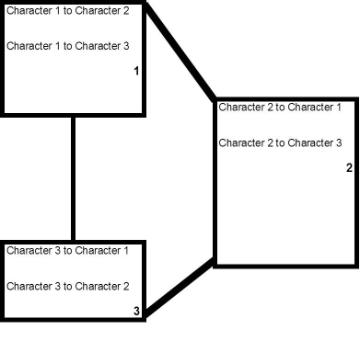
Discussion
Ask discussion questions of all 9 types (see Day 1).
Key Questions
- In your own words, describe Francisco’s struggle in school?
- Why was English class particularly challenging for Francisco?
- Francisco wanted to better his English language skills, particularly writing. What did the teacher suggest as a way for him to improve?
- Francisco decided to write about a family experience involving Trampita. What made this a good story to write about? How was thinking this out, a responsible decision?
- Who in the family was a source of emotional support for Francisco?
- Why did book The Grapes of Wrath touch Francisco?
- Compare and contrast the family in The Grapes of Wrath with Francisco’s family.
- Considering that this story is an autobiography, what aspects about Francisco’s experience in English was critical in contributing to his later becoming a writer?
- Describe Francisco’s father’s health.
- How is Francisco an example of a hard worker?
Analyze
Analyze the key paragraph.
Key Paragraph – p. 102
“After I finished reading the novel, I could not get it out of my mind. I thought about it for days, even after I had turned in the book report to Miss Bell. She must have liked what I wrote, because she gave me a good grade. My success made me happy, but, this time, the grade seemed less important than what I had learned from reading the book.”
Extend
Write
Have each student write a short product based on today’s prompt to connect to the unit theme.
Prompt 1: Autobiographical Experience
In chapter 12, Francisco is given the assignment to write something autobiographical. He picked a dramatic family event to write about. He chose a subject that did not embarrass him (admitting that he was an illegal.)
Write an autobiographical story about an experience that you’ve had within your family that would make an exciting short story. The story can be comical, dramatic, romantic, or inspiring. In a narrative paragraph, set the context by describing the circumstances of the time, who was involved, the time period, etc. Include details to describe the sequence of events. End the story that describes the lesson learned.
Close
Close by extending today’s lesson to life and the world.
- What subject in school do you find most challenging?
- What can you do to improve in that subject area?
Day 13
Outcomes for Today
Prepare
Background
Gather background knowledge about a place, time, event, person, or thing.
What is prejudice?
Prejudice is prevalent in our culture. It involves a preconceived feeling or opinion formed without knowledge, thought or reason. Specifically, it can involve unreasonable feelings, opinions or attitudes, especially of a hostile nature regarding a racial, religious or national group. Such attitudes are considered collectively.
Are people Francisco and his family encounter prejudice? Why or why not? If only a few people are prejudice, who and why?
Word Wall
Here are five vocabulary words to teach and add to the Word Wall.
|
anticipating -107 |
gesturing -105 |
nationality -107 |
swirled -104 |
swung -104 |
Read
Review
Review the timeline from the beginning every day.
Read
Read the selection, usually in a Shared Reading Read React Predict Cycle of 2-3 pages.
Read p. 103-108
|
Setting |
Characters |
Pages |
|
Santa Maria High School |
Francisco, students |
103-104 |
|
School dance |
Francisco, female students, Roberto, Susan |
104-105 |
|
Rides from work, at work |
Francisco, Roberto |
105-108 |
Respond
Timeline
Agree on the facts in today’s reading and list the 3-5 most important on the timeline.
Students might mention:
- Francisco had no time for close friends, but got to know classmates.
- He was ridiculed at school for eating Mexican food.
- Francisco had no difficulty asking girls to dance. He did not have to rely upon alcohol to get the courage to do so.
- At one of the dances, Francisco saw Roberto with another girl. They slow danced and held hands.
- Roberto introduced Francisco to Susan; Susan complimented their dancing ability.
- Roberto made a date with Susan for the next dance.
- Francisco felt bad that Roberto would no longer be attending dances with him anymore.
- Roberto assured him that he would still give him a ride.
- Francisco got upset about the situation, and decided to stay home.
- The next day Roberto was extra happy, and said that he thought that he was in love.
- Francisco admitted that he liked seeing his brother happy, but was upset at not going to dances together anymore.
- Susan’s parents didn’t want Roberto to go out with her anymore once he told them that he was Mexican.
- Francisco had a “revelation” regarding this- it made it clear to him why Peggy had stopped seeing him.
- Most of all, Francisco felt confused- Mama had told him that everyone was equal in the eyes of God, and Papa had told him to respect everyone.
- Susan still wanted to date Roberto secretly, but he felt that to be wrong. Still, they went out secretly for a while until she was caught, and was prevented from going out at all. Eventually she started dating someone else, and Roberto stopped dating for a long time.
Map
Add to ongoing class activities like a KWL chart or map: where did the characters go?
Continue the class theme chart on “Family.” Throughout the novel, Francisco depicts the struggles and successes of his family life. After each chapter, bullet point examples of how his family members take responsibility for each other.
Continue the class theme chart of “Living in Two Cultures.” Francisco and his family are emerged in a seemingly strange and different American culture. After each chapter, bullet point examples of the challenges Francisco and his family faced living in America. Point out how their peers perceived Francisco and Roberto and how this affects their relationships with girls.
Explore
Activity
Explore the reading more deeply with a visual or oral language activity.
One possible activity: Postcard
Materials:
- Index cards, blank if possible 3.5 or larger
On one side have students illustrate with art they think will inspire Francisco or Roberto.
On the other side detailed advice in clear and concise writing, paragraph minimum
It seems Francisco and Roberto are having problems dating. Write either one of them a postcard with advice about dating. Can you give them advice to improve their dating? Why or why not?
What is the real reason these girls are not dating these boys? Is it responsible? What would you do in their situation? How could everyone date more responsible? What would it take to achieve such a goal?
Discussion
Ask discussion questions of all 9 types (see Day 1).
Key Questions
- Why didn’t Francisco have time to make close friends? Can you relate to this? Why or why not?
- How did Francisco react to being called “chile stomper” or “tamale wrapper”?
- Was this the responsible reaction?
- What bothered Francisco about his brother dating a girl?
- How did Susan’s parents react to Roberto? Did Roberto react responsibly?
- Compare and contrast Robert’s relationship with Susan to Francisco’s relationship with Peggy.
- Why do you think the boys were subjected to prejudice? Does this happen in your school or community?
- Did the boys show people respect even though they were not respected? Was this a good thing?
- Why did Roberto stop secretly seeing Susan?
- How do you think prejudice actions impact people’s lives?
Analyze
Analyze the key paragraph.
Key Paragraph – p. 106
“‘I know it’s weird,’ he said, ‘but I have this strange feeling; it’s hard to explain.’ He placed his right hand on his chest and added, ‘It’s like nothing I felt before. I can’t stop thinking about her!’”
Key Paragraph – p. 107
“‘No, I didn’t tell him I was born in Mexico,’ he said, anticipating my question. ‘But when I said I was Mexican there was dead silence. After a while we continued talking, but they seemed uncomfortable and less friendly. I thought it was strange, but I didn’t think much about it until Susan told me today at school. She couldn’t stop crying. I felt terrible.’ Roberto choked up. ‘Her father even promised to buy her a car if she stopped seeing me. Can you believe it?’”
Extend
Write
Have each student write a short product based on today’s prompt to connect to the unit theme.
Prompt 1: Confronting Prejudice: Responsibility to Oneself and Others
In chapter 13, Francisco is subjected to ridicule by his classmates at lunchtime. Students called him names and Francisco pretended not to get upset. Write a narrative paragraph about the prejudice Francisco faced at school. Write a second narrative paragraph describing in detail how he responded. When writing your response, consider the following questions:
- Was this the right thing for him to do?
- What kind of impact did his behavior have on himself and others?
- Could such behavior possibly help change the racist ideas about him by being respectful even though he was being disrespected?
- If he has gotten angry, would it had helped or even continued the problems between him and his classmates?
Close
Close by extending today’s lesson to life and the world.
- Where does prejudice behavior and thoughts come from?
- How can your community eliminate prejudice?
Day 14
Outcomes for Today
Prepare
Background
Gather background knowledge about a place, time, event, person, or thing.
What was the 1955-1961 De Soto?
DeSoto reached its peak years in 1955, selling 115,485 cars divided into two series, Firedome and Fireflite. These two lines included seven models. After years of rumored closure, in November 1960, Chrysler Corporation announced that it would cease production of the DeSoto.
Source: http://www.allpar.com/cars/desoto/1961-cars.html
Word Wall
Here are five vocabulary words to teach and add to the Word Wall.
|
apologize -110 |
gawked -111 |
patience -109 |
portals -111 |
sputtered -109 |
Read
Review
Review the timeline from the beginning every day.
Read
Read the selection, usually in a Shared Reading Read React Predict Cycle of 2-3 pages.
Read p. 109-112
|
Setting |
Characters |
Pages |
|
Parking lot behind the gas station, company van |
Francisco, Roberto |
109 |
|
Home |
Francisco, family |
110 |
|
Morning work, Driving to school |
Francisco |
111-112 |
Respond
Timeline
Agree on the facts in today’s reading and list the 3-5 most important on the timeline.
Students might mention:
- Francisco learned to drive by driving the company van, with Roberto.
- He took the driving test and got 100% on the written, but barely passed the driving test.
- Francisco did not want to drive the DeSoto, which had been in a wreck, and was held together with rope.
- Francisco got angry, and then apologized to Roberto about not being allowed to drive his Buick one time.
- Francisco was teased by his younger brothers about having to drive the DeSoto; he offered to drive them to school in it. (Knowing that this would embarrass them.)
- Roberto kept his Buick in “primo” condition.
- Francisco began cleaning Western Union in the morning before school, and then had to drive the DeSoto to school, parking it behind the fairgrounds so he wouldn’t be seen.
- Roberto offered to help Francisco clean Western Union, so that they could go back to riding to school in the Buick together.
Map
Add to ongoing class activities like a KWL chart or map: where did the characters go?
Continue the class theme chart on “Family.” Throughout the novel, Francisco depicts the struggles and successes of his family life. After each chapter, bullet point examples of how his family members take responsibility for each other.
Continue the class theme chart of “Living in Two Cultures.” Francisco and his family are emerged in a seemingly strange and different American culture. After each chapter, bullet point examples of the challenges Francisco and his family faced living in America. Point out how their peers perceived Francisco and Roberto and how this affects their relationships with girls.
Explore
Activity
Explore the reading more deeply with a visual or oral language activity.
One possible activity: Illustration of the Buick and/or the De Soto
If you had a chance to own this car today would you? Why or why not?
http://www.allpar.com/cars/desoto/1961-cars.html
Materials:
- stiff paper 9x12 to 11x17 or butcher paper
- Tracing paper
- Transfer carbon (you can make this by using graphite from your pencil on th
- back of tracing paper)
- pencils, pens, crayons, markers
- Water-based paints
- resource pictures of a 1953 Buick, old DeSoto
Step One: Rough Sketch
- Use the reference pictures to create a rough sketch of Roberto’s 53 Buick, and/or the De Soto.
- Decide upon the placement of the car(s) on the paper include whatever background elements you wish to add. You can create a view with the car door open, showing the interior, if you wish. You may include figures, specifically Roberto, Francisco, others. It might be fun to draw both of the cars, side by side, for comparison.
- Add details to the design for customizing the exterior of the car, based on descriptions in the book. [De Soto, p.110, Buick, p.111]
Step Two: Work up a Final Illustration
- Trace your rough draft of the car, and add details and corrections
- Transfer your corrected drawing onto the stiff paper
- Draw and/or paint the illustration
Step Three: Display your drawing on the wall for a critique
- Each students finished drawings are posted on the wall.
- Taking turns, students discuss the process they used for crating their images.
- Students receive feedback from the class on the success of their work.
Note: Some students may be more adept at this assignment, and may assist other students in their design. It’s OK to make a scene emphasizing the figures instead of the car(s), with the car(s) in the background, if this is something that the student is more comfortable with.
Discussion
Ask discussion questions of all 9 types (see Day 1).
Key Questions
- In your own words, how did Francisco do on his driving tests?
- How did Francisco react to getting his driver’s license?
- Why does he regret having to drive the De Soto?
- Why does he have to drive this car? Is he responsible in not making a fuss about it?
- Describe Roberto’s car. Compare and contrast Roberto’s car and Francisco’s car.
- What does Francisco do every morning before school? Why?
- How does Francisco try to hide his car?
- How does Roberto fix the situation?
- How does Roberto show responsibility to Francisco as the older brother?
- Describe Roberto and Francisco’s relationship.
Analyze
Analyze the key paragraph.
Key Paragraph – p. 112
“One day Roberto passed by as I was walking out of the fairgrounds on my way to school. I looked the other way, hoping he did not see me. The next morning he got up at the same time I did. ‘Why are you getting up so early?’ I asked. I am helping you clean the Western Union. ‘You are!’ I exclaimed, smiling ear to ear. ‘This means. . .’”
Extend
Write
Have each student write a short product based on today’s prompt to connect to the unit theme.
Prompt 1: One Brother Helping Another: Responsibility to Oneself and Others
In the conclusion of chapter 14, Roberto offers to help Francisco and offers to drive him to school in the morning. Write a narrative paragraph about what Roberto did for Francisco and why it was significant to Francisco at the time. Describe Roberto’s actions in detail and what made it responsible. Consider:
- What kind of impact did Roberto’s behavior have on himself and others?
- Would you do the same thing for your brother or family member or friend?
Close
Close by extending today’s lesson to life and the world.
- Describe a time you helped out a family member.
- How did that improve or change your relationship?
Day 15
Outcomes for Today
Prepare
Background
Gather background knowledge about a place, time, event, person, or thing.
What is Cal Poly?
Cal Poly stands for California Polytechnic State University. It is a nationally ranked, four-year comprehensive public university located in San Luis Obispo, CA. The emphasis at Cal Poly is a “learning by doing” educational experience. It has a 6,000 acre main campus nestled in the foothills of San Luis Obispo, close to California’s central coast beaches.
Word Wall
Here are five vocabulary words to teach and add to the Word Wall.
|
administration -115 |
confident -113 |
eucalyptus -115 |
motioned -113 |
sagged -113 |
Read
Review
Review the timeline from the beginning every day.
Read
Read the selection, usually in a Shared Reading Read React Predict Cycle of 2-3 pages.
Read p. 113-116
|
Setting |
Characters |
Pages |
|
Counselor’s office |
Francisco, Mr. Kincaide |
113 |
|
Trip to Cal Poly |
Francisco, Ernie, Bob |
115 |
|
College Dorm |
Francisco, Ernie, Bob |
116 |
Respond
Timeline
Agree on the facts in today’s reading and list the 3-5 most important on the timeline.
Students might mention:
- Francisco went to see Mr. Kincade, and felt more confident.
- Francisco was notified that he made the California Scholarship Federation
- Kincade suggested that he visit Cal Poly.
- Francisco, Ernie, and Bob took a bus to the campus.
- They took a tour of the campus, and visited the dormitory.
- Francisco found that he was able to read the American history textbook.
- Back at home, he imagines being at college.
Map
Add to ongoing class activities like a KWL chart or map: where did the characters go?
Continue the class theme chart on “Family.” Throughout the novel, Francisco depicts the struggles and successes of his family life. After each chapter, bullet point examples of how his family members take responsibility for each other.
Continue the class theme chart of “Living in Two Cultures.” Francisco and his family are emerged in a seemingly strange and different American culture. After each chapter, bullet point examples of the challenges Francisco and his family faced living in America. Point out how their peers perceived Francisco and Roberto and how this affects their relationships with girls.
Explore
Activity
Explore the reading more deeply with a visual or oral language activity.
One possible activity: Create a KWL Chart of a College you are interested in attending.
Step One: Read the chapter or segment you wish to analyze
Step Two: Fill out the K [know] column: what do you know?
- What key things do you know from experience or explanation you have read so far? This might be who, what, where, when, why, or how information.
- Write this information concisely in the K [What do you know?] column...
Step Three: Fill out the W [want] column: what do you want to know?
- Given what you know, what would you like to know about this story or topic, about what has happened or will happen in the future?
- Write this information concisely in the W [What do you want to know?] column.
Step Four: Fill out the L [learned] column: what have you learned?
- As you read more of the story, or learn more about the topic, ask yourself what you have learned. Do you have answers to any of the questions in your W column: what you wanted to know?
- Write this information concisely in the L [What have you learned?] column. You may want to do this at various times as you learn. You may want to check off the questions in the W column when you answer them in the L column.
Step Five: Review the chart when it is complete
Variations of the KWL Chart
- You can do this chart for any topic you are trying to learn about.
- This can be done on worksheets, or written on a big piece of paper, like chart paper or butcher paper. This can also be written on a white board or black board; the shape of the chart is easy to copy.
- When you are analyzing a story, you can copy a KWL chart on a piece of paper and quickly take the story apart. This can be a helpful strategy on a test. This can use the same strategy for a nonfiction topic, a problem or a case study.
- You can do this individually, in pairs, in a small group, or as part of a large group.
Variations for Writing
- Write a paragraph from any of the 3 columns, K, W or L, of the chart.
KWL Chart
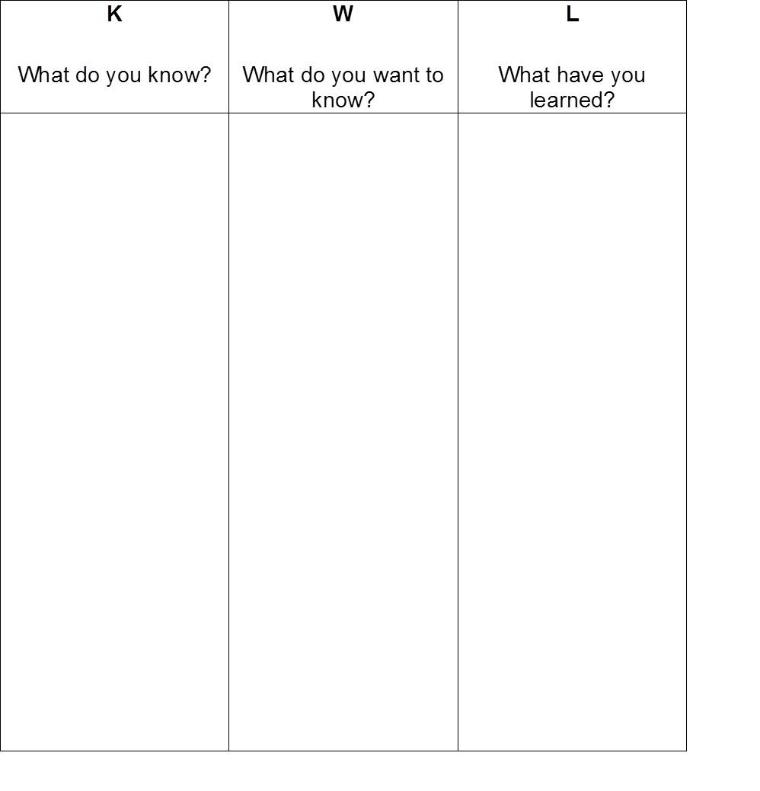
Discussion
Ask discussion questions of all 9 types (see Day 1).
Key Questions
- What do you think accounted for Francisco’s sense of confidence when he returned to Mr. Kinkade the second time?
- What social and financial barriers prevented Francisco from thinking about attending college?
- What was the reason for Francisco’s nervousness when he would get behind a steering wheel?
- How did Mr. Kinkade suggest that Francisco overcome his fear of college? Did Francisco take his advice? Was it the responsible thing to do?
- In your own words, describe Francisco’s visit to Cal Poly.
- What was the outcome of Francisco’s visit to Cal Poly?
- Compare and contrast your school to the Cal Poly description.
- Why was it significant to Roberto to be able to read the history book at Cal Poly?
- What do you think is Mr. Kincade’s impression of Francisco?
- Can you predict whether or not Francisco will become successful at his schooling and career goal of becoming a teacher?
Analyze
Analyze the key paragraph.
Key Paragraph – p. 116
“In the afternoon we visited one of the dormitories that was far away from the administration building. It was a long concrete building with windows in every room. It looked like a fancy arm barrack. We went into the lounge to look around and rest for a few minutes. I saw a student sitting on a light brown couch, reading. He has on a gray sweatshirt that read CAL POLY. I wondered if he felt lonely, like Roberto and I did when we lived alone. The student seemed annoyed by the noise we were making. He looked up, made a bad face, and left in a hurry, leaving one of his books behind on the couch. He was gone before I had a chance to tell him. I assumed it was a college book and wondered if I would be able to read it. Just as I was about to move toward the couch, I heard the guide say, ‘Time to head back.’ Everyone followed him out the door, but I stayed behind and waited until everyone had left before picking it up. It was an American history textbook. I looked at the table of contents, turned the page, and started reading. ‘I can read this!’ I exclaimed under my breath. Maybe college isn’t as hard as my teacher said it is, I thought. That evening at work I thought about our visit to Cal Poly. I imagined myself in college and living in the dorm, away from home. I felt excited and sad at the same time.”
Extend
Write
Have each student write a short product based on today’s prompt to connect to the unit theme.
Prompt 1: Responsibility as an Attitude
In the conclusion of chapter 15, Roberto realized that he could read the college level American history textbook. This realization was very exciting for him. It affirmed that he could handle college level work. Francisco had been nervous about attending college, in part, based upon one of his teacher’s comments (Mrs. Taylor). Also, Francisco came from a poor family, where the idea of affording, and attending college was out of the question. Yet, Francisco also won a scholarship- he had come a long way from not being able to understand English in the first grade!
Pretend you are a journalist. Write a narrative article that highlights Francisco persistence, hard work, and dedication. Demonstrate how Francisco’s sense of responsibility helped him to achieve his academic goals. Talk about Francisco’s attitude and how that helped him succeed?
Close
Close by extending today’s lesson to life and the world.
- How can you model Francisco’s steps to reach your goals?
- How do you think your attitude impacts your success in reaching your goals?
Day 16
Outcomes for Today
Prepare
Background
Gather background knowledge about a place, time, event, person, or thing.
What is the Salvation Army?
The Salvation Army is a non-military organization. It is an evangelical Christian service, whose aim is to advance the Christian religion through the advancement of education, the relief of poverty, and other charitable objects beneficial to society or the community a whole.
Word Wall
Here are five vocabulary words to teach and add to the Word Wall.
|
appreciation -120 |
eminent -120 |
hesitated -120 |
initiation -117 |
strewn -121 |
Read
Review
Review the timeline from the beginning every day.
Read
Read the selection, usually in a Shared Reading Read React Predict Cycle of 2-3 pages.
Read p. 117-121
|
Setting |
Characters |
Pages |
|
Santa Maria High School |
Francisco, Mr. Osterveen |
117 |
|
home |
Francisco, family |
118 |
|
Santa Maria High School |
Francisco, Abie Gonzales, Charlotte Woodward, Marjorie Ito, Mr. Osterveen |
119-120 |
|
Gas company office |
Francisco, Roberto |
121 |
|
home |
Francisco, family |
121 |
Respond
Timeline
Agree on the facts in today’s reading and list the 3-5 most important on the timeline.
Students might mention:
- Francisco liked school activities, and joined the Squires Club and the Spanish Club.
- He attended the Spanish Club meeting, and met Mr. Osterveen, one of the Spanish teachers.
- Osterveen had studied in Mexico City, and his wife was from Oaxaca, and made Francisco feel at home when he spoke Spanish.
- At home that night, Papa seemed interested about the club, and the family helped Francisco to think of a name. Mama came up with the name: “Los Santitos”.
- At the next meting the name was voted in, and Francisco became president, Abbie Gonzales was voted vice president, and Charlotte Woodward, secretary.
- The club decided upon an activity: a Christmas food drive.
- The drive was a success, the Salvation Army delivering 41 bags of food.
- Roberto picked Francisco up and had a donated Christmas tree for the family. As it turned out, Mama received a bag of groceries from the Salvation Army.
Map
Add to ongoing class activities like a KWL chart or map: where did the characters go?
Continue the class theme chart on “Family.” Throughout the novel, Francisco depicts the struggles and successes of his family life. After each chapter, bullet point examples of how his family members take responsibility for each other.
Continue the class theme chart of “Living in Two Cultures.” Francisco and his family are emerged in a seemingly strange and different American culture. After each chapter, bullet point examples of the challenges Francisco and his family faced living in America. Point out how their peers perceived Francisco and Roberto and how this affects their relationships with girls.
Explore
Activity
Explore the reading more deeply with a visual or oral language activity.
One possible activity: What does it take to start a club in high school?
Break students into groups. Have them brainstorm and record what they think it takes to start a club. Who should be allowed in it and why? Will there be an initiation? Will it cost anything? Who will lead it? What will they do? Is Francisco being responsible starting a club? Why or why not? Is it easy to start and maintain a club? What would you name it? What would your goals be?
Here are some guidelines on starting a club through the Red Cross
Discussion
Ask discussion questions of all 9 types (see Day 1).
Key Questions
- Describe Francisco’s extra curricular activities.
- How did the Spanish Club get their name?
- What was the significance of the club’s name?
- What excited Francisco about meeting Mr. Oversteen?
- In your own words, who is Mr. Oversteen? How does Mr. Oversteen meet his wife?
- Describe the characters in the Spanish Club. What characteristics do these students have in common?
- How did the Spanish Club go about putting an activity into action?
- What inspired Francisco to suggest a food drive? Was this a responsible decision?
- Where did Roberto get the family Christmas tree?
- What unusual twist of fate occurred at the end of the chapter? Does this teach a lesson about giving? What would it be?
Analyze
Analyze the key paragraph.
Key Paragraph – p. 120
“We left the meeting and agreed to meet once again before the Christmas break to make sure everything was in order. Every day the number of food bags increased, and by the end of the second week in December we had collected forty-one bags. On the last day of school before Christmas break, Captain Tracy from the Salvation Army came to collect the food. He thanked Los Santitos and gave us a certificate of appreciation for ‘rendering eminent and memorable service to the Santa Maria community by helping the Salvation Army to give a happy Christmas.’”
Extend
Write
Have each student write a short product based on today’s prompt to connect to the unit theme.
Prompt 1: Responsibility Requires Action: The Community Benefit of a Club Activity
Responsible action can be powerfully put into effect by a school activity club, as is the example in chapter 16. In what way was the Los Santitos club acting in a responsible manner? What effect did their Christmas food drive activity have on the community- on an individual and on a group level? Can you think of another activity idea that the club might have put into effect?
Pretend you are writing an article for the Francisco’s high school newspaper. Write a narrative paragraph summarizing the Spanish club’s activity and how it showed responsibly to the community. Include a suggested of an additional activity that the club can do in the future.
Close
Close by extending today’s lesson to life and the world.
- Describe a time you volunteered.
- How did this make you feel?
Day 17
Outcomes for Today
Prepare
Background
Gather background knowledge about a place, time, event, person, or thing.
What was significance of the 1960 Presidential Campaign?
This election marked the end of Dwight D. Eisenhower’s terms as president. Richard M. Nixon was his Vice-President, and became the GOP (Republican) nominee. The Democrats elected Senator John F. Kennedy, the second Catholic ever to run for political office. (the first was Democrat Al Smith in 1928.) He was careful to promise to obey the separation of church and state and not to allow Catholics to dictate public policy. Kennedy’s margin of victory in the popular vote is one of the smallest ever in American history. The Democratic Party platform supported civil rights and voting rights for African-Americans living in the South. Many Southern Democrats were opposed to this.
The turning point of the campaign came during the first presidential debates ever televised, during which Nixon appeared haggard and pale, and had refused to wear make-up. (He had been ill with an infected knee.) Kennedy appeared relaxed, tan and confident.
Word Wall
Here are five vocabulary words to teach and add to the Word Wall.
|
editorial -126 |
enthusiasm -122 |
participate -124 |
preferred -124 |
residential -125 |
Read
Review
Review the timeline from the beginning every day.
Read
Read the selection, usually in a Shared Reading Read React Predict Cycle of 2-3 pages.
Read p. 122-126
|
Setting |
Characters |
Pages |
|
Santa Maria High School U.S. History Class |
Francisco, Miss Kellogg, students |
120 |
|
home |
Francisco, family |
120 |
|
U.S. History Class |
Francisco, Miss Kellogg, students |
123 -124 |
|
home |
Francisco, family |
124 |
Respond
Timeline
Agree on the facts in today’s reading and list the 3-5 most important on the timeline.
Students might mention:
- In U.S. history class Francisco and the other students were encouraged to get informed about the 1960 presidential campaign.
- His assignment was to ask his parents their opinion on politics and the presidential campaign.
- Papa was of the opinion that the rich have all the power, and that they choose the president, not the people. He got very angry about it.
- Mama was in favor of President Kennedy.
- Francisco thought that if Kennedy was elected, that he would help the poor.
- He decided to become a Democrat.
- Francisco thought about who was in favor of which candidate, and realized that his father was wrong about all of the rich, because of Kennedy being rich.
- Francisco had an assignment to create a scrapbook about the campaign, from articles in the Santa Maria Times.
- He learned of people’s discriminatory attitude about Kennedy being Catholic.
- Roberto added that people didn’t like Mexicans, and wouldn’t vote for them either.
- This upset Francisco, who had been taught by Papa to respect everyone.
- Mama explained that some people are blinded by the devil.
- Papa added that people are ignorant; that he was proud of being Mexican, and Catholic, and that they should be too.
- Francisco was shaken by these discussions, thought of Peggy and Susan, and had a hard time falling asleep.
Map
Add to ongoing class activities like a KWL chart or map: where did the characters go?
Continue the class theme chart on “Family.” Throughout the novel, Francisco depicts the struggles and successes of his family life. After each chapter, bullet point examples of how his family members take responsibility for each other.
Continue the class theme chart of “Living in Two Cultures.” Francisco and his family are emerged in a seemingly strange and different American culture. After each chapter, bullet point examples of the challenges Francisco and his family faced living in America. Point out how their peers perceived Francisco and Roberto and how this affects their relationships with girls.
Explore
Activity
Explore the reading more deeply with a visual or oral language activity.
One possible activity: Compare/Contrast Graphic Organizer Venn Diagram
Step One:
Read the web source information regarding the two 1960 candidates: Richard M. Nixon and John F. Kennedy. The First Kennedy-Nixon Presidential Debate: September 26, 1960
Step Two:
Regarding their main campaign promises, fill in the compare/contrast chart
Discussion
Ask discussion questions of all 9 types (see Day 1).
Key Questions
- What was Papa’s philosophy regarding politics in general?
- Did Francisco agree with his father’s philosophy? Why or why not?
- What opinion did Francisco’s mother have? What task did she end up focusing on within the household? Was this a responsible perspective? What made it responsible or irresponsible?
- Roberto said something that upset Francisco further, yet Francisco was able to state his strong belief about it. What did Roberto say?
- Francisco’s scrapbook project enabled him to gather an understanding about the political scene. Do you think that this was a good method to use?
- Why did Francisco become a democrat?
- What did Francisco believe about rich people? Compare and contrast his thoughts with his father’s opinion.
- Why did some people discriminatory against Kennedy?
- What lesson does Francisco learn from his father?
- Unfortunately, after finishing his scrapbook, Francisco had trouble sleeping. Why?
Analyze
Analyze the key paragraph.
Key Paragraph
One of her class assignments was for us to as our parent their opinion on politics and the presidential campaign. Papa, who was in one of his bad moods, did not want to talk about it, but Mama finally convinced him. I don’t know much,” Papa said. I didn’t go to school, but I can tell you that in Mexico the rich have all the power. They choose the president, not the people. They tell us we have a vote, but it means nothing.”
“I am in favor of Kennedy. That’s all I know, she said.
If he gets elected, he’ll help people like us. I thought. At that moment, I decided to be for Kennedy and the Democratic Party from then on.
“Did you know that some people didn’t vote for Kennedy because he is Catholic?” I said, raising my voice and slamming the paper on the table.
“I never hide that I am Mexican,” I said. “I am proud of it too. Besides, even if I tried to hide it, I couldn’t; my accent gives me away. My friends tell me that they can cut it with a knife.”
Extend
Write
Have each student write a short product based on today’s prompt to connect to the unit theme.
Prompt 1: Responsibility as a U.S. Citizen: To become Informed about Political Candidates
In this chapter, Miss Kellog told Francisco’s history class that they had the responsibility as citizens to: “be informed about what’s happening in politics,” “Our democracy depends on it.” The book explains that Francisco, among few in the class, shared her enthusiasm. “During our present political campaign, how informed are you about the candidates for president? Why is it responsible of you to stay informed?
Go online (if no computers are available provide the students with a sheet of paper from http://www.2decide.com/table.htm, and find out who is running for the Democratic and Republican platform. Who do you want to win? Write a narrative paragraph describing who is running, who you would like to win, and why that candidate would be the most responsible for the people.
Close
Close by extending today’s lesson to life and the world.
- What do you think about politics?
- Do you think you share more ideas with democrats or republicans? Why?
Day 18
Outcomes for Today
Prepare
Background
Gather background knowledge about a place, time, event, person, or thing.
Who was El Vez. Jorge Negrete?
A Mexican singer, (1911-1953), trained as an opera singer.
He revolutionized Mexican ranchera music. Mr. Negrete was also an actor, who participated in the golden age of Mexican cinema. In addition, he was also a founder of the Union of Workers of the Mexican Republic, and reconstructed the National Association of Actors.
Who was Pedro Infante?
Probably the most famous actor and singer of the Golden Age of Mexican music, and a contemporary of Jorge Negrete. Mr. Infante has appeared in more than 60 films, and, since 1943, has recorded close to 350 songs. He received the Silver Bear and Golden Globe awards for his acting in the movie “Tizoc”.
Word Wall
Here are five vocabulary words to teach and add to the Word Wall.
|
disrespectful -129 |
gyrated -131 |
ovation -134 |
petrified -133 |
scandal -128 |
Read
Review
Review the timeline from the beginning every day.
Read
Read the selection, usually in a Shared Reading Read React Predict Cycle of 2-3 pages.
Read p. 127-134
|
Setting |
Characters |
Pages |
|
Santa Maria High School U.S. History Class |
Francisco, Miss Kellog, Marvin Bell, students |
127-130 |
|
Santa Maria High School gym |
Francisco, Bobbie Sue, Mr. Kincaide, Mr. Hodges, Greg Kudron, Judy Treankler, George Harshbarger |
130-132 |
|
cafeteria |
Francisco, George Harshbarger, Marvin Bell, performers Papa, Roberto |
132-134 |
Respond
Timeline
Agree on the facts in today’s reading and list the 3-5 most important on the timeline.
Students might mention:
- Francisco was encouraged by classmate Marvin Bell, junior year student body president, to participate in Junior Scandals, and was shown an article in The Breeze describing the event, a “follies” type show.
- Francisco decided to sing, instead of doing something that he considered to be disrespectful.
- Francisco was inspired by remembering his Elvis performance in junior high.
- Papa overheard his discussion with Roberto about the subject, and thought that he was going to sing like El Vez Jorge Negrete.
- Francisco became nostalgic for the old Mexican songs that he used to listen to as a young boy, and decided to sing Cielito Lindo
- He joined the others in the gym and announced that he was going to sing Cielito Lindo. Mr. Kincade witnessed this, and the students cheered.
- George Harshbarger offered to play the guitar for his performance. (He was also performing in a trio.)
- They went into the cafeteria to practice.
- The night of the event at the school gym, Francisco felt petrified, but with Roberto’s hollering of support, the words “flowed like a stream.”
- Audience members joined in with the refrain.
- They all danced to rock and roll afterwards.
- Francisco kept hearing Cielito Lindo in his mind.
Map
Add to ongoing class activities like a KWL chart or map: where did the characters go?
Continue the class theme chart on “Family.” Throughout the novel, Francisco depicts the struggles and successes of his family life. After each chapter, bullet point examples of how his family members take responsibility for each other.
Continue the class theme chart of “Living in Two Cultures.” Francisco and his family are emerged in a seemingly strange and different American culture. After each chapter, bullet point examples of the challenges Francisco and his family faced living in America. Point out how their peers perceived Francisco and Roberto and how this affects their relationships with girls.
Explore
Activity
Explore the reading more deeply with a visual or oral language activity.
One possible activity: Sketch the Visual Details of Francisco’s Junior Scandals Performance
Materials:
- paper suitable for drawing, like 9x12 manila paper
- pencil, pen, crayon, marker or chalk as desired
Step One: List the details of the future home
- Read pages 133-134 in Breaking Through.
- Make a list of all the details of Francisco’s performance
Step Two: Draw a sketch of Francisco’s performance including all of these details.
Variations for Writing
- This sketch can be used to help write a setting paragraph. You could write a paragraph describing Francisco singing, using your sketch as a starting point. It would also be a great illustration for the story, or perhaps a cover.
Discussion
Ask discussion questions of all 9 types (see Day 1).
Key Questions
- What did Francisco think Junior Scandals referred to initially?
- What did Francisco’s Papa think of when he heard of Francisco’s idea?
- What was Francisco’s source of inspiration for his performance?
- Who suggested the song that Francisco ended up singing?
- Was this a good choice for Francisco? How was his decision respectful?
- How did Francisco end up with instrumental accompaniment?
- What happened when Francisco tried to begin performing the song?
- Who helped Francisco to overcome his stage fright?
- What did that person do? How did this event show compassion?
- How did the audience respond to his performance?
- Do you think that this was a life-changing event for him?
Analyze
Analyze the key paragraph.
Key Paragraph
“I opened my mouth, but no words came out. My mouth felt as though it was stuffed with cotton. Then I heard Roberto holler from the back of the bleachers. ‘No te rajes, Panchito!’ As his words of support echoed throughout the gym, Papa’s face flashed in my mind. I slowly released the microphone, took a deep breath, tilted my hat, and said, ‘Okay, I am ready.’ The words to ‘Cielito Lindo’ flowed like a stream. Halfway through the song, several people in the audience sang along to the refrain, ‘Ay, ay, ay, ay, canta y no llores,’ and at the end they cheered and applauded. George and I bowed and left. Marvin then went to the microphone and asked all of the participants to join him onstage.
We all got a standing ovation. After the audience had left, we cleared the stage, played rock ‘n’ roll, and danced the Chicken, the Mash Potato, the Twist, the Stroll, and many other dances. On the way home that evening and for days after, I kept hearing “Cielito Lindo” in my mind.
Extend
Write
Have each student write a short product based on today’s prompt to connect to the unit theme.
Prompt 1: Responsibility to Oneself: Following One’s Creative Inspiration
In this chapter, Francisco performs a Mexican song “Cielito Lindo” for the Junior Scandals show. He might have easily chosen to perform a silly skit, or dress in girls’ clothing and joined a modeling show. Instead he remained true to his own calling: he loved the Mexican songs that he’d heard as a boy. He chose to celebrate his uniqueness and to represent his culture, proudly and without reservation.
Write a narrative paragraph in which you recall a creative endeavor that you have pursued, not automatically following the same type of activity that your peers had chosen. How did you feel about expressing your own unique vision? Were you being responsible to yourself about it? Include details about your type of creative expression, what the others around you may have been involved with, and how people responded to your form of expression.
Close
Close by extending today’s lesson to life and the world.
- Describe a time when you had to perform on stage.
- How did you feel? What did you like and dislike?
Day 19
Outcomes for Today
Prepare
Background
Gather background knowledge about a place, time, event, person, or thing.
What was The Civil Rights Movement?
The Civil Rights movement refers to the second half of the 20th century when legislation was introduced to eradicate discrimination based on race, gender or disability, and public and private acts of racism against African Americans between 1954 to 1968.
Word Wall
Here are five vocabulary words to teach and add to the Word Wall.
|
gangly -136 |
opponent -142 |
pessimist -138 |
racial -140 |
segregation -140 |
Read
Review
Review the timeline from the beginning every day.
Read
Read the selection, usually in a Shared Reading Read React Predict Cycle of 2-3 pages.
Read p. 135-145
|
Setting |
Characters |
Pages |
|
Santa Maria High School hallway |
Francisco, Paul Takagi |
135 |
|
Santa Maria High School cafeteria |
Francisco, Paul Takagi, Francisco, Paul Takagi, Linda Spain |
136 137 |
|
Easter break- work, home |
Francisco |
138-139 |
|
Santa Maria High School |
Francisco, Manuelito Martinez |
139 |
|
Santa Maria High School P.E. |
Francisco, Manuelito Martinez, coach |
140 |
|
Santa Maria High School cafeteria |
Francisco, Paul Takagi |
140 |
|
Church |
Francisco, Paul Takagi |
141 |
|
Santa Maria High School assembly |
Francisco, George Harshbarger, student body |
142 |
|
Leo’s Drive-in |
Francisco, Paul Takagi, classmates |
143 |
|
home |
Francisco, family (except Papa) |
143 |
|
Hospital |
Francisco, family, Papa |
144 |
|
Work-Gas Company |
Francisco |
145 |
Respond
Timeline
Agree on the facts in today’s reading and list the 3-5 most important on the timeline.
Students might mention:
- Paul Takagi became Francisco’s new best friend. He was slender and gangly with black hair and glasses.
- Paul complemented Francisco on his performance; he could pronounce Cielito Lindo perfectly. His father has been a missionary in Mexico, and was now a church minister in Santa Maria.
- They ate lunch together, and became study partners at the library.
- When Linda Spain approached them with her petition to run for student body secretary, Paul suggested that Francisco run for president. Paul was running for treasurer.
- Paul encouraged the reluctant Francisco, and told him that it would help them get into college.
- Francisco spent Easter break reading, and working; he read an article about racial segregation, and blacks fighting for equal rights.
- Francisco ran into an old friend, Manuelito, who told him to run; that the residents of Bonetti ranch would be proud.
- Francisco decided to go for it; he’d have to cut down on school dances. He and Paul signed each other’s petitions.
- They studies at the church where Paul’s father was minister. They made posters for their campaign, which Paul posted. Francisco worked and studied late after work.
- George Harshbarger became Francisco’s opponent.
- At the assembly, Francisco gave a short speech and Paul played the piano for him.
- Paul and Francisco won. Ernie DeGasparis became vice president, and Linda Spain, secretary.
- On the way home from celebrating at the drive-in, Francisco found out that his father had been hurt. He had cut his hand on the saw, and lost a finger.
- They visited Papa at the hospital; Francisco told him the news of being elected president. Papa was confused, but happy for him.
- At work that night, Francisco felt joy and sorrow.
Map
Add to ongoing class activities like a KWL chart or map: where did the characters go?
Continue the class theme chart on “Family.” Throughout the novel, Francisco depicts the struggles and successes of his family life. After each chapter, bullet point examples of how his family members take responsibility for each other.
Continue the class theme chart of “Living in Two Cultures.” Francisco and his family are emerged in a seemingly strange and different American culture. After each chapter, bullet point examples of the challenges Francisco and his family faced living in America. Point out how their peers perceived Francisco and Roberto and how this affects their relationships with girls.
Explore
Activity
Explore the reading more deeply with a visual or oral language activity.
One possible activity: Add to the Open Mind Portrait of Francisco
Refer to your portrait, and include the accomplishments that he’s made during the story.
Draw an additional portrait of Francisco as a politician. How is he different from the beginning of the story? Add to his Papa’s open mind and also compare where his Papa is compared to where Francisco is going. How are they so alike but different?
Another possible activity: Spanish Club Flyer
Draw or paint and write flyers that invite students to join the Spanish Club. Be sure the flyer includes all necessary information, such as the time and day of meetings and location.
Discussion
Ask discussion questions of all 9 types (see Day 1).
Key Questions
- How did Paul Takagi become introduced to Francisco?
- What did they do to get to know each other better?
- What did Paul suggest that Francisco do?
- Describe Francisco’s initial reaction?
- Was this a good choice for Francisco? How was he being responsible to his friends and Paul by doing it?
- What subject did Francisco get interested in while reading the newspaper? What was his reaction to the news?
- What did Francisco say to the assembly?
- How did Francisco’s family react to his nomination?
- What happened to Francisco’s father?
- Why did Francisco have mixed feelings at the end of the chapter?
Analyze
Analyze the key paragraph.
Key Paragraph
“I wiped my eyes with the back of my hand and responded, ‘I am fine, Papa.’ Trying to cheer him up I added, ‘I got good news, Papa. I was elected student body president and my friend was elected treasurer.’”
Extend
Write
Have each student write a short product based on today’s prompt to connect to the unit theme.
Prompt 1: Responsibility to Oneself and Others
In this chapter, Francisco runs for student body president. Even though he already has a very full schedule of activities and work obligations, he manages to fit it into his schedule.
What is your personal response to Francisco’s way of conducting his life while in High School? Is he a source of inspiration to you? How? What is going on in your life that you might take his lead about, and handle in a way similarly to the way Francisco might have handled it? Write a narrative paragraph describing Francisco’s choices. Describe the sequence of events that have led him to becoming President of his school. Write a second narrative paragraph about how you might conduct your life to live more responsibly like Francisco?
Close
Close by extending today’s lesson to life and the world.
- Describe a time when you felt very happy and sad at the same time.
- What advice do you have for Francisco? Should he feel guilty for feeling happy?
Day 20
Outcomes for Today
Prepare
Background
Gather background knowledge about a place, time, event, person, or thing.
Who was Dolores Del Rio?
Originally from Durango, Mexico, Dolores Del Rio was a famous Mexican film actress from the silent era, and in later Mexican films. She was considered one of the most beautiful women on screen. During her career she won 4 Silver Ariel awards in Mexico.
Word Wall
Here are five vocabulary words to teach and add to the Word Wall.
|
engaged -148 |
janitorial -148 |
outskirts -149 |
notch -150 |
rehearsed -148 |
Read
Review
Review the timeline from the beginning every day.
Read
Read the selection, usually in a Shared Reading Read React Predict Cycle of 2-3 pages.
Read p. 146-150
|
Setting |
Characters |
Pages |
|
home |
Roberto, Darlene, family |
146-148 |
|
Work Standard Oil Company |
Francisco |
149 |
Respond
Timeline
Agree on the facts in today’s reading and list the 3-5 most important on the timeline.
Students might mention:
- Roberto brought Darlene home to meet the parents.
- Roberto has gotten serious about Darlene, and told Francisco about her.
- She looked like Elizabeth Taylor, with green eyes, olive skin, and jet-black hair.
- Her parents tried to discourage them from dating because of Roberto being Mexican, but he happily complied with their midnight curfew, and even would even bring her home a half hour early.
- Papa thought she looked like Dolores Del Rio.
- Roberto told him that they were getting engaged, and wanted his blessing.
- Mama told him that of course, he did have their blessing. Papa agreed.
- Their visits became like a tonic for the family.
- That summer, they got married.
- Roberto worked an extra janitorial job to help make ends meet for everyone, and attended Hancock Community College. Darlene worked part-time washing dishes at St. Mary’s Hospital.
- Papa became more depressed over finances. Francisco worried too and started getting headaches.
- Francisco’s face was haggard, full of blemishes, with dark circles. He lost weight, and felt as if he were Papa. He dropped to his knees and cried.
Map
Add to ongoing class activities like a KWL chart or map: where did the characters go?
Continue the class theme chart on “Family.” Throughout the novel, Francisco depicts the struggles and successes of his family life. After each chapter, bullet point examples of how his family members take responsibility for each other.
Continue the class theme chart of “Living in Two Cultures.” Francisco and his family are emerged in a seemingly strange and different American culture. After each chapter, bullet point examples of the challenges Francisco and his family faced living in America. Point out how their peers perceived Francisco and Roberto and how this affects their relationships with girls.
Explore
Activity
Explore the reading more deeply with a visual or oral language activity.
One possible activity: Skit
Scene Theme Ideas:
Meeting the Parents
Newlywed Life
Francisco Falls Ill
In small groups, students are to choose a scene theme from the list above, and write a screenplay script with specific characters and dialogue, to perform for the class.
Step 1: Divide into small groups, of approximately 5-7 students each
Step 2: Decide on a theme for a short skit. (See list above)
Step 3: Choose characters, and a student to write the script.
Step 4: The group references the book for dialogue ideas, and dictates the “screenplay” to the script writer:
- Start with a setting description for the scene.
- List props to be used.
- Write the main outline for the scene: what dramatic or humorous moment is to be portrayed?
- Write the script dialogue for the characters.
- Have copies made for all group members.
Step 5: Read through the script, with each character speaking their lines.
Step 6: Stage the scene, with characters speaking their lines, as their action is worked out.
Step 7: Practice the skit, with non-acting group members acting as the audience, and giving feedback.
Step 8: Perform the skit for the class.
Discussion
Ask discussion questions of all 9 types (see Day 1).
Key Questions
- In your own words, who is Darlene?
- Describe Darlene and Roberto’s relationship.
- A life-changing event occurs to Roberto in the story at this point. What happens?
- How does the family respond to Darlene? Is this responsible?
- How do they react to Roberto’s choice?
- What does Roberto decide to do to better his situation, and that of the family?
- What is wrong with Papa?
- What do Francisco, Trampita and Torrito do to help out? How are they showing responsibility for the family?
- What do you think might be wrong with Francisco?
- Why do you think Francisco feels responsible for family finances?
Analyze
Analyze the key paragraph.
Key Paragraph – p. 148
“Papa folded his hands on the table and stared at Roberto, waiting for my brother to break the long silence. Roberto glanced at Darlene, Looked up at me, swallowed, and said: ‘Papa, Darlene and I are getting engaged and we want your blessing.’”
Key Paragraph – p. 150
“Every day that went by, I felt more and more worn out. One night while I was cleaning the Standard Oil Company, I felt completely exhausted. I had a hard time keeping my eyes open. I went in the men’s bathroom and splashed cold water on my face and arms. I looked in the mirror. My face was haggard and full of blemishes. I had dark circles under my eyes. My pants felt loose around the waist, so I tightened the belt another notch. My reflection reminded me of Papa. I understood for the first time how he must have felt in his darkest moods. I dropped to my knees, buried my face in my hands, and cried.”
Extend
Write
Have each student write a short product based on today’s prompt to connect to the unit theme.
Prompt 1: Responsibility to the Family
In this chapter, the family rallies to help out when Papa falls into a depression. This is a family that continues to support each other to survive, coming from an impoverished background, and trying to make a go of it in the U.S. Can you imagine how it might have been had they not come to each other’s assistance? Do you think that they could have made it in America?
Write a narrative paragraph that describes the family’s responsible behavior toward each other in times of need. Include three references from the text that to illustrate your point.
Close
Close by extending today’s lesson to life and the world.
- How would you help someone going through depression?
- What makes you feel better when you are sad?
Day 21
Outcomes for Today
Prepare
Background
Gather background knowledge about a place, time, event, person, or thing.
What is Mononucleosis?
Infectious mononucleosis is a disease seen mainly in young adults, characterized by fever, sore throat, muscle soreness, and fatigue. It is usually caused by the Epstein-Barr virus, and is usually transmitted through blood or saliva, or sharing a drink or eating utensils. The disease gets its name from the high amount of white blood cells called mononuclear leucocytes that result.
Word Wall
Here are five vocabulary words to teach and add to the Word Wall.
|
ached -151 |
delegate -154 |
disheveled -152 |
mononucleosis -153 |
viral infection -153 |
Read
Review
Review the timeline from the beginning every day.
Read
Read the selection, usually in a Shared Reading Read React Predict Cycle of 2-3 pages.
Read p. 151-156
|
Setting |
Characters |
Pages |
|
home |
Francisco, family |
151-153 |
|
Santa Maria County Hospital |
Francisco, Mama |
153 |
|
home |
Francisco, family |
153 |
|
Santa Maria high school-Mr. Ivan Muse’s office |
Francisco, Mr. Ivan Muse |
154-155 |
|
Santa Maria high school classes/home |
Francisco, family |
155-156 |
Respond
Timeline
Agree on the facts in today’s reading and list the 3-5 most important on the timeline.
Students might mention:
- Francisco became ill; every joint in his body ached.
- Mama tried to take care of him; gave him two aspirins and water and got him to rest.
- Francisco could not work or go to school; he could hardly walk.
- After sleeping a day and a night, Mama took him to the hospital.
- He was diagnosed with mononucleosis.
- He was ordered to rest, take aspirin and to eat more.
- Francisco had a hard time staying in bed because of his responsibilities.
- Mama, Trampita and Torito covered for him.
- He had an appointment with Mr. Ivan Muse, who asked why he’d missed the freshman assembly. He hadn’t called in sick, so Mr. Muse got Ernie DeGasparis to fill in. They agreed to meet the next month for the delegate assembly.
- Francisco couldn’t work out in P.E., and couldn’t keep up with his classes. He dropped physics.
- Mama reminded him about how Torito had been healed by prayer to the Santo de Atocha.
- Francisco began to pray.
- Slowly he began to recover.
- Torito, who’d been filling in for him at work, was given two cleaning assignments of his own.
- Francisco resumed his normal activities, including those as class president. He met with representatives at the delegate assembly: they tried to find ways to raise school spirit. Students did not want to participate in school government.
Map
Add to ongoing class activities like a KWL chart or map: where did the characters go?
Continue the class theme chart on “Family.” Throughout the novel, Francisco depicts the struggles and successes of his family life. After each chapter, bullet point examples of how his family members take responsibility for each other.
Continue the class theme chart of “Living in Two Cultures.” Francisco and his family are emerged in a seemingly strange and different American culture. After each chapter, bullet point examples of the challenges Francisco and his family faced living in America. Point out how their peers perceived Francisco and Roberto and how this affects their relationships with girls.
Explore
Activity
Explore the reading more deeply with a visual or oral language activity.
One possible activity: Fill out cube based on Francisco’s coming down with Mono. What will happen?
- Six of the squares will have a question or topic listed inside the square. Six of the squares are information squares and the others are flaps that will help the cube hold together when you assemble the cube. Fill out only the information squares: the ones that have something already printed in them.
- In regard to your overall subject, answer the question in each box or write about the topic in each square. For example, if you are writing about an event, like a news story, you would use the 4c12 Cubing Who, What, When, Where, Why form. In the Who square write about who the story is about; in the What square write about what happened; in the When box write about when it happened; in the Where box, write about where it happened; in the Why box, write about why you think it happened.
- In each square write the basic, important information you know about this question or topic the cube form on all lines to make it easier to assemble. Fold the form back – all the folds should be behind, instead of above, the printed side.
- Use a glue stick or paste to apply the adhesive to every shaded square. In you can’t make out the shading, use the glue stick on every flap. None of the information squares should have glue or paste on them.
- Fold the cube. Depending on the size of the box, this might be anywhere from 1 to 5 sentences.
Step Two: Cut out the cube and assemble it following the directions on 2c1 2.
- Cut out the cube along all dotted lines on the form; this will sometimes mean cutting between squares. One of these might be an information square and one might be a flap.
- Fold carefully following the directions on 2c12.
Variations for Cubing
- If all the extra flaps are confusing, use the Basic Cube forms instead, and fill in the appropriate questions or topics. After you cut the cube out, use tape to hold together each side. This will work, but it will not be as durable as the cubes with flaps. This means it cannot be handled as much.
- You can put together many cubes you have done over a period of time, or combine yours with cubes that other people have done. You could create a wall of cubes, connect the cubes together in a mobile, or make an archway above a door.
- You could put something in the middle of the cube to give it more weight and stability. You could stuff it with tissue paper or construction paper, for example.
Discussion
Ask discussion questions of all 9 types (see Day 1).
Key Questions
- What was wrong with Francisco?
- Why do you think he got ill?
- What was his treatment?
- What did Mama, Trampita and Torito do to help him? Was this responsible of them?
- How was he responsible for himself even when he was sick?
- What problem did he face at school, when he met with Mr. Muse?
- When did he get well? What did he do?
- What do you think helped Francisco the most? Why?
- Why do you think students did not participate in student government?
- Predict what will happen next.
Analyze
Analyze the key paragraph.
Key Paragraph – p. 152
“I felt worse when I remembered that I had to clean the Western Union and be at school on time to welcome the incoming freshmen at the school assembly. ‘I have to get up,’ I said. Holding on to Mama’s arm, I slowly stood up. I felt dizzy and weak. I took a few steps but had to stop. I could not stand the pain in my joints and muscles. Mama helped me back to bed.”
Key Paragraph – p. 156
“I began praying on a regular basis once again. Slowly I began to recover and after four weeks I felt much better. Trampita continued helping me at the gas company and Mike Nevel gave him two places to clean on his own, a coffee shop and a pet store. This brought our family extra income, which we badly needed.”
Extend
Write
Have each student write a short product based on today’s prompt to connect to the unit theme.
Prompt 1: Responsibility to Oneself
In this chapter, Francisco falls very ill with mononucleosis. He finds himself unable to work or attend school. He has a hard time staying in bed and resting: Still feeling worn-out and achy, I dragged myself out of bed Friday morning. I took a long time to get ready. Pain shot up my legs when I moved quickly. I finished cleaning the Western Union after it had opened and was late for school.”
Write a narrative paragraph describing Francisco’s illness and his recover to heath. How did Francisco handled his illness? What was his primary responsibility in this case? Was he responsible for getting ill in the first place? How responsible was he in complying with his ordered treatment? What about his responsibilities at school? What responsibilities were paramount in his mind?
Close
Close by extending today’s lesson to life and the world.
- Describe a time when you were sick.
- What did you do to get better?
Day 22
Outcomes for Today
Prepare
Background
Gather background knowledge about a place, time, event, person, or thing.
What is the Rotary Club?
Rotary is made up of three parts: at the heart of Rotary are our clubs that are supported by Rotary International and The Rotary Foundation. Rotary clubs bring together dedicated individuals to exchange ideas, build relationships, and take action. Rotary International supports Rotary clubs worldwide by coordinating global programs, campaigns, and initiatives. The Rotary Foundation uses generous donations to fund projects by Rotarians and our partners in communities around the world. As a nonprofit, all of the Foundation's funding comes from voluntary contributions made by Rotarians and friends who share our vision of a better world. Together, Rotary clubs, Rotary International, and The Rotary Foundation work to make lasting improvements in our communities and around the world.
Source: https://www.rotary.org/en/about-rotary/our-structure
Word Wall
Here are five vocabulary words to teach and add to the Word Wall.
|
announcements -161 |
cascading -159 |
hilarious -160 |
podium -161 |
rotary -157 |
Read
Review
Review the timeline from the beginning every day.
Read
Read the selection, usually in a Shared Reading Read React Predict Cycle of 2-3 pages.
Read p. 157-162
|
Setting |
Characters |
Pages |
|
Delegate Assembly Meeting |
Francisco, Mr. Muse |
157 |
|
home |
Francisco, family |
157-158 |
|
J.C. Penney |
Francisco, Mama |
158 |
|
Santa Maria high school-Mr. Ivan Muse’s office |
Francisco, Mr. Ivan Muse |
159 |
|
The Rotary Club luncheon- Santa Maria Inn |
Francisco, Mr. Ivan Muse, members |
159-162 |
Respond
Timeline
Agree on the facts in today’s reading and list the 3-5 most important on the timeline.
Students might mention:
- Francisco was invited by Mr. Muse to attend the Rotary Club luncheon the following Tuesday.
- Knowing that this was an important affair, Mama took Francisco to J.C. Penney for a suit.
- He met Mr. Muse, and arrived at the inn. Francisco admired the beautiful surroundings.
- Francisco joined the important-looking men in the dining room.
- The men joked around, and this confused Francisco.
- The announcer finally called Francisco to the podium.
- Francisco panicked and began speaking with a mixture of Spanish and English.
- He could tell by Mr. Muse’s demeanor that he was not pleased with Francisco’s speech. Afterward, Mr. Muse told him not to worry about it- to forget it.
- Francisco complained that he had not been warned ahead of time that he was going to be asked to speak.
- He would relive the uncomfortable experience afterwards, and would grow angry. Francisco dreamt about it too, and was relieved one time to dream of giving the speech entirely in Spanish. (It was clear and smooth.)
Map
Add to ongoing class activities like a KWL chart or map: where did the characters go?
Continue the class theme chart on “Family.” Throughout the novel, Francisco depicts the struggles and successes of his family life. After each chapter, bullet point examples of how his family members take responsibility for each other.
Continue the class theme chart of “Living in Two Cultures.” Francisco and his family are emerged in a seemingly strange and different American culture. After each chapter, bullet point examples of the challenges Francisco and his family faced living in America. Point out how their peers perceived Francisco and Roberto and how this affects their relationships with girls.
Explore
Activity
Explore the reading more deeply with a visual or oral language activity.
One possible activity:
Finish responsibility bookmark. How many examples of irresponsibility did Francisco give?
Because Francisco was responsible, write a paragraph on how that affected his future. How would is life be now if he had been irresponsible? Why?
OMP Francisco
Finish open mind portrait on Francisco. How has he changed? What is different? What has he learned? How is he responsible?
Another possible activity: Interview with Francisco
Create an interview between Francisco and a Rotary member. Find out what life challenge he has faced and overcome. Include either a written transcript, video, or audio recording of the interview.
Discussion
Ask discussion questions of all 9 types (see Day 1).
Key Questions
- How did Francisco prepare for the Rotary luncheon?
- What do you think was the purpose of the luncheon?
- Do you think Francisco was well prepared for the Rotary Club event?
- What was his opinion of the behavior of some of the guests?
- How did he manage to know how to behave at the lunch table? Was this responsible?
- How might you describe Francisco’s behavior during his speech?
- Was it responsible of Mr. Muse to not tell Francisco about his speech?
- What is Francisco’s lasting impression of the event?
- Why do you think this event haunted him in his dreams?
- What do you think the Rotarians thought of Francisco?
Analyze
Analyze the key paragraph.
Key Paragraph – pp. 159-160
“‘Go on,’ Mr. Muse said, giving me a gentle shove. I slowly walked up, went behind the podium, and grabbed on to it. I felt dizzy and had a sudden pain in the side of my stomach. I could hear my heart pounding as I glanced up at the audience. My mind went blank. I could hear my own silence. My face felt on fire and my legs trembled uncontrollably. Words slowly came out of my mouth, but I had no control over them. Spanish words wove with English words like braids. I knew I was not making any sense when I saw Mr. Muse frowning and staring at me as though he were seeing an animal with two heads. I finally managed to stop myself from babbling. I caught my breath, said a few words about student government, and rushed back to my seat, wishing I could disappear.”
Extend
Write
Have each student write a short product based on today’s prompt to connect to the unit theme.
Prompt 1: Responsibility for Something that Goes Wrong.
In this chapter, “A Fumble”, Francisco finds himself required to make an impromptu speech at the Rotary Club luncheon. He does indeed fumble this moment. He is not prepared for it, and gets so nervous that he speaks Spanish along with English, as is described in the key paragraph above. Also, he can’t think of much to say, and embarrasses himself. Afterwards, he feels uncomfortable every time he remembers the event. Francisco has taken this hard. If you think of his behavior thus far in the story, it makes sense that someone who is so caring, and expects so much of himself, as Francisco does, would feel badly about being unprepared. Yet, when he does think back on the event later, he is angry with the Rotary Club president: “He should have asked me ahead of time, I thought.” One might conclude that Francisco does not feel responsible for the failed speech.
Consider a time when you were in a similar situation where you were not prepared for an unexpected situation. Write a narrative paragraph that details this event. What happened first, second, and third? What lessons did you learn? Did you feel responsible? Why or why not?
Close
Close by extending today’s lesson to life and the world.
Extend the reading to the student’s lives or to the world.
Day 23
Outcomes for Today
Prepare
Background
Gather background knowledge about a place, time, event, person, or thing.
Why is the significance of moving away from your family for college?
Living away from home tends to be the toughest adjustment for first-year students. You've had a clear role within your family all of your life: the family comedian, the mediator, maybe the translator. Whichever role you filled at home, when you're gone, you're not sure where you fit in. It may seem like your family is doing fine without you, and you may feel uncomfortable or sad about these changes.
Sometimes parents have a harder time letting go of their children.
http://www.kidshealth.org/teen/school_jobs/school/college.html
Word Wall
Here are five vocabulary words to teach and add to the Word Wall.
|
enthusiasm -163 |
Instinctively -169 |
hilarious -160 |
sparse -164 |
sympathetically -165 |
Read
Review
Review the timeline from the beginning every day.
Read
Read the selection, usually in a Shared Reading Read React Predict Cycle of 2-3 pages.
Read p. 163-174
|
Setting |
Characters |
Pages |
|
home |
Francisco, family |
163 |
|
Mr. Robert Penny’s office-cafeteria |
Francisco, Mr. Penny |
163-16 7 |
|
Home |
Francisco, family |
167-170 |
|
Library-work |
Francisco |
170-171 |
|
Santa Maria high school Mr. Penny counseling office |
Francisco, Mr. Penny |
172 |
|
Home- |
Francisco, family |
173-174 |
|
Cal Poly-SAT test |
Francisco |
174 |
Respond
Timeline
Agree on the facts in today’s reading and list the 3-5 most important on the timeline.
Students might mention:
- Francisco went to see Mr. Penny about applying to college. Francisco had not applied to any.
- Penny directed him to apply for scholarships. He also signed him up for the SAT.
- Francisco was reluctant because of his family’s needs.
- Penny counseled Francisco to have his younger brother take over his job.
- Francisco approached his father about the idea.
- Papa got very angry, telling Francisco to shut up, and also pushing Mama away. He did not want Francisco to leave the family.
- Francisco came to Mama’s defense, and Papa slapped him.
- Papa went to his room; Mama consoled Francisco. She reminded him that Papa had not said “no”.
- Francisco went to work and school the next day in a daze.
- Francisco found out that Mr. Osterveen had visited them and had convinced Papa to agree.
- Francisco thanked his sleeping father.
- He filled out the scholarship applications and turned them in to Mr. Penny.
- Although Francisco was too late for most colleges, he was able to apply to Santa Clara University with an extension.
- Francisco then took the SAT test in English and Math.
- Francisco’s combined scores were just below 900, but had done better than expected.
Map
Add to ongoing class activities like a KWL chart or map: where did the characters go?
Continue the class theme chart on “Family.” Throughout the novel, Francisco depicts the struggles and successes of his family life. After each chapter, bullet point examples of how his family members take responsibility for each other.
Continue the class theme chart of “Living in Two Cultures.” Francisco and his family are emerged in a seemingly strange and different American culture. After each chapter, bullet point examples of the challenges Francisco and his family faced living in America. Point out how their peers perceived Francisco and Roberto and how this affects their relationships with girls.
Explore
Activity
Explore the reading more deeply with a visual or oral language activity.
One possible activity: Write a letter
Write a letter to Francisco’s dad and convince him that Francisco needs to go to college. List reasons and facts from the chapter that support your persuasion of Francisco’s dad. What does Francisco want to avoid having to do for his future? Do you agree with him? Convince Mr. Jimenez understand the importance of education. Also show that Francisco is showing responsibility.
Remember: Salutation, beginning, middle, end and closing
Discussion
Ask discussion questions of all 9 types (see Day 1).
Key Questions
- What does Mr. Penny advise Francisco to do?
- How does Francisco go about following his advice? Is this the right decision?
- Where does Francisco decide to apply to college?
- What is Papa’s reaction to Francisco’s idea?
- What happens to get Papa to agree?
- How is Mr. Oversteen responsible for Francisco even though he doesn’t have to be?
- What do you think was the possible significance of Francisco’s dream?
- How did Francisco do on the SAT test?
- Why do you think this chapter is called “A Breakthrough”?
- Predict what will happen next.
Analyze
Analyze the key paragraph.
Key Paragraph – p. 170
“‘I know what you mean, mijo,’ she said, stroking the back of my head. ‘Have faith in God. I’ll talk to your father tomorrow when he feels better. Remember, he didn’t say no. That’s a good sign. Now go outside to get some fresh air and go to bed. You need rest.’”
Key Paragraph – p. 171
“‘Yes, Mr. Penny. What a strange name . . . Why would they name him Centavo? Anyway, he asked Mr. Osterveen to talk to us. .Es Buena gente. We couldn’t believe that an important person like him would visit us. He and Papa talked about Mexico. His wife is from Oaxaca, you know, and he lived there for many years. He went on and on talking about college and you. Hablo como perico. Papa and I didn’t understand a lot of what he said about college, but we felt really proud about all the nice things he said about you.’”
Extend
Write
Have each student write a short product based on today’s prompt to connect to the unit theme.
Prompt 1: Taking Advantage of an Opportunity: Does it Sometimes Mean Delegating Responsibility to Others?
In this chapter, with the help of his counselor, Francisco takes quick action to prepare the way for his dream of becoming a teacher. Whereas he had avoided pursuing the option of attending college, to stay home and help out the family, he becomes convinced of the possibility of delegating work responsibility to his younger brother, Trampita. He then, later with the help of his teacher, manages to convince his father of the importance of his decision: “It’s my only chance!” He repeats.
In your life, can you think of an opportunity that you would like to take advantage of, but one, which might require you to pass on some of your present responsibilities to others? Or, perhaps you experienced something like this in your past.
Write a narrative paragraph describing a time when you took advantage of a good opportunity. What was the opportunity? Did you have to make any sacrifices for that opportunity? Provide three details in your narrative.
Close
Close by extending today’s lesson to life and the world.
Extend the reading to the student’s lives or to the world.
Day 24
Outcomes for Today
Prepare
Background
Gather background knowledge about a place, time, event, person, or thing.
What is the significance of a Commencement Ceremony?
Graduation is the action of receiving or conferring an academic degree or the associated ceremony. The date of event is often called degree day. The event itself is also called commencement, convocation or invocation. In the United States and Canada, it is also used to refer to the advancement from a primary or secondary school level. Beginning at the secondary school level in the United States, such ceremonies usually include a procession of the faculty and candidates. The candidates will almost always wear academic dress, and increasingly faculty will do the same. At the college and university level the opposite is true, and the faculty will usually wear academic dress at the formal ceremonies, as will the trustees and degree candidates. Many colleges have traditions associated with the graduation ceremony, the most common likely the throwing of mortarboards in the air.
Word Wall
Here are five vocabulary words to teach and add to the Word Wall.
|
benediction -183 |
deported -175 |
invocation -183 |
procession -183 |
suffocating -177 |
Read
Review
Review the timeline from the beginning every day.
Read
Read the selection, usually in a Shared Reading Read React Predict Cycle of 2-3 pages.
Read p. 175-184
|
Setting |
Characters |
Pages |
|
home |
Francisco |
175 |
|
School-Mr. Penny’s office |
Francisco, Mr. Penny |
175-177 |
|
Home, work, home |
Francisco, Mama, Papa, brothers |
177-183 |
|
Santa Maria high school-graduation |
Francisco, Reverend Glen Johnson, Graduating class, audience, family |
183-184 |
Respond
Timeline
Agree on the facts in today’s reading and list the 3-5 most important on the timeline.
Students might mention:
- Francisco received a letter of acceptance from Santa Clara University.
- He thanked Mr. Penny, but worried about the cost. He was told about scholarships and a NDSL loan. His GPA was 3.77.
- Francisco applied, writing in that he was born in Colton, California.
- The good news finally came that he won $1000 in scholarship money.
- The following day, he found out that his loan for $1000 also came through. Now he had enough for the first year.
- Graduation evening, before the ceremony, Francisco and his brothers worked as a team to clean the gas company. Francisco wanted the whole family to attend.
- Papa wasn’t feeling well, but was persuaded to go. He even wore a suit and tie.
- Francisco put on his gown and white silk California Scholarship Federation sash.
- Reluctantly, he left ahead of his parents, who said they would meet him there.
- After the Reverend Glen Johnson gave the invocation and benediction, Francisco was introduced.
- He began the pledge of allegiance, and the crowd joined in, sounding like a prayer.
- As Francisco finished, his parents entered the back, and he proudly gave the welcome.
Map
Add to ongoing class activities like a KWL chart or map: where did the characters go?
Continue the class theme chart on “Family.” Throughout the novel, Francisco depicts the struggles and successes of his family life. After each chapter, bullet point examples of how his family members take responsibility for each other.
Continue the class theme chart of “Living in Two Cultures.” Francisco and his family are emerged in a seemingly strange and different American culture. After each chapter, bullet point examples of the challenges Francisco and his family faced living in America. Point out how their peers perceived Francisco and Roberto and how this affects their relationships with girls.
Explore
Activity
Explore the reading more deeply with a visual or oral language activity.
One possible activity: Create a graduation card for Francisco
Materials:
- pieces of stiff paper [like oak tag] 3-5 inches wide and 5-10 inches long
- some combination of pencil, pen, crayon, or marker
- construction paper, scissors and glue sticks if desired
Decorate/Greeting on the front, message inside. What would you like to say to him after reading of his life?
These may be shared with the class, and displayed.
Discussion
Ask discussion questions of all 9 types (see Day 1).
Key Questions
- What did it cost for Francisco to attend the first year of college? How does that price compare to the cost of tuition of college today?
- Francisco manages to afford the first year of college. How?
- What techniques do Francisco and Mama use to convince Papa to go to the graduation?
- How is Papa being responsible in going to the graduation?
- Why does Francisco show concern about his parents arriving after him?
- What role does Francisco play in the graduation ceremony?
- Describe how Francisco’s leadership skills? How did he develop these skills?
- Why was it important that Francisco’s parents attend the graduation ceremony?
- How was this graduation ceremony similar and different from Francisco’s middle school ceremony?
- What occurs at the end of the chapter that really makes Francisco proud?
Analyze
Analyze the key paragraph.
Key Paragraph – pp. 183-184
“I picked up my cap and left, not knowing whether or not Pap would attend. I got to the gym in a few minutes before the procession. I moved up to the front of the line to join my classmates who had also made the California Scholarship Federation every semester for four years. We marched up the middle of the aisle, banked on both sides by rows of seats reserved for our graduating class. I sat in the front row, facing a low platform that served as the stage. After the Reverend Glen Johnson from the Gloria Dei Lutheran Church gave the invocation and benediction, I was introduced. I walked up to the podium, feeling nervous but confident. I quickly scanned the bleachers, hoping to see my family, and began: ‘I pledge allegiance to the flag of the United States of America and to the Republic for which it stands, one nation under God . . . with liberty and justice for all.’ I could hardly hear my own voice as thousands of others joined and recited it with me. It sounded like a prayer in church. As I finished, I saw Papa and Mama entering through the door in the back of the gym. My father braced himself on my mother’s shoulder. My heart raced with excitement. I smiled, took a deep breath, and proudly gave the welcome.”
Extend
Write
Have each student write a short product based on today’s prompt to connect to the unit theme.
Prompt 1: Responsibility to the Future
In this chapter, Francisco graduates from high school with all of his family in attendance. He has successfully achieved what many might consider to be unachievable: from immigrant, non-English speaking origins, to graduating high school at the top of his class, and bound for college. But, not only does he carve out a future for himself, but he also serves as an inspiration to others that may come after him. He has created a legacy. What ways has he been a responsible person in creating this legacy?
Write a narrative paragraph that describes the kind of legacy that you would like to leave behind and how responsibility plays key role in that. Include three actions steps on how to create your legacy.
Close
Close by extending today’s lesson to life and the world.
Extend the reading to the student’s lives or to the world.
Day 25
Outcomes for Today
Prepare
Background
Gather background knowledge about a place, time, event, person, or thing.
Who were the Aztec Warriors?
Aztec warriors formed the Aztec forces from the central Mexican civilization, in the 1300-1500’s. The majority was typically made up of commoners, with basic training, but there were also smaller numbers of professional warrior societies, classified by their achievements, such as the sacrifice of war captives. Aztec society was based upon expansion and dominance, and warfare was the main driving force of both economy and religion.
What is the setting of today’s reading?
|
When |
Time of Day |
Where |
Weather |
|
1950’s |
daytime |
Santa Maria |
Spring |
Word Wall
Here are five vocabulary words to teach and add to the Word Wall.
|
Aztec -186 |
feigned -189 |
pyrite -189 |
quivered -190 |
winced -191 |
Read
Review
Review the timeline from the beginning every day.
Read
Read the selection, usually in a Shared Reading Read React Predict Cycle of 2-3 pages.
Read p. 185-193
|
Setting |
Characters |
Pages |
|
Work |
Francisco, Trampita, Mike Nevel |
185 |
|
Roberto’s home |
Roberto, Darlene, baby girl |
185 |
|
Home |
Francisco, family |
186 |
|
Home |
Francisco, family to see him off |
186-190 |
|
Trip to Santa Clara Santa Maria/ Santa Clara |
Francisco, family
|
190-193 |
Respond
Timeline
Agree on the facts in today’s reading and list the 3-5 most important on the timeline.
Students might mention:
- Francisco continued to work for Santa Maria Window Cleaners during the summer.
- Roberto’s family grew when Darlene had a baby girl named Jackie.
- Francisco counted off the days until he was to go to college- on an Aztec calendar.
- Sunday of the first week of September they prepared to leave for Santa Clara, stopping in Santa Maria on the way. Mama bought new clothes for Francisco.
- They all got in the cars, Roberto’s family following behind.
- They drove to Santa Maria and reminisced about old times.
- Francisco compared heading over the bridge to work in Fresno to now, heading to Santa Clara to go to school- after all these years he was still moving.
Map
Add to ongoing class activities like a KWL chart or map: where did the characters go?
Finish the class theme chart on “Family.” Throughout the novel, Francisco depicts the struggles and successes of his family life. After each chapter, bullet point examples of how his family members take responsibility for each other.
Finish the class theme chart of “Living in Two Cultures.” Francisco and his family are emerged in a seemingly strange and different American culture. After each chapter, bullet point examples of the challenges Francisco and his family faced living in America. Point out how their peers perceived Francisco and Roberto and how this affects their relationships with girls.
Explore
Activity
Explore the reading more deeply with a visual or oral language activity.
Another possible activity: Fill out the Plot Profile Chart
- Decide on the 10 most important events in the story, chapter or segment you are analyzing. List them in order in the rows at the bottom of the chart. If you go back the Beginning-Middle-End Chart, this will be easier to do.
- Decide on a scale of 1 [low] to 10 [high] how intense you think this event is, and mark your score in the appropriate box.
- Connect the marks in the boxes to form a graph.
- This graph will help you to profile the plot. How it looks will depend on the story you are reading and whether you are plotting an entire story, or a chapter or segment.
Discussion
Ask discussion questions of all 9 types (see Day 1).
Key Questions
- What event happens in Roberto’s life?
- From what you have learned about Roberto, do you think that he is going to make a responsible father? Why or why not?
- Roberto and Francisco are beginning new chapters in their lives. How are these new chapters similar and different?
- How do you predict their family will support them in this next phase in life?
- How does the family prepare for Francisco’s move to college? What things do they do for him that shows their responsibility to him?
- How does Francisco feel about seeing Santa Maria again?
- What does the crossing the bridge to Santa Clara mean to him? What did this bridge use to symbolize?
- How does the author bring the story full circle at the end?
- What do you think will happen next?
- What did you like and dislike about this book?
Analyze
Analyze the key paragraph.
Key Paragraph - p. 190
“Everyone was ready to leave. We secured the front door with a padlock and stood outside by the car, waiting for Roberto, Darlene, and Jackie to arrive to say good-bye. As soon as we saw them, I felt a lump in my throat. Me brother parked his car behind ours. His eyes turned red and watery as we approached and hugged each other. We were silent. Each one of us knew what the other was feeling.”
Key Paragraph – p. 193
“I speeded up, crossed the bridge, and headed north to Santa Clara. I was going to college. After so many years, I was still moving.”
Extend
Write
Have each student write a short product based on today’s prompt to connect to the unit theme.
Prompt 1: Responsibility to the Family
In this chapter, as in previous chapters, the family gathers together to support each other during hard times, and during times of transition, as when Francisco leaves for college. Francisco’s entire family chooses to accompany him to college. Can you think of an example from your life when you were there for a family member or friend when they needed you? If you can’t, think of what that would have been like and what you could do to be there for someone else.
Write a narrative paragraph detailing an experience you’ve had when you supported a family member or friend. How would it make them feel if you were there and kept your word? How is this a responsible action that does the best thing for everyone?
Close
Close by extending today’s lesson to life and the world.
Extend the reading to the student’s lives or to the world.
Final Assignment
Final Assignment:
Unit: Responsibility Requires Action
Novel: “Breaking Through” by Francisco Jimenez
Final Assignment: Autobiographical Essay
Task: Write an autobiographical essay.
Directions: Over the past five weeks, you have read the novel “Breaking Through by Francisco Jimenez. In the novel, Jimenez shows a child growing up under difficult circumstances. This is a family who faces the worse of times, racism and poverty. Through it all they always have each other. No matter what obstacles get in their way, they find a way through it as a family. Jimenez had to grow up way too soon and help support his family at a very young age. Many young boys go through the same issues Jimenez has gone through. Does this make one stronger? Why or why not?
Using the writing projects you kept over the five weeks, write an autobiography sharing a period of time in your life. You should use the section on Autobiographical Writing to guide you through this exercise. Remember that one paragraph should flow into the next. In order to produce this effect, you may have to re-write some sentences or paragraphs from your daily projects and writings. You may also need to add leading or unifying sentences at the beginning or end of paragraphs to aid your reader in following the direction of your essay.
Prewrite to organize your ideas
Rough draft
Edit/peer edit
Final Draft turn in
Rubric: http://content.scholastic.com/content/collateral_resources/pdf/u/unit_autobio_rubric.pdf