The 40-Minute Lesson Plan is essential elements of the CBL lesson plan. We suggest the teacher reads aloud or uses an audio book for the reading portion. 40-min includes: Background, Wordwall, Key Paragraph, and Writing Prompt
60
The 60-Minute Lesson Plan uses the same elements as the 40-minute plan, but also covers a visual activity and discussion. 60-min includes: Background, Wordwall, Key Paragraph,Writing Prompt and adding the Key Questions
90
The 90-Minute Lesson Plan contains all elements of the lesson plan. If time is available, we recommend using this version to get all of the benefits of CBL. The full lesson includes: Background, Wordwall, Key Paragraph, Writing Prompt, and Key Questions of the 40 and 60 minutes options while incorporating the Mapping Activity, Visual Activity and creating the Timeline as a class.
Cite textual evidence to support analysis; determine a theme or central idea of a text; determine the meaning of words and phrases. Analyze how a particular sentence, chapter, scene, or stanza fits into the overall structure of a text and contributes to the development of the theme, setting, or plot.
Write informative/explanatory texts to examine a topic and convey ideas, concepts, and information through the selection, organization, and analysis of relevant content.
Engage effectively in a range of collaborative discussions (one-on-one, in groups, and teacher-led) with diverse partners on grade 6 topics, texts, and issues, building on others' ideas and expressing their own clearly.
Prepare
Background
Gather background knowledge about a place, time, event, person, or thing.
Does restricting student publication in a school paper violate the First Amendment rights of public school students?
When a journalism teacher in Hazelwood East High School brought the page proofs to a routine review by the school principal in 1983, the principal took out two of the articles. The first article addressed how students cope with parental divorces. The principal noted that the reporter should have contacted the parents identified in the article for comments prior to publication. The second article was based on interviews with three pregnant students. The principal felt that the reporter did not take sufficient action to protect the identity of the interviewees and that some of the content about sexual activity and use of birth control was not aligned with the school’s culture. To avoid a delay in the publication date, the principal decided to take out these articles rather than require a revision. One of the student reporters and two fellow editors filed a lawsuit contending the principal decision violated their right to free speech.
In the case of Hazelwood v. Kuhlmeier (1988), the court held that students’ rights were not violated because the newspaper was produced as part of the course Journalism II and was an educational assignment required to align with the school’s educational mission. The underlying argument here is: When the school sponsors the paper and article has the potential to hurt the school’s reputation or contain inappropriate content, the school has the right to cancel the article or require its modification. A school-sponsored paper is not a public forum; rather it is a limited forum designed to meet requirements for educational activities such as a course or club. Despite the ruling, certain states have taken steps to counter this Supreme Court ruling. Since 1977, California has protected high school student journalists and their rights to free speech. Since 1988, Iowa, Colorado, Kansas, Arkansas, and Massachusetts have protected student journalists from disciplinary action by enacting “Anti-Hazelwood” laws.
Word Wall
Here are five vocabulary words to teach and add to the Word Wall.
curriculum (4)
protest (5)
domain (7)
censor (7)
poll (10)
Read
Review
Review the timeline from the beginning every day.
Read
Read the selection, usually in a Shared Reading Read React Predict Cycle of 2-3 pages.
Look at the front and back cover, then make predictions about what you will be reading over the course of this unit.
Read pp. 1–17 (website, Zebby, Amr, Brianna, Hayley, Lilly)
Setting
Characters
Pages
www.truthabouttruman.com
Zebby
1
Truman Middle School
Zebby, Mrs. Jonstone, Amr, Mrs. Conway
3–7
Truman Middle School
Amr, Zebby, Sara
7–12
Second-floor girl’s bathroom
Brianna, Hayley
12–13
Media center
Hayley, Mrs. Conway, Reece, Jonathan, Sara
13–15
Undisclosed
Lilly
16–17
Respond
Timeline
Agree on the facts in today’s reading and list the 3-5 most important on the timeline.
Students might mention:
Zebby quit the Bugle.
Zebby and Amr create truthabouttruman.com – a space where people can write about anything they want as long as it is true and original.
Lilly begins receiving emails from an anonymous sender.
Map
Add to ongoing class activities like a KWL chart or map: where did the characters go?
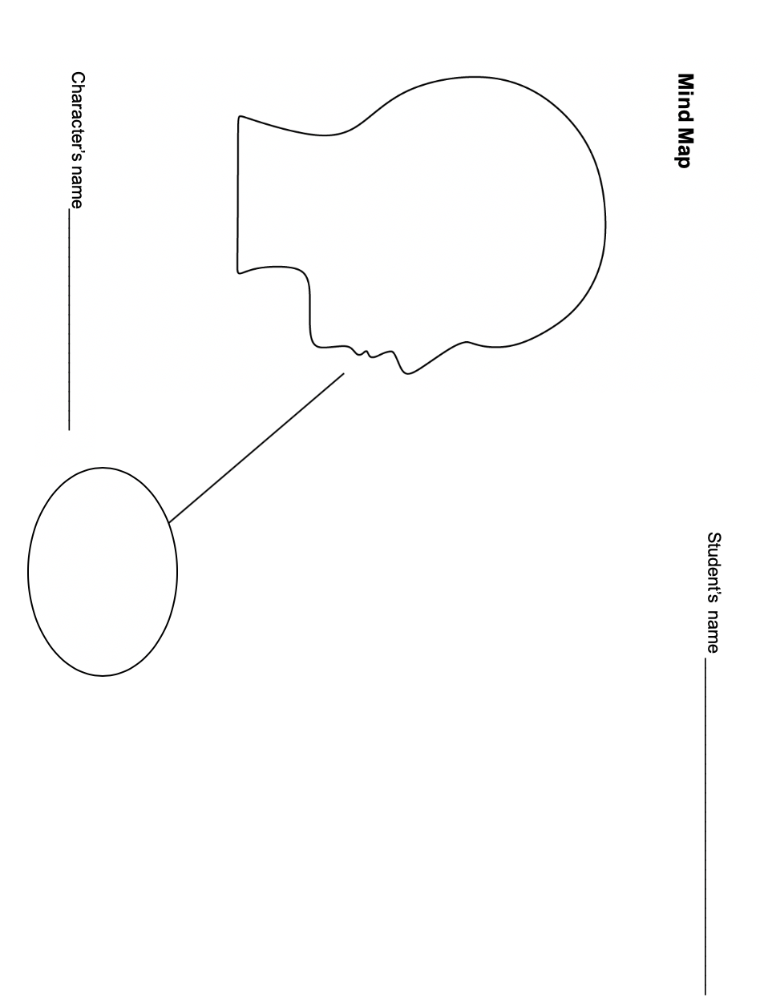
In small groups of six, create a Mind Map of characters attitudes towards the virtue of honesty. The group will decide which member will be responsible for which character. Characters could be Zebby, Amr, Lilly, Trevor, Hayley, or Brianna.
Imagine how the character looks like and add details to the drawing (e.g., face, hair, and shoulders).
Each day draw a speech bubble and add either a quote or evidence from the text that reflects your characters view of telling the truth. Include the page number inside the speech bubble.
Color the bubble green if the character was being honest or advocated for honesty, yellow if they told the partial truth or were unsure of how much truth to share, and red if they did not tell the truth or showed they cared about it.
Students can use markers, crayons, or colored pencils to decorate the page and indicate the characters views. Observe whether and how attitudes towards the truth change over time.
Make sure you start at the bottom of the page and add speech bubbles in order of the page numbers in the book. As the weeks progress, observe how the character’s attitudes towards the truth may have changed throughout the book.
Today, Day 1, use the speech bubble provided. Add either a quote or evidence from the text that reflects the character's attitude towards the truth. Color the bubble to indicate the character’s attitude towards the truth. Once each student has added the daily quote on their map, come together in small groups and read the chosen quote aloud.
Explore
Activity
Explore the reading more deeply with a visual or oral language activity.
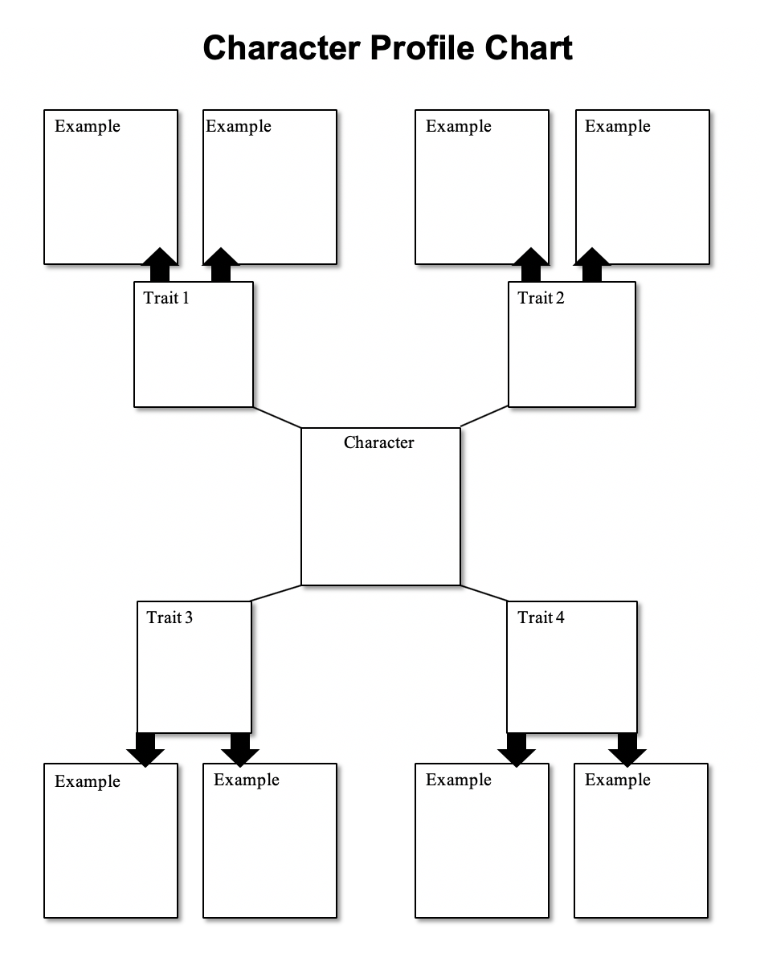
Complete a character profile chart for a character of your choosing.
Write the name of the character in the box in the middle of the chart.
Think of 4 characteristics, or traits, that the character has. Describe each with a keyword or phrase and write it down in one of the four boxes that surround the name.
For each trait, find two concrete examples of it in the story. Write each in one of the two boxes attached to each trait box. Continue this until you have two examples for each of the four
MIND MAP
Character Profile Chart
Discussion
Ask discussion questions of all 9 types (see Day 1).
Answer the key questions. Use evidence from the text.
What evidence supports Zebby’s view that Truman School has a bullying problem?
Why does Mrs. Jonstone say there is not a bullying problem?
Did Lilly make a wise choice by not telling her mom about the emails? Give reasons.
Small Group Discussion about Cyberbullying
Turn to the Cyberbullying Discussion Guide on p. 172 and respond to question 3. Designate a Note Taker and share your group decision with the class.
Analyze
Analyze the key paragraph.
key Paragraph, p. 4
“Being editor of my school newspaper was a good place to start. But Mrs. Jonstone sort of looked past me and said, ”Is there anybody else who’d like to be editor next year?” You could tell how badly she wanted somebody, anybody, else to raise their hand. It’s because of the blue streaks in my hair. Mrs. Jonstone doesn’t like kids with blue hair.”
Extend
Write
Have each student write a short product based on today’s prompt to connect to the unit theme.
Respond to the writing prompt. Write a minimum of two paragraphs (200 words). Use argumentative writing style – consider how one might counter-respond to your arguments and address these potential counterarguments.
Did Zebby and Amr make the right choice to create a website where people can say whatever they want?
Close
Close by extending today’s lesson to life and the world.
Cite textual evidence to support analysis; determine a theme or central idea of a text; determine the meaning of words and phrases. Analyze how a particular sentence, chapter, scene, or stanza fits into the overall structure of a text and contributes to the development of the theme, setting, or plot.
Write informative/explanatory texts to examine a topic and convey ideas, concepts, and information through the selection, organization, and analysis of relevant content.
Prepare
Background
Gather background knowledge about a place, time, event, person, or thing.
What is cyberbullying?
Cyberbullying is a form of bullying that takes place on digital devices. It includes sending, posting, and sharing content that is false, harmful, and mean about another person. Cyberbullying is persistent because the communication can occur at any time on a variety of media platforms. Cyberbullying has long-lasting impact because of its broad audience reach and likely traumatic experience. Cyberbullying can be hard to detect, making timely school or parental intervention difficult. For further information about how to identify cyberbullying and effective practices for prevention and intervention, you can visit the Cyberbullying Research Center at https://cyberbullying.org.
Word Wall
Here are five vocabulary words to teach and add to the Word Wall.
hassling (18)
anonymous (20)
advisor (24)
blathering (25)
goosebumps (30)
Read
Review
Review the timeline from the beginning every day.
Read
Read the selection, usually in a Shared Reading Read React Predict Cycle of 2-3 pages.
Agree on the facts in today’s reading and list the 3-5 most important on the timeline.
Students might mention:
Hayley organizes a cheerleading squad with Brianna and Lilly.
Hayley and Trevor both email truthabouttruman.com asking if they could post articles.
Hayley, Brianna, and Lilly practice cheerleading in the media center; meanwhile Zebby is there to pick up a book.
Map
Add to ongoing class activities like a KWL chart or map: where did the characters go?
Continue working on the Mind Map. Today, Day 2, add a speech bubble above the previous one and add either a quote or evidence from the text that reflects the character's attitude towards the truth. Color the bubble to indicate the character’s attitude towards the truth. Once each student has added the daily quote on their map, come together in small groups and read the chosen quote aloud.
Explore
Activity
Explore the reading more deeply with a visual or oral language activity.
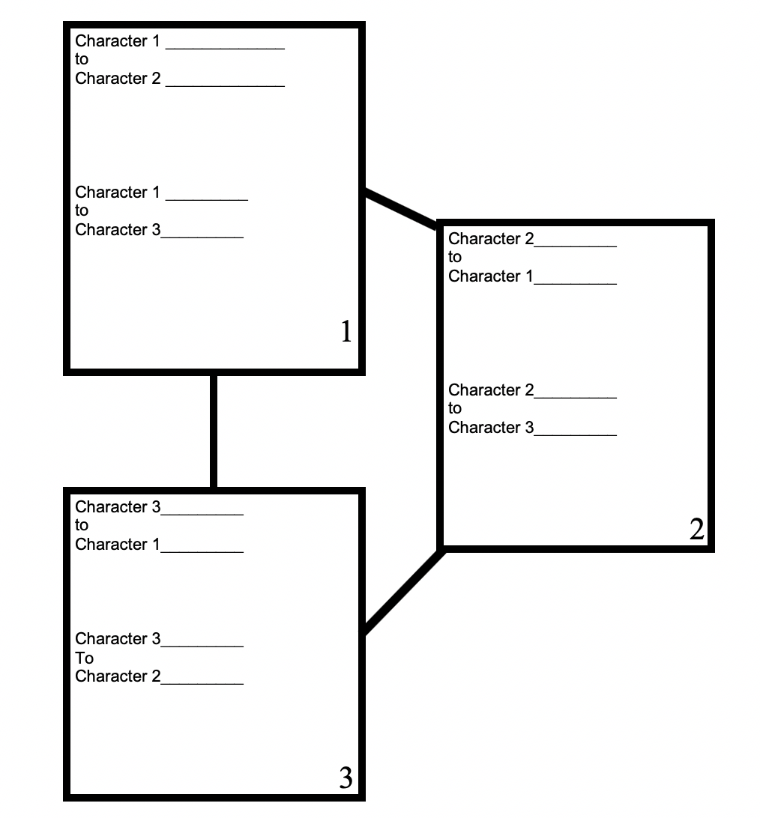
Fill out the Character Interaction Chart for Hayley, Brianna, and Lilly.
Write the name of each of these three characters inside the three
Choose two characters. Write down what the first character thinks about the second character, and how the first character interacts or gets along with the second character.
Then do the same thing for how the second character thinks about and interacts with the first character.
Repeat for other pairs of characters.
Character Interaction Chart
Discussion
Ask discussion questions of all 9 types (see Day 1).
Answer the key questions. Use evidence from the text.
What resources and skills does Trevor use to cope with the bullying?
What could have happened if Mrs. Horton had been more supportive of Trevor?
What ideas support Hayley’s opinion that she and her friends “run things” in the school?
Analyze
Analyze the key paragraph.
Key Paragraph, p. 19
“Well, gee, Mrs. H., I thought. Could it be that this school is full of—never mind. I won’t say it. What would be the point? I bet Mrs. H was popular when she was I school. That was why she said such stupid things sometimes. She just couldn’t relate to what kids like me go through sometimes.”
Extend
Write
Have each student write a short product based on today’s prompt to connect to the unit theme.
Respond to the writing prompt. Write a minimum of two paragraphs (200 words). Provide evidence from the text. Use as many details as possible. Use argumentative writing style – consider how one might counter-respond to your arguments and address these potential counterarguments.
Some students suspected that Truman school staff did not want to know the truth about bullying. What difference does it make if they would like to know the truth?
Close
Close by extending today’s lesson to life and the world.
Cite textual evidence to support analysis; determine a theme or central idea of a text; determine the meaning of words and phrases. Analyze how a particular sentence, chapter, scene, or stanza fits into the overall structure of a text and contributes to the development of the theme, setting, or plot.
Write informative/explanatory texts to examine a topic and convey ideas, concepts, and information through the selection, organization, and analysis of relevant content.
Prepare
Background
Gather background knowledge about a place, time, event, person, or thing.
What is outing?
Outing is a form of cyberbullying in which a person shares personal and private information about another person in a public manner. The information can be in the form of words, pictures, or videos. For example, when someone you know shares an embarrassing photo of you online without your permission and consent, it is an act of outing. Another example could be a bully sharing a secret about another person and the secret being spread throughout the school. For more information on forms of cyberbullying, visit http://www.endcyberbullying.org/5-different-types-of-cyberbullying/
Word Wall
Here are five vocabulary words to teach and add to the Word Wall.
stoked (34)
installment (36)
poser (36)
ridiculous (48)
grudge (48)
Read
Review
Review the timeline from the beginning every day.
Read
Read the selection, usually in a Shared Reading Read React Predict Cycle of 2-3 pages.
Agree on the facts in today’s reading and list the 3-5 most important on the timeline.
Students might mention:
The picture of Lilly and the poser poll are posted on truthabouttruman.com.
Zebby and Amr decide to leave the picture of Lilly on their website.
Hayley, Brianna, and Lilly cheer at the school football game on Friday night.
After the football game, Lilly sees the picture online and sends Zebby an email asking her to remove it from the website.
Map
Add to ongoing class activities like a KWL chart or map: where did the characters go?
Continue working on the Mind Map. Today, Day 3, add a speech bubble above the previous one and add either a quote or evidence from the text that reflects the character's attitude towards the truth. Color the bubble to indicate the character’s attitude towards the truth. Once each student has added the daily quote on their map, come together in small groups and read the chosen quote aloud.
Explore
Activity
Explore the reading more deeply with a visual or oral language activity.
Fill out the Character Interaction Chart for Hayley, Brianna, and Lilly.
Write the name of each of these three characters inside the three
Choose two characters. Write down what the first character thinks about the second character, and how the first character interacts or gets along with the second character.
Then do the same thing for how the second character thinks about and interacts with the first character.
Repeat for other pairs of characters.
Character Interaction Chart
Discussion
Ask discussion questions of all 9 types (see Day 1).
Answer the key questions. Use evidence from the text.
Why was Lilly nervous about her friends learning that the picture was of her?
Describe the emotions that Lilly experienced on Friday.
What if your friends found out a secret about you? How do you think they would respond?
Analyze
Analyze the key paragraph.
Key Paragraph, p. 39
“Well…we said this was everyone’s website. Anyone could post an article. Anyone could comment on an article that’s already up. It said all that right on the front page. So how could we not leave it up? Aside from a few votes for worst teacher and a couple of comments on the articles we wrote, this was the first thing someone else—someone other than me or Amr—had posted. We couldn’t take it down. Even if it was a little bit mean.”
Extend
Write
Have each student write a short product based on today’s prompt to connect to the unit theme.
Respond to the writing prompt. Write a minimum of two paragraphs (200 words). Provide evidence from the text. Use as many details as possible. Use argumentative writing style – consider how one might counter-respond to your arguments and address these potential counterarguments.
How can people show they are trustworthy? In the context of digital journalism, how can writers show their posts are reliable?
Optional closing activity: Review the Trust Indicators created by the Trust Project. Have students compare their responses to the writing prompt to the Trust Indicators.
Close
Close by extending today’s lesson to life and the world.
Cite textual evidence to support analysis; determine a theme or central idea of a text; determine the meaning of words and phrases. Analyze how a particular sentence, chapter, scene, or stanza fits into the overall structure of a text and contributes to the development of the theme, setting, or plot.
Write informative/explanatory texts to examine a topic and convey ideas, concepts, and information through the selection, organization, and analysis of relevant content.
Prepare
Background
Gather background knowledge about a place, time, event, person, or thing.
Does being bullied affect a person’s self-esteem?
Bullying affects a person both physically and emotionally. It can impact a person’s mood, health, and how they interact with others. Bullying can also impact the way a person feels about themselves by lowering their self-esteem. Having a low self-esteem means that people do not feel confident in themselves and their abilities.
Word Wall
Here are five vocabulary words to teach and add to the Word Wall.
segment (53)
keel over (54)
paranoid (55)
shallow (57)
bizarre (61)
Read
Review
Review the timeline from the beginning every day.
Read
Read the selection, usually in a Shared Reading Read React Predict Cycle of 2-3 pages.
Trevor, Brianna, Reece, Taylor, Mrs. Holbrook, Sara
57–59
Cafeteria
Lilly, Cassie, Kylie, Morgan, Hayley, Brianna
59–62
Truman school
Amr, Lilly
62–63
Lilly’s house, Truman school
Lilly, anonymous
64–65
Undisclosed
Anonymous
65
Zebby’s house, Truman school
Zebby, Amr, Sara
65–67
Respond
Timeline
Agree on the facts in today’s reading and list the 3-5 most important on the timeline.
Students might mention:
The online picture of Lilly is edited by an anonymous person. They doodled on her eyes, added horns, a mustache and a beard, two large teeth, and the comment “Oink! Oink! I am Lilly Clarke.”
Trevor’s comic book is ruined by Brianna, Reece, and Taylor during social studies class.
Lilly’s friends start avoiding her during lunch time.
Map
Add to ongoing class activities like a KWL chart or map: where did the characters go?
Continue working on the Mind Map. Today, Day 4, add a speech bubble above the previous one and add either a quote or evidence from the text that reflects the characters attitude towards the truth. Color the bubble to indicate the character’s attitude towards the truth. Once each student has added the daily quote on their map, come together in small groups and read the chosen quote aloud.
Explore
Activity
Explore the reading more deeply with a visual or oral language activity.
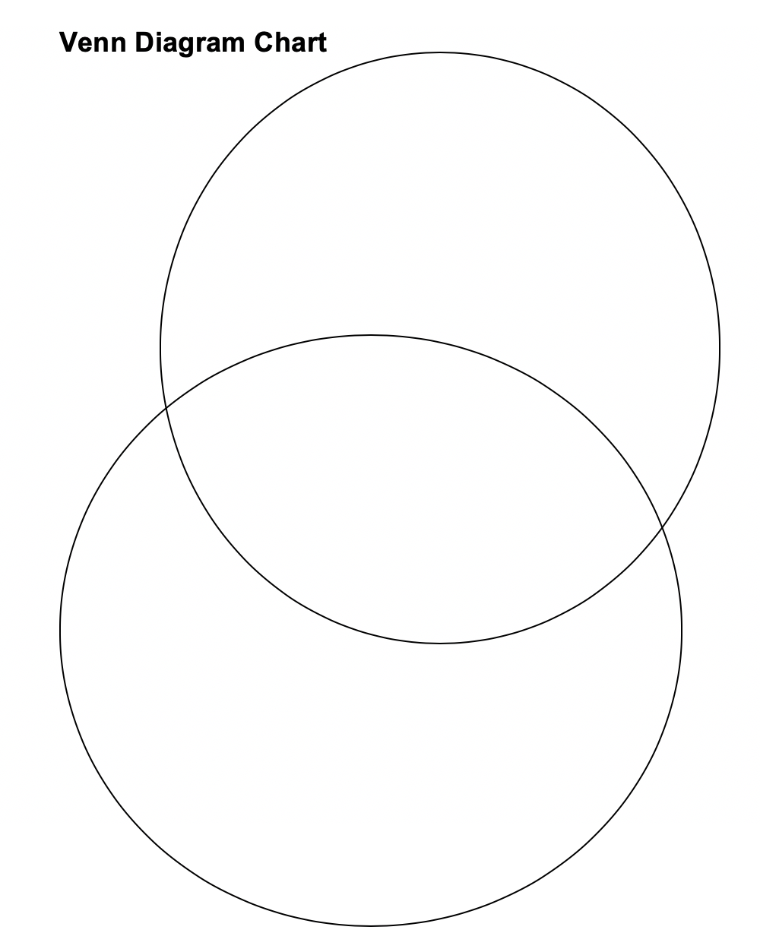
Complete a Venn Diagram for two characters.
Decide on 2 characters in the story you would like to analyze. For example, Zebby and Hayley or Zebby and Lilly. Label each circle with the character’s name.
Where the 2 circles overlap, write the way these two are alike.
Where the circles are distinct, write down how each is different.
Discussion
Ask discussion questions of all 9 types (see Day 1).
Answer the key questions. Use evidence from the text.
How is the bullying of Trevor and Sara different than the bullying of Lilly? How is it similar?
Whose argument was more convincing for taking down the picture of Lilly; Lilly’s or Zebby’s? Why
Small Group Discussion
Turn to the Cyberbullying Discussion Guide on p. 172 and respond to question 7. Designate a Note Taker and share your group decision with the class.
Analyze
Analyze the key paragraph.
Key Paragraph, p. 54
“The thing is, people like Lilly and Reece and the other popular kids could choose to use their powers for good. Like Nero. Everyone listens to them. So they could just say hey, we’re not going to pick on people anymore. And the whole school would follow their lead. But they don’t do that. Instead they use their powers for evil.”
Extend
Write
Have each student write a short product based on today’s prompt to connect to the unit theme.
Respond to the writing prompt. Write a minimum of two paragraphs (200 words). Provide evidence from the text. Use as many details as possible. Use argumentative writing style – consider how one might counter-respond to your arguments and address these potential counterarguments.
Amr says that people are “not his real friends” if they have issues with him being Muslim. In your opinion, should Amr talk with friends about the Muslim faith and feeling stereotyped? What would be the benefits of such a conversation? What could be the risks?
Close
Close by extending today’s lesson to life and the world.
Cite textual evidence to support analysis; determine a theme or central idea of a text; determine the meaning of words and phrases. Analyze how a particular sentence, chapter, scene, or stanza fits into the overall structure of a text and contributes to the development of the theme, setting, or plot.
Write informative/explanatory texts to examine a topic and convey ideas, concepts, and information through the selection, organization, and analysis of relevant content.
Prepare
Background
Gather background knowledge about a place, time, event, person, or thing.
What is online impersonation?
Online impersonation, or masquerading, is when a person creates a fake account of another person and pretends to be that person. The person may use the fake account to spread fictitious information. This is a form of bullying, and also a form of identity theft. People may also refer to this as ‘catfishing,’ particularly if the false account is used in a dating scenario. Online impersonation is regarded by the courts as a criminal activity in several states including California, New York, and Texas. According to California Code 528.5, “an impersonation is credible if another person would reasonably believe, or did reasonably believe, that the defendant was or is the person who was impersonated.” The code defines online impersonation as “opening an e-mail account or an account or profile on a social networking Internet Web site in another person’s name.” The victim may press charges against the violator for compensatory damages and injunctive relief or other equitable relief. The punishment may be in the form of a fine, imprisonment, or both.
Word Wall
Here are five vocabulary words to teach and add to the Word Wall.
intended (70)
immature (71)
suited (71)
tacky (72)
gawking (74)
Read
Review
Review the timeline from the beginning every day.
Read
Read the selection, usually in a Shared Reading Read React Predict Cycle of 2-3 pages.
Lilly, Mrs. Connor, Cassie, Brianna, Reece, Josh, Sara
82–85
Truman school
Reece
85
Respond
Timeline
Agree on the facts in today’s reading and list the 3-5 most important on the timeline.
Students might mention:
Lilly confronts Zebby about the picture shared on truthabouttruan.com and asks her to remove it.
Milkandhoney posts “Lilly’s Lesbian Diary” on the Truth About Truman website.
Zebby decides to leave “Lilly’s Lesbian Diary” posted on the website.
Lilly’s friends begin to avoid her and her relationship with Reece ends.
Map
Add to ongoing class activities like a KWL chart or map: where did the characters go?
Continue working on the Mind Map. Today, Day 5, add a speech bubble above the previous one and add either a quote or evidence from the text that reflects the characters attitude towards the truth. Color the bubble to indicate the character’s attitude towards the truth. Once each student has added the daily quote on their map, come together in small groups and read the chosen quote aloud.
Explore
Activity
Explore the reading more deeply with a visual or oral language activity.
Complete a character profile chart for one of the characters being bullied.
Write the name of the character in the box in the middle of the chart.
Think of four characteristics, or traits, that the character has. Describe each with a keyword or phrase and write it down in one of the four boxes that surround the name.
For each trait, find two concrete examples of it in the story. Write each in one of the two boxes attached to each trait box. Continue this until you have two examples for each of the four traits.
Small Group Discussion
Turn to the Cyberbullying Discussion Guide on p. 172 and respond to question 4. Designate a Note Taker and share your group decision with the class.
Character Profile Chart
Discussion
Ask discussion questions of all 9 types (see Day 1).
Answer the key questions. Use evidence from the text.
Did Zebby make a wise choice by ignoring Lilly’s request for her to take down the pictures? Give reasons.
Whose argument was more convincing, Lilly or Zebby? Why?
Why did Brianna not want Lilly to be their friend?
Analyze
Analyze the key paragraph.
Key Paragraph, 81.
“You’re probably wondering if I ever thought about taking the link to Lilly’s Lesbian Diary down. After all, the two rules we had for the site sad that what you posted had to be true. And honestly, I didn’t know if that was true. I didn’t know whether Lilly was gay. But I didn’t know that it wasn’t true, either. Obviously somebody thought it was. That’s why they posted that link. And really, it was just a link. One little link wasn’t so bad.”
Extend
Write
Have each student write a short product based on today’s prompt to connect to the unit theme.
Respond to the writing prompt. Write a minimum of two paragraphs (200 words). Provide evidence from the text. Use as many details as possible. Use argumentative writing style – consider how one might counter-respond to your arguments and address these potential counterarguments.
What could happen to students who pretend to be something or someone they are not? Consider the short- and long-term consequences.
Close
Close by extending today’s lesson to life and the world.
Cite textual evidence to support analysis; determine a theme or central idea of a text; determine the meaning of words and phrases. Analyze how a particular sentence, chapter, scene, or stanza fits into the overall structure of a text and contributes to the development of the theme, setting, or plot.
Write informative/explanatory texts to examine a topic and convey ideas, concepts, and information through the selection, organization, and analysis of relevant content.
Prepare
Background
Gather background knowledge about a place, time, event, person, or thing.
What is “victim blaming?”
The social phenomenon of victim blaming involves people being more concerned with the victim’s behavior than with the actions of the bully. The victim is viewed as having provoked the actions of the bully or having characteristics that make them more vulnerable to bullying. Sometimes a victim is told to change their behaviors rather than having the actions of the bully addressed. The attitude of victim blaming is that there is something wrong with the victim that needs to be changed, rather than something with the bully. For example, a person is bullied for being shy. Instead of stopping the bullies people say things such as “be more assertive and your peers will respect you.” Victim blaming distracts from the main issue and invalidates the victim’s experience. For more information, visit https://www.safeatschool.ca/plm/bullying-prevention/understanding-bullying/victim-blaming.
Word Wall
Here are five vocabulary words to teach and add to the Word Wall.
provoke (92)
snoop (93)
fable (93)
cocked (97)
grudge (98)
Read
Review
Review the timeline from the beginning every day.
Read
Read the selection, usually in a Shared Reading Read React Predict Cycle of 2-3 pages.
Truman school, walking to Lilly’s house, Lilly’s house
Lilly, classmates
86–88
Math class, Mrs. Horton’s office
Trevor, Reece, Mr. Wesack, Mrs. Horton
88–92
Amr’s house
Zebby
92–94
Lilly’s house
Lilly, Hayley, Brianna
94–96
Amr’s house
Amr, Zebby
97–98
Hayley’s house
Brianna, Hayley
99–100
Zebby’s house
Zebby
100–101
Lilly’s house
Lilly, Lilly’s mom
101–103
Respond
Timeline
Agree on the facts in today’s reading and list the 3-5 most important on the timeline.
Students might mention:
Trevor and Reece get sent to Mrs. Horton’s office for fighting and cheating.
Lilly tries to talk to Hayley through instant messenger, but Brianna is there too.
Zebby and Amr accuse each other of being milkandhoney.
Lilly’s mom notices Lilly’s behavioral changes and attempts to intervene.
Map
Add to ongoing class activities like a KWL chart or map: where did the characters go?
Continue working on the Mind Map. Today, Day 6, add a speech bubble above the previous one and add either a quote or evidence from the text that reflects the characters attitude towards the truth. Color the bubble to indicate the character’s attitude towards the truth. Once each student has added the daily quote on their map, come together in small groups and read the chosen quote aloud.
Explore
Activity
Explore the reading more deeply with a visual or oral language activity.
Complete a Venn Diagram for Trevor and Lilly, compare how their bullying is alike and different.
Label one circle with Trevor’s name and the other with Lilly’s name.
Where the two circles overlap, write the way these two are alike.
Where the circles are distinct, write down how each is different.
Discussion
Ask discussion questions of all 9 types (see Day 1).
Answer the key questions. Use evidence from the text.
How might Lilly and Trevor be feeling? What might they do when they get home from a school day like the one they had in this section?
Why do you think Amr removed the fable from the website and not the other content?
Analyze
Analyze the key paragraph.
Key Paragraph, 92.
“Mrs. Horton cocked her head. ‘Reece poked you with his pencil?’ I could tell she didn’t believe me. ‘Why would he do that?’
Why is the sky blue?
‘I mean, what were you doing to provoke him?’ Mrs. Horton clarified.
Here we go again. ‘Taking my test!’ I said. Hadn’t I just said that?
‘Don’t raise your voice, Trevor.’
I wasn’t raising my voice. But I repeated what I said in a softer voice just to make Mrs. Horton happy. ‘I was just taking my test.’”
Extend
Write
Have each student write a short product based on today’s prompt to connect to the unit theme.
Respond to the writing prompt. Write a minimum of two paragraphs (200 words). Provide evidence from the text. Use as many details as possible. Use argumentative writing style – consider how one might counter-respond to your arguments and address these potential counterarguments.
What could the teachers at Truman school do to build a safer and more supportive school environment?
Close
Close by extending today’s lesson to life and the world.
Cite textual evidence to support analysis; determine a theme or central idea of a text; determine the meaning of words and phrases. Analyze how a particular sentence, chapter, scene, or stanza fits into the overall structure of a text and contributes to the development of the theme, setting, or plot.
Write informative/explanatory texts to examine a topic and convey ideas, concepts, and information through the selection, organization, and analysis of relevant content.
Prepare
Background
Gather background knowledge about a place, time, event, person, or thing.
What is the best way to confront a friend?
To confront someone means to meet them face to face to address a problem. Confrontation can be difficult, however, following these steps can help. To confront someone effectively it is best not to suppress emotions and thoughts. When you have decided to confront a friend, first find the ideal moment and setting. Then explain how you feel without accusing; “I” statements work best. Lastly, give the person space to process what you have shared. An example of effective confrontation: My friend did not eat lunch with me today, I will ask them why when we are on break between classes. ‘I felt bad that we did not eat lunch together today.’ Pause to provide them time to process and respond.
Word Wall
Here are five vocabulary words to teach and add to the Word Wall.
Obsessed (103)
squinting (109)
pathetic (111)
incurable (116)
catastrophe (118)
Read
Review
Review the timeline from the beginning every day.
Read
Read the selection, usually in a Shared Reading Read React Predict Cycle of 2-3 pages.
Agree on the facts in today’s reading and list the 3-5 most important on the timeline.
Students might mention:
Hayley replaces Lilly on the cheerleading squad with Cassie.
Lilly finds a “We Hate Lilly Clarke” website linked to the Truth About Truman website.
Amr and Zebby talk about milkandhoney and forgive each other for the accusations.
Lilly pretends to be sick to avoid school.
Map
Add to ongoing class activities like a KWL chart or map: where did the characters go?
Continue working on the Mind Map. Add a speech bubble above the existing ones and add either a quote or evidence from the text that reflects the character's attitude towards the truth. Color the bubble to indicate the character’s attitude towards the truth. Once each student has added the daily quote on their map, come together in small groups and read the chosen quote aloud.
Explore
Activity
Explore the reading more deeply with a visual or oral language activity.
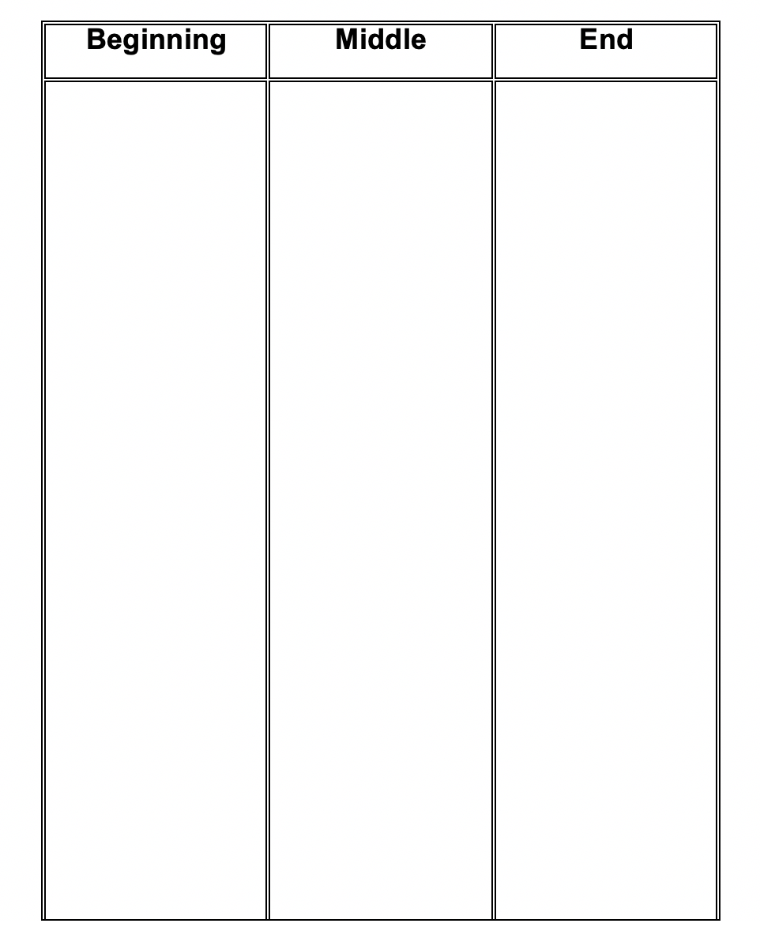
Complete a Beginning-Middle-End chart for Lilly’s friendship with Hayley and Brianna.
Decide what the most important events are. You may want to jot down a list.
Decide whether each event is part of the beginning, middle or end. Then write a phrase describing each event in the correct column. You can use a bullet point list.
If the events in a column are not in the order they took place, number the items in the column.
Discussion
Ask discussion questions of all 9 types (see Day 1).
Answer the key questions. Use evidence from the text.
How does Zebby feel about her website? Is it how she wanted it to be?
Why do you think Hayley, Brianna, Kylie, and Cassie made the ‘We Hate Lilly Clarke” website?
What could Zebby have done differently when she accused Amr?
Analyze
Analyze the key paragraph.
Key Paragraph, 114.
“Of course I get tired of it. But when you run a newspaper, you can’t just take stuff down because you’re tired of it.”
“Are you sure? It’s our newspaper; we can do whatever we want.”
“’It doesn’t always feel like our newspaper,” Zebby said, slouching down on the bench.
‘It feels like it’s just this big gossip site about Lilly Clarke. How did that happen, Amr?’”
Extend
Write
Have each student write a short product based on today’s prompt to connect to the unit theme.
Respond to the writing prompt. Write a minimum of two paragraphs (200 words). Provide evidence from the text. Use as many details as possible. Use argumentative writing style – consider how one might counter-respond to your arguments and address these potential counterarguments.
What kinds of social situations are better handled through face-to-face conversations instead of email or text message? Why?
Close
Close by extending today’s lesson to life and the world.
Cite textual evidence to support analysis; determine a theme or central idea of a text; determine the meaning of words and phrases. Analyze how a particular sentence, chapter, scene, or stanza fits into the overall structure of a text and contributes to the development of the theme, setting, or plot.
Write informative/explanatory texts to examine a topic and convey ideas, concepts, and information through the selection, organization, and analysis of relevant content.
Prepare
Background
Gather background knowledge about a place, time, event, person, or thing.
What Content is Likely to Be Removed from Online Forums and Social Media?
Several social media companies and online discussion moderators have policies for the removal of inappropriate content. These policies contain definitions of the types of content that will be removed once detected. Examples of most frequently removed content include words or images that personally attack, humiliate or defame an individual; hate speech; violent threats; sexual exploitation; a fake profile of an individual or school; pornography; and, any content that may directly promote illegal and terrorist activities.
Word Wall
Here are five vocabulary words to teach and add to the Word Wall.
empowering (124)
vaguely (126)
squirm (129)
yanked (130)
familiar (136)
Read
Review
Review the timeline from the beginning every day.
Read
Read the selection, usually in a Shared Reading Read React Predict Cycle of 2-3 pages.
Agree on the facts in today’s reading and list the 3-5 most important on the timeline.
Students might mention:
Hayley makes a list of ‘the top ten things you’d like to see happen to Lilly Clarke.”
Lilly runs away from school.
Lilly’s mom calls people for information about Lilly.
Zebby tells Lilly’s mom about the website.
Map
Add to ongoing class activities like a KWL chart or map: where did the characters go?
Continue working on the Mind Map. Today, day 8, add a speech bubble above the previous one and add either a quote or evidence from the text that reflects the character's attitude towards the truth. Color the bubble to indicate the character’s attitude towards the truth. Once each student has added the daily quote on their map, come together in small groups and read the chosen quote aloud.
Explore
Activity
Explore the reading more deeply with a visual or oral language activity.
Label one circle with ‘the websites intended purpose’ and the other circle with ‘what the website became.’
Where the 2 circles overlap, write the way these two are alike.
Where the circles are distinct, write down how each is different.
Discussion
Ask discussion questions of all 9 types (see Day 1).
Answer the key questions. Use evidence from the text.
Why did Hayley make ‘the top ten things you’d like to see happen to Lilly Clarke” list?
Who had a stronger argument regarding taking down or keeping the website, Zebby or her mom? Why?
Should have Zebby and Amr regulated the website content? If yes, what actions could have they taken?
Analyze
Analyze the key paragraph.
Key Paragraph, p. 122
“If you won’t tell me what’s wrong, how do you expect me to help you?” Mom asked.
I didn’t expect her to help me.
“Please, Lilly. Talk to me.”
I couldn’t talk to her. I couldn’t talk to anyone.
My eyes welled with tears when Mom pulled into the carpool line at school, but I bit down on my lip and blinked them back.
Mom tried one more time. “What is it, honey?” she asked.
I got out of the car and slammed the door behind me. I wanted to disappear. I wanted to go someplace where there were no people. And no computers. Someplace where I could be totally alone and no one would ever find me.”
Extend
Write
Have each student write a short product based on today’s prompt to connect to the unit theme.
Respond to the writing prompt. Write a minimum of two paragraphs (200 words). Provide evidence from the text. Use as many details as possible. Use argumentative writing style – consider how one might counter-respond to your arguments and address these potential counterarguments.
To what extent do you agree with the following statement?
“It is critical that every person takes a moment of pause to consider his or her decision just in case it is unethical or hurtful.” Explain with examples.
Close
Close by extending today’s lesson to life and the world.
Cite textual evidence to support analysis; determine a theme or central idea of a text; determine the meaning of words and phrases. Analyze how a particular sentence, chapter, scene, or stanza fits into the overall structure of a text and contributes to the development of the theme, setting, or plot.
Write informative/explanatory texts to examine a topic and convey ideas, concepts, and information through the selection, organization, and analysis of relevant content.
Prepare
Background
Gather background knowledge about a place, time, event, person, or thing.
What can a school do to help prevent cyberbullying?
Bullying can impair both a student’s safety and their ability to learn. Schools can help prevent bullying by training teachers and staff how to respond to signs that bullying is happening, and teach staff how to address potential situations. Students can learn preventative measures too and practice peer relation skills. The school can make further efforts by giving presentations about bullying, having anti-bullying posters with resources, and offering discussions. The school, staff, and students can work together to show what positive interactions look like. For more information, visit https://www.stopbullying.gov/prevention/at-school/index.html.
Word Wall
Here are five vocabulary words to teach and add to the Word Wall.
unstable (138)
unnerving (141)
detour (142)
plunged (150)
gingerly (150)
Read
Review
Review the timeline from the beginning every day.
Read
Read the selection, usually in a Shared Reading Read React Predict Cycle of 2-3 pages.
Brianna, Mr. Wesack, Kylie, Mrs. White, Mr. Gates, Brianna’s mom, dad, and stepdad, two police officers
140–142
Truman school
Hayley, Kylie, Cassie, Morgan, Mrs. White
142–143
Mr. Gate’s office
Brianna, Mr. Wesack, Kylie, Mrs. White, Mr. Gates, Brianna’s mom, dad, and stepdad, two police officers
144–145
Undisclosed
Anonymous
146
Zebby’s house
Zebby
147
Amr’s house
Amr
148–149
Zebby’s house, the woods behind Zebby’s house
Zebby, Amr, Zebby’s mom
149–152
Respond
Timeline
Agree on the facts in today’s reading and list the 3-5 most important on the timeline.
Students might mention:
Brianna is interviewed by Mr. Gates, her parents, and the police about her involvement with the Truth About Truman posts.
Brianna is suspended from school for her involvement, no other student is punished.
Zebby removes the Truth About Truman website from the internet.
Zebby and Amr think Lilly may be in the treehouse and start their search for her.
Map
Add to ongoing class activities like a KWL chart or map: where did the characters go?
Continue working on the Mind Map. Today, day 9, add a speech bubble above the previous one and add either a quote or evidence from the text that reflects the character’s attitude towards the truth. Color the bubble to indicate the character’s attitude towards the truth. Once each student has added the daily quote on their map, come together in small groups and read the chosen quote aloud.
Explore
Activity
Explore the reading more deeply with a visual or oral language activity.
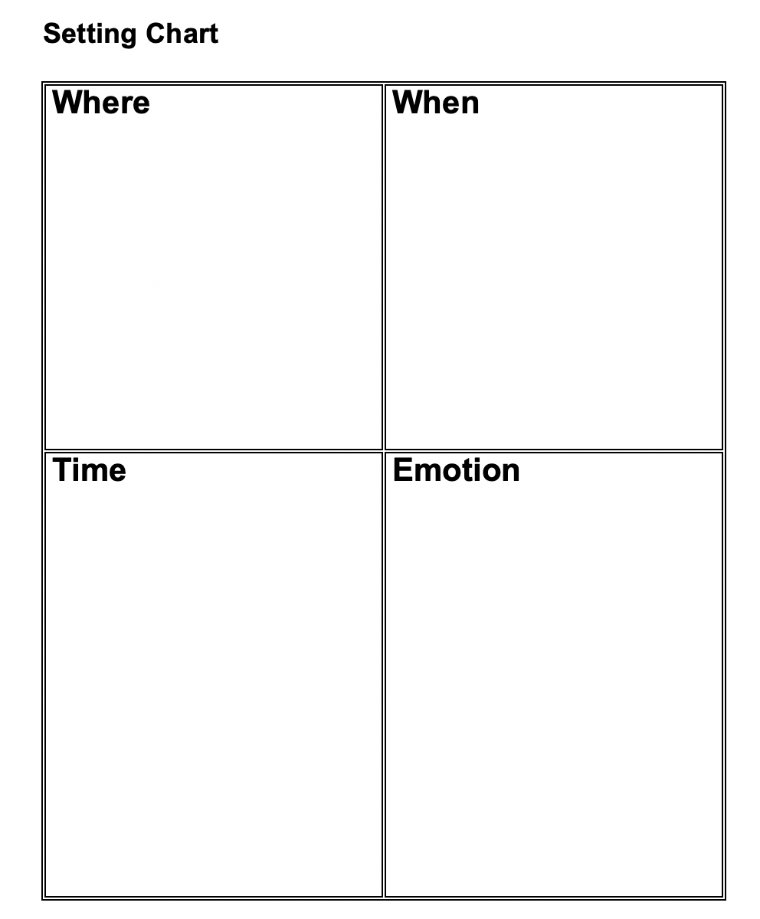
Fill out the Setting Chart for an event from today’s reading selection.
Describe the location where the story takes place in the where box on the chart. This could include the location, geography, scenery and other details about the location.
Describe the time period in which the story is taking place in the when box on the chart. Is this a contemporary story, or does it take place in the past or the future? What is different in the books time period compared to now?
Describe the time of day or day of the week the story begins in the time box on the chart. This box is important if the part of the story you are analyzing takes place in a short period of time.
Describe the emotions in the emotions box of the chart. How are people feeling about their current situation? How do they think the situation will end? Are they hopeful or unsure?
Discussion
Ask discussion questions of all 9 types (see Day 1).
Answer the key questions. Use evidence from the text.
How does Zebby feel about her website? Did she make the right choice when she started the website?
What would happen if Brianna revealed to Mr. Gates the names of students who posted on the website?
Analyze
Analyze the key paragraph.
Key Paragraph, p. 137
“There was one question nobody was asking, though: why did Lilly take off in the first place? Did anyone else wonder if maybe it was our fault she took off? All of us who either wrote mean things about her online or who read the things other people wrote and didn’t do anything about it. Or was it my fault because I’m the one who started the Truth About Truman? And I’m the one who let people post whatever they wanted.”
Extend
Write
Have each student write a short product based on today’s prompt to connect to the unit theme.
Respond to the writing prompt. Write a minimum of two paragraphs (200 words). Provide evidence from the text. Use as many details as possible. Use argumentative writing style – consider how one might counter-respond to your arguments and address these potential counterarguments.
What would be the best response of the school faculty (principal and teachers) to Brianna’s suspension?
Close
Close by extending today’s lesson to life and the world.
Cite textual evidence to support analysis; determine a theme or central idea of a text; determine the meaning of words and phrases. Analyze how a particular sentence, chapter, scene, or stanza fits into the overall structure of a text and contributes to the development of the theme, setting, or plot.
Write informative/explanatory texts to examine a topic and convey ideas, concepts, and information through the selection, organization, and analysis of relevant content.
Prepare
Background
Gather background knowledge about a place, time, event, person, or thing.
What does it mean to be responsible?
Being responsible means taking accountability for something you said or did. Sometimes we make mistakes, but we can take responsibility for them and accept the consequences that come with our choices. We are all responsible for our actions.
Word Wall
Here are five vocabulary words to teach and add to the Word Wall.
imitation (153)
shrunk (153)
Wailing (153)
tromped (159)
Jumbled (162)
Read
Review
Review the timeline from the beginning every day.
Read
Read the selection, usually in a Shared Reading Read React Predict Cycle of 2-3 pages.
Agree on the facts in today’s reading and list the 3-5 most important on the timeline.
Students might mention:
Amr and Zebby find Lilly hiding in the treehouse.
Lilly realizes who milkandhoney is and decides to leave the treehouse.
Lilly decides she wants to change schools in order to have a fresh start.
Lilly apologizes to Trevor for the times she bullied him.
Map
Add to ongoing class activities like a KWL chart or map: where did the characters go?
Continue working on the Mind Map. Today, day 10, add a speech bubble above the previous one and add either a quote or evidence from the text that reflects the characters attitude towards the truth. Color the bubble to indicate the character’s attitude towards the truth. Once each student has added the daily quote on their map, come together in small groups and read the chosen quote aloud.
Post the Mind Maps on the wall and compare the difference between each character. Notice which of the characters told the truth most frequently and which character primarily withheld the truth. Observe if the characters changed their view of the truth over time.
Explore
Activity
Explore the reading more deeply with a visual or oral language activity.
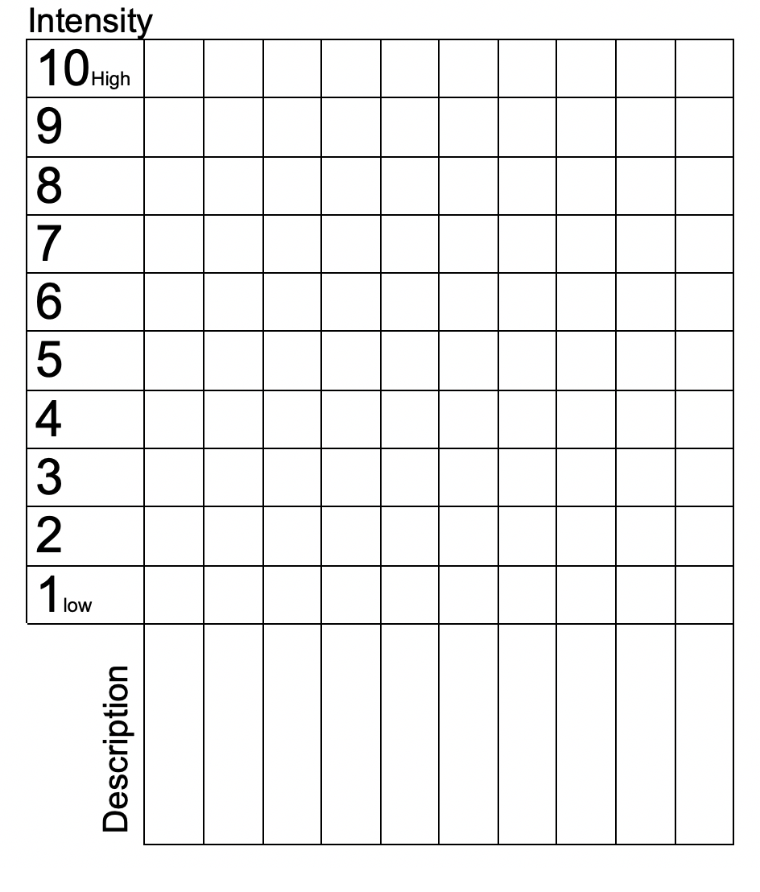
Fill out the plot profile chart.
Decide on the ten most important events that took place in the story. Choose one event from each day of the lesson. List the events in order by day in the rows at the bottom of the chart.
Decide on a scale of 1 [low] to 10 [high] how intense you think this event is, and mark your score in the appropriate box.
Connect the marks in the boxes to form a graph.
This graph will help you to profile the plot. How it looks will depend on the events you decided were important. Use colors and creativity to make your graph represent the story as a whole.
Plot Profile Chart
Discussion
Ask discussion questions of all 9 types (see Day 1).
Answer the key questions. Use evidence from the text.
Why did Trevor become “milkandhoney?” What other strategies could he use to handle bullying?
Why did Lilly apologize to Trevor?
How has this book changed your view of cyberbullying?
Small Group Discussion about Cyberbullying
Turn to the Cyberbullying Discussion Guide on p. 172 and respond to question 14. Designate a Note Taker and share your group decision with the class.
Analyze
Analyze the key paragraph.
Key Paragraph, p. 163
“Mrs. Michael said, “Because you can be anonymous online, the person you show the world online is usually not the real you.” I think she’s dead wrong about that. I think the person you show online is exactly the person you really are. The person you show in real life is the one that’s fake. Think about it. Most people are chameleons. They act different around different people. What’s real about that?”
Extend
Final Writing Product
Have each student write a short product based on today’s prompt to connect to the unit theme.
Write an epilogue that describes what happened after the end of the story.
Your chapter should include at least 250 words (one page double-spaced).
How to Write an Epilogue
Decide which of the characters in the book will narrate this last part of the book.
Choose the timing (e.g., two months, one year, or five years after the story has ended).
Decide what the epilogue will focus on. Try to find one or two central themes, to keep your epilogue short.
Remember that the epilogue does not have to present a happy ending. The subsequent events may be positive, negative, or mixed.
Check your grammar and spelling.
Manage your Time
Create a timeline to organize your writing schedule.
Add dates in the right-side column.
Add lines to the schedule for additional activities.
What
When
Decide on the key elements of the epilogue.
Collect and organize ideas.
Submit the first draft.
Revise based on feedback.
Submit the final draft.
Close
Close by extending today’s lesson to life and the world.