The 40-Minute Lesson Plan is essential elements of the CBL lesson plan. We suggest the teacher reads aloud or uses an audio book for the reading portion. 40-min includes: Background, Wordwall, Key Paragraph, and Writing Prompt
60
The 60-Minute Lesson Plan uses the same elements as the 40-minute plan, but also covers a visual activity and discussion. 60-min includes: Background, Wordwall, Key Paragraph,Writing Prompt and adding the Key Questions
90
The 90-Minute Lesson Plan contains all elements of the lesson plan. If time is available, we recommend using this version to get all of the benefits of CBL. The full lesson includes: Background, Wordwall, Key Paragraph, Writing Prompt, and Key Questions of the 40 and 60 minutes options while incorporating the Mapping Activity, Visual Activity and creating the Timeline as a class.
Day 1
Outcomes for Today
-->
W1. Write arguments to support claims in an analysis of substantive topics or texts, using reasoning and relevant and sufficient evidence.
W8. Gather relevant information from multiple print and digital sources, using search terms effectively: assess the credibility of and accuracy of each source: and quote or paraphrase the data and conclusions of others while avoiding plagiarism and following a standard format for citation.
R1. Cite several pieces of textual evidence to support analysis of what the text says explicitly as well as inferences drawn from the text.
Prepare
Background
Gather background knowledge about a place, time, event, person, or thing.
Complete preliminary research on Pakistan
Full name: Islamic Republic of Pakistan
Population: 179 million (UN, 2012)
Capital: Islamabad
Largest city: Karachi
Major languages: English, Urdu, Punjabi, Sindhi, Pashto, Balochi
Major religion: Islam
Life expectancy: 65 years (men), 67 years (women) (UN)
Monetary unit: 1 Pakistani Rupee = 100 paisa
Main exports: Textile products, rice, cotton, leather goods
The Muslim-majority state of Pakistan occupies an area which was home to some of the earliest human settlements and where two of the world's major religions, Hinduism and Buddhism, were practiced.
The modern state was born out of the separation of the Indian sub-continent in 1947 and has faced both domestic political upheavals and regional conflicts.
Border tensions and terror
Cricket is the most popular sport in Pakistan.
Pakistan's place on the world stage shifted after the 11 September 2001 attacks in the U.S. It dropped its support for the Taliban regime in Afghanistan and was propelled into the frontline in the fight against terrorism, becoming a notional ally of the United States.
However, Pakistani forces have struggled to maintain control over the restless tribal regions along the Afghan border, where Taliban-linked militants became firmly entrenched. These Sunni extremists have more recently expanded attacks from their border fastness to target minority groups elsewhere in the country, in particular Shia Muslims and Christians. Since 2009, the government has been waging an on-and-off military campaign to flush the militants out of the tribal areas.
It repeatedly denied U.S. and Afghan allegations that senior al-Qaeda and Taliban leaders were present in the border areas, or that its intelligence service ISI even had links to Afghan armed groups. So the death in April 2011 of al-Qaeda chief Osama Bin-Laden in a US raid on Abbottabad, a city in the heart of Pakistan's military establishment, stretched relations with the U.S. to the breaking point.
Tensions with India over Kashmir have resurfaced regularly ever since the partition of the sub-continent, and the two nuclear-armed powers have on numerous occasions been on the brink of renewed conflict.
Parliamentary elections in 2013 brought the Muslim League back to power in the first transition from one elected government to another at elections in the country's history. The new government moved fast to engage with the Taliban, and began peace talks with the group in March 2014.
Here are five vocabulary words to teach and add to the Word Wall.
widow (9)
lice (12)
eerie (14)
gobble (15)
stunned (21)
Read
Review
Review the timeline from the beginning every day.
Look at the cover of the book. Why do you think the author decided to title the novel Mud City? Predict what the story is about.
Read
Read the selection, usually in a Shared Reading Read React Predict Cycle of 2-3 pages.
Read p. 9 - 21
Respond
Timeline
Agree on the facts in today’s reading and list the 3-5 most important on the timeline.
Discuss the reading and add 3-5 events to the timeline.
Discuss the story to fix the facts: who, what, when, where, why.
Decide on the 3-5 most important events and add these to the timeline.
Students might mention:
Shauzia wonders when Mrs. Weera will be back, but receives no answer from the women. She decides to go outside with Jasper, her dog.
The children pester Shauzia to tell them a story about the wolves. At first Shauzia is hesitant, but eventually gives in, and recalls her tale.
Weera returns, Shauzia tells her that they must speak urgently. She reminds Mrs. Weera, about her plans to go to France, and that she needs to earn money.
Weera responds that she has a safe life at the compound, and opportunities will come soon enough. This isn't quick enough for Shauzia.
Shauzia decides that she wants to leave the compound and take her chances trying to make money elsewhere.
Map
Add to ongoing class activities like a KWL chart or map: where did the characters go?
Map
Obtain a map of Pakistan by visiting your local AAA or by searching online. Enlarge the map on a piece of butcher paper. Using information provided by authoritative print or digitals sources, have students track the locations in the novel on the map. They can also add physical features, resources, political information, and other relevant information that arises in the novel.
Leadership Poster
Collaborate with students create a class T Chart. This can be a live, online document that students have shared access to (Google Document or Google Spreadsheet).
Label one column “Examples of Good Leadership” and the other side “Examples of Poor Leadership”.
Through the readings, reflect on the characters’ leadership and bullet point examples of characters demonstrating good leadership or poor leadership.
Explore
Activity
Explore the reading more deeply with a visual or oral language activity.
Open Mind Portrait: Create an Open Mind Portrait of Shauzia
Materials:
Large piece of stiff paper for each character, like 11x17 oak tag
Paper for bubbles with scissors and glue sticks
Markers, crayons, pens, pencils, or paint
Construction or tissue paper, scissors and glue sticks if desired
Step One: create a large head shot of the character
Imagine what you think the character looks like from the descriptions in the text as well as your imagination. You can make a list of these details to help you draw the character, if you wish.
Decide how much of the character you wish to show: just the head and face? from the shoulders up? from the waist up? the whole person? You might want to include at least the shoulders to include some clothing details. You might want to show the size differences between characters.
Draw the characters head shot including the face on the large piece of paper. You could also cut the paper to form the head.
Illustrate your portrait with colors, construction paper or whatever will make the character colorful.
Step Two: place cartoon bubbles of character thoughts around the portrait
Cut cartoon bubbles out.
Write things the character thinks, or says to himself, on each bubble.
Put the bubbles up around the portrait.
Step Three: add bubbles as you learn new things about the character
Read the story further and identify new things you have learned about the character, or ways the character has changed.
Follow step 2 to create and place additional bubbles.
Variations of this Open Mind Portrait
You can use this process for any character in the story.
You can use bubbles for what the character says, says to himself or herself, or does. You could make each of these different colors if you wish.
You could add bubbles for what the character learns, or ways the character changes, and use different colors for each.
You could use different colors for the beginning, middle and end of the story. Remember in the beginning you are introduced to the setting, the characters and the problems they have. In the middle you learn about the roadblocks to the characters solving their problems, and conflicts occur. In the end of the story those conflicts reach a peak and then resolve with a resolution of the character’s problems.
You could use different colors for the phases you see in a story or the development of a particular character.
Instead of using bubbles you could write the bubble contents on the back of the portrait. You could use any of the variations above with color or print, or create columns or boxes for different categories or phases.
You could literally open the head like a hinge and list the contents [as though they were escaping from the space] using any of these variations.
You could make an Open Mind Portrait of yourself using any of the above variations.
Variations for Writing
You could use the OMP to help write a character sketch, or to help decide what a character might do in a story.
Discussion
Ask discussion questions of all 9 types (see Day 1).
Key Questions
Why are the clinic, school, and magazine a secret?
Where was Shauzia before she was with Mrs. Weera?
Why do you think the children want to hear Shauzia’s stories?
Why do all the kids have a shaved head?
What would happen if there were lice in the compound?
Describe the life of a shepherd.
Where is Badakhshan?
Based on Shauzia’s stories, describe what the pasturelands looked like?
In what ways are the orphans like the sheep in Shauzia’s story?
What is the difference from need and want?
What are Shauzia’s dreams?
Why is it important to pay people for their work?
How is Shauzia independent and dependent?
How is Shauzia different than the orphan children?
How is Shauzia still like a child?
Analyze
Analyze the key paragraph.
Key Paragraph, p. 18
“‘A few years? I can’t spend a few years here! I’ll go crazy! I’ll be like her!’ Shauzia pointed at the crazy women. A woman with no name, she had been found rocking and moaning on the streets of Peshawar. Aid workers had brought her to the Widows’ Compound” (p. 18).
Extend
Write
Have each student write a short product based on today’s prompt to connect to the unit theme.
Shauzia is frustrated with her life living at the Widows’ Compound. Pretend you are Shauzia. Write a journal entry explaining why you want to leave Widows’ Compound. In an argumentative paragraph argue why you should leave the compound. Provide three reasons to support your answer.
Close
Close by extending today’s lesson to life and the world.
In what ways are you still dependent on your parents or family?
In what ways are you independent? What daily activities are you responsible for?
Day 2
Outcomes for Today
-->
W1. Write arguments to support claims in an analysis of substantive topics or texts, using reasoning and relevant and sufficient evidence.
W8. Gather relevant information from multiple print and digital sources, using search terms effectively: assess the credibility of and accuracy of each source: and quote or paraphrase the data and conclusions of others while avoiding plagiarism and following a standard format for citation.
R1. Cite several pieces of textual evidence to support analysis of what the text says explicitly as well as inferences drawn from the text.
Prepare
Background
Gather background knowledge about a place, time, event, person, or thing.
Who are the Taliban?
The Taliban was created in the early 1990s in northern Pakistan after the withdrawal of Soviet troops from Afghanistan. Taliban came to prominence in Afghanistan in the autumn of 1994.
At first, the Taliban were well liked and welcomed by the Afghan people. Their early popularity was largely due to their success in stamping out corruption, curbing lawlessness and making the roads and the areas under their control safe for commerce to flourish.
By 1998, they were in control of almost 90% of Afghanistan. However, the Afghan people were fed up when the Taliban started to enforce strict rules - such as public executions of convicted murderers and adulterers and amputations of those found guilty of theft. Men were also required to grow beards and women had to wear the all-covering burka. The Taliban banned television, music, movie theaters and disapproved of girls aged 10 and over from going to school.
The attention of the world was drawn to the Taliban in Afghanistan following the attacks on the World Trade Center in September 2001. The Taliban in Afghanistan were accused of providing protection to Osama Bin Laden and the al-Qaeda movement who were blamed for the attacks.
Soon after 9/11 the Taliban were driven from power in Afghanistan by a US-led coalition. On October 7, 2001, a US-led military coalition invaded Afghanistan and by the first week of December the Taliban regime had collapsed.
The Taliban in recent years
In recent years the Taliban have re-emerged in Afghanistan and grown far stronger in Pakistan, where observers say there is loose coordination between different Taliban groups and rebel groups
Despite higher numbers of foreign troops, the Taliban have extended their control. The violence in Afghanistan has returned to levels not seen since 2001.
There have been numerous Taliban attacks on Kabul, the capitol of Afghanistan, in the past two years. In recent years the Taliban have also increasingly relied on roadside bombs as a means of fighting Nato and Afghan forces.
The hardline Islamic Taliban movement has proved to be a formidable fighting force in Afghanistan and a major threat to its government.
The Taliban also threatens to destabilize Pakistan, where they control areas in the north-west and have been blamed for a wave of suicide bombings and other attacks.
Many observers now believe that future peace in Afghanistan can only come if the government in Kabul negotiates with the Taliban.
Here are five vocabulary words to teach and add to the Word Wall.
clenched (23)
seething (24)
abandon (26)
possession (27)
thumped (27)
Read
Review
Review the timeline from the beginning every day.
Read
Read the selection, usually in a Shared Reading Read React Predict Cycle of 2-3 pages.
Read p. 22 - 29.
Respond
Timeline
Agree on the facts in today’s reading and list the 3-5 most important on the timeline.
Students might mention:
Shauzia is awoken by snoring from Mrs. Weera. But decides not to leave because the spot she is in gives her some privacy.
The compound had thrown Shauzia a goodbye party but Shauzia was not happy about it.
Shauzia remembers coming to the compound and her first encounter with Mrs. Weera.
Shauzia recalls her dreams of lying in a lavender field in France and decides it is time to leave.
Shauzia gathers her old 'boy' clothes, gets some food and sets out for her new life with Jasper. (p. 28-29)
Map
Add to ongoing class activities like a KWL chart or map: where did the characters go?
Community Values vs. Individual Values T-Chart
Create a T-Chart providing examples of Community Values and Individual Values.
Map
Update the class map of Pakistan by using information provided by the author. Have students track the locations in the novel on the map. They can also add physical features, resources, political information, and other relevant information that arises in the novel.
Through the readings, continue to reflect on the characters’ leadership and bullet point examples of characters demonstrating good leadership or poor leadership.
Leadership Poster Extension
During this unit, encourage students to follow the local and world news, using a variety of mediums (newspapers, online sources, etc.).
Have students periodically input a headline/article of an “Example of Good Leadership” and “Example of Poor Leadership” in their local community and in the world on the document. Discuss the additions the next day in class.
For all of the items in the “Examples of Good Leadership” column, have students write one thing they can do to take action and support the individuals, groups, or organizations that are acting to promote the common good.
For all of the items in the “Examples of Poor Leadership” column, have students write an idea on how the leader can be more engaged.
In each situation, helping may involve writing a letter, getting more informed, volunteering, etc.
Have students choose one item to take action on. They should report their action and results to the class.
Explore
Activity
Explore the reading more deeply with a visual or oral language activity.
Bookmark: Vision-Plan
Materials:
Pieces of stiff paper [like oak tag] 3-5 inches wide and 5-10 inches long
Some combination of pencil, pen, crayon, or marker
Construction paper, scissors and glue sticks if desired
Step One: Create a vision of your life 10 years from now.
Imagine what you would like your life to be like 10 years from today. Where [or in what kind of housing] will you be living? Where will you be working? What will you be doing? How will you be getting around? What relationships will you be in? What will you be doing in your non-work hours?
On the top third of one side of the bookmark fill in pictures, words or symbols that represent your vision.
Comment: This is a successful vision. This should be a vision that you, your parents and grandparents, your teachers and people who know you [as well as your friends] would be proud to see you have accomplished.
Warning: If people you know think they will be wealthy as a result of major drug sales, prostitution, gun running or other major crime, they need to know they will probably be dead, disabled or imprisoned within 2 years. This is 10 year plan, with a vision of people who aren’t dead, imprisoned, or disabled from injuries received as a result of criminal behavior.
Step Two: Create a plan to achieve your vision in 10 years: what has to happen?
Brainstorm a list of what has to happen between now and 10 years from now to achieve this vision. Compare lists with someone else and select the 10 most important things that have to happen.
On the bottom two-thirds of the bookmark, underneath your vision, write 10 important things that have to happen in the next 10 years. This is your plan.
Step Three: Keep track of efforts to achieve your vision by following your plan.
Every day, or as often as you like during this unit, consider: what have you done in the last 24 hours to get closer to your vision by following something on your plan? You can review this in pairs.
On the back of the bookmark, starting at the top, write the date and what you did in a couple of words. Write in small letters keeping all of one days information in the same row. You want to have room for many entries during this unit.
Variations of this Bookmark
In step 3, make 2 columns. In one column keep track of things that get you closer, and in the other column, keep tracks of things that get in the way.
Do this bookmark for any novel you read. Do the characters have a vision? Create this vision in the top third and list 10 things to achieve this vision in the lower two thirds. On the back keep track of things they do that get them closer to their vision. Or follow variation 1 and make 2 columns. In one column keep track of things that get them closer, and in the other column, keep tracks of things that get in the way.
Variation 2 can be done on a much bigger piece of stiff paper – a giant bookmark – and posted on the wall. After each days reading fill in step 3.
Do step 1 the first day, step 2 the second day, and step 3 the third day and every day after that until you finish.
Discussion
Ask discussion questions of all 9 types (see Day 1).
Key Questions
Why did the Widows’ Compound host a party for Shauzia?
Why was Shauzia seething during her party?
How did Shauzia first meet Mrs. Weera?
Why does Shauzia want to look like a boy?
Explain how Shauzia’s life would be different as a boy.
Would you leave your home for a brighter future?
Why doesn’t Shauzia want to live in the compound?
Why will it be better to travel with Jasper?
How do the women in the compound feel about Shauzia leaving?
Analyze
Analyze the key paragraph.
Key Paragraph, p. 27
“That was where she needed to be, in a field of purple flowers, where no one could bother her. She would sit there until the confusion left her head and the stink of the camp left her nostrils. When she had enough of that, she would go to Paris and sit at the top of the Eiffel Tower until her friend Parvana joined her there, the way they had promised each other. They would spend the rest of their days drinking tea and eating oranges and making fun of Mrs. Weera” (p. 27).
Extend
Write
Have each student write a short product based on today’s prompt to connect to the unit theme.
Shauzia finds comfort dreaming about her plan to meet her friend Parvana in the future. This dream gives her hope for her future and enables her to realize her current situation is only temporary. Do you believe positive thinking or dreaming about a better future helps people overcome difficult circumstances? Write an argumentative paragraph that proves positive thinking helps people overcome difficult circumstances. Support your claim with three examples. These examples could be from the reading or from your life experience.
Close
Close by extending today’s lesson to life and the world.
Do you think Shauzia’s is abandoning her team or taking responsibility of her life and future?
Do you value community or individual values more? Why?
Day 3
Outcomes for Today
-->
W1. Write arguments to support claims in an analysis of substantive topics or texts, using reasoning and relevant and sufficient evidence.
R1. Cite several pieces of textual evidence to support analysis of what the text says explicitly as well as inferences drawn from the text.
Prepare
Background
Gather background knowledge about a place, time, event, person, or thing.
What is the currency in Pakistan?
Pakistan uses the rupee as its official currency. The first rupee was introduced in the sixteenth century. It is still being used by many countries including India, Pakistan, Sri Lanka, Nepal, Mauritius, Seychelles, Maldives, Indonesia (as the rupiah). It was formerly used in Burma, Afghanistan and many countries of Persian Gulf and the Arabian Peninsula. Pakistani introduced its own Pakistani rupee once after independence in 1947. Previously the Indian rupee was used.
What is the history of the Pakistani rupee?
The Pakistani rupee was introduced for circulating in 1947. Previously Pakistan used Indian rupee coins and notes simply over-stamped with “Pakistan”.
The Pakistani rupee was originally divided into 16 annas, each of 4 pice or 12 pie. It was decimalized on January 1, 1961 and then subdivided into 100 paise (singular: paisa, renamed from pice). The Pakistani rupee had been pegged to the British Pound until 1982 and then changed to be managed float. The exchange rate of Pakistani rupee and the U.S. dollar is 1 USD= 98.181 PKR as per date of February 28, 2013.
The Pakistani rupee is subdivided into 100 paise but paisa coins have not been issued since 1994 and the smallest circulating coins are 1 rupee.
Currently in circulation coins are in denominations of 1, 2, 5 rupees and banknotes are in denominations of 10, 20, 50, 100, 500, 1000, 5000 rupees.
Here are five vocabulary words to teach and add to the Word Wall.
parcel (31)
grinned (32)
swaggered (32)
darted (33)
nonsense (39)
Read
Review
Review the timeline from the beginning every day.
Read
Read the selection, usually in a Shared Reading Read React Predict Cycle of 2-3 pages.
Read p. 30 - 41.
Respond
Timeline
Agree on the facts in today’s reading and list the 3-5 most important on the timeline.
Students might mention:
Shauzia and Jasper travel through the night toward Peshawar, but find themselves tiring as the day gets underway.
Shauzia questions her ideas of setting off on her own to make money.
Shauzia reassures Jasper, as he is not used to city traffic and noise, but puts him on a leash for his own safety.
As Shauzia and Jasper wander closer and into Peshawar, she begins to recognize different languages being spoken.
Shauzia and Jasper find a spot to rest, eat, and get out of the sun. But are soon pushed out of the spot by a lady, who says that Shauzia is in her spot where she begs for money everyday.
Shauzia falls asleep in the market after not finding work.
Shauzia wakes with Jasper, they get some water, and she begins to look for work again.
Shauzia wanders into a butcher shop, and convinces him to give her work the next day.
Shauzia felt so happy to have work for tomorrow, she asked the baker for bread on credit, but was given bread because he thought she was a beggar. She didn’t like this, but held her tongue.
Map
Add to ongoing class activities like a KWL chart or map: where did the characters go?
Map
Update the class map of Pakistan by using information provided by the author. Have students track the locations in the novel on the map. They can also add physical features, resources, political information, and other relevant information that arises in the novel.
Through the readings, continue to reflect on the characters’ leadership and bullet point examples of characters demonstrating good leadership or poor leadership.
Leadership Poster Extension
During this unit, encourage students to follow the local and world news, using a variety of mediums (newspapers, online sources, etc.).
Have students periodically input a headline/article of an “Example of Good Leadership” and “Example of Poor Leadership” in their local community and in the world on the document. Discuss the additions the next day in class.
For all of the items in the “Examples of Good Leadership” column, have students write one thing they can do to take action and support the individuals, groups, or organizations that are acting to promote the common good.
For all of the items in the “Examples of Poor Leadership” column, have students write an idea on how the leader can be more engaged.
In each situation, helping may involve writing a letter, getting more informed, volunteering, etc.
Have students choose one item to take action on. They should report their action and results to the class.
Explore
Activity
Explore the reading more deeply with a visual or oral language activity.
Language Map
What languages are spoken throughout the world? For each continent, write 5 languages that are commonly spoken.
Discussion
Ask discussion questions of all 9 types (see Day 1).
Key Questions
Why is Shauzia confused in the beginning of the chapter?
Describe how the new city is similar to Kabul?
List two reasons why this city is different than Kabul.
Which languages did Shauzia recognize?
From this chapter, find a quote that shows that Shauzia has a positive attitude.
What did the shopkeepers sell?
Why is it responsible to demand a job than to beg for money?
How has Jasper been helpful to Shauzia?
Why is Shauzia happy to have met the butcher?
How can Shauzia be more just in her actions and words?
Analyze
Analyze the key paragraph.
Key Paragraph, p. 32
“‘This is where I’m going,’ she said, more to herself than to Jasper. ‘And to get there, first I have to be here’” (p. 32).
Extend
Write
Have each student write a short product based on today’s prompt to connect to the unit theme.
Shauzia is working to pursue her goal of going to the sea. Reflect on one large goal you have for your life. What are the other smaller goals you need to first accomplish to eventually obtain the larger goal? Write a letter to Shauzia about your life goals. In an argumentative paragraph convince Shauzia that you must first achieve the smaller goals in order to obtain your large goal. Explain how the smaller goals will help you reach your large goal.
Close
Close by extending today’s lesson to life and the world.
What advice would you give Shauzia to encourage her to stay positive?
Describe a time in your life when you needed to stay positive during a difficult situation.
Day 4
Outcomes for Today
-->
W1. Write arguments to support claims in an analysis of substantive topics or texts, using reasoning and relevant and sufficient evidence.
W8. Gather relevant information from multiple print and digital sources, using search terms effectively: assess the credibility of and accuracy of each source: and quote or paraphrase the data and conclusions of others while avoiding plagiarism and following a standard format for citation.
R1. Cite several pieces of textual evidence to support analysis of what the text says explicitly as well as inferences drawn from the text.
L3. Use knowledge of language and its conventions when writing, speaking, reading, or listening.
L4. Determine and clarify the meaning of unknown or multiple-meaning words and phrases, choosing flexibility from a range of strategies.
Prepare
Background
Gather background knowledge about a place, time, event, person, or thing.
What are the ways that children participate in the workforce?
Not all work done by children should be classified as child labor that is to be targeted for elimination. Children or adolescents’ participation in work that does not affect their health and personal development or interfere with their schooling is generally regarded as being something positive. This includes activities such as helping their parents around the home, assisting in a family business or earning pocket money outside school hours and during school holidays. These kinds of activities contribute to children’s development and to the welfare of their families; they provide them with skills and experience, and help to prepare them to be productive members of society during their adult life.
The term “child labor” is often defined as work that deprives children of their childhood, their potential and their dignity, and that is harmful to physical and mental development.
Here are five vocabulary words to teach and add to the Word Wall.
fuel (43)
peeled (44)
peddler (46)
swooped (47)
avoided (53)
Read
Review
Review the timeline from the beginning every day.
Read
Read the selection, usually in a Shared Reading Read React Predict Cycle of 2-3 pages.
Read p. 42 - 53.
Respond
Timeline
Agree on the facts in today’s reading and list the 3-5 most important on the timeline.
Students might mention:
Shauzia woke to the butcher opening his shop. The butcher told her to bring Jasper to the back and give him some water, and then to begin cleaning the shop.
Shauzia began to clean the shop and then decided to also wash herself and her dirty cloths.
The butcher liked the job she had done so far and gave Shauzia tea and bread, which she shared with Jasper.
When Shauzia finished, the butcher paid her for her work, and gave her the rest of the bread. Shauzia was happy that she had been paid, had food, and had clean cloths.
Shauzia had little luck finding work over the next couple of days.
Shauzia's sandals fell apart, she asked a peddler how much new sandals cost, but couldn’t afford them, the peddler gave her mismatching pairs for the money she had.
Shauzia found a good sleeping spot in a quiet alleyway for herself and Jasper.
She stepped up her job search, as a 'teaboy', and asked for jobs in the shops she delivered to, with some success.
Shauzia went to the train station to see how much a ticket to Karachi would cost, but it was expensive. She found some work as a porter there.
Shauzia had her hair shaved off, and promised herself she would grow it back when she got to France.
One night while Shauzia was sleeping, some men came and tried to take her away, but Jasper scared them off. They said they would come back and kill Jasper. Shauzia decided it was time to leave that spot for their safety.
Map
Add to ongoing class activities like a KWL chart or map: where did the characters go?
Map
Update the class map of Pakistan by using information provided by the author. Have students track the locations in the novel on the map. They can also add physical features, resources, political information, and other relevant information that arises in the novel.
Through the readings, continue to reflect on the characters’ leadership and bullet point examples of characters demonstrating good leadership or poor leadership.
Leadership Poster Extension
During this unit, encourage students to follow the local and world news, using a variety of mediums (newspapers, online sources, etc.).
Have students periodically input a headline/article of a “Examples of Good Leadership” and “Examples of Poor Leadership” in their local community and in the world on the document. Discuss the additions the next day in class.
For all of the items in the “Examples of Good Leadership” column, have students write one thing they can do to take action and support the individuals, groups, or organizations that are acting to promote the common good.
For all of the items in the “Examples of Poor Leadership” column, have students write an idea on how the leader can be more engaged.
In each situation, helping may involve writing a letter, getting more informed, volunteering, etc.
Have students choose one item to take action on. They should report their action and results to the class.
Explore
Activity
Explore the reading more deeply with a visual or oral language activity.
Trash to treasure
Bring something you found in the trash (non-perishable) and create something useful for the classroom.
Resume
Create a resume of your skills. How can a resume be helpful for Shauzia?
Newspaper
Use construction paper to create the front page (one side only) of a newspaper. Use markers, colored construction paper, colored pencils, pictures, drawing, graphics and/or photographs. Be creative by using a variety of media.
Make up a name for your newspaper.
Add an appropriate date and editor, your name.
Write 3 headlines about 3 important events from the novel. Include an article about the struggles of the children living under the Taliban regime.
For each headline, write the beginning of each article (2 sentences).
Include 1 drawing, cartoon, or picture for each of the 3 articles with appropriate captions.
Add other parts of a newspaper e.g. an editorial, letters to the editor, weather chart, sports events, cartoons, etc.
Discussion
Ask discussion questions of all 9 types (see Day 1).
Key Questions
Describe the work Shauzia had done for the butcher.
Describe the type of work Shauzia performed as a shepherd.
How did Shauzia prepare herself for other jobs?
Why is finding work important to Shauzia and Jasper?
How does Shauzia show resilience during difficult times?
Why did Shauzia need new sandals?
Describe how Shauzia bought new sandals.
Explain why it is a waste of time for Shauzia to blame Mrs. Weera?
Describe the types of jobs Shauzia has done.
Why does Shauzia have mix feelings about going to the train station? Why does she like it? Why doesn’t she like it?
Provide two reasons why it was important for Shauzia to cut her hair.
Predict what the men at the end of the chapter want from Shauzia.
What would you do if the police are not helpful?
Where else can you go for help?
Analyze
Analyze the key paragraph.
Key Paragraph, p. 47
“‘What do I do with these?’ she asked Jasper, holding up her old torn sandals. She decided to leave them on the sidewalk. She put them down, but before she had taken a few steps, a young man swooped down and picked them up. Maybe she should have kept them after all” (p. 47).
Extend
Write
Have each student write a short product based on today’s prompt to connect to the unit theme.
Shauzia did not see any value in her old torn sandals but a young man on the street did. He immediately swooped up Shauzia’s abandoned sandals. Sometimes one person’s trash is another person’s treasure. Why do you think the young man took the sandals? Provide three reasons that explain why the sandals were still useful. Write an argumentative paragraph to persuade Shauzia that she should keep the torn sandals.
Close
Close by extending today’s lesson to life and the world.
Who do you think the men were at the end of the chapter?
What advice would you tell Shauzia?
Day 5
Outcomes for Today
-->
W1. Write arguments to support claims in an analysis of substantive topics or texts, using reasoning and relevant and sufficient evidence.
R1. Cite several pieces of textual evidence to support analysis of what the text says explicitly as well as inferences drawn from the text.
L3. Use knowledge of language and its conventions when writing, speaking, reading, or listening.
Prepare
Background
Gather background knowledge about a place, time, event, person, or thing.
What is Pakistan's 'begging mafia'? How are children affected?
For many Pakistani Muslims, visiting a shrine and donating money to beggars go hand in hand. But their generosity has encouraged the creation of a "begging mafia" which forces thousands of children into a life of slavery.
The shrines have always been a magnet for beggars, especially children, as many of the pilgrims believe giving money to the poor will increase the chance of their prayers being heard.
The result? Children are being kidnapped and traded between begging gangs, says Mohammed Ali, founder of the Roshni Helpline charity.
"In 2010, 3,000 children went missing in Karachi alone," says Ali. "Many of these children will be moved around shrines in Pakistan. They will have their heads shaved. They will be tattooed. They will be made unrecognizable to their parents. The culture of begging at shrines is so prevalent that the police will rarely intervene or ask children how they got to a shrine."
A few hours spent at any shrine in Pakistan will reveal that the beggars with the most pronounced disabilities attract the most attention and, in turn, the most money.
In some cases, if a child isn't disabled, a disability can be inflicted upon them, says Ali. "We have dealt with cases where children have a limb cut off," he says. "Their hair can be pulled out. An eye can be removed. The intention is for the child to attract sympathy and money." But kidnappers also seek after children with existing disabilities.
Pakistan needs to undergo a "culture shift" to remove the financial reward for exploitation, he suggests. "People who visit shrines are still willing to hand over money without asking any questions," he says, "either about where their donation is going and how the person asking for the money came to be at the shrine. We need to ask more questions and think about where these children are coming from. Only then will this problem be solved." Source: http://www.bbc.com/news/magazine-22729351
Word Wall
Here are five vocabulary words to teach and add to the Word Wall.
excrement (55)
roamed (63)
scurried (64)
lurched (64)
retrieved (67)
Read
Review
Review the timeline from the beginning every day.
Read
Read the selection, usually in a Shared Reading Read React Predict Cycle of 2-3 pages.
Read p. 54 - 67.
Respond
Timeline
Agree on the facts in today’s reading and list the 3-5 most important on the timeline.
Students might mention:
Shauzia and Jasper walked all night and collapsed in the doorway of a gun shop.
They were kicked out by the owner, but still very sleepy they moved on, looking for peace and quiet, so they kept walking to get out of the busy market area.
Some children came to play with Jasper, and asked if he can do tricks.
Shauzia wonders what type of things the children are collecting from the trash, she picks up one of the sacks, but is quickly pushed away by one of the children, who thinks she is trying to steal from him.
Shauzia asks if she can pick junk with the children, and offers Jasper’s services as a guard in return for letting her pick with them.
Shauzia tells them of her experience last night in the alley, and the children tell her that one of their friends disappeared like that, and died.
The children show Shauzia how to look through the garbage for valuable junk to collect.
Shauzia finds some cracker bits, but they are taken by one of the boys, Shauzia decides she will fight him for the little bit of food, but while they fight the other children eat it all.
At the end of the day, they all left and Shauzia followed some of the boys back to a hotel to look for scraps after the party there. They shifted through the trash for food.
Soon they were caught and yelled at by the hotel staff, the boys and Shauzia scattered. Shauzia followed them back to where they slept for the night.
Map
Add to ongoing class activities like a KWL chart or map: where did the characters go?
Map
Update the class map of Pakistan by using information provided by the author. Have students track the locations in the novel on the map. They can also add physical features, resources, political information, and other relevant information that arises in the novel.
Through the readings, continue to reflect on the characters’ leadership and bullet point examples of characters demonstrating good leadership or poor leadership.
Leadership Poster Extension
During this unit, encourage students to follow the local and world news, using a variety of mediums (newspapers, online sources, etc.).
Have students periodically input a headline/article of a “Examples of Good Leadership” and “Examples of Poor Leadership” in their local community and in the world on the document. Discuss the additions the next day in class.
For all of the items in the “Examples of Good Leadership” column, have students write one thing they can do to take action and support the individuals, groups, or organizations that are acting to promote the common good.
For all of the items in the “Examples of Poor Leadership” column, have students write an idea on how the leader can be more engaged.
In each situation, helping may involve writing a letter, getting more informed, volunteering, etc.
Have students choose one item to take action on. They should report their action and results to the class.
Explore
Activity
Explore the reading more deeply with a visual or oral language activity.
Make a kite
Create a kite using a plastic bag and string. Be resourceful and creative. Take the class out to see whose kite can fly the highest.
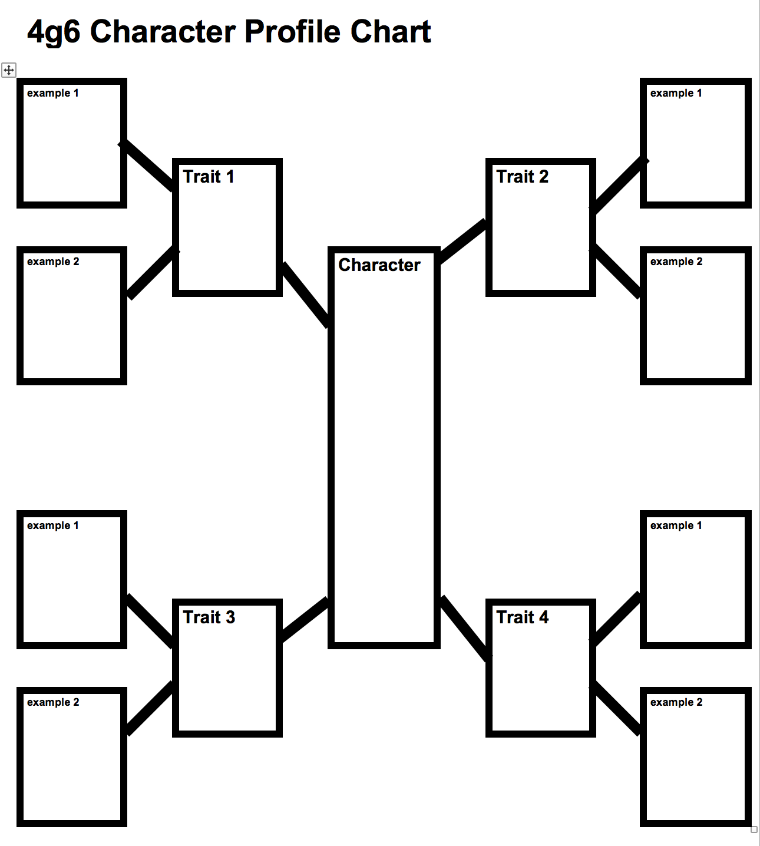
Character Profile Chart
Fill out the Character Profile Chart on Shauzia, Jasper, Zahir, or Looli.
Write the name of the character in the box in the middle of the chart.
Think of 4 characteristics, or traits, that the character has. Describe each with a key word or phrase and write it down one of the 4 boxes that surround the name.
For each trait, find 2 concrete examples of it in the story. Write each in one of the 2 boxes attached to each trait box. Continue this until you have 2 examples for each of the 4 traits.
Discussion
Ask discussion questions of all 9 types (see Day 1).
Key Questions
Why did all the shop owners tell Shauzia to go away?
Is this an example of a just way to treat people? Why or why not?
Instead of saying, “Do I look like a junk picker?” how could Shauzia politely responded?
Why would a watch dog be useful for the street children?
How did Shauzia use persuasion?
How does Shauzia teach Zahir trust?
Explain Looli’s way to search through the garbage.
How did Shauzia and her new friends intimidate others?
Why did the hotel not want these hungry kids to eat the leftovers?
Why didn’t the adults help the street children?
Analyze
Analyze the key paragraph.
Key Paragraph, p. 61-62
“But Shauzia was hungry, and she was tired of being bullied. She sprang up with out thinking and threw herself at the boy. They rolled in the trash, trying to hit each other. Jasper jumped around them, barking. The other children picked the spilled cracker bits off the ground and ate them” (p. 61-62).
Extend
Write
Have each student write a short product based on today’s prompt to connect to the unit theme.
Shauzia was so hungry she fought the street boy for scraps of food. In the end, other street children ate the food from the ground. Do you think Shauzia’s actions are an example of Leadership requires Engagement? Do you think her community is better because she is part of it? Why or why not? What could Shauzia have done instead that would have benefited everyone? Write an argumentative letter to Shauzia that encourages her to demonstrate leadership requires engagement. Provide three reasons to support your argument.
Close
Close by extending today’s lesson to life and the world.
Describe a time when you were really hungry.
Would you ever eat leftovers from the garbage? Why or why not?
Day 6
Outcomes for Today
-->
W1. Write arguments to support claims in an analysis of substantive topics or texts, using reasoning and relevant and sufficient evidence.
R1. Cite several pieces of textual evidence to support analysis of what the text says explicitly as well as inferences drawn from the text.
Prepare
Background
Gather background knowledge about a place, time, event, person, or thing.
What type of clothing is worn in Afghanistan?
The ordinary clothing of Afghani men is a rather baggy pair of trousers with a drawstring at the waist, and a loose, long-sleeved shirt reaching about to the knees. When it is cool, a vest is also worn. Brightly striped, quilted coats are worn in rural areas. Afghanis' turbans were traditionally white but are now any color.
Women generally wear pleated trousers under a long dress, and cover their heads with a shawl. Some urban women continue to wear the chadri, a traditional ankle-length cloth covering, which was officially banned in 1959. It is like a sack over the whole body, with a mesh insert over the eyes and nose. In large cities, especially Kabul, Western-style clothing is becoming increasingly popular with both men and women.
Here are five vocabulary words to teach and add to the Word Wall.
blast (69)
refreshing (69)
generous (70)
Karachi (72)
hitch (74)
Read
Review
Review the timeline from the beginning every day.
Read
Read the selection, usually in a Shared Reading Read React Predict Cycle of 2-3 pages.
Read p. 68 – 79
Respond
Timeline
Agree on the facts in today’s reading and list the 3-5 most important on the timeline.
Students might mention:
Shauzia wanders through a nice grocery store, looking at all the nice food. She was told by the shopkeeper to leave and not come back or he would call the police.
Shauzia spent some time begging outside the store. Soon some boys came up to pet Jasper, Shauzia recognized the language they were speaking as English.
She asked for work to the boy’s parents, and their mother gave her ten rupees and says that Shauzia speaks English very well, the people also give her money to feed Jasper.
Shauzia meets back up with the street boys in a Christian cemetery, a small boy asks to join them, but Zahir tricks him and steals the small boys junk. Shauzia decides to not do anything, because she doesn't want anyone depending on her.
Shauzia moved around the city, and was learning about it constantly. She was also picking up ways to say she needed work and money in different languages.
A man asked her if she needed money, and offered work. He handed Shauzia one hundred rupees, and tried to lead her off forcibly. Jasper didn’t like that, and Shauzia began to struggle.
The police arrived, and the man accused Shauzia of stealing his money. She tried to explain the situation, but the police believed the man, and took the money off of her as evidence and took her away.
Map
Add to ongoing class activities like a KWL chart or map: where did the characters go?
Map
Update the class map of Pakistan by using information provided by the author. Have students track the locations in the novel on the map. They can also add physical features, resources, political information, and other relevant information that arises in the novel.
Through the readings, continue to reflect on the characters’ leadership and bullet point examples of characters demonstrating good leadership or poor leadership.
Leadership Poster Extension:
During this unit, encourage students to follow the local and world news, using a variety of mediums (newspapers, online sources, etc.).
Have students periodically input a headline/article of an “Example of Good Leadership” and “Example of Poor Leadership” in their local community and in the world on the document. Discuss the additions the next day in class.
For all of the items in the “Examples of Good Leadership” column, have students write one thing they can do to take action and support the individuals, groups, or organizations that are acting to promote the common good.
For all of the items in the “Examples of Poor Leadership” column, have students write an idea on how the leader can be more engaged.
In each situation, helping may involve writing a letter, getting more informed, volunteering, etc.
Have students choose one item to take action on. They should report their action and results to the class.
Explore
Activity
Explore the reading more deeply with a visual or oral language activity.
Advertisement for Future Dream Property
Create an advertisement for a future dream property for Shauzia. Create a place she would rather live than on the streets of Pakistan.
Materials:
Stiff paper 9x12 to 11x17
Pencils, pens, crayons, markers
Construction paper, scissors, glue sticks if desired
Step One: Make a list of the details of the property
Read pages that the advertisement will cover.
Make a list of the details in the reading such as weather, location, people, houses etc.
Step Two: Write an ad with a clear illustration
Write an appealing ad in 1 or 2 paragraphs detailing all of the information and making it sound interesting.
Illustrate the ad with a picture of what the property looks like.
Variations for the Ad
Write the ad if it were used in the future or in the past.
Prepare the ad as a magazine ad with an emphasis on visuals or do it as a billboard, TV ad, radio ad, etc.
This process can be used for detailing any solution to a defined problem, and is a great pre-writing activity for a problem-solution essay.
Discussion
Ask discussion questions of all 9 types (see Day 1).
Key Questions
Why is Shauzia desperate for money?
What is preventing Shauzia from earning money from a job?
What are ‘western clothes’?
What are you suppose to do before you pet a stranger’s dog?
How much does 20 rupees equal to in US dollar?
Describe the weather using a quote.
Why doesn’t Shauzia trust the other boys?
Describe Shauzia’s Sunday job. What tricks do you think Jasper can do?
Describe what happened to Shauzia at the end of the chapter.
Analyze
Analyze the key paragraph.
Key Paragraph, p. 73
“Shauzia didn’t join in the scramble for the stolen junk, but she didn’t do anything to help the boy, either. She wasn’t afraid to fight Zahir, but the last thing she needed was someone depending on her, expecting things from her. She would never get to the sea that way” (p. 73).
Extend
Write
Have each student write a short product based on today’s prompt to connect to the unit theme.
Shauzia believes it is better to only look out for yourself and not work as a team. Reflect on why it is better to look out for yourself and why it is better to work in a team. Do you think it is better to work as a team or to work alone? Write an argumentative paragraph supporting your position. Support your claim with three personal examples or three examples from the novel.
Close
Close by extending today’s lesson to life and the world.
What would you do if you saw Zahir bully the new boy? Would you help the boy? Would you watch? What would be the responsible thing to do?
Have you ever been framed for something you didn’t do?
Day 7
Outcomes for Today
-->
W1. Write arguments to support claims in an analysis of substantive topics or texts, using reasoning and relevant and sufficient evidence.
R1. Cite several pieces of textual evidence to support analysis of what the text says explicitly as well as inferences drawn from the text.
Prepare
Background
Gather background knowledge about a place, time, event, person, or thing.
What are the steps involved in creating a budget?
Identify how you're spending money now.
Evaluate your current spending and set goals that take into account your long-term financial objectives.
Track your spending to make sure it stays within those guidelines.
Word Wall
Here are five vocabulary words to teach and add to the Word Wall.
clenched (82)
scowled (82)
proof (82)
determined (83)
foulness (83)
Read
Review
Review the timeline from the beginning every day.
Read
Read the selection, usually in a Shared Reading Read React Predict Cycle of 2-3 pages.
Read p. 80 - 90.
Respond
Timeline
Agree on the facts in today’s reading and list the 3-5 most important on the timeline.
Students might mention:
Shauzia arrives at the police station in the van, where she pleads her innocence in the matter, but the police officers do not believe her. They took all the money she had earned, and tossed her in a cell.
She was determined to get her money back from the policemen, but the other boys in the cell told her to not make them angry. The cell was very uncomfortable and stank from all the people in it. She talked to some of the boys about their experiences in jail.
Shauzia tried to escape while the guards were giving the boys in the cell food, but was caught.
The guards turned the lights off for the nighttime, and one of the boys started banging his head on the wall because he was scared of the dark.
Shauzia was scared she would go crazy like the 'headbanger' and she missed Jasper.
Map
Add to ongoing class activities like a KWL chart or map: where did the characters go?
Map
Update the class map of Pakistan by using information provided by the author. Have students track the locations in the novel on the map. They can also add physical features, resources, political information, and other relevant information that arises in the novel.
Through the readings, continue to reflect on the characters’ leadership and bullet point examples of characters demonstrating good leadership or poor leadership.
Leadership Poster Extension
During this unit, encourage students to follow the local and world news, using a variety of mediums (newspapers, online sources, etc.).
Have students periodically input a headline/article of an “Example of Good Leadership” and “Example of Poor Leadership” in their local community and in the world on the document. Discuss the additions the next day in class.
For all of the items in the “Examples of Good Leadership” column, have students write one thing they can do to take action and support the individuals, groups, or organizations that are acting to promote the common good.
For all of the items in the “Examples of Poor Leadership” column, have students write an idea on how the leader can be more engaged.
In each situation, helping may involve writing a letter, getting more informed, volunteering, etc.
Have students choose one item to take action on. They should report their action and results to the class.
Explore
Activity
Explore the reading more deeply with a visual or oral language activity.
Would You Rather?
Reflect on the following questions and then compare answers with your classmates.
Would you rather live in a cell where you are fed everyday or have your freedom but not eat everyday?
Would you rather live in the prison cell or have gone with the man that gave Shauzia 100 rupees?
Would you rather help the boy Zahir bullied or stay quiet and not have to worry about another person?
Create your own Would You Rather questions based on today’s reading and choose what you would do in Shauzia’s shoes? Share your question with a classmate.
Discussion
Ask discussion questions of all 9 types (see Day 1).
Key Questions
Why does Shauzia have a picture of a lavender field?
Why was Shauzia saving all her rupees?
Why do you think Shauzia saved her money instead of buying food?
How is the smell of the jail cell similar to the sheep?
Explain why one of the boys doesn’t have his identification papers?
Why are identification papers important?
Explain why Shauzia believes anger is good and fear is dangerous? How can anger be used to keep Shauzia determined?
Remember, Leadership requires Engagement. During times of difficult circumstances, why is it still important to use your time and talent to promote the common good?
What is the danger of using the bathroom?
What did Shauzia miss about Jasper?
Analyze
Analyze the key paragraph.
Key Paragraph, p. 84
“‘Once you’re in here, you’re in here forever.’ he replied. ‘I was only six years old when they locked me up. Look at me now- old enough to grow a beard soon.’ The other boys laughed” (p. 84).
Extend
Write
Have each student write a short product based on today’s prompt to connect to the unit theme.
Shauzia is now in jail. Pretend you are Shauzia. Write a journal entry explaining how you were arrested. In an argumentative paragraph defend your innocence. Include three reasons that prove you are innocent. Finally describe how you feel during your first night sleeping in the jail cell.
Close
Close by extending today’s lesson to life and the world.
Describe a time when you felt uncomfortable?
What do you think will happen next?
Day 8
Outcomes for Today
-->
W1. Write arguments to support claims in an analysis of substantive topics or texts, using reasoning and relevant and sufficient evidence.
W8. Gather relevant information from multiple print and digital sources, using search terms effectively: assess the credibility of and accuracy of each source: and quote or paraphrase the data and conclusions of others while avoiding plagiarism and following a standard format for citation.
R1. Cite several pieces of textual evidence to support analysis of what the text says explicitly as well as inferences drawn from the text.
L3. Use knowledge of language and its conventions when writing, speaking, reading, or listening.
L4. Determine and clarify the meaning of unknown or multiple-meaning words and phrases, choosing flexibility from a range of strategies.
Prepare
Background
Gather background knowledge about a place, time, event, person, or thing.
Here are five vocabulary words to teach and add to the Word Wall.
growled (91)
crouch (93)
perplexed (93)
cooperate (99)
eager (101)
Read
Review
Review the timeline from the beginning every day.
Read
Read the selection, usually in a Shared Reading Read React Predict Cycle of 2-3 pages.
Read p. 91 - 105.
Respond
Timeline
Agree on the facts in today’s reading and list the 3-5 most important on the timeline.
Students might mention:
The next day, Shauzia claims her share of food and tea, and the guards tell the prisoners to get ready for a shower.
Shauzia is horrified because she can’t reveal herself as a girl in the shower and she tried to hide at the back of the cell.
There was a bang at the cell bars, and a guard called for the boy that had been brought in yesterday, Shauzia. Shauzia got to the front of the cell and proclaimed herself.
It was the westerner from the other day. Shauzia told him that she needed his help to get out because it as shower day, and she was a girl! The westerner spoke to the guards and gave them money to release Shauzia.
The westerner brought her out of the jail quickly, and outside she was greeted by Jasper. The westerner put both girl and dog into his van, and drove them from the jail area.
The westerner, Tom, drove them all to University Town, a very nice neighborhood. They are greeted by Tom’s family, who then tells his wife, Barbara, that Shauzia is a girl.
Shauzia was amazed by the beautiful home, and was instructed by Barbara to take a shower. She would find Shauzia some new clothes.
Soon Barbara and Tom served dinner, and Shauzia ate, and kept eating till she could eat no more. She then got a bowl of ice cream, and licked the bowl clean. Barbara offered to show her to her room, where she had a bed. She told Jasper that she thought they would ask her to stay with them, and she would be able to pursue anything. She hid some food under the bed, and also told Jasper that she still had plans to go to France.
Map
Add to ongoing class activities like a KWL chart or map: where did the characters go?
Map
Update the class map of Pakistan by using information provided by author. Have students track the locations in the novel on the map. They can also add physical features, resources, political information, and other relevant information that arises in the novel.
Through the readings, continue to reflect on the characters’ leadership and bullet point examples of characters demonstrating good leadership or poor leadership.
Leadership Poster Extension
During this unit, encourage students to follow the local and world news, using a variety of mediums (newspapers, online sources, etc.).
Have students periodically input a headline/article of an “Example of Good Leadership” and “Example of Poor Leadership” in their local community and in the world on the document. Discuss the additions the next day in class.
For all of the items in the “Examples of Good Leadership” column, have students write one thing they can do to take action and support the individuals, groups, or organizations that are acting to promote the common good.
For all of the items in the “Examples of Poor Leadership” column, have students write an idea on how the leader can be more engaged.
In each situation, helping may involve writing a letter, getting more informed, volunteering, etc.
Have students choose one item to take action on. They should report their action and results to the class.
Explore
Activity
Explore the reading more deeply with a visual or oral language activity.
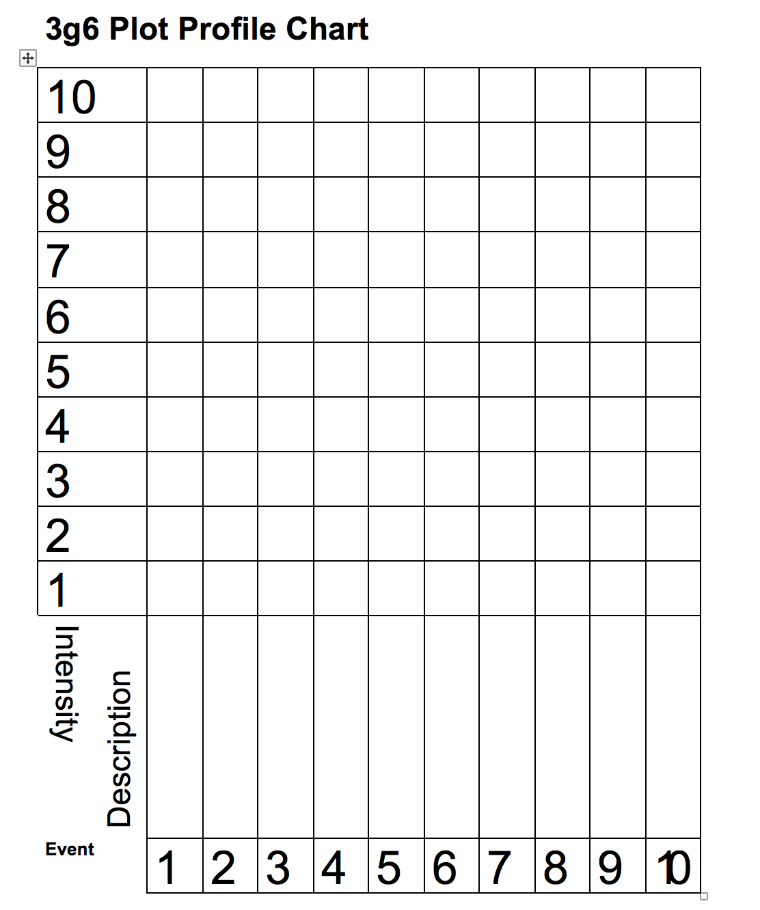
Plot Profile Chart
Complete a Plot Profile Chart for each chapter.
Discussion
Ask discussion questions of all 9 types (see Day 1).
Key Questions
Why did Shauzia not want to take a shower?
How was she able to avoid the showers?
Who rescued Shauzia from the jail?
How did he know where to find her?
How did Shauzia convince him to get her out?
What is Shauzia’s boy name?
How has Shauzia changed since she was a school girl?
Describe how Shauzia is different from the Western boys.
Why does Shauzia save her food under her bed?
Analyze
Analyze the key paragraph.
Key Paragraph, p. 105
“The garbage was full of perfectly good food. She rescued it, took it upstairs and hid it under her bed. She could never tell when she would be hungry again” (p. 105).
Extend
Write
Have each student write a short product based on today’s prompt to connect to the unit theme.
Shauzia rescued remaining food from the trash. What do you do with remaining left over food? Pretend you are Shauzia. Write an argumentative paragraph to convince people not to throw away unspoiled left over food. Provide three reasons to support your argument. Include two ideas of what people should do with their left over food instead?
Close
Close by extending today’s lesson to life and the world.
How could Shauzia show her thankfulness to the family?
What do you think Shauzia’s future will be like with more opportunities available?
Day 9
Outcomes for Today
-->
W1. Write arguments to support claims in an analysis of substantive topics or texts, using reasoning and relevant and sufficient evidence.
R1. Cite several pieces of textual evidence to support analysis of what the text says explicitly as well as inferences drawn from the text.
Prepare
Background
Gather background knowledge about a place, time, event, person, or thing.
How effective are charities?
The accusation is that charity helps the recipient with their problem, but it doesn't do much to deal with the causes of that problem. It certainly is true that some charities do stopgap or 'Band-Aid' work, either exclusively or some of the time. But in fact, a lot of charity work is devoted to dealing with the fundamental causes of problems: for example trying to reduce global poverty, or doing research into diseases like cancer.
These two examples highlight very different problems.
Combating cancer is a relatively simple scientific problem, while global poverty requires more than a scientific operation, or finding a better way to manage world resources.
Combating poverty involves slow processes of political, cultural and social change, with many stakeholders, significant opposition and serious issues of self-determination and coercion to be navigated.
And long-term campaigns pose another ethical problem: should we spend to make a better world in 10 years' time if that means that people who we could have fed starve to death tomorrow?
Here are five vocabulary words to teach and add to the Word Wall.
intending (107)
dozing (107)
ex-Patriots (109)
garden (114)
rotten (115)
Read
Review
Review the timeline from the beginning every day.
Read
Read the selection, usually in a Shared Reading Read React Predict Cycle of 2-3 pages.
Read p. 106 - 118.
Respond
Timeline
Agree on the facts in today’s reading and list the 3-5 most important on the timeline.
Students might mention:
The next days were a haze for Shauzia, as she ate and slept. She felt bad for not helping out around the house, and told Barbara. Barbara said not to worry, and sleep till she was rested.
One day Shauzia woke up and felt refreshed and well rested. She decided it was time for her to start helping out around the house.
Barbara and the two boys left for the American club. While they were gone the buzzer rang, Shauzia decided to open it. A lady with a baby was there, and Shauzia gave her a bag of food. Soon more and more beggars showed up, and Shauzia invited them in to rest and have food. The food in the house was all gone and she began to pass out toys and other things that the beggars needed.
Barbara and the boys came home. Barbara was surprised by all the people in her home, and asked Shauzia what had happened. Shauzia explained that she was sharing with them, like Barbara and Tom had shared with her.
When Tom came home, Barbara and him talked while Shauzia was outside in the garden. Tom went to get pizza. Tom and Barbara discovered the food under Shauzia’s bed, because ants had gotten to it, and it was rotten. They asked Shauzia why she had kept the food, and Shauzia told them it was for when she didn’t have any more food. Tom swept it out and Barbara cleaned the floor. Shauzia felt small because of all the trouble she was causing.
The next morning Tom and Barbara told Shauzia that they had looked into helping her find a special place in the refugee camp for Orphans and Widows. Barbara asked her if she wanted girls or boys cloths, Shauzia answered ‘boys’.
Tom drove her back out of the city to the camp, Shauzia contemplated pushing him out and driving the van, but didn’t. Shauzia was returned to the familiar camp that she had left earlier.
Map
Add to ongoing class activities like a KWL chart or map: where did the characters go?
Map
Update the class map of Pakistan by using information provided by the author. Have students track the locations in the novel on the map. They can also add physical features, resources, political information, and other relevant information that arises in the novel.
Explore the reading more deeply with a visual or oral language activity.
Cartoon strip activity
Create a cartoon of all the guests Shauzia brought to the house.
Discussion
Ask discussion questions of all 9 types (see Day 1).
Key Questions
Why was this Western family helping Shauzia?
Describe how the boys behave.
Why did Shauzia help everyone that came to the door?
Who came into the house?
What did Shauzia do for each person?
How do you think the beggars felt when they were let into the house?
How do you think the beggars felt when they were kicked out of the house?
Why was Barbara upset with the beggars in the house?
Why did the family send Shauzia to the refugee camp?
Why do you think Shauzia choose to wear boy clothes instead of girl clothes?
Analyze
Analyze the key paragraph.
Key Paragraph, p. 106
“‘Why are you doing this?’ Shauzia asked.
‘Tom’s salary goes a long way over here,’ Barbara told her. ‘We like to share what we have. Besides, us girls have to stick together!’ She gave Shauzia another hug, and this time, Shauzia hugged her back” (p. 106).
Extend
Write
Have each student write a short product based on today’s prompt to connect to the unit theme.
Shauzia does not understand why two strangers, Barbara and Tom, would help her. Pretend you are Barbara or Tom. Provide three reasons why you are caring for Shauzia. In an argumentative paragraph encourage other wealthy families to help other children in need.
Close
Close by extending today’s lesson to life and the world.
Would you have invited the beggars into Barbara’s house?
What would you do if you were Barbara or Tom?
Day 10
Outcomes for Today
-->
W1. Write arguments to support claims in an analysis of substantive topics or texts, using reasoning and relevant and sufficient evidence.
R1. Cite several pieces of textual evidence to support analysis of what the text says explicitly as well as inferences drawn from the text.
L3. Use knowledge of language and its conventions when writing, speaking, reading, or listening.
Prepare
Background
Gather background knowledge about a place, time, event, person, or thing.
What is the United Nations (UN)?
The United Nations (UN) has 4 main purposes:
To keep peace throughout the world;
To develop friendly relations among nations;
To help nations work together to improve the lives of poor people, to conquer hunger, disease and illiteracy, and to encourage respect for each other’s rights and freedoms;
To be a center for harmonizing the actions of nations to achieve these goals.
The work of the United Nations reaches every corner of the globe. Although best known for peacekeeping, peace building, conflict prevention and humanitarian assistance, there are many other ways the United Nations and its System (specialized agencies, funds and programs) affect our lives and make the world a better place. The Organization works on a broad range of fundamental issues, from sustainable development, environment and refugees protection, disaster relief, counter terrorism, disarmament and non-proliferation, to promoting democracy, human rights, gender equality and the advancement of women, governance, economic and social development and international health, clearing landmines, expanding food production, and more, in order to achieve its goals and coordinate efforts for a safer world for this and future generations.
Here are five vocabulary words to teach and add to the Word Wall.
scrounging (123)
ration (124)
verge (124)
satisfactory (125)
blissfully (126)
Read
Review
Review the timeline from the beginning every day.
Read
Read the selection, usually in a Shared Reading Read React Predict Cycle of 2-3 pages.
Read p. 119 - 127.
Respond
Timeline
Agree on the facts in today’s reading and list the 3-5 most important on the timeline.
Students might mention:
Shauzia looked at her picture of lavender fields in France, and wondered where the dreams it had held that she may have escaped. She began to question her resolve to get to France.
No one mentioned her time away, and Mrs. Weera didn’t give Shauzia little jobs like she used to. Instead she told her to save her strength for impending trip to France, in a sarcastic manor.
One day, Mrs. Weera walked by Shauzia and asked why she hadn’t gone yet, and that she must be bored with nothing to do. Shauzia was so mad she kicked a wall, some boys playing soccer laughed at her, she then yelled at them to stop playing and fetch some water. They all grabbed jugs and ran off to get water.
Shauzia decided to come up with her own projects to keep herself busy at the camp. Sometimes she would go with others to look for junk, or begin a math class. She even made a new friend, a girl a few years younger than her, Farzana.
Shauzia began to notice how sad and ‘broken’ the people in the camp were. The heat was getting to everyone. Shauzia commented to Farzana that the ocean would have made it much more bearable. Farzana didn’t know what an ocean was, and Shauzia explained that it was a large amount of water in one place.
Farzana said that she had an ocean in the camp, and showed Shauzia to it. But it was just a dirty, garbage filled pool of water. Shauzia said that oceans were much bigger, and told Farzana about how they smelled good. Shauzia and Farzana fell asleep in the shade.
Shauzia promised to take Farzana to the ocean with her one day.
Map
Add to ongoing class activities like a KWL chart or map: where did the characters go?
Map
Update the class map of Pakistan by using information provided by author. Have students track the locations in the novel on the map. They can also add physical features, resources, political information, and other relevant information that arises in the novel.
Through the readings, continue to reflect on the characters’ leadership and bullet point examples of characters demonstrating good leadership or poor leadership.
Leadership Poster Extension
During this unit, encourage students to follow the local and world news, using a variety of mediums (newspapers, online sources, etc.).
Have students periodically input a headline/article of an “Example of Good Leadership” and “Example of Poor Leadership” in their local community and in the world on the document. Discuss the additions the next day in class.
For all of the items in the “Examples of Good Leadership” column, have students write one thing they can do to take action and support the individuals, groups, or organizations that are acting to promote the common good.
For all of the items in the “Examples of Poor Leadership” column, have students write an idea on how the leader can be more engaged.
In each situation, helping may involve writing a letter, getting more informed, volunteering, etc.
Have students choose one item to take action on. They should report their action and results to the class.
Explore
Activity
Explore the reading more deeply with a visual or oral language activity.
KWL Chart: What You Know, Want to Learn, and Have Learned about refugees
Variations of the KWL Chart
You can do this chart for any topic you are trying to learn about.
This can be done on worksheets, or written on a big piece of paper, like chart paper or butcher paper. This can also be written on a white board or black board; the shape of the chart is easy to copy.
When you are analyzing a story, you can copy a KWL chart on a piece of paper and quickly take the story apart. This can be a helpful strategy on a test. This can use the same strategy for a nonfiction topic, a problem or a case study.
You can do this individually, in pairs, in a small group, or as part of a large group.
Variations for Writing
Write a paragraph from any of the 3 columns, K, W or L, of the chart.
Discussion
Ask discussion questions of all 9 types (see Day 1).
Key Questions
Why didn’t anyone ask Shauzia about her time in Peshawar?
Why wasn’t Shauzia helping Mrs. Weera?
Why hasn’t Shauzia left the camp?
Who is Farzana?
Describe the refugee camp using a quote.
Where is the Arabian Sea? Karachi? Indian Ocean?
How is Farzana’s ocean different from an actual ocean?
What is a white lie? Do you think a white lie is still the same as lying? Why or why not?
How can Shauzia help in the camp?
Analyze
Analyze the key paragraph.
Key Paragraph, p. 127
“‘Maybe I should say yes,’ she said to Jasper. ‘It would be a lie, but it would make her happy for a little while.’ Sometimes it was hard to know the right thing to do” (p. 127).
Extend
Write
Have each student write a short product based on today’s prompt to connect to the unit theme.
Shauzia told Farzana that they would go to the ocean together, even though Shauzia has no intention of taking Farzana to the ocean. Do you think it is okay to lie to someone so you don’t hurt his or her feelings? Or do you think it is better to tell the truth so they don’t get mad at you for lying? Write an argumentative paragraph supporting or disproving Shauzia’s decision to tell Farzana a lie. Support your position with three examples.
Close
Close by extending today’s lesson to life and the world.
How would you describe the ocean?
Have you ever lied to someone to make him or her happy for a little while? Describe the situation.
Day 11
Outcomes for Today
-->
W1. Write arguments to support claims in an analysis of substantive topics or texts, using reasoning and relevant and sufficient evidence.
W8. Gather relevant information from multiple print and digital sources, using search terms effectively: assess the credibility of and accuracy of each source: and quote or paraphrase the data and conclusions of others while avoiding plagiarism and following a standard format for citation.
R1. Cite several pieces of textual evidence to support analysis of what the text says explicitly as well as inferences drawn from the text.
Prepare
Background
Gather background knowledge about a place, time, event, person, or thing.
What is the World Food Programme?
The World Food Programme, or WFP, is the frontline UN agency in the fight against global hunger, responsible for distributing food to millions of needy people, including refugees, internally displaced people and returnees. In emergencies it takes food to where it is needed, saving the lives of victims of war, civil conflict and natural disasters.
Here are five vocabulary words to teach and add to the Word Wall.
distribution (129)
pried (132)
drape (132)
unconscious (134)
furiously (134)
Read
Review
Review the timeline from the beginning every day.
Read
Read the selection, usually in a Shared Reading Read React Predict Cycle of 2-3 pages.
Read p. 128 - 134.
Respond
Timeline
Agree on the facts in today’s reading and list the 3-5 most important on the timeline.
Students might mention:
Shauzia was sitting waiting for the compound’s allotment of flower for the day, but got distracted by a man who said there was work in Peshawar. Shauzia didn’t want to go to Peshawar again.
At the end of the day, a guard came to tell the people who were waiting that there would be no flour today, as they didn’t have enough for them. Shauzia was frustrated.
Weera told Shauzia that they would manage without flour. But the same thing happened for two weeks at the warehouse. Shauzia was hungry and said she wanted to go find food in Peshawar. Mrs. Weera said that she had to be patient and that it would be ok eventually.
Shauzia and Farzana came up with a plan to raid the warehouse. Shauzia climbing into the warehouse from a back window and began taking flour with the help of some of the children. Soon adults showed up and tried to take some, but the children did their best to protect the flour they had stolen.
Soon chaos erupted, and Shauzia ran off clutching a bag of flour. A large man tried to grab the flour from her, and then hit her on the head and took her flour. She rolled around on the ground, and was trampled. Someone stepped on her leg and it snapped.
Someone stepped on her head, and Shauzia passed out.
Map
Add to ongoing class activities like a KWL chart or map: where did the characters go?
Map
Update the class map of Pakistan by using information provided by author. Have students track the locations in the novel on the map. They can also add physical features, resources, political information, and other relevant information that arises in the novel.
Through the readings, continue to reflect on the characters’ leadership and bullet point examples of characters demonstrating good leadership or poor leadership.
Leadership Poster Extension
During this unit, encourage students to follow the local and world news, using a variety of mediums (newspapers, online sources, etc.).
Have students periodically input a headline/article of an “Example of Good Leadership” and “Example of Poor Leadership” in their local community and in the world on the document. Discuss the additions the next day in class.
For all of the items in the “Examples of Good Leadership” column, have students write one thing they can do to take action and support the individuals, groups, or organizations that are acting to promote the common good.
For all of the items in the “Examples of Poor Leadership” column, have students write an idea on how the leader can be more engaged.
In each situation, helping may involve writing a letter, getting more informed, volunteering, etc.
Have students choose one item to take action on. They should report their action and results to the class.
Explore
Activity
Explore the reading more deeply with a visual or oral language activity.
Action Cube
Complete the Action Cube to analyze the riot scene.
Discussion
Ask discussion questions of all 9 types (see Day 1).
Key Questions
Why wasn’t Shauzia ready to go back to Peshawar?
Why did the warehouse not give the people in line any flour?
Why does Mrs. Weera feel responsible for the others in the camp?
How does Shauzia show leadership skills?
How did Jasper protect Shauzia during the riot?
Why did the man hit Shauzia?
Do you think this action demonstrates justice? Why or why not?
Why did he want the flour?
How did Shauzia start the riot?
Describe how Shauzia went unconscious.
Analyze
Analyze the key paragraph.
Key Paragraph, p. 133
“He was bigger and stronger. He raised his arm and slammed his fist into Shauzia’s head. She dropped to the ground. Her head hit the dirt with a thud, and she watched the man run off with her flour” (p. 133).
Extend
Write
Have each student write a short product based on today’s prompt to connect to the unit theme.
After a chaotic catastrophe, there are many versions as to how the events unfolded. Write a memo to the police station explaining your version of how the riots started. Write an argumentative paragraph to persuade the police of Shauzia’s version of the story. Provide three quotes from today’s reading to support your claim. Who was involved? What happened first, second, and third?
Close
Close by extending today’s lesson to life and the world.
Describe a time when you started a verbal or physical fight?
What should you have done instead to be more responsible?
Day 12
Outcomes for Today
-->
W1. Write arguments to support claims in an analysis of substantive topics or texts, using reasoning and relevant and sufficient evidence.
W8. Gather relevant information from multiple print and digital sources, using search terms effectively: assess the credibility of and accuracy of each source: and quote or paraphrase the data and conclusions of others while avoiding plagiarism and following a standard format for citation.
R1. Cite several pieces of textual evidence to support analysis of what the text says explicitly as well as inferences drawn from the text.
L3. Use knowledge of language and its conventions when writing, speaking, reading, or listening.
L4. Determine and clarify the meaning of unknown or multiple-meaning words and phrases, choosing flexibility from a range of strategies.
Prepare
Background
Gather background knowledge about a place, time, event, person, or thing.
What were the motivations for the acid attacks in Pakistan?
The motivations for acid attacks in Pakistan range from men attacking women over rejection of marriage proposals “to insure pain and suffering on the victim because she dishonored him by refusing his proposal”, to religious fundamentalists attacking unknown women “because they felt the women were too modern and westernized; even if all the women had done is wear jeans instead of the traditional Pakistani dress”.
Word Wall
Here are five vocabulary words to teach and add to the Word Wall.
managed (136)
mend (137)
patient (138)
sorrow (142)
comfort (142)
Read
Review
Review the timeline from the beginning every day.
Read
Read the selection, usually in a Shared Reading Read React Predict Cycle of 2-3 pages.
Read p. 135 - 142.
Respond
Timeline
Agree on the facts in today’s reading and list the 3-5 most important on the timeline.
Students might mention:
Shauzia woke up on the ground with pain all over her body.
Shauzia woke up again to Mrs. Weera calling to her. She was in the clinic. Mrs. Weera told her to rest and recover.
Shauzia was frustrated and wanted to leave, but the nurse said she could if she wanted, and left before Shauzia could reply.
An old woman next to Shauzia told her to have patience and she would heal. Shauzia didn’t have patience for anything, and told the woman she had places to be. The woman reveals that she is only 16.
Shauzia asked what had happened to her, the woman said a man had thrown acid on her when she had been trying to teach his daughter how to read.
When Shauzia woke up, the woman was gone. The nurse said she didn’t make it. Shauzia exclaimed that she didn’t care about anyone, but the nurse replied that she didn’t have time to cry over every person that died there.
Shauzia decided she wanted to leave, got some crutches and made her way out to find Jasper and be on her way.
Map
Add to ongoing class activities like a KWL chart or map: where did the characters go?
Update the class map of Pakistan by using information provided by author. Have students track the locations in the novel on the map. They can also add physical features, resources, political information, and other relevant information that arises in the novel.
Through the readings, continue to reflect on the characters’ leadership and bullet point examples of characters demonstrating good leadership or poor leadership.
Leadership Poster Extension
During this unit, encourage students to follow the local and world news, using a variety of mediums (newspapers, online sources, etc.).
Have students periodically input a headline/article of an “Example of Good Leadership” and “Example of Poor Leadership” in their local community and in the world on the document. Discuss the additions the next day in class.
For all of the items in the “Examples of Good Leadership” column, have students write one thing they can do to take action and support the individuals, groups, or organizations that are acting to promote the common good.
For all of the items in the “Examples of Poor Leadership” column, have students write an idea on how the leader can be more engaged.
In each situation, helping may involve writing a letter, getting more informed, volunteering, etc.
Have students choose one item to take action on. They should report their action and results to the class.
Explore
Activity
Explore the reading more deeply with a visual or oral language activity.
Open Mind Map
Create an Open Mind Map for the nurse in the clinic.
Venn Diagram Chart of Shauzia and Mrs. Weera
This can be done on worksheets, or written on big pieces of paper, like chart paper or butcher paper.
Step One: Read the story, chapter or segment you wish to analyze
Step Two: Fill out the Venn Diagram Box
Decide on 2 characters, or settings, or events, or other variables you wish to analyze in the story, chapter or segment you have read. Label each of the 2 circles.
Where the 2 circles overlap, write the way these two are alike.
Where the circles are distinct, write down how each is different.
Discussion
Ask discussion questions of all 9 types (see Day 1).
Key Questions
What happened to Shauzia?
Why does Mrs. Weera want Shauzia to do the nurses training?
Explain Shauzia’s injury? What needs to heal?
Who is the patient sleeping next to Shauzia?
What does she try to teach Shauzia?
How does she die?
Why is Shauzia mad and angry with the nurses?
How else could Shauzia demonstrate her frustration? Is it possible to be frustrated while still being respectful? Why or why not?
Why are the nurses upset?
Why was Shauzia supposed to return to the clinic?
Analyze
Analyze the key paragraph.
Key Paragraph, p. 140
“The nurse yanked herself free. ‘Do you know how many deaths we see here? How am I supposed to cry over all of them? All you do is lie there and complain. How dare you criticize me!’” (p. 140).
Extend
Write
Have each student write a short product based on today’s prompt to connect to the unit theme.
As Shauzia’s nurse, write a formal letter to Shauzia explaining her experience working at the clinic.
Write an argumentative paragraph to convince Shauzia that she cares for all of her patients. Explain that nurses need to separate their emotions from their work in order for them to continue to provide patients with life-saving medical support. Provide three reasons why the nurses cannot cry after each patient dies.
Close
Close by extending today’s lesson to life and the world.
Describe a time when you felt helpless, when you wanted to help someone but could not do anything.
What would you recommend Shauzia to do in this type of situation?
Day 13
Outcomes for Today
-->
W1. Write arguments to support claims in an analysis of substantive topics or texts, using reasoning and relevant and sufficient evidence.
R1. Cite several pieces of textual evidence to support analysis of what the text says explicitly as well as inferences drawn from the text.
L3. Use knowledge of language and its conventions when writing, speaking, reading, or listening.
L4. Determine and clarify the meaning of unknown or multiple-meaning words and phrases, choosing flexibility from a range of strategies.
Prepare
Background
Gather background knowledge about a place, time, event, person, or thing.
What Happened on 9/11?
On September 11, 2001, terrorists attacked the Unites States. They hijacked four airplanes in mid-flight. The terrorists flew two of the planes into two skyscrapers at the World Trade Center in New York City. The impact caused the buildings to catch fire and collapse. Another plane destroyed part of the Pentagon (the U.S. military headquarters) in Arlington, Virginia. The fourth plane crashed in Shanksville, Pennsylvania. Officials believe that the terrorists on that plane intended to destroy either the White House or the U.S. Capitol. Passengers on the plane fought the terrorists and prevented them from reaching their goal. In all, nearly 3,000 people were killed in the 9/11 attacks.
A total of 19 terrorists hijacked the four planes on 9/11. All of the men were from nations in the Middle East. They belonged to a terrorist group called Al Qaeda (ahl KAY-dah), led by Osama bin Laden. Al Qaeda practices an extreme version of the religion of Islam. The group is intensely opposed to the United States and other Western, democratic nations. They are especially against the military presence of these countries in Arab nations. Since the group’s creation by bin Laden in the late 1980s, Al Qaeda has helped coordinate and fund numerous bombings worldwide.
How did America respond to 9/11?
In October 2001, the U.S. and its allies invaded Afghanistan, where Al Qaeda was based. The extreme Islamic group that ran Afghanistan's government, known as the Taliban, was protecting Bin Laden and allowing Al Qaeda to run training camps in the country. U.S.-led forces soon brought down the Taliban. They are still working to help rebuild and stabilize the nation. Since 2001, many Al Qaeda members have been captured or killed. On May 1, 2011, U.S. troops killed Bin Laden where he was hiding in Pakistan.
The U.S. invaded Iraq in 2003. Then President George W. Bush and other U.S. leaders believed that the country’s dictator, Saddam Hussein, was hiding terrible weapons that could be given to terrorists. Hussein was captured and later put to death by an Iraqi court. No weapons of mass destruction were found.
How did America change after 9/11?
Following 9/11, the U.S. government took many steps to try to make the country safer. It tightened security at airports and in public buildings. A new cabinet-level department—the Department of Homeland Security—was created. It works to protect the United States from terrorism.
Here are five vocabulary words to teach and add to the Word Wall.
impatiently (144)
debating (145)
abrupt (145)
vacant (147)
immoral (151)
Read
Review
Review the timeline from the beginning every day.
Read
Read the selection, usually in a Shared Reading Read React Predict Cycle of 2-3 pages.
Read p. 143 - 151.
Respond
Timeline
Agree on the facts in today’s reading and list the 3-5 most important on the timeline.
Students might mention:
Shauzia made her way through the camp, and was asked by a man where she was going. She passed more men that were just waiting like the first that had stopped her.
Shauzia realized she was lost, and asked a man where the widows compound was. But he said that she shouldn’t go there because they had started the food riot.
Shauzia asked some people in tents where the widows compound was. An old lady told Shauzia to give her the crutches she had so she could leave.
A water truck came, and people crowded around it to get some water. Soon a fight around the truck erupted.
Shauzia asked an aid worker for directions. The aid worker brought her to a truck and asked her where she lived now. She said the widows’ compound.
Shauzia asked about all the new people coming into the camp; the aid worker said they were from Afghanistan fleeing from a possible attack from the USA.
The aid worker returned her to the Widows’ Compound.
The next day refugees attacked the Widows’ Compound, but Mrs. Weera and the other woman beat them back. Later Mrs. Weera hired more guards to help.
Map
Add to ongoing class activities like a KWL chart or map: where did the characters go?
Map
Update the class map of Pakistan by using information provided by the author. Have students track the locations in the novel on the map. They can also add physical features, resources, political information, and other relevant information that arises in the novel.
Through the readings, continue to reflect on the characters’ leadership and bullet point examples of characters demonstrating good leadership or poor leadership.
Leadership Poster Extension
During this unit, encourage students to follow the local and world news, using a variety of mediums (newspapers, online sources, etc.).
Have students periodically input a headline/article of an “Example of Good Leadership” and “Example of Poor Leadership” in their local community and in the world on the document. Discuss the additions the next day in class.
For all of the items in the “Examples of Good Leadership” column, have students write one thing they can do to take action and support the individuals, groups, or organizations that are acting to promote the common good.
For all of the items in the “Examples of Poor Leadership” column, have students write an idea on how the leader can be more engaged.
In each situation, helping may involve writing a letter, getting more informed, volunteering, etc.
Have students choose one item to take action on. They should report their action and results to the class.
Explore
Activity
Explore the reading more deeply with a visual or oral language activity.
Character Profile Chart
Do a character profile chart of Shauzia. List her most prominent character traits and give evidence of those traits from the text.
Write the name of the character in the box in the middle of the chart.
Think of 4 characteristics, or traits, that the character has. Describe each with a keyword or phrase and write it down on one of the 4 boxes that surround the name.
For each trait, find 2 concrete examples of it in the story. Write each in one of the 2 boxes attached to each trait box. Continue this until you have 2 examples for each of the 4 traits.
Discussion
Ask discussion questions of all 9 types (see Day 1).
Key Questions
Compare and contrast waiting and patience.
Who did Shauzia meet while searching for the Widows’ Compound?
What did these people think of the Widows’ Compound?
How long did some of the refugees wait for tents?
Describe the different ways refugees make their tents?
Instead of trying to hit the kids with her crutches, what could Shauzia have done instead to show kindness?
What happened in New York City on September 11, 2001?
Why do the Afghans predict that Americans are going to attack Afghanistan?
Why did the men attack the Womens’ Compound?
How can the men demonstrate leadership? How can they use their time and talent to promote the common good?
Analyze
Analyze the key paragraph.
Key Paragraph, p. 143
“‘I am just waiting,’ the old man replied. ‘It is what I do. I don’t remember what I am waiting for, but still I wait. One day, you will wait like I do.’
‘Never!’ Shuazia exclaimed” (p. 143).
Extend
Write
Have each student write a short product based on today’s prompt to connect to the unit theme.
Write an informative paragraph about what happened on September 11, 2001. Using the background information provided at the beginning of today’s lesson plan, review the reasons why Americans sent military forces into Afghanistan?
Writing prompt one: As the president of the United States write an argumentative speech that defends your decision to send troops to Afghanistan. Provide three reasons to support your decision.
Writing prompt two: As Mrs. Weera, write an argumentative letter to convince the president of the United States to not send American troops to Afghanistan. Provide three alternative ideas to help the Afghanistan government disband the Taliban.
Close
Close by extending today’s lesson to life and the world.
Describe a moment in your life where you had to be patient.
Why do you think patience is important?
Day 14
Outcomes for Today
-->
W1. Write arguments to support claims in an analysis of substantive topics or texts, using reasoning and relevant and sufficient evidence.
W8. Gather relevant information from multiple print and digital sources, using search terms effectively: assess the credibility of and accuracy of each source: and quote or paraphrase the data and conclusions of others while avoiding plagiarism and following a standard format for citation.
R1. Cite several pieces of textual evidence to support analysis of what the text says explicitly as well as inferences drawn from the text.
Prepare
Background
Gather background knowledge about a place, time, event, person, or thing.
How did the U.S. led attack on Afghanistan begin?
On October 7, 2001, a U.S.-led coalition begins attacks on Taliban-controlled Afghanistan with an intense bombing campaign by American and British forces. Logistical support was provided by other nations including France, Germany, Australia and Canada and, later, troops were provided by the anti-Taliban Northern Alliance rebels. The invasion of Afghanistan was the opening salvo in the United States "war on terrorism" and a response to the September 11, 2001, terrorist attacks on New York and Washington, D.C.
Dubbed "Operation Enduring Freedom" in U.S. military parlance, the invasion of Afghanistan was intended to target terrorist mastermind Osama bin Laden's al-Qaeda organization, which was based in the country, as well as the extreme fundamentalist Taliban government that had ruled most of the country since 1996 and supported and protected al-Qaeda. The Taliban, which had imposed its extremist version of Islam on the entire country, also perpetrated countless human rights abuses against its people, especially women, girls and ethnic Hazaras. During their rule, large numbers of Afghans lived in utter poverty, and as many as 4 million Afghans are thought to have suffered from starvation.
In the weeks prior to the invasion, both the United States and the U.N. Security Council had demanded that the Taliban turn over Osama bin Laden for prosecution. After deeming the Taliban's counteroffers unsatisfactory—among them to try bin Laden in an Islamic court—the invasion began with an aerial bombardment of the Taliban and al-Qaeda installations in Kabul, Kandahar, Jalalabad, Konduz and Mazar-e-Sharif. Other coalition planes flew in airdrops of humanitarian supplies for Afghan civilians.
Word Wall
Here are five vocabulary words to teach and add to the Word Wall.
scrawny (152)
mended (152)
shatter (154)
sought (157)
released (157)
Read
Review
Review the timeline from the beginning every day.
Read
Read the selection, usually in a Shared Reading Read React Predict Cycle of 2-3 pages.
Read p. 152 - 158.
Respond
Timeline
Agree on the facts in today’s reading and list the 3-5 most important on the timeline.
Students might mention:
At the clinic, a nurse cut Shauzia’s leg cast off. She tenderly tried to put weight on it. It hurt a little, but was otherwise mended.
Mrs. Weera discloses that she is taking some nurses over the border to Afghanistan to help the people there.
Shauzia sat inside the hut in the compound, and joked with Farzana about Mrs. Weera. Shauzia told Farzana of her plan to leave for the ocean.
Shauzia was mad at Farzana and Jasper and sulked off.
Mrs. Weera and her nurses were leaving. Shauzia had to see her leave to make sure.
Mrs. Weera found Shauzia, and told her how special she was.
Shauzia decided she had to go with Mrs. Weera and the nurses. She would try to go to France later, but first she had to catch up with Mrs. Weera.
Map
Add to ongoing class activities like a KWL chart or map: where did the characters go?
Map
Finish the class map of Pakistan. Have students review the locations in the novel on the map, including the physical features, resources, political information, and other relevant information from the novel.
Finalize and review the Leadership Poster Extension activity.
Review the “Examples of Poor Leadership.”
Discuss and review the list of student ideas on how the leader can be more engaged.
Allow students to report their leadership actions and how they demonstrated Leadership requires Engagement.
Explore
Activity
Explore the reading more deeply with a visual or oral language activity.
Open Mind Portrait
Create an Open Mind Portrait of Mrs. Weera.
Make a pro/con list
Make a pro/con list for Shauzia with reasons why she should stay in Pakistan and reasons why she should travel with Mrs. Weera back to Afghanistan.
Discussion
Ask discussion questions of all 9 types (see Day 1).
Key Questions
Describe what is happening in Afghanistan.
Why is Mrs. Weera going back to Afghanistan?
Why was it dangerous for the group of women to travel to Afghanistan?
Why has the embroidery group switched from fancy needlework to cutting bandages?
What two items did Shauzia leave with Farzana?
What do you think will happen to Jasper and Farzana?
Why do you think Shauzia left Jasper behind?
Why did Shauzia go with Mrs. Weera?
Who is Parvana? Why does Shauzia want to meet her at the top of the Eiffel Tower?
Do you think their dream will come true? Why or why not?
What do you think happens next? Write chapter 14 and provide the setting, characters, and plot of the next part of the story.
Analyze
Analyze the key paragraph.
Key Paragraph, p. 158
“She had almost twenty years before she had to meet her friend Parvana at the top of the Eiffel Tower in Paris. She’d get there. But first she had a little job to do (p. 158).
Extend
Write
Have each student write a short product based on today’s prompt to connect to the unit theme.
As Shauzia, write a journal entry explaining the recent events. Write an argumentative paragraph defending your decision to go with Mrs. Weera. Provide three reasons that support your decision to work with Mrs. Weera. Explain your new mission and why it is important for the future of Afghanistan.
Close
Close by extending today’s lesson to life and the world.
What would you do if you were Shauzia?
Describe a time when you did something because it was better for the other person but not necessarily good for you.