The 40-Minute Lesson Plan is essential elements of the CBL lesson plan. We suggest the teacher reads aloud or uses an audio book for the reading portion. 40-min includes: Background, Wordwall, Key Paragraph, and Writing Prompt
60
The 60-Minute Lesson Plan uses the same elements as the 40-minute plan, but also covers a visual activity and discussion. 60-min includes: Background, Wordwall, Key Paragraph,Writing Prompt and adding the Key Questions
90
The 90-Minute Lesson Plan contains all elements of the lesson plan. If time is available, we recommend using this version to get all of the benefits of CBL. The full lesson includes: Background, Wordwall, Key Paragraph, Writing Prompt, and Key Questions of the 40 and 60 minutes options while incorporating the Mapping Activity, Visual Activity and creating the Timeline as a class.
Day 1
Outcomes for Today
-->
Common Core Standards Focus:
W2. Write informative/explanatory texts to examine and convey complex ideas, concepts, and information clearly and accurately through the effective selection, organization, and analysis of content.
Prepare
Background
Gather background knowledge about a place, time, event, person, or thing.
What was the Versailles Peace Conference?
This is a peace treaty that was signed in the Versailles Palace near Paris, France in 1918 following World War I. The treaty was named after the location where it was signed. The Versailles Palace was chosen because of its size and capability to hold so many people in one location. The one major nation was not allowed to participate in the framing of the treaty was Germany. The German delegates would however be given a copy of the treaty once it was finalized and were told if they did not agree and sign it they would be invaded. It is believed that Germany is the sole cause of the war.
Word Wall
Here are five vocabulary words to teach and add to the Word Wall.
delegation (xv)
indignation (xvi)
virulent (xvii)
propaganda (xviii)
acquiesced (xviii)
Read
Review
Review the timeline from the beginning every day.
Read
Read the selection, usually in a Shared Reading Read React Predict Cycle of 2-3 pages.
Read Introduction xiiv - xxiii
Respond
Timeline
Agree on the facts in today’s reading and list the 3-5 most important on the timeline.
Students might mention:
Eleanor Roosevelt talks about her impression of Anne Frank The Diary of a Young Girl.
The German Empire is the strongest power in Europe since the beginning of the twentieth century.
The Emperor/Kaiser fled to neutral Holland leaving democratic politicians in Berlin to announce that Germany was now a republic.
This new republic sued for peace in April 1919 and sent delegates to the Versailles Peace Conference where they learned they would not be part of forming the treaty.
The major countries framing the Versailles Peace Treaty were Great Britain, France, Italy and the United States.
Germany was blamed for the war and told if they did not sign the treaty Germany would be invaded for refusing.
Overseas Colonies and territories throughout Europe were taken away from Germany.
Germany had to repay the damage caused to civilians due to the destruction of war.
Germany’s new government was known as the Weimar Republic, which was unsuccessful leading to unrest, and the Nazi Party taking power.
The Nazi program combined nationalism and socialism promising to restore Germany’s power.
Adolf Hitler became leader of the Nazi Party in 1921, he Germany’s problems on the Jews and laid out a plan to expand the country’s borders.
In 1933 Hitler became Chancellor of Germany taking over the country, putting his anti-Jewish program into action.
September 1939 Hitler began his attempt and taking over Europe.
Across Europe the Germans dealt ruthlessly with resistance, Hitler adopted and implemented his “final solution”
Hitler had his men round up Jews from across Europe worked them to exhaustion, shot or gassed them. In the end he had over six million Jews killed.
Anne Frank was born June 12, 1929 in Frankfurt, Germany to a successful and happy family.
Otto Frank moves his family to Holland in the summer of 1933 to avoid Nazi persecution.
Germany occupied Holland in 1940, Queen Wilhemina fled to England where she cooperated with the Allies.
Germans terrorized and exploited Holland as they did in other occupied countries including the round up and deportation of Jews.
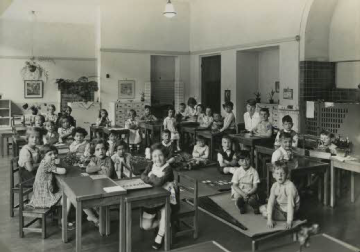
Anne Frank would be forced to leave her Montessori School and attend the Jewish Lyceum.
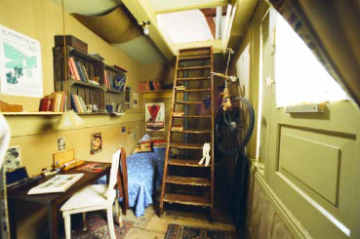
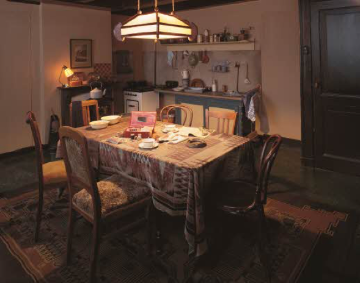
July 5th 1942 Anne Frank, her family and four friends took refuge in the “Secret Annexe”.
The fall of 1942 the tide began to turn and the Allies began to turn back the German armies.
Map
Add to ongoing class activities like a KWL chart or map: where did the characters go?
Leadership Poster
Collaborate with students create a class T Chart. This can be a live, online document that students have shared access to (Google Document or Google Spreadsheet).
Label one column “Examples of Good Leadership” and the other side “Examples of Poor Leadership”.
Through the readings, reflect on the characters’ leadership and bullet point examples of characters demonstrating good leadership or poor leadership.
Leadership Poster Extension
During this unit, encourage students to follow the local and world news, using a variety of mediums (newspapers, online sources, etc.).
Have students periodically input a headline/article of a “Examples of Good Leadership” and “Examples of Poor Leadership” in their local community and in the world on the document. Discuss the additions the next day in class.
For all of the items in the “Examples of Good Leadership” column, have students write one thing they can do to take action and support the individuals, groups, or organizations that are acting to promote the common good.
For all of the items in the “Examples of Poor Leadership” column, have students write an idea on how the leader can be more engaged.
In each situation, helping may involve writing a letter, getting more informed, volunteering, etc.
Have students choose one item to take action on. They should report their action and results to the class.
Interactive Timeline
Anne Frank’s diary reveals events from June 14, 1942 through August 1944. Through the interactive timeline, track critical world events that occurred while reading about Anne’s story. The timeline provides historical context for the time periods before Anne’s family goes into hiding through the end of World War II.
Create a class timeline to track critical events that occur in the World War II time period along with events of the Frank family.
Explore
Activity
Explore the reading more deeply with a visual or oral language activity.
Open Mind Portrait
Create an Open Mind Portrait of a Anne Frank. You will add thought bubbles to her OMP every couple days. You could use different colors for the beginning, middle and end of the story. Remember in the beginning you are introduced to the setting, the characters and the problems they have. In the middle you learn about the roadblocks to the characters solving their problems, and conflicts occur. In the end of the story those conflicts reach a peak and then resolve with a resolution of the character’s problems.
Materials:
Large piece of stiff paper for each character, like 11x17 oak tag
Paper for bubbles with scissors and glue sticks
Markers, crayons, pens, pencils, or paint
Construction or tissue paper, scissors and glue sticks if desired
Discussion
Ask discussion questions of all 9 types (see Day 1).
Key Questions
How does Eleanor Roosevelt describe Anne Frank’s diary and the experience that lead her to writing it?
What impact did the Treaty of Versailles have on Germany and the German people following World War I?
How did the failure of the Weimar Republic lead to the rise of Hitler’s Nazi Party?
What did Hitler plan to do to restore Germany? How did he get support of the people of Germany?
Hitler’s plan was called the “final solution” what did this entail? How was it implemented?
Where was Anne Frank born and how would you describe her early years?
What events lead Otto Frank to move his family from Frankfurt? Where did they move? Why did he select this location?
What role has Holland taken for the persecuted?
What changes occurred for Holland and the Frank family in 1940?
How would you describe the tone and mood of Holland and across Europe following Hitler’s direction to occupy?
Analyze
Analyze the key paragraph.
Key Passage, p. xxi
“For centuries Holland had provided a refuge for the persecuted. In the 1930s it received many German Jews as it had welcomed French Huguenots in the sixteenth century and English Puritans in the seventeenth. By the spring of 1934, the Franks reunited and settled in Amsterdam” (p. xxi)."
Extend
Write
Have each student write a short product based on today’s prompt to connect to the unit theme.
Holland has been a refuge for persecuted people for centuries, the most recent being German Jews including the Frank family. Otto Frank, Anne’s father makes a decision to move his family from Germany to escape Nazi persecution. How are the actions by the people of Holland and Otto Frank similar?
In an informative paragraph discuss how Otto Frank either exemplifies the theme Leadership Requires Engagement or not by his decision to move his family from Germany to Holland. Be sure your explanation includes how the choice of Holland was critical.
Close
Close by extending today’s lesson to life and the world.
Day 2
Outcomes for Today
-->
Common Core Standards Focus:
W2. Write informative/explanatory texts to examine and convey complex ideas, concepts, and information clearly and accurately through the effective selection, organization, and analysis of content.
Prepare
Background
Gather background knowledge about a place, time, event, person, or thing.
What is a diary?
A diary is a permanent personal record of events, thoughts, and ideas associated with an individual. While some cultures think of diaries as being mainly a female pastime, the fact is that journaling or keeping a diary is an activity that people of both genders engage in regularly. Keeping a diary is an excellent means of documenting experiences and ideas that will have meaning later in life or possibly be of importance to the next generation.
Keeping a diary is something that people will occasionally choose to do in secret. The thoughts and ideas written in the diary are often considered private and confidential. For that reason, people who do choose to keep a diary over a number of years may only choose to share certain parts of the recorded text with people they know and trust to maintain that confidence.
Why did Anne write to “Kitty”?
While she’s in hiding, Anne decides to think of her diary as a friend, whom she names Kitty. It makes the writing easier. Besides, she doesn’t really have a real friend, ‘and that’s how the whole idea of keeping a diary started’, she admits. ‘All I think about when I‘m with friends is having a good time. I can’t bring myself to talk about anything but ordinary everyday things. We don’t seem to be able to get any closer, and that’s the problem. Maybe it’s my fault that we don’t confide in each other. In any case, that’s just how things are, and unfortunately they’re not liable to change. This is why I’ve started the diary.’
Agree on the facts in today’s reading and list the 3-5 most important on the timeline.
Students might mention:
June 12th 1942 Anne receives her diary among other gifts for her birthday.
At her birthday party Anne had many friends attend who were happy to see the film The Lighthouse keep with Rin-Tin-Tin.
Anne shares her thoughts on keeping a diary and the importance of doing it.
Anne introduces her family and explains the impact of Hitler’s anti-Jewish laws on her extended family and friends.
Anne describes the changes in life with Germans occupying Holland and the Anti-Jewish decrees.
Anne talks of her way of handling boys who are interested in her.
Anne shares her experiences in school, her struggles keeping quiet having to write additional essays for Mr. Keptor because of it.
Anne and Harry Goldberg begin spending time with each other, his grandparents do not approve of their relationship.
Anne’s father was upset when Harry and Anne arrived home after eight o’clock, because it is dangerous for Jews to be out after eight.
Anne is happy that her family likes Harry.
Anne was pleased that he grades turned out as well as they did
Otto Frank has been making arrangements for the Frank’s belongings over a year and now is making plans to take the family to hiding.
Map
Add to ongoing class activities like a KWL chart or map: where did the characters go?
Leadership Poster
Continue to collaborate with students create a class T Chart of “Examples of Good Leadership” and “Examples of Poor leadership”. This can be a live, online document that students have shared access to (Google Document or Google Spreadsheet).
Continue to reflect on the characters’ leadership and bullet point examples of characters demonstrating good leadership or poor leadership.
Leadership Poster Extension
Continue to encourage students to follow the local and world news, using a variety of mediums (newspapers, online sources, etc.).
Periodically students should continue input a headline/article of “Examples of Good Leadership” and “Examples of Poor Leadership” in their local community and in the world on the document. Discuss the additions the next day in class.
For all of the items in the “Examples of Good Leadership” column, have students write one thing they can do to take action and support the individuals, groups, or organizations that are acting to promote the common good.
For all of the items in the “Examples of Poor Leadership” column, have students write an idea on how the leader can be more engaged.
In each situation, helping may involve writing a letter, getting more informed, volunteering, etc. Encourage students choose one item to take action on. They should report their action and results to the class.
Interactive Timeline
Anne Frank’s diary reveals events from June 14, 1942 through August 1944. Through the interactive timeline, track critical world events that occurred while reading about Anne’s story. The timeline provides historical context for the time periods before Anne’s family goes into hiding through the end of World War II.
Create a class timeline to track critical events that occur in the World War II time period along with events of the Frank family.
Explore
Activity
Explore the reading more deeply with a visual or oral language activity.
Cubing an Action
Have students cube either the action taken by Hitler and Nazi Party or the action taken by Otto Frank.
Discussion
Ask discussion questions of all 9 types (see Day 1).
Key Questions
Based upon her reaction to her birthday presents how would you describe Anne Frank? What kind of child is she?
In her Saturday June 20th 1942 what mood would describe her as having?
Anne states “our freedom was strictly limited. Yet things were bearable”. Would you agree with her? Explain your answer.
How would you characterize Anne’s attitude toward boys and relationships with them on Saturday June 20th 1942?
How did Mr. Keptor handle Anne’s inability to keep quiet? How do you think Anne would do in class today? How does your teacher handle this type of students in class?
What were Anne’s feelings toward the people of Holland?
What kind of boy would you consider Harry Goldberg?
Have you ever experienced a relationship that your family did not approve of? How did you handle the situation?
What was Anne’s father so upset with?
In what ways do Anne and her parent differ in opinion concerning her schooling?
Why was Anne so surprised at the idea of going into hiding?
Analyze
Analyze the key paragraph.
Key Passage, p. 12
“When we walked across our little square together a few days ago, Daddy began to talk of us going into hiding. I asked him why on earth he was beginning to talk of that already. ‘Yes, Anne,’ he said, you know that we have been talking food, clothes, furniture to other people for more than a year now. We don’t want our belongings to be seized by the Germans, but we certainly don’t want to fall into their clutches ourselves. So we shall disappear of our own accord and not wait until they come and fetch us” (p. 12)."
Extend
Write
Have each student write a short product based on today’s prompt to connect to the unit theme.
Otto Frank begins to share his plan with Anne, how he has been preparing for a year by moving the Frank family belongings and food to friends to make it easier for them to disappear. How is Otto acting in a leadership role as we have defined it in the theme? What part of the definition does he best exemplify?
In at least 2 explanatory paragraphs give your opinion on the leadership abilities of Otto Frank. Be sure to use the definition and support from the text.
Close
Close by extending today’s lesson to life and the world.
Day 3
Outcomes for Today
-->
Common Core Standards Focus:
W2. Write informative/explanatory texts to examine and convey complex ideas, concepts, and information clearly and accurately through the effective selection, organization, and analysis of content.
Prepare
Background
Gather background knowledge about a place, time, event, person, or thing.
Who was the S.S.?
Adolf Hitler founded the Schutzstaffel (SS) in April of 1925, as a group of personal bodyguards. As time went on, this small band of bodyguards grew from 300 members in 1925 to 50,000 in 1933 when Hitler took office. The man responsible for this growth was Heinrich Himmler, who commanded the SS from 1929 until its disintegration in 1945. Between 1934 and 1936, the SS gained control of Germany's police forces and expanded their responsibilities. Because of these new responsibilities, the SS divided into two sub-units: the Allgemeine-SS (General SS), and the Waffen-SS (Armed SS). Combined, these two organizations consisted of over 250,000 troops by 1939.
The General SS dealt with local police matters and with "racial matters." The main component of the General SS was the Reichssicherheitshauptamt ("RSHA," Reich Security Central Office in German). The RSHA itself was divided into four sub-groups, including the well-known Gestapo, headed by Heinrich Müller. The RSHA also dealt with foreign espionage and counterintelligence.
Here are five vocabulary words to teach and add to the Word Wall.
Read
Review
Review the timeline from the beginning every day.
Read
Read the selection, usually in a Shared Reading Read React Predict Cycle of 2-3 pages.
satchel (15)
chattels (16)
passage (18)
peculiar (20)
agitation (22)
Respond
Timeline
Agree on the facts in today’s reading and list the 3-5 most important on the timeline.
Students might mention:
Mummy and Mr. Van Daan discuss moving up the date to move in the hiding place.
Anne is upset when she learns the call-up was for Margot and not her father.
Miep and Henk Van Santen took shoes, stockings books and underclothes from Franks.
When Anne and her family left home they put on heaps of clothes before leaving their house for the last time and going into hiding.
The Franks left the house with the impression that had left helter-skelter.
Anne says the hiding place is in the building where her father’s office is, she then describes the space in detail.
Upon arriving into the “Secret Annexe” Anne and her father began unpacking and putting the things away that had been moved in over the previous months.
Map
Add to ongoing class activities like a KWL chart or map: where did the characters go?
Leadership Poster
Continue to collaborate with students create a class T Chart of “Examples of Good Leadership” and “Examples of Poor leadership”. This can be a live, online document that students have shared access to (Google Document or Google Spreadsheet).
Continue to reflect on the characters’ leadership and bullet point examples of characters demonstrating good leadership or poor leadership.
Leadership Poster Extension
Continue to encourage students to follow the local and world news, using a variety of mediums (newspapers, online sources, etc.).
Periodically students should continue input a headline/article of “Examples of Good Leadership” and “Examples of Poor Leadership” in their local community and in the world on the document. Discuss the additions the next day in class.
For all of the items in the “Examples of Good Leadership” column, have students write one thing they can do to take action and support the individuals, groups, or organizations that are acting to promote the common good.
For all of the items in the “Examples of Poor Leadership” column, have students write an idea on how the leader can be more engaged.
In each situation, helping may involve writing a letter, getting more informed, volunteering, etc. Encourage students choose one item to take action on. They should report their action and results to the class.
Interactive Timeline
Anne Frank’s diary reveals events from June 14, 1942 through August 1944. Through the interactive timeline, track critical world events that occurred while reading about Anne’s story. The timeline provides historical context for the time periods before Anne’s family goes into hiding through the end of World War II.
Create a class timeline to track critical events that occur in the World War II time period along with events of the Frank family.
Explore
Activity
Explore the reading more deeply with a visual or oral language activity.
Character Profile Chart
Fill out the Character Profile Chart for both Mr. Van Daans and Mr. Goudsmit based upon today’s reading.
Write Mr. Van Daans and Mr. Goudsmit’s names in the box in the middle of the chart.
Think of 4 characteristics, or traits, for each character. Describe each with a key word or phrase and write it down one of the 4 boxes that surround the name.
For each trait, find 2 concrete examples of it in the story. Write each in one of the 2 boxes attached to each trait box. Continue this until you have 2 examples for each of the 4 traits for each character.
Setting Chart
Describe the place where the story takes place in the where box on the chart. This includes the location, geography, scenery, and other details about the place.
Describe the time period in which the story is taking place in the when box on the chart. Is this a contemporary story, or does it take place in the past or the future? Give details about this past or future time if this is the case.
Describe the time of day or day of the week the story begins in the time box on the chart. This box is important if the story of the part you are analyzing takes place in a short period of time.
Describe the weather in the weather box of the chart. Is it sunny, stormy, snowing, all of the above, none of the above? Sometimes the weather matters, sometimes not. Sometimes it is critical.
Discussion
Ask discussion questions of all 9 types (see Day 1).
Key Questions
What happened to cause the Franks and Van Daans to change the date for moving into the hiding place?
Why was Anne so upset when she learned it was Margot who received the call-up and not her father?
As she and her family are putting on heaps of clothes prior to leaving home Anne states “No Jew in our situation would have dreamed of going out with a suitcase full of clothing.” What did she mean by that?
While walking in the pouring rain, why didn’t a single person offer Anne and her family a lift? How would you have handled the situation?
Why was the plan speeded up by ten days? What impact did this have upon the plan?
What was the hiding place known as?
How did Margot and her mother react upon initially arriving at the hiding place?
Why did it take two days for Anne to have the opportunity to reflect upon what happened to her and was happening?
Analyze
Analyze the key paragraph.
Key Passage, p. 23
“I went on pretending that I knew nothing of your disappearance all the time, but after seeing the paper, I got a brain wave. ‘Mr. Goudsmit’—I said—it suddenly dawns on me what this address may refer to. Now it all comes back to me, a high-ranking officer was in the office about six months ago, he appeared to be very friendly with Mr. Frank and offered to help him, should the need to arise. He was stationed in Maastricht. I think he must have kept his word and somehow or other managed to get them into Belgium and then on to Switzerland. I should tell this to any friends who many inquire. Don’t, of course, mention Maastrict” (p. 23)."
Extend
Write
Have each student write a short product based on today’s prompt to connect to the unit theme.
Mr. Van Daans tells the residents of the “Secret Annexe” his family and the Franks of his conversation and meeting with Mr. Goudsmit at the Franks home the day they went into seclusion. What kind of man is Mr. Van Daans to think quickly to cover the tracks of the Franks? Would you have been able to do as well as he did?
In an explanatory paragraph share your opinion regarding Mr. Van Daans. Does he fulfill the definition of Leadership Requires Engagement? Thoroughly explain the reasons for your answer with support from the text.
Close
Close by extending today’s lesson to life and the world.
Day 4
Outcomes for Today
-->
Common Core Standards Focus:
W2. Write informative/explanatory texts to examine and convey complex ideas, concepts, and information clearly and accurately through the effective selection, organization, and analysis of content.
Prepare
Background
Gather background knowledge about a place, time, event, person, or thing.
What is hypochondria?
Is the fear of having a serious illness. A person with hypochondria continues thinking he is seriously ill despite appropriate medical evaluations and reassurances that his health is fine.
Word Wall
Here are five vocabulary words to teach and add to the Word Wall.
piqued (25)
waxed (26)
waned (26)
obstinate (27)
barbarism (32)
Read
Review
Review the timeline from the beginning every day.
Read
Read the selection, usually in a Shared Reading Read React Predict Cycle of 2-3 pages.
Read p. 24 – 36; Wednesday, 2 September, 1942 - Tuesday, 29 September 1942
Respond
Timeline
Agree on the facts in today’s reading and list the 3-5 most important on the timeline.
Students might mention:
Anne thinks that Peter Van Daan is a hypochondriac.
Van Daan didn’t agree with allowing children to read grown up books
Peter would hide in the attic and read the book while everyone else listened to the radio.
Anne was thrilled to the Joop ter Heul series of books Mr. Koophuis brought her.
Van Daan asks Anne if she can read her diary. Anne is afraid as she just wrote an unflattering description of her on the last page.
Anne told Mrs. Van Daan that Peter’s advances were unwarranted or welcome.
Frank sends word of the family’s whereabouts through a business associate in South Zeeland who re-envelopes the letter and sends it on to Mr. Van Dijk so he won’t be suspicious.
The Van Daan’s believe Anne is “frightfully spoiled” and would have been better served “if she were their daughter”.
Anne feels that she cannot do or be anything right.
Pim is the nickname for Anne’s father; he is an extremely modest.
Frank and Mrs. Van Daan get into an argument over modesty.
Anne says you can only judge a person’s character after you’ve been in a “jolly good row with them”.
The hot water used for bathing is a great luxury, depending upon the modesty of the family member will determine where they bath
Anne decides to use the large office WC for her bathing.
Map
Add to ongoing class activities like a KWL chart or map: where did the characters go?
Leadership Poster
Continue to collaborate with students create a class T Chart of “Examples of Good Leadership” and “Examples of Poor leadership”. This can be a live, online document that students have shared access to (Google Document or Google Spreadsheet).
Continue to reflect on the characters’ leadership and bullet point examples of characters demonstrating good leadership or poor leadership.
Leadership Poster Extension
Continue to encourage students to follow the local and world news, using a variety of mediums (newspapers, online sources, etc.).
Periodically students should continue input a headline/article of “Examples of Good Leadership” and “Examples of Poor Leadership” in their local community and in the world on the document. Discuss the additions the next day in class.
For all of the items in the “Examples of Good Leadership” column, have students write one thing they can do to take action and support the individuals, groups, or organizations that are acting to promote the common good.
For all of the items in the “Examples of Poor Leadership” column, have students write an idea on how the leader can be more engaged.
In each situation, helping may involve writing a letter, getting more informed, volunteering, etc. Encourage students choose one item to take action on. They should report their action and results to the class.
Interactive Timeline
Anne Frank’s diary reveals events from June 14, 1942 through August 1944. Through the interactive timeline, track critical world events that occurred while reading about Anne’s story. The timeline provides historical context for the time periods before Anne’s family goes into hiding through the end of World War II.
Create a class timeline to track critical events that occur in the World War II time period along with events of the Frank family.
Explore
Activity
Explore the reading more deeply with a visual or oral language activity.
Bookmark
On one side of bookmark write down examples of how Anne demonstrates leadership according the definition we use in the theme Leadership Requires Engagement. Keep adding examples as you continue reading the story. Use this as a tool to add to the class leadership poster.
Open Mind Portrait
Continue to update the OMP of Anne and the Character Profile Chart of Mrs. Van Daans and Mrs. Frank.
Discussion
Ask discussion questions of all 9 types (see Day 1).
Key Questions
What event provided a little interruption to everyone’s monotonous life?
How did Peter find a way around being able to read the book uninterrupted?
How did Mr. Koophuis provide happiness and pleasure to Anne?
What reason was given for Anne not being permitted to read any decent books?
What resolution did Anne come up with to address her limited winter wardrobe?
Why does Anne speak with Mrs. Van Daan about Peter? What had her distracted?
How were the male members of the Refuge Committee of the “Secret Annexe” very ingenious in Anne’s opinion? Do you agree with her?
How did the Frank’s get news of their whereabouts to Mr. Van Dijk?
What criticisms did the Van Daan’s have regarding the Frank’s raising of Anne?
How did Anne intend to deal with the criticism about everything about her?
How did the Van Daan’s react to the conversation of modesty? Why do you think they would feel this way?
How did Mom deal with Mrs. Van Daan and her retiring disposition?
What great luxury did Anne and her family enjoy?
Where in the office did each person choose to enjoy their bath?
What did “Miss Quack-Quack” have such a challenging day?
Analyze
Analyze the key paragraph.
Key Passage, p. 32
“I’m expected to simply swallow all the harsh words and shouts in silence and I am not used to this. In fact, I can’t! I’m not going to take all these insults lying down, I’ll show them that Anne Frank wasn’t born yesterday. Then they’ll be surprised and perhaps, they’ll keep their mouths shut when I let them see that I am going to start education them. Shall I take up that attitude? Plain barbarism I’m simply amazed again and again over their awful manners and especially … stupidity” (p. 32).
Extend
Write
Have each student write a short product based on today’s prompt to connect to the unit theme.
Anne is frustrated and upset with the people she is in hiding with as they complain about everything about she is and does. She is questioning what is the best way to handle the frustration and prove that she is not who they think she is.
How is Anne being impacted by the quarter theme of Leadership Requires Engagement? Is she better because of the community she is a part of? Do you believe she is thinking as a girl of character as she plans to move forward? In an informative paragraph argue your opinion. Use at least 2 examples from the reading to support your response.
Close
Close by extending today’s lesson to life and the world.
Day 5
Outcomes for Today
-->
Common Core Standards Focus:
W2. Write informative/explanatory texts to examine and convey complex ideas, concepts, and information clearly and accurately through the effective selection, organization, and analysis of content.
Prepare
Background
Gather background knowledge about a place, time, event, person, or thing.
Who were the Gestapo?
The Geheime Staatspolizei (German for Secret State Police, abbreviated “Gestapo”) was formally organized after the Nazis seized power in 1933. During World War II, the Gestapo's job to round up all the Jews and other “undesirables” living within Germany's newly conquered territories, and to either send them to concentration camps or put them to death.
Arguably Britain’s finest leader, Winston Churchill successfully inspired Britain through desperate times during WWII and the eventual Allied victory. During the 1930s, Churchill became a fierce critic of Prime Minister Chamberlain’s appeasement of Nazi Germany. In 1940, he eventually succeeded Chamberlain as PM, after a vote of no confidence. This was Churchill’s ‘walk with destiny’. He set about preparing the nation for battle with the Nazi army. After five years of conflict - near defeat and eventual victory - the British public rewarded Churchill by voting him out of office in the post-war elections of 1945. Britain needed rebuilding and Churchill was surplus to requirements. He was made prime minister again in 1953, however, before finally retiring from politics in 1964 He died the following year.
Word Wall
Here are five vocabulary words to teach and add to the Word Wall.
urchins (36)
shorthand (37)
continual (37)
sabotage (39)
condemn (46)
Read
Review
Review the timeline from the beginning every day.
Read
Read the selection, usually in a Shared Reading Read React Predict Cycle of 2-3 pages.
Agree on the facts in today’s reading and list the 3-5 most important on the timeline.
Students might mention:
Anne and her family are concerned the Lewin, the Jewish chemist may look in the old laboratory and find them out.
Van Daan flirts with Anne’s father by stroking his face and hair, pulls her skirt up and making witty remarks.
Peter made everyone laugh by dressing up in Mrs. Van Daan’s clothing.
Elli has ordered a shorthand correspondence course for Margot, Peter and Anne.
Anne tells Daddy she is fonder of him than her Mummy.
Anne learns of dismal and depressing news that many of their Jewish friends were loaded into cattle cars by the Gestapo and sent to Drente.
Miep has shared stories of terrible treatment of the Jewish people by the Gestapo.
Anne is keeping up her studies and making progress on her shorthand.
The day the carpenter came to fill the fire extinguishers caused quite a shock on Anne and her father.
Miep and Hank spent the night after bringing the Franks a divine meal.
Anne is allowed to read more grown up books, her father began reading plays to her every evening and her mother shares a prayer book.
Anne was quite disappointed when Daddy sided with Margot and Mummy over the book.
Anne is frustrated over her parent’s favoritism and her own insecurities being compared to Margot.
Anne is struggling with her relationship with her Mummy and their opposing personalities.
Anne feels she has matured and is no longer to be considered a baby or spoiled darling any longer.
On Peter’s birthday the big surprise was news of the British landing in Tunis, Algiers, Casablanca and Oran.
The price of bread is going up, the Frank’s stocked 150 tins of vegetables and 270 pounds of dried peas and beans.
The “Secret Annexe” families decide to bring an eighth person into hiding.
Albert Dussel a dentist who’s wife was out of the country when the war began.
Map
Add to ongoing class activities like a KWL chart or map: where did the characters go?
Leadership Poster
Continue to collaborate with students create a class T Chart of “Examples of Good Leadership” and “Examples of Poor leadership”. This can be a live, online document that students have shared access to (Google Document or Google Spreadsheet).
Continue to reflect on the characters’ leadership and bullet point examples of characters demonstrating good leadership or poor leadership.
Leadership Poster Extension
Continue to encourage students to follow the local and world news, using a variety of mediums (newspapers, online sources, etc.).
Periodically students should continue input a headline/article of “Examples of Good Leadership” and “Examples of Poor Leadership” in their local community and in the world on the document. Discuss the additions the next day in class.
For all of the items in the “Examples of Good Leadership” column, have students write one thing they can do to take action and support the individuals, groups, or organizations that are acting to promote the common good.
For all of the items in the “Examples of Poor Leadership” column, have students write an idea on how the leader can be more engaged.
In each situation, helping may involve writing a letter, getting more informed, volunteering, etc. Encourage students choose one item to take action on. They should report their action and results to the class.
Interactive Timeline
Anne Frank’s diary reveals events from June 14, 1942 through August 1944. Through the interactive timeline, track critical world events that occurred while reading about Anne’s story. The timeline provides historical context for the time periods before Anne’s family goes into hiding through the end of World War II.
Create a class timeline to track critical events that occur in the World War II time period along with events of the Frank family.
Explore
Activity
Explore the reading more deeply with a visual or oral language activity.
Character Interaction Chart
Complete a 5g6 Character Interaction Charts for Anne Frank, Mummy, and Daddy.
Fill the name of each character in one of the 3 boxes.
Each character box has another character box on each side. On the side of the first character box near the second character box, write down what the first character thinks about the second character, and how the first character interacts or gets along with, the second character.
Then do the same thing for how the second character thinks about and interacts with the first, in the second characters box.
Continue doing this until you have filled out each box: the second for the third, the third for the second, the third for the first and the first for the third.
Discussion
Ask discussion questions of all 9 types (see Day 1).
Key Questions
What was the terrible shock Anne received on Wednesday September 30th 1942?
Why does Lewin pose as a threat to Anne and her family?
How did Mrs. Van Daan celebrate her birthday? What did they do to make her day special?
What did Anne and Peter to provide some entertainment to the adults?
Describe the mood of the news of Jews being sent to Westerbork? What was so disturbing?
What tone had the Gestapo created among the Jewish people?
What were the “fatal accidents”?
How did Anne feel about Cissy van Marxveldt’s Joop ter Heul after reading it?
What shock did Anne have that took her over two hours for her hands to stop shaking? How did she learn the coast was clear? What lead to the shock?
How would you describe the evening when Henk and Miep visited the “Secret Annexe”? Do you think this behavior is odd?
How did Anne feel about reading the plays of Goethe and Schiller with Daddy and Mummy sharing her prayer book?
Why do you think Anne was so offended about the situation with Margot’s book and her parents?
How would you describe the dynamic between Mummy and Margot?
What do you believe Anne plans to do when she says “I’m not satisfied with this apparent favoritism any more”?
Why did Anne say she “clings to Daddy”?
Why does Anne have so much issue Mummy?
Anne says her treatment varies so much. Why do you believe this was the case?
What was the biggest surprise on Peter’s birthday?
What reason for optimism was there? How do you see this as optimistic?
Who was the eighth person selected to join the “Secret Annexe”? Why was he selected?
Why does Anne believe Dussel is pretty crazy?
Analyze
Analyze the key paragraph.
Key Passage, p. 48
“Great news-we want to take in an eighth person. Yes, really! We’ve always thought that there was quite enough room and food for one more. We were only afraid of giving Koophius and Kraler more trouble. But now that the appalling stories we hear about Jews are getting even worse, Daddy got hold of the two people who had to decide, and they thought it was an excellent plan. ‘It’s just dangerous for seven as for eight,’ they said, and quite rightly” (p. 48).
Extend
Write
Have each student write a short product based on today’s prompt to connect to the unit theme.
The members of the “Secret Annexe” decide to invite an eighth person to join their extended family in hiding from Hitler’s Nazi movement. Would you have put your family in jeopardy if you had been a member of the Frank or Van Daan families? Would you risk your own safety to bring in a stranger?
In an explanatory paragraph, give your opinion on the decision made by the “Secret Annexe” to be sure to include how the decision was or wasn’t consistent with someone who displays the quarter theme Leadership Requires Engagement. Use examples from the text to support your argument.
Close
Close by extending today’s lesson to life and the world.
Day 6
Outcomes for Today
-->
Common Core Standards Focus:
W2. Write informative/explanatory texts to examine and convey complex ideas, concepts, and information clearly and accurately through the effective selection, organization, and analysis of content.
Prepare
Background
Gather background knowledge about a place, time, event, person, or thing.
It's not celebrated much in the U.S. -- although there has been some awareness of the holiday in Wisconsin -- but in Northern Europe St. Nicholas Day is a big day to celebrate. Traditional celebrations included gifts left in children's shoes (from which American Christmas stockings developed).
Good children receive treats -- candies, cookies, apples and nuts -- while naughty children receive lumps of coal. In Germany, children still put a shoe outside their bedroom doors on the eve of Saint Nicholas Day, and hope to find candy, coins and maybe a small gift in them on Dec. 6. In the Netherlands, children put their shoes in front of their chimneys in hopes of finding chocolate or a small toy in their shoe when they wake.
Here are five vocabulary words to teach and add to the Word Wall.
Read
Review
Review the timeline from the beginning every day.
Read
Read the selection, usually in a Shared Reading Read React Predict Cycle of 2-3 pages.
Read p. 50 – 61; Tuesday, 17 November, 1942 to Sunday, 13 December, 1942
Respond
Timeline
Agree on the facts in today’s reading and list the 3-5 most important on the timeline.
Students might mention:
Miep arranged for Dussel to meet Koophuis, who will bring him to the “Secret Annexe”.
Upon first arriving Dussel was speechless and shocked seeing everyone and all the furniture.
Dussel felt more at home after a nap and reading “Secret Annexe Rules”.
Anne’s initial impression of Dussel is he is a very nice man, the first day he asks Anne many questions about the goings on at the “Secret Annexe”.
Dussel told them lots about the outside world, mostly sad news about friends going to a terrible fate.
Anne feels guilty about sleeping in her warm bed while her friends are suffering.
Anne is beginning to feel deserted, as her thoughts are unhappy or about herself.
Due to using too much electricity previously they must ration it much more closely, forcing them into activities such as; asking riddles, physical training, talking in English and French or criticizing books.
Anne is finding pleasure in watching the neighbors through the curtains.
Now that she has to share a room with Dussel her opinion has changed about him.
Not much fuss was made over Chanuka, St. Nicholas Day was much more fun.
This was the first time Anne and her family celebrated St. Nicholas Day.
Anne enjoyed watching Mr. Van Daan break down the meat and make the sausages.
Van Daan looked like a butcher as he was so covered in blood, Mrs. Van Daan was trying to do everything and complaining the entire time, Dussel was bathing is sore eye and Pim was dealing with the effects of rheumatism while Anne, Mummy and Margot peeled potatoes.
Dussel worked on Mrs. Van Daan’s teeth causing her great pain.
Anne reports that the children of the neighborhood appear dirty with running noses.
Anne feels the variety of thoughts are limited to Jews, food and politics.
Map
Add to ongoing class activities like a KWL chart or map: where did the characters go?
Leadership Poster
Continue to collaborate with students create a class T Chart of “Examples of Good Leadership” and “Examples of Poor leadership”. This can be a live, online document that students have shared access to (Google Document or Google Spreadsheet).
Continue to reflect on the characters’ leadership and bullet point examples of characters demonstrating good leadership or poor leadership.
Leadership Poster Extension
Continue to encourage students to follow the local and world news, using a variety of mediums (newspapers, online sources, etc.).
Periodically students should continue input a headline/article of “Examples of Good Leadership” and “Examples of Poor Leadership” in their local community and in the world on the document. Discuss the additions the next day in class.
For all of the items in the “Examples of Good Leadership” column, have students write one thing they can do to take action and support the individuals, groups, or organizations that are acting to promote the common good.
For all of the items in the “Examples of Poor Leadership” column, have students write an idea on how the leader can be more engaged.
In each situation, helping may involve writing a letter, getting more informed, volunteering, etc. Encourage students choose one item to take action on. They should report their action and results to the class.
Interactive Timeline
Anne Frank’s diary reveals events from June 14, 1942 through August 1944. Through the interactive timeline, track critical world events that occurred while reading about Anne’s story. The timeline provides historical context for the time periods before Anne’s family goes into hiding through the end of World War II.
Create a class timeline to track critical events that occur in the World War II time period along with events of the Frank family.
Explore
Activity
Explore the reading more deeply with a visual or oral language activity.
Prospectus and Guide to the “Secret Annex”
You will create your own prospectus and guide following the one given to Dussel when he arrived. Think about where you will be hiding for the next couple years. Include:
Open all year round: Where you are located and what public transportation serves the area.
Board and Lodging: What do they need to pay to be allowed to stay?
Type of Diet: What kind of food can they expect to have?
Utilities:
Ample storage room: How much space will you have? What can they expect to have room for?
Communication center: How will they communicate? What will be available? Remember you have to be careful and under the radar
Rest hours: When will they need to be resting? Remember space is limited and everyone will need to have the same hours.
Holidays: Will you observe any? If so which ones?
Use of language: How quiet do you need to be?
Lessons: What should the children study? How much?
Small Pets: Will you allow any?
Mealtimes: When will you be eating? Which will be larger and more filling which will be lighter? Who will do the cooking?
Duties: What will be expected to help not just around the house but the people who are hiding you?
Baths: When and where will you be able to bath?
Open Mind Portrait
Continue to update the OMP of Anne.
Character Profile Charts.
Continue to update the character profile charts.
Discussion
Ask discussion questions of all 9 types (see Day 1).
Key Questions
Why was Dussel dumbfounded when he first walked into the Frank’s sitting room?
How does Anne feel in general about Dussel? What does she think when he invites himself to stay in her little room?
What part of Dussel’s personality amazes Anne? Why do you think she is amazed at this?
How do the Germans decide which houses to ring as they round up the Jews? How can the Jews avoid being taken away?
How were the updates outside from Dussel different from Miep?
What changes have occurred in Anne’s thoughts?
After using too much of the rationed electricity how did Anne spend her time in the dark?
With the discovery of the high powered field glasses what did Anne begin doing?
How were Anne’s initial impressions of Dussel different than the one she had on Saturday November 28th?
Why did Anne shudder when she went through the passage behind the wooden staircase?
Why was St. Nicholas Day a better day then Chanuka for Anne?
How was Mr. Van Daan’s previous occupation beneficial to the “Secret Annexe” group?
After opening his dental practice how did Dussel’s first patient respond and react to his services?
What was the reaction from the rest of the members of the “Secret Annexe” during Mrs. Van Daan’s dental appointment with Dussel?
Describe the queer site that Anne sees while sitting cozily in the main office.
Why do you believe that Anne felt she betrayed the two Jews she saw through the curtain?
Analyze
Analyze the key paragraph.
Key Passage, p. 60–61
“Yesterday afternoon Margot and I were having a bath here and I said, ‘Supposing we were to take the children who are walking past, one by one, hoist them up with a fishing rod, give them each a bath, wash and mend their clothes, and then let them go again, then …’ Margo interrupted me, ‘By tomorrow they would look just as filthy and ragged as before’” (p. 60-61).
Extend
Write
Have each student write a short product based on today’s prompt to connect to the unit theme.
Looking down day after day on people walking around town and through the streets Anne has noticed the children are especially dirty. She wants to reach out to the less fortunate children she sees on the street and help them out. Margot doesn’t see the point in helping them as they will be right back where they began the next day dirty and ragged.
Even though Margot and Anne are sisters and close in age, their point of view on the ragged dirty children is opposite. In a paragraph contrast their feelings about these children on the streets. Which one is following the lead of their parents? Who best exemplifies the theme of this novel? Who do you more closely relate to and identify with Anne or Margot? In at least 2 explanatory paragraphs support your views with 2 examples for each Anne and Margot. Be sure to be thorough with your responses.
Close
Close by extending today’s lesson to life and the world.
What would you do if you were Howard Marsellus?
Do you think Howard Marsellus feels good about his decision to not to stop Patrick’s death sentence?
Day 7
Outcomes for Today
-->
Common Core Standards Focus:
W2. Write informative/explanatory texts to examine and convey complex ideas, concepts, and information clearly and accurately through the effective selection, organization, and analysis of content.
Prepare
Background
Gather background knowledge about a place, time, event, person, or thing.
Who was the freedom-loving Gandhi of India?
Mohandas Gandhi was born on October 2, 1869 in Bristish India. He became the pre-eminent political and ideological leader of India during the Indian independence movement. He pioneered a belief in resistance to tyranny through mass civil disobedience, based on total nonviolence. This concept helped India to gain independence, and inspired movements for civil rights and freedom across the world. http://www.biography.com/people/mahatma-gandhi-9305898
Read
Review
Review the timeline from the beginning every day.
Read
Read the selection, usually in a Shared Reading Read React Predict Cycle of 2-3 pages.
Read p. 61–74; Tuesday, 22 December, 1942 to Thursday, 25 March, 1943
Respond
Timeline
Agree on the facts in today’s reading and list the 3-5 most important on the timeline.
Students might mention:
Word has spread that each person will receive an extra quarter pound of butter, which made everyone happy.
Anne has become frustrated with sharing her bedroom.
Anne shares that things for Jews on the street are getting worse with families being torn apart, separated and members disappearing without notice.
For many of the children across Holland who were growing up cold and hungry.
Anne would like to have a night she doesn’t cry herself to sleep, with burning eyes and head throbbing.
The constant talk of her being an insufferable baby is starting to wear on Anne.
Anne explains she doesn’t want to be anything like Margot but does want to be a stronger character.
Henk brought a letter from the bishop to churchgoers to continue to fight, be generous and help others.
The building where the “Secret Annexe” is located, the new owner showed up with an architect.
While checking on sounds in the attic Peter ran across a swarm of enormous rats, leading the Mouschi the cat to move into the attic.
Anne claims to have eaten so many kidney and haricot beans she can’t even look at them without getting sick.
Anne is enjoying the book The Knock at the Door by Ina Bourdier-Bakker.
After a barrel fell over in the warehouse Peter and Pim quietly went to see what had happened.
Concern existed that if someone entered the downstairs they’d find the chairs sitting around the wireless leading them to look deeper.
Map
Add to ongoing class activities like a KWL chart or map: where did the characters go?
Leadership Poster
Continue to collaborate with students create a class T Chart of “Examples of Good Leadership” and “Examples of Poor leadership”. This can be a live, online document that students have shared access to (Google Document or Google Spreadsheet).
Continue to reflect on the characters’ leadership and bullet point examples of characters demonstrating good leadership or poor leadership.
Leadership Poster Extension
Continue to encourage students to follow the local and world news, using a variety of mediums (newspapers, online sources, etc.).
Periodically students should continue input a headline/article of “Examples of Good Leadership” and “Examples of Poor Leadership” in their local community and in the world on the document. Discuss the additions the next day in class.
For all of the items in the “Examples of Good Leadership” column, have students write one thing they can do to take action and support the individuals, groups, or organizations that are acting to promote the common good.
For all of the items in the “Examples of Poor Leadership” column, have students write an idea on how the leader can be more engaged.
In each situation, helping may involve writing a letter, getting more informed, volunteering, etc. Encourage students choose one item to take action on. They should report their action and results to the class.
Interactive Timeline
Anne Frank’s diary reveals events from June 14, 1942 through August 1944. Through the interactive timeline, track critical world events that occurred while reading about Anne’s story. The timeline provides historical context for the time periods before Anne’s family goes into hiding through the end of World War II.
Create a class timeline to track critical events that occur in the World War II time period along with events of the Frank family.
Explore
Activity
Explore the reading more deeply with a visual or oral language activity.
Continue to update the OMP of Anne and Character Profile Charts.
Character Interaction Chart
Complete two 5g6 Character Interaction Charts for Anne, Mummy and Margot on the other.
Fill the name of each character in one of the 3 boxes.
Each character box has another character box on each side. On the side of the first character box near the second character box, write down what the first character thinks about the second character, and how the first character interacts or gets along with, the second character.
Then do the same thing for how the second character thinks about and interacts with the first, in the second characters box.
Continue doing this until you have filled out each box: the second for the third, the third for the second, the third for the first and the first for the third.
Discussion
Ask discussion questions of all 9 types (see Day 1).
Key Questions
Why did Anne feel as if she’d betrayed the two Jews she saw through the curtain?
The newspapers reported each person would receive an extra half-pound. Who was that for?
Anne was disturbed over hearing “ssh-ssh” during the day and now at night as well. Why did this bother her so much?
How does Dussel make Anne so furious, especially on Sundays?
What is the tone of the Dutch people as Anne writes on January 13th 1943?
When Anne describes the evenings and nights in Holland what picture does she paint?
How are the children of Holland effected by what is going on around them?
If Anne is boiling with rage why mustn’t she show it? What would she do if she was able to?
How would you describe Anne’s mental state at this point? How has it changed from the beginning?
If you heard people talk about you on a daily basis as Anne does how would you feel? What would be your reaction?
What are the criticisms that Anne is dealing with?
How does Anne describe Margot?
How do you think the sale of the house where the “Secret Annexe” is located will impact Anne and her family?
Why does Anne feel it important that we know of Mrs. Van Daan’s fears?
After going up to the attic what did Peter find as the cause of the noises they heard? What happened to him?
What is your impression of Anne referring her mother as Mama Frank, champion of youth?
Who is Boche? How did he receive his name?
How does Anne explain the hardships of the war while discussing shoes?
What will be the impact of the 500 and 1000 guilder being no longer valid on the residents of the “Secret Annex”?
Why did Pim and Peter return from the private office downstairs with their hair white to the roots?
How could the wireless and the chair arrangement downstairs have been detrimental to the residents of the “Secret Annex”?
Analyze
Analyze the key paragraph.
Key Passage, p. 67
“Henk brought a copy of the bishop’s letter to churchgoers for us to read. It was very fine and inspiring. ‘Do not rest, people of the Netherlands, everyone is fighting with his own weapons to free the country, the people, and their religion.’ ‘Give help, be generous, and do not dismay” (p. 67).
Extend
Write
Have each student write a short product based on today’s prompt to connect to the unit theme.
Henk brought a copy of the bishop’s letter written to his churchgoers; in it he directs and inspires the people of the Netherlands to continue to fight the good fight, help others less fortunate, be kind and generous and not to worry. He wants them to reach out and make a difference.
Do you see a leader in this man? Does he in your opinion establish himself as a man of character and one that the theme of Leadership Requires Engagement encourages us to be like? In an explanatory paragraph support your thoughts with at least 1 example from the text.
Close
Close by extending today’s lesson to life and the world.
Day 8
Outcomes for Today
-->
Common Core Standards Focus:
W2. Write informative/explanatory texts to examine and convey complex ideas, concepts, and information clearly and accurately through the effective selection, organization, and analysis of content.
Prepare
Background
Gather background knowledge about a place, time, event, person, or thing.
What is an incendiary bomb?
Incendiary bombs, filled with highly combustible chemicals such as magnesium, phosphorus or petroleum jelly (napalm), were dropped in clusters to spread fires. The Luftwaffe tended to use thermite incendiaries. They were eighteen inches long and weighed only a couple of pounds. They were dropped in containers of different sizes. The average "breadbasket" was seventy-two incendiaries.
The history of April Fool's Day or All Fool's Day is uncertain, but the current thinking is that it began around 1582 in France with the reform of the calendar under Charles IX. The Gregorian calendar was introduced, and New Year's Day was moved from March 25 - April 1 (New Year’s week) to January 1. Communication traveled slowly in those days and some people were only informed of the change years later. Others refused to change and continued to celebrate on April 1st, they were labeled “fools” by the most people and subject to ridicule and sent on “fool errands,” sent invitations to nonexistent parties and other practical jokes played on them. The pranks became known as “April fish” because a young naïve fish is easily caught.
Word Wall
Here are five vocabulary words to teach and add to the Word Wall.
eucalyptus (75)
clandestine (84)
rebukes (84)
petrified (85)
pedantic (88)
Read
Review
Review the timeline from the beginning every day.
Read
Read the selection, usually in a Shared Reading Read React Predict Cycle of 2-3 pages.
Read p. 75 – 88; Saturday, 27 March, 1943 to Tuesday, 13 July, 1943
Respond
Timeline
Agree on the facts in today’s reading and list the 3-5 most important on the timeline.
Students might mention:
Anne has finished her shorthand course is working on her speed and is really into Mythology specifically Gods of Greece and Rome.
An announcement with timelines for Jews to leave German-occupied countries was made.
Anne, Pim and Margot took turns lying on the floor listening to the meeting downstairs.
Anne felt bad when she hurt Mummy’s feelings but believed she had no choice.
Anne realizes she is indifferent to Mummy’s tears and Daddy’s looks and they are now aware of this as well.
Anne describes some of the damage recent bombings have created.
The food is miserable; dry bread and coffee for breakfast, spinach or lettuce for the last two weeks and potatoes she describes as sweet and rotten.
Anne reflects that life for her is much better than other Jews not hiding.
Students who want to get their degrees must commit to being German sympathizers, 80 % refused to sign and were sent to a labor camp in Germany.
Anne feels she has been spoiled by receiving many lovely things including her mythology of Greece and Rome book.
Mr. Vossen has cancer that is too advanced to operate on, he was hospitalized for three weeks not having him is a serious blow to the Franks as he was their best helper and security adviser.
After turning in their radio to avoid being found the Franks are left with a little radio upstairs. The radio is their only source of news and connection with the world.
Anne becomes petrified with the thought of going to the oculist to get glasses. The idea of going out on the street is what got her.
Amusements include; reading, learning and the radio for the members of the “Secret Annexe”.
Anne asked Dussel if she could use the table to work at from 4:00 to 5:30 while he sleeps. Dussel and Anne get into an argument after he says “No”.
Dussel says he would agree if Margot had asked but he doesn’t believe Anne’s study of mythology or her knitting are important enough.
After meeting with Pim, Dussel relented and allowed Anne to use the table two days per week in spite of his feelings that Anne is selfish and trifling.
Map
Add to ongoing class activities like a KWL chart or map: where did the characters go?
Leadership Poster
Continue to collaborate with students create a class T Chart of “Examples of Good Leadership” and “Examples of Poor leadership”. This can be a live, online document that students have shared access to (Google Document or Google Spreadsheet).
Continue to reflect on the characters’ leadership and bullet point examples of characters demonstrating good leadership or poor leadership.
Leadership Poster Extension
Continue to encourage students to follow the local and world news, using a variety of mediums (newspapers, online sources, etc.).
Periodically students should continue input a headline/article of “Examples of Good Leadership” and “Examples of Poor Leadership” in their local community and in the world on the document. Discuss the additions the next day in class.
For all of the items in the “Examples of Good Leadership” column, have students write one thing they can do to take action and support the individuals, groups, or organizations that are acting to promote the common good.
For all of the items in the “Examples of Poor Leadership” column, have students write an idea on how the leader can be more engaged.
In each situation, helping may involve writing a letter, getting more informed, volunteering, etc. Encourage students choose one item to take action on. They should report their action and results to the class.
Interactive Timeline
Anne Frank’s diary reveals events from June 14, 1942 through August 1944. Through the interactive timeline, track critical world events that occurred while reading about Anne’s story. The timeline provides historical context for the time periods before Anne’s family goes into hiding through the end of World War II.
Create a class timeline to track critical events that occur in the World War II time period along with events of the Frank family.
Explore
Activity
Explore the reading more deeply with a visual or oral language activity.
Open Mind Portrait
Add bubbles to your open mind portrait of Anne Frank, what is she thinking after her confrontation with Dussel.
Discussion
Ask discussion questions of all 9 types (see Day 1).
Key Questions
What events does Anne refer to as “time-killing subjects”?
What picture did Rauter the German big shot paint during his speech about the Jews of German-occupied countries?
What were the four misfortunes that prevented Anne’s April-fooling spirit?
How and why did Anne believe she had gotten another black mark against her name?
Why was Mummy so upset with Anne? Was she justified?
What part of Mummy did Anne see for the first time? How does Mummy react?
In what ways have quarrels taken control of the members of the “Secret Annexe”? What do you believe has caused this?
As Anne reflects upon her life compared to Jews not in hiding how does she feel?
Why is Anne concerned about life getting back to pre-war standards?
In spite of the warm weather why do the members of the “Secret Annexe” continue light their fires?
How were the students who refused to approve the New Order treated by Germans?
What impact did the incendiary bomb have on the “Secret Annexe” inhabitants?
How does Anne feel about Mr. Vossen and how his illness impacts her and the inhabitants of the “Secret Annexe”?
How did the “Secret Annexe” crew plan to get around the necessity of having a radio and it being their turn to hand in the radio?
What did Anne describe a people’s “source of courage”?
The topic of “upbringing” causes Anne to act in what way? Why does she act this way? How would you react in the same circumstance?
Why did Anne feel like she was getting on better by shamming a bit then by telling everyone exactly what she thinks? Have you ever been in a similar situation?
How did Anne feel when her mother suggested that she go to the oculist with Mrs. Koophuis? What were her reasons for feeling this way?
Describe what the amusements Anne believes ordinary people would not understand.
What advice did Pim give to Anne as how to tackle the problem she had with Dussel? How did Anne respond? How did Dussel? What was the final resolution?
What inner battle did Anne encounter?
How would you describe Anne’s feelings toward Dussel given the last sentence in today’s reading?
Analyze
Analyze the key paragraph.
Key Passage, p. 81
“All the students who wish either to get their degrees this year, or continue their studies, are compelled to sign that they are in sympathy with the Germans and approve of the New Order. Eighty per cent have refused to go against their consciences. Naturally they had to bear the consequences. All the students who do not sign have to go to a labor camp in Germany. What will be left of the youth of the country if they have all got to do hard labor in Germany?” (p. 81).
Extend
Write
Have each student write a short product based on today’s prompt to connect to the unit theme.
The students in Holland who planned to graduate or continue studying were told they had to approve of the New Order and pledge support for the German cause. An amazing eighty percent refused and were sent to a labor camp for doing the right thing. Those students stuck to their beliefs, acted like leaders as CBL defines leadership.
In an explanatory paragraph argue if you believe the students would have made the same decision had they known they would be taken to concentration camps. In a second paragraph explain how their decision reflects the theme for the unit.
Close
Close by extending today’s lesson to life and the world.
Day 9
Outcomes for Today
-->
Common Core Standards Focus:
W2. Write informative/explanatory texts to examine and convey complex ideas, concepts, and information clearly and accurately through the effective selection, organization, and analysis of content.
Prepare
Background
Gather background knowledge about a place, time, event, person, or thing.
What was the Fascist party?
On March 23, 1919 Benito Mussolini founded the Fasci di Combattimento, more commonly known as the Fascist Party. Before World War I, Mussolini had been an ardent Socialist but had broken with them when he fully supported Italy's entry into World War I. In 1915, Italy did join the war and Mussolini enlisted. He was wounded and sent home in February 1917. On March 23, 1919, Mussolini gathered 100 delegates to a conference in Milan and established the Fascist Party. The Fascist Party was violently anti-Socialist, pro-nationalist, and its members wore black shirts.
Benito Mussolini (1883-1945) was the fascist prime minister of Italy, with dictatorial powers, from 1922 until he was overthrown in 1943. In May 1938, Mussolini promised to fight alongside Adolf Hitler in any war against the democracies of the world. His armies, however, poorly led and ill-prepared for war, were defeated quickly by Allied forces. Italian resistance to his dictatorship ultimately led to his fall from power and to his death; Mussolini was overthrown in 1943, and in April 1945, Italian insurgents captured the ex-dictator, murdered him, and mutilated his body—a disgraceful end for a man who considered himself to be the savior of the Italian nation.
Here are five vocabulary words to teach and add to the Word Wall.
tumult (91)
wail (91)
vanity (94)
coquetry (94)
divan (96)
Read
Review
Review the timeline from the beginning every day.
Read
Read the selection, usually in a Shared Reading Read React Predict Cycle of 2-3 pages.
Read p. 89 – 102; Friday, 16 July, 1943 to Monday, 9 August, 1943
Respond
Timeline
Agree on the facts in today’s reading and list the 3-5 most important on the timeline.
Students might mention:
In response to burglars, no taps will be turned on meaning no washing, no lavatory and everything must be finished by eight o’clock.
The wish lists of initial things to do after include: Margot and Mr. Van Daan want an hour long hot bath, Mrs. Van Daan wants to eat cream cakes, Dussel wants to see his wife, Mummy her cup of coffee, Daddy to visit Mr. Vossen and Peter the town and a cinema and Anne believes it would be too blissful to start an one thing.
Elli offered to get fruit as the prices are reasonable.
On July 26th the bombing was so heavy it shook the house, Anne feared if they fled the streets would be as dangerous as the bombing.
The next day news of Mussolini’s resignation brought joy to Anne’s family and friends, causing them to “hope for it to end, hope for peace”.
Margot and Anne disagreed with Mr. Dussel regarding the quality of the book Henry from the Other Side.
Dussel and Mrs. Van Daan believe Margot and Anne know too much that is unsuitable for them and have been brought up all wrong.
The fine example that Mrs. Van Daan sets is a bad one; very pushing, selfish, cunning, calculating, never content.
Anne explains they have now been living at the “Secret Annexe” for a year.
Anne describes the process of preparing for bed at the “Secret Annexe”
Rooming with Dussel is a challenge for Anne as he is loud, rude and inconsiderate to her.
Anne tells that she has almost become immune to the attacks when she is focused on her work.
After lunch every member of the “Secret Annexe” huddled around the baby wireless to listen to the updates.
The evening meal at the “Secret Annexe” is usually Mr. Van Daan talking giving his opinion as it’s the only one he believes worth listening to.
Mrs. Van Daan always took the best of everything at every meal.
Young Mr. Van Daan eats like he is never full and claims to have been able to eat double.
Margot eats like a mouse and doesn’t speak.
Mummy she claims to have a good appetite and was very talkative.
Daddy was the most unassuming of all at the table according to Anne.
Map
Add to ongoing class activities like a KWL chart or map: where did the characters go?
Leadership Poster
Continue to collaborate with students create a class T Chart of “Examples of Good Leadership” and “Examples of Poor leadership”. This can be a live, online document that students have shared access to (Google Document or Google Spreadsheet).
Continue to reflect on the characters’ leadership and bullet point examples of characters demonstrating good leadership or poor leadership.
Leadership Poster Extension
Continue to encourage students to follow the local and world news, using a variety of mediums (newspapers, online sources, etc.).
Periodically students should continue input a headline/article of “Examples of Good Leadership” and “Examples of Poor Leadership” in their local community and in the world on the document. Discuss the additions the next day in class.
For all of the items in the “Examples of Good Leadership” column, have students write one thing they can do to take action and support the individuals, groups, or organizations that are acting to promote the common good.
For all of the items in the “Examples of Poor Leadership” column, have students write an idea on how the leader can be more engaged.
In each situation, helping may involve writing a letter, getting more informed, volunteering, etc. Encourage students choose one item to take action on. They should report their action and results to the class.
Interactive Timeline
Anne Frank’s diary reveals events from June 14, 1942 through August 1944. Through the interactive timeline, track critical world events that occurred while reading about Anne’s story. The timeline provides historical context for the time periods before Anne’s family goes into hiding through the end of World War II.
Create a class timeline to track critical events that occur in the World War II time period along with events of the Frank family.
Explore
Activity
Explore the reading more deeply with a visual or oral language activity.
Biographic cube of Dussel.
Create a biographic cube of Dussel. Six of the squares are information squares and the others are flaps that will help the cube hold together when you assemble the cube. Fill out only the information squares and follow directions to assemble the cube. Fill out his information in the boxes before you fold cube.
Ask discussion questions of all 9 types (see Day 1).
Key Questions
What did the burglars get when they broke in? Do you believe that the typewriter that Anne speaks of is important to the burglars? Why or why not? Why are the typewriters important to Anne?
What significance did the newspapers have in keeping the prices low and manageable?
How did the bombing impact Anne and the residents of the “Secret Annexe”?
Following the resignation of Mussolini how did Anne and her family react and feel it would impact the future?
Why did Anne choose to discuss the book Henry from the Other Side while doing dishes?
How does Anne describe Mrs. Van Daan? Do you agree?
Who is Mouschi? What impact does he have on the house?
What is the tone of the “Secret Annexe” at Nine o’clock in the evening? How would you handle this situation?
Compare Anne’s steps to preparing for bed with Peter’s.
What occurs at three o’clock and why does it make Anne hold her breath?
How did Dussel’s relaxation exercises impact Anne? What does he do?
How does life reflect the poem that Margot wrote to Daddy for his birthday?
Describe in detail the events of the “great share-out”.
What does Anne call the most peaceful hour?
Anne explains the seating arrangement around the table for meals. Briefly summarize what she explained including all members.
Analyze
Analyze the key paragraph.
Key Passage, p. 101
“I won’t say much about Daddy and me. The former is the most unassuming of all at table. He looks first to see if everyone else has something. He needs nothing himself, for the best things are for the children. He is the perfect example, and sitting beside him, the “Secret Annexes” “bundle of nerves” (p. 101).
Extend
Write
Have each student write a short product based on today’s prompt to connect to the unit theme.
Anne describes her Dad and how she sees him, a selfless man who does things for his children. How does Anne’s description of her Dad exemplify the traits of a leader as defined by the CBL theme unit?
In an explanatory paragraph discuss how Anne’s father is a leader. Use at least 3 examples throughout the text to support you response about Anne’s father.
Close
Close by extending today’s lesson to life and the world.
Day 10
Outcomes for Today
-->
Common Core Standards Focus:
W2. Write informative/explanatory texts to examine and convey complex ideas, concepts, and information clearly and accurately through the effective selection, organization, and analysis of content.
Prepare
Background
Gather background knowledge about a place, time, event, person, or thing.
What are valerian pills?
Is most commonly used for sleep disorders, especially the inability to sleep. It is frequently combined with hops, lemon balm, or other herbs that also cause drowsiness. Some people who are trying to withdraw from the use of “sleeping pills” use valerian to help them sleep after they have tapered the dose of the sleeping pill. There is some scientific evidence that valerian works for sleep disorders, although not all studies are positive.
Here are five vocabulary words to teach and add to the Word Wall.
porridge (107)
opklap (108)
droop (109)
inquisitive (110)
queer (114)
Read
Review
Review the timeline from the beginning every day.
Read
Read the selection, usually in a Shared Reading Read React Predict Cycle of 2-3 pages.
Read p. 102 – 117; Tuesday, 10 August, 1943 to Thursday, 11 November 1943
Respond
Timeline
Agree on the facts in today’s reading and list the 3-5 most important on the timeline.
Students might mention:
Members of the “Secret Annexe” could no longer tell exact time following the loss of the Westertoren clock bell.
Anne likes her pair of wine-colored shoes that Miep got for her.
Potato peeling is a communal task
Daddy takes his job of scrapping potatoes as a piece of precision work.
The members of the “Secret Annexe” look forward to half past five when the warehouse men go home.
After the warehouse men go home each of the “Secret Annexe” members quickly begins doing their assigned jobs.
Anne and her family have little real family life, when they read for pleasure.
Anne shares she heard the best news of the whole war. Italy’s capitulation came in.
Mr. Koophuis will not be coming to help out anymore as he has to get an abdominal operation.
Tension with members of the “Secret Annexe” are getting worse
V.M is becoming more suspicious of the “Secret Annexe”
Mrs. Van Daan’s has a birthday and receives food and flowers as gifts
Mr.Koophuis returns to the “Secret Annexe” after surgery to sell clothes for the Van Daans
The Van Daans are out of money and sell clothing except for Ms. Van Daans who does not want to part with her items
Anne studies a lot to avoid having to interact with the others in the “Secret Annexe”
Ms. Van Daan’s wants to keep the 325 florins Koophuis gets for her rabbit skin coat even though the family is broke
The entire household is upset when the Van Daan’s argue because they are so loud.
Koophuis is out again because of his stomach problems and it is starting to show
Anne is not physically well, is depressed and aware of her condition
Anne feels her mood depends on the atmosphere of the “Secret Annexe” environment
Mr. Frank is looking into the Teacher’s Institute in Leiden to keep Anne, Margot and himself busy.
Mr. Frank asks Koophuis for a children’s bible for Anne to research the New Testament
Anne’s imagination is very active at night and she imagines many scenarios where bad comes to her such as being taken away at night, imagines the “Secret Annexe” being on fire and wandering the roadside. She feels something bad will happen soon.
Anne envisions that the future will never be normal for them in the future after the war
Anne envisions the “Secret Annexe” members as a little piece of blue heaven surrounded by dark, heavy rain clouds that are closing in around them
Anne talks about and describes her “most prized possession”, her fountain pen, how she acquired the pen and its journey with Anne
Anne is given the task of “bean rubbing” and loses her fountain pen after she throws it out with the bad beans, newspaper and trash into the fire. Anne’s pen is cremated just like she would like to be one day
Map
Add to ongoing class activities like a KWL chart or map: where did the characters go?
Leadership Poster
Continue to collaborate with students create a class T Chart of “Examples of Good Leadership” and “Examples of Poor leadership”. This can be a live, online document that students have shared access to (Google Document or Google Spreadsheet).
Continue to reflect on the characters’ leadership and bullet point examples of characters demonstrating good leadership or poor leadership.
Leadership Poster Extension
Continue to encourage students to follow the local and world news, using a variety of mediums (newspapers, online sources, etc.).
Periodically students should continue input a headline/article of “Examples of Good Leadership” and “Examples of Poor Leadership” in their local community and in the world on the document. Discuss the additions the next day in class.
For all of the items in the “Examples of Good Leadership” column, have students write one thing they can do to take action and support the individuals, groups, or organizations that are acting to promote the common good.
For all of the items in the “Examples of Poor Leadership” column, have students write an idea on how the leader can be more engaged.
In each situation, helping may involve writing a letter, getting more informed, volunteering, etc. Encourage students choose one item to take action on. They should report their action and results to the class.
Interactive Timeline
Anne Frank’s diary reveals events from June 14, 1942 through August 1944. Through the interactive timeline, track critical world events that occurred while reading about Anne’s story. The timeline provides historical context for the time periods before Anne’s family goes into hiding through the end of World War II.
Create a class timeline to track critical events that occur in the World War II time period along with events of the Frank family.
Explore
Activity
Explore the reading more deeply with a visual or oral language activity.
Continue to update the OMP of Anne
Create a Fakebook
Create a fake Fakebook profile page for Anne using colored pencils and a sheet of paper.
Include all her basic information including her birthday, relatives, gender, occupation, and favorite quotes.
Provide a list of friends and a list of enemies.
Discussion
Ask discussion questions of all 9 types (see Day 1).
Key Questions
What is “The Art of Living?”
Why was the Westertoren clock important to the members of the “Secret Annexe”?
How has Dussel indirectly endangered the lives of the members of the “Secret Annexe?”
Why does Mrs. Frank find it funny that Ms. Van Daan keeps tormenting Mr. Van Daan about the raids even after he has asked her to stop?
How do members in the “Secret Annexe” signal to each other that it is time to eat?
What event is the “best news of the whole war?”
How do the Franks feel about Mr. Koophuis?
Who is V.M? Why is he an important person to the members of the “Secret Annexe”?
What does Anne mean when she says she is mixed up with “all these rows”?
What does Anne find annoying about her piles of letters she has written in the past?
Why is Anne’s fountain pen so important to her? What is believed to be the final outcome for Anne’s pen?
Analyze
Analyze the key paragraph.
Key Passage, p. 115
“I see the eight of us with our “Secret Annexe” as if we were a little piece of blue heaven, surrounded by heavy black rain clouds. The round, clearly defined spot where we stand is still safe, but the clouds gather more closely about us and the circle which separates us from the approaching danger closes more and more tightly. Now we are so surrounded by danger and darkness that we bump against each other, as we search desperately for a means of escape” (p. 115).
Extend
Write
Have each student write a short product based on today’s prompt to connect to the unit theme.
Summarize the paragraph in your own words. What do you think this means? Do you think that Anne’s visions are foreshadowing something that will come in her future? Who do believe the dark clouds are in reference to?
In at least 1 informative paragraph give reasons to your beliefs about Anne’s visions and the dark clouds.
Close
Close by extending today’s lesson to life and the world.
Day 11
Outcomes for Today
-->
Common Core Standards Focus:
W2. Write informative/explanatory texts to examine and convey complex ideas, concepts, and information clearly and accurately through the effective selection, organization, and analysis of content.
Prepare
Background
Gather background knowledge about a place, time, event, person, or thing.
What is diphtheria?
A type of bacteria called Corynebacterium diphtheria causes diphtheria. The condition is typically spread through person-to-person contact or through contact with objects that have the bacteria on them, such as a cup or used tissue. You may also get diphtheria if you’re around an infected person when they sneeze, cough, or blow their nose. Even if an infected person doesn’t show any signs or symptoms of diphtheria, they’re still able to transmit the bacterial infection for up to six weeks after the initial infection.
The bacteria most commonly infect your nose and throat. Once you’re infected, the bacteria release dangerous substances called toxins. The toxins spread through your bloodstream and often cause a thick, gray coating to form in the:
Here are five vocabulary words to teach and add to the Word Wall.
condole (118)
imploring(119)
endurance (120)
stifle (121)
conscience (127)
Read
Review
Review the timeline from the beginning every day.
Read
Read the selection, usually in a Shared Reading Read React Predict Cycle of 2-3 pages.
Read p. 117-128; Wednesday, 17 November 1943 to Wednesday, 5 January, 1944
Respond
Timeline
Agree on the facts in today’s reading and list the 3-5 most important on the timeline.
Students might mention:
Elli cannot visit the “Secret Annexe” because of Diphtheria quarantine.
Koophuis is bed-ridden due to stomach problems
Dussel is ignoring the Van Daan’s and says that Mr. Van Daan started it.
Members of the “Secret Annexe” have been in hiding for one year now. Mrs. Frank receives a plant to celebrate the occasion while Mrs. Van Daan receives nothing.
Dussel says nothing about being grateful for the member of “Secret Annexe” allowing him to stay in hiding with them.
Anne begins to hallucinate and see her friend Lies who looks sickly.
Anne feels bad about how she treated Lies and vows to not forget her.
Anne and Pim plan to celebrate St. Nicholas Day with a poem and a small paper surprise found in the shoe of each member of the “Secret Annexe”
Anne has the flu and does not write to Kitty for approximately 2 weeks.
Many “treatments” have been attempted to make Anne better but most embarrassing and upsetting was Dussel putting his ear on her bare chest to listen to her heart.
Anne feels better, has grown taller, gained 2 lbs but is still pale.
Anne is happy because members of the “Secret Annexe” are all getting along for once.
Elli has still not able to visit the “Secret Annexe” members.
At Christmas the “Secret Annexe” members received extra oil, sweets, syrups etc. The “big” present was a brooch made of a two-and-a-half cent piece.
Mrs.Koophuis visits the “Secret Annexe” and shares about all of the activities her daughter Corry has had in recent time such as canoe trips, hockey club, theatrical performances and enjoying friends. Anne longs to experience fun after hearing all of this.
Anne feels that pitying herself for being in the “Secret Annexe” is to be ungrateful.
Anne wishes she had a mother she could speak to and confide in.
Map
Add to ongoing class activities like a KWL chart or map: where did the characters go?
Leadership Poster
Continue to collaborate with students create a class T Chart of “Examples of Good Leadership” and “Examples of Poor leadership”. This can be a live, online document that students have shared access to (Google Document or Google Spreadsheet).
Continue to reflect on the characters’ leadership and bullet point examples of characters demonstrating good leadership or poor leadership.
Leadership Poster Extension
Continue to encourage students to follow the local and world news, using a variety of mediums (newspapers, online sources, etc.).
Periodically students should continue input a headline/article of “Examples of Good Leadership” and “Examples of Poor Leadership” in their local community and in the world on the document. Discuss the additions the next day in class.
For all of the items in the “Examples of Good Leadership” column, have students write one thing they can do to take action and support the individuals, groups, or organizations that are acting to promote the common good.
For all of the items in the “Examples of Poor Leadership” column, have students write an idea on how the leader can be more engaged.
In each situation, helping may involve writing a letter, getting more informed, volunteering, etc. Encourage students choose one item to take action on. They should report their action and results to the class.
Interactive Timeline
Anne Frank’s diary reveals events from June 14, 1942 through August 1944. Through the interactive timeline, track critical world events that occurred while reading about Anne’s story. The timeline provides historical context for the time periods before Anne’s family goes into hiding through the end of World War II.
Create a class timeline to track critical events that occur in the World War II time period along with events of the Frank family.
Explore
Activity
Explore the reading more deeply with a visual or oral language activity.
Continue to update the OMP of Anne
Postcard
Write a post card to Anne. On one side create an inspiring or an encouraging image. On the other side detailed advice in clear and concise paragraph.
Discussion
Ask discussion questions of all 9 types (see Day 1).
Key Questions
With the diphtheria quarantine in effect, if Ellie chooses to visit the members of the secret “Secret Annexe” before the 6-week quarantine is over, what could be the potential repercussions of her visit?
Dussell and Mr. Van Daan are not on speaking terms, how does this affect the other members of the secret “Secret Annexe” since they’re in such close quarters? Have you ever been in a situation like this before? Explain.
Anne writes about how the secret “Secret Annexe” members celebrated their 1 year anniversary of staying in the “Secret Annex”, do you think this is a bitter sweet celebration for them? Why would Mrs. Van Daan be upset that Dussell did not give them anything in return for allowing him to stay with them in the secret “Secret Annexe”?
Why would Anne begin to have visions of her friend Lies? Is it significant that she does see Lies as a sickly person instead of healthy and vibrant? Why does Anne reflect on how she treated Lies? Have you ever reflected on how you treated someone and wished the ending was different?
Why does Anne feel she needs to stop thinking about Lies?
Why does Anne have such a strained relationship with her mother but refers to her as “mumsie”?
Do you think Anne is exaggerating or over thinking their relationship? How would you handle being in a confined space with someone you do not get along with?
What has happened for the first time to Anne on December 25, 1943? Why do you think this is happening now?
Why do you think Anne is looking back on her diary and shocked at her own thoughts about “mumsie”?
Have you ever reflected on something and shocked yourself or thought “what was I thinking?”
Analyze
Analyze the key paragraph.
Key Passage, p. 127 – 128
“I used to be furious with Mummy, and still am sometimes. It’s true that she doesn’t understand me, but I don’t understand her either. She did love me very much and she was tender, but as she landed in so many unpleasant situations through me, and was nervous and irritable because of other worries and difficulties, it is certainly understandable that she snapped at me” (p. 127-128).
Extend
Write
Have each student write a short product based on today’s prompt to connect to the unit theme.
As time passes Anne reflects more on her relationships with different members of the “Secret Annexe”. Why do you believe she does this? How is Anne changing as we read farther into her story? In what ways does this show that Anne is evolving as an individual? In at least 1 informative paragraph, explain how Anne has developed as an individual.
Close
Close by extending today’s lesson to life and the world.
Day 12
Outcomes for Today
-->
Common Core Standards Focus:
W2. Write informative/explanatory texts to examine and convey complex ideas, concepts, and information clearly and accurately through the effective selection, organization, and analysis of content.
Prepare
Background
Gather background knowledge about a place, time, event, person, or thing.
How did World War II begin?
The instability created in Europe by the First World War (1914-18) set the stage for another international conflict–World War II–which broke out two decades later and would prove even more devastating. Rising to power in an economically and politically unstable Germany, Adolf Hitler and his National Socialist (Nazi Party) rearmed the nation and signed strategic treaties with Italy and Japan to further his ambitions of world domination. Hitler’s invasion of Poland in September 1939 drove Great Britain and France to declare war on Germany, and World War II had begun. Over the next six years, the conflict would take more lives and destroy more land and property around the globe than any previous war. Among the estimated 45-60 million people killed were 6 million Jews murdered in Nazi concentration camps as part of Hitler’s diabolical “Final Solution,” now known as the Holocaust.
Here are five vocabulary words to teach and add to the Word Wall.
tact (129)
fatuous (129)
exquisite (131)
nuisance (131)
catty (137)
Read
Review
Review the timeline from the beginning every day.
Read
Read the selection, usually in a Shared Reading Read React Predict Cycle of 2-3 pages.
Read p. 128-140; Wednesday, 5 January 1944 to Friday, 28 January 1944
Respond
Timeline
Agree on the facts in today’s reading and list the 3-5 most important on the timeline.
Students might mention:
Anne feels that she needs a mother as a role model, not a friend.
Anne holds grudges against her mother and recalls how much it hurts her.
Anne is fascinated with the female body and the changes that she is experiencing, as she gets older.
Anne decides that she is lonely and chooses Peter to talk to.
Anne comes to the conclusion that she does not love Peter.
Anne begins to have vivid dreams of her grandmother.
Anne has dreams of Lies as a symbol of suffering.
Anne recalls having boyfriends as far back as kindergarten.
Anne discusses a crush she had on an older boy Peter and how he eventually moves on to girls his own age. Anne still longs to spend time with him.
Anne and her father discuss sex because Anne longs for Peter so much, she believes that she understands sex because of her desire for him.
Anne thinks back through her behaviors in the past and realizes that she has alienated herself from her family. She tries to change her attitude but is left feeling disheartened when her mother makes what Annes feels are “unfriendly remarks”.
Anne begins to reflect on how see interacts with those around her. She realizes she can’t confide in everyone even her own family. She does admit that at least she can speak with Mrs. Van Daan.
Anne decides that the Franks are partly to blame for some of the tension between the “Secret Annexe” members and decides that she will examine the points of conflict before making a decision about how she feels about the tension.
Anne tells us about the sex discussions in the Anne and how her parents have spoken with her individually about it. Mrs. Frank advises Anne to never discuss or respond on the subject if a boy brings the subject up. Mrs. Van Daan is oblivious if or how much Peter knows about the subject of sex or if Mr. Van Daan has discussed it with Peter.
Map
Add to ongoing class activities like a KWL chart or map: where did the characters go?
Leadership Poster
Continue to collaborate with students create a class T Chart of “Examples of Good Leadership” and “Examples of Poor leadership”. This can be a live, online document that students have shared access to (Google Document or Google Spreadsheet).
Continue to reflect on the characters’ leadership and bullet point examples of characters demonstrating good leadership or poor leadership.
Leadership Poster Extension
Continue to encourage students to follow the local and world news, using a variety of mediums (newspapers, online sources, etc.).
Periodically students should continue input a headline/article of “Examples of Good Leadership” and “Examples of Poor Leadership” in their local community and in the world on the document. Discuss the additions the next day in class.
For all of the items in the “Examples of Good Leadership” column, have students write one thing they can do to take action and support the individuals, groups, or organizations that are acting to promote the common good.
For all of the items in the “Examples of Poor Leadership” column, have students write an idea on how the leader can be more engaged.
In each situation, helping may involve writing a letter, getting more informed, volunteering, etc. Encourage students choose one item to take action on. They should report their action and results to the class.
Interactive Timeline
Anne Frank’s diary reveals events from June 14, 1942 through August 1944. Through the interactive timeline, track critical world events that occurred while reading about Anne’s story. The timeline provides historical context for the time periods before Anne’s family goes into hiding through the end of World War II.
Create a class timeline to track critical events that occur in the World War II time period along with events of the Frank family.
Explore
Activity
Explore the reading more deeply with a visual or oral language activity.
Continue to update the OMP of Anne
Character Profile Chart
Fill out the Character Profile Chart for Anne.
Write Anne’s name in the middle of the chart.
Think of 4 characteristics, or traits, that the character has. Describe each with a key word or phrase and write it down one of the 4 boxes that surround the name.
For each trait, find 2 concrete examples of it in the story. Write each in one of the 2 boxes attached to each trait box. Continue this until you have 2 examples for each of the 4 traits.
Discussion
Ask discussion questions of all 9 types (see Day 1).
Key Questions
Why do you believe Anne’s relationship with her mother is so strained? Why would she say that she needs a mother not a friend? Give examples from the book to support your answers.
What could be a possible reason that Anne is now dreaming or her beloved grandmother and Lies?
Why would she now visualize Lies as suffering if she had not ever actually seen Lies in a state of suffering?
Why would Anne’s feeling about Peter change?
Why do you believe she would be discussing her previous relationships and her longing for Peter with Kitty?
Why do you believe that Anne feels it ironic that her mother enjoyed the book Cloudless Morn?
Do you agree with Anne or do you think she is petty?
Do you believe that Anne’s belief that she and Margot have changed quite a bit since their stay began in the “Secrete Annexe”?
In what ways does Anne feel that they have changed?
Would you agree or disagree with Anne that the Franks are partly to blame for the breakdown of community in the “Secret Annexe”?
What is Anne displaying by giving the Van Daans’s a second chance to redeem themselves in her mind and not just going with the same beliefs as her parents about the Van Daans?
Analyze
Analyze the key paragraph.
Key Passage, p. 140
“I want to start afresh and try to get to the bottom of it all, not be like the saying ‘the young always follow a bad example.’ I want to examine the whole matter carefully myself and find out what is true and what is exaggerated” (p. 140).
Extend
Write
Have each student write a short product based on today’s prompt to connect to the unit theme.
Why do you believe Anne would want to make her own conclusions about the tension between the Frank’s and the Van Daans? Why do you believe Anne would say “ the young always follow a bad example?” Which “bad example” does Anne speak of? Do you believe she is mature enough to take a step back from her community and come to a conclusion of her own based on how sensitive the issue can be within the environment? In at least one explanatory paragraph, make an argument to support your answers with well thought out reasoning.
Close
Close by extending today’s lesson to life and the world.
Day 13
Outcomes for Today
-->
Common Core Standards Focus:
W2. Write informative/explanatory texts to examine and convey complex ideas, concepts, and information clearly and accurately through the effective selection, organization, and analysis of content.
Prepare
Background
Gather background knowledge about a place, time, event, person, or thing.
What does the “Secret Annexe” look like?
The hiding place is located in an empty section of the building owned by Otto Frank's company. While business continues, as usual, in the front part of the building, there are people hiding in the “Secret Annexe” out back. The business on Prinsengracht 263 is in the area where many small companies are located. There is a tea company located on the left and a furniture company on the right of the Secret Annex. The hiding place at 263 Prinsengracht is relatively spacious. There is enough room for two families. This is unusual given that parents and children who go into hiding are frequently separated from each other. Most hiding places are small spaces in damp cellars or dusty attics. People hiding in the countryside are sometimes able go outside, but only if there is no danger of them being discovered.
Here are five vocabulary words to teach and add to the Word Wall.
delve(143)
stilts(148)
propaganda(150)
rummaging (152)
muddle(153)
Read
Review
Review the timeline from the beginning every day.
Read
Read the selection, usually in a Shared Reading Read React Predict Cycle of 2-3 pages.
Read p. 141-153; Monday, 24 January 1944 to Monday, 18 February, 1944
Respond
Timeline
Agree on the facts in today’s reading and list the 3-5 most important on the timeline.
Students might mention:
Anne reminisces about having conversations about sexual problems at school and conferring in her mother. Anne, Peter, and Margot joke about the Boche, the cat, being male or female.
Anne goes with Peter to the warehouse to have him prove Boche is male, but the cat cannot be found. Anne returns later to find Peter playing with Boche, Peter picks up the cat and shows Anne the cats “male organs”.
Kraler brings “Cinema and Theater” on Mondays from which Anne learns about the current movies and stars.
Anne tells Kitty about how she is tired of the conversations, stories, and jokes being repeatedly used in the “Secret Annexe”.
The subject of other people in hiding and resistance is of particular interest to the people living in the “Secret Annexe”, and how efforts are being made to help those in hiding, while avoiding attention from the Germans.
Newspapers talk of possible British invasion, and how the Germans may flood Amsterdam to obstruct this. The residents of the “Secret Annexe” joke about what to do in this occurrence, and that they should order more provisions.
Anne longs for the outdoors and a more free existence, longing for something she can’t exactly understand.
Anne thinks that Peter has been sneaking looks at her, but doesn’t want to talk about how she feels and just wants to be left alone.
Map
Add to ongoing class activities like a KWL chart or map: where did the characters go?
Leadership Poster
Continue to collaborate with students create a class T Chart of “Examples of Good Leadership” and “Examples of Poor leadership”. This can be a live, online document that students have shared access to (Google Document or Google Spreadsheet).
Continue to reflect on the characters’ leadership and bullet point examples of characters demonstrating good leadership or poor leadership.
Leadership Poster Extension
Continue to encourage students to follow the local and world news, using a variety of mediums (newspapers, online sources, etc.).
Periodically students should continue input a headline/article of “Examples of Good Leadership” and “Examples of Poor Leadership” in their local community and in the world on the document. Discuss the additions the next day in class.
For all of the items in the “Examples of Good Leadership” column, have students write one thing they can do to take action and support the individuals, groups, or organizations that are acting to promote the common good.
For all of the items in the “Examples of Poor Leadership” column, have students write an idea on how the leader can be more engaged.
In each situation, helping may involve writing a letter, getting more informed, volunteering, etc. Encourage students choose one item to take action on. They should report their action and results to the class.
Interactive Timeline
Anne Frank’s diary reveals events from June 14, 1942 through August 1944. Through the interactive timeline, track critical world events that occurred while reading about Anne’s story. The timeline provides historical context for the time periods before Anne’s family goes into hiding through the end of World War II.
Create a class timeline to track critical events that occur in the World War II time period along with events of the Frank family.
Explore
Activity
Explore the reading more deeply with a visual or oral language activity.
Interview with Anne
Create an interview between Anne and a news reporter that is secretly interviewing Jews in hiding. Ask questions about how she feels living in the “Secret Annexe”, her views on the war, and what she hops to do once she is able come out of hiding and to return home safely. Include a written transcript, video, or audio recording of the interview.
Discussion
Ask discussion questions of all 9 types (see Day 1).
Key Questions
Describe the challenges Anne faces living in the “Secret Annexe”.
How would you adapt Anne’s day-to-day habits to create a positive living environment?
How is living in the “Secret Annexe” related to living at sea? Describe the similarities and differences.
Describe the stories Anne hears from the adults. What conclusions can you draw from these stories?
Why is Anne tired of hearing the same stories? What do you think she would rather learn or talk about?
Describe the update Anne receives about the war.
How might this impact the residents of the “Secret Annexe”? How might they prepare for these changes?
Why is Anne so impressed with the Dutch people? How are some of the courageous Dutch citizens demonstrating Leadership requires engagement?
Formulate a theory to explain why some Dutch citizens are helping their Jewish friends?
Where does Anne find hope and how does she overcome her fears?
How the relationship between Anne and Peter changing? Elaborate on the reasons for these changes.
Analyze
Analyze the key paragraph.
Key Paragraph, p. 146
“They all come upstairs every day, talk to the men business and politics, to the women about food and wartime difficulties, and about newspapers and books with the children. They put on the brightest possible faces, bring flowers and presents for birthdays and bank holidays, are always ready to help and do all they can. That is something we should never forget; although others may show heroism in the war or against the Germans, our helpers display heroism in their cheerfulness and affection” (p. 146).
Extend
Write
Have each student write a short product based on today’s prompt to connect to the unit theme.
Anne explains that those displaying cheerfulness and affection are heroes just like those fighting against the Nazis. In an explanatory paragraph, describe what it means to be a hero. Write a paragraph in which you define the word hero. Who has been a hero in your own life? How have you been a hero to others?
Close
Close by extending today’s lesson to life and the world.
Day 14
Outcomes for Today
-->
Common Core Standards Focus:
W2. Write informative/explanatory texts to examine and convey complex ideas, concepts, and information clearly and accurately through the effective selection, organization, and analysis of content
Prepare
Background
Gather background knowledge about a place, time, event, person, or thing.
What was Anne’s life like when she was a little girl?
When Anne is four, the Frank family immigrates to the Netherlands. They find an apartment on the Merwedeplein Square in Amsterdam. Anne goes to the local Montessori school. The picture below is taken in June 1935. Anne is six years old. She is sitting in the middle at the back wearing a white dress. There are thirty children in her class. As far as is known, fifteen of them are Jewish. Nine of them will not survive the Holocaust.
Here are five vocabulary words to teach and add to the Word Wall.
spoil (153)
inferiority (155)
intuition (156)
stuffy (158)
remedy (158)
Read
Review
Review the timeline from the beginning every day.
Read
Read the selection, usually in a Shared Reading Read React Predict Cycle of 2-3 pages.
Read p.153-161; Wednesday, February 16, 1944 to Monday, February 28, 1944
Respond
Timeline
Agree on the facts in today’s reading and list the 3-5 most important on the timeline.
Students might mention:
It was Margot’s birthday, Anne wanted to spoil her with potatoes, and went to the Attic to search for some, passing through Peter’s room along the way.
Anne looked for the smallest potatoes possible, but could only find so many. Peter told her he thought they looked “first-rate”.
Soon after, Anne’s mother asked her to get more potatoes for supper, Anne volunteered as to pass through Peter’s room again. He offered to help, but Anne sad she didn’t need any.
Anne and Peter chatted about what Peter wanted to do after the war, and if he would continue to practice Judaism after the war.
Anne enjoys the time she gets to spend with Peter, though she says she has no feelings for him. But her mother tells her to leave him alone, and questions her when she spends time upstairs.
Anne has not had a chance to speak to “him” all day, and cries several times in a feeling on loneliness. She also thinks to herself how much better it might be if he were comforting her. The next morning she spends a quiet moment with Peter in the attic, letting in the fresh air.
Anne thinks to herself that people who are lonely being with nature and God, through nature, fresh air, and sunlight.
Anne cannot think of anyone or thing but Peter, she compares their lives and their mothers. She has daydreams and dreams of Peter. Her parents and sister try to keep her happy, but Anne just wants to be left alone.
Map
Add to ongoing class activities like a KWL chart or map: where did the characters go?
Leadership Poster
Continue to collaborate with students create a class T Chart of “Examples of Good Leadership” and “Examples of Poor leadership”. This can be a live, online document that students have shared access to (Google Document or Google Spreadsheet).
Continue to reflect on the characters’ leadership and bullet point examples of characters demonstrating good leadership or poor leadership.
Leadership Poster Extension
Continue to encourage students to follow the local and world news, using a variety of mediums (newspapers, online sources, etc.).
Periodically students should continue input a headline/article of “Examples of Good Leadership” and “Examples of Poor Leadership” in their local community and in the world on the document. Discuss the additions the next day in class.
For all of the items in the “Examples of Good Leadership” column, have students write one thing they can do to take action and support the individuals, groups, or organizations that are acting to promote the common good.
For all of the items in the “Examples of Poor Leadership” column, have students write an idea on how the leader can be more engaged.
In each situation, helping may involve writing a letter, getting more informed, volunteering, etc. Encourage students choose one item to take action on. They should report their action and results to the class.
Interactive Timeline
Anne Frank’s diary reveals events from June 14, 1942 through August 1944. Through the interactive timeline, track critical world events that occurred while reading about Anne’s story. The timeline provides historical context for the time periods before Anne’s family goes into hiding through the end of World War II.
Create a class timeline to track critical events that occur in the World War II time period along with events of the Frank family.
Explore
Activity
Explore the reading more deeply with a visual or oral language activity.
Continue to update the Character Profile Chart of Anne.
6g6 Venn Diagram Chart
In today’s reading, Anne reflects on her life before living in the “Secret Annexe” and realizes how much she has changed. Use a Venn Diagram to compare and contrast Anne before living in the “Secret Annexe” and Anne living in the “Secret Annexe”.
Discussion
Ask discussion questions of all 9 types (see Day 1).
Key Questions
In your own words, describe how the residence of the “Secret Annexe” celebrate Margot’s birthday.
Describe how Peter interacts with other people? Why did he treat others poorly?
In your own words, explain how Peter could positively calm his nerves.
Describe the conversation between Peter and Anne. Elaborate on the reasons why Peter struggles with his faith.
How do you think the Holocaust shaped Jews after WWII?
Anne’s mother tells her to leave Peter alone and questions her when she spends time upstairs. Formulate a theory that explains why Anne is spending so much time with Peter?
Elaborate on the reasons why Anne feels bored and lonely.
How are Anne’s parents and Margot trying to help Anne feel better?
Why does Anne want to be left along?
Explain how Anne finds comfort in fresh air and nature? How do you find comfort when you are feeling lonely?
How is nature related to spirituality and faith?
Analyze
Analyze the key paragraph.
Key Paragraph, p. 159
“Riches can all be lost, but that happiness in your own heart can only be veiled, and it will still bring you happiness again, as long as you live. As long as you can look fearlessly up into the heavens, as long as you know that you are pure within, and that you will still find happiness” (p. 159).
Extend
Write
Have each student write a short product based on today’s prompt to connect to the unit theme.
Anne explains that happiness cannot be taken away but lives within each individual person regardless of the circumstances. Think about a time when you were struggling during a difficult circumstance.
In one explanatory paragraph, describe the circumstance and explain why this was a difficult time in your life. In a second explanatory paragraph, describe the small acts of kindness or interactions that you encountered during this time that reminded you to be happy. In a final paragraph, explain how you can bring happiness to someone in your family or at your school that is struggling from a difficult circumstance.
Close
Close by extending today’s lesson to life and the world.
Day 15
Outcomes for Today
-->
Common Core Standards Focus:
W2. Write informative/explanatory texts to examine and convey complex ideas, concepts, and information clearly and accurately through the effective selection, organization, and analysis of content.
Prepare
Background
Gather background knowledge about a place, time, event, person, or thing.
Which movie stars’ pictures does Anne decorate her room with?
Just like so many other young girls, Anne decorates her room with pictures. Immediately after the Frank family takes up residence in the “Secret Annexe”, Anne pastes all sorts of magazine clippings and postcards on the walls of her room. While hiding in the “Secret Annexe”, Anne regularly spends time working on her photo collection. She finds it boring to have to look at the same images all the time.
For example, Anne had the picture of the Norwegian figure skater Sonja Henie on her wall. Sonja Henie had become the Olympic and world champion many times in the 1920s and 30s. She made her acting debut in 1936. Anne Frank was also a keen skater. She took lessons at the Apollohal ice rink, and during her time in hiding she fantasised in her diary about a skating performance with her cousin Buddy Elias, who was a figure skater and actor. She drew a skating dress with a matching hat to accompany her story. Anne must have been a big fan of Sonja Henie, because she stuck up three pictures of her on her wall. This photo was recently returned to its original position after restoration work. It came from the Libelle women’s magazine of 19 February 1937.
Here are five vocabulary words to teach and add to the Word Wall.
solitude (167)
affected (167)
acquaintances (168)
melancholy (171)
nuisance (171)
Read
Review
Review the timeline from the beginning every day.
Read
Read the selection, usually in a Shared Reading Read React Predict Cycle of 2-3 pages.
Read p. 161-177; Wednesday, 1 March, 1944 to Thursday, 16 March, 1944
Respond
Timeline
Agree on the facts in today’s reading and list the 3-5 most important on the timeline.
Students might mention:
There was a burglary in the house, Mr. Van Daan had found the office in a mess and several doors open, but when he checked the front door, it was closed securely. He though then it must have been carelessness, but Peter reported in the morning that the front door was ajar. A projector and portfolio were missing.
The residents of the “Secret Annexe” were concerned that the burglar had seen Mr. Van Daan and now knew someone was living in the house.
Elli talked to the group about how discouraged she was feeling, but Anne’s mother told her to think of the others in worse circumstances. Anne didn’t like that response and told her mother so. She knew she had a better response but the grownups told her not to be part of the conversation.
Peter and Anne talked about their parents for a while, Peter says that he thinks Anne’s Dad is “a first rate chap” and generally likes him. Peter and Anne talk more later before dinner after Anne has retrieved more potatoes, Anne is convinced that Peter is a “darling” but has no idea how much he likes her.
Anne has a French and English lesson from her father with Peter. She is very pleased by the way she and Peter have conversations, Peter’s mom asks if she can trust the two of them upstairs together.
Anne thinks upon her life in 1942, and how much she has changed, and is less superficial. She thinks of how she has gained more knowledge of the things in the world that are good, and that she is thankful for them.
The rations begin to run thin, as the people supplying ration cards have been caught. The residents of the “Secret Annexe” have run out of fats, like butter and oil, so they must change their diet. All of the grownups have their own way of dealing with the dire situation.
The people taking care of the residents of the “Secret Annexe” are all taken ill, though Henk comes by to tell them all about the happenings of the community, in particular the practices of the local doctors.
Anne feels cooped up in her room that she shares, and longs to wander around the “Secret Annexe”, in particular the time she gets to go upstairs and spend with Peter. But she also wonders how he puts up with all of her nuisance.
Map
Add to ongoing class activities like a KWL chart or map: where did the characters go?
Leadership Poster
Continue to collaborate with students create a class T Chart of “Examples of Good Leadership” and “Examples of Poor leadership”. This can be a live, online document that students have shared access to (Google Document or Google Spreadsheet).
Continue to reflect on the characters’ leadership and bullet point examples of characters demonstrating good leadership or poor leadership.
Leadership Poster Extension
Continue to encourage students to follow the local and world news, using a variety of mediums (newspapers, online sources, etc.).
Periodically students should continue input a headline/article of “Examples of Good Leadership” and “Examples of Poor Leadership” in their local community and in the world on the document. Discuss the additions the next day in class.
For all of the items in the “Examples of Good Leadership” column, have students write one thing they can do to take action and support the individuals, groups, or organizations that are acting to promote the common good.
For all of the items in the “Examples of Poor Leadership” column, have students write an idea on how the leader can be more engaged.
In each situation, helping may involve writing a letter, getting more informed, volunteering, etc. Encourage students choose one item to take action on. They should report their action and results to the class.
Interactive Timeline
Anne Frank’s diary reveals events from June 14, 1942 through August 1944. Through the interactive timeline, track critical world events that occurred while reading about Anne’s story. The timeline provides historical context for the time periods before Anne’s family goes into hiding through the end of World War II.
Create a class timeline to track critical events that occur in the World War II time period along with events of the Frank family.
Explore
Activity
Explore the reading more deeply with a visual or oral language activity.
Continue to update the Character Profile Chart of Anne.
Character Profile Chart
Fill out the Character Profile Chart for Peter.
Write Peter’s name in the box in the middle of the chart.
Think of 4 characteristics, or traits, that the character has. Describe each with a key word or phrase and write it down one of the 4 boxes that surround the name.
For each trait, find 2 concrete examples of it in the story. Write each in one of the 2 boxes attached to each trait box. Continue this until you have 2 examples for each of the 4 traits.
Discussion
Ask discussion questions of all 9 types (see Day 1).
Key Questions
In your own words, describe the burglary in the house.
Formulate a theory to explain the burglary. What do you think may have happened? Who do you think is responsible? Do you think someone knows Jews are living in the “Secret Annexe”?
Describe Anne’s reaction to the burglary.
Compare and contrast how Ellie and Anne’s mom reacted to the burglary. How did the other adults feel about the situation?
How is Anne’s father using his time and talent to teach Anne and Peter English and French lessons? How is Otto Frank an example of leadership requires engagement?
Think of a friend’s parent that you admire. Describe this person and explain how they use their time and talent to be a role model for you.
Describe how Anne has changed since 1942. Compare and contrast Anne from 1942 to 1944.
In your own words, describe the changes in the rations.
Predict how the residents will adjust to their new diet.
Analyze
Analyze the key paragraph.
Key Paragraph, p. 161
“My own affairs have been pushed into the background by – a burglary. I’m becoming boring with all my burglars, but what can I do, they seem to take such a delight in honoring Kolen & Co. with their visits” (p. 161).
Extend
Write
Have each student write a short product based on today’s prompt to connect to the unit theme.
The warehouse has been robbed which brings uncertainty to the “Secret Annexe.” Pretend you are a police officer and write a police report on the burglary. In an explanatory paragraph describe the burglary’s sequence of events. Provide as many details as possible. Include two quotes from the warehouse workers. Since this is a police report, only report the facts.
Close
Close by extending today’s lesson to life and the world.
Day 16
Outcomes for Today
-->
Common Core Standards Focus:
W2. Write informative/explanatory texts to examine and convey complex ideas, concepts, and information clearly and accurately through the effective selection, organization, and analysis of content.
Prepare
Background
Gather background knowledge about a place, time, event, person, or thing.
Why does Anne rewrite her diary?
On March 28, 1944, minister Bolkestein of the Dutch government in exile makes a broadcast on Radio Orange, calling on people to save their diaries. Anne, listening with the others in the Secret Annex, needs no further encouragement. She starts to seriously rework her diary and calls it The Secret Annex. Anne feels increasingly certain that once the war is over, she wants to make use of her talent for writing. She dreams of becoming a journalist, and then a famous writer. And if it turns out that she lacks the talent to write books or newspaper articles, she can always just write for her own pleasure, she tells herself. ‘But I want to achieve more than that. I can’t imagine having to live like Mother, Mrs van Pels and all the women who go about their work and are then forgotten. I need to have something besides a husband and children to devote myself to! I don’t want to have lived in vain like most people.’
Here are five vocabulary words to teach and add to the Word Wall.
precise (179)
confide (180)
grudge (182)
vain (186)
stupendous (188)
Read
Review
Review the timeline from the beginning every day.
Read
Read the selection, usually in a Shared Reading Read React Predict Cycle of 2-3 pages.
Read p. 178-194; Friday, 17 March, 1944 to Friday, 31 March, 1944
Respond
Timeline
Agree on the facts in today’s reading and list the 3-5 most important on the timeline.
Students might mention:
Anne begins to feel that she has little space to herself, that she would like a little freedom to decide things for herself. Anne and Margot agree on this, and Anne thinks that she is much older inside than before. She knows what she wants, and that she can argue better than her mom.
Anne and Peter talk after dinner and discuss how different each of their relationships are with their own parents. They also talk about how they don’t confide in their parents, but that they help each other. Peter says that Anne helps him through her “cheerfulness”.
Anne thinks that Margot must be jealous of all the time she spends with Peter. Anne soon receives a letter from Margot explaining that she should not worry, that she is not jealous, and would never have grown so intimate with Peter anyway.
Anne wonders about her relationship with Peter, what it may hold for the future, and how she regards him. Margot and Anne exchange letters talking of Anne’s relationship with Peter.
The grownups make remarks on the time Anne and Peter spend together upstairs. Sometimes Peter defends their talks, but becomes quite red. Peter compliments Anne’s laugh in a conversation.
The political climate in the “Secret Annexe” is heated, the residents don’t always agree on different reports, though everyone seems to think highly of the British Reports. They all listen to the “Oranje” radio from the Dutch leaders. Anne describes how they huddle around the radio to listen to Winston Churchill.
Anne’s mother forbids her to so often visit Peter upstairs, and Peter invites Margot to join them. Anne is angry that her mother wont let them be, and she feels that their relationship could grow into something beautiful.
The Dutch radio program asks for people in hiding to save their dairies, Anne muses on publishing her dairy as a romance novel entitled “the Secret Annex”. The Secret Annex hears stories of how the times are getting harder as rations are down, and people don’t have enough; they start to steal anything they can to help survive.
Map
Add to ongoing class activities like a KWL chart or map: where did the characters go?
Leadership Poster
Continue to collaborate with students create a class T Chart of “Examples of Good Leadership” and “Examples of Poor leadership”. This can be a live, online document that students have shared access to (Google Document or Google Spreadsheet).
Continue to reflect on the characters’ leadership and bullet point examples of characters demonstrating good leadership or poor leadership.
Leadership Poster Extension
Continue to encourage students to follow the local and world news, using a variety of mediums (newspapers, online sources, etc.).
Periodically students should continue input a headline/article of “Examples of Good Leadership” and “Examples of Poor Leadership” in their local community and in the world on the document. Discuss the additions the next day in class.
For all of the items in the “Examples of Good Leadership” column, have students write one thing they can do to take action and support the individuals, groups, or organizations that are acting to promote the common good.
For all of the items in the “Examples of Poor Leadership” column, have students write an idea on how the leader can be more engaged.
In each situation, helping may involve writing a letter, getting more informed, volunteering, etc. Encourage students choose one item to take action on. They should report their action and results to the class.
Interactive Timeline
Anne Frank’s diary reveals events from June 14, 1942 through August 1944. Through the interactive timeline, track critical world events that occurred while reading about Anne’s story. The timeline provides historical context for the time periods before Anne’s family goes into hiding through the end of World War II.
Create a class timeline to track critical events that occur in the World War II time period along with events of the Frank family.
Explore
Activity
Explore the reading more deeply with a visual or oral language activity.
Continue to update the Character Profile Chart of Peter.
Bookmark #2: Talent-Time-Engagement
The residents in hiding are restricted on how they can use their time and talent. The residents possess extraordinary talents but were not use to promote the common good. Think about your talents. Do you utilize your talents for the common good? Leadership requires engagement, how can you use your time and talent for positive civic engagement? Create a bookmark to design a leadership plan.
Materials:
Pieces of stiff paper [like oak tag] 3-5 inches wide and 5-10 inches long
Some combination of pencil, pen, crayon, or marker
Construction paper, scissors and glue sticks if desired
Step One: Create a vision of your life 10 years from now.
Imagine what you would like your life to be like 10 years from today. Where or in what kind of housing will you be living? Where will you be working? What will you be doing? How will you be getting around? What relationships will you be in? What will you be doing in your non-work hours?
On the top third of one side of the bookmark fill in pictures, words or symbols that represent your vision.
Comment: This is a successful vision. This should be a vision that you, your parents and grandparents, your teachers and people who know you [as well as your friends] would be proud to see you have accomplished.
Ensure your 10-year plan excludes criminal activity.
Step Two: Create a plan to achieve your vision in 10 years: what has to happen?
Brainstorm a list of what has to happen between now and 10 years from now to achieve this vision. Compare lists with someone else and select the 10 most important things that have to happen.
On the bottom two-thirds of the bookmark, underneath your vision, write 10 important things that have to happen in the next 10 years. This is your plan.
Step Three: Keep track of efforts to achieve your vision by following your plan.
Every day, or as often as you like during this unit, consider: what have you done in the last 24 hours to get closer to your vision by following something on your plan? You can review this in pairs.
On the back of the bookmark, starting at the top, write the date and what you did in a couple of words. Write in small letters keeping all of one day’s information in the same row. You want to have room for many entries during this unit.
Discussion
Ask discussion questions of all 9 types (see Day 1).
Key Questions
In your own words, describe Anne’s daily frustration living in the “Secret Annexe”.
What advice would you give Anne to encourage her to think positively during a difficult time?
How does Anne help Peter? How is Anne an example of leadership requires engagement?
Describe how Anne and Peter’s relationship is evolving.
Predict what you think the future holds for their friendship.
Describe the letters between Margot and Anne. How are the letters a way for Margot and Anne to communicate in private?
Who do you confined in? Why do you think it’s important to be able to communicate with friends privately?
How does the Dutch radio announcer inspire Anne? Do you think Anne ever would have imagined that her diary would be published worldwide?
How do you think Anne’s writing would change, if she knew that her diary would be published? What reflections do you think she would remove? Why?
How is the public responding to the limited number of rations? Select facts from the text to support your response.
Analyze
Analyze the key paragraph.
Key Paragraph, p. 188
“They never seem to tire of it. I have discovered something – the effects are stupendous, just like pricking someone with a pin and waiting to see how they jump. This is what I do: begin on politics. One question, one word, one sentence, and at once they’re off!” (p. 188).
Extend
Write
Have each student write a short product based on today’s prompt to connect to the unit theme.
The more citizens are affected by their political system, the more in tuned they are with politics. In an explanatory paragraph, describe how the adults constantly discuss politics. Explain why the changes in the war are so important to the residents of the “Secret Annexe” and their survival. Describe Anne’s feelings about these discussions. Provide evidence from the novel, the reveals how Anne instigates the conversations about the changing political landscape of the war.
Close
Close by extending today’s lesson to life and the world.
Day 17
Outcomes for Today
-->
Common Core Standards Focus:
W2. Write informative/explanatory texts to examine and convey complex ideas, concepts, and information clearly and accurately through the effective selection, organization, and analysis of content.
Prepare
Background
Gather background knowledge about a place, time, event, person, or thing.
What was the Night of Broken Glass (Kristallnacht)?
During the night of November 9, 1938, the Nazis organize a wave of violence against the Jews of Germany. More than 100 Jews are murdered during "Kristallnacht." Hundreds of synagogues and Jewish stores are destroyed; thousands of Jewish men rounded up and locked away in concentration camps and prisons. The Nazis also arrest Edith's two brothers, Julius and Walter Holländer. Because Julius fought for the Germans during World War I, he is released almost immediately. Walter is finally released on December 1, but only after he promises to leave Germany for good. After the Kristallnacht many Jews flee to The Netherlands and other countries.
Here are five vocabulary words to teach and add to the Word Wall.
commotion (199)
audible (201)
indescribable (201)
reproached (207)
strained (209)
Read
Review
Review the timeline from the beginning every day.
Read
Read the selection, usually in a Shared Reading Read React Predict Cycle of 2-3 pages.
Read p. 194-210; Saturday, 1 April, 1944 to Saturday, 15 April, 1944
Respond
Timeline
Agree on the facts in today’s reading and list the 3-5 most important on the timeline.
Anne dreams and longs to be closer to Peter, she can’t stop thinking about him. Food is getting scarce, not just in the secret “Secret Annexe”, but they have only certain types of food, and must eat it when they’re hungry.
Anne is having a hard time and is sad, but throws herself into her writing, and muses about one day being remembered for her writing and self-expression. Anne talks about her hobbies, they are writing, genealogies, and studying different histories and mythologies.
Peter comes to the Frank’s rooms, and requests Anne’s Fathers help with English. Anne can tell that it’s a lie as to not scare them. Someone was breaking into the warehouse. The men described how to burglars were trying to break in, and that the couple across the street had unknowingly helped them.
Soon after the police arrived and rattled around the warehouse and office. The residents of the “Secret Annexe” waited for the police to leave, but a light had been left on outside the cupboard and they weren’t sure if there was a guard or not, so they waited without moving. They contemplated what they would do if someone discovered the hidden cupboard.
Everything turned out okay, but Henk told the residents of the secret “Secret Annexe” that they should never venture downstairs, for their own safety. Anne wonders how all of this hardship was placed upon the Jews, that she must be brave and persevere through all of this.
Kraler was mad at Peter for forgetting to unlock the door in the morning and he had to climb through a window in back, Anne’s mother feels sorry for Peter.
Map
Add to ongoing class activities like a KWL chart or map: where did the characters go?
Leadership Poster
Continue to collaborate with students create a class T Chart of “Examples of Good Leadership” and “Examples of Poor leadership”. This can be a live, online document that students have shared access to (Google Document or Google Spreadsheet).
Continue to reflect on the characters’ leadership and bullet point examples of characters demonstrating good leadership or poor leadership.
Leadership Poster Extension
Continue to encourage students to follow the local and world news, using a variety of mediums (newspapers, online sources, etc.).
Periodically students should continue input a headline/article of “Examples of Good Leadership” and “Examples of Poor Leadership” in their local community and in the world on the document. Discuss the additions the next day in class.
For all of the items in the “Examples of Good Leadership” column, have students write one thing they can do to take action and support the individuals, groups, or organizations that are acting to promote the common good.
For all of the items in the “Examples of Poor Leadership” column, have students write an idea on how the leader can be more engaged.
In each situation, helping may involve writing a letter, getting more informed, volunteering, etc. Encourage students choose one item to take action on. They should report their action and results to the class.
Interactive Timeline
Anne Frank’s diary reveals events from June 14, 1942 through August 1944. Through the interactive timeline, track critical world events that occurred while reading about Anne’s story. The timeline provides historical context for the time periods before Anne’s family goes into hiding through the end of World War II.
Create a class timeline to track critical events that occur in the World War II time period along with events of the Frank family.
Explore
Activity
Explore the reading more deeply with a visual or oral language activity.
Haiku Poem
Write a Haiku poem about today’s reading.
Think about one scene, emotion, or important detail about today’s reading and create a haiku poem.
For the poem to be considered a haiku with the following syllable pattern: Line 1: 5 syllables Line 2: 7 syllables Line 3: 5 syllables
Discussion
Ask discussion questions of all 9 types (see Day 1).
Key Questions
In your own words, describe how Anne is feeling. Explain why there is not too much food to eat. Describe a time when you were hungry.
How does Anne use her writing as an outlet when she is sad? Describe your outlet when you are sad. Do you have a healthy, positive outlet? List a couple of positive and healthy outlets that you can start.
Describe what Anne wants to be remembered for? Do you think she accomplished her dream? What do you want to be remembered for?
What were Anne’s hobbies? How do your hobbies compare Anne’s hobbies?
Elaborate on how the burglars were trying to break in the warehouse.
How did the couple across the street unknowingly help the burglars?
How do you think the residents are feeling? How would you feel if you were in their shoes?
How were the residents impacted when the light had been left on outside the cupboard?
What would the residents do if they were discovered?
Why should the residents never venture downstairs?
Describe the hardship that was placed upon the Jews during this time in history. How does Anne reflect on the need to be brave and persevere through the difficult time?
Why did Kraler have to climb through a window to get back in the warehouse?
Analyze
Analyze the key paragraph.
Key Paragraph, p. 203
“I lay thinking till half past three, shivering the whole time, which prevented Van Daan from sleeping. I prepared myself for the return of the police, then we’d have to say that we were in hiding; they would either be good Dutch people, then we’d be saved, or N.S.B.-ers, then we’d have to bribe them!” (p. 203).
Extend
Write
Have each student write a short product based on today’s prompt to connect to the unit theme.
Anne reflects on the possible outcomes of being caught by the Dutch police. If they were caught, the residents would have to choose their words carefully to convince the police officer not reveal their cover.
In an explanatory paragraph, describe the scenario of what the residents would say and do if they were caught. Explain what the residents would they say first, second, and third. Choose your words carefully, consider appealing to the officers emotions.
Close
Close by extending today’s lesson to life and the world.
Day 18
Outcomes for Today
-->
Common Core Standards Focus:
W2. Write informative/explanatory texts to examine and convey complex ideas, concepts, and information clearly and accurately through the effective selection, organization, and analysis of content.
Prepare
Background
Gather background knowledge about a place, time, event, person, or thing.
Why did Hitler target the Jewish population?
It is difficult to pinpoint one single trigger for Adolf Hitler’s (1889-1945) antisemitism, but three key reasons can be identified: the anti-Jewish climate in pre-war Vienna, Germany’s defeat in the First World War and Hitler’s belief that some races were superior and others inferior.
Here are five vocabulary words to teach and add to the Word Wall.
rely (211)
scarcely (214)
illiterate (216)
dungarees (217)
suppressed (218)
Read
Review
Review the timeline from the beginning every day.
Read
Read the selection, usually in a Shared Reading Read React Predict Cycle of 2-3 pages.
Read p. 210-222; Sunday morning, just before eleven o’clock, 16 April, 1944 to Tuesday, 2 May, 1944
Respond
Timeline
Agree on the facts in today’s reading and list the 3-5 most important on the timeline.
Students might mention:
Anne and Peter spend some time together, and Peter kisses Anne on her cheek. Anne wonders if her parents would approve of her being so intimate with Peter while they were alone. Anne decides that she is going to look after herself, and be more true to her feelings for Peter.
Annes father says that there will be movement on the Allied fronts in the next several days, Anne cant imagine being liberated from the “Secret Annexe” and is more concerned with her relationship with Peter, and they exchange kisses.
Dussel is angry with Van Daan, who keeps sitting at inappropriate times in the office. Dussel says that he needs to stay in the “Secret Annexe”, Mr. Frank also talk to Dussel and Van Daan, but ends up upset as well.
Van Daan and Anne are both sick with a cold. Anne keeps herself busy by reading and studying history, geography, and many other subjects. Anne unintentionally got Margot sick with her cold.
Anne and Peter sat on the divan quietly and Anne experiences a side of herself that is more gentle and tender. As she goes to give peter a kiss on his cheek, they accidentally kiss on the lips. Anne feels connected with Peter through their shared experience of loneliness.
Anne questions her integrity and how she and Peter are sharing this. Can she put up with the jokes and laughter when she returns to the rest of the “Secret Annexe”. She asks herself if she is a child anymore, or if these experiences and the “Secret Annexe” have forced her to grow up quickly.
Anne and Peter decide to tell Anne’s father a little about what’s going on between them. Mr. Frank tells her to be careful, and that in such a small space there would be no way to get away from one another if something bad happened, but most of all to be careful about what they continue to do. Anne and Peter talk this over, Anne decides she understand her father’s words, but must go see Peter.
Dussel comes to apologize to Van Daan, and they celebrate Dussel’s birthday with gifts.
Map
Add to ongoing class activities like a KWL chart or map: where did the characters go?
Leadership Poster
Continue to collaborate with students create a class T Chart of “Examples of Good Leadership” and “Examples of Poor leadership”. This can be a live, online document that students have shared access to (Google Document or Google Spreadsheet).
Continue to reflect on the characters’ leadership and bullet point examples of characters demonstrating good leadership or poor leadership.
Leadership Poster Extension
Continue to encourage students to follow the local and world news, using a variety of mediums (newspapers, online sources, etc.).
Periodically students should continue input a headline/article of “Examples of Good Leadership” and “Examples of Poor Leadership” in their local community and in the world on the document. Discuss the additions the next day in class.
For all of the items in the “Examples of Good Leadership” column, have students write one thing they can do to take action and support the individuals, groups, or organizations that are acting to promote the common good.
For all of the items in the “Examples of Poor Leadership” column, have students write an idea on how the leader can be more engaged.
In each situation, helping may involve writing a letter, getting more informed, volunteering, etc. Encourage students choose one item to take action on. They should report their action and results to the class.
Interactive Timeline
Anne Frank’s diary reveals events from June 14, 1942 through August 1944. Through the interactive timeline, track critical world events that occurred while reading about Anne’s story. The timeline provides historical context for the time periods before Anne’s family goes into hiding through the end of World War II.
Create a class timeline to track critical events that occur in the World War II time period along with events of the Frank family.
Explore
Activity
Explore the reading more deeply with a visual or oral language activity.
Continue to update the Character Profile Chart of Peter.
Open Mind Portrait
Create an Open Mind Portrait of Peter.
Step One: create a large head shot of the character
Imagine what you think the character looks like from the descriptions in the text as well as your imagination. You can make a list of these details to help you draw the character, if you wish.
Decide how much of the character you wish to show: just the head and face? from the shoulders up? from the waist up? the whole person? You might want to include at least the shoulders to include some clothing details. You might want to show the size differences between characters.
Draw the characters head shot including the face on the large piece of paper. You could also cut the paper to form the head.
Illustrate your portrait with colors, construction paper or whatever will make the character colorful.
Step Two: place cartoon bubbles of character thoughts around the portrait
Cut cartoon bubbles out.
Write things the character thinks, or says to himself, on each bubble.
Put the bubbles up around the portrait.
Discussion
Ask discussion questions of all 9 types (see Day 1).
Key Questions
In your own words, describe Anne’s thoughts about Peter.
How has their friendship evolved? What do you think her parents think about Peter?
Why is it important to keep hopeful during difficult circumstances?
Describe why Dussel is angry with Van Daan?
How would you convince Van Daan to stay in the “Secret Annexe”? How does your approach to solve the dispute between Dussel and Van Daan compate to Mr. Frank’s attempt?
Describe Anne’s health. Provide three reasons why it is so important for the residents of the “Secret Annexe” to stay healthy?
How do you think a shared experience can deepen the relationship between two individuals? Explain how Peter and Anne share many of the same experiences. How do you think this brings them closer together?
In your own words, explain when a child becomes an adult.
Do you think that children that enduring difficult and challenging events early in life grow-up faster? Why or why not?
Do you think the “Secret Annexe” has forced Anne to grow up quickly? Why or why not?
Why did Anne and Peter turn to Mr. Frank for his advice? Describe the advice Mr. Frank provided.
Who do you turn to for advice? Is this person an example of leadership requires engagement?
Why do you think Dussel apologizes to Van Daan? How is this an example of integrity?
Analyze
Analyze the key paragraph.
Key Paragraph, p. 220
“Daddy didn’t reply immediately, then said, ‘No I don’t think it’s wrong, but you must be careful, Anne, you’re in such a confined space here.’ When we went upstairs he said something else on the same lines. On Sunday morning he called me to him and said, ‘Anne I have thought more about what you said.’ I felt scared already. ‘It’s not really very right – here in this house; I thought that you were just pals. Is Peter in love?’” (p. 220).
Extend
Write
Have each student write a short product based on today’s prompt to connect to the unit theme.
Anne confides in her father about Peter. Anne and Peter seek Mr. Frank’s advice. Mr. Frank provides Anne words of caution. Pretend you are Mr. Frank and write Anne a letter of your advice on what her and Peter should do.
In an explanatory paragraph, clearly define your three pieces of advice. Support your advice with details and hindsight. End your letter reminding Anne that you love and support her.
Close
Close by extending today’s lesson to life and the world.
Day 19
Outcomes for Today
-->
Common Core Standards Focus:
W2. Write informative/explanatory texts to examine and convey complex ideas, concepts, and information clearly and accurately through the effective selection, organization, and analysis of content.
Prepare
Background
Gather background knowledge about a place, time, event, person, or thing.
What was the schedule of the residents of the “Secret Annexe”?
Usually, Hermann van Pels gets up around 6:45 AM, followed by the others. Between 8:30 and 9:00 AM the people in hiding must not make a single sound, because then the warehousemen start arriving. The office employs, the helpers, are still not in at this hour. Their workday begins at 9:00 AM. That is when the people in hiding go upstairs to eat breakfast in Hermann and Auguste van Pels room. Miep Gies takes a peek in the Secret Annex to see how things are going and immediately picks up the shopping list. Throughout the rest of the day, the helpers also sometimes drop in for a moment, to discuss a business matter or to deliver supplies.
The dining table in the shared living area (photo of the refurnished secret annex: Allard Bovenberg).
The afternoon
Around 12:30 PM the warehousemen go home and the people in hiding can breathe a momentary sigh of relief. The midday meal is prepared and at 1:00 PM the people in hiding listen to the BBC news from London. At 1:15 lunch is ready. Bep Voskuijl often eats with them; Jan Gies is there most of the time, and either Victor Kugler or Johannes Kleiman also come upstairs. Once in a while, Miep Gies also drops by during lunch. Everybody returns to work at 1:45 PM. The dishes are washed and then it is time for an afternoon nap. Anne seldom sleeps; instead she uses this time to write in her diary.
At 5:30 PM, Bep bestows the “nightly freedom” - as Anne calls this in her diary – on the people in hiding. The other employees of Opekta have gone home by then. Bep asks if there are any other groceries needed and then heads home herself at 5:45. The people in hiding spread out into the office space downstairs, until Auguste van Pels and Edith Frank announce that dinner is served. Exactly when dinner is eaten depends on what time the news is broadcast on the radio.
At around 9:00 PM, the beds are all readied for that night. After 10:00 PM, it is peaceful in the Secret Annex, but the people in hiding often have trouble falling asleep. Especially when there are shots being fired at Allied airplanes.
Here are five vocabulary words to teach and add to the Word Wall.
succulent (222)
prefabricated (223)
surpluses (223)
boisterous (225)
lurch (232)
Read
Review
Review the timeline from the beginning every day.
Read
Read the selection, usually in a Shared Reading Read React Predict Cycle of 2-3 pages.
Read p. 222- 235; Wednesday, 3 May, 1944 to Tuesday, 16 May, 1944
Respond
Timeline
Agree on the facts in today’s reading and list the 3-5 most important on the timeline.
Students might mention:
Anne comments on the state of their food supplies, now dwindling and mostly rotten. She also comments on her disgust with war, and whom she blames for all this violence and anger, but she decides she sees this time in the “Secret Annexe” as a sort of romantic adventure.
Anne describes how her father is unhappy that she continues to visit with Peter, and how she will confront him in order to help him understand how she feels. Anne feels that she has become independent and finally found some good in the world that she enjoys, that she won’t let him stop her.
Anne put a letter to her father in his jacket pocket. Anne and her father later have a conversation describing his reaction to the letter. Anne’s father said that this letter was the most unpleasant one he had ever received. That he and Anne’s mother have given her so much. Anne feels that what she has written to her father was wrong, and that she still has so much to learn and feels ashamed for being so “inaccessible” on her pedestal.
Anne talks about how both her father and mothers families used to be wealthy, but that both have seemingly vanished due to WWI and other reasons. Miep describes a party she went to recently in which there were large amounts of food from the black market and all she could drink and eat.
Anne describes her busy schedule of studies and reading she is planning on doing. Including all of the work she wants to do in conjunction with genealogies and diagrams for The Empereor Charles V. Anne also talks about how she has always wanted to become a journalist and later a famous writer.
It was Anne’s father’s birthday, he received many presents from those in the “Secret Annexe” and out. He shared what he had to the group and everyone enjoyed the treats.
Anne describes a verbal argument that the Van Daans have, talking about the war and whether Mr. Van Daans predictions are right or not, Anne and her mother laugh to themselves at this funny argument.
Map
Add to ongoing class activities like a KWL chart or map: where did the characters go?
Leadership Poster
Continue to collaborate with students create a class T Chart of “Examples of Good Leadership” and “Examples of Poor leadership”. This can be a live, online document that students have shared access to (Google Document or Google Spreadsheet).
Continue to reflect on the characters’ leadership and bullet point examples of characters demonstrating good leadership or poor leadership.
Leadership Poster Extension
Continue to encourage students to follow the local and world news, using a variety of mediums (newspapers, online sources, etc.).
Periodically students should continue input a headline/article of “Examples of Good Leadership” and “Examples of Poor Leadership” in their local community and in the world on the document. Discuss the additions the next day in class.
For all of the items in the “Examples of Good Leadership” column, have students write one thing they can do to take action and support the individuals, groups, or organizations that are acting to promote the common good.
For all of the items in the “Examples of Poor Leadership” column, have students write an idea on how the leader can be more engaged.
In each situation, helping may involve writing a letter, getting more informed, volunteering, etc. Encourage students choose one item to take action on. They should report their action and results to the class.
Interactive Timeline
Anne Frank’s diary reveals events from June 14, 1942 through August 1944. Through the interactive timeline, track critical world events that occurred while reading about Anne’s story. The timeline provides historical context for the time periods before Anne’s family goes into hiding through the end of World War II.
Create a class timeline to track critical events that occur in the World War II time period along with events of the Frank family.
Explore
Activity
Explore the reading more deeply with a visual or oral language activity.
Continue to update the OMP for Peter.
Character Interaction Chart
Fill out the Character Interaction Chart for Anne, Peter, and Mr. Frank.
Fill the name of each character in one of the 3 boxes.
Each character box has another character box on each side. On the side of the first character box near the second character box, write down what the first character thinks about the second character, and how the first character interacts or gets along with, the second character.
Then do the same thing for how the second character thinks about and interacts with the first, in the second characters box.
Continue doing this until you have filled out each box: the second for the third, the third for the second, the third for the first and the first for the third.
Discussion
Ask discussion questions of all 9 types (see Day 1).
Key Questions
In your own words, describe how Anne decides to view the war.
How does Anne try to stay positive while hiding in the “Secret Annexe”? Explain why positive thinking is critical in difficult circumstances.
How would you describe the sequence of events that led Anne to write a letter to her father?
Explain Anne’s letter to Mr. Frank. How did Mr. Frank respond to her letter?
Elaborate on the reasons why Anne feels ashamed about what she wrote in her letter to her father.
Select quotes from the novel that prove that Anne’s father and mothers families used to be wealthy. Explain what happened to their wealth.
Compare and contrast Miep’s party with Anne’s current food supply.
Describe Anne’s goals for the future. How do goals provide people hope in times of trouble? What are your goals for the future?
How is Miep an example of leadership requires engagement?
Describe the argument between the Van Daans.
Can you predict the outcome of the war?
Analyze
Analyze the key paragraph.
Key Paragraph, p. 224 – 225
“I have now reached the stage where I can live entirely on my own, without mummy’s support or anyone else’s for that matter. But it hasn’t just happened in a night; it’s been a bitter hard struggle and I’ve shed many a tear, before I became as independent as I am now. You can laugh at me and not believe me, but that can’t harm me. I know that I’m a separate individual and I don’t feel in the least bit responsible to any of you. I am only telling you this because that I thought that otherwise you might think that I was underhand, but I don’t have to give an account of my deeds to anyone but myself” (p. 224-225).
Extend
Write
Have each student write a short product based on today’s prompt to connect to the unit theme.
Anne feels that she has become independent. Do you think Anne is truly independent? What does it mean to be independent?
List at least three benchmarks you should accomplish to be considered independent in an explanatory paragraph. Support each benchmark with an explanation as to why it is a step towards intendance. Does Anne fit your criteria as someone who is independent? Why or why not?
Close
Close by extending today’s lesson to life and the world.
Day 20
Outcomes for Today
-->
Common Core Standards Focus:
W2. Write informative/explanatory texts to examine and convey complex ideas, concepts, and information clearly and accurately through the effective selection, organization, and analysis of content.
Prepare
Background
Gather background knowledge about a place, time, event, person, or thing.
hat is D-Day?
During World War II (1939-1945), the Battle of Normandy, which lasted from June 1944 to August 1944, resulted in the Allied liberation of Western Europe from Nazi Germany’s control. Codenamed Operation Overlord, the battle began on June 6, 1944, also known as D-Day, when some 156,000 American, British and Canadian forces landed on five beaches along a 50-mile stretch of the heavily fortified coast of France’s Normandy region. The invasion was one of the largest amphibious military assaults in history and required extensive planning. Prior to D-Day, the Allies conducted a large-scale deception campaign designed to mislead the Germans about the intended invasion target. By late August 1944, all of northern France had been liberated, and by the following spring the Allies had defeated the Germans. The Normandy landings have been called the beginning of the end of war in Europe.
The four helpers have worked at Opekta for some time: Miep Gies and Victor Kugler since 1933 and Bep Voskuijl since 1937. Though Johannes Kleiman only starts working at Opekta in 1938, Otto Frank has known him since 1923. There is a very friendly rapport between the director and the company personnel
Johannes Kleiman and Victor Kugler are the first to hear about the plan to go into hiding. Miep Gies and Bep Voskuijl are told somewhat later.
Otto Frank asks the helpers if they are prepared to help him and his family and the Van Pels family. "All four immediately agreed, though they were fully aware of the dangerous task they would be taking upon themselves them in doing so. By Nazi-law everyone helping Jews was severely punished and risked being put into prison, being deported or even shot," writes Otto Frank in a letter after the war.
From the moment they go into hiding, the Frank and Van Pels’ families - and later Fritz Pfeffer - are completely dependent on the four helpers. After July 6, 1942, the lives of Miep Gies, Victor Kugler, Johannes Kleiman and Bep Voskuijl are almost completely dominated by the inhabitants of the Secret Annex. Still, unlike the people in hiding, every now and then, the helpers can forget their worries with a short vacation, a film, or by going to visit acquaintances and friends.
Here are five vocabulary words to teach and add to the Word Wall.
laborious (235)
reproach (237)
liberation (238)
recoil (242)
clench (245)
Read
Review
Review the timeline from the beginning every day.
Read
Read the selection, usually in a Shared Reading Read React Predict Cycle of 2-3 pages.
Read p. 235- 245; Friday, 19 May, 1944 to Tuesday, 6 June, 1944
Respond
Timeline
Agree on the facts in today’s reading and list the 3-5 most important on the timeline.
Students might mention:
Anne continues to visit Peter and says that he needs more attention now than ever. She says that her love has “cooled off”. That she has closed herself off to him, and that if he would like to pursue her, he would have to work much harder this time.
There is an accident in the house and most of Anne’s work and books get wet. At first Anne is inconsolable, but after a little time spent looking through her work, it turns out that not all is lost, and that everything is actually ok, though Anne wishes that the Algebra book had suffered more damage.
Anne’s father loses a bet about when the invasion is coming to Mrs. Van Daan. Anne says that whole of Europe is waiting for the invasion to occur. Anne blames England and all the countries of Europe for being too passive while watching Germany rearm after WWI. The “Secret Annexe” has also heard of anti-Semitism growing in circles where it had not been before, Anne finds this disturbing and hurtful, and hopes this hatred for Jews will pass.
The man who supplied vegetables for the “Secret Annexe” has be caught harboring Jews in his house, and so has been taken away. Now the people in the “Secret Annexe” will have to eat less, Anne’s mother says they will cut out breakfast and eat even less. Anne decides that being hungry is better than being discovered.
Anne discusses the responsibilities of all those helping the residents of the “Secret Annexe” survive. How their responsibilities are great, and that they are sacrificing much to make sure that the residents survive. The sewer is backed-up and the residents must use less water. Anne thinks to herself that maybe it would have been better to not go into hiding, maybe another alternative, and that they are putting so many others in danger by staying hidden and being helped by friends.
It is “D-day”, and the British and American forces invade mainland Europe in France. Anne describes the announcement in multiple different languages across the radio. The residents of the “Secret Annexe” are excited for their possible liberation to follow the invasion.
Map
Add to ongoing class activities like a KWL chart or map: where did the characters go?
Leadership Poster
Continue to collaborate with students create a class T Chart of “Examples of Good Leadership” and “Examples of Poor leadership”. This can be a live, online document that students have shared access to (Google Document or Google Spreadsheet).
Continue to reflect on the characters’ leadership and bullet point examples of characters demonstrating good leadership or poor leadership.
Leadership Poster Extension
Continue to encourage students to follow the local and world news, using a variety of mediums (newspapers, online sources, etc.).
Periodically students should continue input a headline/article of “Examples of Good Leadership” and “Examples of Poor Leadership” in their local community and in the world on the document. Discuss the additions the next day in class.
For all of the items in the “Examples of Good Leadership” column, have students write one thing they can do to take action and support the individuals, groups, or organizations that are acting to promote the common good.
For all of the items in the “Examples of Poor Leadership” column, have students write an idea on how the leader can be more engaged.
In each situation, helping may involve writing a letter, getting more informed, volunteering, etc. Encourage students choose one item to take action on. They should report their action and results to the class.
Interactive Timeline
Anne Frank’s diary reveals events from June 14, 1942 through August 1944. Through the interactive timeline, track critical world events that occurred while reading about Anne’s story. The timeline provides historical context for the time periods before Anne’s family goes into hiding through the end of World War II.
Create a class timeline to track critical events that occur in the World War II time period along with events of the Frank family.
Explore
Activity
Explore the reading more deeply with a visual or oral language activity.
Create a playlist for Anne
Create an iPod playlist by finding 5-8 songs that you think reflect Anne’s mood from today’s reading.
For each song, list the song title and artist.
Provide 1-2 sentences explaining why you chose this song for the playlist. Explain the songs match Anne’s mood or can help her during her confusion with Peter.
Discussion
Ask discussion questions of all 9 types (see Day 1).
Key Questions
In your own words, describe why Anne says her love for Peter has cooled off.
Explain why Anne is so upset when her work and books are wet. How would you feel if your schoolbooks were wet?
Predict what would happen if Anne’s diary was ruined?
How would you describe the sequence of events after WWI that led to the start of WWII?
Explain happened to the man who supplied the “Secret Annexe” resident’s vegetables? Formulate a theory of what will happen to him. How will this event impact the residents in the “Secret Annexe”?
Describe the risk of the helpers of the residents. How do the helpers, including the vegetable supplier, demonstrate leadership requires engagement?
Why do you think the helpers would risk their lives to support Anne and her family?
Do you think you would have helped the Jewish population during WWII? Why or why not?
How is being hungry better than being discovered?
Select facts from the text that describe the D-day event.
Explain the significance of D-day. How does this event provide hope for Anne and her family?
Analyze
Analyze the key paragraph.
Key Paragraph, p. 245
“Oh, Kitty, the best part of the invasion is that I have the feeling that friends are approaching. We have been oppressed by those terrible Germans for so long, they have had their knives so at our throats, that the thought of friends and delivery fills us with confidence!” (p. 245).
Extend
Write
Have each student write a short product based on today’s prompt to connect to the unit theme.
Anne expresses joy and hope after the unfolding of D-day. Pretend you are a news reporter and write an article about the D-day event. In an explanatory paragraph, describe the sequence of events of the day. Conclude your article with a message of hope for all those that are in victims of the war. For more information on D-day, review the background information provided in today’s lesson plan and/or research D-day on the Internet.
Close
Close by extending today’s lesson to life and the world.
Day 21
Outcomes for Today
-->
Common Core Standards Focus:
W2. Write informative/explanatory texts to examine and convey complex ideas, concepts, and information clearly and accurately through the effective selection, organization, and analysis of content.
Prepare
Background
Gather background knowledge about a place, time, event, person, or thing.
Who was Lies Goosens?
In Anne Frank: The Diary of a Young Girl, the name "Lies Goosens" appears a number of times. Anne's father, Otto Frank, changed the names of the people in the diary when it was first published. Lies Goosens is the name he chose for one of Anne's closest childhood friends, Hanneli Goslar. Like the Frank family, the members of Hanneli's family were also Holocaust victims.
More than six million Jews were murdered by the Nazis during this brief period in history, including Anne Frank. But, miraculously, Hanneli and her sister survived.
Here are five vocabulary words to teach and add to the Word Wall.
correspondents(246)
trilogy (246)
botany (247)
envious (248)
insurmountable (249)
Read
Review
Review the timeline from the beginning every day.
Read
Read the selection, usually in a Shared Reading Read React Predict Cycle of 2-3 pages.
Read p. 246- 254; Friday, 9 June, 1944 to Friday, 30 June, 1944
Respond
Timeline
Agree on the facts in today’s reading and list the 3-5 most important on the timeline.
Students might mention:
The residents of the “Secret Annexe” have found a little new hope with the news of the invasion and its success so far. All of the residents are hoping for a swift allied victory. Anne recalls a book “Hungarian Rhapsody” a book about Franz Liszt, composer, child prodigy, and virtuoso.
It is Anne’s birthday, she is now 15. The invasion is going well from what the news says, Anne talks about the leaders military leaders of the invasion coming to visit parts of liberated France. She is envious of how courageous and undaunted the leaders are.
Anne feels criticized by others, especially Mrs. Van Daan. Though she claims to be smarter than Mrs. Van Daan, and actually criticizes herself more than others ever could. She thinks that Peter understands her, but wonders why they are not becoming closer, and she thinks that they are so close because they’ve spent such formative years in the “Secret Annexe”.
Anne misses the outside and nature. She talks about trying to sneak looks out of and time at the window. She misses the sky and clouds, and the rainy days.
Mrs. Van Daan seems to be going a little crazy, Anne thinks she jealous of her relationship with Peter. Mostly Mrs. Van Daan affects everyone else’s mood. The residents of the “Secret Annexe” think they’ll be out by October 10th. The invasion is going very well, and German women and children have be evacuated back to certain cities.
Map
Add to ongoing class activities like a KWL chart or map: where did the characters go?
Leadership Poster
Continue to collaborate with students create a class T Chart of “Examples of Good Leadership” and “Examples of Poor leadership”. This can be a live, online document that students have shared access to (Google Document or Google Spreadsheet).
Continue to reflect on the characters’ leadership and bullet point examples of characters demonstrating good leadership or poor leadership.
Leadership Poster Extension
Continue to encourage students to follow the local and world news, using a variety of mediums (newspapers, online sources, etc.).
Periodically students should continue input a headline/article of “Examples of Good Leadership” and “Examples of Poor Leadership” in their local community and in the world on the document. Discuss the additions the next day in class.
For all of the items in the “Examples of Good Leadership” column, have students write one thing they can do to take action and support the individuals, groups, or organizations that are acting to promote the common good.
For all of the items in the “Examples of Poor Leadership” column, have students write an idea on how the leader can be more engaged.
In each situation, helping may involve writing a letter, getting more informed, volunteering, etc. Encourage students choose one item to take action on. They should report their action and results to the class.
Interactive Timeline
Anne Frank’s diary reveals events from June 14, 1942 through August 1944. Through the interactive timeline, track critical world events that occurred while reading about Anne’s story. The timeline provides historical context for the time periods before Anne’s family goes into hiding through the end of World War II.
Create a class timeline to track critical events that occur in the World War II time period along with events of the Frank family.
Explore
Activity
Explore the reading more deeply with a visual or oral language activity.
Collage Comparison
Materials: magazines, scissors, paste, and cardstock or construction paper.
Create a collage for Anne that demonstrates her personality traits.
Create a collage for yourself that reveals your own personality traits.
Compare your collage to Anne’s collage.
Discussion
Ask discussion questions of all 9 types (see Day 1).
Key Questions
Continue to describe the sequence of events the D-day invasion. Why is Anne feeling hopeful?
Explain Anne’s thought about Franz Liszt.
Explain why Anne believes the military leaders of the invasion are courageous.
How is Anne’s courage similar to the courage of the military leaders? How is it different?
Explain how the military leaders are an example of leadership requires engagement.
In your own words, describe how Anne celebrates her 15th
Why does Anne feel criticized by Mrs. Van Daan.
Formulate a theory to explain why Peter and Anne are so close. How might their friendship be different if they didn’t live in the “Secret Annexe”?
What conclusions can you draw from Anne’s descriptions of Mrs. Van Daan?
Select facts from the text that support the theory that the residents of the “Secret Annexe” will be released by October 10th.
Analyze
Analyze the key paragraph.
Key Paragraph, p. 250
“I wonder if it’s because I haven’t been able to poke my nose outdoors for so long that I’ve grown so crazy about everything to do with nature? I can perfectly well remember that there was a time when a deep blue sky, the song of the birds, moonlight and flowers could never have kept me spellbound. That’s changed since I’ve been here” (p. 250).
Extend
Write
Have each student write a short product based on today’s prompt to connect to the unit theme.
Anne craves the outdoors and the chance to see any nature. Pretend you are a journalist writing an article about the simple beautify of nature. Think about your interaction with nature on a daily basis. Review your morning, afternoon, and evening and reflect on when you are outside walking, the indoor and outdoor plants you see, or any interaction you may have with a pet.
Write an article that describes the sights, sounds, and smells of your daily interaction with nature. In the first explanatory paragraph, write about one sight (or image) of nature you see often. In the second explanatory paragraph, describe the natural sounds of the outdoors that you experience throughout your day. In a third explanatory paragraph, describe smells you encounter while interacting with nature.
Close
Close by extending today’s lesson to life and the world.
Day 22
Outcomes for Today
-->
Common Core Standards Focus:
W2. Write informative/explanatory texts to examine and convey complex ideas, concepts, and information clearly and accurately through the effective selection, organization, and analysis of content.
Prepare
Background
Gather background knowledge about a place, time, event, person, or thing.
Why did the Frank family move from Germany to the Netherlands?
Anne Frank was born on 12 June 1929 in the German town of Frankfurt am Main. Her father’s family had lived here for generations. Anne’s sister, Margot is three and a half years older. The economic crisis, Hitler’s rise to power and growing anti-Semitism put an end to the family’s carefree life. Otto Frank and his wife Edith decide, just as many other German Jews, to leave Germany.
Otto can set up a business in Amsterdam and the family finds a home on the Merwedeplein. The children go to school, Otto works hard in his business, and Edith looks after the home. As the threat of war in Europe increases, Otto and his family try to emigrate to England and the U.S.A. but these attempts fail. On 1 September 1939 Germany invades Poland and World War Two starts.
For a while there is hope that The Netherlands will not become involved in the war, but on 10 May 1940 German troops invade the country. Five days later The Netherlands surrenders and is occupied. Anti-Jewish regulations soon follow. Jews are allowed to go to less and less places, Anne and Margot must attend a Jewish school and Otto loses his business.
When a renewed attempt to emigrate to the U.S.A. fails, Otto and Edith decide to go into hiding. Otto furnishes the house behind his business premises on the Prinsengracht and this becomes the hiding place. He does this together with his Jewish business partner Hermann van Pels and help from employees Johannes Kleiman and Victor Kugler.
Here are five vocabulary words to teach and add to the Word Wall.
persistent (254)
conscience (254)
merits (261)
perturbed (261)
waver (263)
Read
Review
Review the timeline from the beginning every day.
Read
Read the selection, usually in a Shared Reading Read React Predict Cycle of 2-3 pages.
Read p. 254-264; Thursday, 6 July, 1944 to Saturday, 15 July, 1944
Respond
Timeline
Agree on the facts in today’s reading and list the 3-5 most important on the timeline.
Students might mention:
Anne talks about how Margot and Peter see her as strong and uninfluenced by outside forces. But Anne can’t imagine anyone knowing that they are weak and susceptible to something and not improving themselves for it.
The chief representative for the business, Mr. B, bought strawberries for all the office workers and those in the “Secret Annexe”. The residents eat and make jam; during this time they create a lot of noise, which scares Anne. They also get 19 pounds of peas from the greengrocer, which Anne must help shell.
Anne gets a book on modern youths, the author thinks that young people can make a big difference in the world, but are too caught up by superficial things. Anne does not wholly agree with her, and thinks that she herself has good traits.
Anne talks about her parents and how they simply don’t understand what she is going through. She feels that her father neglects her and does not support her struggle in the way he could.
Anne is still confused about her relationship with Peter, and that she may not have allowed it to go as far as it did had she a second chance.
Anne reads a quote “For in its innermost depths youth is lonelier than old age” and talks about how opinions have been so formed in older age that they know how to react, where young people haven’t formed these ideals, and it’s harder for them to hold to their opinions.
Map
Add to ongoing class activities like a KWL chart or map: where did the characters go?
Leadership Poster
Continue to collaborate with students create a class T Chart of “Examples of Good Leadership” and “Examples of Poor leadership”. This can be a live, online document that students have shared access to (Google Document or Google Spreadsheet).
Continue to reflect on the characters’ leadership and bullet point examples of characters demonstrating good leadership or poor leadership.
Leadership Poster Extension
Continue to encourage students to follow the local and world news, using a variety of mediums (newspapers, online sources, etc.).
Periodically students should continue input a headline/article of “Examples of Good Leadership” and “Examples of Poor Leadership” in their local community and in the world on the document. Discuss the additions the next day in class.
For all of the items in the “Examples of Good Leadership” column, have students write one thing they can do to take action and support the individuals, groups, or organizations that are acting to promote the common good.
For all of the items in the “Examples of Poor Leadership” column, have students write an idea on how the leader can be more engaged.
In each situation, helping may involve writing a letter, getting more informed, volunteering, etc. Encourage students choose one item to take action on. They should report their action and results to the class.
Interactive Timeline
Anne Frank’s diary reveals events from June 14, 1942 through August 1944. Through the interactive timeline, track critical world events that occurred while reading about Anne’s story. The timeline provides historical context for the time periods before Anne’s family goes into hiding through the end of World War II.
Create a class timeline to track critical events that occur in the World War II time period along with events of the Frank family.
Explore
Activity
Explore the reading more deeply with a visual or oral language activity.
Plot Profile Chart
Decide on the 10 most important events in the story, chapter or segment you are analyzing. List them in order in the rows at the bottom of the chart. If you go back the Beginning-Middle-End Chart, this will be easier to do.
Decide on a scale of 1 [low] to 10 [high] how intense you think this event is, and mark your score in the appropriate box.
Connect the marks in the boxes to form a graph.
This graph will help you to profile the plot. How it looks will depend on the story you are reading and whether you are plotting an entire story, or a chapter or segment.
Discussion
Ask discussion questions of all 9 types (see Day 1).
Key Questions
Elaborate on the reasons why Margot and Peter see Anne as a strong person?
Do you think friends and family easily influence you? Why or why not?
Describe the significance of Mr. B’s gift. How would you respond if you received the same gift?
Describe what Anne’s new book is about? Elaborate on the reasons why Anne doesn’t completely agree with the author’s point of view.
How are youth judged today? How does this judgment similar and different from the author of Anne’s new book?
How would you test whether or not youth are superficial?
Why is Anne frustrated with her parents? What advice would you give Anne to overcome this frustration?
How would you adapt to living in the “Secret Annexe” to create a more comfortable living environment?
In your own words, interpret the text, “For in the innermost depths youth is lonelier than old age.”
Predict what will happen in the next reading.
Analyze
Analyze the key paragraph.
Key Paragraph, p. 260
“In addition to this, I have lots of courage, I always feel so strong and as I can bear a great deal, I feel so strong and as if I can bear a great deal, I feel so free and so young! I was glad when I first realized it, because I don’t think I shall easily bow down before the blows that inevitably come to everyone” (p. 260).
Extend
Write
Have each student write a short product based on today’s prompt to connect to the unit theme.
Anne feels young, strong, and free. In an explanatory paragraph, elaborate on Anne’s fearlessness and confidence. However, Anne is in a vulnerable situation as a young Jewish girl imprisoned in an “Secret Annexe” in order to hide from Nazi occupants. Explain why you think she feels strong and free?
Close
Close by extending today’s lesson to life and the world.
Day 23
Outcomes for Today
-->
Common Core Standards Focus:
W2. Write informative/explanatory texts to examine and convey complex ideas, concepts, and information clearly and accurately through the effective selection, organization, and analysis of content.
Prepare
Background
Gather background knowledge about a place, time, event, person, or thing.
How does Otto Frank discover Anne’s diary?
After Auschwitz is liberated, Otto returns to Amsterdam. On his way back, he hears of Edith’s death. Back in Amsterdam, he goes to see Miep and Jan Gies. He hopes Anne and Margot might still be alive, but then discovers that they too did not survive the war. Miep gives him Anne’s diaries. Anne had wanted her diary to be published after the war, and her wish would eventually come true.
Here are five vocabulary words to teach and add to the Word Wall.
culprit (264)
divine (264)
shambles (265)
loathe (266)
supercilious (267)
Read
Review
Review the timeline from the beginning every day.
Read
Read the selection, usually in a Shared Reading Read React Predict Cycle of 2-3 pages.
Read p. 264-268; Friday, 21 July, 1944
Respond
Timeline
Agree on the facts in today’s reading and list the 3-5 most important on the timeline.
Students might mention:
There was an attempt on Hitler’s life by a German General, but Hitler survived. It gives Anne hope in the sense that all sides are tired of the war.
Hitler has made a decree that all people must follow the orders of his gestopo and any soldier may take the life of another if they know he was involved in the plot, without retribution.
Anne talks about how she acts one way with some people and another with others, preserving a sort of split personality. One is happy and giddy, exuberant and outgoing, while the other is a secret and deeper in personality.
She says that she never reveals her true feelings, but is driven to hide herself in a confidence of personality that she puts forth.
Map
Add to ongoing class activities like a KWL chart or map: where did the characters go?
Leadership Poster
Finish the class T Chart of “Examples of Good Leadership” and “Examples of Poor leadership” and reflect on the all the examples posted.
For all of the items in the “Examples of Good Leadership” column, have students write one thing they could hypothetically do in order to support the individuals, groups, or organizations that are acting to promote the common good.
For all of the items in the “Examples of Poor Leadership” column, have students write an idea on how the leader could have been more engaged.
Leadership Poster Extension
Finish the document of headlines and articles of “Examples of Good Leadership” and “Examples of Poor Leadership” in their local community.
Discuss the action and leadership initiatives students did to contribute to good leadership.
Explore
Activity
Explore the reading more deeply with a visual or oral language activity.
5-Minute Personality Test
Below are ten horizontal lines with four words on each line, one in each column. In each line, put the number “4” next to the word that best describes you in that line; a “3” next to the word that describes you next best; a “2” to the next best word, and a “1” by the word that least describes you. On each horizontal line of words, you will then have one “4”, one “3”, one “2”, and one “1”.
For example: One choice for the first line of words would be as follows:
Total up the numbers for each vertical column (L, O, G, B).
Now that you’ve taken the survey, what does it all mean? Each letter (L, O, G, B) stands for a particular personality type. The column with the highest score is your dominant personality type, while the column with the second highest number is your sub-dominant type. While you are a combination of all four personality types, the two types with the highest scores reveal the most accurate picture of your natural inclinations, strengths and weaknesses, and how you will naturally respond in most situations.
The four personality types can be likened to animals to make them easier to understand and remember. Below are complete descriptions of each one.
L = Lions
Lions are leaders. They are usually the bosses at work...or at least they think they are! They are decisive, bottom line folks who are observers, not watchers or listeners. They love to solve problems. They are usually individualists who love to seek new adventures and opportunities.
Lions are very confident and self-reliant. In a group setting, if no one else instantly takes charge, the Lion will. Unfortunately, if they don’t learn how to tone down their aggressiveness, their natural dominating traits can cause problems with others. Most entrepreneurs are strong lions, or at least have a lot of lion in them
O = Otters
Otters are excitable, fun seeking, cheerleader types who love to talk! They’re great at motivating others and need to be in an environment where they can talk and have a vote on major decisions. The otters’ outgoing nature makes them great networkers—they usually know a lot of people who know a lot of people. They can be very loving and encouraging unless under pressure, when they tend to use their verbal skills to attack. They have a strong desire to be liked and enjoy being the center of attention. They are often very attentive to style, clothes, and flash. Otters are the life of any party; and most people really enjoy being around them.
G = Golden Retrievers
One word describes these people: LOYAL. They’re so loyal, in fact, that they can absorb the most emotional pain and punishment in a relationship and still stay committed. They are great listeners, incredibly empathetic and warm encouragers. However, they tend to be such pleasers that they can have great difficulty being assertive in a situation or relationship when it’s needed.
B = Beavers
Beavers have a strong need to do things right and by the book. In fact, they are the kind of people who actually read instruction manuals. They are great at providing quality control in an office, and will provide quality control in any situation or field that demands accuracy, such as accounting, engineering, etc. Because rules, consistency and high standards are so important to beavers, they are often frustrated with others who do not share these same characteristics. Their strong need for maintaining high (and oftentimes unrealistic) standards can short-circuit their ability to express warmth in a relationship.
Ask discussion questions of all 9 types (see Day 1).
Key Questions
Describe the recent updates from the war. What would happen if the German General had killed Hitler?
What conclusions does Anne draw from the Hitler’s assassination attempt?
Describe Hitler’s new decree. Predict the outcome of this decree.
Elaborate on Anne’s reflection of having a split personality.
Compare and contrast how you act and speak with your parents/teachers verses your friends.
Do you feel like you have a split personality? Explain why or why not.
Formulate a theory to explain why Anne hides herself in a confident personality.
In your own words, describe characteristics of your personality.
How do you demonstrate Leadership requires engagement? How do you use your time and talent to help others?
How do you think your personality has changed from when you were younger?
What do you think caused these changes? How do you think your personality will change in the future?
Analyze
Analyze the key paragraph.
Key Paragraph, p. 266
“The first is the ordinary ‘not giving in easily, always knowing best, getting in the last word,’ enfin, all the unpleasant qualities for which I’m renowned. The second nobody knows about, that’s my own secret” (p. 266).
Extend
Write
Have each student write a short product based on today’s prompt to connect to the unit theme.
Anne describes the layers of her personality. Complete today’s activity, 5 Minute Personality Test, to discover more about your own personality. In the first explanatory paragraph, describe the results of your personality quiz. Do you believe your results are accurate? In a second explanatory paragraph, explain whether or not you believe your personality quiz results are an accurate representation of you.
Close
Close by extending today’s lesson to life and the world.
Day 24
Outcomes for Today
-->
Common Core Standards Focus:
W2. Write informative/explanatory texts to examine and convey complex ideas, concepts, and information clearly and accurately through the effective selection, organization, and analysis of content.
Prepare
Background
Gather background knowledge about a place, time, event, person, or thing.
What happens to the residents of the “Secret Annexe”?
Every man and woman receives a number, which is tattooed on their arm. Their heads are completely shaven. They receive prison-camp clothes, because they are not allowed to keep their own clothes. The men are placed in one part of the camp, the women in another. The men end up in the main camp Auschwitz I, one and a half kilometers away. The women remain in Auschwitz-Birkenau (Auschwitz II).
The men: Otto Frank, Fritz Pfeffer and Hermann and Peter van Pels manage to stay together. Most prisoners have to perform heavy labor digging trenches. Peter is luckier: he is assigned to the camp post office. Guards and non-Jews may receive mail. Because Peter handles the packages that arrive, he is sometimes able to “arrange” a bit of extra food.
The women: After their arrival and selection at Auschwitz-Birkenau, Edith, Margot and Anne stay together in a barrack. Auguste van Pels is most likely sent to a different part of the camp. During the day, the women have to work very hard hauling heavy stones or grass mats. They often have to stand outside for hours on end to be counted for roll-call, no matter how awful the weather conditions might be.
As the Russian armies advance towards Auschwitz-Birkenau concentration camp in Poland, the Nazis evacuate as many of their prisoners as possible to Germany, especially those still capable of slave labour. Margot and Anne Frank are selected for a transport to Bergen-Belsen. They depart for Bergen-Belsen by train, in overcrowded cattle wagons, in the night of 1 November 1944. Their mother Edith remains in Auschwitz.
Out of all of the people from “Secret Annexe”, only Otto Frank survives.
Here are five vocabulary words to teach and add to the Word Wall.
eloquence (268)
crematories (270)
infirmary (271)
barren (271)
heath (271)
Read
Review
Review the timeline from the beginning every day.
Read
Read the selection, usually in a Shared Reading Read React Predict Cycle of 2-3 pages.
Read p. 269-275; Afterword
Respond
Timeline
Agree on the facts in today’s reading and list the 3-5 most important on the timeline.
Students might mention:
That is last entry in Anne Franks Dairy.
The German empire, after its defeat in WWI was declared a republic by those who took over in the wake of the fleeing Kaiser/Emperor. When they went to the Versailles peace conference, they were not allowed to help establish the framework of that peace. The Germans were blames solely for the WWI and forced to sign a treaty that agreed they would pay all costs.
Nationalists blamed these representatives for this indignation and loss of honor in the signing of the treaty. Many people blamed this new government for their woes and loss of money throughout the 1920’s.
Through this the National Socialist German Workers Party arose, the Nazis, who looked to blame others for the problems within their country. This appealed to many people as an easy scapegoat for their problems.
Adolf Hitler arose as the leader of the party, with the ability to rouse audiences and gained support through the economic downturn of 1929, he was able to convince people of support by simplifying complex issues in a way that suited their appetites for someone to blame and something better.
Hitler blamed, most vehemently, the Jews for the problems facing the modern German state. He adopted racial theories of segregation and eugenics, supporting the idea of a perfect race of Germans.
After Hitler gained power in 1930 and 1932, he instituted racial profiling against Jews and other individuals
In 1939 he took his newfound command of his army and attacked to the east, conquering Poland. France and England quickly declared war, while Hitler turned his mobile forces around and started attacking west into France, Belgium and the Netherlands.
Map
Add to ongoing class activities like a KWL chart or map: where did the characters go?
Interactive Timeline
Anne Frank’s diary reveals events from June 14, 1942 through August 1944. Through the interactive timeline, track critical world events that occurred while reading about Anne’s story. The timeline provides historical context for the time periods before Anne’s family goes into hiding through the end of World War II.
Finish reviewing the world history contents of the interactive timeline and discover interviews, videos, and photos of the Frank family.
Explore the reading more deeply with a visual or oral language activity.
Finish the OMP and Character Profile Chart of Anne
Fill out the Beginning-Middle-End Chart
Decide what the most important events in the story are. You may want to jot down a list.
Decide whether each event is part of the beginning, middle or end or the story. Then write a phrase describing each event in the correct column. Remember in the beginning you are introduced to the setting, the characters and the problems they have. In the middle you learn about the roadblocks to the characters solving their problems, and conflicts occur. In the end of the story those conflicts reach a peak and then resolve with a resolution of the character’s problems.
If the events in a column are not in the order they took place, number the items in the column.
If you analyzing a chapter or segment of a larger story, all of the events might be in 1 or 2 columns, understood as part of the larger story. Or it might work to analyze the beginning, middle and end of just this part.
Discussion
Ask discussion questions of all 9 types (see Day 1).
Key Questions
Select facts from the text that describe the treaty of Versailles.
Elaborate on the reasons why Germans blamed the new German government for Germany’s economic downturn.
Why did the Germans accept the blame for World War I?
Describe Germany’s consequences for their loss in World War I.
Why did England declare war on Germany?
Review the background information from today’s lesson plan. Describe the sequence of events after Anne’s last diary entry.
If you were in charge of publishing Anne’s diary, what would you include in the last chapter?
Describe what Anne’s life would be like if her and her family survived living in the “Secret Annexe” until the war was over.
In your own words, how do you think Anne felt after the “Secret Annexe” residents were discovered?
How do you think Anne would feel about her diary being published?
Analyze
Analyze the key paragraph.
Key Paragraph, p. 270
“The leaders of the new republic sued for peace, and, in April 1919 sent a delegation to the Versailles Peace conference. Contrary to their expectations, the German representatives were not permitted to help frame the Treaty of Versailles, by which peace was restored to Europe. Instead the victorious Allies – among them Great Brittan, France, Italy, and the United States – submitted the finished treaty to the German delegates who were told that if they did not sign, Germany would be invaded. The treaty placed upon Germany sole responsibility for the war. It stripped Germany of its overseas colonies and the valuable territories in Europe. It virtually disarmed the once great military power, and it demanded that Germany pay the cost of all civilian damage cause by the war. The leaders of the German republic had no choice but to accept these terms” (p. 270).
Extend
Write
Have each student write a short product based on today’s prompt to connect to the unit theme.
In an explanatory paragraph, describe the sequence of events after World War I that led to Hitler’s rise to power. Provide three quotes from today’s reading to support your answer. In a second explanatory paragraph, describe three lessons from the end of WWI. How can these three lessons help contribute to international peace in the future?
Close
Close by extending today’s lesson to life and the world.