The 40-Minute Lesson Plan is essential elements of the CBL lesson plan. We suggest the teacher reads aloud or uses an audio book for the reading portion. 40-min includes: Background, Wordwall, Key Paragraph, and Writing Prompt
60
The 60-Minute Lesson Plan uses the same elements as the 40-minute plan, but also covers a visual activity and discussion. 60-min includes: Background, Wordwall, Key Paragraph,Writing Prompt and adding the Key Questions
90
The 90-Minute Lesson Plan contains all elements of the lesson plan. If time is available, we recommend using this version to get all of the benefits of CBL. The full lesson includes: Background, Wordwall, Key Paragraph, Writing Prompt, and Key Questions of the 40 and 60 minutes options while incorporating the Mapping Activity, Visual Activity and creating the Timeline as a class.
Day 1
Outcomes for Today
-->
First Look [Days 1 and 2] Graphic Overview of the Play using Morris, Muriel J. Shakespeare Made Easy. Portland Maine: J. Weston Walch, 1990, pages 75-81, “Romeo and Juliet”
Common Core Standards Focus:
W1. Write arguments to support claims with clear reasons and relevant evidence.
a.) Introduce claim(s), acknowledge alternate or opposing claims, and organize the reasons and evidence logically.
b.) Support claim(s) with logical reasoning and relevant evidence, using accurate, credible sources and demonstrating an understanding of the topic or text.
c.) Use words, phrases, and clauses to create cohesion and clarify the relationships among claim(s), reasons, and evidence.
d.) Establish and maintain a formal style.
e.) Provide a concluding statement or section that follows from and supports the argument presented.
Prepare
Background
Gather background knowledge about a place, time, event, person, or thing..
What is Romeo and Juliet?
Romeo and Juliet is a play written by William Shakespeare in 1597 during the English Renaissance, a time when the knowledge and the arts were beginning the flourish after many dark years. The play is based on an older legend captured in a poem by Arthur Brooke that Shakespeare adapted into a speedier and much more dramatic story. The play has been a popular tragedy in play and movie form. Shakespeare is among the most read and discussed authors in the English language.
Word Wall
Here are five vocabulary words to teach and add to the Word Wall.
brawl, 77
feud, 77
temper, 78
fatal, 78
pursue, 78
Read
Review
Review the timeline from the beginning every day.
Since this is the first day and there is no timeline yet: read the introduction on page 76 of Morris, Muriel J. Shakespeare Made Easy to the class, think about the questions, and then discuss your answers posting them on a chart.
Read
Read the selection, usually in a Shared Reading Read React Predict Cycle of 2-3 pages.
Shakespeare Made Easy by Muriel J Morris, “Romeo & Juliet” pp. 77-78.
Setting
Day
Characters
Frames
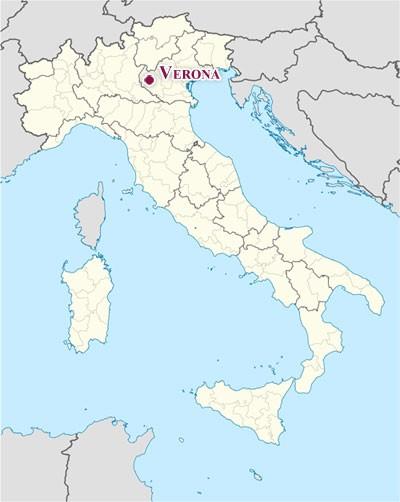
Verona square
1
Capulets, Montagues, Prince
1-2
Around town
1
Romeo, Juliet
3-4
Capulet party
1
Mercutio, Tybault, Romeo, Juliet
5-7
Church
2
Romeo, Friar Laurence, Nurse, Juliet
8-9
Around Town
2
Tybault, Mercutio, Romeo
10-12
Respond
Timeline
Agree on the facts in today’s reading and list the 3-5 most important on the timeline.
Students might mention:
Brawl in the public square between the Capulets and Montagues
Feud between the Montague and Capulet families
Warning by the Prince
Party at the Capulet’s
Balcony scene and quick romance of Romeo and Juliet
Marriage
Fight with Tybault
Slaying of Mercutio and Tybault
Map
Add to ongoing class activities like a KWL chart or map: where did the characters go?
new character information can be added to an Open Mind Portrait
an answer can be added to a question from the KWL Chart
a new location or change can be added to the map
Justice Poster:
Collaborate with students create a class T Chart. This can be a live, online document that students have shared access to (Google Document or Google Spreadsheet).
Label one column “Justice” and the other side “Injustice”.
During this unit, encourage students to follow the local and world news, using a variety of mediums (newspapers, online sources, etc.).
Have students periodically input a headline/article of a “Justice” and “Injustice” in their local community and in the world on the document. Discuss the additions the next day in class.
For all of the items in the “Justice” column, have students write one thing they can do to take action and support the individuals, groups, or organizations that are acting in a “just” way.
For all of the items in the “Injustice” column, have students write one thing they can do to help the individuals, groups, or organizations that are being treated unfairly.
In each situation, helping may involve writing a letter, getting more informed, volunteering, etc.
Have students choose one item to take action on. They should report their action and results to the class.
Explore
Activity
Explore the reading more deeply with a visual or oral language activity.
One possible activity: Poster for Tragedy Ahead
Review the idea of tragedy with the class: things will go wrong, suffering will take place, because of flaws in a heroic character or the circumstances or people around him or her. Look at the twelve frames that quickly tell the plot of the first half of the play. What could go wrong? What are the flaws in the characters? What are the circumstances that can go wrong? Go through the twelve frames looking for clues to flaws and circumstances, and place them on a poster. The poster can be a list, a set of drawings, a set of warnings, or any other ways of displaying the ideas that appear reasonable. Then give the poster a title, like “Tragedy Ahead”, or “Tragedy Waiting to Happen”. Useful materials include poster size paper, construction paper, markers, pencils or crayons.
Another possible activity:
KWL Chart: What You Know, Want to Know, and Learn about the plot of Romeo and Juliet. The story of Romeo and Juliet lives on even in our modern day culture. What do you already know about this story? What details do you want to know? At the end of the story, write what you have learned.
Variations of the KWL Chart
You can do this chart for any topic you are trying to learn about.
This can be done on worksheets, or written on a big piece of paper, like chart paper or butcher paper. This can also be written on a white board or black board; the shape of the chart is easy to copy.
When you are analyzing a story, you can copy a KWL chart on a piece of paper and quickly take the story apart. This can be a helpful strategy on a test. This can use the same strategy for a nonfiction topic, a problem or a case study.
You can do this individually, in pairs, in a small group, or as part of a large group.
Write a paragraph from any of the 3 columns, K, W or L, of the chart.
Discussion
Ask discussion questions of all 9 types (see Day 1).
Key Questions (Day 1)
What was the brawl in the public square about?
Romeo sees Juliet for the first time at a party at the Capulet’s house that he has crashed with Mercutio and others from his family; how do you think this affected Tybault and others in the Capulet family?
What are the events that lead up to the marriage?
Who was present at the marriage?
Why was Friar Laurence so cooperative with Romeo and Juliet’s marriage plans?
Do you think Friar Laurence was right? Why or why not?
How did the conflict between Tybault and Mercutio begin?
Do you think Romeo murdered Tybault? Why or why not?
Give an example of injustice from today’s reading.
Predict what will happen next.
Analyze
Analyze the key paragraph.
Key Paragraph
Sometime during the dance, Romeo sees Juliet and Juliet sees Romeo – love at first sight! They don’t know – until it’s too late – that he is the only son and she is the only daughter of the feuding families. [p. 77]
Extend
Write
Have each student write a short product based on today’s prompt to connect to the unit theme.
Some people just cannot get along. No matter what anyone does, no matter who else is there, certain people cannot seem to work together. They quickly irritate each other. Sometimes it is because the people have a past history together, or friends or relatives who do not get along, or a rivalry. Two people may be on opposite sides of an issue, or belief; they may feel so strongly about it they cannot get along with anyone on the other side.
Think of a time when you had to deal with someone you just could not get along with. Someone you had to work, or study, or cooperate with. This might be another student, or a teacher at school, someone in your family, at work, or in your neighborhood. Describe what made it difficult to get along with this person. Was it the person’s personality, or their attitude, or the way they treated you, or other people? Was it the result of something that happened in a specific incident, or in many incidents? Do you associate a particular feeling, or emotion with this person?
Write an argumentative paragraph explaining why it is difficult to get along with this person, using concrete examples. You do not have to use the person’s real name. You can also write about two people you know who don’t get along, where you are an outside observer.
Close
Close by extending today’s lesson to life and the world.
How do you resolve conflict?
Describe a time when you made amends with someone you didn’t like.
ORDERING INFORMATION FOR ROMEO AND JULIET DVDs
You will need two versions of the film. Both are available for purchase or rent. These are simple instructions to obtain both copies. The two versions are:
Romeo and Juliet 1968, directed by Franco Zeffirelli Paramount
William Shakespeare’s Romeo and Juliet 1996, directed by Baz Luhrmann 20th Century Fox Amazon.com (purchase)
Next to the search box, use the drop down menu to limit your search to DVDs. Then search for “0792165055” or “B000K7VHLY”
The result for each search should be the correct copy.
The Zeffirelli version may be purchased brand new for $9.99. Used copies run as low as $5.00. The Luhrmann version should come up as the “Music Edition DVD” and cost $14.99 new or $6.00 used.
Netflix.com (rent)
Log onto netflix.com and sign up for an account for as little as $9.99. There is no contract, so you may use the service for the month and then cancel it without hassle or obligation.
Search for the films using title and last name of the director. They should be available.
You can check with any other retailer by providing the title and name of the director.
Day 2
Outcomes for Today
-->
First Look [Days 1 and 2] Graphic Overview of the Play using Morris, Muriel J. Shakespeare Made Easy. Portland Maine: J. Weston Walch, 1990, pages 75-81, “Romeo and Juliet”
Common Core Standards Focus:
W1. Write arguments to support claims with clear reasons and relevant evidence.
a.) Introduce claim(s), acknowledge alternate or opposing claims, and organize the reasons and evidence logically.
b.) Support claim(s) with logical reasoning and relevant evidence, using accurate, credible sources and demonstrating an understanding of the topic or text.
c.) Use words, phrases, and clauses to create cohesion and clarify the relationships among claim(s), reasons, and evidence.
d.) Establish and maintain a formal style.
e.) Provide a concluding statement or section that follows from and supports the argument presented.
Prepare
Background
Gather background knowledge about a place, time, event, person, or thing..
What does it mean to be banished?
For serious crimes at the time of Romeo and Juliet, besides death or imprisonment, banishment or exile could be ordered. This required the person to immediately leave the jurisdiction, generally never to return. This could make the person a citizen of no country or kingdom
Word Wall
Here are five vocabulary words to teach and add to the Word Wall.
banish, 79
reconcile, 79
mourn, 79
wit, 79
ignorance, 79
Read
Review
Review the timeline from the beginning every day.
Read
Read the selection, usually in a Shared Reading Read React Predict Cycle of 2-3 pages.
Shakespeare Made Easy by Muriel J Morris, “Romeo & Juliet” pp. 79-80.
Setting
Day
Characters
Frames
Verona square
2
Prince, bodies, families
13
Capulet’s
2
Juliet, Romeo
14-15
Capulet’s
3
Juliet, Capulets
16-17
Capulet’s
4
Juliet
18
Countryside
5
Romeo, servant, apothecary
19-20
Capulet tomb
5
Romeo, Paris, Friar Laurence, Juliet
21-23
Verona square
5
Prince, bodies, families
24
Respond
Timeline
Agree on the facts in today’s reading and list the 3-5 most important on the timeline.
Students might mention:
the Prince banishes Romeo after Mercutio and Tybault’s death
Romeo spends the night with Juliet, and then leaves
the Capulet’s have moved up the wedding of Juliet and Paris
Juliet desperately seeks help from Friar Laurence who helps her with a potion to fake her death, and escape
Juliet is found dead and entombed
it all unravels when Romeo doesn’t get word of the plan in time and comes to the tomb
at the tomb, Romeo kills Paris [who tries to arrest him], and seeing Juliet dead kills himself. Juliet, seeing Romeo dead, kills herself
the prince calls the families together over the two bodies to end their feud
Map
Add to ongoing class activities like a KWL chart or map: where did the characters go?
new character information can be added to an Open Mind Portrait
an answer can be added to a question from the KWL Chart
a new location or change can be added to the map
Justice Poster:
Collaborate with students create a class T Chart. This can be a live, online document that students have shared access to (Google Document or Google Spreadsheet).
Label one column “Justice” and the other side “Injustice”.
During this unit, encourage students to follow the local and world news, using a variety of mediums (newspapers, online sources, etc.).
Have students periodically input a headline/article of a “Justice” and “Injustice” in their local community and in the world on the document. Discuss the additions the next day in class.
For all of the items in the “Justice” column, have students write one thing they can do to take action and support the individuals, groups, or organizations that are acting in a “just” way.
For all of the items in the “Injustice” column, have students write one thing they can do to help the individuals, groups, or organizations that are being treated unfairly.
In each situation, helping may involve writing a letter, getting more informed, volunteering, etc.
Have students choose one item to take action on. They should report their action and results to the class.
Explore
Activity
Explore the reading more deeply with a visual or oral language activity.
One possible activity: Shakespeare Made Easy Quiz
Answer the questions on page 81 of Shakespeare Made Easy by Muriel J Morris, “Romeo & Juliet”.
Answer each of the 12 questions by going back to the cartoons of the play to find the correct information.
Check your answers by consulting the text.
In the upcoming study of Romeo & Juliet, you are going to compare 3 versions of the Prologue and the 3 scenes where the Prince appears in the play. For now, you want an overview of the whole play since you will only be dealing with pieces of it.
One possible activity: Line Up Montagues, Capulets, and the Rest
On a piece of large blank paper, make three columns or three big clusters, and label them: Montagues, Capulets, the Rest. In Shakespeare Made Easy by Muriel J Morris, “Romeo & Juliet”, twelve characters from the play have been introduced. Place each of them in the column where they belong, depending on which family they are associated with [Capulet or Montague]; if they are not part of either family, put them with the Rest. Then go back and write down two key words you would use to describe each character from what you know so far. Go back into the frames in Shakespeare Made Easy for details.
Apothecary Capulet [parents] Friar Laurence Juliet Mercutio Montague [parents] Nurse Paris Prince Romeo Servant Tybault
Discussion
Ask discussion questions of all 9 types (see Day 1).
Key Questions (Day 2)
Why did the Prince banish Romeo?
Why do you think the Prince banished Romeo instead of having him executed?
Why did the Capulet’s move up Juliet’s wedding date?
List as many reasons as you can why Juliet would be distraught when she sees Friar Laurence.
What circumstances lead to, or contributes to, everything going wrong as Romeo and Juliet’s situation begins to fall apart?
Do you think Friar Laurence was helpful or not to Romeo and Juliet?
How does Romeo respond to Juliet’s fake death?
What do you think the Capulets and Montagues thought at the end of the conflict when their only children were dead?
Give an example of injustice from this reading.
Predict what will happen next.
Analyze
Analyze the key paragraph.
Extend
Write
Have each student write a short product based on today’s prompt to connect to the unit theme.
At the end of Romeo and Juliet, you can easily imagine many people thinking to themselves that this isn’t what anyone wanted to happen. Pretend you are a friend of Romeo or Juliet from the future.
In a letter, write an argumentative paragraph to convince Romeo or Juliet not to go through with their plan. Provide three examples to support your claim.
Close
Close by extending today’s lesson to life and the world.
Describe a situation where everything you planned turned out wrong.
How did you respond to the unexpected events?
Day 3
Outcomes for Today
-->
Second Look [Days 3-10] Media Study of the Play using the New Folger Library Shakespeare Romeo & Juliet, the 1968 Franco Zeffirelli Romeo and Juliet, and the 1996 Baz Luhrmann William Shakespeare’s Romeo + Juliet.
Common Core Standards Focus:
W1. Write arguments to support claims with clear reasons and relevant evidence.
a.) Introduce claim(s), acknowledge alternate or opposing claims, and organize the reasons and evidence logically.
b.) Support claim(s) with logical reasoning and relevant evidence, using accurate, credible sources and demonstrating an understanding of the topic or text.
c.) Use words, phrases, and clauses to create cohesion and clarify the relationships among claim(s), reasons, and evidence.
d.) Establish and maintain a formal style.
e.) Provide a concluding statement or section that follows from and supports the argument presented.
Prepare
Background
Gather background knowledge about a place, time, event, person, or thing..
What is a sonnet?
A sonnet is a poem of 14 lines in a particular pattern. The prologue to Romeo and Juliet is an English sonnet in iambic pentameter. This means it is 14 lines of 10 syllables each, and every other syllable is naturally accented, or stressed; the end of the line follows the rhyming pattern abab cdcd efef gg.
Word Wall
Here are five vocabulary words to teach and add to the Word Wall.
dignity, 7
mutiny, 7
civil, 7
foes, 7
fatal, 7
Read
Review
Review the timeline from the beginning every day.
Read
Read the selection, usually in a Shared Reading Read React Predict Cycle of 2-3 pages.
Romeo & Juliet by William Shakespeare, New Folger Library, pp. 6-7.
Comparing the Prologue in 3 Readings
Materials:
The Tragedy of Romeo and Juliet by William Shakespeare
New Folger Library edition, Washington Square Press;
page 7, lines 1-14
Franco Zeffirelli’s Romeo and Juliet, 1968 [138] Paramount;
running times 0:17-1:02
Baz Luhrmann’s William Shakespeare’s Romeo & Juliet, 1996 [120]
20th Century Fox running times 0:01-2:11
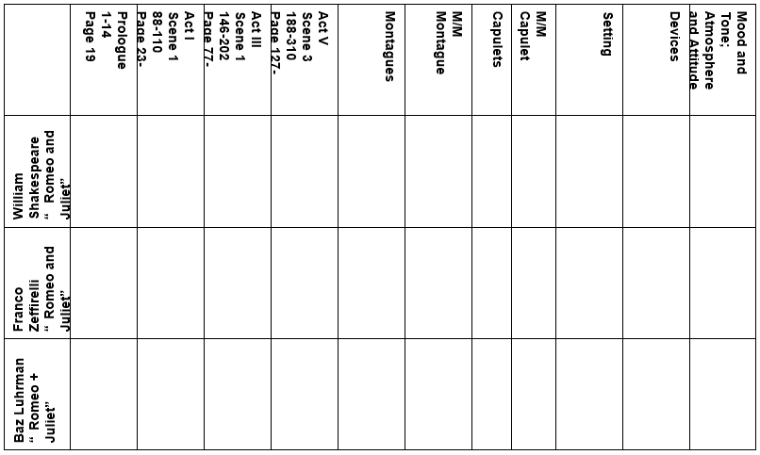
Romeo & Juliet Media Study Chart; Comparing and Contrasting
3 Readings of the Play
William Shakespeare
The Tragedy of Romeo & Juliet
New Folger
Library Shakespeare
Romeo & Juliet
Washington Square Press
Franco Zeffirelli
Romeo and Juliet
1968 [138]
Paramount
Baz Luhrmann
William Shakespeare’s Romeo & Juliet
1996 [120]
20th Century Fox
lines
pages
Prologue
first seqeunce
0:01-2:11
overview
1-14
7
0:17-1:02
0:09-1:38
Step One: Read the Prologue in the text.
Read slowly and carefully page 7 in the text. Note that in this edition that unfamiliar words are listed and explained on the left page and the Shakespeare text appears on the right page. A synopsis will appear on the left page at the beginning of each scene. Note the number of lines and the form [a sonnet, 14 lines].
What do you know about this play just from the 14 lines? Who are the main characters? What is their relationship? What will happen to them? How long will the play last? What are the names of the families in the play? How do they get along?
How do you picture the setting of this play from reading the Prologue? Enter this in the setting column on the chart. Make notes about the image of the play that you get from reading the Prologue in the Prologue column on the chart.
Setting
Prologue
Street Brawl
Montague
Capulet
Prince
Prince
in I, 1
Prince
in III, 1
Prince
in V,3
New Folger Library text
William Shakespeare
Romeo & Juliet
Franco Zeffirelli’s
Romeo & Juliet
1968
Paramount
Baz Luhrmann’s William Shakespeare’sRomeo & Juliet
1996
20th Century Fox
Step Two: Watch the Prologue in the Zeffirelli film.
Watch the opening of the Zeffirelli film [0:07-1:02] and note how Zeffirelli presents the Prologue. Pay attention to visual images, music, voices, pace and locale. How is this like and not like your take after reading the Prologue?
How does Zeffirelli present the setting of this play [where, when, time, weather]? Enter this in the setting column on the chart. Make notes about Zeffirelli’s presentation of the Prologue in the Prologue column on the chart.
Step Three: Watch the Prologue in the Luhrmann film.
Watch the opening of the Luhrmann film [0:01-2:11] and note how Luhrmann presents the Prologue. Pay attention to visual images, music, voices, pace and locale. How is this like and not like your take after reading the Prologue? Note that the Prologue will be repeated twice.
How does Luhrmann present the setting of this play [where, when, time, weather]? Enter this in the Setting column on the chart. Make notes about Luhrmann’s presentation of the Prologue in the Prologue column on the chart.
Variations for the Prologue, or any day in the lesson plans
You may wish to watch some of the segments more than once.
You may wish to make a large display of the chart on butcher paper on the wall or on a blackboard.
You could create another table detailing the differences between the versions.
You may wish to start recording information about the Montagues and Capulets in their respective columns of the chart now.
Respond
Timeline
Agree on the facts in today’s reading and list the 3-5 most important on the timeline.
Students might mention:
two households
Verona
grudge
ancient foes
two lovers
star crossed
take their lives
bury parents strife
two hours long
Map
Add to ongoing class activities like a KWL chart or map: where did the characters go?
new character information can be added to an Open Mind Portrait
an answer can be added to a question from the KWL Chart
a new location or change can be added to the map
Justice Poster:
Collaborate with students create a class T Chart. This can be a live, online document that students have shared access to (Google Document or Google Spreadsheet).
Label one column “Justice” and the other side “Injustice”.
During this unit, encourage students to follow the local and world news, using a variety of mediums (newspapers, online sources, etc.).
Have students periodically input a headline/article of a “Justice” and “Injustice” in their local community and in the world on the document. Discuss the additions the next day in class.
For all of the items in the “Justice” column, have students write one thing they can do to take action and support the individuals, groups, or organizations that are acting in a “just” way.
For all of the items in the “Injustice” column, have students write one thing they can do to help the individuals, groups, or organizations that are being treated unfairly.
In each situation, helping may involve writing a letter, getting more informed, volunteering, etc.
Have students choose one item to take action on. They should report their action and results to the class.
Explore
Activity
Explore the reading more deeply with a visual or oral language activity.
One possible activity: turn the prologue into an ad for the play or movie
Another possible activity:
1g6Portrait: Create an Open Mind Portrait of Romeo or Juliet
You will add thought bubbles to his OMP every couple days.
You could use different colors for the beginning, middle and end of the story. Remember in the beginning you are introduced to the setting, the characters and the problems they have. In the middle you learn about the roadblocks to the characters solving their problems, and conflicts occur. In the end of the story those conflicts reach a peak and then resolve with a resolution of the character’s problems.
Variations of this Open Mind Portrait
You can use this process for any character in the story
You can use bubbles for what the character says, says to himself or herself, or does. You could make each of these different colors if you wish.
You could add bubbles for what the character learns, or ways the character changes, and use different colors for each.
You could use different colors for the beginning, middle and end of the story. Remember in the beginning you are introduced to the setting, the characters and the problems they have. In the middle you learn about the roadblocks to the characters solving their problems, and conflicts occur. In the end of the story those conflicts reach a peak and then resolve with a resolution of the character’s problems.
You could use different colors for the phases you see in a story or the development of a particular character.
Instead of using bubbles you could write the bubble contents on the back of the portrait. You could use any of the variations above with color or print, or create columns or boxes for different categories or phases.
You could literally open the head like a hinge and list the contents [as though they were escaping from the space] using any of these variations.
You could make an Open Mind Portrait of yourself using any of the above variations.
Variations for Writing
You could use the OMP to help write a character sketch, or to help decide what a character might do in a story.
Romeo & Juliet Media Study Chart; Comparing and Contrasting 3 Readings of the Play
Setting
Prologue
Street Brawl
Montague
Capulet
Prince
Prince
in I, 1
Prince
in III, 1
Prince
in V,3
New Folger Library text
William Shakespeare
Romeo & Juliet
Franco Zeffirelli’s
Romeo & Juliet
1968
Paramount
Baz Luhrmann’s William Shakespeare’sRomeo & Juliet
1996
20th Century Fox
Comparisons of the Prince, Prologue and Epilog in “Romeo and Juliet”
Discussion
Ask discussion questions of all 9 types (see Day 1).
Franco Zeffirelli’s Romeo and Juliet Media Questions Prologue (Lines 1-14) (Day 3)
What do you suppose the darkness and fog represent?
Does this introduction lead you to any conclusions about the film?
What do you notice about the color in the picture as the prologue states “From ancient grudge break to new mutiny/Where civil blood makes civil hands unclean”? Does this change in color mean anything to you?
How many lines of the Prologue are omitted?
Why do you think the producer chose to omit those lines?
Overall, do you like the introduction? (The narrator’s tone of voice, pace, the colors, the scenery?) Would you change anything and if so, what would it be?
Baz Luhrmann’s Romeo and Juliet Media Questions Prologue (Lines 1-14) (Day 3)
During what time period does this version of Romeo and Juliet take place? How can you tell?
The Prologue is stated twice. Which do you get more emotion out of? Why?
How is the producer introducing the film? Is it calm or is there already chaos?
What kind of mood does the music set? What kind of atmosphere does placing the names next to the characters give?
Notice that the two main characters (Romeo and Juliet) are not listed. Why do you suppose the producer left them out?
Analyze
Analyze the key paragraph.
Key Paragraph
From ancient grudge break to new mutiny, Where civil blood makes civil hands unclean. From forth the fatal loins of these two foes A pair of star-cross'd lovers take their life; Whose misadventur'd piteous overthrows Doth with their death bury their parents' strife. The fearful passage of their death-mark'd love, And the continuance of their parents' rage, Which but their children's end naught could remove
Extend
Write
Have each student write a short product based on today’s prompt to connect to the unit theme.
The play begins with a discouraging prologue that suggests that Romeo and Juliet are star-crossed lovers. The results of the ancient grudge that sets their families against each other must somehow end in their harm. It sounds like this is set up and cannot be changed.
Write an argumentative paragraph supporting or disproving that the young romance will break the family feud.
Close
Close by extending today’s lesson to life and the world.
Describe a time when you felt, or found yourself in a similar situation as Romeo and Juliet.
Have you ever felt that something was about to happen to you and you could do nothing to stop it, even though you did not like it?
Romeo & Juliet Media Study
A one week study of Romeo & Juliet through the lens of the Prince using the Prologue, Act I, Scene 3, Act III, Scene I and Act 5, Scene 3 for the Change Requires Effort unit
Scene Selections and Locations
William Shakespeare
The Tragedy of Romeo & Juliet
New Folger Library Shakespeare Romeo & Juliet Washington Square Press
Franco Zeffirelli
Romeo and Juliet
1968 [138]
Paramount
Baz Luhrmann
William Shakespeare’s Romeo & Juliet
1996 [120]
20th Century Fox
lines
pages
Prologue
first sequence
0:01-2:11
overview
1-14
7
0:17-1:02
0:09-1:38
Act I, Scene 1
Capulet’s men
1-33
9-11
1:20-1:31
2:16-3:40
quarrel
34-67
11-13
1:38-3:18
4:03-5:07
enter Tybault brawl
68-83
13-15
3:30-5:03
5:32-8:28
enter Prince
83-105
15
5:53-7:29
8:38-9:12
Act III, Scene 1
Tybault - Mercutio
1-56
115-119
1:10:35-1:13:35
57:13-59:31
enter Romeo
57-92
119-121
1:13:36-1:18:28
59:32-1:03:11
Mercutio’s death
93-108
121-123
1:18:29-1:20:04
1:03:12-1:05:19
Tybault’s death
109-143
123-125
1:20:06-1:26:47
1:07:24-1:10:12
appeals to Prince
144-190
125-127
1:29:00-1:29:35
1:10:20-1:11:14
Prince rules
191-207
129
1:29:37-1:30:39
1:11:15-1:12:00
Act V, Scene 3
Prince inquires
195-230
233-237
Friar Lawrence
231-295
237-241
Prince concludes
296-321
241-243
2:13:53-2:15:41
1:51:20-1:52:26
last sequence
2:13-:15-2:18:00
Times are calculated from the beginning of the movie itself [after trailers]
Day 4
Outcomes for Today
-->
Second Look [Days 3-10] Media Study of the Play using the New Folger Library Shakespeare Romeo & Juliet, the 1968 Franco Zeffirelli Romeo and Juliet, and the 1996 Baz Luhrmann William Shakespeare’s Romeo + Juliet.
Common Core Standards Focus:
W1. Write arguments to support claims with clear reasons and relevant evidence.
a.) Introduce claim(s), acknowledge alternate or opposing claims, and organize the reasons and evidence logically.
b.) Support claim(s) with logical reasoning and relevant evidence, using accurate, credible sources and demonstrating an understanding of the topic or text.
c.) Use words, phrases, and clauses to create cohesion and clarify the relationships among claim(s), reasons, and evidence.
d.) Establish and maintain a formal style.
e.) Provide a concluding statement or section that follows from and supports the argument presented.
Prepare
Background
Gather background knowledge about a place, time, event, person, or thing..
What is a tragedy?
Tragedy is drama where the flaws or circumstances of heroic individuals lead to their suffering in ways that cause us to identify with them and both fear their situations and feel for them. In short, a situation that typically starts out happily all falls apart.
Word Wall
Here are five vocabulary words to teach and add to the Word Wall.
draw, 10
collar, 10
quarrel, 10
strike, 13
heartless, 13
Read
Review
Review the timeline from the beginning every day.
Read
Read the selection, usually in a Shared Reading Read React Predict Cycle of 2-3 pages.
Romeo & Juliet by William Shakespeare, New Folger Library, pp. 9-15.
Comparing Act I, Scene 1 in 3 Readings: First Two
Materials:
The Tragedy of Romeo and Juliet by William Shakespeare
New Folger Library edition, Washington Square Press;
pages 9-15, lines 1-105
Franco Zeffirelli’s Romeo and Juliet, 1968 [138] Paramount;
running times 1:20-7:29
Baz Luhrmann’s William Shakespeare’s Romeo & Juliet, 1996 [120]
20th Century Fox running times 2:16-9:12 for tomorrow
Romeo & Juliet Media Study Chart; Comparing and Contrasting
3 Readings of the Play
William ShakespeareThe Tragedy of Romeo & Juliet
New Folger Library Shakespeare Romeo & Juliet Washington Square Press
Franco ZeffirelliRomeo and Juliet1968 [138]Paramount
Baz LuhrmannWilliam Shakespeare’s Romeo & Juliet1996 [120]20th Century Fox
lines
pages
Act I, Scene 1
Capulet’s men
1-33
9-11
1:20-1:31
2:16-3:40
quarrel
34-67
11-13
1:38-3:18
4:03-5:07
enter Tybault brawl
68-83
13-15
3:30-5:03
5:32-8:28
enter Prince
83-105
15
5:53-7:29
8:38-9:12
Step One: Read Act I, Scene 1 in the text.
Read slowly and carefully pages 9-15 in the text. Note that in this edition that unfamiliar words are listed and explained on the left page and the Shakespeare text appears on the right page. A synopsis will appear on the left page at the beginning of the scene. You may wish to break this into 4 parts: the entrance of Capulet’s men in lines 1-33, the quarrel in lines 34-67, the entrance of Tybault and the street brawl in lines 68-83, and the entrance of the Prince in lines 83-105.
What happens in this scene? What impressions do you have of the Capulets? The Montagues? Tybault? The Prince?
How do you picture the street brawl in lines 68-83 of this play from reading this scene? Enter this in the Street Brawl column on the chart. Make notes about the image of the Prince that you get from reading this scene in the Prince Act I, Scene 1 column on the chart.
Make notes about the image of the Prince that you get from reading this scene in the Prince Act I, Scene 1 column on the chart.
Setting
Prologue
Street Brawl
Montague
Capulet
Prince
Prince
in I, 1
Prince
in III, 1
Prince
in V,3
New Folger Library text
William Shakespeare
Romeo & Juliet
Franco Zeffirelli’s
Romeo & Juliet
1968
Paramount
Baz Luhrmann’s William Shakespeare’sRomeo & Juliet
1996
20th Century Fox
Step Two: Watch Act I, Scene 1 in the Zeffirelli film.
Watch this scene of the Zeffirelli film [1:20-7:29] and note how Zeffirelli presents this scene. Pay attention to visual images, music, voices, pace and locale. How is this like and not like your take after reading the Act I, Scene 1?
You may wish to break this into 4 parts: the entrance of Capulet’s men in 1:20-1:31, the quarrel in 1:38-3:18, the entrance of Tybault and the street brawl in 3:30-5:03, and the entrance of the Prince in lines 5:53-7:29.
Note how the Prince is presented in this scene. How does he arrive? What visual and musical effects are used? What kind of person is he? What mood is he in?
How does Zeffirelli present the street brawl? Enter this in the Street Brawl column on the chart. Make notes about Zeffirelli’s presentation of the Prince in Act I, Scene 1 in the Prince Act I, Scene 1 column on the chart.
Variations for Act I, Scene i
You may wish to watch some of the segments more than once.
You may wish to make a large display of the chart on butcher paper on the wall or on a blackboard.
You could create another table detailing the differences between the versions.
You may wish to start recording information about the Montagues and Capulets in their respective columns of the chart now.
Respond
Timeline
Agree on the facts in today’s reading and list the 3-5 most important on the timeline.
Students might mention
bickering between the Montagues and Capulets leads to a street fight
Benvolio attempts to calm the situation
the arrival of Tybault escalates the situation
the Prince shows up and threatens serious penalties for anyone causing problems [death]
Map
Add to ongoing class activities like a KWL chart or map: where did the characters go?
new character information can be added to an Open Mind Portrait
an answer can be added to a question from the KWL Chart
a new location or change can be added to the map
Justice Poster:
Collaborate with students create a class T Chart. This can be a live, online document that students have shared access to (Google Document or Google Spreadsheet).
Label one column “Justice” and the other side “Injustice”.
During this unit, encourage students to follow the local and world news, using a variety of mediums (newspapers, online sources, etc.).
Have students periodically input a headline/article of a “Justice” and “Injustice” in their local community and in the world on the document. Discuss the additions the next day in class.
For all of the items in the “Justice” column, have students write one thing they can do to take action and support the individuals, groups, or organizations that are acting in a “just” way.
For all of the items in the “Injustice” column, have students write one thing they can do to help the individuals, groups, or organizations that are being treated unfairly.
In each situation, helping may involve writing a letter, getting more informed, volunteering, etc.
Have students choose one item to take action on. They should report their action and results to the class.
Explore
Activity
Explore the reading more deeply with a visual or oral language activity.
One possible activity: sketch the town square during the street riot.
Another possible activity:
Fill out the Setting Chart
Describe the place where the story takes place in the where box on the chart. This includes the location, geography, scenery and other details about the place.
Describe the time period in which the story is taking place in the when box on the chart. Is this a contemporary story, or does it take place in the past or the future? Give details about this past or future time if this is the case.
Describe the time of day or day of the week the story begins in the time box on the chart. This box is important if the story of the part you are analyzing takes place in a short period of time.
Describe the weather in the weather box of the chart. Is it sunny, stormy, snowing, all of the above, none of the above? Sometimes the weather matters, sometimes not. Sometimes it is critical.
Discussion
Ask discussion questions of all 9 types (see Day 1).
Franco Zeffirelli’s Romeo and Juliet Media Questions
Act I Scene I (Lines 1-33) (Day 4)
From the beginning, how does he screenplay differ from the text?
From their clothing and their introduction, what perception do you get about Gregory and Sampson? (What is their personality like? Are they serious people?)
There is a third man who accompanies Gregory and Sampson, what is he eating? When Gregory states “here comes of the house of Montagues” what foods are shown? Do you think there is significance in the foods that are chosen for this scene?
(Lines 34-67) (Day 4)
In the text it says that Sampson bites his thumb. What does he do in the film? Why would the producer have him do that?
In the film, how does Sampson instigate the fight? How does this compare to what you read?
What role does Benvolio play in the fight? Does he edge it on or try to neutralize the situation? Is this what you pictured from reading the text?
What cries do you hear amidst the yelling from the fight?
The producer adds a line to Benvolio. What is it and why do you suppose he decided to do this?
(Lines 68-83) (Day 4)
What do you notice about the color of the clothing that the two different families have?
Where does Tybalt injure Benvolio? And what line is added? Why would this line have been added?
When the bell is rung, what happens? Is what is said in the film correspondent to that of the text? More specifically, does it seem as if it is two families fighting each other or is there a citizen party fighting both?
(Lines 83-105) (Day 4)
How does the Prince enter?
How is the Prince distinguished from the Montagues and the Capulets?
Do you think the color of his horse has any significance?
What do you make of Capulet’s and Montague’s reaction when they are both charged with disturbing the peace three times?
Notice that Capulet is not with his wife. Do you think the producer was possibly foreshadowing what would happen in the future by leaving her out?
Analyze
Analyze the key paragraph.
Key Paragraph
Nay, as they dare. I will bite my thumb at them; which is disgrace to them if they bear it. [Enter Abraham and Balthasar.] Do you bite your thumb at us, sir? I do bite my thumb, sir. Do you bite your thumb at us, sir? Is the law of our side if I say ay? No, sir, I do not bite my thumb at you, sir; but I bite my thumb, sir. Do you quarrel, sir? Quarrel, sir! no, sir.
Extend
Write
Have each student write a short product based on today’s prompt to connect to the unit theme.
Write a paragraph describing how the Zeffirelli film presented the quarrel and street fight in the opening scene. How are the two families, and the feud between them, portrayed in the opening of the film? How is the Prince introduced? What kind of leader does the Prince appear to be in the film? How do you know? What visual and musical and other clues does the film use? How does the film make those leadership qualities in the Prince clear?
Describe the quarrel that led to the street fight in the first scene. What started the quarrel? Who made the decision to start the quarrel? What do you think their motivation was? Which characters did the most and least to stop the quarrel? Why do you think the quarrel got so out of control?
Pretend you are a judge. After the quarrel you need to decide who is responsible for the damaged caused. Decide who is responsible for the quarrel. Write an argumentative paragraph that proves that they are responsible. Support your claim with three examples from the reading.
Close
Close by extending today’s lesson to life and the world.
Give an example of how quarrels like this have escalated from your own life.
How would you deescalate the situation?
Day 5
Outcomes for Today
-->
Lesson Plan for Day 5 Play Romeo and Juliet by William Shakespeare
Second Look [Days 3-10] Media Study of the Play using the New Folger Library Shakespeare Romeo & Juliet, the 1968 Franco Zeffirelli Romeo and Juliet, and the 1996 Baz Luhrmann William Shakespeare’s Romeo + Juliet.
Common Core Standards Focus:
W1. Write arguments to support claims with clear reasons and relevant evidence.
a.) Introduce claim(s), acknowledge alternate or opposing claims, and organize the reasons and evidence logically.
b.) Support claim(s) with logical reasoning and relevant evidence, using accurate, credible sources and demonstrating an understanding of the topic or text.
c.) Use words, phrases, and clauses to create cohesion and clarify the relationships among claim(s), reasons, and evidence.
d.) Establish and maintain a formal style.
e.) Provide a concluding statement or section that follows from and supports the argument presented.
Prepare
Background
Gather background knowledge about a place, time, event, person, or thing..
How were marriages arranged at the time of Romeo and Juliet?
Marriages were performed and recorded by the priest [like Friar Laurence] at this time, but most often arranged between families. Juliet’s family had arranged for her to marry a member of the Prince’s family [Paris], which would advance the family’s political interests. Juliet had to consent to any marriage she contracted, even if her family arranged it, before the priest could marry her. But the rules at the time allowed only one marriage, or the person committed a crime. Juliet is married to Romeo and cannot marry anyone else unless he dies. This conflict is important to understanding the story.
Word Wall
Here are five vocabulary words to teach and add to the Word Wall.
crutch, 15
rage, 15
quench, 15
forfeit, 15
ancient, 15
Read
Review
Review the timeline from the beginning every day.
Read
Read the selection, usually in a Shared Reading Read React Predict Cycle of 2-3 pages.
Romeo & Juliet by William Shakespeare, New Folger Library, pp. 9-15.
Comparing Act I, Scene 1 in 3 Readings: Second Two
Materials:
The Tragedy of Romeo and Juliet by William Shakespeare
New Folger Library edition, Washington Square Press;
pages 9-15, lines 1-105
Franco Zeffirelli’s Romeo and Juliet, 1968 [138] Paramount;
running times 1:20-7:29 yesterday
Baz Luhrmann’s William Shakespeare’s Romeo & Juliet, 1996 [120]
20th Century Fox running times 2:16-9:12
Romeo & Juliet Media Study Chart; Comparing and Contrasting
3 Readings of the Play
William ShakespeareThe Tragedy of Romeo & Juliet
New Folger Library Shakespeare Romeo & Juliet Washington Square Press
Franco ZeffirelliRomeo and Juliet1968 [138]Paramount
Baz LuhrmannWilliam Shakespeare’s Romeo & Juliet1996 [120]20th Century Fox
lines
pages
Act I, Scene 1
Capulet’s men
1-33
9-11
1:20-1:31
2:16-3:40
quarrel
34-67
11-13
1:38-3:18
4:03-5:07
enter Tybault brawl
68-83
13-15
3:30-5:03
5:32-8:28
enter Prince
83-105
15
5:53-7:29
8:38-9:12
Step One: Read Act I, Scene 1 in the text.
1. Read slowly and carefully pages 9-15 in the text. Review the text reading from yesterday.
Setting
Prologue
Street Brawl
Montague
Capulet
Prince
Prince
in I, 1
Prince
in III, 1
Prince
in V, 3
New Folger Library text
William Shakespeare
Romeo & Juliet
Franco Zeffirelli’s
Romeo & Juliet
1968
Paramount
Baz Luhrmann’s William Shakespeare’sRomeo & Juliet
1996
20th Century Fox
Step Two: Watch Act I, Scene 1 in the Luhrmann film.
Watch this scene in the Luhrmann film [2:16-9:12] and note how Luhrmann presents the scene. You may wish to watch the movie from the beginning [0:01-9:12] to get the effect. Take your pulse before and after watching. What happens to your pulse, emotions and attention during this scene? Pay attention to visual images, music, voices, pace and locale. How is this like and not like your take after reading the Act I, Scene 1? You may wish to break this into 4 parts: the entrance of the men in 2:16-3:40, the quarrel in 4:05-5:07, the entrance of Tybault and the street brawl in 5:32-8:28, and the entrance of the Prince in lines 8:38-9:12. Note that Luhrmann reverses some of the characters from the play.
Note how the Prince is presented in this scene. How does he arrive? What visual and musical effects are used? What kind of person is he? What mood is he in?
How does Luhrmann present the street brawl? Why is it longer and more elaborate? What do you now know about the Capulets and Montagues? Enter this in the Street Brawl column on the chart. Make notes about Luhrmann’s presentation of the Prince in Act I, Scene 1 in the Prince Act I, Scene 1 column on the chart.
Respond
Timeline
Agree on the facts in today’s reading and list the 3-5 most important on the timeline.
Students might mention:
bickering between the Montagues and Capulets leads to a street fight
Benvolio attempts to calm the situation
the arrival of Tybault escalates the situation
the Prince shows up and threatens serious penalties for anyone causing problems [death].
Map
Add to ongoing class activities like a KWL chart or map: where did the characters go?
new character information can be added to an Open Mind Portrait
an answer can be added to a question from the KWL Chart
a new location or change can be added to the map
Justice Poster:
Collaborate with students create a class T Chart. This can be a live, online document that students have shared access to (Google Document or Google Spreadsheet).
Label one column “Justice” and the other side “Injustice”.
During this unit, encourage students to follow the local and world news, using a variety of mediums (newspapers, online sources, etc.).
Have students periodically input a headline/article of a “Justice” and “Injustice” in their local community and in the world on the document. Discuss the additions the next day in class.
For all of the items in the “Justice” column, have students write one thing they can do to take action and support the individuals, groups, or organizations that are acting in a “just” way.
For all of the items in the “Injustice” column, have students write one thing they can do to help the individuals, groups, or organizations that are being treated unfairly.
In each situation, helping may involve writing a letter, getting more informed, volunteering, etc.
Have students choose one item to take action on. They should report their action and results to the class.
Explore
Activity
Explore the reading more deeply with a visual or oral language activity.
One possible activity: Postcard telling someone outside Verona about the Prince’s pronouncement.
Another possible activity:
Fill out the Character Profile Chart on Romeo or Juliet.
Write the name of the character in the box in the middle of the chart.
Think of 4 characteristics, or traits, that the character has. Describe each with a key word or phrase and write it down one of the 4 boxes that surround the name.
For each trait, find 2 concrete examples of it in the story. Write each in one of the 2 boxes attached to each trait box. Continue this until you have 2 examples for each of the 4 traits.
Discussion
Ask discussion questions of all 9 types (see Day 1).
Baz Luhrmann’s Romeo and Juliet Media Questions
Act I Scene I
(Lines 1-33) (Day 5)
Notice how the lines are switched between Montague and Capulet. Does this make a difference? Why would the producer do this? Do you suppose he is trying to make a point by doing this? If so, what is it?
How do the Montagues react to seeing the Capulets?
Is there a sense of a good family and a bad one? If so, what gives you the impression that there might be? If not, why not?
(Lines 34-67) (Day 5)
When the Montagues bite their thumb at the Capulets, what happens? What are people’s reactions?
What feeling is in the air as they converse over the issue of biting one’s thumb?
Notice how Benvolio draws his gun and it is labeled “Sword 9mm Series S”. Do you think the producer felt an obligation to keep the screenplay original and therefore, labeled the gun? Or can you think of any other reasons why he might have done this?
(Lines 68-83) (Day 5)
What is the significance of cutting to the sign that reads “Add more fuel to your fire”? (Recall what you saw in the Prologue)
What are your thoughts about Tybalt telling Benvolio to “look upon thy death” as he wears a shirt of Jesus? Is there any significance that the shirt has a zipper going down the middle of it?
What do we learn about Tybalt when he points his gun at the young boy?
What do you make of Tybalt dropping his cigarette on the fuel and igniting the fire? Is this foreshadowing?
What does the newspaper headline read? What do you make of that headline being surrounded by fire?
(Lines 83-105) (Day 5)
How does the Prince make his entrance in this film? In the film, what position does he hold? Does this position hold as much prestige or power as that of a real Prince? Compare and contrast the two.
How does the Prince neutralize the situation?
Notice that neither Lady Capulet nor Lady Montague are in this scene. Do you think the producer is trying to make a statement about men and women in society today? What might that statement be?
Analyze
Analyze the key paragraph.
Key Paragraph
[Enter Benvolio.] Benvolio. Part, fools! put up your swords; you know not what you do. [Beats down their swords.] [Enter Tybalt.] Tybalt. What, art thou drawn among these heartless hinds? Turn thee Benvolio, look upon thy death. Benvolio. I do but keep the peace: put up thy sword, Or manage it to part these men with me. Tybalt. What, drawn, and talk of peace! I hate the word As I hate hell, all Montagues, and thee: Have at thee, coward!
Extend
Write
Have each student write a short product based on today’s prompt to connect to the unit theme.
Having watched Act I Scene 1 in both film versions, as well in your reading of the text, how do they differ in the their presentation of the scene?
Write an argumentative paragraph detailing what you consider to be the most significant differences and similarities in the two film versions of this scene. Support your position with examples.
Or, Look at the roles of Benvolio and Tybalt in this scene. How do you feel they each contributed to the quarrel? Are you more like Benvolio or more like Tybault when you are in a conflict? Write an argumentative paragraph that proves that you are more like Tybault or Benvolio. Support your claim with three examples.
Close
Close by extending today’s lesson to life and the world.
Would you recommend the movie or the book? Why?
Name a book you like more than the movie.
Name a movie you like more than the book.
Day 6
Outcomes for Today
-->
Lesson Plan for Day 6 Play Romeo and Juliet by William Shakespeare
Second Look [Days 3-10] Media Study of the Play using the New Folger Library Shakespeare Romeo & Juliet, the 1968 Franco Zeffirelli Romeo and Juliet, and the 1996 Baz Luhrmann William Shakespeare’s Romeo + Juliet.
Common Core Standards Focus:
W1. Write arguments to support claims with clear reasons and relevant evidence.
a.) Introduce claim(s), acknowledge alternate or opposing claims, and organize the reasons and evidence logically.
b.) Support claim(s) with logical reasoning and relevant evidence, using accurate, credible sources and demonstrating an understanding of the topic or text.
c.) Use words, phrases, and clauses to create cohesion and clarify the relationships among claim(s), reasons, and evidence.
d.) Establish and maintain a formal style.
e.) Provide a concluding statement or section that follows from and supports the argument presented.
Prepare
Background
Gather background knowledge about a place, time, event, person, or thing..
What is a prologue to a movie or a play?
A prologue is a preliminary discourse; a preface or introductory part of a discourse, poem, or novel; an introductory speech, often in verse, calling attention to the theme of a play; the actor or actress who delivers this; an introductory scene, preceding the first act of a play, opera, etc.
Can you describe examples of prologues to stories, movies or plays that you thought were effective? What made them effective?
Word Wall
Here are five vocabulary words to teach and add to the Word Wall.
confines, 115
apt, 117
villain, 119
devise, 119
submission, 119
Read
Review
Review the timeline from the beginning every day.
Read
Read the selection, usually in a Shared Reading Read React Predict Cycle of 2-3 pages.
Romeo & Juliet by William Shakespeare, New Folger Library, pp. 115-121.
Comparing Act III, Scene 1 in 3 Readings: First
Materials:
The Tragedy of Romeo and Juliet by William Shakespeare
New Folger Library edition, Washington Square Press;
pages 115-129, lines 1-207
Franco Zeffirelli’s Romeo and Juliet, 1968 [138] Paramount;
running times 1:10:35-1:30:39
Baz Luhrmann’s William Shakespeare’s Romeo & Juliet, 1996 [120]
20th Century Fox running times 57:13-1:12:00
Romeo & Juliet Media Study Chart; Comparing and Contrasting
3 Readings of the Play
William Shakespeare
The Tragedy of Romeo & Juliet
New Folger Library Shakespeare Romeo & Juliet Washington Square Press
Franco ZeffirelliRomeo and Juliet1968 [138]Paramount
Baz LuhrmannWilliam Shakespeare’s Romeo & Juliet1996 [120]20th Century Fox
lines
pages
Act III, Scene 1
Tybault - Mercutio
1-56
115-119
1:10:35-1:13:35
57:13-59:31
enter Romeo
57-92
119-121
1:13:36-1:18:28
59:32-1:03:11
Step One: Read Act III, Scene 1 in the text.
Read slowly and carefully pages 115-121 in the text. Note that in this edition that unfamiliar words are listed and explained on the left page and the Shakespeare text appears on the right page. A synopsis will appear on the left page at the beginning of the scene. You may wish to break this into 2 parts: the argument between Tybault and Mercutio in lines 1-56, and the entrance of Romeo in lines 57-92.
What happens in this scene? What impressions do you have of the Capulets? The Montagues? Tybault? Mercutio? Romeo?
How do you picture the arguments in lines 1-92 of this play from reading this scene?
Now that you’ve looked at the Montagues and Capulets in several scenes, enter your take on them in reading the text in Montague and Capulet columns of the chart.
Setting
Prologue
Street Brawl
Montague
Capulet
Prince
Prince
in I, 1
Prince
in III, 1
Prince
in V,3
New Folger Library text
William Shakespeare
Romeo & Juliet
Franco Zeffirelli’s
Romeo & Juliet
1968
Paramount
Baz Luhrmann’s William Shakespeare’sRomeo & Juliet
1996
20th Century Fox
Step Two: Watch Act III, Scene 1 in the Zeffirelli film.
Watch this scene of the Zeffirelli film [1:10:35-1:30:39] and note how Zeffirelli presents this scene. Pay attention to visual images, music, voices, pace and locale. How is this like and not like your take after reading Act III, Scene 1? You may wish to break this into 2 parts: the argument between Tybault and Mercutio in 1:10:35-1:13:35, and the entrance of Romeo in 1:13:36-1:18:28,
What happens in this scene? What impressions do you have of the Capulets? The Montagues? Tybault? Mercutio? Romeo?
How do you picture the arguments of this play from watching this scene?
Now that you’ve looked at the Montagues and Capulets in several scenes, enter your take on them in watching this movie in the Montague and Capulet columns of the chart.
Step Three: Watch Act III, Scene 1 in the Luhrmann film.
Watch this scene of the Luhrmann film [57:13-1:12:00] and note how Luhrmann presents this scene. Pay attention to visual images, music, voices, pace and locale. How is this like and not like your take after reading Act III, Scene 1? You may wish to break this into 2 parts: the argument between Tybault and Mercutio in 57:13-59:31, and the entrance of Romeo in 59:32-1:03:11.
What happens in this scene? What impressions do you have of the Capulets? The Montagues? Tybault? Mercutio? Romeo?
How do you picture the arguments of this play from watching this scene?
Now that you’ve looked at the Montagues and Capulets in several scenes, enter your take on them in watching this movie in the Montague and Capulet columns of the chart. You may wish to watch the Prologue [0:01-1:38] of this film again for more information about Luhrmann’s take on the Montagues and Capulets.
Respond
Timeline
Agree on the facts in today’s reading and list the 3-5 most important on the timeline.
Students might mention:
Benvolio and Mercutio are walking around Verona, while Benvolio is reminding Mercutio of his tendency to get in trouble
Tybault comes along and Mercutio begins to challenge him.
Benvolio tries to clam things down
Tybault does not respond to Mercutio as he is looking for Romeo
when Romeo shows up Tybault challenges him, but Romeo does not respond.
Romeo tries to avoid a fight with a member of Juliet’s family
Mercutio thinks Romeo is giving in to Tybault too easily
Map
Add to ongoing class activities like a KWL chart or map: where did the characters go?
new character information can be added to an Open Mind Portrait
an answer can be added to a question from the KWL Chart
a new location or change can be added to the map
Justice Poster:
Collaborate with students create a class T Chart. This can be a live, online document that students have shared access to (Google Document or Google Spreadsheet).
Label one column “Justice” and the other side “Injustice”.
During this unit, encourage students to follow the local and world news, using a variety of mediums (newspapers, online sources, etc.).
Have students periodically input a headline/article of a “Justice” and “Injustice” in their local community and in the world on the document. Discuss the additions the next day in class.
For all of the items in the “Justice” column, have students write one thing they can do to take action and support the individuals, groups, or organizations that are acting in a “just” way.
For all of the items in the “Injustice” column, have students write one thing they can do to help the individuals, groups, or organizations that are being treated unfairly.
In each situation, helping may involve writing a letter, getting more informed, volunteering, etc.
Have students choose one item to take action on. They should report their action and results to the class.
Explore
Activity
Explore the reading more deeply with a visual or oral language activity.
One possible activity:
Make a poster listing all of things that Romeo and Benvolio did to avoid conflict in today’s reading on the one side, and Mercutio and Tybault did to increase conflict on the other side.
Another possible activity:
5g6 character interaction chart
Fill out the Character Interaction Chart for Romeo, Juliet, and one other character of your choice.
Choose 3 characters you have profiled and wish to analyze. Fill the name of each character in one of the 3 boxes.
Each character box has another character box on each side. On the side of the first character box near the second character box, write down what the first character thinks about the second character, and how the first character interacts or gets along with, the second character.
Then do the same thing for how the second character thinks about and interacts with the first, in the second characters box.
Continue doing this until you have filled out each box: the second for the third, the third for the second, the third for the first and the first for the third.
Discussion
Ask discussion questions of all 9 types (see Day 1).
Franco Zeffirelli’s Romeo and Juliet Media Questions
Act III Scene I (Lines 1-56) (Day 6)
As Benvolio speaks, what is Mercutio doing? What does it say about his regard for Benvolio’s statements?
The picture changes focus from Benvolio and Mercutio to the empty plaza when Benvolios says “For now, these hot days, is the mad blood stirring”. Why would the producer make the plaza empty? And why would he cut to that picture at that line?
What are some ways people can dress up as ghosts? Do you think the producer was trying to make Mercutio look like a ghost by having him place the white cloth on his face? Why would the producer do that?
Generally speaking, the color white is seen as good, and the color black is seen as evil. By the colors worn in this scene, is either family depicted as good or evil? Why or why not? Should one be?
Notice how Benvolio blends in with the wall near the fountain more than the other characters. Why do you think this is?
(Lines 57-92) (Day 6)
What color is Romeo’s hat? Do you think there I significance in the color of his hat? If so explain what it means to you, if not, explain why you do not think so.
How does Romeo try to stop the fight? Do you think he would have been more effective if he drew a sword? Why or why not?
How has the atmosphere changed from the beginning of the scene?
Baz Luhrmann’s Romeo and Juliet Media Questions
Act III Scene I (Lines 1-56) (Day 6)
What is the significance of cutting to the blue car as Benvolio speaks?
Notice how the camera shoots Benvolio from a distance then as he states “we shall not ‘scape a brawl/ For now, these hot days, is the mad blood stirring” there is a close up. What is the added affect or significance of this?
What is the set up for this scene? Is it empty or is it crowded? What are people doing and what color is their clothing? What is the atmosphere like?
(Lines 57-92) (Day 6)
How does Tybalt try to spur Romeo to fight?
By being on his knees, what position is Romeo in? What position is Tybalt in? Who is in control and who is vulnerable?
What does Tybalt do with his position of control?
Notice how Mercutio throws down his “Dagger”. Do you suppose the producer is trying to make a statement about guns and violence?
Can you see the irony in the scene? Mercutio throws down his “Dagger” but yet is stabbed himself. What is the affect of Mercutio being stabbed as opposed to being shot?
Analyze
Analyze the key paragraph.
Key Paragraph
Tybalt. Boy, this shall not excuse the injuries That thou hast done me; therefore turn and draw.
Romeo. I do protest I never injur'd thee; But love thee better than thou canst devise Till thou shalt know the reason of my love: And so good Capulet,--which name I tender As dearly as mine own,--be satisfied.
Mercutio. O calm, dishonourable, vile submission! Alla stoccata carries it away. [Draws.] Tybalt, you rat-catcher, will you walk?
Extend
Write
Have each student write a short product based on today’s prompt to connect to the unit theme.
Benvolio and Mercutio are on streets walking, discussing who is more likely to get into arguments. As soon as Tybault arrives, Mercutio challenges him. Tybault is looking for Romeo, and when Romeo arrives, challenges him. Romeo attempts to avoid the conflict, but Mercutio does not think he should give in. After thinking about this scene, write a persuasive letter to either Mercutio. Benvolio, Tybault, or Romeo.
Write an argumentative paragraph explaining what you think this character should have done in this scene. Include three reasons to support your answer. In the next segments we will see that their actual choices had disastrous effects.
Close
Close by extending today’s lesson to life and the world.
Who do you count on for advice?
Who is a responsible role model in your life? What makes them responsible?
Day 7
Outcomes for Today
-->
Lesson Plan for Day 7 Play Romeo and Juliet by William Shakespeare
Second Look [Days 3-10] Media Study of the Play using the New Folger Library Shakespeare Romeo & Juliet, the 1968 Franco Zeffirelli Romeo and Juliet, and the 1996 Baz Luhrmann William Shakespeare’s Romeo + Juliet.
Common Core Standards Focus:
W1. Write arguments to support claims with clear reasons and relevant evidence.
a.) Introduce claim(s), acknowledge alternate or opposing claims, and organize the reasons and evidence logically.
b.) Support claim(s) with logical reasoning and relevant evidence, using accurate, credible sources and demonstrating an understanding of the topic or text.
c.) Use words, phrases, and clauses to create cohesion and clarify the relationships among claim(s), reasons, and evidence.
d.) Establish and maintain a formal style.
e.) Provide a concluding statement or section that follows from and supports the argument presented.
Prepare
Background
Gather background knowledge about a place, time, event, person, or thing..
Who is William Shakespeare?
William Shakespeare was baptized on April 26, 1564, in Stratford-upon-Avon, England. From roughly 1594 onward he was an important member of the Lord Chamberlain’s Men company of theatrical players. Written records give little indication of the way in which Shakespeare’s professional life molded his artistry. All that can be deduced is that over the course of 20 years, Shakespeare wrote plays that capture the complete range of human emotion and conflict.
Mysterious Origins
Known throughout the world, the works of William Shakespeare have been performed in countless hamlets, villages, cities and metropolises for more than 400 years. And yet, the personal history of William Shakespeare is somewhat a mystery. There are two primary sources that provide historians with a basic outline of his life. One source is his work—the plays, poems and sonnets—and the other is official documentation such as church and court records. However, these only provide brief sketches of specific events in his life and provide little on the person who experienced those events.
Video and Source: http://www.biography.com/people/william-shakespeare-9480323#synopsis
Word Wall
Here are five vocabulary words to teach and add to the Word Wall.
spite, 121
kin, 121
reputation, 123
slander, 123
triumph, 123
Read
Review
Review the timeline from the beginning every day.
Read
Read the selection, usually in a Shared Reading Read React Predict Cycle of 2-3 pages.
Romeo & Juliet by William Shakespeare, New Folger Library, pp. 121-125
Comparing Act III, Scene 1 in 3 Readings: Second
Materials:
The Tragedy of Romeo and Juliet by William Shakespeare
New Folger Library edition, Washington Square Press;
pages 115-129, lines 1-207
Franco Zeffirelli’s Romeo and Juliet, 1968 [138] Paramount;
running times 1:10:35-1:30:39
Baz Luhrmann’s William Shakespeare’s Romeo & Juliet, 1996 [120]
20th Century Fox running times 57:13-1:12:00
Romeo & Juliet Media Study Chart; Comparing and Contrasting
3 Readings of the Play
William ShakespeareThe Tragedy of Romeo & Juliet
New Folger Library Shakespeare Romeo & Juliet Washington Square Press
Franco ZeffirelliRomeo and Juliet1968 [138]Paramount
Baz LuhrmannWilliam Shakespeare’s Romeo & Juliet1996 [120]20th Century Fox
lines
pages
Act III, Scene 1
Mercutio’s death
93-108
121-123
1:18:29-1:20:04
1:03:12-1:05:19
Tybault’s death
109-143
123-125
1:20:06-1:26:47
1:07:24-1:10:12
Step One: Read Act III, Scene 1 in the text.
Read slowly and carefully pages 121-125 in the text. Note that in this
edition that unfamiliar words are listed and explained on the left page and the Shakespeare text appears on the right page. A synopsis will appear on the left page at the beginning of the scene. You may wish to break this into 2 parts: Mercutio’s death in lines 121-123, and Tybault’s death in 109-143.
What happens in this scene? What impressions do you have of the Capulets? The Montagues? Tybault? Mercutio? Romeo?
How do you picture the arguments and deaths in lines 1-143 of this play from reading this scene?
Now that you’ve looked at the Montagues and Capulets in several scenes, enter your take on them in reading the text in Montague and Capulet columns of the chart.
Setting
Prologue
Street Brawl
Montague
Capulet
Prince
Prince
in I, 1
Prince
in III, 1
Prince
in V,3
New Folger Library text
William Shakespeare
Romeo & Juliet
Franco Zeffirelli’s
Romeo & Juliet
1968
Paramount
Baz Luhrmann’s William Shakespeare’sRomeo & Juliet
1996
20th Century Fox
Step Two: Watch Act III, Scene 1 in the Zeffirelli film.
Watch this scene of the Zeffirelli film [1:10:35-1:30:39] and note how Zeffirelli presents this scene. Pay attention to visual images, music, voices, pace and locale. How is this like and not like your take after reading Act III, Scene 1? You may wish to break this into 2 parts: Mercutio’s death in 1:18:29-1:20:04, and Tybault’s death in 1:20:06-1:26:47.
What happens in this scene? What impressions do you have of the Capulets? The Montagues? Tybault? Mercutio? Romeo?
How do you picture the arguments and deaths in 1:10:35-1:26:47 of this play from watching this scene?
Now that you’ve looked at the Montagues and Capulets in several scenes, enter your take on them in watching this movie in the Montague and Capulet columns of the chart.
Step Three: Watch Act III, Scene 1 in the Luhrmann film.
Watch this scene of the Luhrmann film [57:13-1:12:00] and note how Luhrmann presents this scene. Pay attention to visual images, music, voices, pace and locale. How is this like and not like your take after reading Act III, Scene 1? You may wish to break this into 2 parts: Mercutio’s death in 1:03:12-1:05:19, and Tybault’s death in 1:07:24-1:10:12.
What happens in this scene? What impressions do you have of the Capulets? The Montagues? Tybault? Mercutio? Romeo?
How do you picture the arguments and deaths in 59:32-1:10:12 of this play from watching this scene?
Now that you’ve looked at the Montagues and Capulets in several scenes, enter your take on them in watching this movie in the Montague and Capulet columns of the chart. You may wish to watch the Prologue [0:01-1:38] of this film again for more information about Luhrmann’s take on the Montagues and Capulets.
Respond
Timeline
Agree on the facts in today’s reading and list the 3-5 most important on the timeline.
Students might mention:
Romeo refuses to fight Tybault
Mercutio fights Tybault
Romeo tries to stop the fight enlisting Benvolio’s help
when Romeo steps between them, Tybault thrusts his sword under Romeo’s arm and wounds Mercutio
Tybault escapes; Mercutio treats it as a scratch
Mercuitio dies and Benvolio brings him word, Romeo regrets not fighting Tybalt and realizes he was motivated by love of Juliet
Romeo fights Tybault and kills him
Map
Add to ongoing class activities like a KWL chart or map: where did the characters go?
new character information can be added to an Open Mind Portrait
an answer can be added to a question from the KWL Chart
a new location or change can be added to the map
Justice Poster:
Collaborate with students create a class T Chart. This can be a live, online document that students have shared access to (Google Document or Google Spreadsheet).
Label one column “Justice” and the other side “Injustice”.
During this unit, encourage students to follow the local and world news, using a variety of mediums (newspapers, online sources, etc.).
Have students periodically input a headline/article of a “Justice” and “Injustice” in their local community and in the world on the document. Discuss the additions the next day in class.
For all of the items in the “Justice” column, have students write one thing they can do to take action and support the individuals, groups, or organizations that are acting in a “just” way.
For all of the items in the “Injustice” column, have students write one thing they can do to help the individuals, groups, or organizations that are being treated unfairly.
In each situation, helping may involve writing a letter, getting more informed, volunteering, etc.
Have students choose one item to take action on. They should report their action and results to the class.
Explore
Activity
Explore the reading more deeply with a visual or oral language activity.
One possible activity:
At first, Romeo refuses to fight Tybault, thus Mercutio engages in a fight with Tybault. In the end, Romeo kills Tybault. Write a news headline for the events in today’s story. In one phrase, capture all the emotional events. Draw a picture underneath the headline.
Another possible activity:
Create a Venn diagram to compare and contrast the Montagues and Capulets.
6g6 Venn Diagram Chart
Discussion
Ask discussion questions of all 9 types (see Day 1).
Franco Zeffirelli’s Romeo and Juliet Media Questions
Act III Scene I (Lines 93-108) (Day 7)
As the two fight, what kind of feelings or impressions do you get about the fight? Is it serious or does it seem as if they are fooling around? Why exactly are they fighting?
How does Tybalt react to stabbing Mercutio? When reading the text did it seem intentional? Why do you think the producer made the stabbing un-intentional in the film? What was he trying to say about males fighting?
What affect does the producer use to let us know that Mercutio is in fact severely hurt?
(Lines 109-143) (Day 7)
What is Mercutio’s position in comparison to everyone else when he says “A plague o’ both your houses”? What was the producer trying to convey by putting him in that position? Does it seem as if he has reached a truth and is trying to spread his wisdom?
How did Mercutio make it to that high position at the top of the steps? Do you see any significance on how he made it up there?
Did you notice the music when Romeo lifted Mercutio’s hand from his heart? Did it help add any effect?
Notice how Romeo runs in search for Tybalt, but seems to be trapped in a Maze. What do you think this says about how Romeo is feeling? What would be your feelings if you were trapped in a maze?
When Romeo finds Tybalt, what do you notice about the lighting? What do you think this means?
What is different between this fight and the one with Mercutio
Baz Luhrmann’s Romeo and Juliet Media Questions
Act III Scene I (Lines 93-108) (Day 7)
What is the significance of Mercutio standing on top of a stage as he dies?
Notice the color of the shirt he has on. What color shirts are worn by the others? Do you see a significance?
How does the producer show us that Mercutio is severely hurt?
As Mercutio yells “A plague o’ both your houses”, what happens to the scenery? What do you think the clouds, darkness and wind represent?
(Lines 109-143) (Day 7)
Do you think there is any meaning when all six characters are shown in the center of broken, beat down, dirty wall? Elaborate.
What affect does the music add? What kind of emotions come to mind?
By making the picture almost completely black, what is the producer trying to tell us?
Notice that Tybalt and Romeo are in the same positions they were in at the beach. Who is in control and who is vulnerable this time? What makes this moment different than the last?
Analyze
Analyze the key paragraph.
Key Paragraph
Mercutio. Ay, ay, a scratch, a scratch; marry, 'tis enough.-- Where is my page?--go, villain, fetch a surgeon.
[Exit Page.]
Romeo. Courage, man; the hurt cannot be much.
Mercutio. No, 'tis not so deep as a well, nor so wide as a church door; but 'tis enough, 'twill serve: ask for me to-morrow, and you shall find me a grave man. I am peppered, I warrant, for this world.--A plague o' both your houses!--Zounds, a dog, a rat, a mouse, a cat, to scratch a man to death! a braggart, a rogue, a villain, that fights by the book of arithmetic!--Why the devil came you between us? I was hurt under your arm.
Romeo. I thought all for the best.
Mercutio. Help me into some house, Benvolio, Or I shall faint.--A plague o' both your houses! They have made worms' meat of me: I have it, and soundly too.--Your houses
Extend
Write
Have each student write a short product based on today’s prompt to connect to the unit theme.
When Mercutio dies as a result of the conflict with Tybault, while being held back by Romeo, he ends by declaring “a plague o’ both your houses!” What do you think he meant by this? In what ways were both families responsible for his death?
Write an argumentative paragraph explaining how each of the families was responsible for Mercutio’s death. Include three reasons to support your answer. In what specific ways do you think each of the two families contributed to Mercutio’s death?
Close
Close by extending today’s lesson to life and the world.
Describe a time when you were indirectly responsible for a positive or negative outcome.
Give an example of how you take responsibility for your actions.
Day 8
Outcomes for Today
Prepare
Background
Gather background knowledge about a place, time, event, person, or thing..
Why is this an important piece of background information?
Word Wall
Here are five vocabulary words to teach and add to the Word Wall.
fray, 125
urged, 127
offense, 129
abuses, 129
pardoning, 129
Read
Review
Review the timeline from the beginning every day.
Read
Read the selection, usually in a Shared Reading Read React Predict Cycle of 2-3 pages.
Romeo & Juliet by William Shakespeare, New Folger Library, pp. 125-129.
Comparing Act III, Scene 1 in 3 Readings: Third
Materials:
The Tragedy of Romeo and Juliet by William Shakespeare
New Folger Library edition, Washington Square Press;
pages 115-129, lines 1-207
Franco Zeffirelli’s Romeo and Juliet, 1968 [138] Paramount;
running times 1:10:35-1:30:39
Baz Luhrmann’s William Shakespeare’s Romeo & Juliet, 1996 [120]
20th Century Fox running times 57:13-1:12:00
Romeo & Juliet Media Study Chart; Comparing and Contrasting
3 Readings of the Play
William ShakespeareThe Tragedy of Romeo & Juliet
New Folger Library Shakespeare Romeo & Juliet Washington Square Press
Franco ZeffirelliRomeo and Juliet1968 [138]Paramount
Baz LuhrmannWilliam Shakespeare’s Romeo & Juliet1996 [120]20th Century Fox
lines
pages
Act III, Scene 1
appeals to Prince
144-190
125-127
1:29:00-1:29:35
1:10:20-1:11:14
Prince rules
191-207
129
1:29:37-1:30:39
1:11:15-1:12:00
Step One: Read Act III, Scene 1 in the text.
Read slowly and carefully pages 125-129 in the text. Note that in this edition that unfamiliar words are listed and explained on the left page and the Shakespeare text appears on the right page. A synopsis will appear on the left page at the beginning of the scene. You may wish to break this into 2 parts: the appeals to the Prince in 144-190, and the Prince’s ruling in 191-207.
What happens in this scene? What impressions do you have of the Capulets? The Montagues? Tybault? Mercutio? Romeo? The Prince?
How do you picture the appeals to the Prince and his ruling in lines 144-207 of this scene? Make notes about the image of the Prince that you get from reading this scene in the Prince Act III, Scene 1 column on the chart.
Now that you’ve looked at the Montagues and Capulets in several scenes, enter your take on them in reading the text in Montague and Capulet columns of the chart.
Setting
Prologue
Street Brawl
Montague
Capulet
Prince
Prince
in I, 1
Prince
in III, 1
Prince
in V,3
New Folger Library text
William Shakespeare
Romeo & Juliet
Franco Zeffirelli’s
Romeo & Juliet
1968
Paramount
Baz Luhrmann’s William Shakespeare’sRomeo & Juliet
1996
20th Century Fox
Step Two: Watch Act III, Scene 1 in the Zeffirelli film.
Watch this scene of the Zeffirelli film [1:10:35-1:30:39] and note how Zeffirelli presents this scene. Pay attention to visual images, music, voices, pace and locale. How is this like and not like your take after reading Act III, Scene 1? You may wish to break this into 2 parts: the appeals to the Prince in 1:29:00-1:29:35, and the Prince’s ruling in 1:29:37-1:30:39.
What happens in this scene? What impressions do you have of the Capulets? The Montagues? Tybault? Mercutio? Romeo? The Prince?
How do you picture the appeals to the Prince and his ruling in 1:29:00-1:30:39 of this scene? Make notes about the image of the Prince that you get from watching this scene in the Prince Act III, Scene 1 column on the chart.
Now that you’ve looked at the Montagues and Capulets in several scenes, enter your take on them in watching this movie in the Montague and Capulet columns of the chart.
Step Three: Watch Act III, Scene 1 in the Luhrmann film.
Watch this scene of the Luhrmann film [57:13-1:12:00] and note how Luhrmann presents this scene. Pay attention to visual images, music, voices, pace and locale. How is this like and not like your take after reading Act III, Scene 1? You may wish to break this into 6 parts: the argument between Tybault and Mercutio in 57:13-59:31, the entrance of Romeo in 59:32-1:03:11, Mercutio’s death in 1:03:12-1:05:19, Tybault’s death in 1:07:24-1:10:12, the appeals to the Prince in 1:10:20-1:11:14, and the Prince’s ruling in 1:11:15-1:12:00.
What happens in this scene? What impressions do you have of the Capulets? The Montagues? Tybault? Mercutio? Romeo? The Prince?
How do you picture the arguments and deaths in 59:32-1:10:12 of this play from watching this scene? How do you picture the appeals to the Prince and his ruling in 1:10:20-1:12:00 of this scene? Make notes about the image of the Prince that you get from watching this scene in the Prince Act III, Scene 1 column on the chart.
Now that you’ve looked at the Montagues and Capulets in several scenes, enter your take on them in watching this movie in the Montague and Capulet columns of the chart. You may wish to watch the Prologue [0:01-1:38] of this film again for more information about Luhrmann’s take on the Montagues and Capulets.
Respond
Timeline
Agree on the facts in today’s reading and list the 3-5 most important on the timeline.
Students might mention:
the prince arrives and asks for an explanation
Benvolio explains what took place and how Tybault and Mercutio died
Lady Capulet demands Romeo’s death
Monatgue insists that Romeo was acting only on Mercutio’s death
the prince banishes Romeo from the kingdom
Map
Add to ongoing class activities like a KWL chart or map: where did the characters go?
new character information can be added to an Open Mind Portrait
an answer can be added to a question from the KWL Chart
a new location or change can be added to the map
Justice Poster:
Collaborate with students create a class T Chart. This can be a live, online document that students have shared access to (Google Document or Google Spreadsheet).
Label one column “Justice” and the other side “Injustice”.
During this unit, encourage students to follow the local and world news, using a variety of mediums (newspapers, online sources, etc.).
Have students periodically input a headline/article of a “Justice” and “Injustice” in their local community and in the world on the document. Discuss the additions the next day in class.
For all of the items in the “Justice” column, have students write one thing they can do to take action and support the individuals, groups, or organizations that are acting in a “just” way.
For all of the items in the “Injustice” column, have students write one thing they can do to help the individuals, groups, or organizations that are being treated unfairly.
In each situation, helping may involve writing a letter, getting more informed, volunteering, etc.
Have students choose one item to take action on. They should report their action and results to the class.
Explore
Activity
Explore the reading more deeply with a visual or oral language activity.
One possible activity
If you were the judge, how would you decide? Conduct a minitrial of Romeo and decide what you would do.
Another possible activity: Lady Capulet demands Romeo’s death. Create a wanted poster of Romeo. Be sure to include the following:
picture of Romeo
a written description
describe where he was last seen
explain what he is wanted for
list the reward amount
provide details on how to obtain the reward
Discussion
Ask discussion questions of all 9 types (see Day 1).
Franco Zeffirelli’s Romeo and Juliet Media Questions
Act III Scene I (Lines 144-190) (Day 8)
Notice that the producer switched the end of Act III Scene I with a small fragment of Act III Scene II. Do you agree with this switch or do you think it would have been better if it was done in the original sequence of the play according to text? Why or why not?
Who says “Affection makes him false” in the movie? According to the text, who is supposed to say it?
Why do you supposed the line was given to someone else?
(Lines 191-207) (Day 8)
Is there any relevance that as the Prince speaks he steps down to be at the same level as everyone else? What is the producer trying to say by doing this?
Do you see any significance in that when the Prince speaks he is stepping down and as Mercutio was dying he was stepping up?
What affect does the bell have when the Prince says “Let Romeo hence in hast,/ Else, when he is fond, that hour is his last”?
How does the Prince exit this scene in comparison to the last time? What is his mood like? What do his facial expressions tell you?
Baz Luhrmann’s Romeo and Juliet Media Questions
Act III Scene I (Lines 144-190) (Day 8)
What is different between this moment and all the other moments that have been examined? (Look at the weather, and the clothing that people are wearing). What does this represent?
How does the Prince enter this scene?
Lady Capulet wears a cross. Do you think this means that God is on her side? Why or why not?
(Lines 191-207) (Day 8)
Where is the Prince positioned in comparison to everyone else? What do you think this means?
As the Prince speaks, he speaks into a megaphone to help project his voice. Listen to the words as they are projected. Why do you think the producer wanted these words to be projected? What do these words mean to you?
Analyze
Analyze the key paragraph.
Prince Immediately we do exile him hence: I have an interest in your hate's proceeding, My blood for your rude brawls doth lie a-bleeding; But I'll amerce you with so strong a fine That you shall all repent the loss of mine: I will be deaf to pleading and excuses; Nor tears nor prayers shall purchase out abuses, Therefore use none: let Romeo hence in haste, Else, when he is found, that hour is his last. Bear hence this body, and attend our will: Mercy but murders, pardoning those that kill.
Extend
Write
Have each student write a short product based on today’s prompt to connect to the unit theme.
The Prince is called upon to resolve the situation at the ends of Act 3, Scene 1 where Tybault and Mercutio are dead, and Romeo is on the loose. The Prince has threatened death for anyone further disturbing the streets of Verona, and this disturbance actually includes a death. In the end the Prince banishes Romeo instead of putting him in prison or putting him to death.
Write an argumentative paragraph explaining the Prince’s decision. In your paragraph be sure to give evidence from the text and film versions.
When answering the question above, consider the following:
Based on this decision, what kind of leader is the Prince?
What else could he have done?
How is the Prince pictured as a leader differently in the two movie versions?
Close
Close by extending today’s lesson to life and the world.
Describe a time when you made a difficult decision.
How do you think about your decisions? Do you make a pro con list? Do you talk to a friend or mentor?
Day 9
Outcomes for Today
-->
Lesson Plan for Day 9 Play Romeo and Juliet by William Shakespeare
Second Look [Days 3-10] Media Study of the Play using the New Folger Library Shakespeare Romeo & Juliet, the 1968 Franco Zeffirelli Romeo and Juliet, and the 1996 Baz Luhrmann William Shakespeare’s Romeo + Juliet.
Common Core Standards Focus:
W1. Write arguments to support claims with clear reasons and relevant evidence.
a.) Introduce claim(s), acknowledge alternate or opposing claims, and organize the reasons and evidence logically.
b.) Support claim(s) with logical reasoning and relevant evidence, using accurate, credible sources and demonstrating an understanding of the topic or text.
c.) Use words, phrases, and clauses to create cohesion and clarify the relationships among claim(s), reasons, and evidence.
d.) Establish and maintain a formal style.
e.) Provide a concluding statement or section that follows from and supports the argument presented.
Prepare
Background
Gather background knowledge about a place, time, event, person, or thing..
Was Romeo and Juliet based on a true story?
Yes but this was not "Shakespeare in Love". Romeo and Juliet was in fact based on the life of two real lovers who both died for each other and lived in Verona, Italy in 1303. Both the Capulets and Montagues existed in Verona at this time and Shakespeare is reckoned to have discovered this tragic love story in Arthur Brooke's 1562 poem entitled "The Tragical Historye of Romeus and Juliet" .
Here are five vocabulary words to teach and add to the Word Wall.
glooming, 243
sorrow, 243
burden, 243
tender, 243
curious, 243
Read
Review
Review the timeline from the beginning every day.
Comparing Act V, Scene 3 in 3 Readings: First
Materials:
The Tragedy of Romeo and Juliet by William Shakespeare
New Folger Library edition, Washington Square Press;
pages 233-243, lines 195-321
Franco Zeffirelli’s Romeo and Juliet, 1968 [138] Paramount;
running times 2:13-53-2:18:00
Baz Luhrmann’s William Shakespeare’s Romeo & Juliet, 1996 [120]
20th Century Fox running times 1:51:20-1:52:26
Romeo & Juliet Media Study Chart; Comparing and Contrasting
3 Readings of the Play
William ShakespeareThe Tragedy of Romeo & Juliet
New Folger Library Shakespeare Romeo & Juliet Washington Square Press
Franco ZeffirelliRomeo and Juliet1968 [138]Paramount
Baz LuhrmannWilliam Shakespeare’s Romeo & Juliet1996 [120]20th Century Fox
lines
pages
Act V, Scene 3
Prince inquires
195-230
233-237
Friar Lawrence
231-295
237-241
Prince concludes
296-321
241-243
2:13:53-2:15:41
1:51:20-1:52:26
last sequence
2:13-:15-2:18:00
Step One: Read Act V, Scene 3 in the text.
Read slowly and carefully pages 233-243 in the text. Note that in this edition that unfamiliar words are listed and explained on the left page and the Shakespeare text appears on the right page. A synopsis will appear on the left page at the beginning of the scene. You may wish to break this into 3 parts: the Prince’s inquiry in lines 195-230, Friar Lawrence’s explanation in lines 231-295, and the Prince’s conclusions in lines 296-321.
What happens in this scene? What impressions do you have of the Capulets? The Montagues? The Prince? What do you think of the ending? How do you picture this scene?
Make notes about the image of the Prince that you get from reading this scene in the Prince Act V, Scene 3 column on the chart. Drawing on everything you have seen, fill in the Prince column in the chart. Fill in any additional information on the chart that you are now thinking.
Setting
Prologue
Street Brawl
Montague
Capulet
Prince
Prince
in I, 1
Prince
in III, 1
Prince
in V,3
New Folger Library text
William Shakespeare
Romeo & Juliet
Franco Zeffirelli’s
Romeo & Juliet
1968
Paramount
Baz Luhrmann’s William Shakespeare’sRomeo & Juliet
1996
20th Century Fox
Step Two: Watch Act V, Scene 3 in the Zeffirelli film.
Watch this scene of the Zeffirelli film [2:13:53-2:18:00] and note how Zeffirelli presents this scene. Pay attention to visual images, music, voices, pace and locale. How is this like and not like your take after reading Act V, Scene 3?
What happens in this scene? What impressions do you have of the Capulets? The Montagues? The Prince? What do you think of the ending? How does Zeffirelli present this scene? Note how quickly this scene is presented, how much text is not used, and how movement, gestures and looks are used to convey meaning.
Make notes about the image of the Prince that you get from watching this scene in the Prince Act V, Scene 3 column on the chart. Drawing on everything you have seen, fill in the Prince column in the chart. Fill in any additional information on the chart that you are now thinking.
Step Three: Watch Act V, Scene 3 in the Luhrmann film.
Watch this scene of the Luhrmann film [1:51:20-1:52:26] and note how Luhrmann presents this scene. Pay attention to visual images, music, voices, pace and locale. How is this like and not like your take after reading Act V, Scene 3?
What happens in this scene? What impressions do you have of the Capulets? The Montagues? The Prince? What do you think of the ending? How does Zeffirelli present this scene? Note how quickly this scene is presented, how much text is not used, and how movement, gestures, the setting and looks are used to convey meaning.
Make notes about the image of the Prince that you get from watching this scene in the Prince Act V, Scene 3 column on the chart. Drawing on everything you have seen; fill in the Prince column in the chart. Fill in any additional information on the chart that you are now thinking.
Step Four: Complete the chart so it reflects all of your thoughts.
Read
Read the selection, usually in a Shared Reading Read React Predict Cycle of 2-3 pages.
Romeo & Juliet by William Shakespeare, New Folger Library, pp. 233-243.
Respond
Timeline
Agree on the facts in today’s reading and list the 3-5 most important on the timeline.
Students might mention:
the Prince is called and the Capulets and Montagues arrive to see their children dead
the Friar explains what happened
the Prince connects it to the feud
the families end their feud
Map
Add to ongoing class activities like a KWL chart or map: where did the characters go?
new character information can be added to an Open Mind Portrait
an answer can be added to a question from the KWL Chart
a new location or change can be added to the map
Justice Poster:
Collaborate with students create a class T Chart. This can be a live, online document that students have shared access to (Google Document or Google Spreadsheet).
Label one column “Justice” and the other side “Injustice”.
During this unit, encourage students to follow the local and world news, using a variety of mediums (newspapers, online sources, etc.).
Have students periodically input a headline/article of a “Justice” and “Injustice” in their local community and in the world on the document. Discuss the additions the next day in class.
For all of the items in the “Justice” column, have students write one thing they can do to take action and support the individuals, groups, or organizations that are acting in a “just” way.
For all of the items in the “Injustice” column, have students write one thing they can do to help the individuals, groups, or organizations that are being treated unfairly.
In each situation, helping may involve writing a letter, getting more informed, volunteering, etc.
Have students choose one item to take action on. They should report their action and results to the class.
Explore
Activity
Explore the reading more deeply with a visual or oral language activity.
One possible activity: Create an obituary for Romeo and Juliet. Be sure to include the following:
Name and age of diseased
Place, date of birth
Names of parents
Biographical information (employment, hobbies, and life accomplishments)
Brief explanation of death
Funeral arrangements (date, time and place)
Another possible activity:
2g6 beginning middle end chart
Fill out the Beginning-Middle-End Chart
Decide what the most important events in the story are. You may want to jot down a list.
Decide whether each event is part of the beginning, middle or end or the story. Then write a phrase describing each event in the correct column. Remember in the beginning you are introduced to the setting, the characters and the problems they have. In the middle you learn about the roadblocks to the characters solving their problems, and conflicts occur. In the end of the story those conflicts reach a peak and then resolve with a resolution of the character’s problems.
If the events in a column are not in the order they took place, number the items in the column.
If you analyzing a chapter or segment of a larger story, all of the events might be in 1 or 2 columns, understood as part of the larger story. Or it might work to analyze the beginning, middle and end of just this part.
Discussion
Ask discussion questions of all 9 types (see Day 1).
Franco Zeffirelli’s Romeo and Juliet Media Questions
Act V Scene III (Last Sequence) (Day 9)
What do you make of the Prince talking at the end? What do you notice about his position in comparison to everyone else? Does this represent anything?
Notice that the Narrator recites the Prince’s last lines. Does this add any affect? Do you think it would have been better if the Prince had said his lines? Why or why not?
Baz Luhrmann’s Romeo and Juliet Media Questions
Act IV Scene III (Lines 296-321) (Day 9)
Notice that the Prince does not say his last lines. Instead, it is the news reporter who began this screenplay with the prologue that says his lines. What is your reaction to this? (Why do you think the producer made this decision?)
How do you feel at the end of this screenplay? Does the reporter’s voice or tone add any affect to the way you feel?
Analyze
Analyze the key paragraph.
Key Paragraph
Prince. A glooming peace this morning with it brings; The sun for sorrow will not show his head. Go hence, to have more talk of these sad things; Some shall be pardon'd, and some punished; For never was a story of more woe Than this of Juliet and her Romeo.
Extend
Write
Have each student write a short product based on today’s prompt to connect to the unit theme.
With the death of their children, and a reminder from the Prince as to how this has happened, the Capulets and the Montagues have finally come together. The Montagues are even going to build a tribute to Juliet, a statue. They have proclaimed that their feud, and their enmity is at an end. Do you believe them? Do you think it is over?
Write an argumentative paragraph defending whether you believe the Montagues and Capulets have learned their lesson? If so, why? If not, Why not? Include three reasons to support your answer. What about their experience leads you to answer one way or another? You may wish to answer utilizing the text, both movie versions, or contrast the future outcome between movie versions.
Close
Close by extending today’s lesson to life and the world.
Describe a time when an unfortunate event created a positive change.
What lessons can you learn from tragedies?
Day 10
Outcomes for Today
-->
Lesson Plan for Day 10 Play Romeo and Juliet by William Shakespeare
Second Look [Days 3-10] Media Study of the Play using the New Folger Library Shakespeare Romeo & Juliet, the 1968 Franco Zeffirelli Romeo and Juliet, and the 1996 Baz Luhrmann William Shakespeare’s Romeo + Juliet.
Common Core Standards Focus:
W1. Write arguments to support claims with clear reasons and relevant evidence.
a.) Introduce claim(s), acknowledge alternate or opposing claims, and organize the reasons and evidence logically.
b.) Support claim(s) with logical reasoning and relevant evidence, using accurate, credible sources and demonstrating an understanding of the topic or text.
c.) Use words, phrases, and clauses to create cohesion and clarify the relationships among claim(s), reasons, and evidence.
d.) Establish and maintain a formal style.
e.) Provide a concluding statement or section that follows from and supports the argument presented.
Prepare
Background
Gather background knowledge about a place, time, event, person, or thing..
Is it true Shakespeare didn’t write any of his plays?
A major controversy today is brewing over this very contentious issue. The traditional camp maintains that William Shakespeare was indeed a poet, playwright and an actor. Critics known as "Oxfordians" argue that a more likely contender may have been Edward de Ver (1550-1604) whom T.J. Looney in 1920, claimed authored Shakespeare's plays, Christopher Marlowe or even Queen Elizabeth herself! A problem for the Edward de Vere line is that many of Shakespeare’s plays were said to have been written after Edward de Vere’s death in 1604. Shakespeare died in 1616.
The Oxfordians argue quite reasonably, that proof of Shakespeare’s authorship is largely circumstantial and sketchy at best. These scholars argue that Shakespeare was better known in Stratford as a businessman not a playwright. However despite putting up some plausible contenders for Shakespeare’s throne, Shakespeare remains the most likely evidence wise. For now at least, it is still safe to say Shakespeare did indeed write the 37 plays and 154 sonnets credited to him.
Here are five vocabulary words to teach and add to the Word Wall.
torch, 243
senseless, 243
delay, 243
judgment, 243
gallops, 244
Read
Review
Review the timeline from the beginning every day.
Comparing Act V, Scene 3 in 3 Readings: Second
Materials:
The Tragedy of Romeo and Juliet by William Shakespeare
New Folger Library edition, Washington Square Press;
pages 233-243, lines 195-321
Franco Zeffirelli’s Romeo and Juliet, 1968 [138] Paramount;
running times 2:13-53-2:18:00
Baz Luhrmann’s William Shakespeare’s Romeo & Juliet, 1996 [120]
20th Century Fox running times 1:51:20-1:52:26
Romeo & Juliet Media Study Chart; Comparing and Contrasting
3 Readings of the Play
William ShakespeareThe Tragedy of Romeo & Juliet
New Folger Library Shakespeare Romeo & Juliet Washington Square Press
Franco ZeffirelliRomeo and Juliet1968 [138]Paramount
Baz LuhrmannWilliam Shakespeare’s Romeo & Juliet1996 [120]20th Century Fox
lines
pages
Act V, Scene 3
Prince inquires
195-230
233-237
Friar Lawrence
231-295
237-241
Prince concludes
296-321
241-243
2:13:53-2:15:41
1:51:20-1:52:26
last sequence
2:13-:15-2:18:00
Step One: Read Act V, Scene 3 in the text.
1. Review pages 241-243.
Setting
Prologue
Street Brawl
Montague
Capulet
Prince
Prince
in I, 1
Prince
in III, 1
Prince
in V,3
New Folger Library text
William Shakespeare
Romeo & Juliet
Franco Zeffirelli’s
Romeo & Juliet
1968
Paramount
Baz Luhrmann’s William Shakespeare’sRomeo & Juliet
1996
20th Century Fox
Step Two: Watch Act V, Scene 3 in the Zeffirelli film[2:13:53-2:18:00].
Step Three: Review Act V, Scene 3 in the Luhrmann film[1:51:20-1:52:26].
Step Four: Review your completed chart.
Read
Read the selection, usually in a Shared Reading Read React Predict Cycle of 2-3 pages.
Romeo & Juliet by William Shakespeare, New Folger Library, pp. 6-7.
Respond
Timeline
Agree on the facts in today’s reading and list the 3-5 most important on the timeline.
Map
Add to ongoing class activities like a KWL chart or map: where did the characters go?
new character information can be added to an Open Mind Portrait
an answer can be added to a question from the KWL Chart
a new location or change can be added to the map
Justice Poster:
Collaborate with students create a class T Chart. This can be a live, online document that students have shared access to (Google Document or Google Spreadsheet).
Label one column “Justice” and the other side “Injustice”.
During this unit, encourage students to follow the local and world news, using a variety of mediums (newspapers, online sources, etc.).
Have students periodically input a headline/article of a “Justice” and “Injustice” in their local community and in the world on the document. Discuss the additions the next day in class.
For all of the items in the “Justice” column, have students write one thing they can do to take action and support the individuals, groups, or organizations that are acting in a “just” way.
For all of the items in the “Injustice” column, have students write one thing they can do to help the individuals, groups, or organizations that are being treated unfairly.
In each situation, helping may involve writing a letter, getting more informed, volunteering, etc.
Have students choose one item to take action on. They should report their action and results to the class.
Explore
Activity
Explore the reading more deeply with a visual or oral language activity.
One possible activity: create a cartoon to retell the parts of Romeo and Juliet you thought were most important.
Another possible activity:
3g6 plot profile chart
Fill out the Plot Profile Chart
Decide on the 10 most important events in the story, chapter or segment you are analyzing. List them in order in the rows at the bottom of the chart. If you go back the Beginning-Middle-End Chart, this will be easier to do.
Decide on a scale of 1 [low] to 10 [high] how intense you think this event is, and mark your score in the appropriate box.
Connect the marks in the boxes to form a graph.
This graph will help you to profile the plot. How it looks will depend on the story you are reading and whether you are plotting an entire story, or a chapter or segment.
Discussion
Ask discussion questions of all 9 types (see Day 1).
No discussion questions today.
Analyze
Analyze the key paragraph.
Extend
Write
Have each student write a short product based on today’s prompt to connect to the unit theme.
Final Product
Writing an Argumentative Essay on 3 Readings of Romeo and Juliet
Materials:
The Tragedy of Romeo and Juliet by William Shakespeare
New Folger Library edition, Washington Square Press;
Franco Zeffirelli’s Romeo and Juliet, 1968 [138] Paramount;
Baz Luhrmann’s William Shakespeare’s Romeo & Juliet, 1996 [120]
20th Century Fox
Romeo & Juliet Media Study Chart; Comparing and Contrasting
3 Readings of the Play [completed]
Step One: Using your filled out chart, choose 3 contiguous cells to analyze.
Using a completely filled out chart, choose any 3 cells that are next to each other in any column or row. You could choose the Prince, or the Prince in one scene, the Montagues, Capulets, Brawl, Prologue, etc from one column. Or choose 3 adjoining cells in one row: like the Capulets, Montagues and Prince in the Zeffirelli film or the 3 different scenes where the Prince appears in the Luhrmann film, or the setting, Prologue and Brawl in the text.
Think about how the information in these cells is alike and different. You will need to prove how this sources are similar and different.
Setting
Prologue
Street Brawl
Montague
Capulet
Prince
Prince
in I, 1
Prince
in III, 1
Prince
in V,3
New Folger Library text
William Shakespeare
Romeo & Juliet
Franco Zeffirelli’s
Romeo & Juliet
1968
Paramount
Baz Luhrmann’s William Shakespeare’sRomeo & Juliet
1996
20th Century Fox
Step Two: Form a thesis that explains your thoughts on the information.
What do you think about the information in these 3 cells – argue how are they alike and different?
Express your thoughts in one clear, precise sentence – this is your thesis.
Step Three: Write a paragraph explaining each cell and linking to the thesis.
Write a clear paragraph explaining the information in each cell.
Start with a strong topic sentence and connect your writing to the thesis.
Revise the 3 body paragraphs [which are paragraphs 2, 3 and 4 of the essay] so that they argue how the information in these 3 cells is alike and different.
Step Four: Write a Who Cares? introduction to the essay.
Write an introductory paragraph that ends with your thesis and answers the question: Who Cares? in regards to this thesis. This will be paragraph 1 of the essay.
This is done by giving the reader enough information to understand the thesis, and a reason to care about it. It also means explaining the source of the information contained in each of the cells.
Step Five: Write a So What? conclusion to the essay.
Write a concluding paragraph that starts with your thesis and answers the question: So What? in regards to this thesis. This is paragraph 5 of your essay.
This is done by giving the reader a summary of the information in your 3 body paragraphs, and a reason or reasons why it is important. What are the implications? It also means explaining the source of the information contained in each of the cells.
This might be stronger if you can argue one major way all the cells are alike and different.
Step Six: Put it together and revise, revise, revise; then edit and publish.
Pull all the paragraphs together and revise using the Revision Prompts.
Consider tinting the entire essay with a single idea, point of view, image or emotion.
After revising, revising, and revising, edit the essay and put it in its final form to publish.
Variations for the Essay
If you have been writing paragraphs as you go, pull them from your writing folder and sort them into the essay. Then start the revision process.
Close
Close by extending today’s lesson to life and the world.
What did you like and dislike about this story?
Would you recommend this story to a friend? Why or why not?