Lesson Plan
Left for Dead
40
60
90
Day 1
Outcomes for Today
Prepare
Background
Gather background knowledge about a place, time, event, person, or thing..
Respect - every person has worth and a right to respect: it is a human minimum.
Justice - justice requires that people be treated in a way that is fair and just.
Restraint - justice shows up in the things I don't say, or don't do, because it would harm another person.
Power - power and control should be consistent with rights.
Emotions - expressions of emotion should be real and not manipulative or instrumental.
Skills - restraint requires good skills for coping and cooperation as well as to consider all of the alternatives and then make the best choice.
Watch Youtube video Mission of Misfortune: The USS Indianapolis: http://youtube.com/watch?v=5mPui70VOqY
What is a purple heart?
The Purple Heart is awarded to members of the armed forces of the U.S. who are wounded by an instrument of war in the hands of the enemy and posthumously to the next of kin in the name of those who are killed in action or die of wounds received in action. It is specifically a combat decoration.
Source: http://www.purpleheart.org/historyorder.aspx
Word Wall
Here are five vocabulary words to teach and add to the Word Wall.
|
testimony (xv) |
legislation (xvii) |
vindicate (xvii) |
testify (xx) |
exonerate (xx) |
Read
Review
Review the timeline from the beginning every day.
Start at the beginning and review the story so far.
- Mention the Setting and main character.
- Point to each timeline item as you quickly review it.
Read
Read the selection, usually in a Shared Reading Read React Predict Cycle of 2-3 pages.
Read Left for Dead, p. xi-xx
|
Setting |
Characters |
Pages |
|
Westin Hotel, Indianapolis, 1997 |
Hunter Scott, survivors of the USS Indianapolis, Mr. Scott, and the judges |
xi-xii |
|
Pensacola, Fl. 1996 |
Hunter and his dad |
xii-xiv |
|
Pensacola, Fl. |
Hunter and survivor interviews |
xiv-xv |
|
Westin Hotel, Indianapolis, 1997 |
Hunter Scott, his dad, and the judges |
xv-xvi |
|
1997, Indianapolis, USS Indianapolis Survivor’s convention |
Hunter Scott, and many survivors |
xvii- xviii |
|
In the spotlight |
Hunter Scott, Congressman Scarborough, Morning talk shows, Congresswoman, Julia Carson, and lobbyist Mike Monroney. |
xviii-xx |
|
September 14, 1999- Senate Armed Services Committee |
Hunter Scott and Senator John Warner |
xx |
Respond
Timeline
Agree on the facts in today’s reading and list the 3-5 most important on the timeline.
Students might mention:
- In 1996, Hunter Scott is in the Westin Hotel in Indianapolis, where he is displaying his History Fair project on the sinking of the USS Indianapolis at the end of World War II.
- Scott explains that he first became interested in the story following the scene from the movie, jaws, where Captain Quint describes how 1100 men went into the water and only 317 came out. However, when he went to the university library to research the event, he was shocked to find that there was very little mention of the sinking in any books, newspapers, even the Internet.
- Scott placed an ad in a naval newspaper, seeking survivors. Several responded. Scott began to conduct interviews. One common strand in each person’s story was that the captain of the Indianapolis had been unjustly convicted of negligence and did not deserve the court martial he received. The survivors insisted that he was not responsible for this tragedy.
- While Scott’s history project was disqualified for including notebooks of information, his quest to clear then name of Captain McVay had only just begun.
- Backed by survivors of the sunken ship, legislators, and lobbyists, Scott testified before the Armed Services Committee. While he does not say at this point whether or not McVay’s name was finally cleared, he does state that he succeeded in restoring honor to the sailors of the USS Indianapolis.
Map
Add to ongoing class activities like a KWL chart or map: where did the characters go?
- Use a T-chart to keep track of mistakes made by the navy and by McVay
- Maintain a list of Important characters, adding information about each person’s job and individual struggles as a crew member of the USS Indianapolis
- Add locations, routes and symbols to your map of the pacific each day
- Justice Poster: Collaborate with students create a class T Chart. This can be a live, online document that students have shared access to (Google Document or Google Spreadsheet).
- Label one column “Justice” and the other side “Injustice”.
- During this unit, encourage students to follow the local and world news, using a variety of mediums (newspapers, online sources, etc.).
- Have students periodically input a headline/article of a “Justice” and “Injustice” in their local community and in the world on the document. Discuss the additions the next day in class.
- For all of the items in the “Justice” column, have students write one thing they can do to take action and support the individuals, groups, or organizations that are acting in a “just” way.
- For all of the items in the “Injustice” column, have students write one thing they can do to help the individuals, groups, or organizations that are being treated unfairly.
- In each situation, helping may involve writing a letter, getting more informed, volunteering, etc.
- Have students choose one item to take action on. They should report their action and results to the class.
Explore
Activity
Explore the reading more deeply with a visual or oral language activity.
Timeline
Create a timeline of the events Hunter Scott describes, beginning in 1996 when he first came across the story of the USS Indianapolis and ending in 1999 at the Senate Armed Services Committee.
Discussion
Ask discussion questions of all 9 types (see Day 1).
Key Questions
- Who is the narrator of the preface? What do you know about him?
- Explain the alleged miscarriage of justice that Scott is seeking to right.
- Re-tell the story of Hunter Scott’s life between 1996 and 1999 to a partner.
- Describe how Scott first became interested in the sinking of the USS Indianapolis.
- Why was Scott’s history project disqualified?
- What was the true purpose of Scotts investigation?
- How has Scott helped restore honor to the sailors of the USS Indianapolis?
- Why do you think Hunter Scott, a young student, decided to get so involved in this case?
- How would you describe Hunter’s character?
- Would you ever devote your time and energy to a cause you were not a victim of? Why or why not?
Analyze
Analyze the key paragraph.
Key Paragraph, p. xx
“The past five years of my life have been a journey down a bumpy road with many jolts and upsets, but well worth every bump. My dad says you learn more about an individual’s character after a defeat than after a win. I have learned that winners shake off the bumps, don’t cast blame or make excuses, and continue down the road with their goals and destination intact.”
Extend
Write
Have each student write a short product based on today’s prompt to connect to the unit theme.
Hunter Scott took up a fight for justice that began nearly forty years before he was born. For five years, he devoted a large amount of time and energy to the cause of clearing the name of Captain McVay. What do you think motivated him to this? As Hunter Scott, write an argumentative paragraph that demonstrates why this issue is important to you. Provide three reasons to support your answer.
Close
Close by extending today’s lesson to life and the world.
- What would you investigate for a history project?
- How would you feel if your project was disqualified?
Day 2
Outcomes for Today
Prepare
Background
Gather background knowledge about a place, time, event, person, or thing..
What is a Coxswain?
A coxswain person in charge of the navigation and steering of a ship.
Word Wall
Here are five vocabulary words to teach and add to the Word Wall.
|
turret (3) |
hull (3) |
keel (3) |
buoyancy (4) |
ominously (9) |
Read
Review
Review the timeline from the beginning every day.
Read
Read the selection, usually in a Shared Reading Read React Predict Cycle of 2-3 pages.
Read Left for Dead, p. 1-10
|
Setting |
Characters |
Pages |
|
In the water at night |
Smitty and Dronet |
1-4 |
|
In the water at first light |
Smitty, Dronet, other survivors, dead sailors, and sharks |
5 |
|
1996, Maurice Glenn Bell’s home in Mobile, Alabama |
Hunter Scott and Bell |
7-10 |
Respond
Timeline
Agree on the facts in today’s reading and list the 3-5 most important on the timeline.
Students might mention:
- Cozell Lee Smith (Smitty), a coxswain, had been talking to Jimmy Reid in “the bathtubs” when the torpedoes hit.
- Shortly after, the explosions, the ship began to sink. Smitty was about to abandon the ship like so many other men were doing when another sailor, Dronet asked him for help. Dronet didn’t know how to swim. Smitty, having no life preserver himself, allowed Dronet to hang on to him in the water. It was dark and Smitty couldn’t tell which way to swim. He swallowed seawater mixed with oil from the ship.
- Smitty and Dronet came across a dead man with a life jacket on. Smitty freed the man of his jacket, watched him sink, then gave the life jacket to Dronet.
- At first light, Smitty could see that there were dead bodies floating all around him. That’s when the sharks first appeared.
- Flash forward to Hunter Scott, sitting in the house of survivor, Maurice Glenn Bell. Bell begins to tell Scott how he came to be on the USS Indianapolis on that fateful day.
Map
Add to ongoing class activities like a KWL chart or map: where did the characters go?
- Use a T-chart to keep track of mistakes made by the navy and by McVay
- Maintain a list of Important characters, adding information about each person’s job and individual struggles as a crew member of the USS Indianapolis
- Add locations, routes and symbols to your map of the pacific each day
- Justice Poster: Collaborate with students create a class T Chart. This can be a live, online document that students have shared access to (Google Document or Google Spreadsheet).
- Label one column “Justice” and the other side “Injustice”.
- During this unit, encourage students to follow the local and world news, using a variety of mediums (newspapers, online sources, etc.).
- Have students periodically input a headline/article of a “Justice” and “Injustice” in their local community and in the world on the document. Discuss the additions the next day in class.
- For all of the items in the “Justice” column, have students write one thing they can do to take action and support the individuals, groups, or organizations that are acting in a “just” way.
- For all of the items in the “Injustice” column, have students write one thing they can do to help the individuals, groups, or organizations that are being treated unfairly.
- In each situation, helping may involve writing a letter, getting more informed, volunteering, etc.
- Have students choose one item to take action on. They should report their action and results to the class.
Explore
Activity
Explore the reading more deeply with a visual or oral language activity.
KWL Chart
KWL Chart: What You Know, Want to Know, and Learn
Write a paragraph from any of the 3 columns, K, W or L, of the chart.
Discussion
Ask discussion questions of all 9 types (see Day 1).
Key Questions
- What was Smitty doing when the torpedoes hit?
- Why didn’t Smitty abandon the ship?
- Describe Smitty’s integrity.
- Describe Dronet’s courage.
- Why did Dronet depend on Smitty for survival?
- Describe how Dronet acquired a life jacket.
- What was dangerous about the water?
- Who is Maurice Glenn?
- Why does Dronet need help from Smitty?
- What does Smitty see when the sun comes up?
- How long do you think it will be before rescue teams arrive?
Analyze
Analyze the key paragraph.
Key Paragraph, p. 5
“There were 250 new recruits on the ship. They were all headed for the Philippines for gunnery practice, before an invasion of the Japanese main islands. What sense did that make? Smith had been firing the guns for over two years—he didn’t need any practice. The dead man is floating facedown. Smith swims away from the body. He looks around. He sees a second body, then a third. There are bodies everywhere. How many of my shipmates are dead? How many of us have survived? He sees a splash in the distance, and thinks it could be a man slapping his hand against the water, trying to swim, but then he sees a fin. The terror of it hits him. To his left, he watches as a body is suddenly pulled under. He sees a tail.
The water is full of sharks.”
Extend
Write
Have each student write a short product based on today’s prompt to connect to the unit theme.
Pretend you were a sailor that survived the sinking of the ship with Smitty and Dronet. Write an argumentative paragraph to motivate and convince Smitty and Dronet to stay positive and have courage. Include three motivating reasons in your response.
Close
Close by extending today’s lesson to life and the world.
- How do you think you would react to being in this situation?
- How would you keep your head straight?
Day 3
Outcomes for Today
Prepare
Background
Gather background knowledge about a place, time, event, person, or thing..
Do sinking ships really create a suction that can suck people underwater?
In "Titanic," Leonardo DiCaprio's character was pulled underwater from suction created by the sinking ship. The "MythBusters" tested it out on their TV show and declared it busted, but there have been claims from shipwreck survivors to the contrary. Ted Briggs, a survivor of the sunken British battleship HMS Hood, reported being sucked underwater. So did a crew member aboard the Japanese fishing boat that was accidentally sunk by a U.S. submarine in 2001. To be on the safe side, it might be a good idea to get as far away from a sinking ship as possible.
Source: http://adventure.howstuffworks.com/sinking-ship3.htm
Word Wall
Here are five vocabulary words to teach and add to the Word Wall.
|
bow (11) |
bulkhead (11) |
strafe (11) |
despair (17) |
empathized (17) |
Read
Review
Review the timeline from the beginning every day.
Read
Read the selection, usually in a Shared Reading Read React Predict Cycle of 2-3 pages.
Read Left for Dead, p. 10-18
|
Setting |
Characters |
Pages |
|
Bell’s living room |
Bell and Hunter Scott |
10-12 |
|
In the water |
Bell and the men around him |
12- 14 |
|
The rescue |
Bell, the Navy rescuers, and the other survivors |
14-15 |
|
Bell’s living room |
Bell and Hunter discussing Captain McVay |
15-18 |
Respond
Timeline
Agree on the facts in today’s reading and list the 3-5 most important on the timeline.
Students might mention:
- While sitting in Bell’s living room, Bell explains to Hunter that he had been sleeping when the torpedoes hit. When he reached for his life jacket it wasn’t there. Up on deck, someone snatched the last life vest away from Bell.
- Just before the ship went down completely, Bell jumped from one of the ship’s ‘screws.’ He was worried that the suction from the ship going down would drown him. He also worried that the Japanese submarine would come for them and try to kill any survivors in the water. Neither of these things happened.
- Bell ended up with a large group of men. They had three lifeboats between them and they placed the injured inside. The uninjured continued to float alongside.
- As time wore on, and the sharks took who they wanted, men began lose their grips on reality. Some hallucinated an island nearby, close enough to swim to. Others imagined that the cold water at their feet was safe to drink. Many died from drinking salt water.
- Bell was among the saved on the fifth day when they were spotted by a pilot named Wilbur Gwinn. Bell doesn’t blame anyone for the tragedy, but tells Hunter that it definitely was not the fault of Captain McVay, who committed suicide in 1969, likely unable to bare the burden of all those lost lives anymore.
Map
Add to ongoing class activities like a KWL chart or map: where did the characters go?
- Use a T-chart to keep track of mistakes made by the navy and by McVay
- Maintain a list of Important characters, adding information about each person’s job and individual struggles as a crew member of the USS Indianapolis
- Add locations, routes and symbols to your map of the pacific each day
- Justice Poster: Collaborate with students create a class T Chart. This can be a live, online document that students have shared access to (Google Document or Google Spreadsheet).
- Label one column “Justice” and the other side “Injustice”.
- During this unit, encourage students to follow the local and world news, using a variety of mediums (newspapers, online sources, etc.).
- Have students periodically input a headline/article of a “Justice” and “Injustice” in their local community and in the world on the document. Discuss the additions the next day in class.
- For all of the items in the “Justice” column, have students write one thing they can do to take action and support the individuals, groups, or organizations that are acting in a “just” way.
- For all of the items in the “Injustice” column, have students write one thing they can do to help the individuals, groups, or organizations that are being treated unfairly.
- In each situation, helping may involve writing a letter, getting more informed, volunteering, etc.
- Have students choose one item to take action on. They should report their action and results to the class.
Explore
Activity
Explore the reading more deeply with a visual or oral language activity.
Cartoon Strip
Create a five-panel cartoon depicting the events of the sinking as Bell recalls them. Be sure to include as much of the setting in each panel as possible.
Discussion
Ask discussion questions of all 9 types (see Day 1).
Key Questions
- What happened to Bell’s life jacket?
- What was Bell doing when the torpedoes hit?
- Describe Bell’s two main worries.
- How could the ship’s suction drown Bell?
- What did Bell do to avoid drowning by the ship’s suction?
- Who was able to go in the lifeboat?
- Describe the scene with the sharks.
- What did some men hallucinate?
- How many days were the men in the water before rescuers came along?
- What happened to many of the men during that time?
- Who does Bell blame for this tragedy?
Analyze
Analyze the key paragraph.
Key Paragraph, p. 17
“What Hunter cannot imagine, because he’s only eleven and because no one can truly know the heart and soul of someone in deepest despair, is what must have been going through the captain’s mind when, at the age of seventy, on a cold November day in 1968, he lay down in the front yard outside his house in Litchfield, Connecticut, and shot himself through the head with his nave-issued .38 caliber revolver. Hunter can’t understand either why relatives of the men who died on the Indianapolis sent McVay hate mail for the rest of his life, hounding him long after the fact, particularly during the holidays. Surely Captain McVay felt responsible, even if losing the ship wasn’t his fault. Surely he grieved the loss of his crew. Surely he empathized with the wives and parents and families the left behind. Why were they trying to make it worse? Is that the reason, Hunter wonders, why he was holding a small toy sailor when he killed himself?
Why did the navy blame him?”
Extend
Write
Have each student write a short product based on today’s prompt to connect to the unit theme.
Write an argumentative and encouraging letter to Captain McVay in order persuade him that his life and every life has value. Include three specific examples of what makes Captain McVay so special and unique. End the note with encouraging words of love and support.
Close
Close by extending today’s lesson to life and the world.
- Based on what you know at this point, who do you think is to blame?
- How would you feel if you were one of the sailors floating among the sharks?
Day 4
Outcomes for Today
Prepare
Background
Gather background knowledge about a place, time, event, person, or thing..
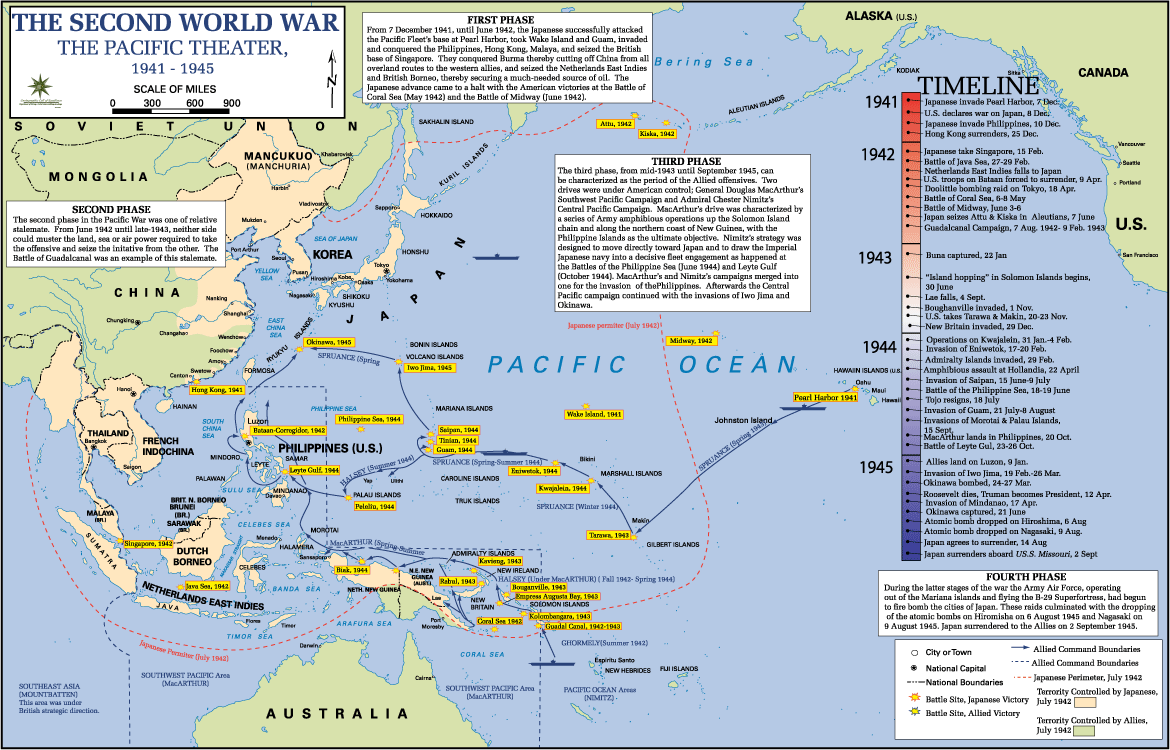
What did the Pacific landscape during the WWII?
Map of War in the Pacific:
Word Wall
Here are five vocabulary words to teach and add to the Word Wall.
|
devastating (20) |
deprivation (20) |
disastrous (21) |
tenacity (24) |
superstitious (27) |
Read
Review
Review the timeline from the beginning every day.
Read
Read the selection, usually in a Shared Reading Read React Predict Cycle of 2-3 pages.
Read Left for Dead, p. 19-27
|
Setting |
Characters |
Pages |
|
Japanese expansion prior to WW II |
Admiral Osami Nagano, Emperor Hirohito, Minister of War, Hideki ‘the razor’ Tojo, and Franklin Delano Roosevelt |
19-21 |
|
Pearl Harbor, December 7, 1941 |
Japan and the US Navy |
21-22 |
|
The war in the Pacific |
The Indianapolis |
22-26 |
|
Okinawa, March, 1945 |
The Indy and a Kamikaze |
26-27 |
Respond
Timeline
Agree on the facts in today’s reading and list the 3-5 most important on the timeline.
Students might mention:
- Between World War I and World War II, Japan began expanding it’s empire, taking control of parts of China.
- In 1939 at the outset of WWII, Japan joined Nazi Germany and Fascist Italy as an axis power, vowing mutual aid for the next ten years. They promptly invaded the French Colony of Indochina (now Vietnam).
- While the US was not yet involved in the war, President Roosevelt was concerned about Japan’s expansionist intentions. He applied sanctions to Japan, freezing assets and ending oil exportation. Japan retaliated by attacking Pearl Harbor in Hawaii, which maintained a large fleet of Navy ships. The United States declared war on Japan and the Axis powers.
- The USS Indianapolis was a powerful and fast ship that participated in more than nine campaigns against Japan in the Pacific. Each time, the Indy caused sizable damages to the Japanese fleet. Each time, the Indy sailed away, unscathed.
- Off the coast of Okinawa, an island quite close to Japan, the Indianapolis was hit by a Kamikaze plane. There was an explosive onboard the plane that blew a hole in the ship. Still, the Indy sailed away without sinking.
Map
Add to ongoing class activities like a KWL chart or map: where did the characters go?
- Use a T-chart to keep track of mistakes made by the navy and by McVay
- Maintain a list of Important characters, adding information about each person’s job and individual struggles as a crew member of the USS Indianapolis
- Add locations, routes and symbols to your map of the pacific each day
- Justice Poster: Collaborate with students create a class T Chart. This can be a live, online document that students have shared access to (Google Document or Google Spreadsheet).
- Label one column “Justice” and the other side “Injustice”.
- During this unit, encourage students to follow the local and world news, using a variety of mediums (newspapers, online sources, etc.).
- Have students periodically input a headline/article of a “Justice” and “Injustice” in their local community and in the world on the document. Discuss the additions the next day in class.
- For all of the items in the “Justice” column, have students write one thing they can do to take action and support the individuals, groups, or organizations that are acting in a “just” way.
- For all of the items in the “Injustice” column, have students write one thing they can do to help the individuals, groups, or organizations that are being treated unfairly.
- In each situation, helping may involve writing a letter, getting more informed, volunteering, etc.
- Have students choose one item to take action on. They should report their action and results to the class.
Explore
Activity
Explore the reading more deeply with a visual or oral language activity.
Map
Create a map of the War in the Pacific. Be sure to identify Pearl Harbor and Japan, as well as any islands mentioned in this chapter. Use a dotted line to show the travels of the Indianapolis as it island hopped toward Okinawa.
Use the map in Left for Dead, found just after page 140 as a reference. A black-line master of the Pacific can be located at:

Materials:
- Stiff paper 11x17 or bigger to make a map
- Or a printed map of the area
- Push pins or something else to mark the map
- Pencils, pens, crayons, markers
- Construction paper, scissors, glue sticks if desired
Step One: Find or make a map of the setting in the story.
- Make sure key places are located on the map. Remember this map needs to be big enough to mark many things on.
Step Two: Add or mark important places in the story on the map.
- Decide if any of the places in today’s reading are important for this story.
- Either add these places to the map or mark them.
Variations for the Map
- If you are reading a book from a certain geographical location, you will want to have a map available.
- Use a big map and a little map for specific places that are important in the story, like a particular place or property or smaller area.
- Use a different kind of map like a smaller map or a topographic map.
- Make up the map as you learn details in the story. This works well when the characters don’t actually know where they are.
Discussion
Ask discussion questions of all 9 types (see Day 1).
Key Questions
- How did Japan expand its empire?
- What three countries were in the axis power?
- What is Indochina called today?
- Why was President Roosevelt concerned about Japan’s expansion?
- Why did the US apply sanctions to Japan?
- How do you think this affect Japan’s economy?
- Why did Japan attack Pearl Harbor?
- Describe the USS Indy’s legacy.
- Explain the mission of a Kamikaze pilot and a Kaiten pilot.
- What happened at the battle of Okinawa?
- Do you think the events at Okinawa changed the luck of the USS Indianapolis?
Analyze
Analyze the key paragraph.
Key Paragraph, p. 21
“War became inevitable on October 23, 1941, when Japanese Prime Minister Prince Fumimaro Konoe, a pacifist, resigned. He was replaced as prime minister by the minister for war, fifty-seven-year-old extremist Hideki Tojo, a man whose nickname as an army officer had bee “The Razor.” Even as Japan continued diplomatic efforts to get the U.S. to release its oil, plans were drawn up to attack the American fleet at Pearl Harbor.”
Extend
Write
Have each student write a short product based on today’s prompt to connect to the unit theme.
Review today’s reading beginning with Black Friday, 1929. How do you think the war started between Japan and the US? Write your explanation in an argumentative paragraph that convinces your readers that this is the true reason why the war began. Include three details from today’s reading to support your claim.
Close
Close by extending today’s lesson to life and the world.
- How much weight do you place on luck in your life?
- Describe a time when you were lucky?
Day 5
Outcomes for Today
Prepare
Background
Gather background knowledge about a place, time, event, person, or thing..
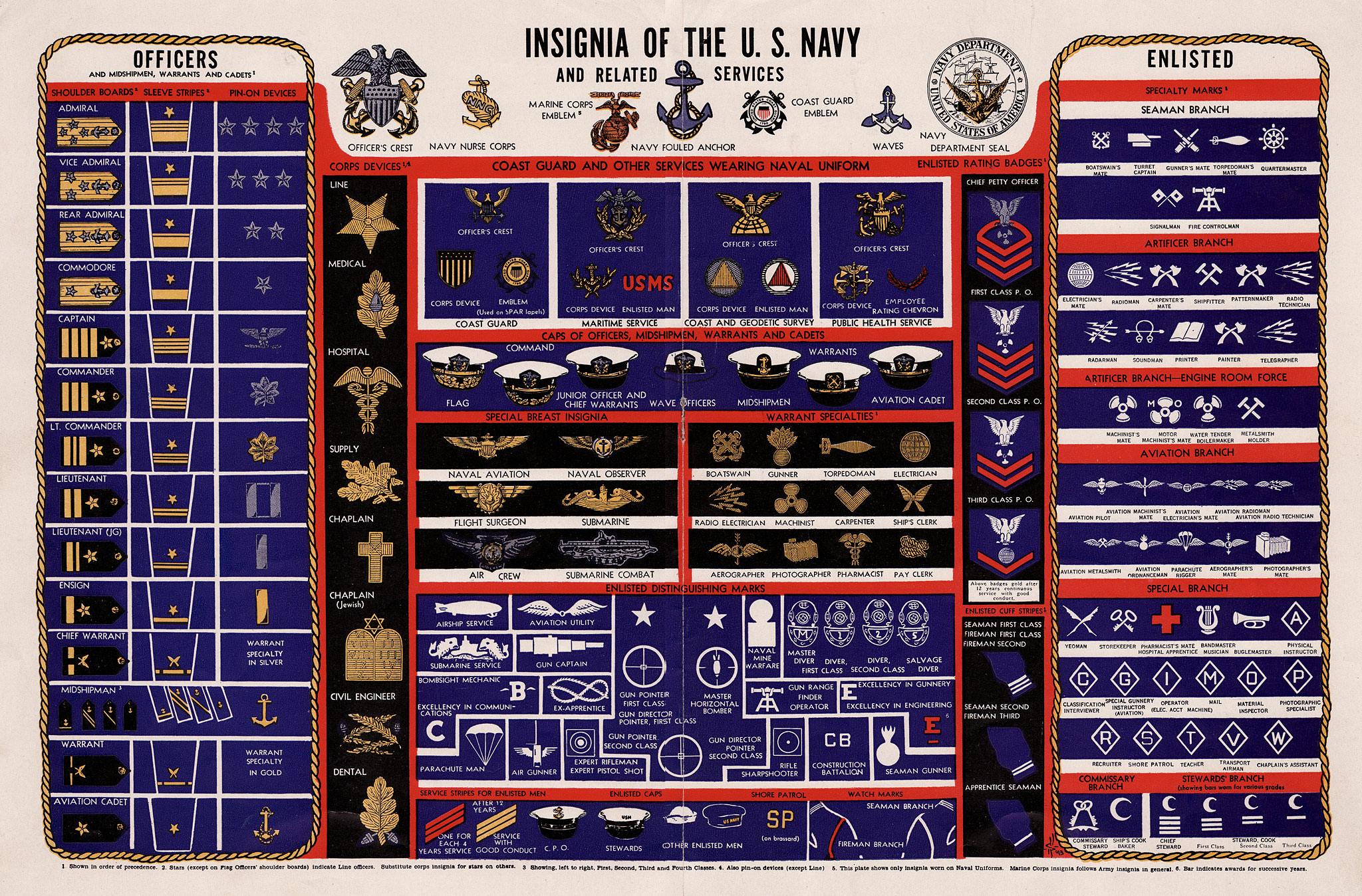
What are the US Navy rankings for Commissioned and Non-commissioned officers?
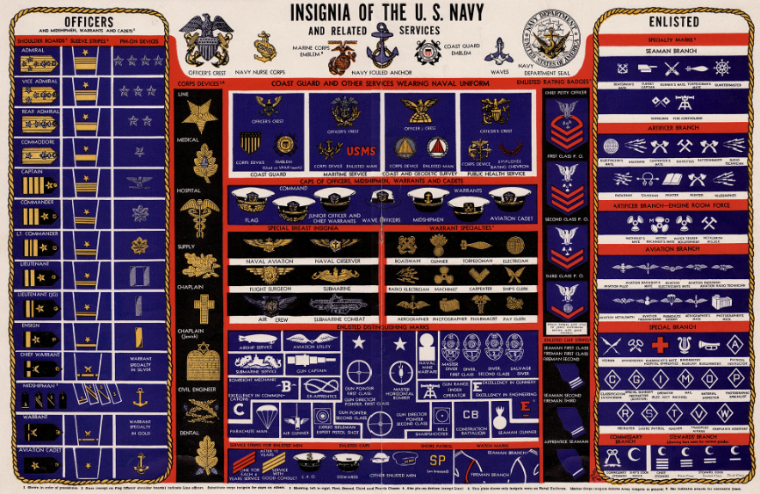
Source: http://www.ibiblio.org/hyperwar/USN/ref/Ranks&Rates/img/plate.jpg
Word Wall
Here are five vocabulary words to teach and add to the Word Wall.
|
conservative (30) |
gallantry (30) |
swashbuckling (32) |
coxswain (32) |
omen (35) |
Read
Review
Review the timeline from the beginning every day.
Read
Read the selection, usually in a Shared Reading Read React Predict Cycle of 2-3 pages.
Read Left for Dead p. 29-35
|
Setting |
Characters |
Pages |
|
Port of San Francisco |
McVay, Seamen’s families, Jack Miner, Harlin Twible, Robert McGuiggan, Mike Kuryla, Morgan Mosely, and Giles McCoy |
29-35 |
Respond
Timeline
Agree on the facts in today’s reading and list the 3-5 most important on the timeline.
Students might mention:
- The Indianapolis returned to San Francisco for repairs and a new paintjob. While there, Capt. McVay was summoned and he received new orders for his ship.
- The mission he was to undertake with his men was top secret. All he was told was that they would be shipping out early, sailing to the island of Tinian as quickly as possible, and that they were carrying “special cargo.”
- In reality, the ship would be delivering the first atom bomb, which, upon arrival would be transferred to the now infamous silver B-29 bomber, The Enola Gay, who would drop the bomb on Hiroshima, Japan on August 6, 1945.
- New men joining the ship for this mission were: Radio Technician Second Class Jack Miner, who dropped out of Yale at 18 to join the Navy; and Ensign Harlan Twible, a new officer who had just graduated from the Naval Academy and placed in charge of the aft guns.
- Veteran men of the ship included: Seaman first Class Robert McGuiggan; Mike Kuryla, a coxswain who had been in 8 major battles aboard the Indy; Ship’s Cook First Class Morgan Mosely, who had been on board and nearly died when the Kamikaze struck the ship off the coast of Okinawa; and Giles McCoy, a marine and personal servant/bodyguard to Captain McVay.
Map
Add to ongoing class activities like a KWL chart or map: where did the characters go?
- Use a T-chart to keep track of mistakes made by the navy and by McVay
- Maintain a list of Important characters, adding information about each person’s job and individual struggles as a crew member of the USS Indianapolis
- Add locations, routes and symbols to your map of the pacific each day
- Justice Poster: Collaborate with students create a class T Chart. This can be a live, online document that students have shared access to (Google Document or Google Spreadsheet).
- Label one column “Justice” and the other side “Injustice”.
- During this unit, encourage students to follow the local and world news, using a variety of mediums (newspapers, online sources, etc.).
- Have students periodically input a headline/article of a “Justice” and “Injustice” in their local community and in the world on the document. Discuss the additions the next day in class.
- For all of the items in the “Justice” column, have students write one thing they can do to take action and support the individuals, groups, or organizations that are acting in a “just” way.
- For all of the items in the “Injustice” column, have students write one thing they can do to help the individuals, groups, or organizations that are being treated unfairly.
- In each situation, helping may involve writing a letter, getting more informed, volunteering, etc.
- Have students choose one item to take action on. They should report their action and results to the class.
Explore
Activity
Explore the reading more deeply with a visual or oral language activity.
Insignia
Below is the identifying badge for a coxswain, referenced in today’s reading, worn by Mike Kuryla. Review the other character descriptions from today’s reading. Choose the person or job you identify with most. Imagine what his special insignia would look like and create it.

Discussion
Ask discussion questions of all 9 types (see Day 1).
Key Questions
- What happened when the Indianapolis went to San Fransico?
- Describe the secret mission of the
- What was the ship actually delivering?
- How did The Enola Gay influence history?
- Who were Miner and Twible?
- Who were the veteran men on the ship?
- Describe their experience.
- Why do you think no one on-board the ship was allowed to know the exact nature of their mission?
- Which of the character’s introduced today most appeals to you?
- Which of the jobs aboard ship described today most appeals to you? Why?
Analyze
Analyze the key paragraph.
Key Paragraph, p. 31-32
“Captain McVay told his officers what he knew. Most of the common seaman knew only that they were heading back into the war, possibly gearing up for the invasion of the Japanese home islands.”
Extend
Write
Have each student write a short product based on today’s prompt to connect to the unit theme.
Review the descriptions of today’s characters and the jobs that they were assigned. Choose the character or job that you most identify with. In an argumentative paragraph, prove why you identify with this character and/or job. Explain why you identify with a particular type of work, ranking, or personality description? Provide three reasons to support your claim.
Close
Close by extending today’s lesson to life and the world.
- Do you believe in omens?
- Do you think Marine McCoy will “get it” on this next voyage like his buddy prophecies?
Day 6
Outcomes for Today
Prepare
Background
Gather background knowledge about a place, time, event, person, or thing..
What is the difference between a nautical mile and a knot?
A nautical mile is based on the circumference of the earth, and is equal to one minute of latitude. It is slightly more than a statute (land measured) mile (1 nautical mile = 1.1508 statute miles). Nautical miles are used for charting and navigating.
A knot is one nautical mile per hour (1 knot = 1.15 miles per hour). The term knot dates from the 17th century, when sailors measured the speed of their ship by using a device called a "common log." This device was a coil of rope with uniformly spaced knots, attached to a piece of wood shaped like a slice of pie. The piece of wood was lowered from the back of the ship and allowed to float behind it. The line was allowed to pay out freely from the coil as the piece of wood fell behind the ship for a specific amount of time. When the specified time had passed, the line was pulled in and the number of knots on the rope between the ship and the wood were counted. The speed of the ship was said to be the number of knots counted (Bowditch, 1984).
Source: http://oceanservice.noaa.gov/facts/nauticalmile_knot.html
Word Wall
Here are five vocabulary words to teach and add to the Word Wall.
|
discretion (43) |
dubious (43) |
erroneous (45) |
competent (46) |
sporadically (47) |
Read
Review
Review the timeline from the beginning every day.
Read
Read the selection, usually in a Shared Reading Read React Predict Cycle of 2-3 pages.
Read Left for Dead, p. 37-47
|
Setting |
Characters |
Pages |
|
San Francisco to Tinian |
McVay |
37-39 |
|
Island of Tinian |
McVay and Forward Admiral Chester Nimitz |
39-40 |
|
Guam |
McVay, Commander Brooks, Lieutenant Joseph Waldron, Lieutenant Johnson, and Commander Janey |
40- 43 |
|
The Peddie Route |
McVay, Janney, Anton Wie, Lieutenant Charles McKissick, Lt. McFarland, Commander Lipski, Lt. Redmayne, Quartermaster Allard, and Lt. Jack Orr |
43-47 |
Respond
Timeline
Agree on the facts in today’s reading and list the 3-5 most important on the timeline.
Students might mention:
- Upon dropping their shipment at Tinian, Captain McVay received further orders from CINCPAC. The orders were to sail from Tinian to Guam, report in, then continue on to the island of Leyte in the Philippines.
- McVay reported in at Guam, met with Lieutenant Joseph Waldron, the convoy and routing officer, who directed McVay to set sail on Saturday, to travel at an average speed of 15.7 knots via Convoy Route Peddie. While McVay requested an escort, the request was denied.
- On Sunday night at dinner, Commander Janney, who had received an intelligence report, mentioned that the SS Wild Hunter had spotted a submarine along The Peddie, that they had fired two shots at it, and that a hunter-killer group had been dispatched. Janney estimated that they would arrive at the sub’s location about midnight.
- McVay, not overly concerned, gave an order to stop zigzagging and to speed up. He requested that he be awoken, should the visibility conditions improve.
- At about midnight, Monday morning, a minimal crew debated whether the change to six tenths of sky coverage was enough to merit waking the captain. They decided not to.
Map
Add to ongoing class activities like a KWL chart or map: where did the characters go?
- Use a T-chart to keep track of mistakes made by the navy and by McVay
- Maintain a list of Important characters, adding information about each person’s job and individual struggles as a crew member of the USS Indianapolis
- Add locations, routes and symbols to your map of the pacific each day
- Justice Poster: Collaborate with students create a class T Chart. This can be a live, online document that students have shared access to (Google Document or Google Spreadsheet).
- Label one column “Justice” and the other side “Injustice”.
- During this unit, encourage students to follow the local and world news, using a variety of mediums (newspapers, online sources, etc.).
- Have students periodically input a headline/article of a “Justice” and “Injustice” in their local community and in the world on the document. Discuss the additions the next day in class.
- For all of the items in the “Justice” column, have students write one thing they can do to take action and support the individuals, groups, or organizations that are acting in a “just” way.
- For all of the items in the “Injustice” column, have students write one thing they can do to help the individuals, groups, or organizations that are being treated unfairly.
- In each situation, helping may involve writing a letter, getting more informed, volunteering, etc.
- Have students choose one item to take action on. They should report their action and results to the class.
Explore
Activity
Explore the reading more deeply with a visual or oral language activity.
Map
Using the map you created of the Pacific, plot the course from Guam to Leyte. Also mark the spot where you think the SS Wild Hunter spotted the U-boat.
1g6 Portrait: Create an Open Mind Portrait for Hunter
Imagine you are Hunter Scott and that you have been listening to the survivors of the USS Indianapolis tell their tales. Create an OMP for Hunter and use thought bubbles to show what you are thinking while taking all this in.
Materials:
- Large piece of stiff paper for each character, like 11x17 oak tag
- Paper for bubbles with scissors and glue sticks
- Markers, crayons, pens, pencils, or paint
- Construction or tissue paper, scissors and glue sticks if desired
Step One: create a large head shot of the character
Step Two: place cartoon bubbles of character thoughts around the portrait
Step Three: add bubbles as you learn new things about the character
You could use different colors for the beginning, middle and end of the story. Remember in the beginning you are introduced to the setting, the characters and the problems they have. In the middle you learn about the roadblocks to the characters solving their problems, and conflicts occur. In the end of the story those conflicts reach a peak and then resolve with a resolution of the character’s problems.
You could use different colors for the phases you see in a story or the development of a particular character.
Discussion
Ask discussion questions of all 9 types (see Day 1).
Key Questions
- What were McVay’s travel orders?
- Do you think McVay should have sought out a higher-ranking officer to affirm his travel route and lack of an escort?
- Why might leaving all of the watertight hatches open pose a threat to the sea worthiness of the Indy?
- Why do you think McVay request for an escort was denied?
- Describe what happened when the SS Wild Hunter had spotted a submarine?
- What is the purpose of zigzagging?
- Why did the crew decided not to wake the captain?
- Do you think that the officer’s on deck at midnight should have awoken Captain McVay?
- Had you been on deck, would you have wanted to wake him?
- Is McVay responsible to the sinking of the Indianapolis? Is anyone else?
Analyze
Analyze the key paragraph.
Key Paragraph, p. 47
“To some it may have seemed like they were the only ship on the sea.
They weren’t.
A Japanese sub lay directly ahead.”
Extend
Write
Have each student write a short product based on today’s prompt to connect to the unit theme.
From the vaguely written itinerary of the Indy’s orders, to the decision not to provide an escort; from the downplaying of actual enemy threat along the Peddie route to allowing all of the water-tight hatches to remain open; from McVay’s order to stop zig-zagging to his apparent lack of concern regarding recent intelligence regarding the possible presence of a Japanese submarine dead ahead, many mistakes were made by many people that could be attributed to the sinking of the USS Indianapolis. Write an argumentative paragraph supporting the fact that there is not one person to blame for this atrocity. Provide three reasons to support your answer.
Close
Close by extending today’s lesson to life and the world.
- Describe a time when you made the wrong decision.
- How did you determine your choice?
Day 7
Outcomes for Today
Prepare
Background
Gather background knowledge about a place, time, event, person, or thing..
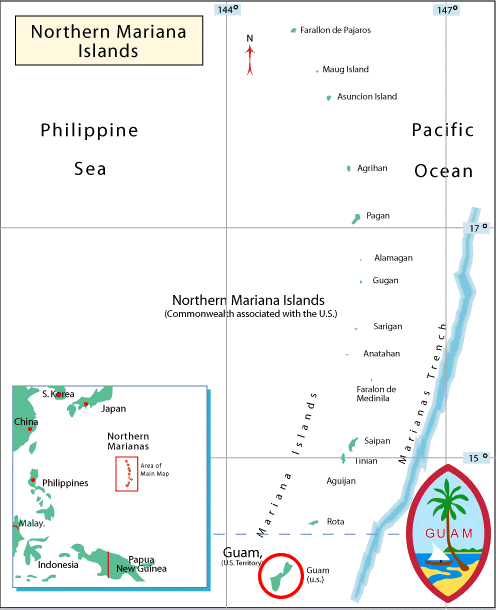
Where is Guam?
In the Western Pacific Ocean, Guam is the southernmost and largest tropical island in the Mariana island chain and is also the largest island in Micronesia.
By plane, Guam is approximately 3 hours flying distance of major Asian cities. These cities include Manila, Philippines; Hong Kong; Tokyo, Japan; Seoul, South Korea; Taipei, Taiwan; Sydney, Australia.
Guam has a remarkable history involving the visit of Ferdinand Magellaen, Japanese occupation during World War II, and its continued economic growth since the US recaptured the island in 1944.
Guam is an organized, unincorporated territory of the United States located in the western Pacific Ocean. It is one of five U.S. territories with an established civilian government.
It only covers 212 square miles and is 30 miles long and 8 1/2 miles wide. Along the edge of the Marianas Trench where the deepest part of the ocean and the deepest location on Earth is situated.
Geographically, The island of Guam is 30 miles (48 km) long and 4 to 12 miles (6 to 19 km) wide. Guam lies between 13.2°N and 13.7°N and between 144.6°E and 145.0°E, and has an area of 212 square miles (549 km2), making it the 32nd largest island of the United States. Source: http://www.whereisguam.info/where-is-guam.html
Word Wall
Here are five vocabulary words to teach and add to the Word Wall.
|
submerged (50) |
acoustic (50) |
providence (51) |
brig (54) |
ventilation (54) |
Read
Review
Review the timeline from the beginning every day.
Read
Read the selection, usually in a Shared Reading Read React Predict Cycle of 2-3 pages.
Read Left for Dead, p. 49-55
|
Setting |
Characters |
Pages |
|
The I-58 |
Captain Mochitsura Hashimoto |
49-52 |
|
On board the Indianapolis |
Kuryla, Miner, Mosely, Twible, and McCoy |
52-55 |
Respond
Timeline
Agree on the facts in today’s reading and list the 3-5 most important on the timeline.
Students might mention:
- Just before midnight on the Guam to Leyte route, Captain of the I-58, Mochitsura Hashimoto stood on deck and spotted what he thought might be an enemy ship.
- As the ship moved directly toward the I-58, Hashimoto readied 6 torpedoes. When the ship was within range, he shot the six torpedoes in a fanned trajectory. Two hit the Indianapolis directly.
- Coxswain Kuryla, Radio Technician Jack Miner, and Ship’s Cook Morgan Mosely were all in bed when the torpedoes hit.
- Both Ensign Harlan Twible and Marine Giles McCoy were on duty when the torpedoes hit. McCoy had arrived at his post early. Had he not, he would have died immediately alongside his 39 Marine Corp. brothers.
- Two large holes in the hull were created by the torpedoes, and the ship was on fire.
Map
Add to ongoing class activities like a KWL chart or map: where did the characters go?
- Use a T-chart to keep track of mistakes made by the navy and by McVay
- Maintain a list of Important characters, adding information about each person’s job and individual struggles as a crew member of the USS Indianapolis
- Add locations, routes and symbols to your map of the pacific each day
- Justice Poster: Collaborate with students create a class T Chart. This can be a live, online document that students have shared access to (Google Document or Google Spreadsheet).
- Label one column “Justice” and the other side “Injustice”.
- During this unit, encourage students to follow the local and world news, using a variety of mediums (newspapers, online sources, etc.).
- Have students periodically input a headline/article of a “Justice” and “Injustice” in their local community and in the world on the document. Discuss the additions the next day in class.
- For all of the items in the “Justice” column, have students write one thing they can do to take action and support the individuals, groups, or organizations that are acting in a “just” way.
- For all of the items in the “Injustice” column, have students write one thing they can do to help the individuals, groups, or organizations that are being treated unfairly.
- In each situation, helping may involve writing a letter, getting more informed, volunteering, etc.
- Have students choose one item to take action on. They should report their action and results to the class.
Explore
Activity
Explore the reading more deeply with a visual or oral language activity.
1g6 Portrait: Create an Open Mind Portrait for Hunter
Recall the seaman that you identified with on Day 5. Create an Open Mind Portrait of him at the time of the torpedoes. Use speech and thought bubbles to show what he might have been saying and thinking.
Materials:
- Large piece of stiff paper for each character, like 11x17 oak tag
- Paper for bubbles with scissors and glue sticks
- Markers, crayons, pens, pencils, or paint
- Construction or tissue paper, scissors and glue sticks if desired
Step One: Create a large head shot of the character
Step Two: Place cartoon bubbles of character thoughts around the portrait
Discussion
Ask discussion questions of all 9 types (see Day 1).
Key Questions
- Why was Captain Hashimoto able to see the Indy from so far away?
- Do you think zig-zagging would have saved the Indy?
- What resources did Hashimoto use to estimate the type of ship and the speed that it was traveling?
- Where was the I-58 headed?
- Describe what happened when the shipped moved toward the I-58?
- Where was Coxswain Kuryla, Radio Technician Jack Miner, and Ship’s Cook Morgan Mosely when the torpedoes hit?
- Who was on duty when the torpedoes hit?
- What saved McCoy’s life?
- Describe what happened to McCoy’s 39 Marine Corp. brothers?
- Describe the destruction of the torpedoes.
Analyze
Analyze the key paragraph.
Key Paragraph, p. 52
“At 12:02, Captain Mochitsura Hashimoto looked through his periscope and saw a column of water shoot up into the sky near the front of his target, followed by tongues of red flame lighting up the darkness.
‘Meecyuu!’ He said. (‘A hit!’)
A few seconds later, he witnessed a second explosion.
‘Meecyuu!’ he repeated.”
Extend
Write
Have each student write a short product based on today’s prompt to connect to the unit theme.
Captain of the I-58, Mochitsura Hashimoto, decided to fire 6 torpedoes. Do you believe this was a just decision? In an argumentative paragraph support or disprove Mochisura Hashimoto’s decision to launch the torpedoes. Provide three reasons to support your position.
Close
Close by extending today’s lesson to life and the world.
- Recall the seaman that you identified with on Day 5.
- What do you think was going through his mind when he felt the blasts?
Day 8
Outcomes for Today
Prepare
Background
Gather background knowledge about a place, time, event, person, or thing..
How many survivors of the Indy are still alive today (2014)?
There are 12 survivors from the USS Indianapolis that are still alive today.
Secret USS Indianapolis photos unveiled to survivors article discusses the last meeting of the 12 survivors.
The former navigation yeoman remembers his fear as he waited in the water with other survivors for days before their rescue after the torpedo attack. Buckett remembers the feeling of a shark passing between his legs, the acrid taste of diesel fuel expelled from the sinking ship and the pain of his skin peeling off his fingers when he twisted a valve to add air to his flotation device.
But Buckett said Sedivi's photos mostly triggered happier memories of playing cards and singing with friends, some of whom he recognized in the images.
"It brings back a lot of memories, that's for sure," he said.
The Naval Institute gave the other 12 survivors in attendance notepads in case they also recognized any of the nameless crew members depicted smiling, pouring drinks or standing somberly in the small collection of photos presented Saturday.
Christenson said he hopes family and friends of the men of the USS Indianapolis recognize some of the nameless faces in Sedivi's photos, which will be digitized for public viewing.
Source: http://www.indystar.com/story/news/2014/07/26/secret-uss-indianapolis-photos-unveiled-survivors/13211961/
Word Wall
Here are five vocabulary words to teach and add to the Word Wall.
|
chaos (55) |
shearing (56) |
list (57) |
vulnerable (59) |
contrition (60) |
Read
Review
Review the timeline from the beginning every day.
Read
Read the selection, usually in a Shared Reading Read React Predict Cycle of 2-3 pages.
Read Left for Dead, p. 55-64
|
Setting |
Characters |
Pages |
|
The bow of the ship |
Captain McVay, Commander Janney, Commander Flynn, and Lieutenant Orr. |
55-57 |
|
The radio rooms |
Lieutenant Orr, Radio Technician Jack Miner, and Chief Radio Technician Woods |
57-59 |
|
Abandoning ship |
Kuryla, Mosely, Twibble, McCoy, and McVay |
59-64 |
Respond
Timeline
Agree on the facts in today’s reading and list the 3-5 most important on the timeline.
Students might mention:
- Captain McVay awoke as his cabin filled with smoke. He first conferred with Lieutenant Orr, who informed him that communication between the front and rear of the ship had broken down.
- He then conferred with Commander Janney and Commander Flynn. He ordered Janney to get to the radios and send a distress signal. He ordered Flynn to “pass the word to abandon ship.” A message was sent from the radio room, but the technicians were unable to confirm whether anyone had received it.
- Before Coxswain Kuryla went overboard, he tried to free one of the whaleboats. He was unsuccessful, but he did make it into a lifeboat. Before Ship’s Cook Mosely went overboard, he tried to save a new recruit. He was unable to save him, but Mosely made it safely into the water.
- Before new Naval Officer, Twible went overboard, he moved a crowd of men to the back of the boat. They followed him into the water where, as ordered by Twible, they placed the wounded into nearby life rafts and tied themselves to the floater rafts. Before Marine McCoy went overboard, he freed as many of the prisoners as he could. He had to leave some behind as the hatches were dogged. He swam through the thick oil until someone pulled him by his hair into a lifeboat.
- Captain McVay was swept into the water as it rushed over the bow of the ship. He watched as men plummeted into the water, some alive, some dead. The ship sank in 12 minutes, killing 300. The other 880 began the fight of their lives.
Map
Add to ongoing class activities like a KWL chart or map: where did the characters go?
- Use a T-chart to keep track of mistakes made by the navy and by McVay
- Maintain a list of Important characters, adding information about each person’s job and individual struggles as a crew member of the USS Indianapolis
- Add locations, routes and symbols to your map of the pacific each day
- Justice Poster: Collaborate with students create a class T Chart. This can be a live, online document that students have shared access to (Google Document or Google Spreadsheet).
- Label one column “Justice” and the other side “Injustice”.
- During this unit, encourage students to follow the local and world news, using a variety of mediums (newspapers, online sources, etc.).
- Have students periodically input a headline/article of a “Justice” and “Injustice” in their local community and in the world on the document. Discuss the additions the next day in class.
- For all of the items in the “Justice” column, have students write one thing they can do to take action and support the individuals, groups, or organizations that are acting in a “just” way.
- For all of the items in the “Injustice” column, have students write one thing they can do to help the individuals, groups, or organizations that are being treated unfairly.
- In each situation, helping may involve writing a letter, getting more informed, volunteering, etc.
- Have students choose one item to take action on. They should report their action and results to the class.
Explore
Activity
1g6 setting chart
Fill out the Setting Chart
- Describe the place where the story takes place in the where box on the chart. This includes the location, geography, scenery and other details about the place.
- Describe the time period in which the story is taking place in the when box on the chart. Is this a contemporary story, or does it take place in the past or the future? Give details about this past or future time if this is the case.
- Describe the time of day or day of the week the story begins in the time box on the chart. This box is important if the story of the part you are analyzing takes place in a short period of time.
- Describe the weather in the weather box of the chart. Is it sunny, stormy, snowing, all of the above, none of the above? Sometimes the weather matters, sometimes not. Sometimes it is critical.
Discussion
Ask discussion questions of all 9 types (see Day 1).
Key Questions
- Describe the scene when Captain McVay woke up.
- What did Lieutenant Orr confirm?
- How did Captain McVay react in the aftermath of the torpedoes?
- Why was Captain McVay reluctant to give the orders to immediately abandon the ship?
- Explain as best as possible the breakdown in the radio rooms.
- What did Twible do before he went overboard?
- What did Marine McCoy do before he went overboard?
- How did Marine McCoy show integrity and courage?
- Describe the sinking of the ship.
- What would you say to guilt-ridden survivor Morgan Mosely to help him with the fact that he had to leave the young sailor behind?
Analyze
Analyze the key paragraph.
Key Paragraph, p. 64
“It took only twelve minutes. Shorter than halftime at a football game, but enough time to kill about 300 men and put the rest in the water, roughly 880 men scattered 600 miles west of Guam, 550 miles east of Leyte and 250 miles north of the Palau Islands, the closest land.
Twelve minutes.”
Extend
Write
Have each student write a short product based on today’s prompt to connect to the unit theme.
In today’s reading, each seaman described (Kuryla, Moslely, Twible, McCoy, and McVay) had to make sacrifices to save himself. If they survive, each character will re-analyze these paste events and question whether or not they could have- or should have- done more. Chose a seaman, pretend you are one of his closest loved ones- a girlfriend, wife, or family member. Write an argumentative letter convincing the seaman that he did everything he could under the circumstances. Consider the time it took for the ship to sink, the laws of seamanship, and the chaos of the situation. Make your argument heartfelt and sincere.
Close
Close by extending today’s lesson to life and the world.
- What advice would you give Captain McVay?
- What would you do differently if you were the Captain?
Day 9
Outcomes for Today
Prepare
Background
Gather background knowledge about a place, time, event, person, or thing..
Why do sharks attack people?
Sharks primarily feed on smaller fish but some species prey upon seals, sea lions, and other marine mammals. Sharks have been known to attack humans when they are confused or curious. If a shark sees a human splashing in the water, it may try to investigate, leading to an accidental attack.
Source: http://oceanservice.noaa.gov/facts/sharkseat.html
Word Wall
Here are five vocabulary words to teach and add to the Word Wall.
|
concussions (65) |
noxious (66) |
tethered (66) |
self-fulfilling (68) |
prophecy (68) |
Read
Review
Review the timeline from the beginning every day.
Read
Read the selection, usually in a Shared Reading Read React Predict Cycle of 2-3 pages.
Read Left for Dead, p. 65-72
|
Setting |
Characters |
Pages |
|
In the water |
880 men |
65 |
|
Kuryla’s group |
Kuryla, McCoy and a group of sailors |
66-67, 71-72 |
|
Miner’s group |
Miner, Mosely, Twibble and 325 sailors. |
67-69 |
|
Smith’s group |
Smith, Dronet, 150 men plus sharks |
70-71 |
Respond
Timeline
Agree on the facts in today’s reading and list the 3-5 most important on the timeline.
Students might mention:
- As the Indianapolis disappeared, men were scattered over more than a mile of ocean. They were drifting further, over 24 miles a day.
- Seaman First Class Robert McGuiggan helped a man who could not swim make his way to a group of 150 men. Sharks took those from his group that drifted away.
- Coxswain Kuryla, and Marine McCoy were in a group together. While Kuryla reassured the men that rescuers would arrive tomorrow, McCoy divided his time between leading the men in prayer and threatening men who were losing their minds with his waterlogged .45.
- Radio Technician Jack Miner found himself in a group with Ship’s Cook Morgan Mosely and Officer Twibble. Miner assured the group that an SOS had definitely been sent before the ship went down. Mosely took the opportunity in the water to make up for having left a man below deck by comforting a young sailor until he passed. Twibble continued to lead his group, having the men count off and ordering, as tensions and chaos rose, to disarm.
- Sailor Cozel “Smitty” Smith, who had saved Dronet who couldn’t swim the night before, hangs on to a floater net. Sharks were all around. One took Smitty by the hand and dragged him under. Smitty fought back against the shark tearing at his eye. He escaped from the shark, but was not allowed to return to the net for fear that his open wound would bring more sharks to the vicinity of the float net.
Map
Add to ongoing class activities like a KWL chart or map: where did the characters go?
- Use a T-chart to keep track of mistakes made by the navy and by McVay
- Maintain a list of Important characters, adding information about each person’s job and individual struggles as a crew member of the USS Indianapolis
- Add locations, routes and symbols to your map of the pacific each day
- Justice Poster: Collaborate with students create a class T Chart. This can be a live, online document that students have shared access to (Google Document or Google Spreadsheet).
- Label one column “Justice” and the other side “Injustice”.
- During this unit, encourage students to follow the local and world news, using a variety of mediums (newspapers, online sources, etc.).
- Have students periodically input a headline/article of a “Justice” and “Injustice” in their local community and in the world on the document. Discuss the additions the next day in class.
- For all of the items in the “Justice” column, have students write one thing they can do to take action and support the individuals, groups, or organizations that are acting in a “just” way.
- For all of the items in the “Injustice” column, have students write one thing they can do to help the individuals, groups, or organizations that are being treated unfairly.
- In each situation, helping may involve writing a letter, getting more informed, volunteering, etc.
- Have students choose one item to take action on. They should report their action and results to the class.
Explore
Activity
Explore the reading more deeply with a visual or oral language activity.
Diagram
Create a diagram that depicts the members of each floating group. Include their names and their jobs or titles where possible.
Discussion
Ask discussion questions of all 9 types (see Day 1).
Key Questions
- List the reasons why it was hard to tell who the survivors were or how many there were.
- Explain who each of the seamen you have been introduced to were with and what they were doing in the water?
- How fast were the seamen drifting?
- How were the seamen safer in numbers?
- How did Seaman First Class Robert McGuiggan show integrity?
- How did McCoy show leadership while the men waited to be rescued?
- What was McCoy’s waterlog?
- Why did Mosely feel guily?
- How did Twibble work to ease tensions?
- How did Smitty survive the shark attack?
- Why wasn’t Smitty allowed to return to the net?
Analyze
Analyze the key paragraph.
Key Paragraph, p. 71
“Suddenly Smith felt a shark take him by the left hand and pull him under before he had a chance to scream. His left hand was in the shark’s mouth up to his wrist. He couldn’t shake it loose. He could see the shark under water. It was maybe eight or ten feet long. It rolled, then twisted, trying to rip his hand off. Smith held his breath and pushed at the shark, trying to get his left hand free as the shark jerked from side to side. Smith’s right hand slipped off the shark’s nose until he felt a soft spot on the side of the shark’s head. Smith plunged his middle finger into the soft spot and slid it in all the way to the last knuckle. His eye, Smith thought. I’ll rip his eye out if he thinks he can pull me down. Then the shark turned him loose. Smith kicked for the surface, certain the shark would take him again. He surfaced, gasping for air. His hand was torn and bleeding, but at least it was still connected to his arm. He swam back toward the group, but found he was no longer welcome there. Men feared that Smith’s wounds would only attract more sharks.”
Extend
Write
Have each student write a short product based on today’s prompt to connect to the unit theme.
Smith is injured and could use the help of the group to survive. However, Smith is also bleeding and the group fears that Smith’s blood will attract more sharks and place them in more danger. Write an argumentative paragraph that defends Smith survival or the group’s safety. Begin with a firm statement in support of either helping Smith or alienating Smith for the group’s safety. Include three reasons to support your statement. Conclude with a sentence that reaffirms your position.
Close
Close by extending today’s lesson to life and the world.
- Who do you think should earn a medal for bravery today? For leadership?
- Do you think it was a good idea for Twibble to order his men to disarm? Why?
- Do you think Smith should be allowed back into his group? Why or why not? What criteria do you base your opinion on?
Day 10
Outcomes for Today
Prepare
Background
Gather background knowledge about a place, time, event, person, or thing..
What is Hypernatremia?
Hypernatremia is an electrolyte imbalance and is indicated by a high level of sodium in the blood. The normal adult value for sodium is 136-145 mEq/L. Sodium is an element, or an electrolyte, that is found in the blood.
Source: http://chemocare.com/chemotherapy/side-effects/hypernatremia-high-sodium.aspx#.VCv2nP0zJg0
Word Wall
Here are five vocabulary words to teach and add to the Word Wall.
|
corrosive (75) |
despondency (76) |
listlessness (76) |
insidious (76) |
succumbed (78) |
Read
Review
Review the timeline from the beginning every day.
Read
Read the selection, usually in a Shared Reading Read React Predict Cycle of 2-3 pages.
Read Left for Dead, p. 72-79
|
Setting |
Characters |
Pages |
|
Day one in the water |
McVay, Quartermaster Allard, and eight other seamen |
72-74 |
|
Causes of death in the water |
|
74-79 |
Respond
Timeline
Agree on the facts in today’s reading and list the 3-5 most important on the timeline.
Students might mention:
- Captain McVay kicked himself over using a floating crate, to two well-provisioned, but otherwise unoccupied life rafts.
- By the end of the next day, he had managed to hook up with 9 other survivors.
- Men were dying all around. Many died quickly from wounds sustained before the ship sank.
- Others died from hypothermia, dehydration and of course, from shark attacks.
- Perhaps the most relentless killer was hypernatremia, the result of drinking saltwater, while already dehydrated.
Map
Add to ongoing class activities like a KWL chart or map: where did the characters go?
- Use a T-chart to keep track of mistakes made by the navy and by McVay
- Maintain a list of Important characters, adding information about each person’s job and individual struggles as a crew member of the USS Indianapolis
- Add locations, routes and symbols to your map of the pacific each day
- Justice Poster: Collaborate with students create a class T Chart. This can be a live, online document that students have shared access to (Google Document or Google Spreadsheet).
- Label one column “Justice” and the other side “Injustice”.
- During this unit, encourage students to follow the local and world news, using a variety of mediums (newspapers, online sources, etc.).
- Have students periodically input a headline/article of a “Justice” and “Injustice” in their local community and in the world on the document. Discuss the additions the next day in class.
- For all of the items in the “Justice” column, have students write one thing they can do to take action and support the individuals, groups, or organizations that are acting in a “just” way.
- For all of the items in the “Injustice” column, have students write one thing they can do to help the individuals, groups, or organizations that are being treated unfairly.
- In each situation, helping may involve writing a letter, getting more informed, volunteering, etc.
- Have students choose one item to take action on. They should report their action and results to the class.
Explore
Activity
Explore the reading more deeply with a visual or oral language activity.
Elements and the Human Body Diagram
Create a diagram of the human body that shows how it is affected by: Saltwater, Sunlight, cold water, a lack of nutrition, and a lack of fresh water. Be sure to include the effect each has on the body.
Discussion
Ask discussion questions of all 9 types (see Day 1).
Key Questions
- Why didn’t McVay go down with his ship like other mythical captains?
- What did McVay do once he was in the water? Why?
- What happened to Captain McVay?
- How did Captain McVay find other survivers?
- Why were men dying?
- Why is it ironic to die of dehydration in the ocean?
- What are the effects of long term exposure to seawater on the human body?
- What happens when you become dehydrated?
- Explain what happened to sailors who drank sea water.
Analyze
Analyze the key paragraph.
Key Paragraph, p. 78
“The men in the water suffered from a variety of delusions. Some believed that the water at their feet had to be fresh water because it was colder than the water nearer the surface, and that it would be safe to dive down and take a drink as long as the water they drank was cold.”
Extend
Write
Have each student write a short product based on today’s prompt to connect to the unit theme.
Pretend you are one of the sailor-leaders (McVay, Mosely, Smith, Twible, Miner, Kuryla, etc.) and that one of your shipmates nearby is considering diving down for a drink of “freshwater.” Write an argumentative paragraph to convince your shipmate not to drink the water. Explain what will happen to him if he drinks the water. Provide three consequences for drinking the water. Be descriptive and convincing.
Close
Close by extending today’s lesson to life and the world.
- Do you think you could have kept your head during such an ordeal?
- What would have kept you going?
Day 11
Outcomes for Today
Prepare
Background
Gather background knowledge about a place, time, event, person, or thing..
What is REM?
Rapid eye movement sleep, or REM, is one of the five stages of sleep that most people experience nightly. It is characterized by quick, random movements of the eyes and paralysis of the muscles.
Source: www.medicalnewstoday.com/articles/247927.php
Word Wall
Here are five vocabulary words to teach and add to the Word Wall.
|
psyche (79) |
delirium (79) |
mollified (84) |
basest (87) |
manifestation (88) |
Read
Review
Review the timeline from the beginning every day.
Read
Read the selection, usually in a Shared Reading Read React Predict Cycle of 2-3 pages.
Read Left for Dead, p. 79-88
|
Setting |
Characters |
Pages |
|
Description of sleep deprivation |
|
79-81 |
|
Explanation of shark sensory organs |
Blue sharks and white tips |
81-82 |
|
Twible’s group |
Twible, Redmayne, Miner, and Mosely |
82-85 |
|
Kuryla’s group |
Kuryla, McCoy, and Brundige |
85-87 |
|
Smith, alone |
Smith and the chaos of madmen |
87-89 |
Respond
Timeline
Agree on the facts in today’s reading and list the 3-5 most important on the timeline.
Students might mention:
- Sleep deprivation, specifically REM deprivation, drove many men insane. They hallucinated, attacked each other, swam in the direction of non-existent islands and drank seawater.
- Sharks, blues and white tips mostly, took whomever they wanted. Those in rafts were relatively safe, but not completely.
- By the second day, even Twible, Mosely and McCoy were losing it. Twible and Mosely were simply sleep deprived and becoming listless. McCoy was considering drinking the saltwater.
- Smith, alone in the water, could do nothing when he saw men near him eating the dead.
- McVay’s group was doing fairly well, however. They had provisions, and intact rafts allowing them to sleep deeply. No one was questioning his leadership either.
Map
Add to ongoing class activities like a KWL chart or map: where did the characters go?
- Use a T-chart to keep track of mistakes made by the navy and by McVay
- Maintain a list of Important characters, adding information about each person’s job and individual struggles as a crew member of the USS Indianapolis
- Add locations, routes and symbols to your map of the pacific each day
- Justice Poster: Collaborate with students create a class T Chart. This can be a live, online document that students have shared access to (Google Document or Google Spreadsheet).
- Label one column “Justice” and the other side “Injustice”.
- During this unit, encourage students to follow the local and world news, using a variety of mediums (newspapers, online sources, etc.).
- Have students periodically input a headline/article of a “Justice” and “Injustice” in their local community and in the world on the document. Discuss the additions the next day in class.
- For all of the items in the “Justice” column, have students write one thing they can do to take action and support the individuals, groups, or organizations that are acting in a “just” way.
- For all of the items in the “Injustice” column, have students write one thing they can do to help the individuals, groups, or organizations that are being treated unfairly.
- In each situation, helping may involve writing a letter, getting more informed, volunteering, etc.
- Have students choose one item to take action on. They should report their action and results to the class.
Explore
Activity
Explore the reading more deeply with a visual or oral language activity.
Shark Diagram
Create a diagram of a shark, showing all the sensory organs that would have been used to convince them that a feeding opportunity was at hand. Include a description of what would have been sensed by each organ. Be sure to include: lateral lines, noses, eyes, and ampullae of Lorenzini.
Fill out the Character Profile Chart on either Captain McVay or captain McCoy.
- Write the name of the character in the box in the middle of the chart.
- Think of 4 characteristics, or traits, that the character has. Describe each with a key word or phrase and write it down one of the 4 boxes that surround the name.
- For each trait, find 2 concrete examples of it in the story. Write each in one of the 2 boxes attached to each trait box. Continue this until you have 2 examples for each of the 4 traits.
Discussion
Ask discussion questions of all 9 types (see Day 1).
Key Questions
- What were the results of sleep deprivation for the men in the water?
- What would the signs have been to the sharks that a “substantial feeding opportunity had presented itself?”
- What were four different signs that the seamen were going crazy?
- Explain why the men in the rafts were not completely safe.
- Describe how Twible, Mosely and McCoy copied with out sleep.
- Describe what Smith saw.
- What were these men eating? Why?
- How did McVay’s group compare to the other groups?
- Why do you think Lt. Redmayne was demanding that the occupants get out of the boat and back into the water?
- Who in this group do you think is worst off?
Analyze
Analyze the key paragraph.
Key Paragraph, p. 79
“Many of the men went out of their heads, to varying degrees, for varying lengths of time, from simple sleep deprivation. Hallucinations, compelling fantasies, obsessive thoughts, uncontrollable fears and emotions, delirium, hopelessness and despair are all expressions of psychic damage, and during sleep is the time when the psyche heals and repairs itself by dreaming. Without sleep, microscopic psychic injuries rub and chafe and become infected too.”
Extend
Write
Have each student write a short product based on today’s prompt to connect to the unit theme.
In order to survive a torturous situation it is important to keep your mind sharp and not fall into hallucinations. Is it possible to prevent hallucinations? How can a focus mind-set help humans overcome mental roadblocks, provide hope, and think about solutions? Write an argumentative paragraph to convince and motivate the men who are hallucinating. Provide three reasons why it is important not to hallucinate in order to survive.
Close
Close by extending today’s lesson to life and the world.
- Can the sailors who were attacking each other be blamed for their actions? Why or why not?
- What would you do if you witness these scenes?
Day 12
Outcomes for Today
Prepare
Background
Gather background knowledge about a place, time, event, person, or thing..
What did the USS Indianapolis look like?
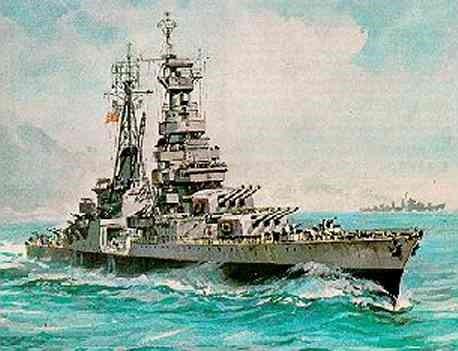
Source: http://indymaru.tripod.com/Indianapolis.jpg
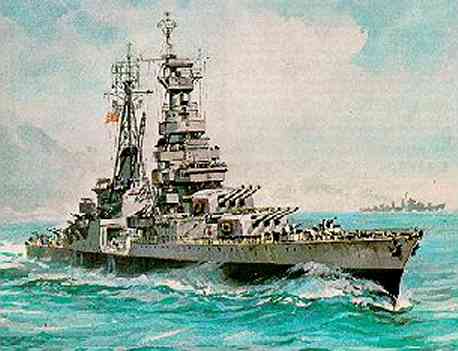
Word Wall
Here are five vocabulary words to teach and add to the Word Wall.
|
divert (91) |
court-martialed (92) |
fuselage (93) |
eternity (97) |
decomposed (99) |
Read
Review
Review the timeline from the beginning every day.
Read
Read the selection, usually in a Shared Reading Read React Predict Cycle of 2-3 pages.
Read Left for Dead, p. 89-99
|
Setting |
Characters |
Pages |
|
Thursday, overhead |
Lieutenant Gwinn |
89-91 |
|
The island of Peleliu |
Gwinn, Lt. Commander Atterbury, Lt. Marks, Lt. Commander Clayton, |
91-92 |
|
In the water |
Lt. Gwinn and his crew, plus 56 survivors |
92-93 |
|
Day 5 |
McGuiggan, Kuryla, Miner, Mosely, Twible, Smith, McCoy, McVay, and Captain Meyer |
93-99 |
Respond
Timeline
Agree on the facts in today’s reading and list the 3-5 most important on the timeline.
Students might mention:
- On the fourth afternoon, a PBY-5 plane spotted bodies in the water.
- The pilot came back around and dropped supplies over the survivors. He then notified the navy.
- The navy sent dispatched other planes and ships to the area. Meanwhile the pilot of the PBY landed his plane in the water without orders and took on as many survivors as possible.
- That night ships arrived and began searching for and collecting the rest of the survivors. Sailors onboard fire into the water in an attempt to keep the sharks at bay.
- Of the 1,197 crew members that left on the Indianapolis, only 317 survived.
Map
Add to ongoing class activities like a KWL chart or map: where did the characters go?
- Use a T-chart to keep track of mistakes made by the navy and by McVay
- Maintain a list of Important characters, adding information about each person’s job and individual struggles as a crew member of the USS Indianapolis
- Add locations, routes and symbols to your map of the pacific each day
- Justice Poster: Collaborate with students create a class T Chart. This can be a live, online document that students have shared access to (Google Document or Google Spreadsheet).
- Label one column “Justice” and the other side “Injustice”.
- During this unit, encourage students to follow the local and world news, using a variety of mediums (newspapers, online sources, etc.).
- Have students periodically input a headline/article of a “Justice” and “Injustice” in their local community and in the world on the document. Discuss the additions the next day in class.
- For all of the items in the “Justice” column, have students write one thing they can do to take action and support the individuals, groups, or organizations that are acting in a “just” way.
- For all of the items in the “Injustice” column, have students write one thing they can do to help the individuals, groups, or organizations that are being treated unfairly.
- In each situation, helping may involve writing a letter, getting more informed, volunteering, etc.
- Have students choose one item to take action on. They should report their action and results to the class.
Explore
Activity
Explore the reading more deeply with a visual or oral language activity.
Pro-Con List
Create a Pro and Con list of all the reasons you can come up with regarding Lt. Mark’s decision to attempt to land or not land his PBY-5A in open water.
Discussion
Ask discussion questions of all 9 types (see Day 1).
Key Questions
- Why did Lt. Gwinn happen to notice the survivors in the water while so many other pilots had not?
- What were Gwinn’s first intentions when he spotted the oil in the water?
- What did the plane drop over the survivors?
- How did the PBY pilot demonstrate integrity?
- What argument would you use to explain Mark’s decision to endanger his crew and his plane to save the lives of men in the water?
- What would you have done in this situation if you were the pilot of the PBY-5A?
- What did sailors do to keep the sharks away?
- How many people survived the attack?
- Describe the rescue efforts.
Analyze
Analyze the key paragraph
Key Paragraph, p. 92
“[Marks] was informing, not asking permission. Marks made his decision to land because as he circled low, he’d actually seen sharks taking men in the water, and the sight horrified him. There was a standing order in the squadron that nobody was allowed to land PBY-5As in open water. Unlike standard PBYs, PBY-5As had three large wheels, which, though retractable, put extra weight in the nose and made the aircraft less seaworthy. Other attempts to land 5As in the open water had met with disaster, but Marks decided it was worth the risk, and when he’d polled his crew to ask them what they thought, they agreed. He’d established a reputation for fearlessness in prior rescues, and his men admired him for that. The wind was eight knots, blowing from the north, but the seas contained twelve-foot swells running from the northwest, promising a roller-coaster landing at best. At worst, Playmate 2 could break up if it hit the sea wrong. Insofar as he was putting his crew in danger, Marks was aware that he could be court-martialed later, but right now, men were being ripped to pieces by sharks.”
Extend
Write
Have each student write a short product based on today’s prompt to connect to the unit theme.
Pretend you are Lt. Marks and that the war is over. You have been notified that you are to be court-martialed for disobeying a standing order and thereby endangering your aircraft and your crew. Construct an argumentative response that explains why you disobeyed the order. In order to convince the tribunal that you did the right thing, provide three strong convincing reasons to support your decision. Include three specific examples from today’s reading to back up your argument.
Close
Close by extending today’s lesson to life and the world.
- What do you think is more important? Obedience to rules? Or Human Lives?
- What would you do if you were the pilot of the PBY-5 plane?
Day 13
Outcomes for Today
Prepare
Background
Gather background knowledge about a place, time, event, person, or thing..
Where are the Philippines?
The Philippines are located in southeastern Asia, archipelago between the Philippine Sea and the South China Sea, east of Vietnam.
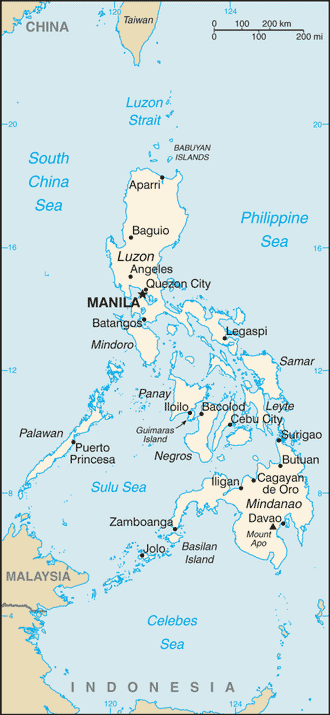
Source: https://www.cia.gov/library/publications/the-world-factbook/geos/rp.html
Word Wall
Here are five vocabulary words to teach and add to the Word Wall.
|
culpable (102) |
hoarder (104) |
assumptions (105) |
vaguely (107) |
combatant (109) |
Read
Review
Review the timeline from the beginning every day.
Read
Read the selection, usually in a Shared Reading Read React Predict Cycle of 2-3 pages.
Read Left for Dead, p. 101-109
|
Setting |
Characters |
Pages |
|
In Guam, prior to the sinking |
The Admirals and their assistants |
101-106 |
|
At sea in the Philipines |
McCormick and Oldendorf |
106-108 |
|
Phillipines Sea Frontier (PSF) |
Gibson, Sancho, and Jacobson |
108-109 |
Respond
Timeline
Agree on the facts in today’s reading and list the 3-5 most important on the timeline.
Students might mention:
- After the rescue, many people began to ask why the ship had been sunk and to enquire as to where blame ought to be laid.
- One reason the ship sank was because it had been sailing under “Condition Yoke Modified,” meaning that its hatches were open, allowing water to fill the ship quickly.
- Another contributor to the sinking was that McVay was not supplied with needed intelligence that enemy submarines were active in the area.
- A contributor to the deaths of so many men in the water was the breakdown in Naval Communication. Messages outlining the mission of the Indy as well as its itinerary were sent, but not received. One commander knew when it was coming, but not why. Another commander had received information on why it would be joining them, but not when.
- Finally, those that knew when the Indy was expected neglected to report in when the ship did not show up. This omission made the deaths of hundreds of men possible.
Map
Add to ongoing class activities like a KWL chart or map: where did the characters go?
- Use a T-chart to keep track of mistakes made by the navy and by McVay
- Maintain a list of Important characters, adding information about each person’s job and individual struggles as a crew member of the USS Indianapolis
- Add locations, routes and symbols to your map of the pacific each day
- Justice Poster: Collaborate with students create a class T Chart. This can be a live, online document that students have shared access to (Google Document or Google Spreadsheet).
- Label one column “Justice” and the other side “Injustice”.
- During this unit, encourage students to follow the local and world news, using a variety of mediums (newspapers, online sources, etc.).
- Have students periodically input a headline/article of a “Justice” and “Injustice” in their local community and in the world on the document. Discuss the additions the next day in class.
- For all of the items in the “Justice” column, have students write one thing they can do to take action and support the individuals, groups, or organizations that are acting in a “just” way.
- For all of the items in the “Injustice” column, have students write one thing they can do to help the individuals, groups, or organizations that are being treated unfairly.
- In each situation, helping may involve writing a letter, getting more informed, volunteering, etc.
- Have students choose one item to take action on. They should report their action and results to the class.
Explore
Activity
Explore the reading more deeply with a visual or oral language activity.
Comparative Lists
Create a two-column list. Label ones side, “McVay’s Mistakes.” Label the other column, “The Navy’s Mistakes.” Place all the things each could have done differently to prevent this tragedy in their proper column. Which list is longer?
Discussion
Ask discussion questions of all 9 types (see Day 1).
Key Questions
- Describe the aftermath of the rescue.
- What does “Condition Yoke Modified” mean?
- Why did the ship sink so quickly?
- What was McVay not supplied with?
- What might Captain McVay have done differently on this voyage that could have prevented the sinking or at least the deaths of so many men?
- What actions could the navy have taken to prevent the torpedoing of the USS Indianapolis?
- What procedural breakdowns in the navy occurred making it possible for the sinking to go unnoticed for so long?
- Knowing what you know now about this tragedy, where do you place the most blame?
- Do you think anyone or any organization needed to be held responsible or punished for the tragedy?
Analyze
Analyze the key paragraph.
Key Paragraph, p. 101
“Knowing how the men in the water died is not the same thing as knowing why they died. The 317 men who were saved from exposure and shark attacks were asking, ‘Why me? Why did I live when my shipmates didn’t?’ The relatives of the other 880 men were asking the navy, ‘Why did this happen? Why wasn’t the ship given an escort? Was the captain doing all he could have done to prevent the attack? How could the ship go down so fast? Why weren’t there more lifeboats? Why didn’t anybody hear the SOSs? Why didn’t anybody notice the ship was overdue in port? Why wasn’t anybody keeping track of it? Why didn’t somebody send rescue planes and ships immediately? What should the navy have done that they didn’t do?’”
Extend
Write
Have each student write a short product based on today’s prompt to connect to the unit theme.
Today’s reading analyzes what the Navy should have done. Write an argumentative paragraph to convince readers how the Navy could be partly responsible for the sinking of the Indy. Describe in detail the mistakes and assumptions that were made.
Close
Close by extending today’s lesson to life and the world.
- Describe a time when you experienced a problem due to a lack of communication.
- How can you communicate better in your daily life?
Day 14
Outcomes for Today
Prepare
Background
Gather background knowledge about a place, time, event, person, or thing..
What is a court-martial?
Summary Court-Martial
A summary court-martial consists of one commissioned officer, and may try only enlisted personnel for noncapital offenses. The punishment which may be imposed depends on the grade of the accused.
In the case of enlisted members above the fourth pay grade, a summary court-martial may impose any punishment not forbidden by the law except death, dismissal , dishonorable or bad conduct discharge, confinement for more than 1 month, hard labor without confinement for more than 45 days, restriction to specified limits for more than 2 months, or forfeiture of more than two-thirds of 1 month's pay.
In the case of all other enlisted members, the court-martial may also impose confinement for not more than one month and may reduce the accused to the lowest pay grade, E-1.
The accused has the absolute right to refuse trial by summary court-martial. The accused does not have the right to representation by an attorney. The accused does have the right to cross-examine witnesses, to call witnesses and produce evidence, and to testify or remain silent.
Special Court-Martial
A special court-martial consists of not less than three members and a military judge, or an accused may be tried by military judge alone upon request of the accused.
A special court-martial is often characterized as a misdemeanor court, and may try all persons subject to the UCMJ, including officers and midshipmen.
A special court-martial may impose any punishment authorized under R.C.M.1003 except death, dishonorable discharge, dismissal, confinement for more than 1 year, hard labor without confinement for more than 3 months, forfeiture of pay exceeding two-thirds pay per month, or any forfeiture of pay for more than 1 year.
General Court-Martial
A general court-martial consists of not less than five members and a military judge, or an accused may be tried by military judge alone upon request of the accused.
A general court-martial is often characterized as a felony court, and may try all persons subject to the UCMJ, including officers and midshipmen.
A general court-martial may adjudge any punishment not prohibited by the UCMJ, including death when specifically authorized.
Source: http://www.military.com/benefits/military-legal-matters/courts-martial-explained.html
Word Wall
Here are five vocabulary words to teach and add to the Word Wall.
|
corroborate (110) |
deficiency (112) |
monumental (114) |
premonition (114) |
anxious (114) |
Read
Review
Review the timeline from the beginning every day.
Read
Read the selection, usually in a Shared Reading Read React Predict Cycle of 2-3 pages.
Read Left for Dead, p. 109-115
|
Setting |
Characters |
Pages |
|
The Inquiry |
McVay, other survivors, McCormick, Gibson, Sancho, and Admiral Nimitz |
109-113 |
|
The Findings |
Judge Advocate Hillbert, McCormick, Gibson, Sancho, and McVay |
113 |
|
The trip home |
McVay, 315 survivors and McCoy |
113-115 |
Respond
Timeline
Agree on the facts in today’s reading and list the 3-5 most important on the timeline.
Students might mention:
- In July, the navy began its investigation. They interviewed 43 witnesses, including McVay, Admiral McCormick, and members of the PSF.
- The court of inquiry recommended that Admiral McCormick discipline his men for incorrectly decoding the message that said when McVay would be arriving.
- They also recommended that Gibson and Sancho of the PSF be reprimanded for not reporting the missing ship.
- Finally, they recommended that McVay be court-martialed for negligence endangering his crew. They said he should have been zig-zagging and that he should have had a pre-prepared SOS message anticipating such a disaster so it could have been sent out quickly. (The court of inquiry believed that McVay had never given orders to send any SOS at all, when in fact, he had.)
- The war ended on August 15, 1945. The Navy waited until this day to release information to the press about the sinking of the Indianapolis. Shortly after the war ended, the 317 survivors shipped out of Peleliu and headed for home.
Map
Add to ongoing class activities like a KWL chart or map: where did the characters go?
- Use a T-chart to keep track of mistakes made by the navy and by McVay
- Maintain a list of Important characters, adding information about each person’s job and individual struggles as a crew member of the USS Indianapolis
- Add locations, routes and symbols to your map of the pacific each day
- Justice Poster: Collaborate with students create a class T Chart. This can be a live, online document that students have shared access to (Google Document or Google Spreadsheet).
- Label one column “Justice” and the other side “Injustice”.
- During this unit, encourage students to follow the local and world news, using a variety of mediums (newspapers, online sources, etc.).
- Have students periodically input a headline/article of a “Justice” and “Injustice” in their local community and in the world on the document. Discuss the additions the next day in class.
- For all of the items in the “Justice” column, have students write one thing they can do to take action and support the individuals, groups, or organizations that are acting in a “just” way.
- For all of the items in the “Injustice” column, have students write one thing they can do to help the individuals, groups, or organizations that are being treated unfairly.
- In each situation, helping may involve writing a letter, getting more informed, volunteering, etc.
- Have students choose one item to take action on. They should report their action and results to the class.
Explore
Activity
Explore the reading more deeply with a visual or oral language activity.
6g6 Venn Diagram Chart
Complete a Venn diagram comparing and contrasting the WWII time period with modern day.

Discussion
Ask discussion questions of all 9 types (see Day 1).
Key Questions
- What misinformation did the Navy receive regarding SOS?
- Why was Admiral McCormick recommended he discipline his men?
- Why were Gibson and Sancho reprimanded?
- Describe the Navy’s investigation.
- What did the court of inquiry recommend to Admiral McCormick? Why?
- What was Gibson and Sancho of the PSF reprimanded for?
- Why was McVay court-martialed?
- What should have McVay done, according to the Navy?
- What did McVay think about the findings of the inquiry? Do agree with him or disagree?
- Captain McVay was found to be most guilty in this case. Do you think he was?
- Do you think he deserved a court-martial? Why or Why not?
Analyze
Analyze the key paragraph.
Key Paragraph, p. 113
“Then Judge Advocate Hillbert listed what he construed as the facts of the case regarding McVay. He maintained that Waldron had indeed warned McVay of the submarine menace, that visibility was good enough the night of the sinking that McVay should have been zigzagging, and that he’d delayed sending an SOS. The court of inquiry ruled that as a consequence, Captain McVay should be issued a letter of reprimand and court-martialed for endangering the lives of his men through negligence.”
Extend
Write
Have each student write a short product based on today’s prompt to connect to the unit theme.
The above charges are likely true of McVay. The ship’s log notes that the sky at the time of the sinking was only 60% covered. Further, the author notes that McVay did indeed hold off sending an SOS believing that the ship would hold together, despite the damage from the torpedoes. Pretend you are McVay’s defense attorney. As his attorney, write an argumentative statement to prove McVay is not completely to blame to the court. Redirect blame to the navy, reminding the court of the Navy’s errors in judgment. Explain how failing to provide the necessary intelligence, a safe route of passage, an escort equipped with sonar had far more to do with the sinking of the ship than McVay’s minimal negligence. Conclude your statement with a strong closing sentence.
Close
Close by extending today’s lesson to life and the world.
- Do you think McVay was negligent?
- Describe a time when you were accused of negligence.
Day 15
Outcomes for Today
Prepare
Background
Gather background knowledge about a place, time, event, person, or thing..
What is the history of the USS Hollandia?
USS Hollandia was formerly classified as AVG-97 and ACV-97 before reclassifying as CVE-97. The vessel was commissioned in mid-1944, and was sent from San Diego to Espiritu Santo. This cruise was for two purposes. The first was a shakedown, and then the ship was used to transport replacement aircraft on her way back home.
The carrier made similar cruises in the following months from the U.S. to the Pacific, Manus, Guam, and Ulithi, responsible for transporting goods and passengers. USS Hollandia was anchored in Ulithi when Okinawa’s attack began. The vessel immediately headed for the coast, bringing fighters and support to the attack. Then, the ship returned to San Diego in May of 1945 and was again used for transport for a round trip to Pearl Harbor.
Hollandia then departed in June to take her place in the Pacific War battles, which included loading replacement aircraft and bringing replenishments to the forces that were attacking Japan. After the war, she was converted in Guam to a passenger vessel and was responsible for bringing home thousands of service members.
In 1946, she arrived in Puget Sound and was decommissioned the following year. After two reclassifications, the ship was sold in 1960 for scrap. Hollandia did receive two battle stars for her service in WWII.
Source: http://www.hullnumber.com/CVE-97
Word Wall
Here are five vocabulary words to teach and add to the Word Wall.
|
subdued (117) |
lenience (118) |
privy (118) |
reprimand (119) |
egomaniac (122) |
Read
Review
Review the timeline from the beginning every day.
Read
Read the selection, usually in a Shared Reading Read React Predict Cycle of 2-3 pages.
Read Left for Dead, p. 117-124
|
Setting |
Characters |
Pages |
|
San Diego |
McVay and the other survivors |
117-118 |
|
Washington DC |
Admiral Nimitz, Admiral King, Secretary Forrestal, and Admiral Charles P. Snyder |
118-124 |
Respond
Timeline
Agree on the facts in today’s reading and list the 3-5 most important on the timeline.
Students might mention:
- The Hollandia arrived in San Diego. Surviving crewmembers of the USS Indianapolis returned to their homes when they had recuperated enough. Some, even after two months in the hospital in Peleliu, still had to be taken off the ship by stretcher. McVay returned to his home in Washington.
- Admiral Nimitz disagreed with the inquiry recommendation for court-martial. He sent a letter of reprimand to McVay and stated that that should be the end of the matter.
- Admiral King and Secretary Forrestal still pushed for court-martial. They were closer to Washing D.C. Politics and felt that blame needed to be shifted away from the Navy.
- Forrestal knew he would have to count on Congress for future funding, and if the Navy’s numerous mistakes in this tragedy were highlighted, it would be much more difficult to justify getting what he wanted. King, Chief of Naval Operations, was deeply concerned for the Navy’s and his own reputation.
- A full investigation was ordered. However, King began the court-martial before the investigation was even completed. The charges against McVay all had to do with his negligence prior to the sinking in order to prevent the defense from bringing up the Navy’s failure to act quickly in rescuing the seaman.
Map
Add to ongoing class activities like a KWL chart or map: where did the characters go?
- Use a T-chart to keep track of mistakes made by the navy and by McVay
- Maintain a list of Important characters, adding information about each person’s job and individual struggles as a crew member of the USS Indianapolis
- Add locations, routes and symbols to your map of the pacific each day
- Justice Poster: Collaborate with students create a class T Chart. This can be a live, online document that students have shared access to (Google Document or Google Spreadsheet).
- Label one column “Justice” and the other side “Injustice”.
- During this unit, encourage students to follow the local and world news, using a variety of mediums (newspapers, online sources, etc.).
- Have students periodically input a headline/article of a “Justice” and “Injustice” in their local community and in the world on the document. Discuss the additions the next day in class.
- For all of the items in the “Justice” column, have students write one thing they can do to take action and support the individuals, groups, or organizations that are acting in a “just” way.
- For all of the items in the “Injustice” column, have students write one thing they can do to help the individuals, groups, or organizations that are being treated unfairly.
- In each situation, helping may involve writing a letter, getting more informed, volunteering, etc.
- Have students choose one item to take action on. They should report their action and results to the class.
Explore
Activity
Explore the reading more deeply with a visual or oral language activity.
Open Mind Portrait
Create an Open Mind Portrait of McVay in his Washington home awaiting the court-martial. Use thought bubbles to show all the things you believe he might be thinking.
Discussion
Ask discussion questions of all 9 types (see Day 1).
Key Questions
- Describe the aftermath once the survivors arrived in San Diego.
- Where is McVay from?
- How did Admiral Nimitz defend McVay?
- How did money and politics play into McVay’s recommendation for court-martial?
- Why do you think Admiral King and Secretary Forrestal went ahead with the court-martial despite Nimitz?
- Why do you think King proceeded with the trial before the investigation had been completed?
- Would zigzagging have prevented the sinking of the ship in your opinion?
- In your opinion, did McVay delay orders to abandon ship?
- What defense would you use to convince the court that the Navy that McVay was innocent?
- What defense would you use to convince the court that the Navy was to blame instead?
Analyze
Analyze the key paragraph.
Key Paragraph, p. 124
“The charges were: 1. ‘Through negligence suffering a vessel of the Navy to be hazarded…by failing to cause a zigzag course to be steered…during good visibility,’ and 2. ‘Culpable inefficiency in the performance of duty…by failing to issue timely orders to abandon ship.’ Limiting the scope of the charges to McVay’s actions before the sinking effectively prevented McVay’s defense from raising any questions about the delay in rescue or the failure by the various commands to keep track of the ship. That, in turn, enhanced the impression that McVay and only McVay was responsible for the loss of his crew.”
Extend
Write
Have each student write a short product based on today’s prompt to connect to the unit theme.
Pretend you are McVay’s lawyer. McVay has been accused of failing to zigzag and delaying the order to abandon ship. Construct an argumentative opening statement in Defense of McVay. Focus on what the Navy could have done differently to prevent the attack by the I-58. (HINT: Consider their failures to provide adequate intelligence, an alternative route to Leyte, and an escort.)
Close
Close by extending today’s lesson to life and the world.
- How do you think McVay is feeling?
- Do you think he is holding himself responsible?
- If so, to what degree? If you were a survivor, what would you say to McVay?
Day 16
Outcomes for Today
Prepare
Background
Gather background knowledge about a place, time, event, person, or thing..
How did Captain McVay recall the sinking of the USS Indianapolis?
The link provides the transcript of an oral interview of Captain McVay.
http://www.history.navy.mil/faqs/faq30-7.htm
The [heavy cruiser USS] Indianapolis [CA-35] had come to the Navy Yard, Mare Island [in San Francisco Bay] in early May 1945, to get heavy underwater damage repaired from a Kamikaze [Japanese suicide aircraft] hit that she took in [the Battle of] Okinawa on 30 March [1945]. We had more time there than anticipated and knew that we were due back in the forward area at the earliest practicable date.
On about 12 July, I got orders which indicated that we had to perform some special mission, so that we knew that we would not be able to take our usual refresher course on the west coast, but had been told we would receive that in the forward area. On 15 July, I was in San Francisco, and talked with Admiral Purnell and Captain Parsons who I know were connected in an intimate way with a secret project, but I did not know what this project was. I was informed at that time that when we were ready for sea on 16 July, we would proceed as fast as possible to the forward area. On Sunday, the 15th of July, about noon, we were at Hunters Point and they put on us what we now know was the Atomic Bomb……
Word Wall
Here are five vocabulary words to teach and add to the Word Wall.
|
sustained (131) |
acquitted (133) |
prevailed (133) |
summations (133) |
clemency (134) |
Read
Review
Review the timeline from the beginning every day.
Read
Read the selection, usually in a Shared Reading Read React Predict Cycle of 2-3 pages.
Read Left for Dead, p. 124-137
|
Setting |
Characters |
Pages |
|
McVay’s trial |
Ryan, Cady, McVay, McCoy, Twible, Hashimoto and other witnesses |
124-134 |
|
After the trial |
Admiral Nimitz, Admiral Spruance, Snyder, Naquin, and McVay |
134-137 |
Respond
Timeline
Agree on the facts in today’s reading and list the 3-5 most important on the timeline.
Students might mention:
- The trial began on December 4, 1945. The lawyer for the prosecution was Captain Thomas J. Ryan, friend and former classmate of McVay’s. The defense attorney was Captain John P. Cady. Both had only four days to prepare for the trial.
- The prosecution attempted to prove first that visibility had been good at the time of the sinking. Testimony was mixed.
- Beginning with Captain of the I-58 submarine, the prosecution then attempted to prove that McVay should have been zigzagging. Again testimony was mixed at best.
- No one but Lt. Orr could remember hearing a command to abandon ship.
- Despite mixed testimony, McVay was found guilty of hazarding his ship.
Map
Add to ongoing class activities like a KWL chart or map: where did the characters go?
- Use a T-chart to keep track of mistakes made by the navy and by McVay
- Maintain a list of Important characters, adding information about each person’s job and individual struggles as a crew member of the USS Indianapolis
- Add locations, routes and symbols to your map of the pacific each day
- Justice Poster: Collaborate with students create a class T Chart. This can be a live, online document that students have shared access to (Google Document or Google Spreadsheet).
- Label one column “Justice” and the other side “Injustice”.
- During this unit, encourage students to follow the local and world news, using a variety of mediums (newspapers, online sources, etc.).
- Have students periodically input a headline/article of a “Justice” and “Injustice” in their local community and in the world on the document. Discuss the additions the next day in class.
- For all of the items in the “Justice” column, have students write one thing they can do to take action and support the individuals, groups, or organizations that are acting in a “just” way.
- For all of the items in the “Injustice” column, have students write one thing they can do to help the individuals, groups, or organizations that are being treated unfairly.
- In each situation, helping may involve writing a letter, getting more informed, volunteering, etc.
- Have students choose one item to take action on. They should report their action and results to the class.
Explore
Activity
Explore the reading more deeply with a visual or oral language activity.
Key Witnesses
Create a two column list. Label one column “McVay is guilty of hazarding his ship.” Label the other column, “McVay is not guilty of hazarding his ship.” Review today’s reading and place each key witnesses name under the proper column. Which column contains more names?
Or/And
Pretend you are a press agent. Create a sketch of the courtroom, focusing on a witness of your choice. Include a line from their testimony that suggests McVay’s innocence or that suggests unfairness of the trial.
Discussion
Ask discussion questions of all 9 types (see Day 1).
Key Questions
- When did the trial begin?
- How many days was the beginning of the trial from the beginning of the investigation?
- How long did the trial last?
- When were the findings of the investigation released?
- What information did the Navy omit from its testimony?
- What other tactics did the navy use to ensure the prosecution would prevail?
- Why was Captain Hashimoto’s testimony questionable?
- Why was the charge of failing to order abandonment of the ship used by the Navy?
- Describe the two lawyers.
- Who heard the command to abandon ship?
- What was the verdict of the trial?
- What aspects of the trial were examples of justice?
- What aspects of the trial were examples of injustice?
Analyze
Analyze the key paragraph.
Key Paragraph, p. 133
“Testimony ended on December 18, a week before Christmas. The next day, the two lawyers gave their summations. Cady maintained that the charges had been disproved. Ryan summarized the evidence and defined negligence as failing to do something a reasonable man should have done, or doing something a reasonable man wouldn’t. ‘And the negligence, in this case, as we see it, is that the accused failed in his general overall responsibility to cause a zigzag course to be steered under the conditions proved, together with the fact that he failed to incorporate in his night orders, or by issuing define instructions to commence zigzagging if and when the moon rose. He failed to issue these instructions to the officers of the deck.’”
Extend
Write
Have each student write a short product based on today’s prompt to connect to the unit theme.
Pretend you are either prosecutor Ryan or defense attorney Cady. Write an argumentative summation, proclaiming McVay’s guilt or innocence. A summation should provide the essential facts to back up your findings. Conclude with a strong statement defending your position.
Close
Close by extending today’s lesson to life and the world.
- How would you feel if you were McVay’s lawyer of this trial?
- How would you feel if you provided a testimony?
Day 17
Outcomes for Today
Prepare
Background
Gather background knowledge about a place, time, event, person, or thing..
What is Post-traumatic stress disorder (PTSD)?
Post-traumatic stress disorder (PTSD) is a mental health condition that's triggered by a terrifying event — either experiencing it or witnessing it. Symptoms may include flashbacks, nightmares and severe anxiety, as well as uncontrollable thoughts about the event.
Many people who go through traumatic events have difficulty adjusting and coping for a while, but they don't have PTSD — with time and good self-care, they usually get better. But if the symptoms get worse or last for months or even years and interfere with your functioning, you may have PTSD.
Getting effective treatment after PTSD symptoms develop can be critical to reduce symptoms and improve function.
Word Wall
Here are five vocabulary words to teach and add to the Word Wall.
|
trauma (140) |
atoned (145) |
demurred (146) |
spurred (148) |
attrition (149) |
Read
Review
Review the timeline from the beginning every day.
Read
Read the selection, usually in a Shared Reading Read React Predict Cycle of 2-3 pages.
Read Left for Dead, p. 139-149
|
Setting |
Characters |
Pages |
|
The years after the war |
McGuiggan, Kuryla, Twible, Mosely, Smith, and McCoy |
139-145 |
|
The first reunion |
McVay and the survivors |
145-147 |
|
McVay’s home in Connecticut. |
McVay, his housekeeper and his gardener |
147-148 |
|
Efforts to exonerate McVay |
McCoy, Presidents Ford and Reagan, and Secretary of the Navy, Claytor, |
148-149 |
Respond
Timeline
Agree on the facts in today’s reading and list the 3-5 most important on the timeline.
Students might mention:
- Many of the surviving seamen suffered from Post Traumatic Stress Disorder, turning inward, feeling alone, and suffering recurrent nightmares. Most of the seamen focused on in this book, left the Navy within a few years of the end of the war.
- Giles McCoy organized the first Indianapolis reunion in 1960. Captain McVay attended and was embraced by the surviving crew. Still, he confided in McCoy, McVay felt that he got what he deserved from the court martial.
- The survivors of the Indy began a campaign to clear the Captain’s name.
- They tried numerous times and numerous avenues, arranging for independent investigations, appealing to senators and their local congressmen and petitioning more than one President of the United States. Even when McVay’s cousin in-law, Graham Claytor became Secretary of the Navy, the request for exoneration was denied.
- Charles McVay, plagued by guilt, spurred by an onslaught of hate mail, committed suicide on his front lawn in 1968.
Map
Add to ongoing class activities like a KWL chart or map: where did the characters go?
- Use a T-chart to keep track of mistakes made by the navy and by McVay
- Maintain a list of Important characters, adding information about each person’s job and individual struggles as a crew member of the USS Indianapolis
- Add locations, routes and symbols to your map of the pacific each day
- Justice Poster: Collaborate with students create a class T Chart. This can be a live, online document that students have shared access to (Google Document or Google Spreadsheet).
- Label one column “Justice” and the other side “Injustice”.
- During this unit, encourage students to follow the local and world news, using a variety of mediums (newspapers, online sources, etc.).
- Have students periodically input a headline/article of a “Justice” and “Injustice” in their local community and in the world on the document. Discuss the additions the next day in class.
- For all of the items in the “Justice” column, have students write one thing they can do to take action and support the individuals, groups, or organizations that are acting in a “just” way.
- For all of the items in the “Injustice” column, have students write one thing they can do to help the individuals, groups, or organizations that are being treated unfairly.
- In each situation, helping may involve writing a letter, getting more informed, volunteering, etc.
- Have students choose one item to take action on. They should report their action and results to the class.
Explore
Activity
Explore the reading more deeply with a visual or oral language activity.
Banner
Imagine you are one of the survivors attending the first reunion and that you want to communicate to Captain McVay how you feel about him. Create a banner that you would hang in the private meeting room of the hotel.
Discussion
Ask discussion questions of all 9 types (see Day 1).
Key Questions
- Describe PTSD.
- As a result of PTSD, describe a common trend among the surviving seamen.
- When was the first Indy reunion?
- Who organized it?
- Why do you think Captain McVay, was embraced by his former crew?
- What does Captain McVay feel about the court martial?
- How did the survivors try to clear Captain McVay’s name?
- What do you think McCoy and other survivors gained from the reunion?
- Why do you think all of the survivor’s efforts to have McVay exonerated were met with so much resistance?
- Predict what will happen next.
Analyze
Analyze the key paragraph.
Key Paragraph, p. 147
“Perhaps hardest of all for McVay to bear were the cards and letters he received from the families of the sailors who died when the Indianapolis sank, hate mail blaming him and asking him how he could live with himself, even Christmas cards from families telling him how he’d ruined their Christmases forever because he’d killed their sons. Louise had tried to screen his mail for him and keep him from seeing the hate mail, but she was never entirely successful. Since her death, he’d collected a large number of letters, which he saved in bundles bound by string or rubber bands.”
Extend
Write
Have each student write a short product based on today’s prompt to connect to the unit theme.
Pretend you are McVay and that you have just received and read a Christmas card filled with sadness and anger from a relative of one of the men who died on the Indy. As McVay, construct a heartfelt response to the deceased man’s family members. Include an argumentative paragraph persuade the family members that you are truly sorry for their loss. Ask the family members for their forgiveness.
Close
Close by extending today’s lesson to life and the world.
- How would have you comforted Captain McVay?
- What is the purpose of hate mail?
- How do you think the authors of the hate mail letters felt after Captain McVay’s death?
Day 18
Outcomes for Today
Prepare
Background
Gather background knowledge about a place, time, event, person, or thing..
What is the purpose of the United States Congress?
The United States Congress consists of two houses: the Senate, in which each state, regardless of its size, is represented by two senators, and the House of Representatives (see Representatives, House of), to which members are elected on the basis of population. Among the express powers of Congress as defined in the Constitution are the power to lay and collect taxes, borrow money on the credit of the United States, regulate commerce, coin money, declare war, raise and support armies, and make all laws necessary for the execution of its powers.
Source: http://www.britannica.com/EBchecked/topic/132602/Congress-of-the-United-States
Word Wall
Here are five vocabulary words to teach and add to the Word Wall.
|
etched (155) |
transcripts (155) |
resolutions (156) |
finessed (156) |
Quonset (163) |
Read
Review
Review the timeline from the beginning every day.
Read
Read the selection, usually in a Shared Reading Read React Predict Cycle of 2-3 pages.
Read Left for Dead, p. 151-163
|
Setting |
Characters |
Pages |
|
The media tour |
Hunter Scott, Congressman Scarborough, Jerry Seinfeld, and David Letterman |
151-155 |
|
Hawaii |
Hunter Scott and Kimo |
155-156 |
|
Washington D.C. |
Hunter Scott, Kimo, Mike Monroney, Newt Gingrich, Congressman Scarborough, Congresswoman Carson, Senator John Warner, Donald Allen, Lt. Gibson, and Commodore Gillette |
156-163 |
Respond
Timeline
Agree on the facts in today’s reading and list the 3-5 most important on the timeline.
Students might mention:
- Beginning with his interview of Maurice Bell, Hunter Scott received pieces of the Indy’s story from all over the US. While his history fair project won local contests, he was disqualified at the state level for displaying three-ring notebooks.
- Congressman Scarborough invited Scott to display his project in the lobby of his office where numerous visitors would see it every day. This started off a media frenzy. Scott was featured in several newspapers and invited to appear on many talk shows, including David Letterman’s.
- Following a visit to Hawaii where Scott met with Kimo, one of McVay’s sons, the two joined survivors and a lobbyist in Washington DC where new legislation was drafted to overturn McVay’s convictions. The bill died in the Senate.
- Scott impressed a lot of people in Washington DC. The following year, he helped to draft a revision of the dead bill and submitted it to both the house and the senate.
- Before the bill was passed, Hunter would have to present to the Armed Services Committee. He felt secure as even more new evidence had presented itself, proving that SOS messages had indeed been sent and received.
Map
Add to ongoing class activities like a KWL chart or map: where did the characters go?
- Use a T-chart to keep track of mistakes made by the navy and by McVay
- Maintain a list of Important characters, adding information about each person’s job and individual struggles as a crew member of the USS Indianapolis
- Add locations, routes and symbols to your map of the pacific each day
- Justice Poster: Collaborate with students create a class T Chart. This can be a live, online document that students have shared access to (Google Document or Google Spreadsheet).
- Label one column “Justice” and the other side “Injustice”.
- During this unit, encourage students to follow the local and world news, using a variety of mediums (newspapers, online sources, etc.).
- Have students periodically input a headline/article of a “Justice” and “Injustice” in their local community and in the world on the document. Discuss the additions the next day in class.
- For all of the items in the “Justice” column, have students write one thing they can do to take action and support the individuals, groups, or organizations that are acting in a “just” way.
- For all of the items in the “Injustice” column, have students write one thing they can do to help the individuals, groups, or organizations that are being treated unfairly.
- In each situation, helping may involve writing a letter, getting more informed, volunteering, etc.
- Have students choose one item to take action on. They should report their action and results to the class.
Explore
Activity
Explore the reading more deeply with a visual or oral language activity.
Open Mind Portrait
Create an Open Mind Portrait of Commodore Gillette. Use thought bubbles and speech bubbles to record all the things you believe he might have been thinking and saying just after the survivors had been rescued.
Fill out the Character Interaction Captain McVay, Scott Hunter, and the U.S. Congress.
- Choose 3 characters you have profiled and wish to analyze. Fill the name of each character in one of the 3 boxes.
- Each character box has another character box on each side. On the side of the first character box near the second character box, write down what the first character thinks about the second character, and how the first character interacts or gets along with, the second character.
- Then do the same thing for how the second character thinks about and interacts with the first, in the second characters box.
- Continue doing this until you have filled out each box: the second for the third, the third for the second, the third for the first and the first for the third.
Discussion
Ask discussion questions of all 9 types (see Day 1).
Key Questions
- What could have Scott done to prevent being disqualified?
- What did Scott gain from this project?
- How did Congressman Scarborough support Scott and Captain McVay?
- Explain the string of events that led Hunter to Washington DC as the co-author of a bill to congress.
- How do you think Scott felt when he gained lost of publicity?
- Who is Kimo?
- How do Kimo and Scott work together to clear Captain McVay’s name?
- Who were some of the key people that Hunter Scott impressed in Washington DC?
- What significance might the fact that SOS calls were received have on McVay’s case?
- If it is true that Commodore Gillette called the tugboats back, how do you think he feels knowing that his actions may have led to the deaths of hundreds of men?
- How do you think he feels knowing he allowed someone else to take the blame?
Analyze
Analyze the key paragraph.
Key Paragraph, p. 163
“Allen finished his duty, went to bed and woke up curious to hear what had happened to the Indianapolis. When he asked, he was told that Gillette had become furious that a subordinate officer had dispatched ships without permission and actually ordered the tugs to turn around and return to base, simply because he hadn’t been the one who sent them. In a follow-up letter to Hunter Scott, Allen alleged that a cover-up had taken place at the naval shore facilities at Tacloban. Considering that both Gillette and Gibson were questioned in the inquiry that followed the disaster, if what Allen was saying was true, the navy had even more to answer for than anyone had previously known. If those tugs had been allowed to proceed, hundreds of sailors on the Indianapolis might have been saved.”
Extend
Write
Have each student write a short product based on today’s prompt to connect to the unit theme.
Pretend you are Hunter Scott. Write a letter to Commodore Gillette. Introduce yourself and your mission. Tell him what you heard about the SOS and the tugboats. In an argumentative paragraph persuade him to come forward and tell the truth. Consider appealing to his emotions, knowing that if this is true, the deaths of many have likely been weighing heavily on his conscience for years and years. Explain that this is a chance to free himself of that weight through telling the truth.
Close
Close by extending today’s lesson to life and the world.
- Do you believe in the adage, “The truth will set you free?”
- Explain what it means to you.
Day 19
Outcomes for Today
Prepare
Background
Gather background knowledge about a place, time, event, person, or thing..
What is the purpose of the Armed Services Committee?
The Armed Services Committee is the primary vehicle through which the Senate exercises its constitutional and statutory duties to oversee national defense. The committee’s responsibilities encompass “comprehensive study and review of matters relating to the common defense policy of the United States.” The committee crafts the annual National Defense Authorization Act, which authorizes spending on weapons systems and pay and benefits for troops and sets policy on a multitude of issues relevant to defense, from research and development of new weapons to personnel policies. It is also responsible for general oversight of the Department of Defense, including the Department of the Army, the Department of the Navy (which includes the Marine Corps) and the Department of the Air Force.
Source: http://www.levin.senate.gov/senate/committees/armed_services/#sthash.CARDPGs7.dpuf
Word Wall
Here are five vocabulary words to teach and add to the Word Wall.
|
reckoning (165) |
intransigence (166) |
obduracy (166) |
revisionist (167) |
doublespeak (174) |
Read
Review
Review the timeline from the beginning every day.
Read
Read the selection, usually in a Shared Reading Read React Predict Cycle of 2-3 pages.
Read Left for Dead, p. 165-179
|
Setting |
Characters |
Pages |
|
Courtroom introductions |
Senator Warner, Senator Smith, Hunter Scott, Twible, McCoy, McGuiggan, Kuryla, and Miner |
165-169 |
|
Scott’s testimony |
Hunter Scott and Senator Smith |
169-172 |
|
The Navy’s testimony |
Dr. Dudley, Rear Admiral Hutson, and Admiral Pilling, and Senators Smith and Warner |
173-179 |
Respond
Timeline
Agree on the facts in today’s reading and list the 3-5 most important on the timeline.
Students might mention:
- On September 14, 1999, Hunter Scott attended the Senate Armed Services Committee meeting along with several survivors.
- While examined by Senator Smith, Scott presented new evidence regarding withheld intelligence, and the failure of the navy to respond to three SOS messages at three different locations.
- Representatives of the Navy communicated to the hearing that they felt the court martial had been just.
- Senator Smith cross-examined the naval representatives, forming an argument along the way that it was preposterous to court martial a man for an error in judgment, especially when it could not be proven that the error had caused the sinking of the ship.
- By the end of the hearing, Senator Warner, head of the Armed Services Committee agreed with Smith, Scott, and the survivors that the court martial of Captain McVay was indeed an injustice that needed to be righted.
Map
Add to ongoing class activities like a KWL chart or map: where did the characters go?
- Use a T-chart to keep track of mistakes made by the navy and by McVay
- Maintain a list of Important characters, adding information about each person’s job and individual struggles as a crew member of the USS Indianapolis
- Add locations, routes and symbols to your map of the pacific each day
- Justice Poster: Collaborate with students create a class T Chart. This can be a live, online document that students have shared access to (Google Document or Google Spreadsheet).
- Label one column “Justice” and the other side “Injustice”.
- During this unit, encourage students to follow the local and world news, using a variety of mediums (newspapers, online sources, etc.).
- Have students periodically input a headline/article of a “Justice” and “Injustice” in their local community and in the world on the document. Discuss the additions the next day in class.
- For all of the items in the “Justice” column, have students write one thing they can do to take action and support the individuals, groups, or organizations that are acting in a “just” way.
- For all of the items in the “Injustice” column, have students write one thing they can do to help the individuals, groups, or organizations that are being treated unfairly.
- In each situation, helping may involve writing a letter, getting more informed, volunteering, etc.
- Have students choose one item to take action on. They should report their action and results to the class.
Explore
Activity
Explore the reading more deeply with a visual or oral language activity.
Open Mind Portrait
Create an Open Mind Portrait of Senator Warner in the Armed Services Committee. Use thought bubbles to show what he is thinking as he finds himself switching sides.
Fill out the Beginning-Middle-End Chart
- Decide what the most important events in the story are. You may want to jot down a list.
- Decide whether each event is part of the beginning, middle or end or the story. Then write a phrase describing each event in the correct column. Remember in the beginning you are introduced to the setting, the characters and the problems they have. In the middle you learn about the roadblocks to the characters solving their problems, and conflicts occur. In the end of the story those conflicts reach a peak and then resolve with a resolution of the character’s problems.
- If the events in a column are not in the order they took place, number the items in the column.
- If you analyzing a chapter or segment of a larger story, all of the events might be in 1 or 2 columns, understood as part of the larger story. Or it might work to analyze the beginning, middle and end of just this part.
Discussion
Ask discussion questions of all 9 types (see Day 1).
Key Questions
- Why was the Senate Armed Services committee hearing necessary?
- Describe the Senate Armed Services Committee meeting.
- What new evidence did Scott present?
- Why do you think the navy still felt the court martial was just?
- What do you think contributed to Senator Warner changing his mind about McVay’s trial and conviction?
- Can you explain Senator Smith’s argument in simple terms?
- Describe some of the imperfections of the U.S. justice system.
- How can the justice system be improved?
- What do you think will happen next?
Analyze
Analyze the key paragraph.
Key Paragraph, p. 178
“‘There is an inconsistency here. If you’re going to use the principles of accountability, then you have to apply them to all officers who are involved. You did not do that. What I am saying to you is,’ Smith said, punctuating with a thumb and forefinger, ‘if you’re going to do this to one man who was involved in this incident, you’ve got to do it to everybody. And you didn’t do that, which is what makes the court-martial, in my opinion, morally wrong.’”
Extend
Write
Have each student write a short product based on today’s prompt to connect to the unit theme.
As concisely as possible, explain Senator Smith’s argument that suggests McVay’s conviction was unfair. Construct an argumentative statement to convince Congress that McVay’s court martial was wrong. Provide three reasons to support your statement. It may be helpful to think in terms of an “If…then…statement.”
Close
Close by extending today’s lesson to life and the world.
- Describe a time when you were falsely accused.
- How did you work to clear your name?
- Were you successful?
Day 20
Outcomes for Today
Prepare
Background
Gather background knowledge about a place, time, event, person, or thing..
What happened to the USS Cole on October 12, 2000?
Video news coverage: http://abcnews.go.com/Archives/video/oct-12-2000-uss-cole-attacked-yemen-9061229
On October 12, 2000, the U.S. Navy destroyer Cole was attacked by a small boat laden with explosives during a brief refueling stop in the harbor of Aden, Yemen. The suicide terrorist attack killed 17 members of the ship’s crew, wounded 39 others, and seriously damaged the ship. Evidence developed to date suggests that it may have been carried out by Islamic militants with possible connections to the terrorist network led by Osama bin Ladin.
The FBI, Defense Department, and Navy launched investigations to determine culpability for the attack and to review procedures. A broad DoD review of accountability was conducted by a special panel. On January 9, 2001, the panel issued its report which avoided assigning blame but found significant shortcomings in security against terrorist attacks, including inadequate training and intelligence. On January 23, 2001, Senate Armed Services Committee Chairman, John Warner, announced intentions for the Committee to hold its own investigation. Issues for Congress include the adequacy of (1) procedures by U.S. forces to protect against terrorist attacks; (2) intelligence related to potential terrorist attacks; and (3) U.S. anti-terrorism policy and response. This report will be updated if major new developments warrant.
Source: http://www.history.navy.mil/library/online/usscole_crsreport.htm
Word Wall
|
culpability (182) |
implemented (183) |
sandbagged (184) |
blindsided (184) |
obstinacy (185) |
Read
Review
Review the timeline from the beginning every day.
Read
Read the selection, usually in a Shared Reading Read React Predict Cycle of 2-3 pages.
Read Left for Dead, p. 181-186
|
Setting |
Characters |
Pages |
|
Off the coast of Yemen |
Commander Kirk S. Lippold, Seaman aboard the USS Cole, two suicide bombers, and Admiral Robert J. Natter |
181-183 |
|
The Armed Services Committee Hearing |
Hunter Scott, Senator Warner, and Admiral Pilling |
183-185 |
|
Hunter Scott’s backyard |
Hunter Scott, Gordon England, Congressman Scarborough, and Senator Smith |
185-186 |
Respond
Timeline
Agree on the facts in today’s reading and list the 3-5 most important on the timeline.
Students might mention:
- On October 12, 2000 The Senate passed Joint Resolution 26, which stated that the American people should now recognize that Captain McVay was not responsible for the sinking of the USS Indianapolis, nor was he responsible for the lives lost by 880 men. It went on to state that McVay’s military record should reflect his exoneration.
- On this same day off the shore of Yemen, the USS Cole, a destroyer, was attacked by suicide bombers. Seventeen were killed and another thirty-nine were injured.
- A naval inquiry revealed sixty-two things that the captain could have done to protect his ship and his men. He had only implemented thirty-two of them. However, it was found that the captain would have been more prepared had he been given the necessary intelligence and training.
- Additionally, it was found that a destroyer ship should not have been ordered to anchor alone off the coast of a dangerous country in a region of crisis. It should have been provided with an escort. The navy admitted its own culpability this time.
- On July11, 2001 Gordon England, New Secretary of the Navy under George W. Bush, agreed that, while he could not overturn McVay’s court-martial, he would place the Joint resolution in McVay’s military file to assure that communication was clear that he was not considered culpable in the sinking of the Indianapolis or in the loss of his men. The surviving seamen thanked Hunter Scott for his dedication to their cause.
Map
Add to ongoing class activities like a KWL chart or map: where did the characters go?
- Use a T-chart to keep track of mistakes made by the navy and by McVay
- Maintain a list of Important characters, adding information about each person’s job and individual struggles as a crew member of the USS Indianapolis
- Add locations, routes and symbols to your map of the pacific each day
- Justice Poster: Collaborate with students create a class T Chart. This can be a live, online document that students have shared access to (Google Document or Google Spreadsheet).
- Label one column “Justice” and the other side “Injustice”.
- During this unit, encourage students to follow the local and world news, using a variety of mediums (newspapers, online sources, etc.).
- Have students periodically input a headline/article of a “Justice” and “Injustice” in their local community and in the world on the document. Discuss the additions the next day in class.
- For all of the items in the “Justice” column, have students write one thing they can do to take action and support the individuals, groups, or organizations that are acting in a “just” way.
- For all of the items in the “Injustice” column, have students write one thing they can do to help the individuals, groups, or organizations that are being treated unfairly.
- In each situation, helping may involve writing a letter, getting more informed, volunteering, etc.
- Have students choose one item to take action on. They should report their action and results to the class.
Explore
Activity
Explore the reading more deeply with a visual or oral language activity.
Open Mind Portrait
Create an Open Mind Portrait of Admiral Pilling as Hunter Scott offers him a set of his notes on the USS Indianapolis. Use thought bubbles and speech bubbles to indicate what he might say and think during this event.
Fill out the Plot Profile Chart
- Decide on the 10 most important events in the story, chapter or segment you are analyzing. List them in order in the rows at the bottom of the chart. If you go back the Beginning-Middle-End Chart, this will be easier to do.
- Decide on a scale of 1 [low] to 10 [high] how intense you think this event is, and mark your score in the appropriate box.
- Connect the marks in the boxes to form a graph.
- This graph will help you to profile the plot. How it looks will depend on the story you are reading and whether you are plotting an entire story, or a chapter or segment.
Discussion
Ask discussion questions of all 9 types (see Day 1).
Key Questions
- Describe the announcement on October 12, 2000.
- Describe the unfortunate events that occurred on Yemen on the same day?
- How could the USS Cole, a destroyer, prevent the terrorist attack off the coast of Yemen?
- How did the Navy respond to the Joint Resolution 26?
- Explain the significance of the bombing of the USS Cole to McVay’s case.
- What do you think Admiral Pillard is thinking and feeling when Hunter Scott offers him a copy of his notes?
- Why couldn’t Gordon England overturn McVay’s court-martial?
- Do you think what he did do was enough? Why or why not?
- Why do you think Hunter Scott was so invested in clearing McVay’s name?
- Would you do something similar for someone you didn’t know?
- Having read this book in its entirety, do you think McVay should have been held responsible for the sinking of his ship? Why or why not?
Analyze
Analyze the key paragraph.
Key Paragraph, p. 182-183
“1. In light of the remission by the Secretary of the Navy of the sentence of the court-martial and the restoration of Captain McVay to active duty by the Chief of Naval Operations, Fleet Admiral Chester Nimitz, that the American people should now recognize Captain McVay’s lack of culpability for the tragic loss of the USS Indianapolis and the lives of the men who died as a result of the sinking of that vessel; and
2. In light of the fact that certain exculpatory information was not available to the court-martial board and that Captain McVay’s conviction resulted therefrom, that Captain McVay’s military record should now reflect that he is exonerated for the loss of the USS Indianapolis and so many of her crew.”
Extend
Write
Have each student write a short product based on today’s prompt to connect to the unit theme.
Write an argumentative essay that answers the question of whether or not you believe Captain McVay was responsible for the sinking of the USS Indianapolis or the loss of lives that resulted from it. Use the information you have collected while reading this book. Provide at least three reasons to support your opinion regarding his culpability. Include an introduction, a body paragraph supports your position, and a conclusion that reiterates your position.
Close
Close by extending today’s lesson to life and the world.
- What did you like and dislike about this book?
- Would you recommend this book to a friend?