The 40-Minute Lesson Plan is essential elements of the CBL lesson plan. We suggest the teacher reads aloud or uses an audio book for the reading portion. 40-min includes: Background, Wordwall, Key Paragraph, and Writing Prompt
60
The 60-Minute Lesson Plan uses the same elements as the 40-minute plan, but also covers a visual activity and discussion. 60-min includes: Background, Wordwall, Key Paragraph,Writing Prompt and adding the Key Questions
90
The 90-Minute Lesson Plan contains all elements of the lesson plan. If time is available, we recommend using this version to get all of the benefits of CBL. The full lesson includes: Background, Wordwall, Key Paragraph, Writing Prompt, and Key Questions of the 40 and 60 minutes options while incorporating the Mapping Activity, Visual Activity and creating the Timeline as a class.
Day 1
Outcomes for Today
-->
W3. Write narratives to develop real or imagined experiences or events using effective technique, relevant descriptive details, and well-structured event sequences.
W3b.) Use narrative techniques, such as dialogue, pacing, and description, to develop experiences, events, and/or characters.
Prepare
Background
Gather background knowledge about a place, time, event, person, or thing.
What is mental illness?
Mental illnesses are medical conditions that disrupt a person’s thinking, feeling, mood, ability to relate to others and daily functioning.
Mental illness can affect people of any age, race, religion, or income. Mental illnesses are not the result of personal weakness, lack of character or poor upbringing. Medical help from trained professionals is available through individual treatment plans.
Word Wall
Here are five vocabulary words to teach and add to the Word Wall.
Introduce five important, useful words from today’s reading.
astonished
sheepishly
psychiatrist
ravishingly
rankles
Show, say, explain, expand, explode or buzz about the word briefly
Show, say and define the word quickly and add to the word wall
Read
Review
Start at the beginning and review the story so far.
Mention the setting and main character
Point to each timeline item as you quickly review it
Read
Read the selection, usually in a Shared Reading Read React Predict Cycle of 2-3 pages.
p. 7-16
Setting
Characters
Pages
At Lisa’s home
Lisa, Mom, Dad, Sister, M.N.
9-11
Unclear of setting
Betsy introduces the main characters
12-16
Respond
Timeline
Agree on the facts in today’s reading, and list the 3-5 most important on the Timeline.
Discuss the reading and add 3-5 events to the timeline
Discuss the story to fix the facts: who, what, when, where, why
Decide on the 3-5 most important events and add these to the timeline
Students might mention:
Lisa announces her concerns to her family. They ignore her and walk away.
Her friends grow more concerned about Lisa
Betsy gives us a view of the main characters
The mutual friend of Lisa and Betsy is M.N.= Mary Nell
Map
Add to ongoing class activities like a KWL chart or map: where did the characters go?
Open Mind Portrait
New character information can be added to an Open Mind Portrait
KWL Chart
An answer can be added to a question from the KWL Chart
Map
A new location or change can be added to the map
Explore
Activity
Explore the reading more deeply with a visual or oral language activity.
Listening Inventory
Have students take a listening inventory. Make sure students understand they will be presenting a speech at the end of week 9.
Directions: Below the website gives you two options, one is manual on paper which you will need to print out, the other is an online version, if your students have computer and internet access. Have students take this small inventory and compare results with a partner. After they have finished looking at each others results have the partners introduce their partner to the class with one strength their partner has in listening and one thing they need to work on.
How does Lisa’s family respond to her announcement that she might need “a psychiatrist or something?”
How does M.N. react to Lisa’s announcement?
In today’s reading, Betsy is the narrator. What other role does Betsy portray? How does she describe herself?
Why does Lisa think she is crazy?
Have you ever thought you were losing your mind and had no control over your thoughts and the words coming out of your mouth? What happened?
If you thought one of your friend’s was going crazy and no one was helping him or her, what would you do?
What year was this book written? Why do you think that is significant?
Analyze
Analyze the key paragraph.
Key Paragraph, p. 10
“‘You’ve seen too many movies,’ Mr. Shilling said.
‘”Who else has a psychiatrist, Lisa, in your class?’ Her mother wanted to know” (p. 10).
Extend
Write
Have each student write a short product based on today’s prompt to connect to the unit theme.
Lisa is clearly asking for help. She knows something is wrong with her and wants to talk to someone who will understand and “know what to do.” Lisa’s parents should respond with concern. How does each parent respond? Why do you think they react this way? Are they taking her concerns seriously? What happens when you share something very important and you know the other person is hearing you, but not really listening? How can you get them to listen to you and help you?
In a two-paragraph narrative essay, respond to the questions above. The first paragraph will focus on Lisa’s dilemma with her parents and the second paragraph should examine your own personal connection when you felt like the person you sought help from did not give you what you needed. Six to eight sentences per paragraph is required in order to fully respond to the questions with depth and detail.
Close
Close by extending today’s lesson to life and the world.
Extend the reading to the student’s lives or to the world.
Day 2
Outcomes for Today
-->
W3. Write narratives to develop real or imagined experiences or events using effective technique, relevant descriptive details, and well-structured event sequences.
W3c.) Use a variety of transition words, phrases, and clauses to convey sequence and signal shifts from one frame to another.
Prepare
Background
Gather background knowledge about a place, time, event, person, or thing.
Some of the symptoms of mental illness include the following: inability to concentrate, loss of energy, excessive fears and worries, detachment from reality, major changes in eating habits, withdrawal from friends and activities, severe mood swings and suicidal thinking.
Word Wall
Here are five vocabulary words to teach and add to the Word Wall.
inaudibly
hindsight
indecisive
instinctively
staunching
Read
Review
Start at the beginning and review the story so far.
Read
Read the selection, usually in a Shared Reading Read React Predict Cycle of 2-3 pages.
p. 16-26
Setting
Characters
Pages
The Fickett’s home
M.N., Lisa, Brian, group of kids
16-20
Explanation of what is happening to Lisa
Betsy
21-24
Under Mr. Milne’s desk
M.N., Lisa, Betsy
25-26
Respond
Timeline
Agree on the facts in today’s reading, and list the 3-5 most important on the Timeline.
Students might mention:
Betsy tells the story of how Brian and Lisa were in love
N. tells Betsy the story of Lisa’s yelling at group
Brian breaks up with Lisa
Betsy recognizes Lisa’s moods by how she is dressed
Lisa is found under a desk poking holes in herself
Map
Add to ongoing class activities like a KWL chart or map: where did the characters go?
Open Mind Portrait
New character information can be added to an Open Mind Portrait
KWL Chart
An answer can be added to a question from the KWL Chart
Map
A new location or change can be added to the map
Explore
Activity
Explore the reading more deeply with a visual or oral language activity.
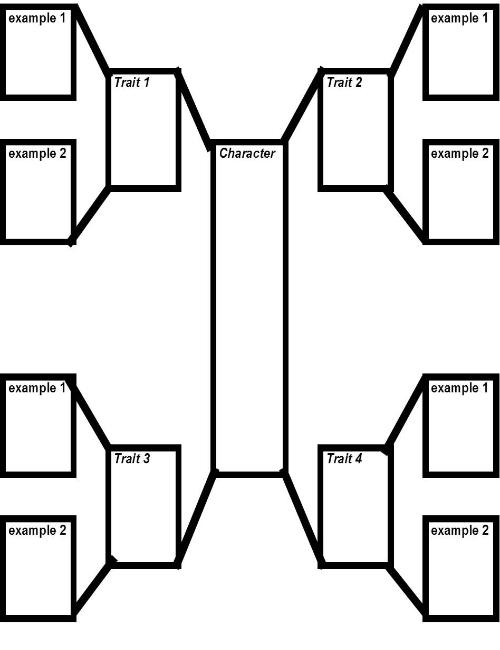
Fill out the Character Profile Chart
Have students fill out a character profile chart on Lisa, Betsy or M.N.
Write the name of the character in the box in the middle of the chart.
Think of 4 characteristics, or traits, that the character has. Describe each with a key word or phrase and write it down one of the 4 boxes that surround the name.
For each trait, find 2 concrete examples of it in the story. Write each in one of the 2 boxes attached to each trait box. Continue this until you have 2 examples for each of the 4 traits.
Character Profile Chart
Discussion
Ask discussion questions of all 9 types.
Key Questions
Why is Betsy telling the story?
What is Lisa doing to herself underneath the teacher’s desk and why do you think she is doing this?
How did M.N. react to what Lisa did to herself? Was she really “powerless” or could she have done more?
What would you have done if your friend was behaving this way?
Does the counselor at school give the parents good advice?
Did Brian do the right thing by breaking up with Lisa and why did he breakup with her?
Is Lisa aware of her behavior all the time?
How do Lisa’s parents handle Lisa’s problem? Why don’t they want to admit she has an illness?
Analyze
Analyze the key paragraph.
Key Paragraph, p. 21
“When she was in school, we began being able to tell when Lisa was having a black day, as we began to call them, and when she was having a fairly good bright day” (p. 21).
Extend
Write
Have each student write a short product based on today’s prompt to connect to the unit theme.
In today’s reading, Betsy thoroughly describes Lisa’s emotions, attitude, style of dress, and overall mood. She paints a clear picture of what it’s like for Lisa, and for those around her, to experience this form of mental illness. So far, Lisa’s parents and the school have let her down. In other words, they seem to be in denial about what is happening to Lisa and they are not getting the help she needs. Her friends are the only ones who seem to notice that she needs serious intervention.
In a three-paragraph narrative essay you will examine a few perspectives. In the first paragraph, describe a bright and dark day for Lisa. Be very specific in your description. You may need to refer to the text. In the second paragraph, compare your good and bad days to Lisa’s. How are they different and how are they similar? In the third paragraph, express how you feel about the adults not being responsible and attentive towards the care of Lisa.
Close
Close by extending today’s lesson to life and the world.
Extend the reading to the student’s lives or to the world.
Day 3
Outcomes for Today
-->
W3. Write narratives to develop real or imagined experiences or events using effective techniques, relevant descriptive details, and well-structured event sequences.
W3c.) Use a variety of transition words, phrases, and clauses to convey sequence and signal shifts from one frame to another.
Prepare
Background
Gather background knowledge about a place, time, event, person, or thing.
Refer to the list of mental health symptoms from the previous day’s reading. Compare these with Lisa’s symptoms. Discuss as a whole group the similarities and differences.
Word Wall
Here are five vocabulary words to teach and add to the Word Wall.
hysteria
phonies
self-conscious
diagnosed
abominable
Read
Review
Start at the beginning and review the story so far.
Read
Read the selection, usually in a Shared Reading Read React Predict Cycle of 2-3 pages.
p. 26-38
Setting
Characters
Pages
High School
Betsy
26-32
Betsy, Lisa, M.N., school staff, Elizabeth
33-36
Walking home from school
Betsy, M.N., Lisa
36-38
Respond
Timeline
Agree on the facts in today’s reading, and list the 3-5 most important on the Timeline.
Students might mention:
Bernstein, the counselor, recommends a break from school for Lisa
Lisa is sent on vacation by herself to reduce her stress
Lisa returns to school with no improvement
Lisa shares that she was in a “rest home”
N. decides that she and Betsy are going to help Lisa all on their own
Map
Add to ongoing class activities like a KWL chart or map: where did the characters go?
Open Mind Portrait
New character information can be added to an Open Mind Portrait
KWL Chart
An answer can be added to a question from the KWL Chart
Map
A new location or change can be added to the map
Explore
Activity
Explore the reading more deeply with a visual or oral language activity.
Open Mind Portrait
Have students create an open mind portrait of Lisa, Betsy or M.N.
Materials:
Large piece of stiff paper for each character, like 11x17 oak tag
Paper for bubbles
Markers, crayons, pens, pencils, or paint
Construction or tissue paper, scissors and glue sticks if desired
Step One: create a large head shot of the character
Imagine what you think the character looks like from the descriptions in the text as well as your imagination. You can make a list of these details to help you draw the character, if you wish.
Decide how much of the character you wish to show: just the head and face? From the shoulders up? From the waist up? The whole person? You might want to include at least the shoulders to include some clothing details. You might want to show the size differences between characters.
Draw the characters head shot including the face on the large piece of paper. You could also cut the paper to form the head.
Illustrate your portrait with colors, construction paper or whatever will make the character colorful.
Step Two: place cartoon bubbles of character thoughts around the portrait
Cut cartoon bubbles out.
Write things the character thinks, or says to himself, on each bubble.
Put the bubbles up around the portrait.
Step Three: add bubbles as you learn new things about the character
Read the story further and identify new things you have learned about the character, or ways the character has changed.
Follow step 2 to create and place additional bubbles.
Variations of this Open Mind Portrait
You can use this process for any character in the story
You can use bubbles for what the character says, says to himself or herself, or does. You could make each of these different colors if you wish.
You could add bubbles for what the character learns, or ways the character changes, and use different colors for each.
You could use different colors for the beginning, middle and end of the story. Remember in the beginning you are introduced to the setting, the characters and the problems they have. In the middle you learn about the roadblocks to the characters solving their problems, and conflicts occur. In the end of the story those conflicts reach a peak and then resolve with a resolution of the character’s problems.
You could use different colors for the phases you see in a story or the development of a particular character.
Instead of using bubbles you could write the bubble contents on the back of the portrait. You could use any of the variations above with color or print, or create columns or boxes for different categories or phases.
You could literally open the head like a hinge and list the contents [as though they were escaping from the space] using any of these variations.
You could make an Open Mind Portrait of yourself using any of the above variations.
Variations for Writing
You could use the OMP to help write a character sketch, or to help decide what a character might do in a story.
Discussion
Ask discussion questions of all 9 types.
Key Questions
Why did the Counselor recommend Lisa have a break from school?
Lisa’s parents sent her to Florida for six weeks. They did not go with her. Why do you think at least one of them didn’t go?
While Lisa was in Florida, she stayed in a rest home. How was she treated? Did she receive care and attention?
The more we find out about Lisa’s parents, the easier it is to lose respect and understanding for them. They appear to be very weak. Why did Lisa’s parents only listen to part of what was recommended?
Betsy stated that Lisa’s parents are phony and villainous. Why did she say this?
Why were the staff and students treating her as if “she might go off the deep end at any minute?”
What made Betsy mad?
Why does M.N. ask Betsy for help in helping Lisa?
What is M.N.’s first plan to help Lisa?
Do you predict M.N. and Betsy will be successful helping Lisa?
Analyze
Analyze the key paragraph.
Key Paragraph, p. 38
“‘We have to convince Lisa’s family that she’s in real danger,’ M.N. said after a moment. ‘We’ll go to her house and tell her parents what’s happening in school, and that Lisa wasn’t kidding, after all. They can’t help but be upset and they’ll have to get some professional help for her’” (p. 38).
Extend
Write
Have each student write a short product based on today’s prompt to connect to the unit theme.
M. N. and Betsy want to help Lisa. They now realize how serious of a problem Lisa has. They feel like it’s up to them or she won’t get the help she needs. M.N. and her ever-positive attitude, believes that she can convince Lisa’s parents that she needs professional help.
In a two-paragraph narrative essay, state what you think M.N. will say to the Shillings in the first paragraph. In the second paragraph, what would you say to them if given the opportunity?
Close
Close by extending today’s lesson to life and the world.
Extend the reading to the student’s lives or to the world.
Day 4
Outcomes for Today
-->
W3. Write narratives to develop real or imagined experiences or events using effective technique, relevant descriptive details, and well-structured event sequences.
W3d.) Use precise words and phrases, relevant descriptive details, and sensory language to capture the action and convey experiences and events.
Prepare
Background
Gather background knowledge about a place, time, event, person, or thing.
History of Mental Illness
In ancient times, many cultures viewed mental illness as a form of religious punishment or demonic possession. During the Middle Ages, people who suffered from mental illness were thought to be in need of religion. Negative theories continued into the 18th century. In the U.S., mentally ill people were confined to unsanitary and degrading institutions. By the mid-1800s, the negative stigmatization started to change. Mental health advocates demanded better care and deinstitutionalization, which improved the treatment and quality of life. Today, there are many high-quality treatment programs and long-term psychiatric care. With the addition of government-funded health programs, the public’s perception of those who are inflicted with mental illness has vastly improved.
Word Wall
Here are five vocabulary words to teach and add to the Word Wall.
dawdled
arcs
intruded
misinterpreted
presumptuous
Read
Review
Start at the beginning and review the story so far.
Read
Read the selection, usually in a Shared Reading Read React Predict Cycle of 2-3 pages.
p. 39-44
Setting
Characters
Pages
Shilling’s home
M.N., Brian, Betsy, Mrs. Shilling
39-44
Bernstein’s office
Mr. Bernstein, Betsy
39-44
Respond
Timeline
Agree on the facts in today’s reading, and list the 3-5 most important on the Timeline.
Students might mention:
Betsy and M.N. start helping Lisa by trying to get adults involved
N. tried to convince Mrs. Shilling
Betsy tried to get help from school counselor Mr. Bernstein
Shilling was in denial of any issue with Lisa
Bernstein could not do anything to help due to repercussions from Lisa’s parents
Map
Add to ongoing class activities like a KWL chart or map: where did the characters go?
Explore
Activity
Explore the reading more deeply with a visual or oral language activity.
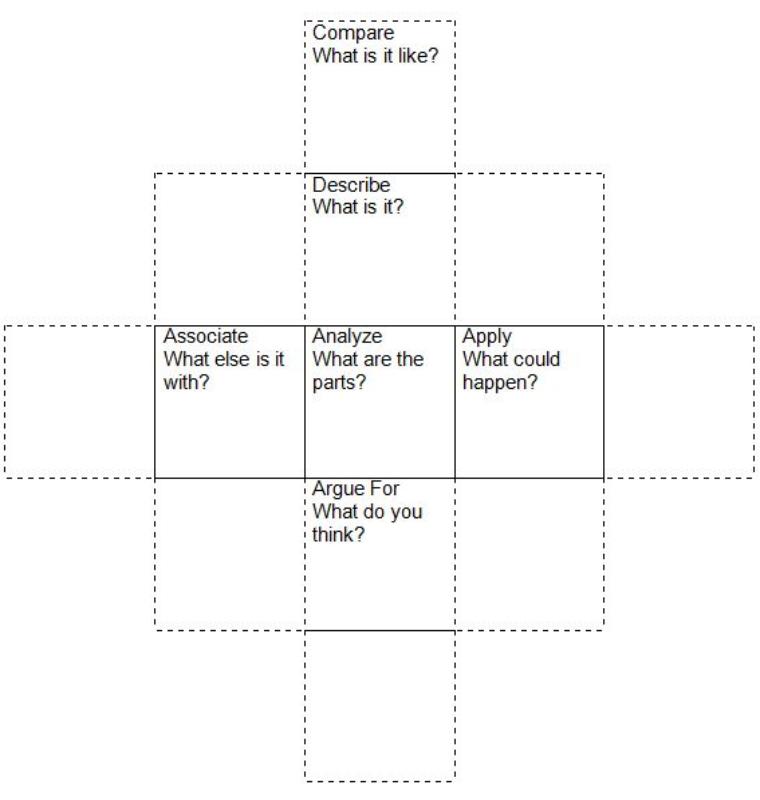
Analytic Cubing:
Have students Cube Lisa’s behaviors. Fill out the six squares by writing about the topic in each square.
Six of the squares will have a question or topic listed inside the square. Six of the squares are information squares and the others are flaps that will help the cube hold together when you assemble the cube. Fill out only the information squares: the ones that have something already printed in them.
In regard to your overall subject, answer the question in each box or write about the topic in each square. For example, if you are writing about an event, like a news story, you would use the 4c12 Cubing Who, What, When, Where, Why form. In the Who square write about who the story is about; in the What square write about what happened; in the When box write about when it happened; in the Where box, write about where it happened; in the Why box, write about why you think it happened.
In each square write the basic, important information you know about this question or topic. Depending on the size of the box, this might be anywhere from 1 to 5 sentences.
Cut out the cube and assemble it following the directions on 2c12.
Cut out the cube along all dotted lines on the form; this will sometimes mean cutting between squares. One of these might be an information square and one might be a flap.
Fold the cube form on all lines to make it easier to assemble. Fold the form back – all the folds should be behind, instead of above, the printed side.
Use a glue stick or paste to apply the adhesive to every shaded square. In you can’t make out the shading, use the glue stick on every flap. None of the information squares should have glue or paste on them.
Fold the cube carefully following the directions on 2c12.
Variations for Cubing
If all the extra flaps are confusing, use the Basic Cube forms instead, and fill in the appropriate questions or topics. After you cut the cube out, use tape to hold together each side. This will work, but it will not be as durable as the cubes with flaps. This means it cannot be handled as much.
You can put together many cubes you have done over a period of time, or combine yours with cubes that other people have done. You could create a wall of cubes, connect the cubes together in a mobile, or make an archway above a door.
You could put something in the middle of the cube to give it more weight and stability. You could stuff it with tissue paper or construction paper, for example.
Variations for Writing
In order to create a research or term paper, the cube can be used as an outline. Each side of the cube can be turned into one or more paragraphs by expanding and further explaining what is written on the cube, gathering more information and finding quotes and primary sources to back up your information.
Any side of the cube can be used to write a paragraph.
7c12 Cubing a Topic or Idea
Discussion
Ask discussion questions of all 9 types.
Key Questions
Why do some parents not listen to young people?
What is wrong with Mr. Bernstein? He admits to Betsy that he agrees with her and Lisa’s problem is serious. He says he has “to find better reasons.” What could those reasons possibly be?
Who do you think is responsible for helping students who need extra help?
How has identifying and helping those with special needs changed in 30 years?
Would you be able to face a friend’s parents to get help for your friend? Why or why not?
Adults listen to young people more now than they did 30 years ago. What do you think is the reason for this change?
Why do Lisa’s parents continue to deny her problem?
If you were Lisa would you want your friends to talk to your parents? Why or why not?
Analyze
Analyze the key paragraph.
Key Paragraph, p. 44
“‘Furthermore, she didn’t appreciate the fact that I, a presumptuous sixteen-year-old child, should come to tell her about her own family and how to run it, thank you very much…’
‘Mrs. Shilling is nothing if not a plainspoken woman,’ M.N. said with a mean sort of smile. ‘Anyway, she knows her family well enough to take care of it, she said. Hadn’t she just spent God knows how much money sending Lisa away for six whole weeks to do nothing but laze around in the sun dreaming?’” (p. 44).
Extend
Write
Have each student write a short product based on today’s prompt to connect to the unit theme.
Write a two paragraph narrative essay by answering the following questions: What is the inference Mrs. Shilling is making in the key paragraph? Does she really know what is going on in her family? What do you think went through Mrs. Shilling’s mind when she found out that Lisa repeatedly poked holes in her hand? What does she think when Lisa has her drastic mood swings? What is she thinking when Lisa wears clothes that reflect her extreme happiness or harrowing sadness? What does Mrs. Shilling think when Lisa tells her she needs help? Why would her parents let her go on a rest for six weeks all by herself?
Close
Close by extending today’s lesson to life and the world.
Extend the reading to the student’s lives or to the world.
Day 5
Outcomes for Today
-->
W3. Write narratives to develop real or imagined experiences or events using effective technique, relevant descriptive details, and well-structured event sequences.
W3b.) Use narrative techniques, such as dialogue, pacing and description, to develop experiences, events, and/or characters.
Prepare
Background
Gather background knowledge about a place, time, event, person, or thing.
How to give an effective speech?
When preparing to give a speech, adhere to the following guidelines:
Be clear, specific, descriptive; state your main idea right away; practice it beforehand; write down important notes/facts/observations for reference and be genuine by showing your compassion and desire to improve and resolve the situation/conflict/area of concern.
Word Wall
Here are five vocabulary words to teach and add to the Word Wall.
schizophrenia
gulch
haughtily
psychology
theology
Read
Review
Start at the beginning and review the story so far.
Read
Read the selection, usually in a Shared Reading Read React Predict Cycle of 2-3 pages.
p. 45-56
Setting
Characters
Pages
M.N.’s home
Lisa, Betsy, M.N.
45-56
Respond
Timeline
Agree on the facts in today’s reading, and list the 3-5 most important on the Timeline.
Students might mention:
The first group therapy session for Lisa
N and Betsy confront Lisa with their ideas
Lisa listens and tells them it will be very hard
Lisa advises them to include Elizabeth
N. and Betsy start reading all they can about mental illness
Map
Add to ongoing class activities like a KWL chart or map: where did the characters go?
Explore
Activity
Explore the reading more deeply with a visual or oral language activity.
Open Mind Portrait
Have students in partners create an open mind portrait of Lisa being confronted by her friends in chapter 8.
Discussion
Ask discussion questions of all 9 types.
Key Questions
Why did Betsy and M.N. want to meet alone with Lisa?
How did Lisa respond to them?
How would you describe the bond Betsy and M.N. have with Lisa?
Why do you think Lisa wanted Elizabeth involved?
Where are Betsy and M.N. looking to find all answers to Lisa’s mental illness? Do you think they will find the information they need to help Lisa? Why or why not?
What might be some potential problems with Lisa’s friends trying to help and/or cure her?
What happens when an amateur tries to become a professional by reading a book?
What do you predict will happen to Lisa?
Analyze
Analyze the key paragraph.
Key Paragraph, p. 48
“‘Betsy,’ Lisa said, ‘that’s what scares me the most. I already know what’s happened. What I don’t know is what’s coming next. I can’t turn anything off. I tried to, in Florida. But now it’s here and almost comfortable, if you know what I mean. Familiar. I even like it a little, though it scares me. About the only thing I can think to do is sink into it. Sink in and let them take me away when the time comes.’ She said this without bitterness, without fear, like a weather report on the telephone: flat, emotionless, distant” (p. 48).
Extend
Write
Have each student write a short product based on today’s prompt to connect to the unit theme.
In today’s reading, Lisa seems very receptive to Betsy and M.N.’s desire to want to help her. Lisa even empathized with them when they told her that her parents and Dr. Bernstein were not very supportive and seemed very hesitant in wanting to help Lisa.
In a two-paragraph narrative essay, respond to the following questions: Lisa said she already knows what’s happened. What do you think she means by that? What does Lisa mean when she says she does not know what’s coming next? What is she comfortable with and feels she likes “it” a little? How is Lisa handling her mental illness? Why would she talk about being taken “away when the time comes”? Why do you think her friends are enough to sustain her spirit? Should they be doing more? Why or why not?
Close
Close by extending today’s lesson to life and the world.
Extend the reading to the student’s lives or to the world.
Day 6
Outcomes for Today
-->
W3. Write narratives to develop real or imagined experiences or events using effective technique, relevant descriptive details, and well-structured event sequences.
W3b.) Use narrative techniques, such as dialogue, pacing and description, to develop experiences, events, and/or characters.
Prepare
Background
Gather background knowledge about a place, time, event, person, or thing.
Have students take a look at these famous speeches. Have them write down the things people say to make them powerful. Have Students take notes on beginning, middle and end of these speeches.
Here are five vocabulary words to teach and add to the Word Wall.
deception
futile
patronizing
decompression
Incident
Read
Review
Start at the beginning and review the story so far.
Read
Read the selection, usually in a Shared Reading Read React Predict Cycle of 2-3 pages.
p. 56-66
Setting
Characters
Pages
High school
Betsy, Mr. Bernstein
56-57
Betsy, Elizabeth, M.N., students in cafeteria
57-60
Front of school
Betsy, Elizabeth, M.N.
60-61
Walking home from school
Betsy, M.N.
61
Home of Betsy
Betsy, Lisa
61-66
Respond
Timeline
Agree on the facts in today’s reading, and list the 3-5 most important on the Timeline.
Students might mention:
Girls talk to Elizabeth about helping them with Lisa
Girls wait for Lisa, who does not show up
Girls go to their own homes
Betsy gets an unexpected visitor, Lisa
Lisa asks Betsy never to lie to her and to always be truthful.
Map
Add to ongoing class activities like a KWL chart or map: where did the characters go?
Explore
Activity
Explore the reading more deeply with a visual or oral language activity.
Speech Writing
Have students work in partners. Have them use their speech notes to create a speech to tell their best friend’s parents their son or daughter needs help.
Directions:
This will be a practice persuasive speech. Make sure students use all their notes and maybe some ideas of chapter 9 that Betsy and M.N. tried to use. One partner will be the parent and the other student will be the young person trying to convince the adult that something needs to be done to help their son or daughter. Have student write out what they will say and organize their thoughts. How would they correct the situation if they did not think the parent was listening? Have the student who is being a parent critique their speech and give them feedback on how they can improve. Have each partner play each roll. After they have finished open up a class discussion on what the strengths in the speeches were and some things that might need improvement.
Discussion
Ask discussion questions of all 9 types.
Key Questions
What question did Betsy ask Elizabeth after she agreed to be in their group and help Lisa? What was Elizabeth’s response?
Do you think Mr. Bernstein is an effective counselor?
Why does Lisa not show up after school?
Why do you think Lisa wanted Elizabeth in the group?
How would you describe Elizabeth’s personality?
Who do you think will become Lisa’s closest friend and why?
Why does Lisa choose Betsy to ask for the truth?
Is M.N. only worried about Lisa?
Do you think the group therapy will work with the 3 girls?
Why is Betsy so obsessed with movies and what is the reason why she’s talking about it now?
Analyze
Analyze the key paragraph.
Key Paragraph. p. 61
“‘I guess Elizabeth has something we don’t,’ I said. ‘It certainly grabbed Lisa. We can’t afford to lose her now because she seems sort of cold. We don’t need her. Lisa does. So,’ I said smiling, ‘smile’” (p. 61).
Extend
Write
Have each student write a short product based on today’s prompt to connect to the unit theme.
Betsy was trying to be mature and objective in her attempts to reason with M.N., after their conversation with Elizabeth. In descriptive detail (provide 2 quotes from the novel) about why M.N. is mad at Elizabeth. What do you see as positive personality traits in Betsy? What about M.N.? What do you think Betsy instinctively knows about Elizabeth? Formulate your response in two narrative paragraphs.
Close
Close by extending today’s lesson to life and the world.
Extend the reading to the student’s lives or to the world.
Day 7
Outcomes for Today
-->
W3. Write narratives to develop real or imagined experiences or events using effective technique, relevant descriptive details, and well-structured event sequences.
W3d.) Use precise words and phrases, relevant descriptive details, and sensory language to capture the action and convey experiences and events.
Prepare
Background
Gather background knowledge about a place, time, event, person, or thing.
Have students pick a topic from the following website. Have them research information to prove their point. Have students practice taking notes.
Here are five vocabulary words to teach and add to the Word Wall.
confidence
symptoms
psychotic
dissect
conniving
Read
Review
Start at the beginning and review the story so far.
Read
Read the selection, usually in a Shared Reading Read React Predict Cycle of 2-3 pages.
p. 66-74
Setting
Characters
Pages
Betsy’s house
Betsy, Elizabeth, M.N., Lisa
66-74
Respond
Timeline
Agree on the facts in today’s reading, and list the 3-5 most important on the Timeline.
Students might mention:
Elizabeth shows up at Betsy’s house
Lisa disappears
M.N. shows up at Betsy’s house
Lisa appears from a closet in Betsy’s house
The girls start their first therapy session and M.N. is verbally attacked by Lisa
Map
Add to ongoing class activities like a KWL chart or map: where did the characters go?
Explore
Activity
Explore the reading more deeply with a visual or oral language activity.
Speech Writing
Using information gathered from part one of this lesson have students do a 3 minute speech on their topic.
Directions: Using the note cards students have created, have students share their ideas with a partner. Make sure the partner can see the beginning, middle and the end of the speech and the time is not more then 3 minutes and not less then 2 minutes. Have each of the partners share their speech from their cards.
Discussion
Ask discussion questions of all 9 types.
Key Questions
Why do you think Lisa hid in the closet?
What terrifies Lisa?
How does Elizabeth explain Lisa’s mental illness? Be specific.
What is Elizabeth’s reasoning for why Lisa seems closer to Betsy than M.N.?
What happened to Lisa right after she explained to Betsy, M.N. and Elizabeth what one of her outbursts is like?
Does Lisa appear to have more than one personality?
Why did M.N. cry? Do you think M.N. is an effective therapist?
Analyze
Analyze the key paragraph.
Key Paragraph, p. 73
“By that time, M.N. was crying, sort of shaking and just letting tears streak down her cheeks. She sat on the couch, her arms at her sides, crying right along with Lisa” (p. 73).
Extend
Write
Have each student write a short product based on today’s prompt to connect to the unit theme.
In the paragraph following the Key Paragraph (you may need to refer back to the novel), Lisa abruptly stops crying. Why? What does she do? How does she come across now? (What is Lisa thinking and what is she feeling?) Have the roles of the patient been reversed? Or, are they in this together? What did Lisa ask M.N. to do?
Answer these questions in a one-paragraph (6-8 sentences) narrative response. Be specific and detailed. Quote the author where appropriate.
Close
Close by extending today’s lesson to life and the world.
Extend the reading to the student’s lives or to the world.
Day 8
Outcomes for Today
-->
W3. Write narratives to develop real or imagined experiences or events using effective technique, relevant descriptive details, and well-structured event sequences.
W3d.) Use precise words and phrases, relevant descriptive details, and sensory language to capture the action and convey experiences and events.
Prepare
Background
Gather background knowledge about a place, time, event, person, or thing.
Have students start thinking about a topic they will want to do their formal speech. At the end of the week they will present their topic to the class. Here are a few ideas on topics they can use or they can come up with their own topic.
Here are five vocabulary words to teach and add to the Word Wall.
confidante
reinstated
deacon
devastating
abnormal
Read
Review
Start at the beginning and review the story so far.
Read
Read the selection, usually in a Shared Reading Read React Predict Cycle of 2-3 pages.
p. 74-88
Setting
Characters
Pages
Betsy, Elizabeth, M.N.,
74-76
M.N., Betsy, Mr. Fickett, Mr. Milne, Lisa, Mr. Shilling
76-81
M.N.’s house
Elizabeth, M.N., Betsy, Lisa
82-88
Respond
Timeline
Agree on the facts in today’s reading, and list the 3-5 most important on the Timeline.
Students might mention:
N.’s has studied all the books which has made her an expert
M.N. decides to include her father who turns to Mr. Milne
Both men address Mr. Shilling with information on Lisa
The adults fail at convincing Mr. Shilling there is something wrong
The girls play a joke on M.N. but she takes it seriously
Map
Add to ongoing class activities like a KWL chart or map: where did the characters go?
Explore
Activity
Explore the reading more deeply with a visual or oral language activity.
Write out your speech
Have students take information from the first part of this lesson and apply it to their speech they will present to the class at the end of the week. Use the information they have gathered and topic they have picked. Remind them they have practiced with 3-minute quick speech. Also remind students to have beginning, middle and end.
Discussion
Ask discussion questions of all 9 types.
Key Questions
Why does Mr. Fickett have Mr. Milne go with him to talk to Mr. Shilling?
What type of work does Mr. Fickett do and what did he say to Mr. Shilling in order to schedule an appointment with him?
Why is it so hard for the Shilling’s to accept Lisa’s problem and get her help?
What is Elizabeth’s opinion about “reasonable adults” and do you agree?
What does Mr. Fickett suggest to his daughter, after talking to Mr. Shilling?
Why does M.N. not understand the girls playing a joke on her?
What are your current predictions on what will happen next in the story?
Analyze
Analyze the key paragraph.
Key Paragraph, p. 81
“‘Lisa!’ called her father furiously.
‘No!’ she shouted back. ‘I want help! I need help! I need it! Do something for God’s sake! No, do it for my sake!’” (p. 81).
Extend
Write
Have each student write a short product based on today’s prompt to connect to the unit theme.
Lisa is visibly upset and pleads, again, to her father for help. Shouldn’t this be enough for her parents to see that she has a problem and is not just seeking attention? Why do the Shillings keep denying Lisa’s illness? Do you think that they value the image of maintaining the perfect family more than the health and well-being of their daughter? Why do you think they wouldn’t, at least, ask more questions about how she acts at school? Lisa’s friends and now adults have spoken to Mr. Shilling, but no one seems to be able to help him understand that everything is not perfect. Should Mr. Milne and Mr. Fickett have approached him differently or did they not even have a chance, since it appeared that Mr. Shilling was going to believe what he wanted to believe?
Structure your responses to the questions in a two paragraph narrative essay.
Close
Close by extending today’s lesson to life and the world.
Extend the reading to the student’s lives or to the world.
Day 9
Outcomes for Today
-->
W3. Write narratives to develop real or imagined experiences or events using effective technique, relevant descriptive details, and well-structured event sequences.
W3d.) Use precise words and phrases, relevant descriptive details, and sensory language to capture the action and convey experiences and events.
Prepare
Background
Gather background knowledge about a place, time, event, person, or thing.
Have students take a look at some of the court cases in education. Who is responsible for children, parents or the schools?
What does Mr. Bernstein suggest that the teachers do to help Lisa now that it is approaching the end of the school year?
Why do you think the school is afraid of Lisa’s parents? What could they do to cause them this fear?
In most court cases of this type, who usually wins, the parents or the school? Why?
If you were Lisa’s parents what would you do?
If you were M.N.’s parent what would you do?
If you were a teacher what would you do? Why? What if you could lose your job, would you still do the same thing?
Analyze
Analyze the key paragraph.
Key Paragraph, p. 93
“For another example, one afternoon we were sitting at my house, talking about something our social sciences’ teacher had brought up that day, about one’s image of oneself and the image received by people looking at you. His point was that each of us was guided, to some degree, by what others thought of us, as well as by what we thought of ourselves. Lisa disagreed” (p. 93).
Extend
Write
Have each student write a short product based on today’s prompt to connect to the unit theme.
Do you agree that we are influenced by others’ perceptions of how they see us? Is the image we have of ourselves different from how others view us? Do we sometimes try to change who we are because we want to impress others and we are worried that if they see us as ourselves they will be disappointed? Are we also at the mercy of what society thinks? In other words, if the media promotes being young and beautiful as requirements for attaining success and happiness, do we then try to find ways to maintain a youthful appearance and become overly concerned with our looks in order to be valued? Should we just conform to our own standards in how we present ourselves, or is it acceptable to also be influenced by outside opinions? Incorporate your answers into a two-paragraph essay.
Close
Close by extending today’s lesson to life and the world.
Day 10
Outcomes for Today
-->
W3. Write narratives to develop real or imagined experiences or events using effective technique, relevant descriptive details, and well-structured event sequences.
W3c.) Use a variety of transition words, phrases, and clauses to convey sequence and signal shifts from one frame to another.
Prepare
Background
Gather background knowledge about a place, time, event, person, or thing.
Have students study the Rubric for their speeches they are giving today. (See end of lesson for rubric). Have students look over what they have learned from the Internet lessons on delivering speeches. Give students time to practice with a partner.
Word Wall
Here are five vocabulary words to teach and add to the Word Wall.
sensational
inferior
brittle
circuitous
talisman
Read
Review
Start at the beginning and review the story so far.
Read
Read the selection, usually in a Shared Reading Read React Predict Cycle of 2-3 pages.
p. 97-108
Setting
Characters
Pages
Elizabeth’s house
Betsy, Elizabeth, Lisa, M.N.
97-102
school
Elizabeth, Betsy, M.N., Lisa, Tracy
103-108
Respond
Timeline
Agree on the facts in today’s reading, and list the 3-5 most important on the Timeline.
Students might mention:
Girls meet at Elizabeth’s house without adults
Lisa physically attacks Elizabeth and girls have to break it up
Elizabeth seems to be able to handle it and knows what to do
Lisa makes Betsy and the girls promise if it happens again to call the police
Betsy has issues exposing Lisa to people outside their group
Map
Add to ongoing class activities like a KWL chart or map: where did the characters go?
Explore
Activity
Explore the reading more deeply with a visual or oral language activity.
Speech Presentation
Have students deliver speeches today. Use the rubric to grade speeches. Have students while they are listening do the same. Use rubric for creative feedback for students. After each student is done discuss 2 strengths of speech and 1 thing they can improve upon.
Discussion
Ask discussion questions of all 9 types.
Key Questions
What is Betsy’s concern once they are out of school?
Lisa physically attacked Elizabeth. Why did she choose Elizabeth to abuse?
Why does Elizabeth not fight back or call out for help?
What is Elizabeth’s response after the fight is over?
What are your predictions for Lisa?
How do M.N. and Betsy react to the abuse and do you think their response was appropriate?
Why does Lisa want the girls to call the police if she has another outburst again?
Why does Betsy not want to include or involve outsiders like the police?
Analyze
Analyze the key paragraph.
Key Paragraph, p. 104
“‘That the next time, when I go—nuts, you won’t try to handle it by yourselves. Neither you nor M.N. nor Elizabeth. I want you to call the police’” (p. 104).
Extend
Write
Have each student write a short product based on today’s prompt to connect to the unit theme.
Lisa clearly wants to be responsible for her actions the mental illness has caused. What else does this request about wanting to involve the police say about her as a person? As noted in previous readings, she has repeatedly asked for help because she is aware that something is wrong with her and she is not able to see it coming or control it when she has one of her outbursts. In a two paragraph narrative response, describe Lisa’s strengths and whether or not you believe she is handling her illness in a good way. In the second paragraph, describe your strengths. Are they similar to Lisa’s?
Close
Close by extending today’s lesson to life and the world.
SPEECH RUBRIC
SKILLS
LEVEL 4
LEVEL 3
LEVEL 2
LEVEL 1
Topic
Appropriately focused topic with a clearly communicated understanding of the purpose for the speech
Focused topic with partially demonstrated understanding of the purpose for the speech
Somewhat focused topic or a vague sense of the purpose for the speech, which require the audience to make assumptions
A lack of focus or confused purpose, which result in confusion on the part of the audience
Research Analysis
Clear and convincing command of facts and information with insightful explanations that help to illustrate the speaker’s ideas and arguments
Clear use of facts and information with partially developed explanations in support of the speaker’s ideas or arguments
Partially clear use of facts and information with limited or incomplete explanations to support the speaker’s ideas or arguments
Confusing or incomplete facts with little and/or confusing explanations as to how the facts support the speakers ideas or arguments
Organization
Clearly and logically organized speech with an engaging introduction, a logically sequenced body with appropriate transitions, and a clear and convincing conclusion
Clear attempt at organization with a beginning, middle, and end and an attempt to use transitions
Some inconsistencies in organization and/or a lack of sustained focus throughout the speech with inconsistently use transitions
A lack of organization makes it difficult to follow the speaker’s ideas; speech may be too conversational and may ramble without a clear beginning, middle, or end
Language
Uses sophisticated and varied language that is suited to the topic and audience; word choice is concise, original, and effectively conveys the appropriate tone given the purpose of the speech
Uses appropriate language and word choice, but with less sophistication, expressiveness and/or originality
Use words that may be unsuited to the topic, audience or purpose of the speech; word choice lacks originality and fails to convey an appropriate tone for the speech
Inappropriate use of language distracts the audience because it is too informal or too imprecise given the topic and purpose of the speech
Stylistic Devices
Skillful use of various stylistic devices (e.g., repetition, parallelism, anecdotes, analogies, figurative language, different types of appeals) greatly enhance the effectiveness of the speech
Effective use of at least one stylistic device (e.g., repetition, parallelism, anecdotes, analogies, figurative language, different types of appeals) enhances the effectiveness of the speech
An attempt to use at least one stylistic device (e.g., repetition, parallelism, anecdotes, analogies, figurative language, different types of appeals) but it does not enhance the effectiveness of the speech
No attempt to use stylistic devices to enhance the meaning of the speech
Delivery
A combination of appropriate and effective eye contact, clarity and projection of voice, tone and pace, and gestures significantly enhance the speaker’s words
A combination of appropriate eye contact, clarity and projection of voice, tone and pace, and gestures are used but without the smoothness of level four
Inconsistent use of eye contact, clarity and projection of voice, tone and pace, and/or gestures interrupt the flow of the speech
Lack of eye contact, clarity and projection of voice, tone and pace, and/or appropriate gestures make the speech difficult to follow
Overall Effectiveness
Speaker remains enthusiastic, audience attention is maintained, and the purpose of the speech is achieved
Speaker shows some enthusiasm, the audience remains mostly interested, and the purpose of the speech is achieved
Speaker shows limited enthusiasm, audience interest is not sustained, and the purpose of the speech is only partially achieved
Speaker lacks enthusiasm, the audience shows a lack of interest, and the purpose of the speech is not achieved
Day 11
Outcomes for Today
-->
W3. Write narratives to develop real or imagined experiences or events using effective technique, relevant descriptive details, and well-structured event sequences.
W3d.) Use precise words and phrases, relevant descriptive details, and sensory language to capture the action and convey experiences and events.
Prepare
Background
Gather background knowledge about a place, time, event, person, or thing.
Have students take a look at today’s mental illness and what our society has done to help those with mental illness.
Word Wall
Here are five vocabulary words to teach and add to the Word Wall.
precatatonic
immobility
consommé
absurd
roughshod
Read
Review
Start at the beginning and review the story so far.
Read
Read the selection, usually in a Shared Reading Read React Predict Cycle of 2-3 pages.
p. 108-117
Setting
Characters
Pages
Betsy’s house
Elizabeth, Betsy, Lisa, M.N. Betsy’s father
108-117
Respond
Timeline
Agree on the facts in today’s reading, and list the 3-5 most important on the Timeline.
Students might mention:
The girls meet at Betsy’s and her father walks in
Lisa is cordial then walks through a glass door
Betsy uses her readiness to call appropriate people
Lisa’s parents are convinced she was pushed or provoked
Mrs. Shilling is confronted by Elizabeth, Shilling hits Elizabeth blaming the girls for Lisa’s condition, still in denial
Map
Add to ongoing class activities like a KWL chart or map: where did the characters go?
Explore
Activity
Explore the reading more deeply with a visual or oral language activity.
Open Mind Portrait
Create an Open mind portrait of Lisa, Betsy’s father or Mrs. Shilling or add to an existing one.
Discussion
Ask discussion questions of all 9 types.
Key Questions
Describe Lisa’s state of mind? Have we seen this side of her yet?
Why does Lisa walk through the glass door?
What do you think of Betsy? What kind of friend is she to Lisa?
How did Mrs. Shilling respond to this horrible ordeal? Why do you think she did not immediately leave to be with Lisa in the ambulance?
What do you think of Mrs. Shilling? Why?
What do you think it will take for Lisa to get through to her parents? Or, after this episode, is it possible?
What did you think of how Elizabeth responded to Mrs. Shilling? Did she express herself clearly and with sincere intent? Would you have said something different?
Analyze
Analyze the key paragraph.
Key Paragraph, p. 116
“‘Are you mad?’ Mrs. Shilling answered. ‘There’s nothing at all wrong with Lisa that a little discipline won’t cure. She’s simply a spoiled selfish girl who is showing off for some absurd reason. We have no intention of letting her ride roughshod over us’” (p. 116).
Extend
Write
Have each student write a short product based on today’s prompt to connect to the unit theme.
Who is the one that is “mad?” (“Mad,” in this context, is synonymous with the word “crazy.”) How is it still possible that Mrs. Shilling does not see that her daughter has a very serious, possibly life threatening, problem? Mrs. Shilling goes on to state that her daughter is spoiled and selfish and that she is taking advantage of them. What do you think Mrs. Shilling is thinking? Is she a stable person? What do you predict her childhood was like? Respond in a two-paragraph narrative essay.
Close
Close by extending today’s lesson to life and the world.
SPEECH RUBRIC
SKILLS
LEVEL 4
LEVEL 3
LEVEL 2
LEVEL 1
Topic
Appropriately focused topic with a clearly communicated understanding of the purpose for the speech
Focused topic with partially demonstrated understanding of the purpose for the speech
Somewhat focused topic or a vague sense of the purpose for the speech, which require the audience to make assumptions
A lack of focus or confused purpose, which result in confusion on the part of the audience
Research Analysis
Clear and convincing command of facts and information with insightful explanations that help to illustrate the speaker’s ideas and arguments
Clear use of facts and information with partially developed explanations in support of the speaker’s ideas or arguments
Partially clear use of facts and information with limited or incomplete explanations to support the speaker’s ideas or arguments
Confusing or incomplete facts with little and/or confusing explanations as to how the facts support the speakers ideas or arguments
Organization
Clearly and logically organized speech with an engaging introduction, a logically sequenced body with appropriate transitions, and a clear and convincing conclusion
Clear attempt at organization with a beginning, middle, and end and an attempt to use transitions
Some inconsistencies in organization and/or a lack of sustained focus throughout the speech with inconsistently use transitions
A lack of organization makes it difficult to follow the speaker’s ideas; speech may be too conversational and may ramble without a clear beginning, middle, or end
Language
Uses sophisticated and varied language that is suited to the topic and audience; word choice is concise, original, and effectively conveys the appropriate tone given the purpose of the speech
Uses appropriate language and word choice, but with less sophistication, expressiveness and/or originality
Use words that may be unsuited to the topic, audience or purpose of the speech; word choice lacks originality and fails to convey an appropriate tone for the speech
Inappropriate use of language distracts the audience because it is too informal or too imprecise given the topic and purpose of the speech
Stylistic Devices
Skillful use of various stylistic devices (e.g., repetition, parallelism, anecdotes, analogies, figurative language, different types of appeals) greatly enhance the effectiveness of the speech
Effective use of at least one stylistic device (e.g., repetition, parallelism, anecdotes, analogies, figurative language, different types of appeals) enhances the effectiveness of the speech
An attempt to use at least one stylistic device (e.g., repetition, parallelism, anecdotes, analogies, figurative language, different types of appeals) but it does not enhance the effectiveness of the speech
No attempt to use stylistic devices to enhance the meaning of the speech
Delivery
A combination of appropriate and effective eye contact, clarity and projection of voice, tone and pace, and gestures significantly enhance the speaker’s words
A combination of appropriate eye contact, clarity and projection of voice, tone and pace, and gestures are used but without the smoothness of level four
Inconsistent use of eye contact, clarity and projection of voice, tone and pace, and/or gestures interrupt the flow of the speech
Lack of eye contact, clarity and projection of voice, tone and pace, and/or appropriate gestures make the speech difficult to follow
Overall Effectiveness
Speaker remains enthusiastic, audience attention is maintained, and the purpose of the speech is achieved
Speaker shows some enthusiasm, the audience remains mostly interested, and the purpose of the speech is achieved
Speaker shows limited enthusiasm, audience interest is not sustained, and the purpose of the speech is only partially achieved
Speaker lacks enthusiasm, the audience shows a lack of interest, and the purpose of the speech is not achieved
Day 12
Outcomes for Today
-->
W3. Write narratives to develop real or imagined experiences or events using effective technique, relevant descriptive details, and well-structured event sequences.
W3b.) Use narrative techniques, such as dialogue, pacing, and description, to develop experiences, events, and/or characters.
W3d.) Use precise words and phrases, relevant descriptive details, and sensory language to capture the action and convey experiences and events.
Prepare
Background
Gather background knowledge about a place, time, event, person, or thing.
Have students take a look at today’s mental illness and what our society has done to help those with mental illness.
Here are five vocabulary words to teach and add to the Word Wall.
anxieties
optimism
persuade
suspended
determination
Read
Review
Start at the beginning and review the story so far.
Read
Read the selection, usually in a Shared Reading Read React Predict Cycle of 2-3 pages.
p. 117-123
Setting
Characters
Pages
Betsy’s home
Betsy, M.N., Elizabeth, Betsy’s father and family
117-119
School
M.N., Betsy
119-120
Betsy, Brian, M.N.
121-123
Respond
Timeline
Agree on the facts in today’s reading, and list the 3-5 most important on the Timeline.
Students might mention:
The girls hate not being in contact with Lisa
M.N. and Betsy noticed Elizabeth missed a couple of days of school
Betsy realizes Elizabeth has had some experience with mental illness
M.N. and Betsy run into Brian and start talking to him
The girls meet at Elizabeth’s house
Map
Add to ongoing class activities like a KWL chart or map: where did the characters go?
Explore
Activity
Explore the reading more deeply with a visual or oral language activity.
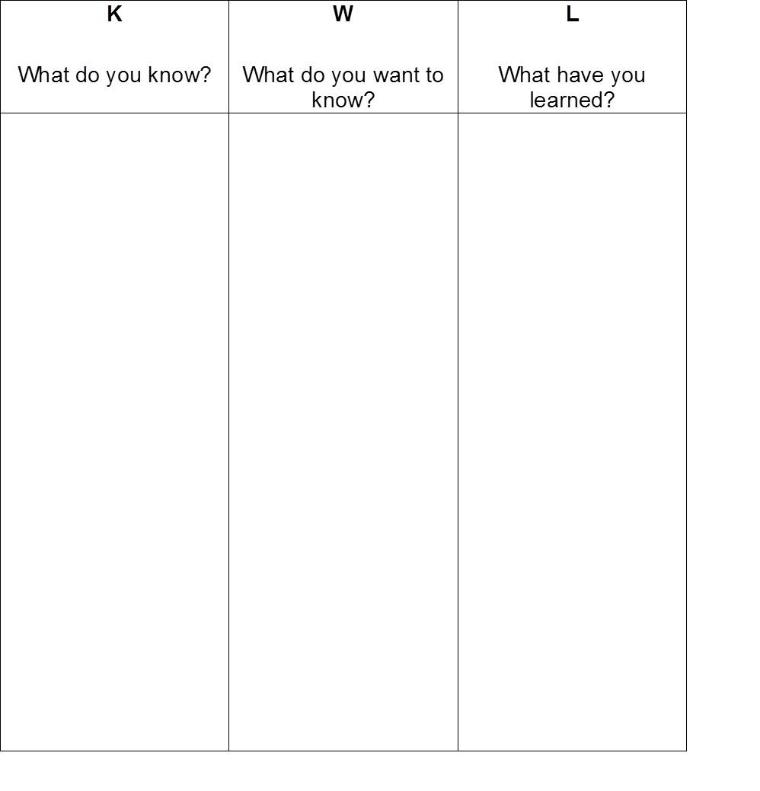
KWL Chart
Have students fill out a K-W-L chart on the story currently. Discuss what they want to know and why?
Materials
KWL Chart
Step One: Read the chapter or segment you wish to analyze
Step Two: Fill out the K [know] column: what do you know?
What key things do you know from the story or explanation you have read so far? This might be who, what, where, when, why, or how information.
Write this information concisely in the K [What do you know?] column.
Step Three: Fill out the W [want] column: what do you want to know?
Given what you know, what would you like to know about this story or topic, about what has happened or will happen in the future?
Write this information concisely in the W [What do you want to know?] column.
Step Four: Fill out the L [learned] column: what have you learned?
As you read more of the story, or learn more about the topic, ask yourself what you have learned. Do you have answers to any of the questions in your W column: what you wanted to know?
Write this information concisely in the L [What have you learned?] column. You may want to do this at various times as you learn. You may want to check off the questions in the W column when you answer them in the L column.
Step Five: Review the chart when it is complete
Variations of the KWL Chart
You can do this chart for any topic you are trying to learn about.
This can be done on worksheets, or written on a big piece of paper, like chart paper or butcher paper. This can also be written on a white board or black board; the shape of the chart is easy to copy.
When you are analyzing a story, you can copy a KWL chart on a piece of paper and quickly take the story apart. This can be a helpful strategy on a test. This can use the same strategy for a nonfiction topic, a problem or a case study.
You can do this individually, in pairs, in a small group, or as part of a large group.
Variations for Writing
Write a paragraph from any of the 3 columns, K, W or L, of the chart.
KWL chart
Discussion
Ask discussion questions of all 9 types.
Key Questions
What kind of relationship does Betsy have with her father?
Betsy believes they have “failed” Lisa. Do you agree with her? Do you think the girls could have done more to help her?
Elizabeth missed two days of school. Where do you think she was?
How well is M.N. dealing with Lisa’s problems?
If Elizabeth were to confide in either M.N. or Betsy, which one do you think she will choose? Why?
Why do you think Elizabeth suddenly returns and asks the girls over to her house?
The Shillings are not in today’s reading, but do you think that by now Lisa’s parents have realized how sick she is?
What is M.N.’s strength within this group? Do you think this experience has helped her mature? Why or why not?
Analyze
Analyze the key paragraph.
Key Paragraph, p. 122
“And then I wondered what was going on. It had to be something about Lisa, but what? I gave up trying to guess, because I had recently begun to suspect that every time you expect one thing from life, something else usually happens. There was no point in being constantly disappointed” (p. 122).
Extend
Write
Have each student write a short product based on today’s prompt to connect to the unit theme.
In the key paragraph, Betsy was questioning what was going on with Elizabeth, who had not been in school for the past two days. Elizabeth called Betsy on the phone and asked her to come over for dinner. M.N. was going to join them. Do you agree with Betsy that when you have expectations that something will happen, something else usually happens in its place? Is it always something that you did not expect? When Betsy stated that there’s “no point in being constantly disappointed,” that implies that it’s usually negative. Is that always the case? Reflect on your own life and provide detailed examples of situations where something happened that was not what you expected. Was it good or bad? How did you feel and react? Did you learn anything from the experience? When this happens do you feel constantly disappointed or are you able to see it from a more positive perspective?
Compose your response in a three-paragraph essay.
Close
Close by extending today’s lesson to life and the world.
Extend the reading to the student’s lives or to the world.
Day 13
Outcomes for Today
-->
W3. Write narratives to develop real or imagined experiences or events using effective technique, relevant descriptive details, and well-structured event sequences.
W3b.) Use narrative techniques, such as dialogue, pacing, and description, to develop experiences, events, and/or characters.
Prepare
Background
Gather background knowledge about a place, time, event, person, or thing.
Have students look at some of the treatments for mental disease.
What are some of the issues with some of the treatments?
Here are five vocabulary words to teach and add to the Word Wall.
aquiline
analyst
docilely
Technicolor
extraordinary
Read
Review
Start at the beginning and review the story so far.
Read
Read the selection, usually in a Shared Reading Read React Predict Cycle of 2-3 pages.
p. 123-130
Setting
Characters
Pages
Elizabeth’s house
M.N., Elizabeth, Betsy, Neil Donovan
123-130
Respond
Timeline
Agree on the facts in today’s reading, and list the 3-5 most important on the Timeline.
Students might mention:
The girls arrive at Elizabeth’s to find Dr. Donovan
Betsy is very attracted to the Doctor
The Doctor talks to each of the girls individually about Lisa
Betsy seems to be more concerned about flirting then talks intensely about Lisa
A plan is in the making with Dr. Donovan
Map
Add to ongoing class activities like a KWL chart or map: where did the characters go?
Explore
Activity
Explore the reading more deeply with a visual or oral language activity.
KWL Chart
Fill in more of your K-W-L chart from the previous chapter. Answer what questions you had and fill in more that you have now. Make predictions about what will happen next to each of the girls.
Discussion
Ask discussion questions of all 9 types.
Key Questions
Elizabeth knows a psychiatrist, Neil Donovan, who she believes can help Lisa. Why does he talk to the girls individually?
How does M.N. feel about this opportunity to speak to a real trained mental health professional?
Why has Elizabeth chosen this particular doctor?
What does this reveal about Elizabeth?
Why does Betsy feel especially close to Elizabeth now?
Who is paying for Dr. Donovan’s services?
Why does Betsy think Lisa might commit suicide?
What does Elizabeth tell Betsy about this doctor?
Analyze
Analyze the key paragraph.
Key Paragraph
“‘Anyway it wasn’t difficult for him to remember when I was sick. And he agreed that Lisa should have help now, even if her own family is unwilling to give it to her. I’ll pay him back, of course, as soon as I can’” (p. 128).
Extend
Write
Have each student write a short product based on today’s prompt to connect to the unit theme.
We find out that Elizabeth use to see Dr. Donovan for an undisclosed illness. He was able to treat her with success. Now she wants him to give Lisa the treatment she needs in order to get better. Elizabeth’s father offered to pay for Dr. Donovan’s services, and Elizabeth wants to pay him back. What does this tell you about Elizabeth’s character? Describe her personality. She appears to have chosen a life of high moral and ethical values. Do you know anyone, including yourself, who shares these same principles? Would you do the same for a friend? Respond in a 2-paragraph essay.
Close
Close by extending today’s lesson to life and the world.
Extend the reading to the student’s lives or to the world.
Day 14
Outcomes for Today
-->
W3. Write narratives to develop real or imagined experiences or events using effective technique, relevant descriptive details, and well-structured event sequences.
W3d. ) Use precise words and phrases, relevant descriptive details, and sensory language to capture the action and convey experiences and events.
W3e. ) Provide a conclusion that follows from and reflects on the narrated experiences or events.
Prepare
Background
Gather background knowledge about a place, time, event, person, or thing.
Have student take a look at different editorials. Have them take notes on what needs to be in an editorial and what should not be in an editorial.
Word Wall
Here are five vocabulary words to teach and add to the Word Wall.
unyielding
tentatively
seize
futile
torrent
Read
Review
Start at the beginning and review the story so far.
Read
Read the selection, usually in a Shared Reading Read React Predict Cycle of 2-3 pages.
p. 131-138
Setting
Characters
Pages
Betsy’s house
Betsy, Dr. Donovan, Betsy’s dad
131-132
Elizabeth’s house
Dr. Donovan, Elizabeth
132
school
Elizabeth, Betsy, M.N., M.N.’s father
133
Elizabeth’s house
Dr. Donovan, Elizabeth, M.N., Betsy
134-136
Lisa’s room in the hospital
Elizabeth, M.N., Betsy, Dr. Donovan, Lisa
136-138
Respond
Timeline
Agree on the facts in today’s reading, and list the 3-5 most important on the Timeline.
Students might mention:
Donovan researches through teachers and students
Dr. Donovan reads newspaper article about teen attempted suicide
The doctor finds out it was Lisa
Betsy’s dad talks to Mr. Shilling, who is listening now
Donovan is introduced to Lisa through the girls
Map
Add to ongoing class activities like a KWL chart or map: where did the characters go?
Explore
Activity
Explore the reading more deeply with a visual or oral language activity.
Editorial
Have students use the following outline of an editorial about mental illness.
How to Write an Editorial
General Tips before writing:
Don't always take the easy route: Consider the less popular stand. Remember the axiom which states the role of a newspaper is "to comfort the afflicted and afflict the comfortable." Don't necessarily play Devil's advocate, but don't feel you must represent majority opinion either. Hold your journalistic ideals high when you take your editorial stance.
Take a reasonable approach: Since life has few absolutes or superlatives, remember to consider the degree and circumstance of the truth. Generally avoid inclusive words such as "always" or "never." Be specific and accurate with examples.
Make sure you refine your thesis: As I've said many times, you can't take on the world (or cover some of your topics in the space allowed). Be specific with your thesis and you will argue more effectively.
Here is a common structure for editorials:
The Lead
Attention-getter
_____________
Committal statement
Hook the reader with the opening of the editorial. Perhaps an anecdote will do the trick. Or a shocking statement. The narrative works well. Maybe a direct dialogue directed to the reader will be effective. Whatever your approach, remember to be accurate and specific. Once the reader is firmly with you, indicate your topic and commit to your stance.
The Concession
Strongest argument against your thesis
_____________
but
__________
You may wish to disarm the opposition by recognizing their viewpoint has some validity. This is a good move because those who disagree with your stand will be thinking it anyway.
The point is not rebutted; it is conceded.
The question might arise as to which point to use as a concession. Concede only the hardest point to argue against.
The Body
Strong argument for your thesis
_____________
Stronger argument for your thesis
_____________
Strongest argument for your thesis
_____________
The psychology of argument dictates saving the strongest argument for last. There are two reasons for this strategy:
1. The reader will tend to remember the final argument longer, and
2. To end with a weak argument would invite rebuttal.
The Conclusion
Thesis
___________
Something extra
____________
An effective ending to an editorial is to state or to restate the thesis, then leave the reader with a little something extra: a call to action, a vision of the future, food for thought, etc.
Of course, this basic outline of the editorial has many variations, and many professional different organizations for their editorials.
Discussion
Ask discussion questions of all 9 types.
Key Questions
Do you think Lisa’s suicide attempt was serious? Did she really want to die or was she desperate and calling out for help?
Do you think both of Lisa’s parents now understand the seriousness of her condition?
Why do you think the girls were allowed in the hospital now when Mrs. Shilling told them earlier to stay away?
How did Lisa respond when she met Dr. Donovan?
What do you think will happen to Lisa now?
How did the girls act after Lisa realized she was going to finally get the help she needed?
Analyze
Analyze the key paragraph.
Key Paragraph, p. 138
“We ran through the lobby like three idiot children and burst through the doors. There is a little park on the side of the hospital, and we scrambled to reach it, all three of us holding hands and laughing, and crying, and giggling, and acting like three-year-olds together. And we didn’t stop. We fell about in the grass, and rolled over each other, and shrieked and hooted and hollered and hit each other and then started all over again. And to think, I remembered, that the patient was still inside” (p. 138).
Extend
Write
Have each student write a short product based on today’s prompt to connect to the unit theme.
Betsy, M.N., and Elizabeth are ecstatic beyond what mere words can describe at the prospect of Lisa being cured. They have witnessed firsthand how debilitating mental illness can be. The girls have tirelessly tried to help Lisa with her sickness and they also enlisted the aid of their parents, Lisa’s parents, and school personnel in earnest attempts at getting her the help she needs. They have finally succeeded and are overcome with relief and joy. Though they may seem few and far between, we have all experienced unbelievable happiness, elated surprise, or just a huge feeling of relief…..as if the stress has disappeared. Describe in descriptive detail what the situation was like and what the end result did for you and others who were involved. Were you thankful? Did other people contribute to make it special, profound, memorable? Did this time involve something negative that ended up being something positive? Was your situation already a happy one, but it became even better as a result of what someone else may have done? Think this over carefully, outline your thoughts, and formulate your experience in a three-paragraph narrative essay.
Close
Close by extending today’s lesson to life and the world.
Extend the reading to the student’s lives or to the world.
Day 15
Outcomes for Today
-->
W3. Write narratives to develop real or imagined experiences or events using effective technique, relevant descriptive details, and well-structured event sequences.
W3e. ) Provide a conclusion that follows from and reflects on the narrated experiences or events.
Prepare
Background
Gather background knowledge about a place, time, event, person, or thing.
Have students pick a topic for their editorial. Here are some ideas from USA Today.
Here are five vocabulary words to teach and add to the Word Wall.
resistance
venturing
tautness
cruelty
insulate
Read
Review
Start at the beginning and review the story so far.
Read
Read the selection, usually in a Shared Reading Read React Predict Cycle of 2-3 pages.
p. 139-143
Setting
Characters
Pages
Elizabeth, Betsy, M.N., Neil
139-143
Respond
Timeline
Agree on the facts in today’s reading, and list the 3-5 most important on the Timeline.
Students might mention:
The discussion of Lisa’s recovery
The length of time it will take Lisa to recover
Neil talks about others not picking on Lisa which is rare
The girls talk about the what if’s for Lisa not getting help
Girls have to say their summer good byes since Betsy is the only one staying behind.
Map
Add to ongoing class activities like a KWL chart or map: where did the characters go?
Explore
Activity
Explore the reading more deeply with a visual or oral language activity.
Editorial
Have students write their editorial to a newspaper. Use information in part one from USA Today. Have students write a letter to the editor on a topic they feel strongly about, if they cannot think of one they can use some of the examples from USA Today.
Discussion
Ask discussion questions of all 9 types.
Key Questions
With intense therapy from Dr. Donovan, Lisa is going to be okay. Why then, do you think is M.N. so dramatic?
What do you think Betsy has learned? What do you think she has learned about herself?
The ending of the novel has Betsy pondering the fun of being infatuated with Brian. Why do you think the author chose to end this story in a lighthearted way?
What career paths do you think the girls might choose for their future?
Do you think this experience will establish a deep bond between the girls and they’ll maintain a lifelong friendship? Imagine you are one of the girls. Would you want to always be close or, at the very least, stay in touch?
Analyze
Analyze the key paragraph.
Key Paragraph, p. 141
“‘Poor M.N.,’ Elizabeth laughed. ‘You’ve had a chance to study everything but the patient’s mind. I hate to think of all that reading and no primary source available to you. Maybe Neil could send bulletins’” (p. 141).
Extend
Write
Have each student write a short product based on today’s prompt to connect to the unit theme.
Why is Elizabeth making fun, again, of M.N.? One of the girls had firsthand knowledge of mental illness because of her experiences. Another read extensively on mental illness and observed Lisa attentively. The other was the very compassionate, understanding, and nurturing towards Lisa and the other two girls. Between Betsy, Elizabeth and M.N., who do you think has the most knowledge and understanding about mental illness? Explain your response in descriptive detail in a 2-paragraph final essay.
Close
Close by extending today’s lesson to life and the world.
Extend the reading to the student’s lives or to the world.
FINAL SPEECH
Have students choose a topic from the list below.
America's Future
Will immigrants and minorities revitalize America? (Also America Beyond 2001, Culture Wars, Interracial America and Population)
America's Prisons
Should prisons rehabilitate?
Do prisons create a criminal personality?
Will building more prisons solve prison overcrowding? (Also Crime and Criminals)
America's Victims
*Background--CWI: Victim's Rights, Rape in America
Does Repressed Memory Therapy create victims? (Also Mental Illness; TS: Childhood and Society; CC: Family Violence)
Do talk shows exploit society's victims? (Also TS: Mass Media and Society)
Should the Battered women Syndrome be a legal defense? (Also Violence; CC: Violence Against Women)
Is there a date rape crisis in society? (Only in TS: Family and Personal Relationships and Human Sexuality; CC: Violence Against Women)
Are self-help groups helpful? (Only in TS: Psychological Issues)
Animal Rights
*Background--CWI: Animal Rights
Is animal experimentation justified? (Also: Biomedical Ethics; TS: Bioethical Issues, Moral Issues, Psychological Issues, Science, Technology and Society)
Is eating meat detrimental? (Also: Health and Fitness, 21st Century Earth)
Is hunting animals morally acceptable?
Do zoos preserve endangered species?
Biomedical Ethics
*Background--CWI: Abortion, AIDS Crisis in America
Is fetal tissue research moral? (Also: CC: The Abortion Controversy)
Is surrogate mothering a valuable service? (Also: Feminism; TS: Family and Personal Relationships; CC: Reproductive Technologies)
Should humans be allowed to receive animal organ transplants?
Should HIV-infected surgeons be allowed to operate? (Only in TS: Bioethical Issues)
Should newborns without brains be used as organ donors? (Only in TS: Bioethical Issues; CC: Ethics)
Is electroconvulsive therapy safe? (Only in TS: Psychological Issues)
Should post-menopausal women become pregnant? (Only in CC: Reproductive Technologies)
Could genetic screening of embryos harm society? (Only in CC: Reproductive Technologies)
Speech Check off list
Pick a topic
Find information
Write your Beginning
Organize your ideas
Think of an effective ending
Create note cards (remember to number them)
Write your speech
Practice your speech
Before:
Make sure note cards are in order
Stand up straight
During:
Speak loudly, clearly and slowly
Make sure you make eye contact with audience often
Show emotion when you speak
Try not to fidget
If you miss something keep going don’t stop
After your speech:
Wait for questions
Calmly gather your things and sit down again
Speech Rubric
SKILLS
LEVEL 4
LEVEL 3
LEVEL 2
LEVEL 1
Topic
Appropriately focused topic with a clearly communicated understanding of the purpose for the speech
Focused topic with partially demonstrated understanding of the purpose for the speech
Somewhat focused topic or a vague sense of the purpose for the speech, which require the audience to make assumptions
A lack of focus or confused purpose, which result in confusion on the part of the audience
Research Analysis
Clear and convincing command of facts and information with insightful explanations that help to illustrate the speaker’s ideas and arguments
Clear use of facts and information with partially developed explanations in support of the speaker’s ideas or arguments
Partially clear use of facts and information with limited or incomplete explanations to support the speaker’s ideas or arguments
Confusing or incomplete facts with little and/or confusing explanations as to how the facts support the speakers ideas or arguments
Organization
Clearly and logically organized speech with an engaging introduction, a logically sequenced body with appropriate transitions, and a clear and convincing conclusion
Clear attempt at organization with a beginning, middle, and end and an attempt to use transitions
Some inconsistencies in organization and/or a lack of sustained focus throughout the speech with inconsistently use transitions
A lack of organization makes it difficult to follow the speaker’s ideas; speech may be too conversational and may ramble without a clear beginning, middle, or end
Language
Uses sophisticated and varied language that is suited to the topic and audience; word choice is concise, original, and effectively conveys the appropriate tone given the purpose of the speech
Uses appropriate language and word choice, but with less sophistication, expressiveness and/or originality
Use words that may be unsuited to the topic, audience or purpose of the speech; word choice lacks originality and fails to convey an appropriate tone for the speech
Inappropriate use of language distracts the audience because it is too informal or too imprecise given the topic and purpose of the speech
Stylistic Devices
Skillful use of various stylistic devices (e.g., repetition, parallelism, anecdotes, analogies, figurative language, different types of appeals) greatly enhance the effectiveness of the speech
Effective use of at least one stylistic device (e.g., repetition, parallelism, anecdotes, analogies, figurative language, different types of appeals) enhances the effectiveness of the speech
An attempt to use at least one stylistic device (e.g., repetition, parallelism, anecdotes, analogies, figurative language, different types of appeals) but it does not enhance the effectiveness of the speech
No attempt to use stylistic devices to enhance the meaning of the speech
Delivery
A combination of appropriate and effective eye contact, clarity and projection of voice, tone and pace, and gestures significantly enhance the speaker’s words
A combination of appropriate eye contact, clarity and projection of voice, tone and pace, and gestures are used but without the smoothness of level four
Inconsistent use of eye contact, clarity and projection of voice, tone and pace, and/or gestures interrupt the flow of the speech
Lack of eye contact, clarity and projection of voice, tone and pace, and/or appropriate gestures make the speech difficult to follow
Overall Effectiveness
Speaker remains enthusiastic, audience attention is maintained, and the purpose of the speech is achieved
Speaker shows some enthusiasm, the audience remains mostly interested, and the purpose of the speech is achieved
Speaker shows limited enthusiasm, audience interest is not sustained, and the purpose of the speech is only partially achieved
Speaker lacks enthusiasm, the audience shows a lack of interest, and the purpose of the speech is not achieved
FINAL WRITING PROJECT
Have students write a letter to the editor on a topic they feel strongly about, if they cannot think of one they can use some of the examples from USA Today.