The 40-Minute Lesson Plan is essential elements of the CBL lesson plan. We suggest the teacher reads aloud or uses an audio book for the reading portion. 40-min includes: Background, Wordwall, Key Paragraph, and Writing Prompt
60
The 60-Minute Lesson Plan uses the same elements as the 40-minute plan, but also covers a visual activity and discussion. 60-min includes: Background, Wordwall, Key Paragraph,Writing Prompt and adding the Key Questions
90
The 90-Minute Lesson Plan contains all elements of the lesson plan. If time is available, we recommend using this version to get all of the benefits of CBL. The full lesson includes: Background, Wordwall, Key Paragraph, Writing Prompt, and Key Questions of the 40 and 60 minutes options while incorporating the Mapping Activity, Visual Activity and creating the Timeline as a class.
Day 1
Outcomes for Today
W2. Write informative/explanatory texts to examine a topic and convey ideas, concepts, and information through the selection, organization, and analysis of relevant content.
-->
W2. Write informative/explanatory texts to examine a topic and convey ideas, concepts, and information through the selection, organization, and analysis of relevant content.
Prepare
Background
Gather background knowledge about a place, time, event, person, or thing.
What is tyranny?
Vietnam was divided into two parts, the North and the South. North Vietnam was communist, South Vietnam was anti-communist. During the Vietnam War, the North and South fought against each other. The North won the war. The entire country came under communist rule. The new government arrested several hundred thousands of military officers and government workers who used to fight for or work for South Vietnam. They put them in “re-education camps”, which were like prison camps. They often tortured and abused the people in the camps. The new government also made up fake charges and arrested people who were wealthy or who held on to old traditions that the new government leaders did not like.
How can people protect themselves against tyranny?
Word Wall
Here are five vocabulary words to teach and add to the Word Wall.
Introduce five important, useful words from today’s reading.
superstition 3)
scoffed (5)
scorching (7)
commemorated (12)
infirmities (14)
Read
Review
Start at the beginning and review the story so far.
As today is day 1 of Goodbye, Vietnam have students look at the front cover and read the back. Predict what the novel will be about
Read
Read the selection, usually in a Shared Reading Read React Predict Cycle of 2-3 pages.
p. 3-14
Setting
Characters
Pages
Mai’s home
Father, mother, grandmother, Mai, Anh, Thant
3-14
Respond
Timeline
Agree on the facts in today’s reading, and list the 3-5 most important on the Timeline.
Students might mention:
Mai’s family is struggling to survive in Vietnam.
Her uncle’s family escaped and fled for another country by boat.
Her grandmother is a “healer” and wanted by the police for not conforming.
Her father has skills as a mechanic.
The family decides to flee Vietnam and is going to escape.
Map
Add to ongoing class activities like a KWL chart or map: where did the characters go?
Map
Create a class poster of Vietnam and Hong Kong track the family’s progress as they leave their country.
Calendar
Create a poster symbolic of the Vietnamese Calendar.
Explore
Activity
Explore the reading more deeply with a visual or oral language activity.
Open Mind Portrait
Create an Open Mind Portrait of Mai
Discussion
Ask discussion questions of all 9 types.
Key Questions
Why is Anh’s birthday significant to her personality?
How can being a healer be a threat to a government?
Is it appropriate to have Thant be the family favorite? Explain.
Why doesn’t grandmother call any of the kids “number one child”?
If you had to work in the fields instead of going to school would you do it?
Analyze
Analyze the key paragraph.
Key Paragraph, p. 9
“It was my job to start the fire for the morning tea. I hurried into my trousers and shirt and went outside to bring in rice stalks and coconut shells to fuel the fire. The pale sunlight was tangled in the branches of the great mango tree in the village and the object of much veneration. My grandmother said its great pools of shade attracted spirits that lounged about under the green canopy. We were forbidden to get too close to the tree lest we interfere with the spirits, but when my grandmother wasn’t looking Thant would scramble up the trunk like a monkey and steal the fruit” (p. 9).
Extend
Write
Have each student write a short product based on today’s prompt to connect to the unit theme.
Review the theme: Integrity
Having integrity means following moral standards of behavior. Many of these moral standards are the same among all cultures and peoples, such as honesty. Other standards are unique or special to specific cultures.
Pretend you work for a publishing company that produces travel books. You are assigned to write the culture section of a travel book on Vietnam. Describe in detail the culture of Vietnam based on today’s reading. You may want to keep in mind:
Old ways vs. new ways in Vietnamese culture and religion
Cultural differences between males and females
Government influences on the lives of its citizens
Holidays
Any other things you learned about the culture in Vietnam
Close
Close by extending today’s lesson to life and the world.
Extend the reading to the student’s lives or to the world.
Day 2
Outcomes for Today
W2. Write informative/explanatory texts to examine a topic and convey ideas, concepts, and information through the selection, organization, and analysis of relevant content.
-->
W2. Write informative/explanatory texts to examine a topic and convey ideas, concepts, and information through the selection, organization, and analysis of relevant content.
Prepare
Background
Gather background knowledge about a place, time, event, person, or thing.
When is it right to escape a bad situation?
Due to the horrors people in Vietnam experienced under communist rule, many people wanted to escape the country. Here is how one boy explained why his family wanted to escape Vietnam:
“My family and I also wanted to escape immediately but because of my circumstances; I had to wait five years for opportunities to escape. In 1975, I was 14 year old and living with my family of 12 people; I had 5 sisters and 4 brothers. My father was a wealthy businessman in Ho Chi Minh City, formerly Saigon, so we were upper class. Because of this, my father was deprived of all his wealth by the Vietnamese Communist government and more brutally than this, they put him in jail, what they call a “re-education camp,” for three years. I never forgot the day when ten policemen broke into our house during a birthday party for one of my sisters. They came in, handcuffed my father, and then they took him out of the house and put him in the police car and drove him away. They put us together in the living room, and they stole everything in the house. They took all my father’s ten houses and everything in them.
They accused him of being part of the American CIA, collaborating with the “American Empire” and making a fortune on the exploitation of the sweat and blood of hard-laboring civilians. These charges were made up to put him in prison without a trial.
In 1978 my father was released from jail. When he realized that life under the Communist rule would be impossible, he immediately began looking for the ways get us out of the country. My eldest brother was a lieutenant in the Vietnamese army, so he had the opportunity to leave for America on an American War ship the day the South Vietnam government collapsed.”
Here are five vocabulary words to teach and add to the Word Wall.
ancestors (16)
ceased (17)
barbarian (21)
lurking (22)
wailing (22)
Read
Review
Start at the beginning and review the story so far.
Read
Read the selection, usually in a Shared Reading Read React Predict Cycle of 2-3 pages.
p. 15-25
Setting
Characters
Pages
Road to the village
Mai, Thant, Anh
15-17
The Chans Store
Mai, Thant, Anh
17-20
The family home
Mai, Thant, Anh, mother, father, grandmother
20-24
The Road to Go Cong
The Family
25
Respond
Timeline
Agree on the facts in today’s reading, and list the 3-5 most important on the Timeline.
Students might mention:
Mai, Anh, and Thant were sent to town to purchase supplies;
On the road they visited the tombs of their ancestors;
They passed the Buddhist Temple that was shut down by the government;
They got to Chen’s store and their belongings were for sale;
They were told about the trip when they got home;
Upon-leaving Mai realized that her grandmother was bringing the Tet ducks.
Map
Add to ongoing class activities like a KWL chart or map: where did the characters go?
Map
Continue to add to the map of Vietnam
Open Mind Portrait
Start an OMP on grandmother or Mai
Monsoons
Study monsoons and their effect on the rice paddies.
Explore
Activity
Explore the reading more deeply with a visual or oral language activity.
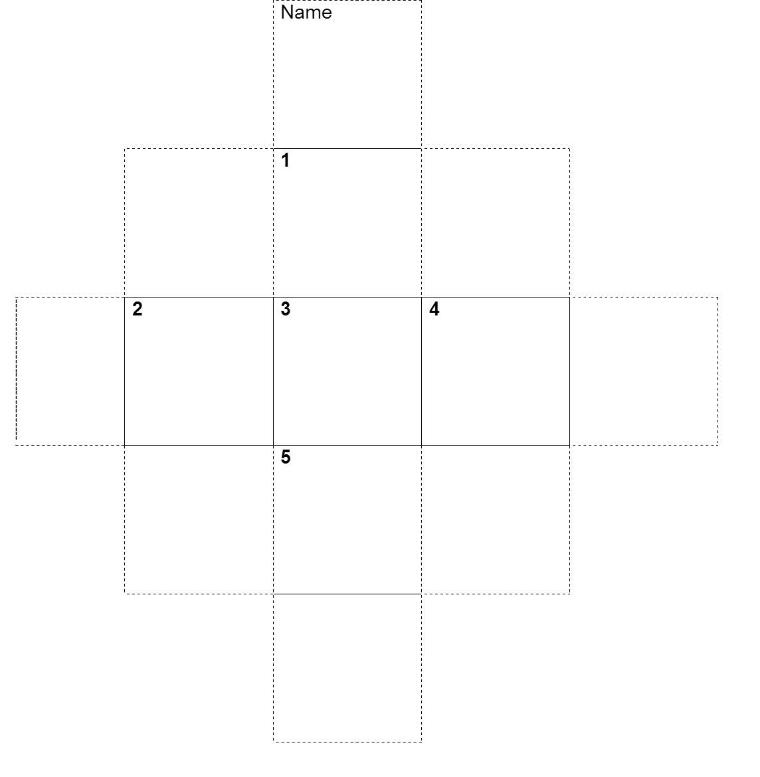
Analytic Cubing
Create a cube on Vietnam. You can make up your own questions or use the ones listed below.
What is the national religion of Vietnam?
What are the seasons like?
What is the capital?
What are the major resources?
What languages are spoken?
What type of government does it have?
1c12 Cubing 5 Questions About Vietnam
Discussion
Ask discussion questions of all 9 types.
Key Questions
Why did the family take their belongings to Chan’s store? What risk was there for them by doing that?
Why did the Buddhist Temple get closed?
Why is the Tet dinner so important to Grandmother that she would risk her safety by taking the ducks?
Is it significant that she keep some normalcy for the family on their journey? Explain.
Analyze
Analyze the key paragraph.
Key Paragraph, p. 17
“The whole village had been called together and told that the government had closed the temple. My grandmother had muttered under her breath that temple was the property of the village and that the gods would destroy the government for closing it. My father and mother had tried to hush her, but not before the officers had heard her. Since that time they had never ceased to watch her” (p. 17).
Extend
Write
Have each student write a short product based on today’s prompt to connect to the unit theme.
Review the theme: Integrity
Having integrity means following moral standards of behavior. Many of these moral standards are the same among all cultures and peoples, such as honesty. Other standards are unique or special to specific cultures.
Pretend you work for a publishing company that produces travel books. You are chosen to write the culture section of a travel book on Vietnam. Describe in detail the culture of Vietnam based on today’s reading. You may want to keep in mind:
Religious beliefs and practices
What they eat and what things they use everyday
Any other things you learned about the culture in Vietnam
Close
Close by extending today’s lesson to life and the world.
Extend the reading to the student’s lives or to the world.
Day 3
Outcomes for Today
W2. Write informative/explanatory texts to examine a topic and convey ideas, concepts, and information through the selection, organization, and analysis of relevant content.
-->
W2. Write informative/explanatory texts to examine a topic and convey ideas, concepts, and information through the selection, organization, and analysis of relevant content.
Prepare
Background
Gather background knowledge about a place, time, event, person, or thing.
What is freedom?
There are many ways that people or governments can infringe on people’s freedom. One of these ways is in trying to control what they believe. Following the victory of the communist North Vietnam, the government of Vietnam officially declared itself an atheist state, meaning the government did not support any religion. Not only did it not support any religion, but it forbade its people to enjoy many religious practices. The government claimed that these religious beliefs were old and foolish, of a more primitive people. Many people who still held on to these traditional beliefs and practices were punished.
Should a person ever be punished for what they believe?
Word Wall
Here are five vocabulary words to teach and add to the Word Wall.
muck (27)
captured (28)
listless (29)
suspiciously (30)
smugly (32)
Read
Review
Start at the beginning and review the story so far.
Read
Read the selection, usually in a Shared Reading Read React Predict Cycle of 2-3 pages.
p. 27-32
Setting
Characters
Pages
Journey to Go Cong
The family
27-30
Go Cong
Family and Police officer
30-32
Respond
Timeline
Agree on the facts in today’s reading, and list the 3-5 most important on the Timeline.
Students might mention:
The family has to hide as an Army jeep goes by. The duck nearly gives them away;
They are all scared as they walk through the village and get stopped by the police;
They know they have no traveling papers;
The grandmother uses the duck to save the family by bribing the officer.
Map
Add to ongoing class activities like a KWL chart or map: where did the characters go?
Continue to add to the class map of Vietnam
Explore
Activity
Explore the reading more deeply with a visual or oral language activity.
Advertisement for a Duck
Create an advertisement convincing people to buy a duck.
Materials:
Stiff paper 9x12 to 11x17
Pencils, pens, crayons, markers
Construction paper, scissors, glue sticks if desired
Step One: Make a list of the details of the Duck
Where can you get a duck?
How can the duck help you?
What purposes do people have for them?
Can the duck help you if needed?
What is the cost?
What are their needs?
Use a thesaurus to use good descriptive words
Step Two: Write an ad with a clear illustration
Write an appealing ad in 1 or 2 paragraphs detailing all of the information and making it sound interesting.
Illustrate the ad with a picture that would sell the dictionary.
Discussion
Ask discussion questions of all 9 types.
Key Questions
Why does the family need traveling papers to get from their village to the town?
What would you feel like if you had to have papers to go anywhere in your own country or county?
What risks does the family risk by having to travel to the boat?
Why would a family risk their lives to leave their country?
Do you think the kids know why they have to leave?
Would you risk yourself and others for freedom?
Analyze
Analyze the key paragraph.
Key Paragraph, p. 27
“‘Our journey to Go Cong will take us two nights of walking,’ our father said. ‘We have no papers from the government giving us permission to leave our village, so we must travel when it is dark’” (p. 27).
Extend
Write
Have each student write a short product based on today’s prompt to connect to the unit theme.
Having integrity includes always being honest and upright. Sometimes, however, specific situations require discretion. For example, Mai and her family are escaping Vietnam illegally. They are hiding and willing to lie to the police. Does that mean they are acting without integrity? Consider the reasons they are escaping to contemplate this question.
Mai’s family is leaving Vietnam because they fear their government. Choose a character from the book so far. Pretend to be that character and write a letter to a relative in another country. Describe the problems in Vietnam and why you want to leave. Explain the injustices that the Vietnamese government put on its people.
Close
Close by extending today’s lesson to life and the world.
Extend the reading to the student’s lives or to the world.
Day 4
Outcomes for Today
W2. Write informative/explanatory texts to examine a topic and convey ideas, concepts, and information through the selection, organization, and analysis of relevant content.
-->
W2. Write informative/explanatory texts to examine a topic and convey ideas, concepts, and information through the selection, organization, and analysis of relevant content.
Prepare
Background
Gather background knowledge about a place, time, event, person, or thing.
Traditional vs. New Medicine
In this novel, we see many old traditions and beliefs being practiced and defended. These customs are a legacy of the history and culture of the people. It is interesting to learn about these customs and many of them have real value, even today. One example of the old medicine of Eastern Asia that is still alive today is a procedure called Gua Sha. Gua Sha is a medical treatment in which the skin is scraped with a hard object, like a coin or a spoon, to create light bruising. Those who employ this technique believe that it releases unhealthy elements from injured areas and stimulates blood flow and healing.
Why is it valuable to learn about old ways?
Word Wall
Here are five vocabulary words to teach and add to the Word Wall.
pudgy (33)
mourning (35)
sorcerer (36)
commission (37)
greedily (39)
Read
Review
Start at the beginning and review the story so far.
Read
Read the selection, usually in a Shared Reading Read React Predict Cycle of 2-3 pages.
p. 33-39
Setting
Characters
Pages
Quack Loc
Anh, Mai, Thant, father, mother, grandmother, Kim, bas si Hong
33-39
Respond
Timeline
Agree on the facts in today’s reading, and list the 3-5 most important on the Timeline.
Students might mention:
The family made it to the safe house;
They were greeted and had tea, they continued to negotiate their passage;
Father went to get food and felt that he had been taken;
They met Kim and her mother;
They stayed until it was time to go to the boat for passage.
Map
Add to ongoing class activities like a KWL chart or map: where did the characters go?
Continue to add to the class map of Vietnam
Create a KWL Chart of the for either Vietnam or for Hong Kong
Explore
Activity
Explore the reading more deeply with a visual or oral language activity.
Postcard
Pretend you are Mai write a postcard about your journey.
Open Mind Portrait
Add to your OMP
Suitcase
Make a suitcase for your journey. What items would you take with you?
Discussion
Ask discussion questions of all 9 types.
Key Questions
Why is Mai fascinated with Kim and her clothes?
How can the Bac Si’s medicines help the people on the boat?
Do you think they will be more useful then the medicines that grandmother brought?
Both of the men keep trying to take more from the family and the Bac Si why do you think they keep trying?
Analyze
Analyze the key paragraph.
Key Paragraph, p. 39
“The man dropped his hand and stood staring at Kim while she played. The music sounded to me as if it ought to be played in pleasant gardens where there were fountains. When Kim finished, she put the flute back into its case and handed to the man. He shook his head indicating that she should keep it. But, he was embarrassed by being caught in a kind act, and when he turned away, his voice was very rough. ‘Come with me,’ he ordered” (p. 39).
Extend
Write
Have each student write a short product based on today’s prompt to connect to the unit theme.
Having integrity means caring about others. It means doing good things for people. Remember that: “Who you are when you think no one else is looking is who you really are.” The man in the key paragraph showed some integrity by letting Kim keep her flute. Think about others ways people can show integrity by thinking about and helping others.
Pretend you are Mai. You are thinking about the friends you left behind in your village. You want to give them advice if they decide to escape Vietnam as well. Write a paragraph telling them what to expect along the way to Ho Chi Minh City. Also tell them what kinds of things they should bring with them and what they need to leave behind.
Close
Close by extending today’s lesson to life and the world.
Day 5
Outcomes for Today
W2. Write informative/explanatory texts to examine a topic and convey ideas, concepts, and information through the selection, organization, and analysis of relevant content.
-->
W2. Write informative/explanatory texts to examine a topic and convey ideas, concepts, and information through the selection, organization, and analysis of relevant content.
Prepare
Background
Gather background knowledge about a place, time, event, person, or thing.
What are the risks of boat travel?
The people who escaped Vietnam had to put themselves in danger in many ways. Even if they were able to make it to a boat and board it, they were still at great risk. It was possible that the boat could sink, they could get lost, run out of food and water, contract a disease, and be attacked by pirates to name a few. The United Nations High Commission for Refugees compiled this data that they estimated:
In 1981, …452 boats carrying Vietnamese boat people arrived in Thailand carrying 15,479 refugees. 349 of the boats had been attacked by pirates an average of three times each. "578 women had been raped; 228 women had been abducted; and 881 people were dead or missing." An international anti-piracy campaign began in June 1982 and reduced the number of pirate attacks although they continued to be frequent and often deadly until 1990.”
According to the UNHCR, 200,000 to 400,000 boat people died at sea.
Here are five vocabulary words to teach and add to the Word Wall.
gravely (41)
gangplank (42)
businesslike (43)
herded (45)
ballast (46)
Read
Review
Start at the beginning and review the story so far.
Read
Read the selection, usually in a Shared Reading Read React Predict Cycle of 2-3 pages.
p. 40-48
Setting
Characters
Pages
Docks
Anh, Mai, Thant, grandmother, father, mother, Kim, doc si, villagers
40-41
On the boat
Anh, Mai, Thant, grandmother, father, mother, Kim,
doc si,
41-48
Respond
Timeline
Agree on the facts in today’s reading, and list the 3-5 most important on the Timeline.
Students might mention:
The family was escorted to the boat; it looked like it wouldn’t float.
They did not realize how many people would travel with them;
The family boards the boat and Mai makes sure that Kim and her mother get on board too.
They start scouting for a spot to sit. Mother wants to stay with father, Bac Si convinces her to stay on the top level near the kitchen;
Mai is surprised how Bac Si can give orders like a man but she is confident in her and follows the direction.
They get their spot and have to defend their space from the others.
Map
Add to ongoing class activities like a KWL chart or map: where did the characters go?
Continue to add to the class Vietnam/Hong Kong map.
Have the class make Sampans for the display board.
Explore
Activity
Explore the reading more deeply with a visual or oral language activity.
Open Mind Portrait
Add to one of the Open Mind Portraits you’ve started
Cartoon
Have class do a cartoon summarizing the story so far.
Discussion
Ask discussion questions of all 9 types.
Key Questions
Why would Mai take a risk to make sure Kim and her mom get on the boat?
Is it appropriate for woman to give orders like Kim’s mom did, why or why not?
If you didn’t know the Bac Si would you follow her directions like Mai did? Why or why not?
Do you think the Bac Si’s wisdom will help save the family? How?
Analyze
Analyze the key paragraph.
Key Paragraph, p. 42-43
“…For the first time Kim’s mother spoke. ‘They are no better than murderers to send us off in such a boat. The first wave will crush it.’ She looked in the direction of the wharf as though she were considering making her way back with Kim. A moment later the anger disappeared and the look of despair that had been on her face since we had first seen her returned” (p. 42-43).
Extend
Write
Have each student write a short product based on today’s prompt to connect to the unit theme.
Often, the true test of a person’s integrity is seeing what they do in desperate or stressful circumstances. Sometimes people who you thought had integrity do selfish things. On the other hand you may be surprised when someone you did not expect does heroic things in such situations. The integrity of Mai and her family, along with the other passengers on the boat is tested to the extreme.
Pretend you are a news reporter. You are assigned to write about the conditions on the boats of refugees from Vietnam.
Close
Close by extending today’s lesson to life and the world.
Day 6
Outcomes for Today
W2. Write informative/explanatory texts to examine a topic and convey ideas, concepts, and information through the selection, organization, and analysis of relevant content.
-->
W2. Write informative/explanatory texts to examine a topic and convey ideas, concepts, and information through the selection, organization, and analysis of relevant content.
Prepare
Background
Gather background knowledge about a place, time, event, person, or thing.
Does everyone have a breaking point?
Consider how many challenges Mai and her family are going through. They have not given up yet. Another challenge they will face is seasickness.
What is seasickness?
Seasickness, also called motion sickness, is a common disturbance of the inner ear. This is the area of the body that affects your sense of balance and equilibrium. Motion sickness happens when your brain receives conflicting messages about motion and your body’s position in space. The conflicting messages are delivered from your inner ear, your eyes (what you see), your skin receptors (what you feel), and muscle and joint sensors. For example, you might become airsick because your eyes cannot see the turbulence that is tossing the plane from side to side. Motion sickness can occur with any mode of travel: on a ship, plane, train, bus, or car.
Often times when people are in desperate circumstances, there are little things that add up to make the situation even worse. Sometimes it is a little thing that can cause a person to reach their breaking point and give up or snap. Putting things in perspective and determining to reach your goal is key to maintaining your sanity.
Here are five vocabulary words to teach and add to the Word Wall.
clammy (51)
waterlogged (52)
precious (54)
obedient (54)
retching (57)
Read
Review
Start at the beginning and review the story so far.
Read
Read the selection, usually in a Shared Reading Read React Predict Cycle of 2-3 pages.
p. 51-60
Setting
Characters
Pages
The boat to Hong Kong
Father, mother, grandmother, Mai, Anh,
Thant, Bac Si, Kim, Capt. Moui, the Tho’s
51-60
Respond
Timeline
Agree on the facts in today’s reading, and list the 3-5 most important on the Timeline.
Students might mention:
The family is on the boat and cramped;
Father informs them that the boat is not safe but he is doing what he can to make the engine run.
Mother befriends Bac Si and starts to talk about home. This makes them all feel better.
The seas get choppy and they all get seasick.
Bac Si tries to relate to grandmother since they are both healers.
Map
Add to ongoing class activities like a KWL chart or map: where did the characters go?
Map
Create a class poster of Vietnam and Hong Kong track the family’s progress as they leave their country.
Calendar
Create a poster symbolic of the Vietnamese Calendar.
Explore
Activity
Explore the reading more deeply with a visual or oral language activity.
Open Mind Portrait
Add to your Open Mind Portrait of Mai
Brochure
Create a tri-fold brochure selling the trip to others.
Discussion
Ask discussion questions of all 9 types.
Key Questions
How does being on the boat make all of the people related to one another, even if they are from different places?
Does the boat become a community?
What are the elements of a community?
Why is grandmother so intent on celebrating Tet?
Why would speaking of home bring it closer for Mai?
Analyze
Analyze the key paragraph.
Key Paragraph, p. 55
“Bac Si Hong saw that our mother was shy in the presence of so many strangers and tried to make her more comfortable by asking about our village. At first our mother was embarrassed to be speaking with a Bac Si, who was educated, but after a while she forgot her embarrassment in the pleasure of speaking about our village. Speaking about it brought it closer” (p. 55).
Extend
Write
Have each student write a short product based on today’s prompt to connect to the unit theme.
Often, the true test of a person’s integrity is seeing what they do in desperate or stressful circumstances. Sometimes people who you thought had integrity do selfish things. On the other hand you may be surprised when someone you did not expect does heroic things in such situations. The integrity of Mai and her family, along with the other passengers on the boat is tested to the extreme.
Pretend you are a news reporter. You are assigned to write about the conditions on the boats of refugees from Vietnam, as well as how the refugees are handling the situation.
Close
Close by extending today’s lesson to life and the world.
Day 7
Outcomes for Today
W2. Write informative/explanatory texts to examine a topic and convey ideas, concepts, and information through the selection, organization, and analysis of relevant content.
-->
W2. Write informative/explanatory texts to examine a topic and convey ideas, concepts, and information through the selection, organization, and analysis of relevant content.
Prepare
Background
Gather background knowledge about a place, time, event, person, or thing.
Should you always share with others?
Most of the time, sharing is a good thing, but sometimes it is very bad. For example, no one wants to share your disease. Dysentery is a common contagious disease that will show up in this chapter.
What is dysentery?
Dysentery is an intestinal inflammation, especially in the colon, that can lead to severe diarrhea with mucus or blood in the feces. Patients typically experience mild to severe abdominal pain or stomach cramps. In some cases, untreated dysentery can be life-threatening, especially if the infected person cannot replace lost fluids fast enough.
Dysentery is often caused by poor hygiene and poor food sanitation.
Here are five vocabulary words to teach and add to the Word Wall.
complained (61)
horizon (62)
dysentery (62)
fortunate (63)
drifted (63)
Read
Review
Start at the beginning and review the story so far.
Read
Read the selection, usually in a Shared Reading Read React Predict Cycle of 2-3 pages.
p. 61-65
Setting
Characters
Pages
Boat
Mai, Thant, Anh, mother, father, grandmother, Bac Si, Kim, Capt. Moui
61-65
Respond
Timeline
Agree on the facts in today’s reading, and list the 3-5 most important on the Timeline.
Students might mention:
Kim and Mai discussed America. Kim started to teach the kids English;
Mai learns there is just as much heart ache in the country as there is in the city;
Anh is getting withdrawn from all of the change and stress;
Kim plays her flute and everyone is in a trance;
They learn that the engine has broken and they feel as if they are off course;
Kim describes living in the city to Mai.
Map
Add to ongoing class activities like a KWL chart or map: where did the characters go?
Continue to add to the map of Vietnam
Add to the map tracking their travels.
Explore
Activity
Explore the reading more deeply with a visual or oral language activity.
Add to OMP
Different Perspectives
Have students retell the story from the Captain's perspective.
Discussion
Ask discussion questions of all 9 types.
Key Questions
Why is everyone on the boat sick?
Bac Si seems like she is an expert in treating people. Why do you think they don’t listen to her about the water?
Do you think it would be worth the hardships to travel like they are to another land?
How does Kim playing the flute settle people and make them forget their hardships?
Analyze
Analyze the key paragraph.
Key Paragraph, p. 62
“The next day there were many sick passengers. An old couple from the city, unused to the heat, developed bad cases of sunstroke. There was dysentery, and the tiny space at the back of the boat, curtained off for a toilet, was always in use. Kim's mother had ordered the drinking water boiled, but no one paid attention to her order. It was too much trouble, Le Hung said, and there was not enough fuel for the stove. Bac Si Hong told us to drink nothing but tea” (p. 62).
Extend
Write
Have each student write a short product based on today’s prompt to connect to the unit theme.
Integrity is valuing the mind, body and spirit in oneself and others. It means thinking things through and considering consequences to self and others. In making their decision to leave Vietnam, Mai's family had to consider all the pros and cons of each option.
In two paragraphs discuss the pros and cons of escaping from Vietnam. Organize it so that one paragraph outlines the pros of escaping and the second paragraph outlines the cons.
Close
Close by extending today’s lesson to life and the world.
Extend the reading to the student’s lives or to the world
Day 8
Outcomes for Today
W2. Write informative/explanatory texts to examine a topic and convey ideas, concepts, and information through the selection, organization, and analysis of relevant content.
-->
W2. Write informative/explanatory texts to examine a topic and convey ideas, concepts, and information through the selection, organization, and analysis of relevant content.
Prepare
Background
Gather background knowledge about a place, time, event, person, or thing.
Statistics vs. Superstitions
There are many beliefs about luck in the old Vietnamese culture. As Dao is about to have her baby, all are hoping it is born on a lucky day. Consider the following news article:
Defying warnings about the negative health impacts on both mothers and children following C-section surgeries, many families in Vietnam still opt for the method because they want their babies to arrive at a lucky time of day.
Doctors at a three-day maternity healthcare conference ending Saturday in Hanoi said that besides a number of prescribed cesareans, a much larger number of others were decided upon fortunetellers’ advice, according to aTuoi Trereport Friday.
The conference focused on preventing stillbirths and infant deaths.
Wame Baravilala, a consultant on reproduction health for the UN Population Program in Vietnam, told the conference that several countries have control policies for C-sections and the method is only used in 3 percent of deliveries on average.
But the rate can jump to 45-50 percent in countries that don’t apply such policies.
Vietnam falls in the latter case, and although there are yet full statistics on the national C-section rate, doctors said the 40-50 percent rate is true to the country’s leading ob-gyn hospitals like Hanoi Ob-Gyn Hospital and the Central Ob-Gyn Hospital, also in the capital city.
This interesting phenomenon happens in Vietnam and other countries because some people believe in superstitions more than statistics and empirical data. How does a person choose what is true? Who should make decisions about health, individuals or their doctors? Discuss this as a class.
Here are five vocabulary words to teach and add to the Word Wall.
auspicious (66)
venerate (68)
reassure (69)
porpoises (70)
listing (72)
Read
Review
Start at the beginning and review the story so far.
Read
Read the selection, usually in a Shared Reading Read React Predict Cycle of 2-3 pages.
p. 66-75
Setting
Characters
Pages
Boat
The family, Dao
66-70
Railing of boat
Kim and Mai
70-71
Boat deck
The people and the boy
71-75
Respond
Timeline
Agree on the facts in today’s reading, and list the 3-5 most important on the Timeline.
Students might mention:
It was time for Dao to have her baby;
Grandmother was asked to help; she had a boy;
The engine broke again; Mai asked that she and Kim go to the railing to watch the water.
They saw a school of porpoises and then saw something move on a piece of wood;
They realized it was a person and called for help.
Father swam to get him and he was rescued.
During the night he cried out in nightmares.
Map
Add to ongoing class activities like a KWL chart or map: where did the characters go?
Continue to add to the class map of Vietnam
Explore
Activity
Explore the reading more deeply with a visual or oral language activity.
Advertisement for a New Engine
Pretend you have an engine to sell to Capt. Moui. Create and advertisement selling your engine.
Materials:
Stiff paper 9x12 to 11x17
Pencils, pens, crayons, markers
Construction paper, scissors, glue sticks if desired
Step One: Make a list of the details of the qualities of a good engine
Where can you get an engine?
Why is it needed?
What qualities should it have?
How much does it cost?
Describe it in good details.
Use a thesaurus to use good descriptive words
Step Two: Write an ad with a clear illustration
Write an appealing ad in 1 or 2 paragraphs detailing all of the information and making it sound interesting.
Illustrate the ad with a picture that would sell the dictionary.
Discussion
Ask discussion questions of all 9 types.
Key Questions
Why are grandmother’s predictions about Dao’s birth so important?
Why does it make grandmother feel important to help “deliver” the baby?
How does having a boy for their first child make people on the boat feel “Hopeful”?
Does the viewing of the porpoises help them feel hope for land?
Why do you think father was chosen to go rescue the boy?
Can the boy help them on their journey?
Analyze
Analyze the key paragraph.
Key Paragraph, p. 75
"Captain Muoi wanted to question the boy, but Kim's mother said ‘No!’ in so strong a voice that the captain retreated without another word. At last the boy fell asleep, but it was a restless sleep. Several times during the night he woke the whole boat with screams that sounded as if ten thousand devils were after him. We didn't dare think about what nightmares he was having—or worse, that they might not be nightmares at all but memories” (p. 75).
Extend
Write
Have each student write a short product based on today’s prompt to connect to the unit theme.
People who have integrity are people of good character. Character is shaped as people make choices throughout their lives. How they respond to the experiences in their lives and the courses they take determine who they are. The characters in the novel Goodbye, Vietnam are gaining many experiences in a short amount of time.
Pretend you are a news reporter. If you were to board the boat that Mai and her family and the other passengers are and interview them, write a news story based on what they would say has happened and what their experience has been like aboard the boat recently.
Close
Close by extending today’s lesson to life and the world.
Extend the reading to the student’s lives or to the world
Day 9
Outcomes for Today
W2. Write informative/explanatory texts to examine a topic and convey ideas, concepts, and information through the selection, organization, and analysis of relevant content.
-->
W2. Write informative/explanatory texts to examine a topic and convey ideas, concepts, and information through the selection, organization, and analysis of relevant content.
W9. Draw evidence from literary or informational texts to support analysis, reflection, and research.
a.) Apply grade 7 Reading standards to literature (e.g., “Compare and contrast a fictional portrayal of a time, place, or character and a historical account or the same period as a means of understanding how authors of fiction use or alter history”).
Prepare
Background
Gather background knowledge about a place, time, event, person, or thing.
Vietnamese Boat People
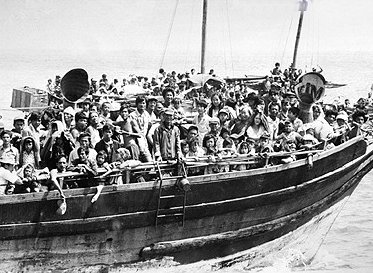
The ‘Boat People of Vietnam’ seemed to encapsulate all the suffering Vietnam had suffered from 1965 to 1975. Despite the end of the VietnamWar, tragedy for the people of Vietnam continued into 1978-79. The term ‘Boat People’ not only applies to the refugees who fled Vietnam but also to the people of Cambodia and Laos who did the same but tend to come under the same umbrella term. The term ‘Vietnamese Boat People’ tends to be associated with only those in the former South who fled the new Communist government. However, people in what was North Vietnam who had an ethnic Chinese background fled to Hong Kong at the same time fearing some form of retribution from the government in Hanoi.
In late 1978, Indo-China degenerated into wholesale confrontation and war between Vietnam and Kampuchea (Cambodia) and China. In December 1978, Vietnam attacked Kampuchea while in February 1979, Vietnam attacked Chinese forces in the north. These two conflicts produced a huge number of refugees.
Many in what was South Vietnam feared the rule of their communist masters from what had been North Vietnam. Despite the creation of a united Republic of Vietnam in 1975, many in the South feared retribution once it was found out that they had fought against the North during the actual war. The rule exerted in Ho Chi Minh City (formally Saigon) was repressive as this was seen as a bastion of ‘Americanisation’. Traditional freedoms were few. It has been estimated that 65,000 Vietnamese were executed after the end of the war with 1 million being sent to prison/re-education camps where an estimated 165,000 died.
Many took the drastic decision to leave the country – an illegal act under the communist government. As an air flight out of Vietnam was out of the question, many took to makeshift boats in an effort to flee to start a new life elsewhere. Alternately, fishing boats were utilized. While perfectly safe for near-shore fishing, they were not built for the open waters. This was coupled with the fact that they were usually chronically overcrowded, thus making any journey into the open seas potentially highly dangerous.
No one can be sure how many people took the decision to flee, nor are there any definitive casualty figures. However, the number who attempted to flee has been put as high as 1.5 million. Estimates for deaths vary from 50,000 to 200,000 (Australian Immigration Ministry). The primary cause of death was drowning though many refugees were attacked by pirates and murdered or sold into slavery and prostitution. Some countries in the region, such as Malaya, turned the boat people away even if they did manage to land. Boats carrying the refugees were deliberately sunk offshore by those in them to stop the authorities towing them back out to sea. Many of these refugees ended up settling in the United States and Europe. The United States accepted 823,000 refugees; Britain accepted 19,000; France accepted 96,000; Australia and Canada accepted 137,000 each.
Here are five vocabulary words to teach and add to the Word Wall.
miracle (76)
dreadful (77)
suspicious (78)
pirates (79)
lured (80)
Read
Review
Start at the beginning and review the story so far.
Read
Read the selection, usually in a Shared Reading Read React Predict Cycle of 2-3 pages.
p. 76-80
Setting
Characters
Pages
Boat deck
Bac Si, Anh, Kim, Mai, mother, captain, Vu Loi, others on board
76-80
Respond
Timeline
Agree on the facts in today’s reading, and list the 3-5 most important on the Timeline.
Students might mention:
Vu Loi finally woke he broke out in fits of screaming, Bac Si gave him an injection to make him sleep.
He woke again and told the tale of his family fleeing the country. They all died and he survived.
Grandmother became fearful of the ghosts of ma da. They all thought she was scared of the pirates.
Map
Add to ongoing class activities like a KWL chart or map: where did the characters go?
Continue to add to the class Vietnam poster
Add to the K-W-L chart for either Vietnam or for Hong Kong
Explore
Activity
Explore the reading more deeply with a visual or oral language activity.
Add to your OMP
Life Ring
Make a life ring, like what you would throw to someone drowning. The ring would have to be a sign of encouragement. Write things that encourage you on the ring.
Discussion
Ask discussion questions of all 9 types.
Key Questions
Why do you think the boy woke and was frightful?
How do you think his nightmares were helping or hurting him?
Have there been pirates throughout history?
Why did they break up the boat when they realized the family had no gold?
Do you think telling his story helped him?
Analyze
Analyze the key paragraph.
Key Paragraph, p. 80
"My grandmother rocked back and forth moaning softly to herself. ‘They will come and find us,’ she cried. ‘They are waiting out there for us. We are lost’” (p. 80).
Extend
Write
Have each student write a short product based on today’s prompt to connect to the unit theme.
Having integrity means having respect for yourself and others. When you have integrity, you consider the effects of your actions on other people. People who have integrity are able to sympathize with others.
Can you sympathize with Mai's grandmother and the other passengers? Can you feel their fears and frustrations, along with their hopes and joys? Goodbye, Vietnam is a fictional story based on real historical circumstances. The author, Gloria Whelan is not Vietnamese. Neither was she a refugee of any kind. She had to do research to learn about the real circumstances of the people her characters represent.
Using the article about "Vietnamese Boat People" included in the Background section of this lesson (you may find it useful to do your own research as well), compare and contrast Gloria Whelan's portrayal in Goodbye, Vietnam of these historical circumstances with the information about real Vietnamese refugees in the article.
Close
Close by extending today’s lesson to life and the world.
Extend the reading to the student’s lives or to the world
Day 10
Outcomes for Today
W2. Write informative/explanatory texts to examine a topic and convey ideas, concepts, and information through the selection, organization, and analysis of relevant content.
-->
W2. Write informative/explanatory texts to examine a topic and convey ideas, concepts, and information through the selection, organization, and analysis of relevant content.
Prepare
Background
Gather background knowledge about a place, time, event, person, or thing.
Tet Festival in Vietnam
Tet is the most important festival of the Vietnamese calendar. It marks the beginning of the lunar New Year, which is celebrated in China as well. Festivities occur throughout the country, but this is a family holiday and many of the traditions of observance occur in the home. The official holiday lasts three days, but celebrations continue for at least the first week of the New Year.
Before The New Year
Preparations begin about a week before the New Year. Homes are cleaned out in the hopes of getting rid of the past year's bad luck, and some families go so far as to repaint their house's exterior. It also is believed to be lucky to buy new clothes and get a fresh haircut. At midnight on New Year's Eve, Vietnamese families conduct the ritual Le Tru Tich, which involves gongs, firecrackers and other noisy items to chase out the old year and ring in the new.
New Year's Day Traditions
On New Year's Day, most families meet to exchange gifts and have a traditional meal, and also perform a ceremony to appease the kitchen god. Homes are decorated with the hoa mai flower and all thoughts of sadness are supposed to be avoided. Children are encouraged not to fight or cry and anyone in mourning is shunned because it is bad luck to be associated with death on New Year's Day. Many families plant a new year's tree in front of the house and wrap it with lucky red paper. The tree is removed at the end of the first week of the New Year. After the family meal, many Vietnamese attend the local pagoda to worship ancestors.
In The Cities
In major cities, such as Ho Chi Minh and Hanoi, Tet celebrations are more similar to New Year celebrations in western countries. People attend events in dance clubs and bars. This is a time of enjoyment and there is a lot of eating and drinking involved in the celebrations. Fireworks are set off to scare away the evil spirit Na A. Stores and neighborhoods decorate with colored lights and red banners.
Food
Food is an important part of the Tet celebrations. The Vietnamese believe that what a person does on New Year's Day dictates the course of the rest of the year, and eating a lot represents the hope that no one will go hungry in the coming year. In the days leading up to the holiday, the Vietnamese traditionally give gifts of food to family members and friends. The traditional meal includes foods such as bang, a bamboo and pork soup; bang chung, a sticky rice cake filled with pork and beans; and orange sticky rice. Even the ancestors are given food gifts. Families leave a five fruit tray at the altar.
Here are five vocabulary words to teach and add to the Word Wall.
muttered (81)
wring (82)
hungrily (82)
scandalized (84)
morsel (85)
Read
Review
Start at the beginning and review the story so far.
Read
Read the selection, usually in a Shared Reading Read React Predict Cycle of 2-3 pages.
p. 81-86
Setting
Characters
Pages
Boat
Loi, Kim, Mai, grandmother, Capt. Moui, passengers
81-86
Respond
Timeline
Agree on the facts in today’s reading, and list the 3-5 most important on the Timeline.
Students might mention:
Loi goes to look at the sea, he is extremely respectful of the ocean.
Kim and Loi get along well, Mai can’t believe that Kim would be so bold around a boy.
Grandmother wrung the ducks neck in preparation of the Tet Meal.
Mother passed firecrackers to the captain to be lit off.
People on the boat began to talk to one another and forgot their quarrels.
The duck was separated for Tet and the festival began. Grandmother shared the duck with everyone on the boat.
Map
Add to ongoing class activities like a KWL chart or map: where did the characters go?
Continue to add to the class Vietnam/Hong Kong map.
Have the class make Sampans for the display board.
Explore
Activity
Explore the reading more deeply with a visual or oral language activity.
Add to OMP
Cartoon
Have class do a cartoon summarizing the story so far.
Postcard
Write a postcard describing the mood on the boat—draw a picture of the tet festival
Discussion
Ask discussion questions of all 9 types.
Key Questions
Is it important the Loi does not blame the sea for the deaths of his family?
Why does the Tet bring people on the ship closer together?
Why do you think old Quang was chosen to be the first guest of New Year?
What are your suppose to do at the end and beginning of the New Year?
Analyze
Analyze the key paragraph.
Key Paragraph, p. 86
“It is my duck and I chose to give it to all of the others. It will be added to the rice and everyone will have a taste. . . .everyone was impressed” (p. 86).
Extend
Write
Have each student write a short product based on today’s prompt to connect to the unit theme.
The Festival of Tet brought out the best in the people on the boat. They were happier and kinder than they were before. Sharing traditions and special occasions with each other can make people more united and selfless. Grandmother was very generous to give her duck to all the passengers. It was a sacrifice she didn't have to make, but she wanted to. Having integrity means being consistently good and always trying to do the right thing.
Read the article on the "Tet Festival in Vietnam" included in the "Background" section of this lesson. Explain what information you already knew about the Tet Festival from reading the novel thus far. Then describe some of the traditions involved in the Tet Festival that the people on Mai's boat were not able to do because of the circumstances of their escape.
Close
Close by extending today’s lesson to life and the world.
Extend the reading to the student’s lives or to the world
Day 11
Outcomes for Today
W2. Write informative/explanatory texts to examine a topic and convey ideas, concepts, and information through the selection, organization, and analysis of relevant content.
-->
W2. Write informative/explanatory texts to examine a topic and convey ideas, concepts, and information through the selection, organization, and analysis of relevant content.
Prepare
Background
Gather background knowledge about a place, time, event, person, or thing.
Who needs a compass?
In this section of the novel, Loi, thanks to his experience on his father’s boat, is able to tell that they are off course without using a compass. How is this possible? Read the following excerpt about navigation:
Astronomy is the oldest of the sciences, and quite possibly the oldest use of astronomy is navigating by the stars. This craft dates from prehistoric times among humans, and is even practiced by certain animals.
For example, during the 1960s, a study undertaken by New York’s Cornell Lab of Ornithology demonstrated through use of planetarium simulations that the indigo bunting, a brilliantly blue bird of old fields and roadsides, migrates at night using the stars for guidance. It learns its orientation to the night sky from its experience as a young bird observing the stars.
Some primitive tribes accomplished amazing feats of pathfinding using only the sky as their guide. The Māori came to New Zealand from eastern Polynesia, probably in several waves between the years 1280 to 1300. With no instruments or tables to consult, they very carefully observed the night sky as well local weather patterns and ocean currents.
Like the Indigo Bunting, a bird with a built-in compass, we are all born with a built-in “moral compass,” which guides us to know what is right and wrong. Just like how people will get lost if they do not pay attention to a compass or stars to guide them, they will also be “lost” morally, if they ignore their “moral compass.”
Word Wall
Here are five vocabulary words to teach and add to the Word Wall.
ration (88)
sling (89)
delicious (89)
perspire (90)
incantations (92)
Read
Review
Start at the beginning and review the story so far.
Read
Read the selection, usually in a Shared Reading Read React Predict Cycle of 2-3 pages.
p. 87-96
Setting
Characters
Pages
The boat to Hong Kong
Father, mother, grandmother, Mai, Bac Si, Kim, Capt. Moui, Tho, Dao, Quang
87-96
Respond
Timeline
Agree on the facts in today’s reading, and list the 3-5 most important on the Timeline.
Students might mention:
Food and water are running out on the boat;
Loi begs for string and makes a net to catch fish—he catches a sea turtle.
The boat is able to eat another meal;
Old Quang gets sick—grandmother and Bac Si work together to save him. There is no hope. He dies.
The boat mourns for him and gives him as proper burial as they can.
There is more room to lie down. Mai realizes that it is because old Quang has died. She curls up so his soul can find a place to rest.
Map
Add to ongoing class activities like a KWL chart or map: where did the characters go?
Create a class poster of Vietnam and Hong Kong track the families progress as they leave their country.
Explore
Activity
Explore the reading more deeply with a visual or oral language activity.
Open Mind Portrait
Add to your Open Mind Portrait of Mai
Sea Turtle Information
Do a study of the sea turtle. Make a tri-fold brochure giving information on the turtle, places they live, why they are protected, and reasons to save them.
Discussion
Ask discussion questions of all 9 types.
Key Questions
Are the people on the boat starting to get desperate?
Why does Loi know more about navigation then the captain?
As old man Quang died why do you think people starting to reflect on those who have been lost?
Would you have thought to make fishing net if you were in this situation?
Do you think catching the turtle gave them some hope?
Why would Loi jump in to save the turtle and not himself?
Analyze
Analyze the key paragraph.
Key Paragraph, p. 87
“Loi swung the net the bamboo pole that held the net toward the boat, but just as the turtle was within reach, the tip of the pole, bent by the weight of the turtle, cracked, and the net fell in the water. In a second Loi was over the side of the boat and holding on the turtle. I screamed for help. Someone threw a rope, but instead of tying it around himself, Loi wrestled it around the struggling turtle. ‘Pull,’ he shouted” (p. 87).
Extend
Write
Have each student write a short product based on today’s prompt to connect to the unit theme.
Loi showed integrity by risking his own safety so that the others on the boat could eat. He used his skill of fishing to catch the sea turtle so everyone could have food. In Vietnam, the government was afraid of people who had special skills like Mai's father. They want people to depend on the government and not to be self-reliant. However, people who have skills can help others like Loi and Mai's father did.
Pretend you are Loi. You want to teach others your skill of fishing. Following the description of how Loi caught the sea turtle on pages 87-89, write a step-by-step how-to guide on how to make a fishing net and how to use it to catch food. Include a drawing of the net.
Think of a skill you have that you could teach others. Write another step-by-step how-to guide on how to do that skill. Look up or find an instruction manual for examples of how to format your guide.
Close
Close by extending today’s lesson to life and the world.
Extend the reading to the student’s lives or to the world
Day 12
Outcomes for Today
W2. Write informative/explanatory texts to examine a topic and convey ideas, concepts, and information through the selection, organization, and analysis of relevant content.
-->
W2. Write informative/explanatory texts to examine a topic and convey ideas, concepts, and information through the selection, organization, and analysis of relevant content.
Prepare
Background
Gather background knowledge about a place, time, event, person, or thing.
What is humane treatment?
Consider the following news article from 1988 describing the conditions of some of the refugee camps in Hong Kong:
Refugees sail north to Hong Kong from the northern Vietnamese port of Haiphong, a 500-mile journey through the South China Sea that takes about 15 days with good luck and fair weather. Refugees from the north, Mr. French said, are poor people with few skills, no foreign languages and no ties to countries outside Vietnam.
''More and more we have the men, women and children nobody else wants,'' Mr. French said. Barracks-Like Buildings
A teacher at a closed camp on Hei Ling Chau, a tiny rocky island that was once the site of a leper colony, said there are children there who had never seen a dog or walked on grass.
Hei Ling Chau is about an hour's boat ride from central Hong Kong, and a recent visitor was asked to send picture postcards of the city because most of the refugees had only caught a glimpse of it as they landed.
The camp's barracks-like cinder-block buildings house 2,900 people in spaces meant for 2,400. Two meals a day and a snack are served and there is one toilet for every 90 people.
''We try to take the children on field trips, to see what real life looks like,'' said Nilda Bernardo, a teacher with World Relief, which runs programs in Hei Ling Chau.
''Sometimes we take them into a flat there so they can see what a kitchen and a living room and a bedroom look like,'' she said.
Christopher Bale, the director of the Oxfam relief agency in Hong Kong, said the three closed camps, surrounded by high steel fences and supervised by prison guards, are ''just barely adequate for short-term stays, but there are almost 5,000 people who have been living in these places for three years, and 3,000 who have been in them for more than five years.'' 'No One Has Asked to See Us'
Bao Ntuyen, a 12-year-old from Haiphong, said he had been living in Hei Ling Chau for four years and no resettlement official had ever interviewed him or his uncle, a farmer who has no ties to anyone outside Vietnam.
''No one has asked to see us,'' the boy said, ''so we are learning English. We want to go to a free country, somewhere where they play football.''
Do you think it would have been better for some of these people to stay in Vietnam? What should be done about these people?
Here are five vocabulary words to teach and add to the Word Wall.
ached (99)
horizon (99)
Commotion (100)
wharf (102)
Nudge (108)
Read
Review
Start at the beginning and review the story so far.
Read
Read the selection, usually in a Shared Reading Read React Predict Cycle of 2-3 pages.
p. 99-111
Setting
Characters
Pages
Boat
Mai, Thant, Anh, mother, father, grandmother, Bac Si, Kim,
Capt. Moui, the passengers
99-102
Bus in Hong Kong
Mai, Thant, Anh, mother, father, grandmother, Bac Si,
Kim, the passengers, Bihn, the police
103-105
Refugee Camp
(warehouse)
Mai, Thant, Anh, mother, father, grandmother, Bac Si, Kim,
the passengers, Bihn
105-111
Respond
Timeline
Agree on the facts in today’s reading, and list the 3-5 most important on the Timeline.
Students might mention:
The boat finally makes it to Hong Kong. Some of the locals welcome them the others say harsh words and want them to go home.
Mai is amazed at the city: the buildings, stores, and market place.
They are loaded onto a bus and driven through the city;
They are taken to a warehouse/camp where they are to stay until a country can take them in.
They are examined to make sure they have no disease. Bac Si is welcomed as a doctor but told she can’t practice medicine in Hong Kong.
They are given a platform to stay on and learn that some are sent back to Vietnam.
Map
Add to ongoing class activities like a KWL chart or map: where did the characters go?
Continue to add to the map of Vietnam/Hong Kong. Place Ho Chi Mihn City.
Add to the map tracking their travels.
Explore
Activity
Explore the reading more deeply with a visual or oral language activity.
Add to OMP
Sketch
Have students draw a sketch of what Hong Kong is like.
Resume
Pretend you are father. Create a resume describing your talents and why you should be sent to a new country.
Discussion
Ask discussion questions of all 9 types.
Key Questions
If you were on the ship what would you be thinking if you realized you were finally safe?
Do you think the family is happy or still scared?
Why do you think they won’t allow Bac Si to practice medicine?
Father warns Loi, “A friend is someone you can trust.” Why do you think father did not like the boys?
Is the family better off in the camp or in the village? Why?
Analyze
Analyze the key paragraph.
Key Paragraph, p. 105
“Kim was not looking at the shore but at a barge that was approaching us. On it were men in uniform. ‘Policemen,’ Kim said in a frightened voice. I tried to convince her not to worry. ‘Policemen here,’ I said, ‘will not be like the policemen in Vietnam’” (p. 105).
Extend
Write
Have each student write a short product based on today’s prompt to connect to the unit theme.
Why would Mai say that policemen in Hong Kong will not be the same as policemen in Vietnam? Perhaps she believes that because Hong Kong is a country with more regard for human rights than Vietnam is, its people, especially policemen, are people of integrity?
Write a description of Hong Kong from the perspective of the refugees on Mai's boat. Compare and contrast Hong Kong from Vietnam as described in this novel.
Close
Close by extending today’s lesson to life and the world.
Extend the reading to the student’s lives or to the world
Day 13
Outcomes for Today
W2. Write informative/explanatory texts to examine a topic and convey ideas, concepts, and information through the selection, organization, and analysis of relevant content.
-->
W2. Write informative/explanatory texts to examine a topic and convey ideas, concepts, and information through the selection, organization, and analysis of relevant content.
Prepare
Background
Gather background knowledge about a place, time, event, person, or thing.
What is scabies?
Scabies …is a contagious skin infection caused by the miteSarcoptes scabiei. The mite is a tiny, and usually not directly visible, parasite which burrows under the host's skin, causing intense allergic itching. The infection in animals other than humans is caused by a different but related mite species, and is called sarcoptic mange.
Scabies is classified by the World Health Organization as a water-related disease. The disease may be transmitted from objects, but is most often transmitted by direct skin-to-skin contact, with a higher risk with prolonged contact.
Kim’s mother went to great lengths and personal risk to help people by treating illnesses including an epidemic of scabies. One of the risks she took was being taken from her daughter and arrested. Do you think she did the right thing?
Word Wall
Here are five vocabulary words to teach and add to the Word Wall.
modesty (113)
impatiently (115)
generous (115)
cruel (118)
scabies (118)
Read
Review
Start at the beginning and review the story so far.
Read
Read the selection, usually in a Shared Reading Read React Predict Cycle of 2-3 pages.
p. 112-122
Setting
Characters
Pages
Refugee Camp
The family, Bac Si, Kim, Loi
112-122
Respond
Timeline
Agree on the facts in today’s reading, and list the 3-5 most important on the Timeline.
Students might mention:
The family found Kim and her mother. Bac Si wanted to go help others and wanted the family to watch Kim.
Mother found out about the camp and where they could wash clothes etc.,
They were given food and saw the cook from the boat. He gave grandmother extra shrimp for her kindness of the duck;
Bac Si was treating people and she found clients for grandmother;
Kim’s flute was stolen, Loi spent much of his time looking out the window.
Loi returned the flute;
Loi returned to Vietnam in return for money and hope to buy into a fishing boat.
Map
Add to ongoing class activities like a KWL chart or map: where did the characters go?
Continue to add to the class map of Vietnam/Hong Kong
Explore
Activity
Explore the reading more deeply with a visual or oral language activity.
Add to your OMP
Postcard
Make a postcard; send it to your family telling them of your plight in the camp and asking for help. Draw a scene on the front depicting the camp.
Discussion
Ask discussion questions of all 9 types.
Key Questions
Why does Bac Si want Kim to stay with the family?
Is it improper for father to ask the help of a woman?
Is it significant that Hung the cook offers grandmother shrimp? Why
If you were Loi would you return to Vietnam?
Is there hope for the family? Where are they getting their strength?
Analyze
Analyze the key paragraph.
Key Paragraph, p. 112
"It took us a while to find Kim and her mother. Bac Si was happy to see us. ‘I've been looking everywhere for you. There are so many sick people here. They tell me I cannot help, but I will not see people sick and do nothing. I will do what I must, but I must do it secretly. I am afraid to leave Kim alone. Not everyone in the camp can be trusted. Could Kim stay with you for a little while?’” (p. 112).
Extend
Write
Have each student write a short product based on today’s prompt to connect to the unit theme.
Integrity is valuing the mind, body and spirit in others and ourselves. Integrity means being honest to yourself and others and doing what is right. It means thinking things through and considering consequences to self and others. Core values guide and are evident in thought, speech and action.
Consider the characters in Goodbye, Vietnam. Choose two or three characters from the book and explain ways in which they acted with or without integrity. Would you have done the same as them? Explain.
Close
Close by extending today’s lesson to life and the world.
Extend the reading to the student’s lives or to the world
Day 14
Outcomes for Today
W2. Write informative/explanatory texts to examine a topic and convey ideas, concepts, and information through the selection, organization, and analysis of relevant content.
-->
W2. Write informative/explanatory texts to examine a topic and convey ideas, concepts, and information through the selection, organization, and analysis of relevant content.
Prepare
Background
Gather background knowledge about a place, time, event, person, or thing.
What is hope?
The following is a true account of a woman named Linda Thong, who was a in her twenties when she and her family escaped Vietnam on a boat. She had similar experiences to Mai’s family. This excerpt is about her new life in the United States:
…When first I arrived in California, I worried too much because I didn't speak English, just said hello and good morning. One month later I gave birth to my third children. We had no money and clothes for my baby. I remembered three months we slept on the floor because we didn't have a bed, and the Government gave us money but not enough. I came here with my husband, two daughters and three brothers. One is my brother and two brothers in-law. We lived together in the apartment with two bedrooms, one bath. It was very hard for us. My husband and three brothers found jobs at the swap-meet on the weekends. Weekday we went to school and studied English. My husband found another job and the owner paid for him five hundred dollars a month. After two years we saved 5,000 dollars to open a small business. We sold toys step by step, we made good money. Now I am 39 year old and I have five children; two girls and three boys. Two are in University at UCI. One is second year, one is first year. They are both taking Biology. One boy is in high school, and another one is in the six grade. My last boy is in Kindergarten. My children very nice study hard and listen to parents. We bought a house, cars and good business. My husband and I work very hard for my children. We want our children have education in the future and to be good people. I always thank God very very much for my family have freedom.
Although it was difficult to adjust to their new environment at first, Linda Thong and her family did their best and worked hard to provide the life they hoped for in their new country. Her story is like many others who escaped the horrors of the post-war Vietnam.
Word Wall
Here are five vocabulary words to teach and add to the Word Wall.
epidemics (123)
convince (124)
bulged (125)
scarcely (127)
sponsor (129)
Read
Review
Start at the beginning and review the story so far.
Read
Read the selection, usually in a Shared Reading Read React Predict Cycle of 2-3 pages.
p. 123-135
Setting
Characters
Pages
Refugee Camp
Bac Si, Anh, Kim, Mai, mother, Thant, grandmother
123-132
Bus to the plane
Bac Si, Anh, Kim, Mai, mother, Thant, grandmother
132-135
Respond
Timeline
Agree on the facts in today’s reading, and list the 3-5 most important on the Timeline.
Students might mention:
An epidemic breaks out in the camp. The family is discouraged, grandmother catches the illness.
Kim’s mother brings grandmother a shot for the illness. Grandmother gets better.
The Bac Si is caught and punished for helping another family; she is sent back to Vietnam.
The family learns they are to be sponsored to move to America. Kim will go with them;
On the bus Kim finds her mother and they are able to leave together;
Map
Add to ongoing class activities like a KWL chart or map: where did the characters go?
Continue to add to the class Vietnam poster
Finish a KWL Chart of the for either Vietnam or for Hong Kong
Explore
Activity
Explore the reading more deeply with a visual or oral language activity.
Add to your OMP
Make a thought chart.
Have students think of all of the positive things in their lives. Including hardships. . .for without hardships and struggle we will not grow. Make a positive chart poster and collage. Have students represent those things that are good to them and that will stay with them on the chart.
Discussion
Ask discussion questions of all 9 types.
Key Questions
Why didn’t the officials respond sooner to the epidemic?
Was Kim’s mom right to help?
Do you think that Kim’s mom was retaliated against?
What could she have done different?
How would you have reacted to the news that your family was to go to a new country and be sponsored?
Even though the family struggled do you think they were right to follow the rules of passage to a new country? Why or why not?
Analyze
Analyze the key paragraph.
Key Paragraph, p. 134
“… One of the doctors was a volunteer from the hospital in America. He wrote to his hospital and asked them to help sponsor me so that I could come to America. I could not go back to your camp because of the official, who would have reported me, but through the doctors I learned that you were going to America and when you would leave, and here I am!” (p. 134).
Extend
Write
Have each student write a short product based on today’s prompt to connect to the unit theme.
Integrity is valuing the mind, body and spirit in oneself and others. It means thinking things through and considering consequences to self and others. Core values guide and are evident in thought, speech and action.
In the novel Goodbye, Vietnam, many of the characters show love and integrity toward each other despite their harsh circumstances. In contrast to their integrity is the terrible treatment they suffered at the hands of their government. Think about what the characters suffered throughout the book and how they handled these situations.
Pretend you are a newspaper reporter. Write a newspaper article about the struggles of the Vietnamese refugees from Mai's boat. End the article by explaining how the refugees overcame their struggles by helping each other. Be sure to include:
A headline
Many facts and details about the boat trip and the camp in Hong Kong
A quote from at least one of the characters
Transition words (i.e.
Use formal newspaper language
Tips:
Remember this is an informational article, not an opinion piece. Look up real news articles to help you get an idea of the style of writing and type of language used.
Close
Close by extending today’s lesson to life and the world.
Extend the reading to the student’s lives or to the world