The 40-Minute Lesson Plan is essential elements of the CBL lesson plan. We suggest the teacher reads aloud or uses an audio book for the reading portion. 40-min includes: Background, Wordwall, Key Paragraph, and Writing Prompt
60
The 60-Minute Lesson Plan uses the same elements as the 40-minute plan, but also covers a visual activity and discussion. 60-min includes: Background, Wordwall, Key Paragraph,Writing Prompt and adding the Key Questions
90
The 90-Minute Lesson Plan contains all elements of the lesson plan. If time is available, we recommend using this version to get all of the benefits of CBL. The full lesson includes: Background, Wordwall, Key Paragraph, Writing Prompt, and Key Questions of the 40 and 60 minutes options while incorporating the Mapping Activity, Visual Activity and creating the Timeline as a class.
Day 1
Outcomes for Today
-->
W1. Write arguments to support claims with clear reasons and relevant evidence.
a.) Introduce claim(s), acknowledge alternate or opposing claims, and organize the reasons and evidence logically.
b.) Support claim(s) with logical reasoning and relevant evidence, using accurate, credible sources and demonstrating an understanding of the topic or text.
c.) Use words, phrases, and clauses to create cohesion and clarify the relationships among claim(s), reasons, and evidence.
d.) Establish and maintain a formal style.
e.) Provide a concluding statement or section that follows from and supports the argument presented.
Prepare
Background
Gather background knowledge about a place, time, event, person, or thing.
What are the Ozark Mountains? What characteristic defines them?
The Ozarks of Missouri and Arkansas is an often-misunderstood region to which definite geographic boundaries have not been assigned. The Ozarks are defined by both the cultural habits of the residents and the natural landscape/geography of the area. The underlying geology has played an important role in characterizing the Ozarks.
Traditional Ozark culture is defined by independent minded individuals who are socially conservative, and practice one of several Protestant forms of Christianity. A decent number of Catholics are also present in the area. Ozarkers are generally laid back, not in too much of a hurry, and willing to talk to anyone with time to kill. Respect is very important when interacting with Ozarkers. One might be welcomed with open arms onto property posted with “NO TRESPASSING” signs if they ask permission to visit. On the other hand, the same property owners are likely to greet unannounced visitors with harsh words and possibly a firearm.
In today’s reading we meet the narrator. He is able to break up a dogfight and the victim was a coonhound. This dog brought back a flood of memories and the importance a dog played in his life.
Word Wall
Here are five vocabulary words to teach and add to the Word Wall.
Introduce 5 important, useful words from today’s reading
sanitation (11)
snarling (11)
coaxing (12)
dormant (13)
quench (14)
Read
Review
Review the timeline from the beginning every day.
Start at the beginning and review the story so far
mention the setting and main character
point to each timeline item as you quickly review it
Read
Read the selection, usually in a Shared Reading Read React Predict Cycle of 2-3 pages.
p. 11-15
Setting
Characters
Pages
Walking in town
Narrator
11
Dog fight/bushes
Narrator and dogs
12-13
Respond
Timeline
Agree on the facts in today’s reading and list the 3-5 most important on the timeline.
Students might mention
Narrator leaving office one spring day and hears a dogfight.
He notices that many dogs were ganging up on one.
It was a redbone hound against many.
He coaxes him from under the bushes and discovers he is starving.
He feeds him and opens the gate for him to leave if he wants to.
The narrator goes inside and builds a fire and looks at two trophy cups.
The cups remind him of a story from his boyhood.
Map
Add to ongoing class activities like a KWL chart or map: where did the characters go?
Map
The setting for the novel is the Ozark Mountains in Oklahoma. Post a map of the United States and track the characters locations as your read.
Theme “T” Chart
Two main themes of the novel can be described as;
Determination or
Impact that animals have on humans or the animal/human bond.
As you read fill out the “T” stating the theme and citing what the character did (or did not) do to display this theme, list the page numbers.
You will use this chart to help you with your final writing product.
Continue to fill this chart in as you read
Explore
Activity
Explore the reading more deeply with a visual or oral language activity.
One possible activity: 5 Ws and H chart.
Discussion
Ask discussion questions of all 9 types (see Day 1).
Key Questions (pp 11-15)
How old does the narrator seem? What clues does the author give you?
What is a coonhound?
What is a sanitation department?
What kind of relationship to dogs does the narrator seem to have? What changed in him when he realized the injured dog was a coonhound?
Why didn’t the narrator try to keep the dog? Why did he try to learn the dog’s story?
The narrator knows the dog is trying to straighten out what is wrong and get home. What will happen when he gets home? Can this principle be applied to people? How?
On page 14 (the key paragraph below) the author uses a technique called foreshadowing what clues is he giving you in the passage? What do you think the novel will be about?
The narrator shares his memories and how valuable they are to him. Why are memories, good and bad, priceless?
Analyze
Analyze the key paragraph.
Key Paragraph
Page 14:
Although the old hound had no way of knowing it, he had stirred memories, and what priceless treasures they were. Memories of my boyhood days, an old K.C. Baking Powder can, and two little red hounds. Memories of a wonderful love, unselfish devotion, and death in its saddest form.
Extend
Write
Have each student write a short product based on today’s prompt to connect to the unit theme.
The author is foreshadowing the events of the story.
Define the term foreshadow.
Write a one-paragraph argument in which you support or oppose the use of this literary technique in the story. Introduce your claim. Acknowledge the opposing viewpoint. Support your claim with logical evidence and reasoned and relevant evidence. Use words and phrases to create co
Close
Close by extending today’s lesson to life and the world.
Extend the reading to the students’ lives or to the world.
Day 2
Outcomes for Today
-->
W1. Write arguments to support claims with clear reasons and relevant evidence.
a.) Introduce claim(s), acknowledge alternate or opposing claims, and organize the reasons and evidence logically.
b.) Support claim(s) with logical reasoning and relevant evidence, using accurate, credible sources and demonstrating an understanding of the topic or text.
c.) Use words, phrases, and clauses to create cohesion and clarify the relationships among claim(s), reasons, and evidence.
d.) Establish and maintain a formal style.
e.) Provide a concluding statement or section that follows from and supports the argument presented.
Prepare
Background
Gather background knowledge about a place, time, event, person, or thing.
Where is the Illinois River? What makes it unique?
Flowing through the Ozark borderlands of eastern Oklahoma and western Arkansas, the Illinois River is fed by 1,660 square miles of drainage area and serves as the primary tributary for the largest lake in eastern Oklahoma, Tenkiller Ferry Reservoir. The Illinois has historically represented an area of significant economic importance and ecological convergence between the hilly Ozarks and the southern plains. The watershed of the Illinois River comprises five counties in Oklahoma and Arkansas, providing more than 100 miles of recreational opportunities. The Illinois River system consists of the Illinois and its tributaries, Flint and Baron Fork creeks, both of which are major tourist destinations for the south-central United States and provide a substantial portion of tourism income for the area.
The earliest historical accounts of the Illinois River basin come from the ill-fated Arkansas River expedition of Thomas Nuttall. After leaving Fort Smith (Sebastian County), Nuttall and company went 130 miles farther up the Arkansas River near the mouth of the Verdigris and Neosho rivers and camped along the banks of the Illinois River. Aside from the geologic description Nuttall provided in his journal, the naturalist mentions salt deposits in the Illinois River and adjacent streams, stating, “A few miles from its mouth, its banks present salt springs similar to those of Grand River, and scarcely less productive; most of the streams on this side of the Arkansas(s) are said to afford springs of salt water which might be wrought with profit.” Nuttall also described hunting buffalo in prairies near the Illinois River. Three days after leaving Belle Point, Nuttall and Bradford reached the confluence of the Illinois and Arkansas rivers, near the site of present-day Tenkiller Reservoir. Nuttall described the river, writing, “The current of the Arkansas(s) was here unusually rapid; on the right hand side the water was clear, but on the left, red and muddy. The clear water issued from the Illinois River, to which we were now contiguous.”
Following forced removal and travails along the Trail of Tears, Native Americans settled in the Illinois River basin some seventy years prior to the infamous Oklahoma “land runs” that would establish white settlements. From 1820 to 1865, agricultural activities in the Cherokee Nation and Illinois basin included small herd cattle raising, spotty cotton farming, and the cultivation of corn as the major grain/subsistence crop. After the economic, political, and social systems in the Cherokee Nation and in Arkansas as a whole were destroyed during the Civil War, the Reconstruction period witnessed increasing white settlement that undermined both Native American sovereignty and stewardship of the natural environment of the Illinois basin from 1865 through the early twentieth century. The increased development of infrastructure systems like cattle trails, railroads, and market roads had a profound effect on the Illinois watershed region.
Word Wall
Here are five vocabulary words to teach and add to the Word Wall.
romp (16)
gnawing (16)
allotted (17)
nestled (16)
grieve (18)
Read
Review
Review the timeline from the beginning every day.
Read
Read the selection, usually in a Shared Reading Read React Predict Cycle of 2-3 pages.
p.16-23
Setting
Characters
Pages
Ozarks, home
Billy-age 10, father, mother
16
Ozarks, describing the land
Billy
17-18
Home
Father and Billy
18-19
Home/trapping
Billy, mother, sisters, Samie the cat
19-21
Woods
Billy
22-23
Respond
Timeline
Agree on the facts in today’s reading and list the 3-5 most important on the timeline.
Students might mention
Billy wants two coon hunting dogs but his family is too poor to afford them.
He likes to look for the ringtail coon tracks.
Once hunting season began he was kept up all night by the sound of hunters and their dogs hunting.
Billy wanted to do this so badly that he didn’t get any sleep.
He turned 11 and his father told him he would now be helping with the farm.
Map
Add to ongoing class activities like a KWL chart or map: where did the characters go?
Map
The setting for the novel is the Ozark Mountains in Oklahoma.
Post a map of the United States and track the characters locations as your read.
Theme “T” Chart
Two main themes of the novel can be described as;
Determination or
Impact that animals have on humans or the animal/human bond.
As you read fill out the “T” stating the theme and citing what the character did (or did not) do to display this theme, list the page numbers.
You will use this chart to help you with your final writing product.
Continue to fill this chart in as you read
Explore
Activity
Explore the reading more deeply with a visual or oral language activity.
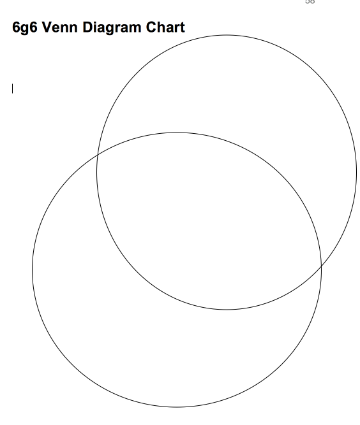
Venn diagram:
How is your life similar and different from Billy's?
Once you complete your Venn Diagram you can use it to write a compare and contrast paragraph.
Open Mind Portrait:
Create an OMP of Billy. What is he thinking and feeling as he realizes he in in puppy love? When he realizes he cannot convince his dad to get him dogs? As he listens to the hunting and tracking around him? Add 3-5 thoughts to your OMP.
Discussion
Ask discussion questions of all 9 types (see Day 1).
Key Questions (pp 16-23)
What is puppy love? How does this “disease” affect him? Have you ever wanted something so badly you couldn’t focus on anything else?
What historic event led to Billy’s family getting their land? Why did his mother chose that location?
What factors contribute to the family’s financial situation? What would Billy’s father do if he had more money?
What present did Father give Billy? What was a result of his trapping on the family and on the farm?
What keeps Billy up at night?
What are Billy’s dreams? Do you think he could help his family more or less if he had a dog? Explain.
Analyze
Analyze the key paragraph.
Key Paragraph
Page 23:
“He’s almost eleven now, and I’m going to let him help me in the fields this summer. That will put the muscles back on him.”
"I thought this was wonderful. I’d finally grown up to be a man. I was going to help Papa with the farm.”
Extend
Write
Have each student write a short product based on today’s prompt to connect to the unit theme.
Billy is asked to help with the farm at age 11. What responsibilities did you have at 11? How was your life like or unlike Billy’s? What were your dreams? Worries? Do you think it is right and just for an 11-year-old child to have the responsibilities of farm work?
Write a one-paragraph argument in which you support or oppose the work Billy will be asked to do. Introduce your claim with clear reasons. Acknowledge the opposing claim. Organize your reasons logically. Support your claims with relevant evidence and cite credible sources. Use words phrases and clauses to create cohesion. Maintain formal writing style. Provide a concluding statement, which supports your claim.
Close
Close by extending today’s lesson to life and the world.
Extend the reading to the students’ lives or to the world.
Day 3
Outcomes for Today
-->
W1. Write arguments to support claims with clear reasons and relevant evidence.
a.) Introduce claim(s), acknowledge alternate or opposing claims, and organize the reasons and evidence logically.
b.) Support claim(s) with logical reasoning and relevant evidence, using accurate, credible sources and demonstrating an understanding of the topic or text.
c.) Use words, phrases, and clauses to create cohesion and clarify the relationships among claim(s), reasons, and evidence.
d.) Establish and maintain a formal style.
e.) Provide a concluding statement or section that follows from and supports the argument presented.
Prepare
Background
Gather background knowledge about a place, time, event, person, or thing.
What makes a sportsman? (for discussion)
Sportsmanship can be defined as the conduct and attitude of participants in sports as it relates to fair play, courtesy, and grace in losing. There was no clear character trait for sportsman so the list below covers most of the traits needed to be a sportsman. These rules could be extrapolated to apply to most all of life’s situations.
1. Plays the game for the game’s sake.
2. Plays for his side and not for himself.
3. Is a good winner and a good loser, is modest in victory and generous in defeat.
4. Accepts all decisions in a proper spirit.
5. Is chivalrous towards a defeated opponent.
6. Is unselfish and always ready to help others to become proficient.
7. As a spectator, applauds good play on both sides.
8. Never interferes with referees or judges, no matter what the decision.
In today’s reading Billy finds an ad for coonhounds. He is determined to earn the money he needs himself. He encounters many sportsmen who purchase things he is selling not because of their need but because of their class and sportsmanship.
Word Wall
Here are five vocabulary words to teach and add to the Word Wall.
festered (24)
prowl (24)
haunches (25)
abandoned (27)
quavering (29)
Read
Review
Review the timeline from the beginning every day.
Read
Read the selection, usually in a Shared Reading Read React Predict Cycle of 2-3 pages.
p. 24-30
Setting
Characters
Pages
Hunting camp
Billy
24-25
Barn
Billy
26
Farm/Woods
Billy
27
Store
Billy and grandpa
28-30
Respond
Timeline
Agree on the facts in today’s reading and list the 3-5 most important on the timeline.
Students might mention
Billy finds an ad for coonhound puppies.
He begins working hard year round to save his money so he can buy the dogs.
Finally, after 2 years, he has saved enough money.
He shows his grandpa who is impressed and moved by Billy’s dedication to his goal.
His grandfather agrees to help him find some pups.
They do not tell Father.
Map
Add to ongoing class activities like a KWL chart or map: where did the characters go?
Map
The setting for the novel is the Ozark Mountains in Oklahoma.
Post a map of the United States and track the characters locations as your read.
Theme “T” Chart
Two main themes of the novel can be described as;
Determination or
Impact that animals have on humans or the animal/human bond.
As you read fill out the “T” stating the theme and citing what the character did (or did not) do to display this theme, list the page numbers.
You will use this chart to help you with your final writing product.
Continue to fill this chart in as you read
Explore
Activity
Explore the reading more deeply with a visual or oral language activity.
Open Mind Portrait:
Add to your OMP of Billy. What is he thinking and feeling when he finds the ad for the dogs? As he works to earn money for them? Once he has enough money to place the order. Add 3-5 new thoughts to your OMP.
Sketch:
Use the information on page 25 to create a sketch of the fishing camp where Billy found the magazine.
Discussion
Ask discussion questions of all 9 types (see Day 1).
Key Questions (pp 24-30)
Billy prowls the fishing camps after the men leave. What items does he find there? Why are these trinkets so valuable to Billy? What circumstances make Billy love to scour the camp? Have you ever found something that was no value to another but you adored it? Explain.
Billy’s life changed when he found the magazine. What do you think the author means by this statement?
What does Billy do to make money? Why is it important that he makes the money himself?
Billy sells food and supplies to the men camping near the river. He describes them as true sportsmen. What qualities make the men great?
Where does he store his money? Why do you think he does not want to tell his father about the money and the hounds?
Who does he confide in? Why is it important to have multigenerational relationships?
What is grandfather’s reaction when he sees the money from Billy? What are his concerns? Name the feeling/emotion that you think grandfather has for Billy.
Analyze
Analyze the key paragraph.
Extend
Write
Have each student write a short product based on today’s prompt to connect to the unit theme.
Some events seem to have more impact than others. Have you ever had an event happen that changed your life? What was it and what did it lead to? How did finding this magazine impact Billy’s life and his plans?
Billy claims that finding the magazine had a profound impact and change on his life. Do you agree or disagree. Write a one-paragraph argument in which you support or oppose Billy and his claim. Use logical reasoning and relevant evidence to support your claim. Use words or phrases to create cohesion in your writing. Provide a concluding statement, which supports your claim.
Close
Close by extending today’s lesson to life and the world.
Extend the reading to the students’ lives or to the world.
Day 4
Outcomes for Today
-->
W1. Write arguments to support claims with clear reasons and relevant evidence.
a.) Introduce claim(s), acknowledge alternate or opposing claims, and organize the reasons and evidence logically.
b.) Support claim(s) with logical reasoning and relevant evidence, using accurate, credible sources and demonstrating an understanding of the topic or text.
c.) Use words, phrases, and clauses to create cohesion and clarify the relationships among claim(s), reasons, and evidence.
d.) Establish and maintain a formal style.
e.) Provide a concluding statement or section that follows from and supports the argument presented.
Prepare
Background
Gather background knowledge about a place, time, event, person, or thing.
What does the term, “as the crow flies” refer to?
The term, “as the crow flies” is an idiom and refers to the shortest distance between two points.
In today’s reading Billy could have gotten to town by taking the road, 32 miles or as the crow flies 20 miles over the hills.
What is a ‘Hillbilly’?
A Hillbilly is a person who lives in the country far away from cities and who is often regarded as someone who lacks education, who is stupid, etc.
In today’s reading Billy learns that his dogs have been delivered and he makes his way to town to pick them up. He sees kids at a school. The boy he speaks to refers to him as a Hillbilly.
Word Wall
Here are five vocabulary words to teach and add to the Word Wall.
kennels (31)
half-hearted (32)
determination (33)
provisions (34)
flailing (38)
Read
Review
Review the timeline from the beginning every day.
Read
Read the selection, usually in a Shared Reading Read React Predict Cycle of 2-3 pages.
p. 31-38
Setting
Characters
Pages
Grandfathers store
Billy and grandfather
31
Home
Billy, mother, father, and his sisters
32
Road to Tahlequah
Billy
33
Tahlequah
Billy and the townspeople
34-36
School
Billy and the children
36-38
Respond
Timeline
Agree on the facts in today’s reading and list the 3-5 most important on the timeline.
Students might mention
Grandpa finally gets a notice that the dogs are ready.
Billy does not want to wait for them to be delivered.
He decides to leave that night and walk 20 miles through the mountains on his own to get them.
When he gets to town people stare at him and he sees many things he has never seen before.
He tries going down a slide.
Map
Add to ongoing class activities like a KWL chart or map: where did the characters go?
Map
The setting for the novel is the Ozark Mountains in Oklahoma.
Post a map of the United States and track the characters locations as your read.
Theme “T” Chart
Two main themes of the novel can be described as;
Determination or
Impact that animals have on humans or the animal/human bond.
As you read fill out the “T” stating the theme and citing what the character did (or did not) do to display this theme, list the page numbers.
You will use this chart to help you with your final writing product.
Continue to fill this chart in as you read
Explore
Activity
Explore the reading more deeply with a visual or oral language activity.
Comic Strip:
Create a 6-panel comic strip that shows the events in today’s reading.
Add dialog between the characters.
Open Mind Portrait:
Add to your OMP of Billy. What do you thing he is thinking and feeling when he learns that the dogs are in? When he experiences town and the people for the first time? As he sets out to get his dogs? Add 3-5 new thoughts to your OMP.
Discussion
Ask discussion questions of all 9 types (see Day 1).
Key Questions (pp 31-38)
Grandfather keeps Billy informed on the status of the dogs? What can you tell about grandfather and Billy’s relationship? Why is it important that Grandfather kept Billy’s secret?
Why does Billy’s family think it is so outlandish that he wants to know where Kentucky is? What does this convey about their world and their experiences?
Why didn’t Billy tell his father about the dogs? Is it important that Billy starts and finishes this endeavor on his own? Explain.
Billy gets to town by going through the hills, 20 miles, barefoot. There is no sense of fear, as he was raised in the mountains. How do his experiences make him wise?
Why do people laugh at Billy when he enters town? He looks in the mirror and for the first time, sees his reflection. Do you think seeing himself for the first time makes him self-conscious?
In what way is he different from the townspeople? Describe what Billy looks like
What does Billy do to make amends for leaving home without telling anyone?
Analyze
Analyze the key paragraph.
Key Paragraph
Page 34:
Then I saw something else. The sun was just right, and the plate glass was a perfect mirror. I saw the full reflection of myself for the first time in my life.
Extend
Write
Have each student write a short product based on today’s prompt to connect to the unit theme.
What do you think it would be like to not see your full reflection until you are 12 years old? Do you think that would be liberating or difficult?
Write an argument in which you defend the above claim, introduce your claim and acknowledge the counterclaim. Organize your reasons to support your viewpoint logically. Use reasons and relevant evidence to support your claim. Use words, phrases, and clauses to create cohesion. Maintain formal style. Conclude with a statement, which defends your claim.
Close
Close by extending today’s lesson to life and the world.
Extend the reading to the students’ lives or to the world.
Day 5
Outcomes for Today
-->
W1. Write arguments to support claims with clear reasons and relevant evidence.
a.) Introduce claim(s), acknowledge alternate or opposing claims, and organize the reasons and evidence logically.
b.) Support claim(s) with logical reasoning and relevant evidence, using accurate, credible sources and demonstrating an understanding of the topic or text.
c.) Use words, phrases, and clauses to create cohesion and clarify the relationships among claim(s), reasons, and evidence.
d.) Establish and maintain a formal style.
e.) Provide a concluding statement or section that follows from and supports the argument presented.
Prepare
Background
Gather background knowledge about a place, time, event, person, or thing.
What is an impression?
An impression is the effect or influence that something has on a person’s thoughts or feelings.
In today’s reading Billy and the dogs camped out in the cave. They were being stalked by a mountain lion. Each time the lion cried the boy dog would go to the mouth of the cave and return the cry. This giving the impression that he was ready to fight and bigger than he is.
Word Wall
Here are five vocabulary words to teach and add to the Word Wall.
muster (39)
canary (39)
pulley (40)
gunny sack (40)
smother (40)
Read
Review
Review the timeline from the beginning every day.
Read
Read the selection, usually in a Shared Reading Read React Predict Cycle of 2-3 pages.
p. 39-48
Setting
Characters
Pages
Train depot
Billy, dogs and station master
39-41
Town
Billy, boys, towns people, dogs
41-43
Town
Billy, dogs, marshal
43-45
Trail home/cave
Billy and the dogs
46-4
Respond
Timeline
Agree on the facts in today’s reading and list the 3-5 most important on the timeline.
Students might mention
Billy finds the depot and the stationmaster shows him his dogs.
Billy is speechless and in love with his dogs.
People are laughing at him carrying his dogs in a gunnysack out of town.
A gang of boys jumps him and pulls one dog’s ear.
A marshal breaks up the fight.
The marshal admires Billy’s determination and ‘grit’.
He buys him a soda pop.
Billy heads off into the mountains and finds a cave to sleep in.
A mountain lion is close by watching and wanting to eat the pups.
Billy keeps a fire going and throws stones to keep the lion away.
Map
Add to ongoing class activities like a KWL chart or map: where did the characters go?
Map
The setting for the novel is the Ozark Mountains in Oklahoma.
Post a map of the United States and track the characters locations as your read.
Theme “T” Chart
Two main themes of the novel can be described as;
Determination or
Impact that animals have on humans or the animal/human bond.
As you read fill out the “T” stating the theme and citing what the character did (or did not) do to display this theme, list the page numbers.
You will use this chart to help you with your final writing product.
Continue to fill this chart in as you read
Explore
Activity
Explore the reading more deeply with a visual or oral language activity.
Open Mind Portrait:
Add to you OMP of Billy. What is he thinking and feeling once he sees his dogs? Gets laughed at in town? Meets the marshal? And spends the night in the cave? Add 3-5 new thoughts to your OMP.
Sketch:
Choose one of the scenes from today’s reading (train depot, street in town, cave) sketch the scene based on the description in the book.
Discussion
Ask discussion questions of all 9 types (see Day 1).
Key Questions (pp 39-48)
How does the stationmaster treat Billy? How does Billy know that the stationmaster is a nice man? Give details to support your answer.
What was Billy’s expectation when he was leaving town with his dogs? What was his reality?
What act started the fight? What does this act say about the kids and about Billy? Why is it important to protect those who cannot protect themselves?
What does the marshal respect about Billy? What acts of kindness does he show Billy? Do you think this changes his attitude about people in town? How does this one person make a difference and impact Billy?
What steps did Billy do to prepare for the night in the mountains? What factors did he have to consider? How does preparedness help when you need to make change?
At night in the cave Billy learns about his pups. What does he know about them? Why are these qualities important in a team?
How does the author create suspense in the novel thus far?
Analyze
Analyze the key paragraph.
Key Paragraph
Page 44:
I saw an outraged look come over the marshal’s face. Reaching up, he pushed his hat back. He glanced up and down the street. I heard him mutter, “There’s not a one in that bunch with that kind of grit.”
Extend
Write
Have each student write a short product based on today’s prompt to connect to the unit theme.
What does the marshal mean when he says this? Billy originally did not have dogs and his family could not afford them. He saved for two years and made it happen. In what way do his actions fit the theme ‘change requires effort’? In this case, he wasn’t changing bad habits, but he was adopting good habits. Think about a good habit you would like to adopt.
Write a one-paragraph argument in which you introduce the good habit you would like to adopt. Describe the habit or change you want to make and what you are going to do to adopt it in your life. Explain to your reader why this habit is important and how it will make your life more productive. Introduce your claim and your counterclaim. Support your claim with relevant evidence. Insert clauses, transitions, and phrases to create cohesion. Establish and maintain formal style. Conclude with a statement, which supports your claim.
Close
Close by extending today’s lesson to life and the world.
Extend the reading to the students’ lives or to the world.
Day 6
Outcomes for Today
-->
W1. Write arguments to support claims with clear reasons and relevant evidence.
a.) Introduce claim(s), acknowledge alternate or opposing claims, and organize the reasons and evidence logically.
b.) Support claim(s) with logical reasoning and relevant evidence, using accurate, credible sources and demonstrating an understanding of the topic or text.
c.) Use words, phrases, and clauses to create cohesion and clarify the relationships among claim(s), reasons, and evidence.
d.) Establish and maintain a formal style.
e.) Provide a concluding statement or section that follows from and supports the argument presented.
Prepare
Background
Gather background knowledge about a place, time, event, person, or thing.
What is baling wire?
Baling wire, otherwise known as bale wire, farm wire, or soft wire, is a type of wire used in an agricultural setting and industrial setting for everything from mending fences to manually binding a rectangular bale of hay, straw, or cut grass. It is also used to band together condensed cardboard, textiles, aluminum and other materials that are processed in the recycling industry.
In today’s reading Billy makes collars for the dogs. He uses baling wire to tie the ends together as rope was not that strong or prevalent and they did not have the money for a leash and collar.
Word Wall
Here are five vocabulary words to teach and add to the Word Wall.
nestled (50)
quavering (51)
sober (53)
eager (53)
hampering (54)
Read
Review
Review the timeline from the beginning every day.
Read
Read the selection, usually in a Shared Reading Read React Predict Cycle of 2-3 pages.
p. 49-54
Setting
Characters
Pages
Campgrounds
Billy and the dogs
49-50
Home
Billy, is parents, sisters, and Dan and Ann
51-53
Home
Billy and his sisters
54
Respond
Timeline
Agree on the facts in today’s reading and list the 3-5 most important on the timeline.
Students might mention
Billy finds his way home with his dogs.
He stops by the campground where he found the original magazine with the dog ad.
Engraved in a tree he spots “Dan” and “Ann”.
He decides to name his dogs Old Dan and Little Ann.
He returns home and gives his presents to his family.
Everyone is relieved and happy to see him and the pups.
He tells his family about his adventures.
His parents share how they want to move to town soon.
He makes them a doghouse and collars.
Map
Add to ongoing class activities like a KWL chart or map: where did the characters go?
Map
The setting for the novel is the Ozark Mountains in Oklahoma.
Post a map of the United States and track the characters locations as your read.
Theme “T” Chart
Two main themes of the novel can be described as;
Determination or
Impact that animals have on humans or the animal/human bond.
As you read fill out the “T” stating the theme and citing what the character did (or did not) do to display this theme, list the page numbers.
You will use this chart to help you with your final writing product.
Continue to fill this chart in as you read
Explore
Activity
Explore the reading more deeply with a visual or oral language activity.
Open Mind Portrait:
Add to your OMP for Billy. What is he thinking and feelings as he returns home? Names the dogs? Speaks with his family? And learns about their goals for the kids? Add 3-5 new thoughts to your OMP.
Discussion
Ask discussion questions of all 9 types (see Day 1).
Key Questions (pp 49-54)
What does Billy find at the fisherman’s campground? Why does he spend the day there? Why is this place special to him? Why does the author choose to have him return to this spot before returning home? Is this a form of irony.
What does he see when he returns home? How has his view of home changed?
What is the name of the cave Billy stayed in overnight?
What emotion or emotions do you think Billy’s parents went through? Identify them and give a reason for each.
Billy describes his mother feeling the cloth he brought for her. These gifts were valuable for emotional and economic reasons. What did Billy value most about getting these gifts? What did he value about giving them? What did his family value most?
How did his relationship with his father change when he returned home? Explain.
How does Mother feel about her children living in town and getting an education? How does Billy feel about going to town for an education? Explain how they both have valid points.
Analyze
Analyze the key paragraph.
Key Paragraph
Page 53:
From the stove where she was heating salt water for my feet, Mama said in a low voice, “I’ll pray every day and night for that day to come. I don’t want you children to grow up without an education, not even knowing what a bottle of soda pop is, or ever seeing the inside of a schoolhouse. I don’t think I could stand that…”
Extend
Write
Have each student write a short product based on today’s prompt to connect to the unit theme.
Can education only be obtained in school? What is the difference between formal and informal education? Which has more value? What do you think of Mama’s ideas? If you lived in the country do you think you’d want your children to go to a formal school and would teaching them at home be enough?
Write an argument in which you defend mama and her ideals of having her children live in town and have an education? Introduce your claim. Acknowledge the opposing claim organize your reasons logically and with flow. Support your claim with relevant evidence from credible sources. Use words, phrases, and clauses to create cohesion. Provide a concluding statement, which supports your claim.
Close
Close by extending today’s lesson to life and the world.
Extend the reading to the students’ lives or to the world.
Day 7
Outcomes for Today
-->
W1. Write arguments to support claims with clear reasons and relevant evidence.
a.) Introduce claim(s), acknowledge alternate or opposing claims, and organize the reasons and evidence logically.
b.) Support claim(s) with logical reasoning and relevant evidence, using accurate, credible sources and demonstrating an understanding of the topic or text.
c.) Use words, phrases, and clauses to create cohesion and clarify the relationships among claim(s), reasons, and evidence.
d.) Establish and maintain a formal style.
e.) Provide a concluding statement or section that follows from and supports the argument presented.
Prepare
Background
Gather background knowledge about a place, time, event, person, or thing.
How do dogs learn to scent train?
In today’s reading Billy had gotten his pups but realized he now had to train them to hunt. In order to teach them to hunt coons, he had to capture/kill a coon and uses its hide to train the pups. He and his sisters would drag the hide around the property through the streams and up trees using as many tricks as they could think of. The dogs practiced with Billy daily.
Word Wall
Here are five vocabulary words to teach and add to the Word Wall.
wiley (55)
cease (55)
determination (55)
desperation (55)
mischievous (55)
Read
Review
Review the timeline from the beginning every day.
Read
Read the selection, usually in a Shared Reading Read React Predict Cycle of 2-3 pages.
p. 55-66
Setting
Characters
Pages
Store
Grandfather and Billy (talking about coon trapping)
55-57
Store
Grandfather and Billy (talking about coon nature)
57-58
Home
Papa and Billy
58
River bottom
Billy
59
Home
Billy and papa
60
River bottom
Billy and the pups and coon
60-61
Home/river
Billy and the family
61-63
River/training
Billy and the dogs
63-66
Respond
Timeline
Agree on the facts in today’s reading and list the 3-5 most important on the timeline.
Students might mention
Billy needed the skin/hide or a raccoon to train his dogs.
He sets many traps and finally catches one.
His father comes to help him kill and skin the raccoon.
He dismantles the other traps—it was unsportsmanlike to keep them in play.
He starts training his dogs.
Map
Add to ongoing class activities like a KWL chart or map: where did the characters go?
Map
The setting for the novel is the Ozark Mountains in Oklahoma.
Post a map of the United States and track the characters locations as your read.
Theme “T” Chart
Two main themes of the novel can be described as;
Determination or
Impact that animals have on humans or the animal/human bond.
As you read fill out the “T” stating the theme and citing what the character did (or did not) do to display this theme, list the page numbers.
You will use this chart to help you with your final writing product.
Continue to fill this chart in as you read
Explore
Activity
Explore the reading more deeply with a visual or oral language activity.
Open Mind Portrait:
Add to your OMP of Billy. What is he thinking and feeling as he is unsuccessful at trapping the coon? Once he traps his first coon? As he trains his dogs? Add 3-5 new thoughts to your OMP.
Discussion
Ask discussion questions of all 9 types (see Day 1).
Key Questions (pp 55-66)
How does Billy set his traps? Why is he discouraged? Who helps him when he wants to give up? Who helps you when you want to give up?
What causes his mother the most worry when he returns to the house to tell them about his catch? Why can something like a bite be fatal for a boy during this time?
What does Billy’s dad tell him to do after he catches one? Explain his reasons?
How does Billy train his dogs and what is he training them for?
Once he thinks his dogs are ready he tells them there will be no more lessons. How is this like life? At what point do you have to rely on your training? He has a talk with his dogs. What kind of understanding do they share?
Analyze
Analyze the key paragraph.
Key Paragraph
Page 64:
A sorrowful look came over Papa’s face as he ran his fingers through the soft, yellow hair. “Billy,” he said, “I want you to take a hammer and pull the nails from every one of those traps. It’s summertime now and their fur isn’t any good. Besides, I don’t think this is very sportsmanlike. The coon doesn’t have a chance. It’s all right this time. You needed this one, but from now on I want you to catch them with your dogs. That way they have a fifty-fifty chance.”
“I will, Papa,” I said. “That’s what I intended to do.”
Extend
Write
Have each student write a short product based on today’s prompt to connect to the unit theme.
In what ways does this show a human animal relationship that is filled with respect? Why is it important to respect the animals and nature that surrounds you? Do you agree with father that Billy should remove the traps and give the animals a chance?
Write a one-paragraph argument in which you defend Billy’s first catch of the coon and argue that he should remove the traps. Write a claim. Acknowledge the counterclaims and opposing viewpoints. Give evidence to support your viewpoint. Use words, phrases, and clauses to create cohesion in your writing. Provide a concluding statement to support your claim.
Close
Close by extending today’s lesson to life and the world.
Extend the reading to the students’ lives or to the world.
Day 8
Outcomes for Today
-->
W1. Write arguments to support claims with clear reasons and relevant evidence.
a.) Introduce claim(s), acknowledge alternate or opposing claims, and organize the reasons and evidence logically.
b.) Support claim(s) with logical reasoning and relevant evidence, using accurate, credible sources and demonstrating an understanding of the topic or text.
c.) Use words, phrases, and clauses to create cohesion and clarify the relationships among claim(s), reasons, and evidence.
d.) Establish and maintain a formal style.
e.) Provide a concluding statement or section that follows from and supports the argument presented.
Prepare
Background
Gather background knowledge about a place, time, event, person, or thing.
What is responsibility? (for discussion)
Responsibility can be defined as having the ability to be trusted to do what is right or to do the things that are expected or required.
In today’s reading Billy is given permission to hunt at night. His mother does not like this at all but knows it is the right thing. His father and mother explain that along with the privilege of hunting he has to be responsible and let them know where he will be and when he will be back.
Word Wall
Here are five vocabulary words to teach and add to the Word Wall.
agony (70)
reared (71)
lunging (71)
bewildered (73)
domain (74)
Read
Review
Review the timeline from the beginning every day.
Read
Read the selection, usually in a Shared Reading Read React Predict Cycle of 2-3 pages.
p. 67-78
Setting
Characters
Pages
Home
Billy, family and dogs
67-68
Porch talking to dogs
Billy and dogs
69
Woods
Billy and dogs
70
River
Billy and dogs
71-73
Tree
Billy, dogs, and coon
74-75
Tree
Billy, dogs, and papa
76-78
Respond
Timeline
Agree on the facts in today’s reading and list the 3-5 most important on the timeline.
Students might mention
Hunting season has started and Billy takes his dogs out.
They finally tree a coon.
Billy decides to cut the tree down, despite its large size.
He is keeping his word to his dogs that if they tree a coon, he’ll take it from there.
Father comes out to check on him.
Later his sister brings him food and he keeps chopping.
Map
Add to ongoing class activities like a KWL chart or map: where did the characters go?
Map
The setting for the novel is the Ozark Mountains in Oklahoma.
Post a map of the United States and track the characters locations as your read.
Theme “T” Chart
Two main themes of the novel can be described as;
Determination or
Impact that animals have on humans or the animal/human bond.
As you read fill out the “T” stating the theme and citing what the character did (or did not) do to display this theme, list the page numbers.
You will use this chart to help you with your final writing product.
Continue to fill this chart in as you read
Explore
Activity
Explore the reading more deeply with a visual or oral language activity.
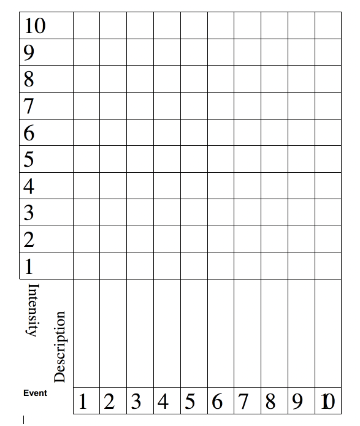
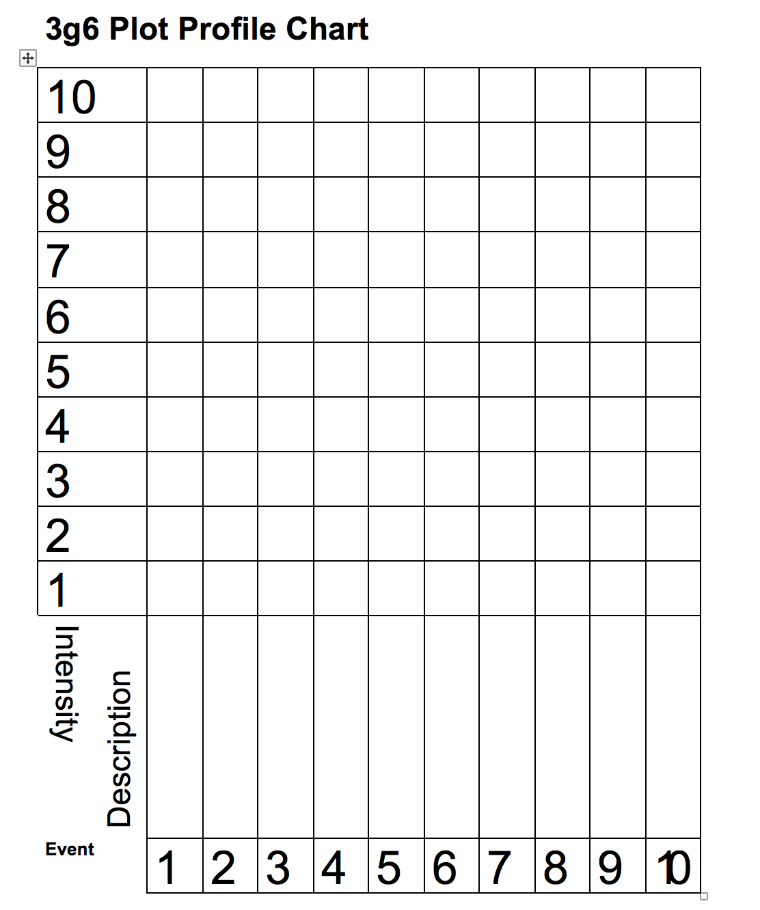
Plot Profile Chart:
Create a PPC for this chapter.
Record 2-3 major events from today’s reading.
Rate them on a scale of 1-10 based on their intensity
We will add to this chart over the next 2 days.
Open Mind Portrait:
Add to your OMP of Billy. What is he thinking and feeling as he hunts for the first time? As he watches his dogs work? As he trees his first coon? Add 3-5 more thoughts to your OMP.
Discussion
Ask discussion questions of all 9 types (see Day 1).
Key Questions (pp 67-78)
Billy’s papa wants to treat him like a man but also knows he needs to learn responsibility. What agreement (rules) does he set for Billy? Do you think this is a good way for a parent to give a little freedom and teach a child? What will Billy have to do to keep his end of the agreement?
In what ways does Billy encourage his dogs? Why do you think these cues are important? How do we encourage each other (verbally and non-verbally)? Why is encouragement important?
The dogs lost the trail. Billy could have shown them how to get across the river but he wanted them to figure out the trail. What was he trying to teach the dogs? Is it important for people to figure out solutions with the close encouragement of someone trusted? How will the learning change if he doesn’t let the dogs do it on their own?
Billy makes an agreement with the dogs; if they put a coon in the tree he will do the rest. It is important for him to keep his word? What is the value of a man’s word? Why is it important that Billy keeps his side of the bargain? What happens to a man or woman when they do not keep their word?
In what ways does Billy’s support him?
Papa is going to ask grandpa for his suggestions to get the coon. What do you think grandpa’s suggestion will be?
Analyze
Analyze the key paragraph.
Key Paragraph
Page 77:
“Well, all right,” he said. “If that’s the way you want it, I’m for it even if it is only an agreement between you and your dogs. If a man’s word isn’t any good, he’s no good himself.”
Extend
Write
Have each student write a short product based on today’s prompt to connect to the unit theme.
Billy wanted to keep cutting the tree down. What would happen with the trust and relationship with his dogs if he did not keep his end of the bargain? Who do you know and trust that keeps his or her word? What does that mean to you? Can people count on you to keep your word?
Billy’s father states, “If a man’s word isn’t any good, he’s no good himself.”
Do you agree or disagree with this statement? Write a one-paragraph argument in which you support or oppose Billy’s father. Introduce your claim. Acknowledge the counterclaim. Support your claim with logical reasons and relevant evidence. Use words, phrases, and clauses to create flow and cohesion. Provide a concluding statement that supports your claim.
Close
Close by extending today’s lesson to life and the world.
Extend the reading to the students’ lives or to the world.
Day 9
Outcomes for Today
-->
W1. Write arguments to support claims with clear reasons and relevant evidence.
a.) Introduce claim(s), acknowledge alternate or opposing claims, and organize the reasons and evidence logically.
b.) Support claim(s) with logical reasoning and relevant evidence, using accurate, credible sources and demonstrating an understanding of the topic or text.
c.) Use words, phrases, and clauses to create cohesion and clarify the relationships among claim(s), reasons, and evidence.
d.) Establish and maintain a formal style.
e.) Provide a concluding statement or section that follows from and supports the argument presented.
Prepare
Background
Gather background knowledge about a place, time, event, person, or thing.
What is a raccoon?
Bandit-masked raccoons are a familiar sight just about everywhere, because they will eat just about anything. These ubiquitous mammals are found in forests, marshes, prairies, and even in cities. They are adaptable and use their dexterous front paws and long fingers to find and feast on a wide variety of fare.
In the natural world, raccoons snare a lot of their meals in the water. These nocturnal foragers use lightning-quick paws to grab crayfish, frogs, and other aquatic creatures. On land, they pluck mice and insects from their hiding places and raid nests for tasty eggs. Raccoons also eat fruit and plants—including those grown in human gardens and farms. They will even open garbage cans to dine on the contents.
These ring-tailed animals are equally opportunistic when it comes to choosing a denning site. They may inhabit a tree hole, fallen log, or a house's attic. Females have one to seven cubs in early summer. The young raccoons often spend the first two months or so of their lives high in a tree hole. Later, mother and children move to the ground when the cubs begin to explore on their own.
Raccoons in the northern parts of their range gorge themselves in spring and summer to store up body fat. They then spend much of the winter asleep in a den. There are six other species of raccoons, in addition to the familiar northern (North American) raccoon. Most other species live on tropical islands.
In today’s reading the dogs treed a coon. Billy is having to cut the tree down (one of the largest on the bottoms). Grandfather comes to see how he is doing. They place a scarecrow by the tree so they can eat and Billy can rest. While dining Grandfather shares the tricks and traits of the coon with Billy and the family.
Word Wall
Here are five vocabulary words to teach and add to the Word Wall.
throbbed (79)
confidence (81)
hide (81)
artistic (81)
determination (82)
Read
Review
Review the timeline from the beginning every day.
Read
Read the selection, usually in a Shared Reading Read React Predict Cycle of 2-3 pages.
p. 79-84
Setting
Characters
Pages
Woods
Billy, grandpa, dogs
79-82
Home
Billy and the family
82-84
Respond
Timeline
Agree on the facts in today’s reading and list the 3-5 most important on the timeline.
Students might mention
Grandpa helps Billy think of a way to keep the coon treed.
They make a scarecrow.
Grandpa admires Billy’s determination and will power to get the coon.
Billy goes back to the house for some food and a good night’s rest.
Map
Add to ongoing class activities like a KWL chart or map: where did the characters go?
Map
The setting for the novel is the Ozark Mountains in Oklahoma.
Post a map of the United States and track the characters locations as your read.
Theme “T” Chart
Two main themes of the novel can be described as;
Determination or
Impact that animals have on humans or the animal/human bond.
As you read fill out the “T” stating the theme and citing what the character did (or did not) do to display this theme, list the page numbers.
You will use this chart to help you with your final writing product.
Continue to fill this chart in as you read
Explore
Activity
Explore the reading more deeply with a visual or oral language activity.
Plot Profile Chart:
Add 2-3 more events to the PPC you started yesterday.
Rate each event on a scale of 1-10 based on its intensity.
Poem or rap:
Create a poem or a rap about determination and willpower.
Build Billy’s scarecrow:
Use it to pin Billy’s character traits to.
Open Mind Portrait:
Add to your OMP of Billy. What do you think he is thinking and feeling as he makes the scarecrow with grandpa? Gets a good nights rest? And realizes his and his dogs determination? Add 3-5 new thoughts to your OMP.
Discussion
Ask discussion questions of all 9 types (see Day 1).
Key Questions (pp 79-84)
How would you explain Grandpa’s personality and the relationship he has with Billy? Why are multi-generational relationships important?
Grandpa scolds Billy for wanting to give up he says, don’t ever start something you can no finish. What is he trying to teach Billy? Why is this lesson important? Where does Billy need to get his motivation from internal or external sources?
How did they keep the coon treed? Do you think this type of trickery will work?
What did Billy have to do to get Old Dan to go with him? What other options did he have?
What were Mama’s concerns for Billy? Are they valid?
What is Billy learning about determination and character by chopping the tree down? What does grandfather mean that all people should have to chop a tree?
Grandpa thinks that all boys should have to chop a tree down at one point in their lives. What does the tree represent? What literary device is the author using to relate the tree to determination?
Analyze
Analyze the key paragraph.
Key Paragraph
Page 82:
…about this tree-chopping of yours, I think it’s all right. In fact, I think it would be a good thing if all young boys had to cut down a big tree like that once in their life. It does something for them. It gives them determination and will power. That’s a good thing for a man to have…
Extend
Write
Have each student write a short product based on today’s prompt to connect to the unit theme.
Have you ever had a time in your life that you were driven by determination and will power? What did that feel like?
Do you agree with Grandpa’s statement about boys needing to chop a tree to learn determination? Write a one-paragraph argument in which you agree or oppose Grandfather’s viewpoint. Introduce your claim and acknowledge the opposing claim. Support your claim with logical reasons and relevant evidence using accurate and credible sources. Use words, phrases, and clauses to create cohesion and to clarify relationships among claims. Provide a concluding statement, which supports your claims.
Close
Close by extending today’s lesson to life and the world.
Extend the reading to the students’ lives or to the world.
Day 10
Outcomes for Today
-->
W1. Write arguments to support claims with clear reasons and relevant evidence.
a.) Introduce claim(s), acknowledge alternate or opposing claims, and organize the reasons and evidence logically.
b.) Support claim(s) with logical reasoning and relevant evidence, using accurate, credible sources and demonstrating an understanding of the topic or text.
c.) Use words, phrases, and clauses to create cohesion and clarify the relationships among claim(s), reasons, and evidence.
d.) Establish and maintain a formal style.
e.) Provide a concluding statement or section that follows from and supports the argument presented.
Prepare
Background
Gather background knowledge about a place, time, event, person, or thing.
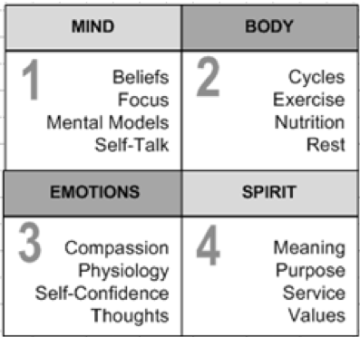
What is a source of strength? Why is it important? (for discussion)
People have many different sources of strength. There are times when life and situations can get extremely difficult and you may have to reach in and find your source of strength. For some it may be religion, family, health and well-being or a combination of any number of things.
The chart below gives examples of sources of strength that can be driven by your mind, body, emotions, or spirit.
Word Wall
Here are five vocabulary words to teach and add to the Word Wall.
limber (85)
underbrush (86)
irritated (86)
torture (86)
droning (88)
Read
Review
Review the timeline from the beginning every day.
Read
Read the selection, usually in a Shared Reading Read React Predict Cycle of 2-3 pages.
p. 85-90
Setting
Characters
Pages
Home
Billy, dogs, family
85-86
Woods
Billy and the dogs
86-88
River bottom
Billy and the dogs
89
Home
Billy, the dogs, and family
90
Respond
Timeline
Agree on the facts in today’s reading and list the 3-5 most important on the timeline.
Students might mention
Billy wakes up the next morning to find Old Dan gone.
When he gets to the tree he realized both dogs had slept there.
His hands are full of blisters and he doesn’t think he can go on.
He asks for help.
A big wind comes and helps blow the tree down.
Map
Add to ongoing class activities like a KWL chart or map: where did the characters go?
Map
The setting for the novel is the Ozark Mountains in Oklahoma.
Post a map of the United States and track the characters locations as your read.
Theme “T” Chart
Two main themes of the novel can be described as;
Determination or
Impact that animals have on humans or the animal/human bond.
As you read fill out the “T” stating the theme and citing what the character did (or did not) do to display this theme, list the page numbers.
You will use this chart to help you with your final writing product.
Continue to fill this chart in as you read
Explore
Activity
Explore the reading more deeply with a visual or oral language activity.
Plot Profile Chart:
Complete the PPC you started on day 8.
Rate each event on a scale of 1-10 based on its intensity.
Use the chart to write a summary of the reading.
Open Mind Portrait:
Add to your OMP of Billy. What is he thinking and feeling when he wakes up and can barely move? When he is so exhausted and sore he doesn’t think he can chop any more? When the tree falls? Add 3-5 new thoughts to your OMP.
Discussion
Ask discussion questions of all 9 types (see Day 1).
Key Questions (pp 85-90)
How does the author create a sense of bonding between Billy and his dogs?
Is Billy’s mama supportive of him? What role does she play in his development?
What understanding does Billy have of the relationship of nature and man? What clues from the reading support your answer?
What kind of boy is Billy? Describe his character.
What happens after the tree falls down?
Analyze
Analyze the key paragraph.
Key Paragraph
Page 86:
Old Dan hadn’t been alone when he had gone back to the tree. She too had gone along. There was no doubt that in the early morning she had come home to get me.
There was a lump in my throat as I said, “I’m sorry, little girl, I should’ve known.”
Extend
Write
Have each student write a short product based on today’s prompt to connect to the unit theme.
Sometimes we make inaccurate assumptions about things or people. What inaccurate assumption did Billy make about Little Ann? What really happened? Have you ever made an inaccurate assumption? Define assumption?
Write a one-paragraph argument in which you agree or oppose with the merits of assuming things. Use this as an opportunity to define assume. Introduce your claim and acknowledge a counterclaim. Use words phrases and cohesions and clarify the relationships among claims. Establish and maintain a formal style. Provide a concluding statement in which you support your claim.
Close
Close by extending today’s lesson to life and the world.
Extend the reading to the students’ lives or to the world.
Day 11
Outcomes for Today
-->
W1. Write arguments to support claims with clear reasons and relevant evidence.
a.) Introduce claim(s), acknowledge alternate or opposing claims, and organize the reasons and evidence logically.
b.) Support claim(s) with logical reasoning and relevant evidence, using accurate, credible sources and demonstrating an understanding of the topic or text.
c.) Use words, phrases, and clauses to create cohesion and clarify the relationships among claim(s), reasons, and evidence.
d.) Establish and maintain a formal style.
e.) Provide a concluding statement or section that follows from and supports the argument presented.
Prepare
Background
Gather background knowledge about a place, time, event, person, or thing.
What is a “fish story”?
A fish story is a storytelling technique, that allows people to tell a story to entertain but also to pass down traditions, compete for superiority and respect, and sometimes the tales end up as great legends or myths.
The term “fish story” originates from fishermen talking about the “one that got away”. But a fish story can be told by anyone.
In today’s reading Billy goes to the store on Saturday to turn in skins. His relationship has changed with the men at the store and now he can join them and tell tales about his adventures or a “fish story”. If he strays too far from the truth, Grandfather will put a bar of soap in his pocket.
Word Wall
Here are five vocabulary words to teach and add to the Word Wall.
prowled (91)
predicted (91)
nonchalantly (92)
belligerent (94)
destined (95)
Read
Review
Review the timeline from the beginning every day.
Read
Read the selection, usually in a Shared Reading Read React Predict Cycle of 2-3 pages.
p. 91-100
Setting
Characters
Pages
Hunting in woods
Billy and dogs
91-92
Grandpa’s Store
Billy, grandpa, men
92-93
Home
Billy, the dogs, and family
94-95
River bottom
Billy and dogs
95-97
Muskrat den
Billy and dogs
97-98
Tree
Billy and dogs
99-100
Respond
Timeline
Agree on the facts in today’s reading and list the 3-5 most important on the timeline.
Students might mention
Mama made Billy a coonskin cap.
Billy hunts all the time and takes his hides to Grandpa’s store.
Grandpa counts them but never knows why. He doesn’t care about the money they bring in.
He just loves being with his dogs.
Old Dan will not hunt without Little Ann.
Map
Add to ongoing class activities like a KWL chart or map: where did the characters go?
Map
The setting for the novel is the Ozark Mountains in Oklahoma.
Post a map of the United States and track the characters locations as your read.
Theme “T” Chart
Two main themes of the novel can be described as;
Determination or
Impact that animals have on humans or the animal/human bond.
As you read fill out the “T” stating the theme and citing what the character did (or did not) do to display this theme, list the page numbers.
You will use this chart to help you with your final writing product.
Continue to fill this chart in as you read
Explore
Activity
Explore the reading more deeply with a visual or oral language activity.
Cartoon:
Choose one of the stories Billy tells about the dogs and make a cartoon about it.
Illustrate it and add thought bubbles.
Open Mind Portrait:
Add to your OMP of Billy. What is he thinking and feeling as he continues to hunt? As he becomes a “hunter”? As people talk about his dogs? Add 3-5 new thoughts to your OMP.
Discussion
Ask discussion questions of all 9 types (see Day 1).
Key Questions (pp 91-100)
What does Mama make for Billy? How does this change his personality?
How does Billy deal with all the other hunters who tease him about the size of Little Ann? How has his interactions changed with the men at the store? What changed for the men and for Billy?
In what way do Dan and Ann work well together? Why is their dependency positive and negative? What are the similarities and differences of their personalities?
Billy asks grandfather about the notes he keeps when skins are turned in and grandfather snaps at him, Billy says nothing more as he knows to respect his grandfather. What are ways Billy shows respect? How do you show respect? Do you think this is a good example of being respectful? Explain.
Analyze
Analyze the key paragraph.
Key Paragraph
Page 99:
There he was. I didn’t know what to do. I couldn’t cut the tree down and I was afraid to climb it for fear I would scare the coon into jumping out. If he did, Old Dan would jump, too, and break his legs.
Extend
Write
Have each student write a short product based on today’s prompt to connect to the unit theme.
Billy solves a lot of problems while hunting.
List a few other times he had to think through the situation clearly to solve a problem. Do you think he shows maturity and logic in his thinking?
Write an argument in which you defend his ability to reason. Introduce your claim and acknowledge a counterclaim. Organize your reasons clearly and logically. Support your claim using relevant evidence and sources. Use words and phrases to create cohesion. Provide a concluding statement, which supports your claim.
Close
Close by extending today’s lesson to life and the world.
Extend the reading to the students’ lives or to the world.
Day 12
Outcomes for Today
-->
W1. Write arguments to support claims with clear reasons and relevant evidence.
a.) Introduce claim(s), acknowledge alternate or opposing claims, and organize the reasons and evidence logically.
b.) Support claim(s) with logical reasoning and relevant evidence, using accurate, credible sources and demonstrating an understanding of the topic or text.
c.) Use words, phrases, and clauses to create cohesion and clarify the relationships among claim(s), reasons, and evidence.
d.) Establish and maintain a formal style.
e.) Provide a concluding statement or section that follows from and supports the argument presented.
Prepare
Background
Gather background knowledge about a place, time, event, person, or thing.
What does it mean to believe? (for discussion)
The term believe can be defined as, the ability to have confidence in the truth, the existence, or the reliability of something, although without absolute proof that one is right in doing so.
In today’s reading Billy almost loses Little Ann in the river. As he asks for help and prays a solution is given to him. He asks his mother about prayers being answered and she tells Billy that his prayers have to be sincere and he has to believe in him.
Word Wall
Here are five vocabulary words to teach and add to the Word Wall.
predicament (101)
rile (101)
cunning (103)
eddy (104)
mournful (104)
Read
Review
Review the timeline from the beginning every day.
Read
Read the selection, usually in a Shared Reading Read React Predict Cycle of 2-3 pages.
p. 101-110
Setting
Characters
Pages
Home
Billy and family
101
Woods
Billy and dogs
102-103
River
Billy and dogs
104-109
River bank
Billy and dogs
109-110
Respond
Timeline
Agree on the facts in today’s reading and list the 3-5 most important on the timeline.
Students might mention
Billy goes hunting during a very bad snowstorm.
Little Ann falls into the icy river and nearly drowns.
Billy has to figure out how to save her.
Map
Add to ongoing class activities like a KWL chart or map: where did the characters go?
Map
The setting for the novel is the Ozark Mountains in Oklahoma.
Post a map of the United States and track the characters locations as your read.
Theme “T” Chart
Two main themes of the novel can be described as;
Determination or
Impact that animals have on humans or the animal/human bond.
As you read fill out the “T” stating the theme and citing what the character did (or did not) do to display this theme, list the page numbers.
You will use this chart to help you with your final writing product.
Continue to fill this chart in as you read
Explore
Activity
Explore the reading more deeply with a visual or oral language activity.
Open Mindy Portrait:
Add to your OMP of Billy. What is he thinking and feeling when he was trapped inside during the storm? Once he is out on the chase for a coon in the snow? When Little Ann gets stuck? Add 3-5 new thoughts to your OMP.
Discussion
Ask discussion questions of all 9 types (see Day 1).
Key Questions (pp 101-110)
Can you spot at least two places in the chapter where the author creates suspense for the reader? Explain them.
Do you think Billy is making wise choices by hunting right after a blizzard? Were his parents wise to let him go? What trait does Billy possess that help him when he is in trouble?
What words and phrases does the author use to give a visual image of the hunt on page 102-103? How do those words make you feel?
Billy has to have faith in himself, his dogs, and he also has faith in something bigger (for him, God). Define faith. How does his faith help him?
Analyze
Analyze the key paragraph.
Key Paragraph
Page 106:
At the edge of the water stood a large sycamore. I got behind it, anything to blot out that heartbreaking scene. Little Ann, thinking I had deserted her, started crying. I couldn’t stand it.
I opened my mouth to call Old Dan. I wanted to tell him to come on and we’d go home as there was nothing we could do. The words just wouldn’t come out…
Extend
Write
Have each student write a short product based on today’s prompt to connect to the unit theme.
Do you think this part of the chapter is realistic? If you were the author would you have had Billy give up at this point? What does the author gain by adding that at this juncture of the story?
Write an argument in which you agree or oppose the author’s technique. Write your claim and acknowledge the counterclaim. Organize your reasons logically. Support your claim with relevant evidence, using credible sources. Use words phrases and clauses to create cohesions. Provide a concluding statement to support your claim.
Close
Close by extending today’s lesson to life and the world.
Extend the reading to the students’ lives or to the world.
Day 13
Outcomes for Today
-->
W1. Write arguments to support claims with clear reasons and relevant evidence.
a.) Introduce claim(s), acknowledge alternate or opposing claims, and organize the reasons and evidence logically.
b.) Support claim(s) with logical reasoning and relevant evidence, using accurate, credible sources and demonstrating an understanding of the topic or text.
c.) Use words, phrases, and clauses to create cohesion and clarify the relationships among claim(s), reasons, and evidence.
d.) Establish and maintain a formal style.
e.) Provide a concluding statement or section that follows from and supports the argument presented.
Prepare
Background
Gather background knowledge about a place, time, event, person, or thing.
What does it mean to mill corn?
A mill is a machine that is equipped to grind or pulverize grain to make flour, corn meal, or other products.
A mill is either driven by water or animals to turn the grinding stone.
In today’s reading Billy takes corn to the store to have his father grind it. He runs into the Pritchard boys and they talk him and grandpa into making a bet with them.
Word Wall
Here are five vocabulary words to teach and add to the Word Wall.
pelts (111)
disposition (112)
sneered (112)
gnawed (113)
begrudgingly (113)
Read
Review
Review the timeline from the beginning every day.
Read
Read the selection, usually in a Shared Reading Read React Predict Cycle of 2-3 pages.
p. 111-121
Setting
Characters
Pages
Home
Family
111
Store
Grandfather, Billy, Pritchard Boys
112-113
Mill
Grandfather, Billy, Pritchard Boys
113-115
Hunting
Billy, the dogs, and the Pritchard Boys
116-121
Respond
Timeline
Agree on the facts in today’s reading and list the 3-5 most important on the timeline.
Students might mention
The Pritchard boys challenge Billy to a bet.
He doesn’t want to bet but his grandpa calls the bet.
Billy has to tree the ‘ghost coon.’
The have a suspenseful hunt and it’s not over yet!
Map
Add to ongoing class activities like a KWL chart or map: where did the characters go?
Map
The setting for the novel is the Ozark Mountains in Oklahoma.
Post a map of the United States and track the characters locations as your read.
Theme “T” Chart
Two main themes of the novel can be described as;
Determination or
Impact that animals have on humans or the animal/human bond.
As you read fill out the “T” stating the theme and citing what the character did (or did not) do to display this theme, list the page numbers.
You will use this chart to help you with your final writing product.
Continue to fill this chart in as you read
Explore
Activity
Explore the reading more deeply with a visual or oral language activity.
Open Mind Portrait:
Add to your OMP of Billy. What is he thinking and feeling when he gets to the store and sees the Pritchard Boys? As they make a bet with him? When his dogs scent the ghost coon? Add 3-5 new thoughts to your OMP.
Plot Profile Chart (day 1):
Create a plot profile chart.
Choose 3 events from today’s reading that are significant. Rate them on a scale of 1-10 based on their intensity.
You will complete the rest of the chart on day 14
Discussion
Ask discussion questions of all 9 types (see Day 1).
Key Questions (pp 111-121)
What words does the author use to describe the personality and appearance of the Pritchard boys? Do you think he does a good job creating these two characters? Why won’t grandfather leave the boys in the store? Do you think their reputation fuels the way they act? Explain.
Billy does not want to bet and his grandfather calls the bet. Who is right in this situation? Do you think grandfather should have encouraged the bet or the hunt?
Billy talks to his dogs before the hunt. Do you believe that they can understand what he wants from them? What is an animal human bond?
What happens out on the hunt?
The Pritchard boys get excited while on the hunt, how does this humanize them?
What factors make Billy proud?
Analyze
Analyze the key paragraph.
Key Paragraph
Page 114:
I told Rubin I didn’t want to bet, but I was pretty sure my dogs could tree the ghost coon. Rainie butted in again, “What’s the matter? You ‘yellow’?”
Extend
Write
Have each student write a short product based on today’s prompt to connect to the unit theme.
How does Rainier try to get Billy to say yes to the hunt? Does calling someone ‘yellow’ or scared do the trick? Would you fall for that if you really didn’t want to do something? Grandfather calls the bet and gives Billy the money. Do you think that grandfather was acting responsibly to contribute to the hunt/bet?
Write a one-paragraph argument in which you agree or oppose grandfather’s actions. Write a claim and acknowledge the counterclaim. Give reasons and relevant evidence to support your viewpoint. Use transitions and clauses to create cohesion in your writing. Conclude with a statement, which supports your claim.
Close
Close by extending today’s lesson to life and the world.
Extend the reading to the students’ lives or to the world.
3g6 Plot Profile Chart
Day 14
Outcomes for Today
-->
W1. Write arguments to support claims with clear reasons and relevant evidence.
a.) Introduce claim(s), acknowledge alternate or opposing claims, and organize the reasons and evidence logically.
b.) Support claim(s) with logical reasoning and relevant evidence, using accurate, credible sources and demonstrating an understanding of the topic or text.
c.) Use words, phrases, and clauses to create cohesion and clarify the relationships among claim(s), reasons, and evidence.
d.) Establish and maintain a formal style.
e.) Provide a concluding statement or section that follows from and supports the argument presented.
Prepare
Background
Gather background knowledge about a place, time, event, person, or thing.
What does the phrase, “to pay respect,” mean?
To pay respect is an idiom that means to show respect, admiration, or appreciation for someone. You can pay respect for someone who is living or when they have died. When you pay respect for the dead it may be in the form of a memorial, words of praise, or going to a service.
In today’s reading Billy is struggling with everything he saw and encountered with the Pritchard’s and he knows he has to do something. He takes some flowers to the grave and leaves them. It is his way of respecting the boy and his family even though they were not friendly.
Word Wall
Here are five vocabulary words to teach and add to the Word Wall.
squatty (122)
taut (124)
commotion (128)
astraddle (129)
trance (129)
Read
Review
Review the timeline from the beginning every day.
Read
Read the selection, usually in a Shared Reading Read React Predict Cycle of 2-3 pages.
p. 122-134
Setting
Characters
Pages
The squatty tree
Billy, the dogs, and the Pritchard Boys
122-124
Fence post
Billy, the dogs, and the Pritchard Boys
124-125
The squatty tree
Billy and the dogs
126
The squatty tree
Billy, the dogs, the Pritchard Boys, Old Blue
127-130
Home
Billy, mother, father
131-132
Home
Billy
133
The grave
Billy and the dogs
134
Respond
Timeline
Agree on the facts in today’s reading and list the 3-5 most important on the timeline.
Students might mention
The boys continue to hunt the ghost coon.
Finally the dogs tree him.
Billy decides not to kill the coon because it has lived this long and he didn’t think it would be right.
The Pritchard boys get mad thinking they should kill the coon.
Rubin and Rainie’s dog shows up and starts a fight with Dan and Ann.
They are winning and Rubin gets angry and starts running with an ax to kill Ann and Dan.
Rubin trips and falls on the ax and dies.
Map
Add to ongoing class activities like a KWL chart or map: where did the characters go?
Map
The setting for the novel is the Ozark Mountains in Oklahoma.
Post a map of the United States and track the characters locations as your read.
Theme “T” Chart
Two main themes of the novel can be described as;
Determination or
Impact that animals have on humans or the animal/human bond.
As you read fill out the “T” stating the theme and citing what the character did (or did not) do to display this theme, list the page numbers.
You will use this chart to help you with your final writing product.
Continue to fill this chart in as you read
Explore
Activity
Explore the reading more deeply with a visual or oral language activity.
Open Mind Portrait:
Add to your OMP of Billy. What is he thinking and feeling as Little Ann scents the coon? As he gets into a fight with the Pritchard boys? As he tells his parents the events of the night? As he pays respect at the grave? Add 3-5 new thoughts to your OMP.
Plot Profile Chart:
Complete the Plot Profile Chart you started yesterday. Add the events you think are the most significant. Then rate those events on a scale of 1-10 based on their intensity.
Once the chart is complete you can use it to write a summary of the reading.
Discussion
Ask discussion questions of all 9 types (see Day 1).
Key Questions (pp 122-134)
What would you say is the climax of this chapter?
How does Billy eventually show respect to the ghost coon? What does this say about his respect for nature? What would you have done? What made him not want to kill the coon?
What events in today’s reading made Billy fearful? Is his fear justified?
Rainie was not able to help Billy and could not respond to him. What was happening? Do you think this is a natural reaction?
What role does Papa and the men play? Do you think their presence was helpful to the Pritchard’s? In what way?
Describe the setting on the day after Rubin’s death. How does that add to the mood?
How does Billy pay his respects to Rubin? In what way does this help Rubin’s mother?
Analyze
Analyze the key paragraph.
Key Paragraph
Page 134:
I felt much better after paying my respects to Rubin. Everything looked brighter, and I didn’t have that funny feeling any more.
Extend
Write
Have each student write a short product based on today’s prompt to connect to the unit theme.
Why is it important to ‘pay our respects’ when someone dies? What does that expression mean to you? Are you paying respect to the living or to the dead?
Write a one-paragraph argument to support your claim with clear reasons and relevant evidence. Introduce your claim and acknowledge the opposing claim. Organize the reasons and evidence logically. Support your claims with relevant evidence and logical reasoning. Use credible sources. Use words, phrases, and clauses to create cohesion and clarify relationships. Provide a concluding statement to support your claim.
Close
Close by extending today’s lesson to life and the world.
Extend the reading to the students’ lives or to the world.
Day 15
Outcomes for Today
-->
W1. Write arguments to support claims with clear reasons and relevant evidence.
a.) Introduce claim(s), acknowledge alternate or opposing claims, and organize the reasons and evidence logically.
b.) Support claim(s) with logical reasoning and relevant evidence, using accurate, credible sources and demonstrating an understanding of the topic or text.
c.) Use words, phrases, and clauses to create cohesion and clarify the relationships among claim(s), reasons, and evidence.
d.) Establish and maintain a formal style.
e.) Provide a concluding statement or section that follows from and supports the argument presented
Prepare
Background
Gather background knowledge about a place, time, event, person, or thing.
What is a trauma and how can you overcome a traumatic event?
A trauma is a very difficult or unpleasant experience that causes someone to have mental or emotional problems usually for a long time.
There are certain steps you can take to help minimize the effects of a traumatic event.
Talk about the tragic event to someone who will really listen and whom you trust.
Don’t be afraid to ask for information about the tragic event so that you can understand what happened.
Limit the amount of TV News coverage you watch.
Reassure yourself that you are safe and that the tragic event, which occurred, is rare. Do what you need to do to feel safe.
As a result of the tragic event you may be experiencing “strange” or “different” thoughts and feelings. Accept these feelings and thoughts as a normal reaction to a very unusual event. Remember that recovering from a tragic event takes time.
Find comforting routines like listening to your favorite music or engaging in other activities you enjoy.
It might be a good idea to keep a journal and to write down your thoughts and feelings as well as your memory of the tragic event.
Become involved and be active. You might want to write letters to victims, help plan a memorial service, or engage in a campaign to keep the tragic event from happening again.
Stay connected with your family and friends and continue with your normal activities
Get enough sleep and exercise. Eat well-balanced meals and avoid alcohol.
In today’s reading Billy returns to the store to speak with grandfather. He wants Billy to tell him about the ghost coon hunt and what happened. Grandfather is upset knowing he played a small event in Rainies death. Billy is still trying to deal and cope. Grandfather tells him about the championship coon hunt in hopes that will help Billy “forget” at least for a while.
Word Wall
Here are five vocabulary words to teach and add to the Word Wall.
quivered (136)
solemn (137)
jubilant (139)
pranced (140)
sulking (144)
Read
Review
Review the timeline from the beginning every day.
Read
Read the selection, usually in a Shared Reading Read React Predict Cycle of 2-3 pages.
p. 135-147
Setting
Characters
Pages
home
Billy, dogs, family
135
Store
Billy and grandpa
136-138
Store
Billy, grandpa, and the dogs
139
Road home
Billy and the dogs
140-141
Home
Billy and the family
141-144
Road to the store
Billy, the dogs, and Papa
144-145
Store
Billy, the dogs, Papa, and grandpa
146-147
Respond
Timeline
Agree on the facts in today’s reading and list the 3-5 most important on the timeline.
Students might mention
Grandpa asks Billy if he wants to be in a championship coon hunt.
Grandpa has already registered him and Billy is very excited.
The whole family wants Billy to bring home the gold cup.
Father goes along for the hunt as well.
Map
Add to ongoing class activities like a KWL chart or map: where did the characters go?
Map
The setting for the novel is the Ozark Mountains in Oklahoma.
Post a map of the United States and track the characters locations as your read.
Theme “T” Chart
Two main themes of the novel can be described as;
Determination or
Impact that animals have on humans or the animal/human bond.
As you read fill out the “T” stating the theme and citing what the character did (or did not) do to display this theme, list the page numbers.
You will use this chart to help you with your final writing product.
Continue to fill this chart in as you read
Explore
Activity
Explore the reading more deeply with a visual or oral language activity.
Open Mind Portrait:
Add to your OMP of Billy. What do you think he is thinking and feeling as he retells the events of the hunt? He learns of the championship hunt? He leaves with his Papa and grandpa? Add 3-5 new thoughts to you OMP.
Sketch:
Sketch the scene described on page 144 of the sunrise. Use details from the reading to give detail.
Discussion
Ask discussion questions of all 9 types (see Day 1).
Key Questions (pp 135-147)
What transpired in Grandpa’s and Billy’s conversation about Rubin’s accident? What changed for grandpa? Why is personal responsibility important in healing?
Why had Grandpa been counting the coon hides? Was Billy going to be hunting for himself or for the family? Explain.
Billy describes the sights and sounds he hears on the way home pg. 141. He describes these things as blessings. What do you look and listen for in your environment? Why is it important to stop, look up, and wonder?
How did Billy’s family respond to him entering the hunt?
What does Billy do to help prepare for the hunt? What trait does he display?
On page 144, “looking to the mountains around us, I saw that the mysterious artist who comes at nights had paid us a visit. I wondered how he could paint with so many different colors in one night; red, wine, yellow, and rust.” What is Billy seeing and describing? How does the author use imagery to help create this scene?
What are your predictions about what might happen?
Analyze
Analyze the key paragraph.
Key Paragraph
Page 143:
In the midst of all the excitement, my little sister, not saying a word, climbed down from her chair…
“Silly, you don’t put banty eggs in a gold cup,” the oldest one said.
Extend
Write
Have each student write a short product based on today’s prompt to connect to the unit theme.
All throughout the novel the author refers to Billy’s sisters by other descriptors like “the oldest one” or “the youngest one” instead of their names. What impact or effect does this have on the reader? How would your impression of his sisters change if their names were Sally, Sarah and Sabrina for instance? How do names in general influence our interpretation of a character?
Write an argument in which you support or oppose the need for names or descriptions of the characters. Introduce your claim and acknowledge the opposing claim. Organize your reasons logically. Support your claim with relevant evidence. Use words, phrases, and clauses to create cohesions and clarify the relationships. Conclude with a statement, which supports your claim.
Close
Close by extending today’s lesson to life and the world.
Extend the reading to the students’ lives or to the world.
Day 16
Outcomes for Today
-->
W1. Write arguments to support claims with clear reasons and relevant evidence.
a.) Introduce claim(s), acknowledge alternate or opposing claims, and organize the reasons and evidence logically.
b.) Support claim(s) with logical reasoning and relevant evidence, using accurate, credible sources and demonstrating an understanding of the topic or text.
c.) Use words, phrases, and clauses to create cohesion and clarify the relationships among claim(s), reasons, and evidence.
d.) Establish and maintain a formal style.
e.) Provide a concluding statement or section that follows from and supports the argument presented.
Prepare
Background
Gather background knowledge about a place, time, event, person, or thing.
What are superstitions?
What are your superstitions? (for discussion)
A superstition is a belief or notion, not based on reason or knowledge, in or of the ominous significance of a particular thing, circumstance, occurrence, proceeding, or the like.
What is a Dutch-Oven?
A Dutch oven is typically made of a heavy, sturdy material like cast iron, which allows for slow, even heat distribution, and it's coated in a nonreactive material like enamel, which also makes it fairly easy to clean. It is round (or occasionally oval-shaped, which is good for whole roasts) and deep, with two loop or tab handles and a tight-fitting lid. This pot can be used on the stove or in the oven. It comes in a wide range of sizes, measured by quart capacity.
In todays reading Billy, his grandfather, and father camp for the night. Billy hears and screech owl calls in the night. He is afraid because hearing a screech owl is considered bad luck.
Billy’s grandfather cooks in a Dutch oven, which is a versatile cook pot. It can be used as a pot or can cook as an oven making anything from large pieces of beef or meet and stews to fabulous desserts.
Word Wall
Here are five vocabulary words to teach and add to the Word Wall.
imagination (149)
Dutch-oven (150)
domain (150)
monotonous (150)
jinx (151)
Read
Review
Review the timeline from the beginning every day.
Read
Read the selection, usually in a Shared Reading Read React Predict Cycle of 2-3 pages.
p. 148-158
Setting
Characters
Pages
Camp site
Billy, father, grandfather
148-151
Road to the camp
Billy, father, grandfather
152
Campground prior to the hunt
Billy, father, grandfather, other campers and dogs
153-155
Campground, during the hunt
Billy, father, grandfather, other campers, and dogs
156-158
Respond
Timeline
Agree on the facts in today’s reading and list the 3-5 most important on the timeline.
Students might mention
They set out for the hunt, making sure that Ann and Dan ride in the buggy to protect their feet.
Billy hears two screech owls, which he thinks means bad luck.
His grandfather dismisses that idea as an old superstition.
Billy prepares to hunt the 4th
He is very nervous.
Map
Add to ongoing class activities like a KWL chart or map: where did the characters go?
Map
The setting for the novel is the Ozark Mountains in Oklahoma.
Post a map of the United States and track the characters locations as your read.
Add the locations dogs are bread at.
Theme “T” Chart
Two main themes of the novel can be described as;
Determination or
Impact that animals have on humans or the animal/human bond.
As you read fill out the “T” stating the theme and citing what the character did (or did not) do to display this theme, list the page numbers.
You will use this chart to help you with your final writing product.
Continue to fill this chart in as you read
Explore
Activity
Explore the reading more deeply with a visual or oral language activity.
Postcard:
Pretend you are Billy. Write a postcard to your mother and sisters.
How would Billy describe this event so far in a postcard to his mother?
On the front draw a picture based on today’s reading.
Open Mind Portrait:
Add to you OMP of Billy. What do you think he is thinking and feeling as he hears the screech owl? Gets to the camp with all the men? Wins the best looking dog competition? And hears the hunt start? Add 3-5 new thoughts to your OMP.
T Chart (reference page 149):
“”No grandpa,” I said. “They’ve always been that way. They won’t take anything away from each other, and everything they do, they do as one.”
Create a chart that displays the bond that the dogs share:
You can list it based on what each member of the family has witnessed.
Discussion
Ask discussion questions of all 9 types (see Day 1).
Key Questions (pp 148-158)
How does the narrator describe places in the book? What do they use to find the campground for the hunt?
In what way are they taking care of the dogs so they will be ready for the hunt? Old Dan won’t eat until Ann has been fed what does that say about the bond the dogs share? What makes them so close?
Billy hears the screech owl at night? What prediction can you make about the hunt? What was grandpa and papa’s response to his fear?
What was the campground like at the big hunt?
Billy goes to wonder around the camp. He starts to compare the other dogs to his dogs. The other owners have more equipment and may have better bread hounds, but what sets Billy and his dogs apart from them?
Billy has to choose a dog to show in the beauty contest. He chose Little Ann because she had fewer scars than Old Dan. In what way can visible scars and internal scars make you beautiful? Explain.
Who won the silver cup and why?
Billy felt out of place walking around the camp. The other men had better equipment and nicer clothes. He had a sheepskin coat and faded overalls. But, the men treated him as an equal. What value do the men place on him? What lesson can be learned from this treatment? How do you think this will affect Billy for the rest of his life?
What is Billy’s plan for his night of the hunt? Do you think he is wise to use this strategy? Explain.
Analyze
Analyze the key paragraph.
Key Paragraph
Page 151:
Rubbing the sleep from his eyes, he said, “You heard two screech owls. Why, that’s nothing…You’re thinking of the bad-luck superstition. There’s nothing to that; nothing at all.
Extend
Write
Have each student write a short product based on today’s prompt to connect to the unit theme.
Do you think the author is foreshadowing anything by mentioning this? Or is he just trying to raise the level of suspense? Do you believe in superstitions?
Write a one-paragraph argument in which you confirm or dispel the value of superstitions. Introduce your claim and acknowledge the opposing viewpoint. Organize the evidence logically. Support your reasons with logical evidence and reasons. Use words and phrases to create cohesion. Provide a concluding statement, which supports your claim.
Close
Close by extending today’s lesson to life and the world.
Extend the reading to the students’ lives or to the world.
Day 17
Outcomes for Today
-->
W1. Write arguments to support claims with clear reasons and relevant evidence.
a.) Introduce claim(s), acknowledge alternate or opposing claims, and organize the reasons and evidence logically.
b.) Support claim(s) with logical reasoning and relevant evidence, using accurate, credible sources and demonstrating an understanding of the topic or text.
c.) Use words, phrases, and clauses to create cohesion and clarify the relationships among claim(s), reasons, and evidence.
d.) Establish and maintain a formal style.
e.) Provide a concluding statement or section that follows from and supports the argument presented.
Prepare
Background
Gather background knowledge about a place, time, event, person, or thing.
What does it take to be a teacher (for discussion)?
A teacher is described as one who instructs or passes knowledge on to another.
In today’s reading Billy has become the teacher. He is sharing his knowledge with his papa and grandpa.
Word Wall
Here are five vocabulary words to teach and add to the Word Wall.
territory (159)
spectacles (160)
gingerly (161)
faltered (163)
elimination (164)
Read
Review
Review the timeline from the beginning every day.
Read
Read the selection, usually in a Shared Reading Read React Predict Cycle of 2-3 pages.
p. 159-169
Setting
Characters
Pages
Camp
Billy, Grandpa, Father, dogs, and the judge
159
Hunting
Billy, Grandpa, Father, dogs, and the judge
160-161
Near the fire
Billy, Grandpa, Father, and the judge
161-162
Rail fence (hunt)
Billy, Grandpa, Father, dogs, and the judge
162-164
Campground
Billy, Grandpa, Father, dogs, and the other hunters
165-166
Hunt (finals)
Billy, Grandpa, Father, dogs, and the judge
166-169
Respond
Timeline
Agree on the facts in today’s reading and list the 3-5 most important on the timeline.
Students might mention
They begin hunting and end up treeing 3 coons.
The judge is impressed with the dogs.
While on the hunt, Grandpa falls in the river.
Billy and his dogs qualify for the final round.
Map
Add to ongoing class activities like a KWL chart or map: where did the characters go?
Map
The setting for the novel is the Ozark Mountains in Oklahoma.
Post a map of the United States and track the characters locations as your read.
Add the locations dogs are bread at;
Theme “T” Chart
Two main themes of the novel can be described as;
Determination or
Impact that animals have on humans or the animal/human bond.
As you read fill out the “T” stating the theme and citing what the character did (or did not) do to display this theme, list the page numbers.
You will use this chart to help you with your final writing product.
Continue to fill this chart in as you read
Explore
Activity
Explore the reading more deeply with a visual or oral language activity.
Open Mind Portrait
Add to your OMP of Billy. What do you think he is thinking and feeling as he realizes he is in the finals for the hunt? As he is able to share his knowledge with his papa and grandpa? As he watches his dogs excel? Add 3-5 new thoughts to your OMP.
Beginning Middle and End Chart
Create a Beginning, Middle, and End chart for the chapter.
Place 3-5 items in each column.
Once completed you can use the chart to summarize the chapter.
Discussion
Ask discussion questions of all 9 types (see Day 1).
Key Questions (pp 159-169)
Grandpa and father start to look to Billy for his expertise. In what ways has Billy become the teacher? (list 3-5 examples from the chapter)
What happened to Grandpa? What effect does this have on everyone else?
What words of encouragement does Billy give the dogs before the hunt?
“Regardless of all the discouraging talk, the love and belief I had in my little read hounds never faltered.” Pg. 163. How does this faith keep Billy going? Why is it important to place your faith in something other than yourself?
What are the men doing then they are exchanging money in camp?
The other hunters want Billy to win the prize money. Why do you think they are rooting for him? Who do you want to win? Explain.
Billy is asked where he wants to start the next hunt. What does he decide? How does he defend his choice?
Analyze
Analyze the key paragraph.
Key Paragraph
Page 168:
Old Dan was standing perfectly still, with eyes closed and head hanging down. Little Ann was licking at his cut and bleeding ears. “She always does that,” I said. “If you watch, when she gets down with him, he’ll do the same for her.”
Extend
Write
Have each student write a short product based on today’s prompt to connect to the unit theme.
What kind of relationship Ann and Dan have with one another? What can we learn from them as dogs that could be applied to our human interactions?
Write an argument in which you support or oppose better interactions between people. Introduce your claim and acknowledge the opposing claim. Organize your reasons logically. Support your claim with logical reasoning and relevant evidence, using accurate, and credible sources. Use words and phrases to create cohesion and to clarify relationships in your writing. Provide a concluding statement, which supports your claim.
Close
Close by extending today’s lesson to life and the world.
Extend the reading to the students’ lives or to the world.
2g6 Beginning-Middle-End Chart
Day 18
Outcomes for Today
-->
W1. Write arguments to support claims with clear reasons and relevant evidence.
a.) Introduce claim(s), acknowledge alternate or opposing claims, and organize the reasons and evidence logically.
b.) Support claim(s) with logical reasoning and relevant evidence, using accurate, credible sources and demonstrating an understanding of the topic or text.
c.) Use words, phrases, and clauses to create cohesion and clarify the relationships among claim(s), reasons, and evidence.
d.) Establish and maintain a formal style.
e.) Provide a concluding statement or section that follows from and supports the argument presented.
Prepare
Background
Gather background knowledge about a place, time, event, person, or thing.
What are miracles?
A miracle is an event not explicable by natural or scientific laws. Such an event may be attributed to a supernatural being (God or gods), a miracle worker, a saint or a religious leader. Theologians say that, with divine providence, gods regularly work through created nature yet are free to work without, above, or against it as well
The word "miracle" is often used to characterize any beneficial event that is statistically unlikely but not contrary to the laws of nature, such as surviving a natural disaster, or simply a "wonderful" occurrence, regardless of likelihood, such as a birth. Other miracles might be: survival of an illness diagnosed as terminal, escaping a life-threatening situation or 'beating the odds'. Some coincidences may be seen as miracles.
In today’s reading Billy and the men are lost in a storm. They cannot find the dogs, it is freezing, and they are struggling. Billy does not want to leave the dogs as he knows they will not give up. He starts to hope for a miracle so they can find them.
Word Wall
Here are five vocabulary words to teach and add to the Word Wall.
momentary (172)
mournful (175)
searing (176)
gully (176)
affection (178)
Read
Review
Review the timeline from the beginning every day.
Read
Read the selection, usually in a Shared Reading Read React Predict Cycle of 2-3 pages.
p. 170-185
Setting
Characters
Pages
At the hunt
Billy, Papa, Grandpa, the judge
170-173
Hunting
Billy, Papa, Grandpa, the judge, Little Ann
173-174
Gully
Billy, Papa, Grandpa, the judge, the dogs
175-179
Gully
Billy, Papa, grandpa, the judge, men from camp
180-183
Tree
Billy, men, the dogs
183-184
Respond
Timeline
Agree on the facts in today’s reading and list the 3-5 most important on the timeline.
Students might mention
A big sleet storm hits.
Billy has a hard time hearing the dogs and the storm worsens.
The men want to turn back but Billy will not abandon his dogs.
Finally, Little Ann helps them find Old Dan.
Meanwhile, Grandpa has severely sprained his ankle during a fall.
The sleet turns to snow.
A search party finds them.
They built a stretcher for Grandpa and carried him out.
They find the dogs and they are nearly frozen to death.
They warm them up with a fire.
The dogs chase one last coon down, what Billy needs in order to win.
He is presented with $300 and the gold cup.
Map
Add to ongoing class activities like a KWL chart or map: where did the characters go?
Map
The setting for the novel is the Ozark Mountains in Oklahoma.
Post a map of the United States and track the characters locations as your read.
Theme “T” Chart
Two main themes of the novel can be described as;
Determination or
Impact that animals have on humans or the animal/human bond.
As you read fill out the “T” stating the theme and citing what the character did (or did not) do to display this theme, list the page numbers.
You will use this chart to help you with your final writing product.
Continue to fill this chart in as you read
Explore
Activity
Explore the reading more deeply with a visual or oral language activity.
Open Mind Portrait:
Add to your OMP of Billy. What is he thinking and feeling as he continues to search for his dogs? Sees that grandpa is hurt? Is found by the men from camp? Finds he dogs have treed a coon and stayed with him in the storm? Add 3-5 new thoughts to your OMP.
Discussion
Ask discussion questions of all 9 types (see Day 1).
Key Questions (pp 170-185)
Why do the men want to turn back? What is their logic? What is Billy’s argument? Who do you support?
Why does Billy trust Little Ann? How does this trust build their relationship?
How does Little Ann alert them when she finds grandfather? How is this different then some of her other barks? What happened to Grandpa’s ankle?
Billy wants to take grandpa to the gully. He can support his logic. Does this choice show he has wisdom and maturity? Explain.
Grandpa has a talk with Billy on page 179. What does he tell Billy? Why is this helpful?
On page 184, Mr. Kyle talks about how our world would not have war or murder if people were able to be as loving as dogs, what do you think?
The men decide to split up Billy goes to find his dogs. The men take grandpa to the camp where there is a doctor who is also in the hunt. Most of the men did not know he was a doctor. How is hunting and camping an equalizer among men? Can you name other activities that equalize people? What does this term refer to?
Analyze
Analyze the key paragraph.
Key Paragraph
Page 174:
"Fellows, no dog is worth the lives of three men.”
Extend
Write
Have each student write a short product based on today’s prompt to connect to the unit theme.
The judge, papa, and grandfather are ready to give up and get out of the storm. Billy knows his dogs will not give up and will die if he does not find them and he wants to continue on. Can you justify his actions?
Write an argument in which you support the judge or Billy. Write an argument in which you support your claim with clear, reasoned, and relevant evidence. Introduce your claim. Acknowledge the opposing viewpoint and organize your reasons logically. Support your claim with relevant evidence, using accurate, credible sources and demonstrate an understanding of the topic. Use words, phrases, and clauses to create cohesion and clarify relationships. Provide a concluding statement that follows form and supports the argument.
Close
Close by extending today’s lesson to life and the world.
Extend the reading to the students’ lives or to the world.
Day 19
Outcomes for Today
-->
W1. Write arguments to support claims with clear reasons and relevant evidence.
a.) Introduce claim(s), acknowledge alternate or opposing claims, and organize the reasons and evidence logically.
b.) Support claim(s) with logical reasoning and relevant evidence, using accurate, credible sources and demonstrating an understanding of the topic or text.
c.) Use words, phrases, and clauses to create cohesion and clarify the relationships among claim(s), reasons, and evidence.
d.) Establish and maintain a formal style.
e.) Provide a concluding statement or section that follows from and supports the argument presented.
Prepare
Background
Gather background knowledge about a place, time, event, person, or thing.
What is the purpose of hunting?
Hunters do a lot for conservation. The sale of hunting licenses, tags, and stamps is the primary source of funding for most state wildlife conservation efforts.
By respecting seasons and limits, purchasing all required licenses, and paying federal excise taxes on hunting equipment and ammunition, individual hunters make a big contribution towards ensuring the future of many species of wildlife and habitat for the future. By paying the Federal excise tax on hunting equipment, hunters are contributing hundreds of millions of dollars for conservation programs that benefit many wildlife species, both hunted and non- hunted.
Each year, nearly $200 million in hunters' federal excise taxes are distributed to State agencies to support wildlife management programs, the purchase of lands open to hunters, and hunter education and safety classes. Proceeds from the Federal Duck Stamp, a required purchase for migratory waterfowl hunters, have purchased more than five million acres of habitat for the refuge system (2005 statistics only); lands that support waterfowl and many other wildlife species, and are usually open to hunting.
Local hunting clubs and national conservation organizations work to protect the future of wildlife by setting aside thousands of acres of habitat and speaking up for conservation in our national and state capitals.
In today’s reading Billy wins the cup and is able to return home. He and his family are proud. His mother’s prayers have been answered. He continues to hunt and the dogs tree a Mountain Lion. They get in a major fight and the dogs are hurt bad. Billy recounts the story and talks about how there will be one less lion terrorizing farms and animals. He is able to help keep a certain balance in nature.
Word Wall
Here are five vocabulary words to teach and add to the Word Wall.
association (186)
stampede (187)
defiant (188)
trembling (189)
entrails (197)
Read
Review
Review the timeline from the beginning every day.
Read
Read the selection, usually in a Shared Reading Read React Predict Cycle of 2-3 pages.
p. 186-198
Setting
Characters
Pages
Home and woods
Billy, dogs
186-198
Respond
Timeline
Agree on the facts in today’s reading and list the 3-5 most important on the timeline.
Students might mention
Billy comes home and shares the silver and gold cup with his sisters.
He and Papa give the box of money to Mama.
They have a big dinner and celebration while Billy tells the story of the hunt.
Billy goes back to hunting.
One night he comes across a big mountain lion.
The lion attacks and it becomes a deadly fight between the dogs, Billy and the lion.
Billy uses the ax on the lion and he dies.
Old Dan has been wounded very badly.
He brings the dogs home and tries to patch up Old Dan’s entrails.
Map
Add to ongoing class activities like a KWL chart or map: where did the characters go?
Map
The setting for the novel is the Ozark Mountains in Oklahoma.
Post a map of the United States and track the characters locations as your read.
Theme “T” Chart
Two main themes of the novel can be described as;
Determination or
Impact that animals have on humans or the animal/human bond.
As you read fill out the “T” stating the theme and citing what the character did (or did not) do to display this theme, list the page numbers.
You will use this chart to help you with your final writing product.
Continue to fill this chart in as you read
Explore
Activity
Explore the reading more deeply with a visual or oral language activity.
Predict ending:
Use a timeline or a storyboard to predict the ending of the book. Share your predictions with the class.
Open Mind Portrait:
Add to your OMP of Billy. What is he thinking and feeling as he wins the cup? As he sees his mother pay respects to the dogs and fall in prayer? As he fights the Mountain Lion with the dogs? Add 3-5 new thoughts to your OMP.
Discussion
Ask discussion questions of all 9 types (see Day 1).
Key Questions (pp 186-198)
How did this part of the book make you feel? What were the high points and the low points? Why do you think the author wrote about both so close together?
How do you think the men felt when they were able to award Billy the cup? Why do we tend to root for the underdog? Why did Billy want to take the cup home?
How did the family embrace Billy and his winning the cup(s)? How were they living and winning through him? Is it important to celebrate and be truly happy for others? Explain. Do you have a cheering section that is rooting you on?
Mama speaks of her prayer being answered. What do you think she is referring to? Why did she go to thank the dogs?
Billy talks about the dogs killing bobcats (pg. 191). He refers to them as vicious predatory animals. Why is there a need for predatory animals? Why is there a need to sometimes get rid of them? Why is it important to strike a balance between the two?
During the fight with the mountain lion Billy thinks about Rubin Pritchard. Why do you think the author refers back to him? How does the comparison of the mountain lion and Rubin make you feel?
What did the author do to make you feel compassion for Billy and the dogs?
What happened once Billy got home?
Analyze
Analyze the key paragraph.
Key Paragraph
Page 195:
“There is a little good in all evil.”
Extend
Write
Have each student write a short product based on today’s prompt to connect to the unit theme.
During the fight with the mountain lion Billy thinks of a time his ax was covered in blood when Rubin died. What is he referring to that there is good in evil? Do you agree with that statement? Is it important to find good when bad is occurring?
Write a one-paragraph argument in which you agree with the statement “There is good in all evil.” Introduce your claim and acknowledge the alternate viewpoint. Organize your thoughts and reasons logically. Support your claim with logical reasoning and relevant evidence using accurate and credible sources. Use words and phrases to create cohesion. Provide a concluding statement, which flows from and supports your argument.
Close
Close by extending today’s lesson to life and the world.
Extend the reading to the students’ lives or to the world.
Day 20
Outcomes for Today
-->
W1. Write arguments to support claims with clear reasons and relevant evidence.
a.) Introduce claim(s), acknowledge alternate or opposing claims, and organize the reasons and evidence logically.
b.) Support claim(s) with logical reasoning and relevant evidence, using accurate, credible sources and demonstrating an understanding of the topic or text.
c.) Use words, phrases, and clauses to create cohesion and clarify the relationships among claim(s), reasons, and evidence.
d.) Establish and maintain a formal style.
e.) Provide a concluding statement or section that follows from and supports the argument presented.
Prepare
Background
Gather background knowledge about a place, time, event, person, or thing.
What is a legend?
A legend is a non-historical or unverifiable story handed down by tradition from earlier times and popularly accepted as historical.
In today’s reading Billy goes to visit the dogs and when he gets to the grave he sees a red fern has grown there. He remembers the Indian Legend of the Red Fern and that it was planted by angels and will never die. He realizes that his dogs death might have had a higher purpose and he starts to feel a little better about their loss.
Word Wall
Here are five vocabulary words to teach and add to the Word Wall.
feeble (199)
artic (199)
suffered (203)
legend (212)
sacred (212)
Read
Review
Review the timeline from the beginning every day.
Read
Read the selection, usually in a Shared Reading Read React Predict Cycle of 2-3 pages.
p. 199-212
Setting
Characters
Pages
Home
Billy, dogs and family
199-200
River bank/hillside
Billy
200-201
Home
Billy, sisters, Little Ann, mama
202-204
Hill side
Billy, Little Ann, mama
204
Home
Billy and family
204-206
Hillside
Billy
207-208
Home
Billy and family
209-212
Respond
Timeline
Agree on the facts in today’s reading and list the 3-5 most important on the timeline.
Students might mention
Old Dan dies and Billy buries him on a beautiful mountainside.
Little Ann stops eating.
Little Ann drags herself to Old Dan’s grave and dies.
Mama and Papa tell the family that because of the money from the furs the dogs caught and they sold they have enough money to move to town.
Billy is heartbroken that both of his dogs are gone.
The following spring on moving day Billy goes to say goodbye to the dogs.
There on the hillside has grown a sacred red fern.
Legend says that only angels plant the seeds for the sacred red fern.
Map
Add to ongoing class activities like a KWL chart or map: where did the characters go?
Map
The setting for the novel is the Ozark Mountains in Oklahoma.
Post a map of the United States and track the characters locations as your read.
Theme “T” Chart
Two main themes of the novel can be described as;
Determination or
Impact that animals have on humans or the animal/human bond.
As you read fill out the “T” stating the theme and citing what the character did (or did not) do to display this theme, list the page numbers.
You will use this chart to help you with your final writing product.
Continue to fill this chart in as you read
Explore
Activity
Explore the reading more deeply with a visual or oral language activity.
Open Mind Portrait:
Complete your OMP of Billy. What do you think he is thinking and feeling as his dogs save his life? As he tries to save theirs? As he has to bury them and leave their home? Add 3-5 thoughts to your OMP.
Plot Profile Chart:
Create a Plot Profile Chart for today’s reading. List the most significant events from the reading. Rate them on a scale from 1-10 based on their intensity.
You can use this chart to summarize the reading.
Discussion
Ask discussion questions of all 9 types (see Day 1).
Key Questions (pp 199-212)
What was Billy’s view on Bobcats? Why did he allow the dogs to hunt them?
Once Billy realized they treed a mountain lion would there be any way for him to get the dogs and himself away safely?
The dogs leaped together as one to save Billy. What does that say about their bond and the bond they had with Billy?
“There is a little good in all evil”. Pg. 195. What does that phrase mean? Give an example of a time you were able to find good in evil?
Billy knows his dogs saved him and he may not ever be able to repay them but he will not forget it. Is it enough to always remember? Is there enough honor in that? As you answer consider men and women in uniform who have lost their life in battle, is it enough to remember?
If you were Billy’s parents what would you say or do for him as he lost Old Dan?
How did Old Dan and Little Ann die? Can you die of a broken heart?
Billy’s mother and father tried to justify the dog’s death by finding a reason. Do you think that was a benefit to Billy? Does having a reason justify or change the outcome? What could have been more helpful?
What did Billy do for them after they died?
Analyze
Analyze the key paragraph.
Key Paragraph
Page 201:
“You were worth it, old friend, and a thousand times over. In my heart I knew that there in the grave lay man’s best friend.”
Extend
Write
Have each student write a short product based on today’s prompt to connect to the unit theme.
In what way were the dogs Billy’s best friends? What can we learn from them about what it means to love and be loyal? What can we learn from Billy about persistence and working hard toward a goal?
Do you agree with the statement, “dog’s are man’s best friend”.
Write a one-paragraph argument in which you agree or oppose the above statement. Write your claim. Acknowledge the opposing viewpoint. Use examples from the reading and from credible sources to support your claim. Use logic and reason to support your claim. Use transitions and phrases to create cohesion. Conclude with a statement, which supports your claim.
Close
Close by extending today’s lesson to life and the world.
Extend the reading to the students’ lives or to the world.
Day 21
Outcomes for Today
-->
W1. Write arguments to support claims with clear reasons and relevant evidence.
a.) Introduce claim(s), acknowledge alternate or opposing claims, and organize the reasons and evidence logically.
b.) Support claim(s) with logical reasoning and relevant evidence, using accurate, credible sources and demonstrating an understanding of the topic or text.
c.) Use words, phrases, and clauses to create cohesion and clarify the relationships among claim(s), reasons, and evidence.
d.) Establish and maintain a formal style.
e.) Provide a concluding statement or section that follows from and supports the argument presented.
The final writing product for this novel is an argument essay.
There are two main themes of Where the Red Fern Grows.
Determination
Impact that animals have on humans or the animal/human bond.
Chose one theme.
Write a 5-paragraph argument essay in which you support or oppose one theme and the impact it has in the novel.
Introduce your claim and acknowledge the opposing claim or viewpoint. Organize the reasons and evidence logically.
Support your claim with logical reasoning and relevant evidence, using accurate credible sources from the reading.
Use words, phrases, and clauses to create cohesion and clarify the relationships among your claims, reasons, and evidence.
Provide a conclusion that follows form and supports your argument.
Use the Theme “T” Chart you have filled out throughout the reading to help you support or oppose your theme.
Use other appropriate sources to help define or support your argument.
Theme “T” Chart
Two main themes of the novel are
Determination
Impact that animals have on humans or the animal/human bond.
As you read fill out the “T” stating the theme and citing what the character did (or did not) do to display this theme, list the page numbers.
You will use this chart to help you with your final writing product