Lesson Plans

Nectar in a Sieve


40
The 40-Minute Lesson Plan is essential elements of the CBL lesson plan. We suggest the teacher reads aloud or uses an audio book for the reading portion. 40-min includes: Background, Wordwall, Key Paragraph, and Writing Prompt
60
The 60-Minute Lesson Plan uses the same elements as the 40-minute plan, but also covers a visual activity and discussion. 60-min includes: Background, Wordwall, Key Paragraph,Writing Prompt and adding the Key Questions
90
The 90-Minute Lesson Plan contains all elements of the lesson plan. If time is available, we recommend using this version to get all of the benefits of CBL. The full lesson includes: Background, Wordwall, Key Paragraph, Writing Prompt, and Key Questions of the 40 and 60 minutes options while incorporating the Mapping Activity, Visual Activity and creating the Timeline as a class.

Day 1

Outcomes for Today

-->

W2. Write informative/explanatory texts to examine and convey complex ideas, concepts, and information clearly and accurately through the effective selection, organization, and analysis of content.

a.) Introduce a topic; organize complex ideas, concepts, and information to make important connections and distinctions; include formatting (e.g., headings), graphics (e.g., figures, tables), and multimedia when useful to aiding comprehension.

b.) Develop the topic with well-chosen, relevant, and sufficient facts, extended definitions, concrete details, quotations, or other information and examples appropriate to the audience’s knowledge of the topic.

c.) Use appropriate and varied transitions to link the major sections of the text, create cohesion, and clarify the relationships among complex ideas and concepts.

f.) Provide a concluding statement or section that follows from and supports the information or explanation presented (e.g., articulating implications or the significance of the topic).

Prepare

Background

Gather background knowledge about a place, time, event, person, or thing. 

Consider this:

Change requires changing habits.

 Is it easier to change good habits to bad habits or to change bad habits to good habits?

What do you have to consider before making change?

“Work without hope draws nectar in a sieve, and hope without an object cannot live.”

~Coleridge

What is a sieve?

A sieve is a device with mesh or perforations through which finer particles of a mixture (as of ashes, flour, or sand) of various sizes may be passed to separate them from coarser ones, through which the liquid may be drained from liquid-containing material, or through which soft materials may be forced for reduction to fine particles. 

The Author: Kamala Markandaya

http://www.britannica.com/EBchecked/topic/365630/Kamala-Markandaya

As today is Day 1 of Nectar in a Sieve, have students look at the front and back covers. Predict what the novel will be about.

Word Wall

Here are five vocabulary words to teach and add to the Word Wall.

Introduce 5 important, useful words from today’s reading.

foibles (3)

dowry (4)

bullock cart (5)

Dhal (5)

  • Show, say, explain, expand, explode, or buzz about the word briefly.
  • Define the word and add it to the Word Wall.

Read

Review

Review the timeline from the beginning every day.

Start at the beginning and review the story so far.

  • Mention the setting and main character.
  • Point to each timeline item as you quickly review it. 

Brief Summary of Today’s Reading

Chapter 1: Rukmani is an old woman about to die. She begins the novel by recollecting her life story living in a village in India. She was the youngest of 4 sisters and was the last to get married. Since it is customary for the family to give the husbands a dowry, hers was very small, as she was the last daughter and the family did not have much to spare. Therefore, the only man she could attract was a very poor farmer named Nathan. It was an arranged marriage. She was only 12 years old. Nathan was very sweet to her and after the wedding took her to a mud hut that he had built himself. He was a rice farmer. Rukmani feels happy with Nathan, quiet and content. She plants a vegetable garden, they have plenty of grain, and life is good. Her neighbors are friendly. 

Chapter 2: Kunthi, the neighbor, had a baby. Rukmani helped deliver the baby because the midwife could not be found. Rukmani is pregnant as well. It is tradition in Indian culture that farmers want sons, so they can help till the fields. Daughters are not sought after because the father just has to give the upcoming husband a dowry and he loses money and belongings. Rukmani takes it easy as she is pregnant and starts writing more. Her father taught her how. That was very unusual for a girl to know how to write. It would come in handy later in life as she could make money writing letters when the fields were not producing grain. Rukmani was tending her garden and saw a cobra, which scared her. A few days later she had her baby, and it was a daughter. She was disappointed. They named her Irawaddy, after a river in Asia, “for of all things, water was most precious to us.”

Read

Read the selection, usually in a Shared Reading Read React Predict Cycle of 2-3 pages.

Nectar in a Sieve by Kamala Markandaya, p.  3-17 

Setting

Characters

Pages

village in India

(As a dying woman, Rukmani recounts her life)

Rukmani

3-4

village in India

(Rukmani on her wedding night)

Rukmani, her mother, and Nathan


4-6

Respond

Timeline

Agree on the facts in today’s reading and list the 3-5 most important on the timeline.

  • Discuss the reading and add 3-5 events to the timeline.
  • Discuss the story to fix the facts: who, what, when, where, why. 

Students might mention:

  • Rukmani, an old woman, is reflecting on her life.
  • She recalls her wedding. Since her father had lost status, she did not have a good dowry.
  • Rukmani learns to like and then love her husband.
  • She learns that Nathan built the house specifically for her.
  • Rukmani learns to plant vegetables and grows her own garden.
  • She and Nathan have enough.
  • Rukmani goes to the river to wash their clothes, where she meets Kunthi, Kali, and Janaki (her neighbors).
  • Rukmani has to help deliver Kunthi’s child. She is not prepared and does not know what to do.
  • Rukmani is pregnant and has to take care of herself. She starts to leave the hard work to Nathan.
  • They desire a healthy child. Since Rukmani knows how to read and write, she wants to teach her children.
  • Rukmani gives birth a month early. She has a girl. She is disappointed and cries when she is born.

Map

Add to ongoing class activities like a KWL chart or map: where did the characters go?

Map

Create classroom map of India.  A map can be obtained at AAA. The map will be referenced throughout the book. 

Create a change poster.

Everyone should contribute:

          What would you like to change? (vision)

          How are you going to do it? (plan)

          What are you doing daily to get there? (effort)

The poster can be added to as the unit continues.

Character Chart

Create a chart of all of the characters in the book. Write the character’s name and give a description of them.

Change Bookmark.

Create a change bookmark.

Materials: 

  • Pieces of stiff paper [like oak tag] 3-5 inches wide and 5-10 inches long
  • Some combination of pencil, pen, crayon, or marker
  • Construction paper, scissors, and glue sticks (optional)

Step One: Create a vision of your life 10 years from now.

  1. Imagine what you would like your life to be like 10 years from today. Where [or in what kind of housing] will you be living? Where will you be working? What will you be doing? How will you be getting around? What relationships will you be in? What will you be doing in your non-work hours?
  2. On the top third of one side of the bookmark fill in pictures, words or symbols that represent your vision.

Comment: This is a successful vision. This should be a vision that you, your parents, your grandparents, your teachers, your friends, and people who know you would be proud to see you have accomplished. 

Warning: If people you know think they will be wealthy as a result of major drug sales, prostitution, gun running or other major crime, they need to know they will probability be dead, disabled, or imprisoned within 2 years. This is a 10 year plan, with a vision of people who aren’t dead, imprisoned, or disabled from injuries received as a result of criminal behavior.

Step Two: Create a plan to achieve your vision in 10 years. What has to happen?

  1. Brainstorm a list of what has to happen between now and 10 years from now to achieve this vision. Compare lists with someone else and select the 10 most important things that have to happen.
  2. On the bottom two-thirds of the bookmark, underneath your vision, write 10 important things that have to happen in the next 10 years. This is your plan.

Step Three:  Keep track of efforts to achieve your vision by following your plan.

  1. Every day, or as often as you like during this unit, consider: what have you done in the last 24 hours to get closer to your vision by following something on your plan? You can review this in pairs.
  2. On the back of the bookmark, starting at the top, write the date and what you did in a couple of words. Write in small letters keeping all of one days information in the same row. You want to have room for many entries during this unit.

Explore

Activity

Explore the reading more deeply with a visual or oral language activity.

Cube 

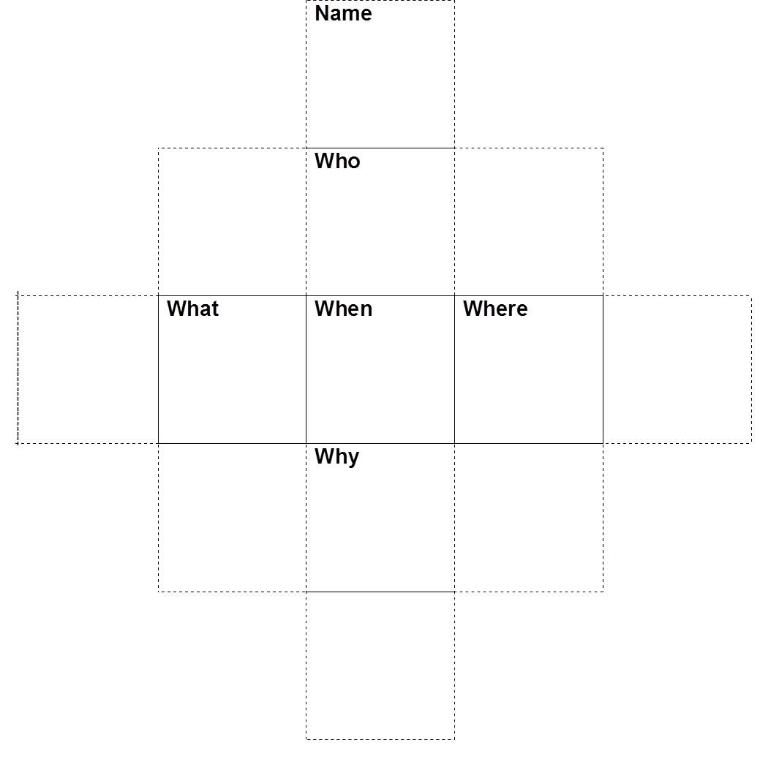
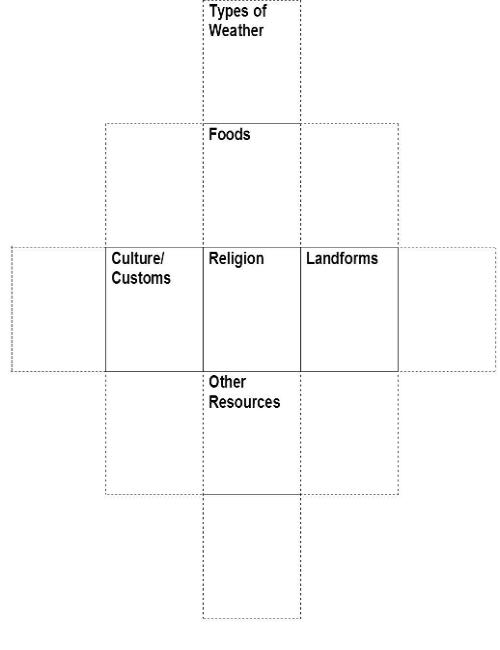
Cube Kamala Markandaya, placing her information from her website and book in the boxes before you fold the cube (master attached below).

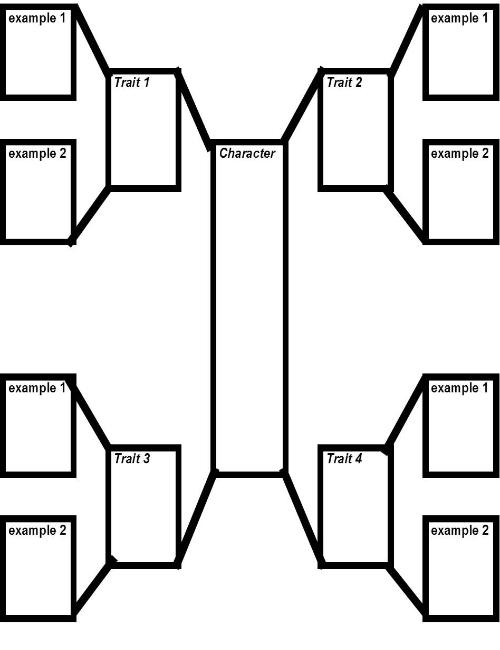
Create a Character Profile Chart (master attached below).

Now that you have been introduced to Rukmani, get out 2 copies of the Character Profile Chart. One will be for Rukmani and one will be for you. Begin by adding one character trait to Rukmani’s chart and identify some examples from your reading today. This will be an ongoing chart you fill out throughout the unit. Now, think about yourself. Do you have this same trait? If not, do you have the opposite trait or a similar trait? Write in one trait and list some examples. Note to yourself how you are both similar and different from Rukmani, despite that fact that she may be a female from India.

Open Mind Portrait

The OMP of Rukmani can follow her as she goes through particular events, meets new people, and experiences hope, fear, or despair. Students can track the changes in her thoughts with different colored markers that are dated at the bottom (like a key).

I Am Poem

Have students write an “I Am” Poem to explore who they are and what they like. Visit the following link to obtain the “I Am” poem format.

http://score.rims.k12.ca.us/score_lessons/symbols_freedom/pages/i_am_poem.html

Cubing Biography
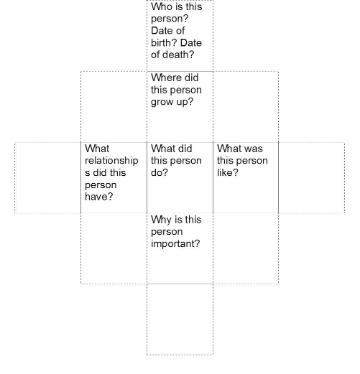
Diagram of cube biography highlighting different quadrants.

4g6 Character Profile Chart

4g6 Character Profile Chart diagram with sections and labels.

Discussion

Ask discussion questions of all 9 types.

Key Questions

  1. Why do boys have more value than girls in some societies?
  2. What is the advantage of an arranged marriage?
  3. Can you predict how gender will play a role in this novel/community?
  4. How did Nathan support Rukmani as she learned her new way of life?
  5. While Rukmani learns to sow seeds, how does the new life and change affect her?
  6. On page 16, Nathan killed the snake in the garden. Rukmani’s friend says, “It’s a shame he killed the snake since cobras are sacred.” Do you think that is an example foreshadowing of things to come? Why?

Analyze

Analyze the key paragraph.

Key Paragraph

“Work without hope draws nectar in a sieve, and hope without an object cannot live.”  -Coleridge

Extend

Write

Have each student write a short product based on today’s prompt to connect to the unit theme.

Think about a time when you have worked really hard on something when there seemed to be no point to it. How did that feel? How does it feel different when you are working toward a goal that has meaning?

What’s a goal you have today? What work do you need to do to get there? What role does hope play in helping you to keep working?

Using the questions above as a guide, write an informative or explanatory paragraph. In addition, explain/make predictions about the novel, given the title? Use proper formatting and organize your ideas, use the above quotation and support it with facts. Give relevant information to support your topic.

-OR-

Key Paragraph, p. 9

“While the sun shines on you and the fields are green and beautiful to the eye, and your husband sees beauty in you which no one has seen before, and you have a good store of grain laid away for hard times, a roof over you and a sweet stirring in your body, what more can a woman ask for? My heart sang and my feet were light as I went about my work, getting up at sunrise and going to sleep content. Peace and quiet were ours. How well I recall it, how grateful I am that not all the clamor which invaded our lives later could subdue the memory or still the longing for it. Rather, it has strengthened it: had there not been what has been, I might never have known how blessed we were” (p. 9).

Writing Prompt

Think about a time in your life that you experienced hardship.

How did that experience make you appreciate the simple things in life? (Maybe being in the Hall makes you appreciate freedom. What do you have to do to stay out of trouble and out of the Hall?)

Write a paragraph explaining your thoughts. (Discuss the notion that Rukmani is able to look back on those moments that were peaceful with much more appreciation because of the hardship she faced. Hardship can make us appreciate the simple things in life—food, shelter, family, and love). Introduce your topic with a strong thesis. Utilize quotations and support them with facts to strengthen your writing. Provide a strong conclusion to your writing.

Close

Close by extending today’s lesson to life and the world.
Day 2

Outcomes for Today

Prepare

Background

Gather background knowledge about a place, time, event, person, or thing. 

Consider this: change needs a vision. What do you think you will be doing in 5 minutes, 5 hours, 5 days, and 5 years? Do you like what you see? Do you want to see something else for yourself? What is it? Identify what YOU want your life to be.

What is an arranged marriage?

An arranged marriage (also called prearranged marriage) is a marriage arranged by someone other than the persons getting married. Arranged marriages are common in the Middle East and South Asia. The match could be selected by parents, a matchmaking agent, matrimonial site, or a trusted third party. In many communities, priests, religious leaders, relatives, or family friends play a major role in matchmaking.

Word Wall

Here are five vocabulary words to teach and add to the Word Wall.

consumption (18)

temple (18)

reserve (21)

contentment (21)

rupee (24)

Read

Review

Review the timeline from the beginning every day.

Brief Summary of Today’s Reading

Chapter 3: Rukmani’s mother comes to visit and they pray that Rukmani can get pregnant. It has been 6 years and they have had no luck. The mother is sick and her doctor, Kennington (Kenny) helps make her feel better. Kenny is a foreigner (probably British). Rukmani told him she had no sons. He told her to come see him. Ira was 7 when Rukmani had her first son. They had a feast in celebration. Rukmani had 4 more sons: Thambi, Murugan, Raja and Selvam. With so many children, resources are getting low. Old Granny usually buys vegetables from Rukmani, but because they need more money, she begins selling to Biswas who can pay her a little more. He is unpleasant. Rukmani puts away a rupee or two in anticipation of Ira’s wedding.

Read

Read the selection, usually in a Shared Reading Read React Predict Cycle of 2-3 pages.

Nectar in a Sieve by Kamala Markandaya, p.  18-24 

Setting

Characters

Pages

the village

Rukmani, Mother, Kali, Kunthi, Janaki (village wives), Old Granny Biswas (moneylender), Sivaji (rent collector), Arjun, Thambi, Murugan, Raja, Selvam (sons)

18-24

Respond

Timeline

Agree on the facts in today’s reading and list the 3-5 most important on the timeline.

Students might mention:

  • Rukmani has not had any more children. When she sees her family she goes to the temple to pray for a son.
  • Mother is ill. She gives Rukmani a symbol of fertility. She is not getting better. They send for a new village doctor.
  • Rukmani’s mother dies. She speaks to the doctor and tells him she has no sons. He offers to help her.
  • Rukmani gives birth to a son 7 years after Ira was born. The family and village celebrate. She cannot find Kenny.
  • They have four more sons. With more mouths, they have less food and money. Rukmani has to start selling their garden vegetables in the city.

Map

Add to ongoing class activities like a KWL chart or map: where did the characters go?

Continue to add to the class change poster.

Add to the change bookmark.

Add to the map.

Introduce new characters to the character chart.

Explore

Activity

Explore the reading more deeply with a visual or oral language activity.

Symbols of India

Have students investigate the symbols of India. Have students choose, illustrate, and write a brief description of a symbol.

  • National Animal
  • National Bird
  • National Flag
  • National Flower
  • National Tree
  • National Fruit

Discussion

Ask discussion questions of all 9 types.

Key Questions

  1. Why is it important for a son to be born first in many societies?
  2. How will sons help Rukmani and her family?
  3. How will more sons and a large family change the resources that the family has?
  4. Which is more important: a large family and sons to help in the fields or resources to keep the family comfortable?
  5. Do you think that consulting a Western doctor will be accepted by her husband and the other villagers?
  6. What sources does Rukmani use to get food for the family?

Analyze

Analyze the key paragraph.

Key Paragraph, p. 24

“But we never went hungry as some families were doing. We grew our own plantains and coconuts, the harvests were good and there was always food in the house—at least a bagful of rice, a little dahl if not more. Then when the rice terraces were drained, there was the fish, spawned among the paddy, and what we could not eat, we dried and salted away. And every month I put a rupee or two against the time Ira would be married. So we still could not grumble” (pg. 24).

Extend

Write

Have each student write a short product based on today’s prompt to connect to the unit theme.

Change requires a vision, a plan, and effort. Rukmani and the family are currently in a period of good fortune. However, Rukmani is taking advantage of the fortune and saving for Ira’s wedding and also for a period in time that they may not have so much. She has a plan.

Think of a time that you were having good luck and fortune. Did you use that time to plan for a rainy day?

Read the story below called “Sleeping Through the Storm.” Can you sleep through a storm? Do you use the good times when you are doing well and thriving to save for a rainy day?

Write about a time that you planned ahead and were able to “sleep through a storm.” Inform/explain to your reader, what you did to “sleep through the storm” How did that planning make you feel? Did you have to make sacrifices to plan ahead? How will that planning help you in your future? As you write, organize your topic and ideas. Use relevant facts and information to support your writing. Utilize quotations if appropriate. Use precise language and a formal style to support your writing. Provide a concluding statement that expands on and supports your thesis.

“Sleeping Through the Storm” (Author Unknown)

Years ago, a farmer owned land along the Atlantic seacoast.

He constantly advertised for hired hands. Most people were

reluctant to work on farms along the Atlantic. They dreaded the

awful storms that raged across the Atlantic, wreaking havoc on

the buildings and crops.

As the farmer interviewed applicants for the job, he received a steady stream of refusals.

Finally, a short, thin man, well past middle age, approached

the farmer. "Are you a good farm hand?" the farmer asked him.

"Well, I can sleep when the wind blows," answered the little man.

Although puzzled by this answer, the farmer, desperate for help,

hired him. The little man worked well around the farm, busy from

dawn to dusk,  and the farmer felt satisfied with the man's work.

Then one night the wind howled loudly in from offshore.

Jumping out of bed, the farmer grabbed a lantern and rushed

next door to the hired hand's sleeping quarters. He shook the

little man and yelled, "Get up!  A storm is coming!

Tie things down before they blow away!"

The little man rolled over in bed and said firmly, "No

sir. I told you, I can sleep when the wind blows."

Enraged by the response, the farmer was tempted to fire him on

the spot. Instead, he hurried outside to prepare for the storm.

To his amazement, he discovered that all of the haystacks had

been covered with tarpaulins. The cows were in the barn, the chickens

were in the coops, and the doors were barred.

The shutters were tightly secured.  Everything was tied down.

Nothing could blow away. The farmer then understood what his

hired hand meant, so he returned to his bed to also sleep while

the wind blew.

Close

Close by extending today’s lesson to life and the world.
Day 3

Outcomes for Today

-->

W2. Write informative/explanatory texts to examine and convey complex ideas, concepts, and information clearly and accurately through the effective selection, organization, and analysis of content.

a.) Introduce a topic; organize complex ideas, concepts, and information to make important connections and distinctions; include formatting (e.g., headings), graphics (e.g., figures, tables), and multimedia when useful to aiding comprehension.

b.) Develop the topic with well-chosen, relevant, and sufficient facts, extended definitions, concrete details, quotations, or other information and examples appropriate to the audience’s knowledge of the topic.

d.) Use precise language and domain-specific vocabulary to manage the complexity of the topic.

e.) Establish and maintain a formal style and objective tone while attending to the norms and conventions of the discipline in which they are writing.

Prepare

Background

Gather background knowledge about a place, time, event, person, or thing. 

What is a caste system?

Castes are unchanged groups. A person born into one group will never change castes or mix with members from other castes. Caste members live, eat, marry, and work with their own group.

  • Brahmin – priests, teachers, and judges
  • Kshatriya (KUH SHAT REE YUH) – warriors
  • Vaisya (VEEZ YUH) – farmers and merchants
  • Sudras – craftworkers and laborers
  • Untouchables – outcastes (people beyond the caste system)

Untouchables were often forbidden to enter temples, schools and wells where higher castes drew water. Their jobs or habits involved “polluted activities” including:
• any job that involved ending a life, such as fishing
• killing or disposing of dead cattle or working with their hides
• any contact with human emissions such as sweat, urine, or feces (This included occupational groups such as sweepers and washermen.)
• eating meat

Word Wall

Here are five vocabulary words to teach and add to the Word Wall.

gulped (25)

tannery (25)

intonation (26)

haughty (27)

tenancy (31)

Read

Review

Review the timeline from the beginning every day.

Brief Summary of Today’s Reading

Chapter 4: Change is coming quickly to Rukmani and the village. Townspeople from over 100 miles away are building a tannery. These are castes with money. The townspeople building the tannery build huts of their own, creating their own separate community. They are noisy. They leave after the building is complete, leaving only empty huts. Things go back to normal. Rukmani is happy to see them go because they have taken the field where their kids played and they have made the bazaar prices too high for them to afford food. Only the townspeople have enough money to buy things. Nathan says they will be back and they must accept that.

Chapter 5: Sivaji, the rent collector, is a kind man. He lets Rukmani and Kali use the dung from the fields for fuel when he could have taken it himself. Kenny comes to visit, looking tired and thin. Rukmani and her family are so poor they were only eating rice water. Because Kenny is a guest, she adds a scoopful of rice to his meal. She tells him she has 5 sons and is hoping he will not share the secret. Rukmani does not want to tell Nathan because she thinks it will make Nathan feel badly. Kenny does not say anything. He drops by the hut more often and comes and goes from the village mysteriously.

Read

Read the selection, usually in a Shared Reading Read React Predict Cycle of 2-3 pages.

Nectar in a Sieve by Kamala Markandaya, p.  25-34 

Setting

Characters

Pages

Village

Rukmani, Mother, Kali, Kunthi, Janaki (village wives), Old Granny Biswas (moneylender), Zemindar (landowner), Sivaji (rent collector), Arjun, Thambi, Murugan, Raja, Selvam (sons)

25-34

Respond

Timeline

Agree on the facts in today’s reading and list the 3-5 most important on the timeline.

Students might mention:

  • Men come to the village and tear down houses to build a tannery.
  • The workers’ demand for food and goods drive the prices in the village higher for Rukmani and her family.
  • The men bring their families, noise, commotion, and pollution to the area.
  • Ira draws the attention of many men. Rukmani has to take away her freedoms to ensure her marring a good man.
  • Kenny returns to the village and is welcomed to Rukmani’s home.
  • Kenny cautions her from taking so much from the land and not giving back.
  • The family has to sell their goat and no longer has money for milk. Kenny brings them milk and food occasionally.

Map

Add to ongoing class activities like a KWL chart or map: where did the characters go?

Continue to add to the class change poster.

Add to the change bookmark.

Add to the map.

Introduce new characters to the character chart.

Explore

Activity

Explore the reading more deeply with a visual or oral language activity.

Postcard

Write a postcard to your family. Tell them about the changes that are made in the village as the tannery opens. Illustrate a picture on the other side.

Discussion

Ask discussion questions of all 9 types.

Key Questions

  1. Do you think the tannery will help or hinder the village?
  2. What good can the tannery bring to the village and the people?
  3. Why would they villagers resent the tannery being built in the village?
  4. What does Kenny mean when he says, “I thought you would know better one who lives from the land, yet takes without giving?”
  5. Rukmani uses the dung for heat and cooking. Why is it a bad decision to take the dung from the fields to use in the home?
  6. What environmental factors arise when you take too much from the land? Do you think that will affect Rukmani and her family in the future? How?

Analyze

Analyze the key paragraph.

Key Paragraph, p. 25; p. 28

“Change I had known before, and it had been gradual. My father had been a headman once, a person of consequence in our village: I had lived to see him relinquish this importance, but the alteration was so slow that we hardly knew when it came. I had seen both my parents sink into old age and death, and here too there was no violence. But the change that now came into my life, into all our lives, blasting its way into our village, seemed wrought in the twinkling of an eye” (p. 25).

“‘Foolish woman,’ Nathan said. ‘There is no going back. Bend like the grass, that you do not break’” (p. 28). 

Extend

Write

Have each student write a short product based on today’s prompt to connect to the unit theme.

Think about a time in your life when change came suddenly. How did it feel?  Did it throw you off? How did you cope?  What did you learn about yourself from the experience? How could you apply what you learned to future experiences?

In terms of the second quote, what does Nathan mean?  How does being flexible help us deal with change?  

Write an informative/explanatory text in which you explain to your reader how critical a positive repose to change is. Introduce your topic. Organize your ideas so you can connect a positive response to change and a positive outcome. Ensure your paragraph is formatted correctly. Expand your writing with concrete details, extend definitions, add quotes. Establish a formal style and use formal/concise language.

Close

Close by extending today’s lesson to life and the world.
Day 4

Outcomes for Today

-->

W2. Write informative/explanatory texts to examine and convey complex ideas, concepts, and information clearly and accurately through the effective selection, organization, and analysis of content.

a.) Introduce a topic; organize complex ideas, concepts, and information to make important connections and distinctions; include formatting (e.g., headings), graphics (e.g., figures, tables), and multimedia when useful to aiding comprehension.

b.) Develop the topic with well-chosen, relevant, and sufficient facts, extended definitions, concrete details, quotations, or other information and examples appropriate to the audience’s knowledge of the topic.

c.) Use appropriate and varied transitions to link the major sections of the text, create cohesion, and clarify the relationships among complex ideas and concepts.

e.) Establish and maintain a formal style and objective tone while attending to the norms and conventions of the discipline in which they are writing.

f.) Provide a concluding statement or section that follows from and supports the information or explanation presented (e.g., articulating implications or the significance of the topic).

Prepare

Background

Gather background knowledge about a place, time, event, person, or thing. 

What is a dowry?

A dowry, or dahej, is the payment in cash or/and kind by the bride's family to the bridegroom' s family along with the giving away of the bride (which is called Kanyadaan in Indian marriage). The dowry originated in upper caste families as the wedding gift to the bride from her family.  The dowry was later given to help with marriage expenses and became a form of insurance in the case that her in-laws mistreated her.  Although the dowry was legally prohibited in 1961, it continues to be highly institutionalized.  The groom often demands a dowry consisting of a large sum of money, farm animals, furniture, and electronics.

Word Wall

Here are five vocabulary words to teach and add to the Word Wall.

vigilant (39)

listlessness (39)

monsoon (39)

incessantly (39)

wraithlike (45)

Read

Review

Review the timeline from the beginning every day.

Brief Summary of Today’s Reading

Chapter 6: Ira is turning fourteen and Rukmani is worried she is getting too old to be married to an eligible man. She asks Old Granny to be the go-between and find someone she thinks is appropriate. Nathan and Rukmani would look over the prospects. They finally settle on the only son of a farmer who would one day inherit a good portion of land. Nathan and Rukmani can only afford a 100 rupee dowry. Nevertheless, Ira’s incredible beauty helped. Once a daughter marries, she leaves her family. This makes Ira sad. Nathan and Rukmani have a huge feast at the wedding. Rukmani has saved food for years to use on this day. Ira and her husband depart.

Chapter 7: The monsoon breaks early, creating a lot of flooding. It rains for 8 days straight. Moisture, dampness, and water are everywhere, including inside their hut. The water floods and destroys their rice and cornfields, ruining all of the work they had done. Kali’s hut is completely destroyed. Dead rats, cats, and dogs line the roadside. Rukmani goes looking for food with very little money. They have to eat from their saved food. They trap, dry, and salt the fish from the fields. They can eat again, but Rukmani is still very worried.

Read

Read the selection, usually in a Shared Reading Read React Predict Cycle of 2-3 pages.

Nectar in a Sieve by Kamala Markandaya, p.  35-45 

Setting

Characters

Pages

Village

Rukmani, Nathan, Ira, Old Granny, Wedding Guests, Ira’s brothers

35-45

Respond

Timeline

Agree on the facts in today’s reading and list the 3-5 most important on the timeline.

Students might mention:

Map

Add to ongoing class activities like a KWL chart or map: where did the characters go?

Continue to add to the class change poster.

Add to the change bookmark.

Add to the map.

Introduce new characters to the character chart.

Explore

Activity

Explore the reading more deeply with a visual or oral language activity.

Character Profile Chart

Add to the Character Profile Chart for Rukmani.

Open Mind Portrait

Create an OMP of Rukmani or of Kenny. Note how their thoughts differ about family size, resources, and thoughts of better times. What do you think they are thinking and feeling as you read today’s selection? Add 3-5 new thoughts to your OMP.

Suitcase

Create a suitcase. Pretend you have lost your home to a natural disaster and you will have to leave. On one side of a piece of construction paper, make a list of 10 things you would take—why are these things important? Will they help you survive? On the other side, decorate the sheet of paper to resemble a suitcase.

Advertisement

Create an advertisement for a natural disaster kit. Include the following:

  • Description of the kit—What’s inside it? Why should I buy it?
  • Name of the kit
  • Kit’s company name and logo
  • Cost of kit
  • Contact information

4g6 Character Profile Chart

4g6 Character Profile Chart diagram with sections and labels.


Discussion

Ask discussion questions of all 9 types.

Key Questions

  1. Why do you think Ira’s beauty made up for a small dowry?
  2. What kind of a sacrifice was it for Rukmani to save for Ira’s wedding?
  3. Are their benefits of an arranged marriage?
  4. Why was it important for Ira’s future for Rukmani to plan and save for so many years?
  5. How did the monsoon affect Rukmani and her family? How were they able to make the best of the disaster?
  6. As man lives and competes with nature, what is within our control and outside our control?
  7. Do you think Rukmani and her family can recover from their losses?
  8. How do you think they could be better prepared for monsoons in the future?

Analyze

Analyze the key paragraph.

Key Paragraph, p. 42

“At dusk the drums of calamity began; their grave, throbbing rhythm came clearly through the night, throughout the night, each beat, each tattoo, echoing the mighty impotence of our human endeavor. I listened. I could not sleep. In the sound of the drums I understood a vast pervading doom; but in the expectant silences between, my own disaster loomed larger, more consequent and more hurtful” (p. 42). 

Extend

Write

Have each student write a short product based on today’s prompt to connect to the unit theme.

Think about a time when you knew things were not going to turn out well—like there was a pervading doom and you could not sleep. What happened? What part of that situation were you responsible for? What could you have done to prevent that situation from occurring? When things have happened to you, how have you dealt with them when they were not your fault?

Write a paragraph explaining your strategies for disaster. As you write use well-chosen, relevant, and sufficient facts to support your thesis. Provide a concluding statement that supports and expands on your thesis.

Close

Close by extending today’s lesson to life and the world.
Day 5

Outcomes for Today

-->

W2. Write informative/explanatory texts to examine and convey complex ideas, concepts, and information clearly and accurately through the effective selection, organization, and analysis of content.

b.) Develop the topic with well-chosen, relevant, and sufficient facts, extended definitions, concrete details, quotations, or other information and examples appropriate to the audience’s knowledge of the topic.

c.) Use appropriate and varied transitions to link the major sections of the text, create cohesion, and clarify the relationships among complex ideas and concepts.

d.) Use precise language and domain-specific vocabulary to manage the complexity of the topic.

e.) Establish and maintain a formal style and objective tone while attending to the norms and conventions of the discipline in which they are writing.

f.) Provide a concluding statement or section that follows from and supports the information or explanation presented (e.g., articulating implications or the significance of the topic).

Prepare

Background

Gather background knowledge about a place, time, event, person, or thing. 

What is Deepavali?

Deepavali is a colorful festival that is celebrated by all Hindus worldwide (also known as the festival of lights). This festival usually falls around late October and November. One important practice that the Hindus follow during the festival is to light oil lamps in their homes on Deepavali morning. By lighting the oil lamps, the Hindus are thanking the gods for the happiness, knowledge, peace, and wealth that they have received. The Hindus consider Deepavali as one of the most important festivals to celebrate.

What are the customs and traditions of Muslims?

http://www.typesofreligion.com/islam/customs.html

Word Wall

Here are five vocabulary words to teach and add to the Word Wall.

wrathfully (46)

pungent (49)

mortar & pestle (49)

barren (50)

contemptuous (52)

Read

Review

Review the timeline from the beginning every day.

Please pre-read this chapter (especially the last paragraph on page 57) prior to reading it with your students. Please gauge the maturity of your students before reading this section with them. Feel free to paraphrase and skip the material if needed.

Brief Summary of Today’s Reading

Chapter 8: Kunthi’s sons are the first to start working at the tannery. She thinks it helps the village become more of a town. Others are against it. Rukmani does not like the noise, crowds, and higher prices in the bazaar brought about by the tannery. Kunthi likes going into town so that the men will notice her. The tannery is tanning thousands of goat, calf, lizard, and snake skins. Rukmani has a hard time understanding how they could get so many animals and that there is a market to buy all of them. A white man owns the tannery and works with 9 or 10 Muslims to operate it. They employ servants. Rukmani does not understand why the Muslim women have to hide their bodies and their faces.

Chapter 9: Ira and her husband come back after a year. He wants to “give her back” because she has not produced any children. Rukmani feels terribly because she had the same problem. Rukmani’s oldest son, Arjun, wants to work at the tannery. Rukmani wants him to work the land or do something with reading and writing. A few days later their next eldest son, Thambi, joins Arjun at the tannery. They feel the only important thing is to be able to make money and eat, so they decide to choose that over family obligation and duty. However, the sons share a portion of what they earn and Rukmani buys a few new special clothes for her and Nathan so that they would not disgrace their sons at their weddings. So, even in all this hardship, she has family pride.

Chapter 10: It is a time of celebration, it is the Festival of Lights—Deepavali. Nathan is happy, dancing and carrying on. The village has a big bonfire and there is much drinking. Nathan feels content with the world. He and Rukmani make love.

Read

Read the selection, usually in a Shared Reading Read React Predict Cycle of 2-3 pages.

Nectar in a Sieve by Kamala Markandaya, pp.  46-57 

Setting

Characters

Pages

Village

Rukmani, Nathan, Kunthi and her sons, Kali

46-57

Respond

Timeline

Agree on the facts in today’s reading and list the 3-5 most important on the timeline.

Students might mention:

Map

Add to ongoing class activities like a KWL chart or map: where did the characters go?

Continue to add to the class change poster.

Add to the change bookmark.

Add to the map.

Introduce new characters to the character chart.

Explore

Activity

Explore the reading more deeply with a visual or oral language activity.

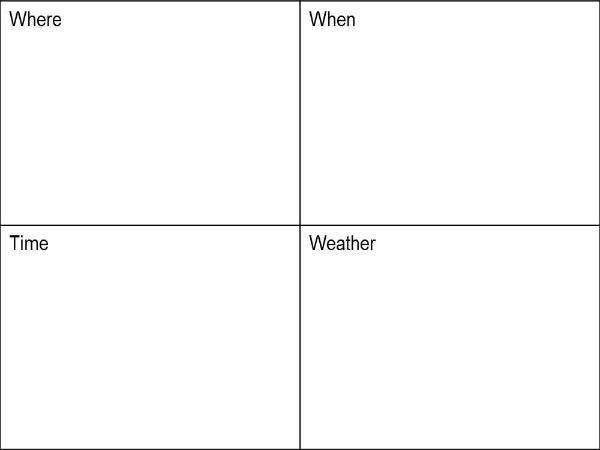
Setting Map

Create a setting map for the chapters read. List the changes as they occur. A chart is attached below.

Open Mind Portrait

Add to the OMP of Rukmani. What do you think she is thinking and feeling as she loses her son and as Ira is returned? Add 3-5 new thoughts to your OMP.  

1g6 Setting Chart

1g6 Setting Chart with sections Before and After.

Discussion

Ask discussion questions of all 9 types.

Key Questions

  1. Why is the industrialization of the town bad for the people and the environment?
  2. How will the return of Ira hurt the family?
  3. Why does Ira’s husband return her?
  4. What might Ira’s life be like now that she has been returned by her husband?
  5. Since Arjun knows how to read and write, do you think he will be satisfied by his life in the village?
  6. In what ways can Arjun benefit the family by leaving the village?
  7. How does the Deepvali festival help the family and the village?
  8. Do you think it is responsible for the family to be celebrating at this point in time? Why?

Analyze

Analyze the key paragraph.

Key Paragraph, p. 47-48

“What they did in their houses I did not know, for they employed servants to do the work; but they stayed mostly indoors, or if they went out at all they went veiled in bourkas. It was their religion, I was told: they would not appear before any man but their husband. Sometimes, when I caught sight of a figure in voluminous draperies swishing through the streets under a blazing sun, or a face peering through a window or shutter, I felt desperately sorry for them, deprived of the ordinary pleasures of knowing warm sun and cool breeze upon their flesh, of walking out light and free, or of mixing with men and working beside them” (pg. 47-48).

Extend

Write

Have each student write a short product based on today’s prompt to connect to the unit theme.

Take 5 minutes and write down everything you know about Muslims or people from India. Write down the answers on the board. Brainstorm with the class which responses are true and which may be stereotypes. (Possible research topics generated here as well.) Write a few sentences about something you would like to learn more about.

Think about a time you have seen someone dressed in a way that you thought was “strange.”  What thoughts went through your head?  What stereotypes do you think you have about different races? Different cultures? Different religions? Different genders? How would you feel if you were judged by something you did or wore if people did not know the meaning behind it? Humans are 99% the same. Only 1% of our genetic makeup is different. Why do you think there is so much hatred and prejudice against people who are different than we are? What can we do to change that?

Brainstorm ideas that answer the above questions as a class. Write one paragraph in which you explain to your reader why you feel there is hatred and prejudice toward people who are perceived as being different than you.

In a second paragraph explain what you can do to help change your attitude or other peoples attitudes to be less hateful.

In each paragraph introduce your topic in a well-organized fashion with relevant details to support your thesis. Use appropriate transitions to link supporting material and create cohesion. Use a formal style of writing. As you conclude that follows form and supports the material you provided your reader.

Week 1: Social Studies Research Opportunities

Find out more about:

Arranged marriages, dowries, gender roles in India, caste systems, and father/son expectations, the concept of “beauty,” Muslim customs, religion, Hindi language, Deepavali-Festival of Lights, industrialization, and natural disasters.

What has changed over time in India? What remains the same?

This research will help you write your final essay at the conclusion of the lesson.

Close

Close by extending today’s lesson to life and the world.

Day 6

Outcomes for Today

-->

W2. Write informative/explanatory texts to examine and convey complex ideas, concepts, and information clearly and accurately through the effective selection, organization, and analysis of content.

b.) Develop the topic with well-chosen, relevant, and sufficient facts, extended definitions, concrete details, quotations, or other information and examples appropriate to the audience’s knowledge of the topic.

c.) Use appropriate and varied transitions to link the major sections of the text, create cohesion, and clarify the relationships among complex ideas and concepts.

d.) Use precise language and domain-specific vocabulary to manage the complexity of the topic.

e.) Establish and maintain a formal style and objective tone while attending to the norms and conventions of the discipline in which they are writing.

f.) Provide a concluding statement or section that follows from and supports the information or explanation presented (e.g., articulating implications or the significance of the topic).

Prepare

Background

Gather background knowledge about a place, time, event, person, or thing. 

What is social justice?

Social justice is the belief that every individual and group is entitled to fair and equal rights and participation in social, educational, and economic opportunities. 

Word Wall

Here are five vocabulary words to teach and add to the Word Wall.

assuagement (60)

daunted (61)

qualms (67)

insistently (67)

chafing (67)

Read

Review

Review the timeline from the beginning every day.

Brief Summary of Today’s Reading

Chapter 11: Nathan is out of town at a funeral. Rukmani goes to see Kenny behind Nathan’s back because she knows he will not approve. She wants Kenny to help Ira with her infertility. On the way home, late at night, Kunthi sees Rukmani and accuses her of prostituting herself and threatens to tell Nathan. Rukmani gets into a brawl with Kunthi. Rukmani goes back to Ira’s husband to ask him to take her back, but he already has another woman. Ira seems very distant and hopeless. Rukmani is pregnant herself and Ira resents this until the baby, Kuti, was born. Then Ira feels a special connection to the boy and raises it as if it were her own.

Chapter 12: Once a week, the two oldest sons help Nathan in the fields. The rest of the week they work at the tannery. Nathan and Rukmani have lunch with them every day. Arjun and Thambi do not come out one day for lunch. Rukmani inquires about this, and the guard says there has been trouble and they are not allowed out now. Later in the evening, the sons come home and tell their parents that they were asking the tannery people for better wages and were therefore punished by not being allowed to eat. Arjun and Thambi are challenging the oppressive systems of the tannery and are outspoken leaders. They are fired. Nathan becomes the sole provider for the household again. The sons start frequenting the town more and more. One day, the town holds a meeting and laborers are called for to work on the island of Ceylon on their tea plantations. Rukmani and Nathan know that if their sons leave, they will probably never see them again. Nathan tries to comfort Rukmani by telling her they are going to have a good harvest that year. Kenny reports to Rukmani that their third son, Murugan, is working as a servant at a doctor’s house and doing well. Rukmani asks Kenny if he is alone. He says he has a wife and children.

Read

Read the selection, usually in a Shared Reading Read React Predict Cycle of 2-3 pages.

Nectar in a Sieve by Kamala Markandaya, p. 58-70 

Setting

Characters

Pages

Village

Rukmani, Nathan, Kenny,

Kunthi, Sons, Ira, New Baby, Kuti, tannery guards

58-70

Respond

Timeline

Agree on the facts in today’s reading and list the 3-5 most important on the timeline.

Students might mention:

Map

Add to ongoing class activities like a KWL chart or map: where did the characters go?

Continue to add to the class change poster.

Add to the change bookmark.

Add to the map.

Introduce new characters to the character chart.

Explore

Activity

Explore the reading more deeply with a visual or oral language activity.

Open Mind Portrait

Add to the OMP of Rukmani and Kenny.

Protest Sign

Make a sign protesting the conditions at the factory.


Discussion

Ask discussion questions of all 9 types.

Key Questions

  1. Why does Rukmani want Ira’s husband to take her back?
  2. How does Kuti’s arrival help Ira?
  3. What will happen to Ira’s future? Will she be able to marry?
  4. Why do companies try to build in area’s that are poor and uneducated?
  5. Why were the boys considered a threat?
  6. Do you think they will be successful in their new jobs?
  7. Why doesn’t the family want them to leave?
  8. Why do companies want to hire less educated people for factory work?

Analyze

Analyze the key paragraph.

Key Paragraph, p. 67-68

“‘What is it that calls you?’ I said. ‘Is it gold? Although we have none, remember that money is not everything.’

‘It is an important part of living,’ he answered me patiently, ‘and work is another. There is nothing for us here, for we have neither the means to buy land nor to rent it. Would you have us wasting our youth chafing against things we cannot change?’” (p. 67-8)

Extend

Write

Have each student write a short product based on today’s prompt to connect to the unit theme.

Think about a time in your life when you have wanted to change something. What was it? What obstacles got in your way? How did you go about making the decision to try to change it or just to leave it? (problem solving strategies).

Write a paragraph in which you explain to your reader how you changed something important in your life. Introduce your topic. Organize your details and facts. If using quotations properly format them. Develop your topic with relevant details and facts. Use varied transitions and precise language. Provide a strong concluding statement that supports your thesis.

Close

Close by extending today’s lesson to life and the world.
Day 7

Outcomes for Today

Prepare

Background

Gather background knowledge about a place, time, event, person, or thing. 

What is a drought?

A drought is a period of abnormally dry weather when the average rainfall for a region drops far below the normal amount for a long period of time. Higher than normal temperatures usually occur during drought periods. The severity of the drought depends upon the degree of moisture deficiency, the duration, and the size of the affected area.

Drought impacts can be economic, social, and environmental. Lack of rain and increased temperatures cause stress on both rural agricultural and urban metropolitan areas. Unusual periods of rain-free weeks can spread panic and shrivel crops. Wells, lakes, and streams begin to dry up. People are directed to stop washing cars, cease watering lawns, and employ other water saving measures. Plants and farm crops eventually wither and then die. Animals suffer and may even die because of extreme drought. Forest and grass fires occur more frequently and can spread quickly if dry, arid conditions continue. Absence of moisture and plant life reduction can lead to increased wind erosion. More weeks and months without sufficient rainfall coupled with wind and sunshine can begin to turn a forest into desert.

Word Wall

Here are five vocabulary words to teach and add to the Word Wall.

indifferent (71)

meager (72)

haste (74)

festering (75)

pitiless (76)

Read

Review

Review the timeline from the beginning every day.

Brief Summary of Today’s Reading

Chapter 13: It has not rained for weeks and their crops are dying. They are praying for rain. Sivaji comes to collect rent for the land for his master. Rukmani and Nathan have nothing to give to him. Sivaji, being a kind man, tells them to try to pay half and then he would ask his master for more time for them. If they do not come up with the money, they will rent the land to another family. Rukmani and Nathan go into their little hut and collect anything they could find to sell. They have to sell their bullocks as well as their special wedding clothing. Rukmani has to sell them to Biswas, who is always out to take advantage of people. Rukmani meets up with Nathan, who has also been out selling their belongings. They pool their money and have 125 rupees, which is not even half of what they need to pay rent. They have to decide whether to sell the very last seeds that they had. They decide to wait and talk to Sivaji. They pay the money to Sivaji, but it was not enough. After they beg him, he leaves, caught in his own predicament of trying to keep his job and his family safe. The drought continues. Finally it rains, but it is too late to do any good. They feel extremely discouraged.

Read

Read the selection, usually in a Shared Reading Read React Predict Cycle of 2-3 pages.

Nectar in a Sieve by Kamala Markandaya, p. 71-77 

Setting

Characters

Pages

Village

Nathan, Rukmani, Sivaji

71-73

Village

Rukmani, Biswas, Nathan

73-75

Village

Nathan, Rukmani, Sivaji

75-77

Respond

Timeline

Agree on the facts in today’s reading and list the 3-5 most important on the timeline.

Students might mention:

Map

Add to ongoing class activities like a KWL chart or map: where did the characters go?

Continue to add to the class change poster.

Add to the change bookmark.

Add to the map.

Introduce new characters to the character chart.

Explore

Activity

Explore the reading more deeply with a visual or oral language activity.

Open Mind Portrait

Add to OMP of Rukmani.

Maslow’s Hierarchy of Needs

Have students research Maslow’s basic needs.

  • See: http://webspace.ship.edu/cgboer/maslow.html
  • Have students visually represent the basic needs of people
    • They can make a collage
    • Draw pictures or a cartoon
  • On the back have students answer the following questions:
    • Why is it important to meet the basic needs of people?
    • As a society is it valuable to ensure that those needs are met for all people? Why?


Discussion

Ask discussion questions of all 9 types.

Key Questions

  1. Is there anything Rukmani and Nathan could have done to prepare for the rains?
  2. Do you think Sivaji is responsible for the family’s hardship?
  3. If you had to sell your possessions to help pay rent, what would you sell?
  4. What does Rukmani mean when she says to Biswas, “you make your fortune on the bad fortune of others?”
  5. If you were Nathan, would you have sold the seeds for the next year’s crops?
  6. Do you see any other alternatives for the family beside selling their seeds?
  7. What role does the factory play in the drought and the family’s hardships?

Analyze

Analyze the key paragraph.

Key Paragraph, p. 73

“‘Rather these should go,’ said Nathan, ‘than that the land should be taken from us; we can go without these, but if the land is gone our livelihood is gone, and we must thenceforth wander like jackals.’ He stared awhile at what we had to sell, and made an effort to say something and tried again and at last he said, choking, ‘The bullocks must go. Otherwise we shall not have enough’ (p. 73).

Extend

Write

Have each student write a short product based on today’s prompt to connect to the unit theme.

Rukmani and Nathan are trying to negotiate what belongings they have to sell to help save their land and home. Make a list of things you think they should get rid of and the things you think they should keep (at least 5 each).

When finished, prioritize the things that they should sell and those you think are most important to keep. Defend in writing why they need to keep the items you have on your list. Explain to your reader the significance of each item and how it can help them in the future. Introduce your writing and your topic to your readers. Support your thesis with relevant and concrete details. Add additional support material from other sources if that will help you support your topic. Provide a concluding statement in which you state the significance of your topic.

Close

Close by extending today’s lesson to life and the world.
Day 8

Outcomes for Today

Prepare

Background

Gather background knowledge about a place, time, event, person, or thing. 

What is terrace farming?

In agriculture, a terrace is a leveled section of a hilly cultivated area. Terrace farms are designed to slow or prevent the rapid run-off of irrigation water.

Often, such land is formed into multiple terraces, giving a stepped appearance. The human landscapes of rice cultivation in terraces follow the natural contours of the land.

Word Wall

Here are five vocabulary words to teach and add to the Word Wall.

transplant (78)

engulf (78)

ailing (79)

scornfully (81)

relinquished (83)

Read

Review

Review the timeline from the beginning every day.

Please pre-read this chapter (especially the last paragraph on page 87) prior to reading it with your students. Please gauge the maturity of your students before reading this section with them. Feel free to paraphrase and skip the material if needed.

Chapter 14: The rains end and the seeds start sprouting. They replant the seedlings and feel hopeful for their future. Nevertheless, it will take time for the crop to ripen. In the meantime, they need to eat. They have to dip into their last reserves to eat. They had 24 days of food left. Rukmani is suspicious that someone is going to take her last rice away. She has nightmares about it. She buries half of her rice in a hole some distance from her hut, and keeps the other half with her at all times. Kunthi shows up on Rukmani’s doorstep looking horrible—she is starving. She asks for food and says she will tell Nathan about seeing Rukmani out late at night cheating on him if she doesn’t comply. She’s blackmailing Rukmani for food. Rukmani gives her some rice, then goes to the rice stored in a hole. It is almost all gone—someone has stolen it. Rukmani questions her family, asking if they had stolen it. Rukmani is so upset she says if Kuti

(4 years old) dies, it will be one less mouth to feed. She is scared and desperate and saying things she does not mean. Finally, Nathan says he took the rice to give to Kunthi because he is the father of her sons and if he didn’t give her the rice, she would have told Rukmani. Nathan had had an affair with Kunthi. The first time was before they were married. Then Rukmani tells him of the grain Kunthi had extorted from her as well. After their conversation, they both feel better. The last grain had been eaten. They are scavenging around town finding food in gutters and so forth. At times, they have to eat grass, which later gave them stomach cramps and made them retch. The baby, Kuti, is starving.

Read

Read the selection, usually in a Shared Reading Read React Predict Cycle of 2-3 pages.

Nectar in a Sieve by Kamala Markandaya, p. 78-87 

Setting

Characters

Pages

Village

Nathan, Rukmani, Kunthi

78-87

Respond

Timeline

Agree on the facts in today’s reading and list the 3-5 most important on the timeline.

Students might mention:

Map

Add to ongoing class activities like a KWL chart or map: where did the characters go?

Continue to add to the class change poster.

Add to the change bookmark.

Add to the map.

Introduce new characters to the character chart.

Explore

Activity

Explore the reading more deeply with a visual or oral language activity.

Open Mind Portrait

Add to the OMP of Rukmani—what do you think is going through her mind after Kunthi visits and she finds out the grain is gone? Add 3-5 new thoughts to your OMP.

Postcard

Pretend you are Rukmani. Write a postcard to Kenny or your sons asking them for help. On the other side, visually represent what is happening in the village.

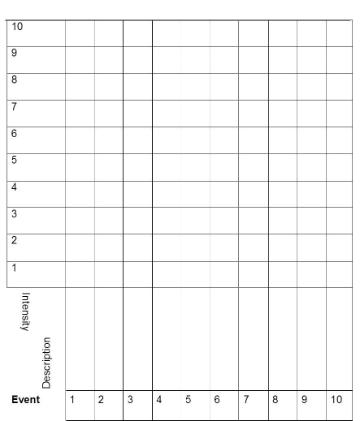
Plot Profile Chart

Create a Plot Profile Chart for this chapter (chart attached).

A blank 3g6 plot profile chart with axes and gridlines.


Discussion

Ask discussion questions of all 9 types.

Key Questions

  1. Why do you think the family was filled with both hope and fear as described on page 78?
  2. Do you think Rukmani was wise to pre-portion the food for the family?
  3. Why won’t Kunthi go to her family for food?
  4. Would you take from your family and give to Kunthi even if it meant she blackmailed you?
  5. What could you do to prevent Kunthi from harming you or your family?
  6. What would you do if you found out your husband gave grain to Kunthi?
  7. Do you think he had a good reason to give her the food?

Analyze

Analyze the key paragraph.

Key Paragraph, p. 85

“It became possible for me to speak as well. I told him of her earlier visit and the grain she had extorted from me also; and it seemed to me that a new peace came to us then, freed at last from the necessity for lies and concealment and deceit, with the fear of betrayal lifted from us, and with the power we ourselves had given her wrested finally from Kunthi” (p. 85).

Extend

Write

Have each student write a short product based on today’s prompt to connect to the unit theme.

Think about a time in your life when you have told someone the truth about something that was difficult to admit. Did you feel relieved? What were the advantages of being honest?

Write a paragraph in which you explain to your reader the benefit of honesty, “Honesty is the only policy.” Organize your ideas to connect complex ideas. How can being dishonest end in a web of lies, etc.? Develop your topic with relevant details. Give examples that are relevant from the reading or from your experiences. Use appropriate transitions. Maintain a formal style in your writing. Provide a concluding statement that supports your topic.

Close

Close by extending today’s lesson to life and the world.

Day 9

Outcomes for Today

Prepare

Background

Gather background knowledge about a place, time, event, person, or thing. 

What are funeral rituals in India?

The funeral rituals are almost universally performed and follow similar patterns. Most Hindus cremate their dead. The exceptions are small children and saints, whose bodies are considered pure, and are therefore buried.

Funeral ceremonies are performed as soon as possible – by dusk or by dawn, whichever occurs first. Therefore, in India a funeral takes place within hours of death. The body is washed by relatives, dressed in fresh cloth, and bedecked with flowers. A few drops of Ganges water are placed in the mouth. The corpse is then carried on a stretcher to the cremation grounds accompanied by kirtan, chanting mantras such as "Ram Nam Satya Hai" (the name of Rama is truth).  The eldest son lights the funeral pyre. For renunciates, it is considered important that the skull is cracked, and this is sometimes part of the ritual, apparently urging the departed soul to move on.

Towards the end of the ceremony, a priest or relative recites appropriate verses from scripture.

Usually three days later, the eldest son will collect the ashes and place them in the Ganges, or another sacred river. In the UK, relatives may travel to India for this purpose, though some are now using the Thames.

Word Wall

Here are five vocabulary words to teach and add to the Word Wall.

dusk (88)

merely (88)

compensation (90)

appalled (91)

imitating (91)

Read

Review

Review the timeline from the beginning every day.

Brief Summary of Today’s Reading

Chapter 15: Raja dies at the tannery. Supposedly, he was stealing a calfskin and they hit him. Because he was so frail already from not having enough to eat, he died. The family burns the body in a funeral ceremony. Men from the tannery come and say it was not their fault and Rukmani should not try to get compensation. One man from the tannery was compassionate about their loss and the other was not.

Read

Read the selection, usually in a Shared Reading Read React Predict Cycle of 2-3 pages.

Nectar in a Sieve by Kamala Markandaya, p. 88-91 

Setting

Characters

Pages

Village

Rukmani, Nathan, Raja (4th son), factory men

88-91

Respond

Timeline

Agree on the facts in today’s reading and list the 3-5 most important on the timeline.

Students might mention:

Map

Add to ongoing class activities like a KWL chart or map: where did the characters go?

Continue to add to the class change poster.

Add to the change bookmark.

Add to the map.

Introduce new characters to the character chart.

Explore

Activity

Explore the reading more deeply with a visual or oral language activity.

Open Mind Portrait

Add to the OMP for Rukamni-what do you think she is thinking when the men come to visit? What is she feeling as she learns her son is dead. Add 3-5 new thoughts to your OMP.

Who, What, When, Where, Why Cube

Complete a Who, What, When, Where, Why cube (CUBE attached).

  • Who is the main character of today’s reading?
  • What happens?
  • When does it occur?
  • Where are the main events?
  • Why is this significant?

You can use your cube to assist writing a summary of today’s chapter.

4c12 Cubing Who, What, When, Where, Why

Diagram of a cube net labeled Who, What, When, Where, Why, and How.

Discussion

Ask discussion questions of all 9 types.

Key Questions

  1. What did Raja do to be killed at the factory?
  2. Do you think he was stealing?
  3. What would he do with the goods that he stole?
  4. Why did the factory men wait three days to visit the family?
  5. Do you think that Nathan and Rukmani considered trying to get compensation from the factory?
  6. Do you think there is any way to compensate for death?
  7. Why do you think the thin man was embarrassed to visit the family?

Analyze

Analyze the key paragraph.

Key Paragraph, p. 90

“Compensation, I thought. What compensation is there for death? I felt confused, I did not understand what he was getting at. There was a pause. The timid man said kindly; ‘He was not brutally treated or anything you know. They merely tapped him with a lathi, as he was trying to escape, and he fell. He must have been very weak or something’” (p. 90).

Extend

Write

Have each student write a short product based on today’s prompt to connect to the unit theme.

Rukmani does not understand why the men are discussing compensation for Raja’s death. Think about a time that something bad happened to you and you wanted compensation. Do you think that people deserve compensation when bad things happen? How does compensation help people? Are there things that cannot be compensated? Do you think that money is appropriate compensation in death? What do you think is appropriate compensation? Take a moment to investigate your state’s compensation levels for loss of limb or life.

Write an explanatory paragraph in which you introduce the idea of compensation for such a loss. Give facts and details as they relate to your research. Explain why you think this practice is fair or not fair. Give logical reasons for your opinion. Use precise and formal language. Conclude your paragraph that helps support your introduction.

Close

Close by extending today’s lesson to life and the world.

Day 10

Outcomes for Today

Prepare

Background

Gather background knowledge about a place, time, event, person, or thing. 

What is starvation?

Starvation is the result of a severe or total lack of nutrients needed for survival.  Adequate nutrition has two components: necessary nutrients and energy in the form of calories. It is possible to ingest enough energy without a well-balanced selection of individual nutrients and produce diseases that are noticeably different from those resulting from an overall insufficiency of nutrients and energy. Although all foods are a source of energy for the human body, it is possible to consume a seemingly adequate amount of food without getting the required minimum of energy (calories). For example, marasmus is the result of a diet that is deficient mainly in energy. Children who get enough calories, but not enough protein have kwashiorkor. This is typical in cultures with a limited variety of foods that eat mostly a single staple carbohydrate like maize or rice. These conditions overlap and are associated with multiple vitamin and mineral deficits, most of which have specific names and set of problems associated with them.

Word Wall

Here are five vocabulary words to teach and add to the Word Wall.

reaping (92)

irritating (93)

enduring (94)

bangles (95)

countenance (100)

Read

Review

Review the timeline from the beginning every day.

Brief Summary of Today’s Reading

Chapter 16: The rice takes 3 weeks until it is ready to harvest. Kuti might not live to see the harvesting. Suddenly, however, Kuti starts to get better, even though the family did not have food. Several days later, Rukmani hears an intruder and attacks the person. It turns out to be Ira. There is a big gash on her left side. Rukmani had thought it was Kunthi. The glass bangles she was wearing shattered and she has glass in her cuts. She is very bloody. Ira was prostituting herself for money to feed Kuti. Nathan confronts her and is angry and does not want her to make this choice. She is able to buy rice, salt, and milk. Nathan will eat none of it. Despite all of Ira’s help, Kuti dies. This was Rukmani and Nathan’s last son—one conceived in peaceful and happy times.

Read

Read the selection, usually in a Shared Reading Read React Predict Cycle of 2-3 pages.

Nectar in a Sieve by Kamala Markandaya, pp. 92-100 

Setting

Characters

Pages

Village

Rukmani, Nathan, Ira, Kuti

92-100

Respond

Timeline

Agree on the facts in today’s reading and list the 3-5 most important on the timeline.

Students might mention:

Map

Add to ongoing class activities like a KWL chart or map: where did the characters go?

Continue to add to the class change poster.

Add to the change bookmark.

Add to the map.

Introduce new characters to the character chart.

Explore

Activity

Explore the reading more deeply with a visual or oral language activity.

Open Mind Portrait

Continue the OMP of Rukmani.

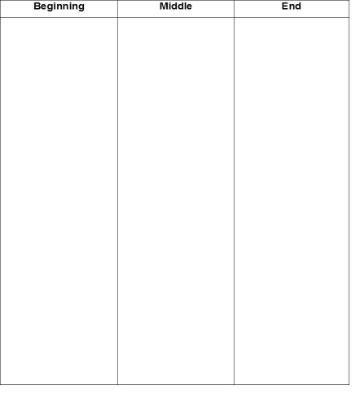
Beginning-Middle-End Chart

Complete a Beginning-Middle-End Chart for this chapter (form attached).

Venn Diagram

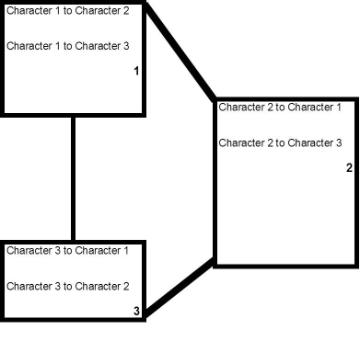
Create a Venn diagram comparing the family’s life in the good times and in tragedy. What has remained the same?  (diagram attached)

Character Profile Chart

Continue to think of specific character traits Rukmani has and fill out another part of the 4g6 chart.

  • When did she show these qualities?
  • Do you have the same quality?
  • Do you have an opposite or different quality?
  • Fill out other sections describing how you see your character.
  • When did she show these qualities?

2g6 Beginning-Middle-End Chart

Beginning-Middle-End chart with three columns for organizing content.

6g6 Venn Diagram Chart

Two overlapping circles forming a Venn diagram.

4g6 Character Profile Chart

4g6 Character Profile Chart diagram with sections and labels.

Discussion

Ask discussion questions of all 9 types.

Key Questions

  1. Would you be able to wait patiently for grain to grow if you were starving?
  2. Would you be suspicious if your daughter came home with money when you were starving?
  3. Do you think that Ira was right to try and feed Kuti?
  4. Why wouldn’t Nathan eat the food Ira provided? Would you if you knew how it was purchased?
  5. What made Ira change from being tender, modest, and obedient (pg 98) to starting to talk back and not obey?
  6. Do you think that Nathan and Rukmani were doing enough for the family?
  7. Could they have done more?
  8. Why was Rukmani grieving?

Analyze

Analyze the key paragraph.

Key Paragraph, p. 94

“This has been a bad time but it is passing as all things must, and now it is not joy, which passes in a trice, but sorrow, which is slower in the going, and so one must be patient. A few more days’ waiting, a few more days’ anxiety—it is not beyond enduring, it is not too much to ask. This I thought as I lay there, listening to the sounds of sleep and lost in my own imaginings” (p. 94).

Extend

Write

Have each student write a short product based on today’s prompt to connect to the unit theme.

Why is it so hard to be patient? What can we say to ourselves that will help us cope during these times? Take 3 minutes to write down your ideas and then brainstorm as a class. Choose one technique that you have used to help you be patient.

Write an explanatory paragraph in which you detail how this technique has helped you. Inform your reader about this technique giving them steps of how to use it. Give facts and details, step-by-step instructions if needed. Use varied language to help transition through your topic and maintain a formal style. 

Week 2: Social Studies Research Opportunities

Find out more about: farming in India, starvation, health care, funeral rituals, husband/wife expectations, and cultural norms about fate and destiny.

Choose one topic and write a paragraph informing your audience about it. Cite your source.

Close

Close by extending today’s lesson to life and the world.

Day 11

Outcomes for Today

Prepare

Background

Gather background knowledge about a place, time, event, person, or thing. 

Do different cultures have different expectations/roles for men vs. women?

(Reference page 63 of the reading.)

Compare and contrast the roles men and women play in the following cultures: American, Hispanic, Middle Eastern, and Asian. Are there different expectations—work vs. no work, equal pay, what kind of clothes can they wear, ability to vote or serve in government? Discuss the similarities and differences as a class.

Word Wall

Here are five vocabulary words to teach and add to the Word Wall.

fallow (100)

laden (103)

ludicrous (104)

covertly (105)

forlorn (107)

Read

Review

Review the timeline from the beginning every day.

Brief Summary of Today’s Reading

Chapter 17: The next crop is abundant. They feel hopeful that they can pay back what they owe, stock the fields with fish, and plant a vegetable garden. Their hearts are grateful and they offer prayers in thanks.

Chapter 18: Rukmani goes to market to sell her grains and produce. While she no longer has to sell to Biswas, he still calls to her and tells her Kenny is in town. He knows, from Kunthi, that Rukmani in some way used Kenny for something—either an affair or something else. He threatens her with this knowledge. She gathers some gifts and goes to see Kenny. Rukmani fills him in on their lack of food and that they lost one son at the tannery and one to starvation. Kenny mentions that his wife left him. They disagree on the role a wife plays to her husband. Rukmani believes she should accompany him everywhere. Kenny believes independence is fine. Ira is pregnant and they do not know the father. Rukmani is worried about what people will say. Kenny says a person should not care.

Read

Read the selection, usually in a Shared Reading Read React Predict Cycle of 2-3 pages.

Nectar in a Sieve by Kamala Markandaya, p. 101-108 

Setting

Characters

Pages

Village

Rukmani, Nathan, Biswas, Kenny

101-108

Respond

Timeline

Agree on the facts in today’s reading and list the 3-5 most important on the timeline.

Students might mention:

Map

Add to ongoing class activities like a KWL chart or map: where did the characters go?

Continue to add to the class change poster.

Add to the change bookmark.

Add to the map.

Introduce new characters to the character chart.

Explore

Activity

Explore the reading more deeply with a visual or oral language activity.

Open Mind Portrait

Add to the OMP for Rukmani.

Character Profile Chart

Add to your Character Profile Chart.

Advertisement

Pretend you are Rukmani and you are going to the village to sell your fruit and vegetables.  Make an advertisement to sell your goods. Include the following:

  • Name of your company
  • Types of foods you are selling
  • Three to five reasons to buy your food
  • Slogan
  • Cost, etc.
  • Visual representations

Discussion

Ask discussion questions of all 9 types.

Key Questions

  1. Why did the family think the harvest would not be a good one?
  2. Do you think they were given good fortune because they endured hardships?
  3. Do people have to work for fortune or are some people just lucky? Why?
  4. Why did the family react with contagious laughter once the crop was harvested?
  5. How do you think Rukmani felt when she could sell her produce in the market?
  6. Why was Biswas accusing Rukmani of being “with” Kenny? What did he have to gain?
  7. Rukmani considers Kenny a friend, do you think he returns the favor?
  8. Is it appropriate for Rukmani to have a male friend?
  9. Why do you think Rukmani’s culture does not believe men and woman should be friends?

Analyze

Analyze the key paragraph.

Key Paragraph, p. 106

“‘Save your wishes,’ he said unpleasantly. ‘My wife has left me. My sons have been taught to forget me.’

I tried and failed to imagine her, this woman who could after so many years renounce altogether her husband, break the bond that must surely have existed despite his long absences. Perhaps it is just this that has driven her to it, I thought. He is not without blame.

‘You think it is my fault,’ he said. ‘Do not deny it, your face speaks plainly enough for me.’

‘Women need men,’ I said, shrugging. ‘It is not right to deprive a woman.’

‘Tell me also, he said, ‘Do you not think a man must choose his work?’

‘Such a man as you, yes,’ I replied.

‘What then if his wife cannot accompany him?’

‘Cannot?’ I said. ‘She must. A woman’s place is with her husband’” (p. 106).

Extend

Write

Have each student write a short product based on today’s prompt to connect to the unit theme.

Rukmani believes it is a woman’s duty to follow her husband wherever he goes. Kenny has a different perspective about the possible relationship a husband and wife can have. Think of some ways Rukmani’s views differ from Kenny’s. Think about your views about the relationship a husband should have with his wife.

Write a paragraph in which you detail how a husband and wife’s role should be determined (culture, negotiation, ect). Explain to your reader how your culture and background plays a strong role in marriage and the roles that a husband and wife should assume. If your culture is lenient write a paragraph explaining how you will determine the roles of your future relationship. Organize your ideas clearly and coherently. Give facts and details to support your thesis. Use varied transitions and formal style. Provide a strong conclusion that supports your thesis.

Close

Close by extending today’s lesson to life and the world.

Day 12

Outcomes for Today

Prepare

Background

Gather background knowledge about a place, time, event, person, or thing. 

Why do people volunteer?

People volunteer for a wide variety of reasons, especially wanting to help others. But it's also okay to want some benefits for yourself from volunteering. Consider that most people find themselves in need at some point in their lives. Today you may be the person with the ability to help, but tomorrow you may be the recipient of someone else's volunteer effort. Even now you might be on both sides of the service cycle: maybe you are a tutor for someone who can't read, while last month the volunteer ambulance corps rushed you to the emergency room. Volunteering also includes "self-help." For example, if you are active in your neighborhood crime watch, your home is protected while you protect your neighbors' homes, too. Adding your effort to the work of others makes everyone's lives better.

Word Wall

Here are five vocabulary words to teach and add to the Word Wall.

wilted (109)

forsaken (110)

clamor (111)

compassionate (111)

noble (112)

Read

Review

Review the timeline from the beginning every day.

Brief Summary of Today’s Reading

Chapter 19: Selvam isn’t a good farmer. He decides he wants to assist Kenny at the soon to be built hospital. The money for the hospital is coming from both India and Kenny’s country. Rukmani does not understand why people who have never met them would pay for a hospital. Kenny explains that you must reach out for help if you need it. Rukmani says that they are taught to bear their sorrows and pain in silence. Kenny tells her to leave before he becomes entangled in her philosophies.

Chapter 20: Ira gives birth to an albino baby. At first Nathan is ashamed, but Rukmani and Ira love the baby. People come to see the unusual baby. After 10 days, they decide to have a naming ceremony where people come and bring gifts and good wishes for the baby. They name him Sacrabani. Old Granny gives Rukmani her last rupee to hold on his behalf. Kali comes and makes fun of the baby with pink eyes and white skin. Nathan, who never liked her to begin with, defends the baby.

Read

Read the selection, usually in a Shared Reading Read React Predict Cycle of 2-3 pages.

Nectar in a Sieve by Kamala Markandaya, p. 109-119 

Setting

Characters

Pages

Village

Rukmani, Kenny, Nathan, Selvam (5th son)

109-119

Respond

Timeline

Agree on the facts in today’s reading and list the 3-5 most important on the timeline.

Students might mention:

Map

Add to ongoing class activities like a KWL chart or map: where did the characters go?

Continue to add to the class change poster.

Add to the change bookmark.

Add to the map.

Introduce new characters to the character chart.

Explore

Activity

Explore the reading more deeply with a visual or oral language activity.

Open Mind Portrait

Add to OMP of Rukmani.

Birth Announcement

Create a birth announcement for Sacrabani and draw a picture of what you think he looks like. Be sure to add:

  • Baby’s weight, height, birthdate
  • General description of him based on the reading

Discussion

Ask discussion questions of all 9 types.

Key Questions

  1. Selvam did not have a talent for farming. Why do some people have a talent for some trades that others do not?
  2. Can you have a working knowledge of how to do things and still not be able to do them?
  3. How has Selvam decided to use his talents?
  4. How will a hospital help the village?
  5. Do you think that the true “villagers” will use a hospital? Why or why not?
  6. Do you agree with Rukmani that people should carry their own burdens?
  7. Why do people volunteer and donate money to help others?
  8. Can people learn to take care of themselves if they are given money or do you think they need to be taught how to take care of themselves?
  9. Why is Rukmani cautious about the birth of Ira’s child?
  10. Ira did not show the hardship of labor. What does that say about her character?
  11. What effect does the baby’s birth have on the village and the family?

Analyze

Analyze the key paragraph.

Key Paragraph, p. 111

“‘I have little understanding,’ I replied humbly. ‘I do not know why people who have not seen us and who know us not should do this for us.’

‘Because they have the means,’ he said, ‘and because they have learnt of your need. Do not the sick die in the streets because there is no hospital for them? Are not children born in the gutters? I have told you before,’ he said. ‘I will repeat it again: you must cry out if you want help. It is no use whatsoever to suffer in silence. Who will succour the drowning man if he does not clamour for his life?’”  (p. 111). 

Extend

Write

Have each student write a short product based on today’s prompt to connect to the unit theme.

Rukmani believes it is a woman’s duty to follow her husband wherever he goes. Kenny has a different perspective about the possible relationship a 

Throughout the novel, Rukmani has accepted things that have happened to her as fate. Some of those things have been out of her control, like monsoons or drought. Other things, perhaps, have been in her control.

Do you think it is because she grew up in India that she believes she needs to accept things as they are? Or do you feel that is her individual choice? Or, perhaps is it a combination? How is this the same or different from people in the United States? From you, your friends, or your family? If you are victim to a natural disaster can you still control your outcome?

Write a paragraph in which you explain to your reader that individuals have control of their own fate. Give the reader facts to support your thesis. Use relevant websites, quotes, or information to support your thesis. Use strong and varied transitions to create cohesion. Establish and maintain formal style.

Close

Close by extending today’s lesson to life and the world.

Day 13

Outcomes for Today

Prepare

Background

Gather background knowledge about a place, time, event, person, or thing. 

What is a soup kitchen?

A soup kitchen (or a bread line) is a place where food is offered to the poor and homeless for free or at a reasonably low price. Frequently located in lower-income neighborhoods, they are often staffed by volunteer organizations, such as church groups or community groups. Soup kitchens sometimes obtain food from a food bank for free or at a low price because they are considered a charity.

Word Wall

Here are five vocabulary words to teach and add to the Word Wall.

irked (120)

decency (121)

precariously (122)

contrive (123)

disabilities (125)

Read

Review

Review the timeline from the beginning every day.

Brief Summary of Today’s Reading

Chapter 21: The hospital began to be built and Selvam and Kenny met regularly to talk about medical matters. Rukmani mentions that the hospital actually took 7 years to build, not one year, as they had hoped. Old Granny dies in the street and they have a funeral for her. Rukmani feels guilty for having accepted her last rupee, thinking somehow maybe that would have kept her alive. Nathan says we must move on. The hospital is taking a long time to build and there are so many people in need.

Chapter 22: Selvam and Ira are close as brother and sister. Selvam completely accepts her albino son, Sacrabani, but unfortunately others do not. Other children exclude him. One day Sacrabani asks Ira what a bastard is. She told him he does have a father and he was away and that he was a wanted child. Both were lies. She did not know the father and she had tried to have an abortion. She cries all night distressed about the situation.

Read

Read the selection, usually in a Shared Reading Read React Predict Cycle of 2-3 pages.

Nectar in a Sieve by Kamala Markandaya, p. 120-126 

Setting

Characters

Pages

Village

Rukmani, Nathan, Ira, Sacrabani, Kali

120-124

Hospital/Village

Kanny, Selvam

124-126

Respond

Timeline

Agree on the facts in today’s reading and list the 3-5 most important on the timeline.

Students might mention:

Map

Add to ongoing class activities like a KWL chart or map: where did the characters go?

Continue to add to the class change poster.

Add to the change bookmark.

Add to the map.

Introduce new characters to the character chart.

Explore

Activity

Explore the reading more deeply with a visual or oral language activity.

Open Mind Portrait

Add to the OMP of Rukmani.

Character Interaction Chart

Fill out a Character Interaction Chart on Rukmani, Ira, and Selvam.

5g6 Character Interaction Chart

A chart depicting character interactions with three labeled boxes connected by lines. Labeled boxes: Character D to Characters B, Character D to Characters C, and “Direct Character Interaction.

Discussion

Ask discussion questions of all 9 types.

Key Questions

  1. What role does the hospital play in the village?
  2. What role does Rukmani think it should play in the village?
  3. Do you think there is a need for a hospital for the people? Is there a greater need? What is it?
  4. Is there anything that could have prevented Old Granny’s death?
  5. Do you think the villagers were ever asked what their needs were?
  6. If you could help the villagers, what would you give them?
  7. Why doesn’t Ira tell Sacrabani that his father is dead?
  8. If you were Ira, would you tell your child the truth? What would you tell him?

Analyze

Analyze the key paragraph.

Key Paragraph, p. 121-122

“‘You are being childish,’ Nathan said. ‘How long would a rupee have kept her?’

‘A few days at least,’ I said.

‘And what when those few days ran out?’

‘I don’t know . . .something may have turned up. It is a pity the hospital was not ready. She could have gone there.’

‘A hospital is not a soup kitchen,’ he said.

I did not know what he meant by a soup kitchen and I stared at him. He repeated the words, pleased that I did not.

          ‘Where the poor are fed free of charge,’ he explained. ‘In other countries Selvam tells me this is a fact’” (p. 121-122). 

Extend

Write

Have each student write a short product based on today’s prompt to connect to the unit theme.

Nathan explains to Rukmani about a soup kitchen and how in other places the poor are fed. In their village many die due to starvation, yet they are building a hospital.

What need would you address? Do you think there is more need for a hospital or to provide food? Do you think it is a global responsibility to provide food to those who do not have it? What is the social implication of not giving to others?  Is there a way that we can help others without giving, but by teaching?

Choose one of the issues above and address it in an explanatory paragraph. Write a strong thesis that introduces your topic. Add relevant data, quotes, or sources to support your ideas. Write in a formal style with good transitions. Conclude your paragraph by supporting your thesis.

Close

Close by extending today’s lesson to life and the world.

Day 14

Outcomes for Today

Prepare

Background

Gather background knowledge about a place, time, event, person, or thing. 

What would you consider hard choices?

Defining a hard choice depends on your perspective. A hard choice for a young child may be what dessert to have.  For a teenager, it may be whether or not to try drugs, or whether to go to school or stay home each day.  For a young adult, it may be whether to get a job or go to college.  For a poor family, it may be deciding whether to pay a bill or put food on the table.  For a country, it may be whether to help another country destroyed by a disaster, individual victims of genocide, or the poor of their own country.  

Hard choices are put in front of us daily. What do you consider to be hard choices?

Word Wall

Here are five vocabulary words to teach and add to the Word Wall.

rheumatism (127)

myriad (131)

juggernaut (131)

resignation (131)

scathed (132)

Read

Review

Review the timeline from the beginning every day.

Brief Summary of Today’s Reading

Chapter 23: Murugan is getting married, but Rukmani and Nathan cannot be there because the town that the wedding is in is 100 miles away. They cannot afford to go by rail because they do not have the money. The dairyman, Durgan, offers to take them by bullock, but Nathan has rheumatism and is weak. Ira and Rukmani would try to help out in the fields, but the work needed to be done requires a strong man. Kenny tries to help him, but states that Nathan needs more food.

Plain rice is not enough. He needs milk, vegetables and butter. Kenny asks Rukmani if there is anyone she can turn to that will help her. Sivaji, the rent collector, comes and tells them they have to give up the land and vacate their home in two weeks. The owners of the tannery are buying it. Nathan and Rukmani are distraught. Rukmani goes back into her hut and thinks about all the things that have happened to her there. Nathan tells Selvam, who is angry and wants them to fight back rather than just “accept” it. Nathan and Rukmani decide to travel the 100 miles to the city to stay with Murugan. It is a long, hard trip, and will be difficult on their health. Selvam promises to take care of Ira and her son as well. This is the end of Part One.

Read

Read the selection, usually in a Shared Reading Read React Predict Cycle of 2-3 pages.

Nectar in a Sieve by Kamala Markandaya, p. 127-135 

Setting

Characters

Pages

Village

Rukmani, Nathan, Murugan (3rd son), Durgan, Ira, Sacrabani, Sivaji

127-135

Respond

Timeline

Agree on the facts in today’s reading and list the 3-5 most important on the timeline.

Students might mention:

Map

Add to ongoing class activities like a KWL chart or map: where did the characters go?

Continue to add to the class change poster.

Add to the change bookmark.

Add to the map.

Introduce new characters to the character chart.

Explore

Activity

Explore the reading more deeply with a visual or oral language activity.

Eviction Notice

Make a sign giving the family their notice of eviction—it should include the following:

  • Title
  • Date
  • Time the family is to leave by
  • Reasons they are being evicted

Open Mind Portrait

Add to the OMP of one of the characters.

6g6 Venn Diagram Chart

Two overlapping circles forming a Venn diagram.

Discussion

Ask discussion questions of all 9 types.

Key Questions

  1. Does the tannery have the right to evict people from their land?
  2. Since Rukmani and Nathan were not land owners, do they have any rights?
  3. Will they be given compensation to move?
  4. Would it have helped them to keep the land if they would have protested?
  5. Does Selvam have the ability to help the family if he decided to farm?
  6. What do you think Ira will do if she stays with Selvam?
  7. There is no communication. Do you think Murugan will be able to help them?

Analyze

Analyze the key paragraph.

No key paragraph today. 

Extend

Write

Have each student write a short product based on today’s prompt to connect to the unit theme.

Take out all the writing prompts Character Profile sheets you have completed. You will be using the Venn diagram sheet to examine both similar and different character traits between you and Rukmani. On one side of the diagram, list all of Rukmani’s character traits. On the other, list yours. In the middle, where the circles meet, write down any that you share. Debrief as a class. Are there any that you missed?

Use this diagram to write a three-paragraph comparison of you and Rukmani. In your writing explain/inform your readers of your similarities. How can the similarities of two people be used to bridge cultural and gender gaps. Explain how you can build off the similarities in people to make certain aspects of life better. Use information from outside sources to support your statement. Be clear and concise. Conclude by restating your thesis.

Close

Close by extending today’s lesson to life and the world.

Day 15

Outcomes for Today

Prepare

Background

Gather background knowledge about a place, time, event, person, or thing. 

Why is there so much emphasis placed on material possessions?

In society, people judge others by their looks and by what they have. It is common for kids to be teased by how they look and what they do not have. It is a sign of wealth and power to have more material goods than others. Those with wealth and power normally have more respect then those who do not.

Some people are rich and others are poor. Some have opportunities and others do not. Some are graced with good luck. As a rule of thumb, people should be judged by their moral fiber instead of what they have. In many cases people's morals and character will last, while material goods can be lost in a moments notice.

Word Wall

Here are five vocabulary words to teach and add to the Word Wall.

plantains (143)

saffron (144)

beseeching (144)

ferocity (146)

trepidation (148)

Read

Review

Review the timeline from the beginning every day.

Brief Summary of Today’s Reading

Chapter 24: Rukmani and Nathan pack up their belongings and leave their village. They say goodbye to Ira, Selvam, and their grandson, Sacrabani. They are sad to leave. It was a long journey. Finally, they are dropped off and still need to walk at least 15 more miles.

They are not sure where they are going, only that they are trying to find their son Murugan, who is a servant in the city. They are very hungry and finally make it to a temple, where food is given away to the poor. People are fighting to get first in line for the food. Rukmani is in line, but Nathan is too tired to wait in line. When she gets up there and asks for a helping for each of them, they tell her she is a liar and that each person must come up for himself for food. She brings back only one dish of food to share and then they go to wash their hands. When they return to their place against the temple wall, their bundles, with all their belongings, are missing. They had been stolen. 

Read

Read the selection, usually in a Shared Reading Read React Predict Cycle of 2-3 pages.

Nectar in a Sieve by Kamala Markandaya, p. 135-145 

Setting

Characters

Pages

City

Rukmani, Nathan, Ira, Selvam, Sacrabani, people at the temple

140-149

Respond

Timeline

Agree on the facts in today’s reading and list the 3-5 most important on the timeline.

Students might mention:

Map

Add to ongoing class activities like a KWL chart or map: where did the characters go?

Continue to add to the class change poster.

Add to the change bookmark.

Add to the map.

Introduce new characters to the character chart.

Explore

Activity

Explore the reading more deeply with a visual or oral language activity.

Character Inventory

Create a character inventory. Look at the attached list. Pick as many positive character traits as you can for yourself. Write reasons these are good traits. Pick five of them. Write one way to make those five traits more pronounced/stronger in your day-to-day life.

Open Mind Portrait

Add to your OMP of Rukmani. What do you think she is thinking and feeling as she leaves the village to find her son? Add 5-7 new thoughts to your OMP.

active

confused

fair

immaculate

adventurous

conscientious

faithful

immature

affable

considerate

fanciful

impartial

affected

cooperative

fearless

impatient

affectionate

courageous

fidgety

impolite

afraid

cowardly

fierce

impudent

ambitious

crafty

finicky

impulsive

amiable

critical

foolish

inactive

angry

cross

formal

independent

animated

cruel

fortunate

industrious

annoyed

cultured

frank

inimitable

anxious

curious

friendly

innocent

argumentative

dangerous

frustrated

insipid

arrogant

daring

funny

insistent

astonished

dauntless

garrulous

insolent

attentive

decisive

generous

intelligent

babyish

dependable

gentle

intrepid

bewildered

determined

giddy

jealous

blasé

diligent

giving

jovial

boorish

discouraged

glamorous

keen

bored

discreet

gloomy 

lackadaisical

bossy

dishonest

glum

languid

brave

dismayed

grateful

lazy

brilliant

disparaging

greedy

lively

busy

disrespectful

gregarious

logical

calm

dissatisfied

grouchy

lonely

candid

distressed

grumpy

loquacious

capable

domineering

gullible

loving

careful

doubtful

happy

loyal

caustic

dutiful

hardy

lucky

cautious

eager

harried

malicious

charismatic

easygoing

harsh

mature

charming

effervescent

hateful

mean

cheerful

efficient

haughty

meticulous

childish

eloquent

helpful

mischievous

clever

embarrassed

honest

moody

clumsy

encouraging

hopeful

mysterious

coarse

energetic

hopeless

naive

cold-hearted

enthusiastic

hospitable

negligent

compassionate

exacting

humble

nervous

complacent

excited

humorous

noisy

conceited

expert

ignorant

obedient

concerned

exuberant

ill-bred

obliging

confident

facetious

imaginative

obnoxious

Discussion

Ask discussion questions of all 9 types.

Key Questions

  1. Had Rukmani or Nathan traveled to a city before?
  2. Do you think they were prepared? What could they have done to better prepare?
  3. If you were going on a journey what would you do to get ready?
  4. Why do you think they thought their belongings were safe at the temple?
  5. Would you go and leave you things behind?
  6. Why did it not bother Nathan that their things had been taken?
  7. Once they find Murugan, what do you think will happen?

Analyze

Analyze the key paragraph.

Key Paragraph, p. 139

“I took down the mats on which we slept from the wall where they hung and rolled them up. Inside I placed the cloth bundle which contained two ollocks of rice, some chilies, tamarind and salt, and the two wooden bowls, Nathan’s and mine, tying the ends of the rolled mats to make sure nothing fell out of the way. Most of the cooking vessels I had brought with me on my marriage had been sold to pay our debts, of the remainder I left two for Ira and the other two I put aside for ourselves. The grindstone, pestle and mortar were too heavy to take” (p. 139).

Extend

Write

Have each student write a short product based on today’s prompt to connect to the unit theme.

The above paragraph describes the only material belongings left for Nathan and Rukmani. If you were asked to leave your home, how would your material belongings differ from that of this Indian couple? What would you try to take with you?

Write an informative/explanatory paragraph in which you show your reader what items you would take with you on a trip similar to Rukmani’s. As you write make sure you consider what you are able to carry and the form of travel you will be taking. You can research survival or camping websites to assist you. Open with a strong thesis that enables you to convey your opening clearly. Give details and facts from relevant sources. Use varied transitions to link your text together. Establish a formal style.

Week 3: Social Studies Research Opportunities

Find out more about material goods in India versus the United States. Remember that in each society, there is a “caste” system of sorts, meaning that there will be both poor and wealthy people in each country. Perhaps choose one caste and focus on the differences between countries.

Or

Research medical concerns in India. One specific medical concern in India is leprosy. Has leprosy ever been a problem in the United States? Why or why not? Explain.

Make sure you cite your sources.

Close

Close by extending today’s lesson to life and the world.

Day 16

Outcomes for Today

Prepare

Background

Gather background knowledge about a place, time, event, person, or thing. 

Word Wall

Here are five vocabulary words to teach and add to the Word Wall.

perfunctory (151)

facile (151)

godowns (156)

forbearance (162)

semblance (162)

Read

Review

Review the timeline from the beginning every day.

Brief Summary of Today’s Reading

Chapter 25: Nathan and Rukmani wake up the next morning. Rukmani did not sleep well because she was so worried. They smell food and are so hungry that they decide they would like to buy a pancake. Rukmani reaches for her money under her clothes and realizes it has been stolen. They find the city busy, noisy and unpleasant. Eventually they ask a young boy named Puli to take them to the doctor’s house where their son works. He says he will do so for a fee. He is very street smart. He has heard of the doctor, Birla, but never heard of their son. Puli’s fingers are stumps because he has leprosy.  Puli brings them to the doctor’s house and they inquire about their son. The three servants have never heard of him and tell them to go away. When the doctor shows up, it is a woman. Nathan is shocked to see a female doctor. She tells them that Murugan left nearly two years ago for higher wages and now works for the Collector. Birla tells them to stay the night and eat a good meal. They leave the next morning feeling a bit better.

Chapter 26: They arrive at the Collector’s house, which is surrounded by guards. Murugan was not there but they brought Nathan and Rukmani to his wife, whom they had never met. She told them that he left two years ago and has never been heard from again. She thinks he left for other women and to gamble. They leave and decide to go back to Ira and Selvam in the village. 

Read

Read the selection, usually in a Shared Reading Read React Predict Cycle of 2-3 pages.

Nectar in a Sieve by Kamala Markandaya, p. 150-164 

Setting

Characters

Pages

City

Rukmani, Nathan, Puli (orphan), Birla (doctor), Ammu (Murugan’s wife)

150-164

Respond

Timeline

Agree on the facts in today’s reading and list the 3-5 most important on the timeline.

Students might mention:

Map

Add to ongoing class activities like a KWL chart or map: where did the characters go?

Continue to add to the class change poster.

Add to the change bookmark.

Add to the map.

Introduce new characters to the character chart.

Explore

Activity

Explore the reading more deeply with a visual or oral language activity.

Open Mind Portrait

Add to your OMP. What do you think Rukmani is thinking and feeling as she wakes to find she has no money, cannot find her son, and meets his wife for the first time? Add 3-5 new thoughts to your OMP.

Discussion

Ask discussion questions of all 9 types.

Key Questions

  1. Rukmani and Nathan have lost their belongings and their money—do you think they are unlucky or naive?
  2. What could they have done to protect their things and money?
  3. Would you journey to see a family member without writing?
  4. Based on the reading, do you think Murugan left for more money?
  5. Do you think their expectations of their son and their journey were unrealistic?
  6. What do you think they will find when they return to the village?

Analyze

Analyze the key paragraph.

No key paragraph today.

Extend

Write

Have each student write a short product based on today’s prompt to connect to the unit theme.

Complete the cubing activity (attached).

Create a cube of the basic geography of India.

Pretend you are a travel agent or an agent of the Indian Travel and Tourist Council

Once you have completed your cube write a one-paragraph explanatory or informative text directed at clients who are not familiar with the country. Use the information from the cube to encourage visitors to come to your country. Be clear, concise, give factual information, and be descriptive. Give details about the country. Use varied transitions and precise language. Maintain a formal style as you write. Conclude with a statement that supports the information presented.

Printable cube template with labeled sections for basic geography of India.

Close

Close by extending today’s lesson to life and the world.

Day 17

Outcomes for Today

Prepare

Background

Gather background knowledge about a place, time, event, person, or thing. 

What are the benefits of hard work?

Hard work helps all of us appreciate the things that we work for. If we don’t have to work, we take for granted the things we have. It is important to utilize skills and knowledge to build a better future for those who come after us. Take a moment to read the following poem with your class.

THE BRIDGE BUILDER
An old man, going a lone highway,
Came at the evening cold and gray,
To a chasm, vast and deep and wide,
Through which was flowing a sullen tide.
The old man crossed in the twilight dim-
That sullen stream had no fears for him;
But he turned, when he reached the other side,
And built a bridge to span the tide.

"Old man," said a fellow pilgrim near,
"You are wasting strength in building here.
Your journey will end with the ending day;
You never again must pass this way.
You have crossed the chasm, deep and wide,
Why build you the bridge at the eventide?"

The builder lifted his old gray head.
"Good friend, in the path I have come," he said,
"There followeth after me today
A youth whose feet must pass this way.
This chasm that has been naught to me
To that fair-haired youth may a pitfall be.
He, too, must cross in the twilight dim;
Good
friend, I am building the bridge for him."
-Will Allen Dromgoole

Word Wall

Here are five vocabulary words to teach and add to the Word Wall.

antagonistic (165)

pervading (166)

albeit (166)

quarry (170)

din (170)

Read

Review

Review the timeline from the beginning every day.

Brief Summary of Today’s Reading

Chapter 27: Nathan and Rukmani are still in the city. They have no means to travel home. With each growing day, their longing for the country increases. They figure out how much they will need to get home and decide that Rukmani will write letters for money. Puli finds them and asks for the money they owed him when he first took them to the doctor’s house looking for Murugan. They find out he is homeless. He suggests they go to the stone quarry to make money. They get money for how many stones they have broken. It is hard work.

Read

Read the selection, usually in a Shared Reading Read React Predict Cycle of 2-3 pages.

Nectar in a Sieve by Kamala Markandaya, p. 165-176 

Setting

Characters

Pages

City

Rukmani, Nathan, Puli

165-176

Respond

Timeline

Agree on the facts in today’s reading and list the 3-5 most important on the timeline.

Students might mention:

Map

Add to ongoing class activities like a KWL chart or map: where did the characters go?

Continue to add to the class change poster.

Add to the change bookmark.

Add to the map.

Introduce new characters to the character chart.

Explore

Activity

Explore the reading more deeply with a visual or oral language activity.

Open Mind Portrait

Add to your OMP of Rukmani. What do you think she is thinking and feeling as she longs to get home, struggles to find money, and resorts to doing hard labor? Add 3-5 new thoughts to your OMP.

Acrostic Poem

Write an Acrostic Poem on Hard Work.

Discussion

Ask discussion questions of all 9 types.

Key Questions

  1. Why are Rukmani and Nathan unwelcome at the temple after the first couple of nights?
  2. The passers-by make fun of Rukmani for being able to read and write. Why is that so unheard of?
  3. Do you think Nathan and Rukmani owe Puli the money?
  4. Why does Puli suggest that Rukmani, rather than Nathan, negotiates with the quarry overseer?
  5. Why do Nathan and Rukmani long to return to their village?
  6. Where will Rukmani and Nathan find better opportunities?
  7. Who do you think has more wisdom? Puli or Nathan and Rukmani? Why?

Analyze

Analyze the key paragraph.

No key paragraph today.

Extend

Write

Have each student write a short product based on today’s prompt to connect to the unit theme.

Look back over your daily writings and compare and contrast different aspects of Indian culture with life in the US. Include information on marriage rituals, the caste/class system, housing, natural disasters and climate, possessions, and relationships and roles of family members. 

Close

Close by extending today’s lesson to life and the world.

Day 18

Outcomes for Today

Prepare

Background

Gather background knowledge about a place, time, event, person, or thing. 

What is grief?

Grief is the normal response of sorrow, emotion, and confusion that comes from losing someone or something important to you. It is a natural part of life. Grief is a typical reaction to death, divorce, job loss, a move away from friends and family, or loss of good health due to illness.

Word Wall

Here are five vocabulary words to teach and add to the Word Wall.

veering (178)

extravagant (178)

sear (184)

endure (185)

affliction (186)

Read

Review

Review the timeline from the beginning every day.

Brief Summary of Today’s Reading

Chapter 28: They start to collect money.  Puli and Rukmani go to the market. She ends up splurging on food and a toy for both Puli and Sacrabini. This is extravagant because they still were saving every coin to return home to their village. She is afraid of what Nathan is going to say, but it has been so long since she had money that it has grown into a frenzy. It begins to rain and she goes home. Nathan has fallen from being ill and she finds him lying in the street caked in mud.

Chapter 29: She recounts the night of Nathan’s death in more detail. He tells her to hold him when the time comes and to not grieve.

Chapter 30: She calls to Puli and he helps her cope with the sorrow. She asks him to come with her back to the village and he says yes. They travel back to the village and are greeted by Ira and Selvam. He assures her that they will manage.

Read

Read the selection, usually in a Shared Reading Read React Predict Cycle of 2-3 pages.

Nectar in a Sieve by Kamala Markandaya, p. 177-186 

Setting

Characters

Pages

City

Rukmani, Nathan, Puli

177-183

Village

Ira, Selvam

183-186

Respond

Timeline

Agree on the facts in today’s reading and list the 3-5 most important on the timeline.

Students might mention:

Map

Add to ongoing class activities like a KWL chart or map: where did the characters go?

Finish the class change poster.

Finish the change bookmark.

Complete your map.

Explore

Activity

Explore the reading more deeply with a visual or oral language activity.

Open Mind Portrait

Add to your OMP of Rukmani. What do you think she is thinking and feeling as she splurges at the market, finds Nathan in the street, and returns home? Add 3-5 new thoughts to your OMP.

Plot Profile Chart

Fill out the Plot Profile Chart.

A blank 3g6 plot profile chart with axes and gridlines.

Discussion

Ask discussion questions of all 9 types.

Key Questions

  1. If you work hard, is it okay to splurge on something special?
  2. Should you reward yourself? Why?
  3. Do you think Nathan would have the right to be angry with her purchases? Why?
  4. Would you have been able to work at the quarry if you were ill?
  5. If someone told you not to grieve, would you be able to respect their wishes?
  6. Why doesn’t Nathan want Rukmani to grieve?
  7. Why do you think Puli went with Rukmani to the village?
  8. Is it significant that they are determined to manage? Why?
  9. How has Rukmani managed her life?

Analyze

Analyze the key paragraph.

No key paragraph today.

Extend

Write

Have each student write a short product based on today’s prompt to connect to the unit theme.

Think about the ending of the book. What happened to the main characters? If you were the author, how else could you have finished the book? Turn to a partner and brainstorm how else the book might have ended. Then, on your own, write an alternate ending. Which do you like better and why?

Close

Close by extending today’s lesson to life and the world.

Day 19

Outcomes for Today

WRITE

Today’s activity: Writing a 5-paragraph explanatory/informative essay comparing life in India to life in the United States.

Is the U.S. more like India or more different? Use this as an opportunity to make connections and distinctions between the two countries and cultures.